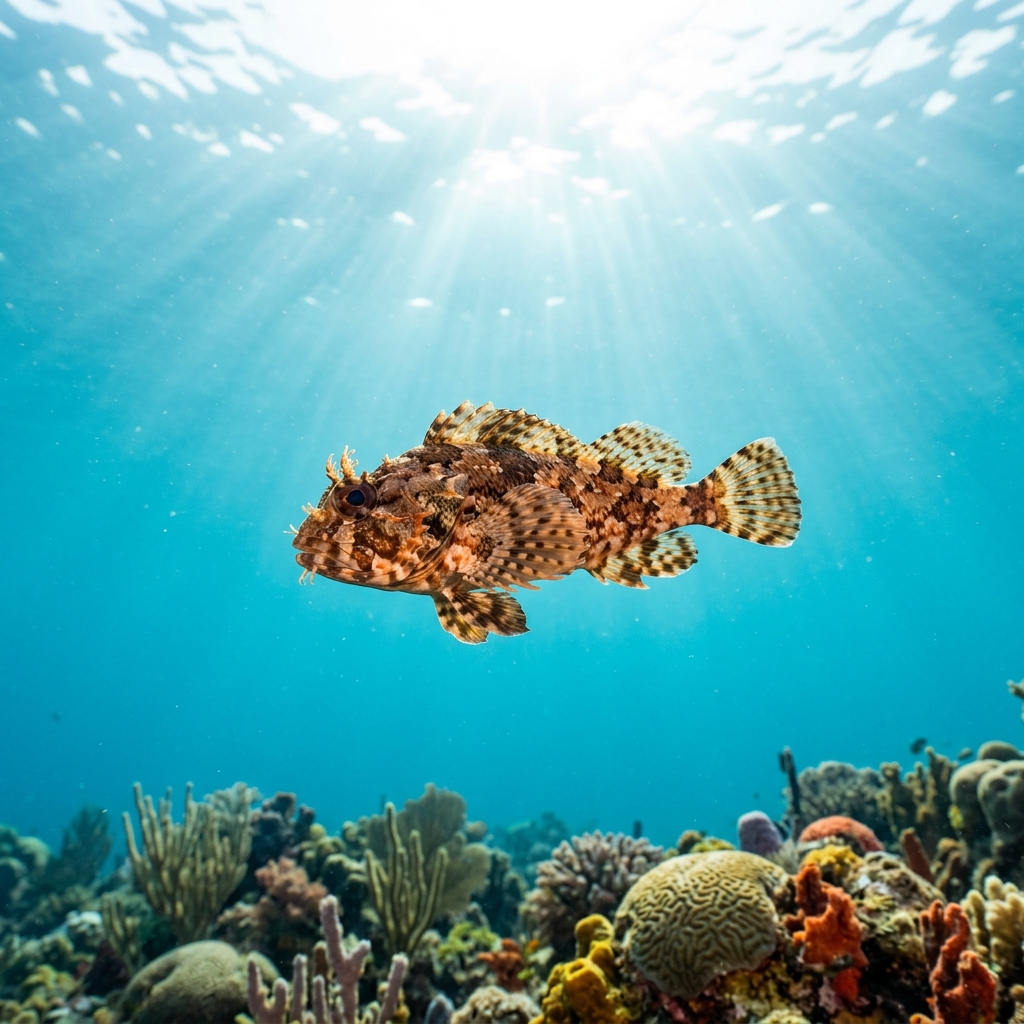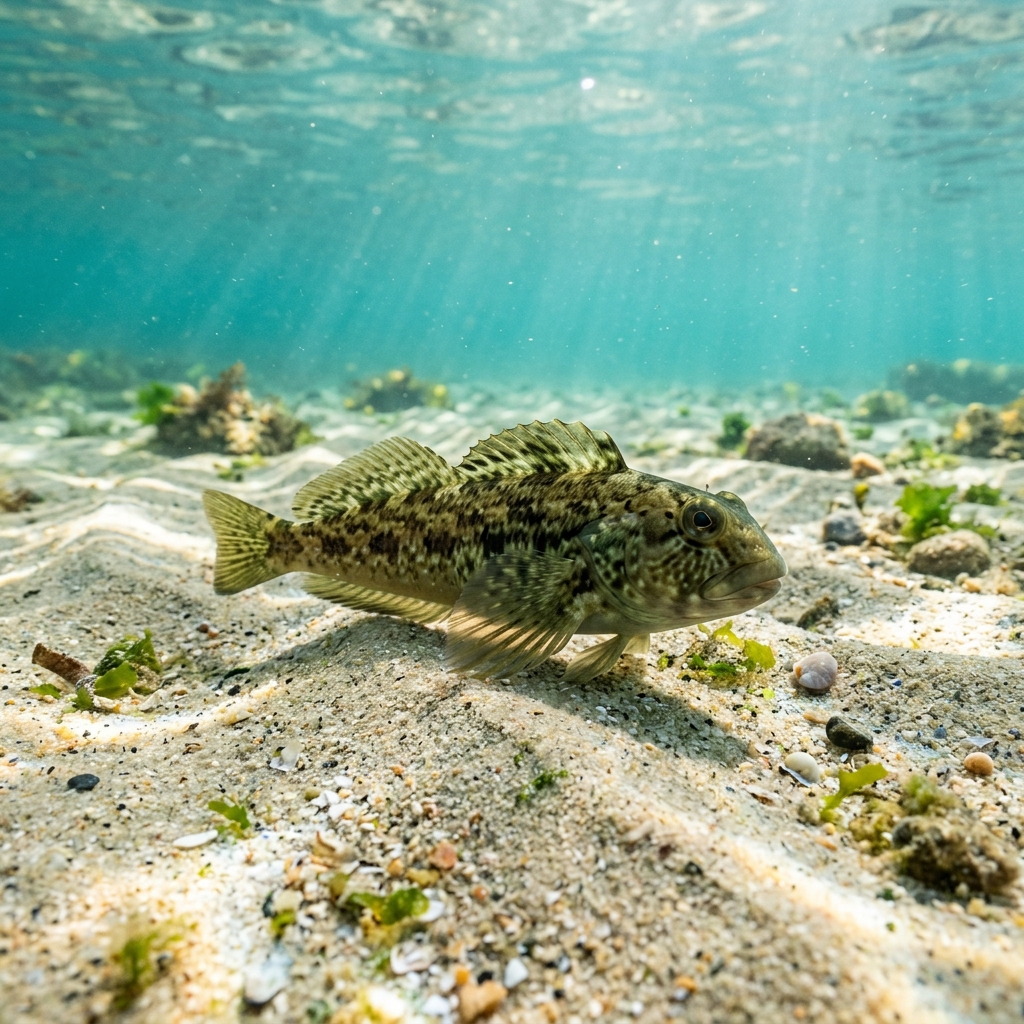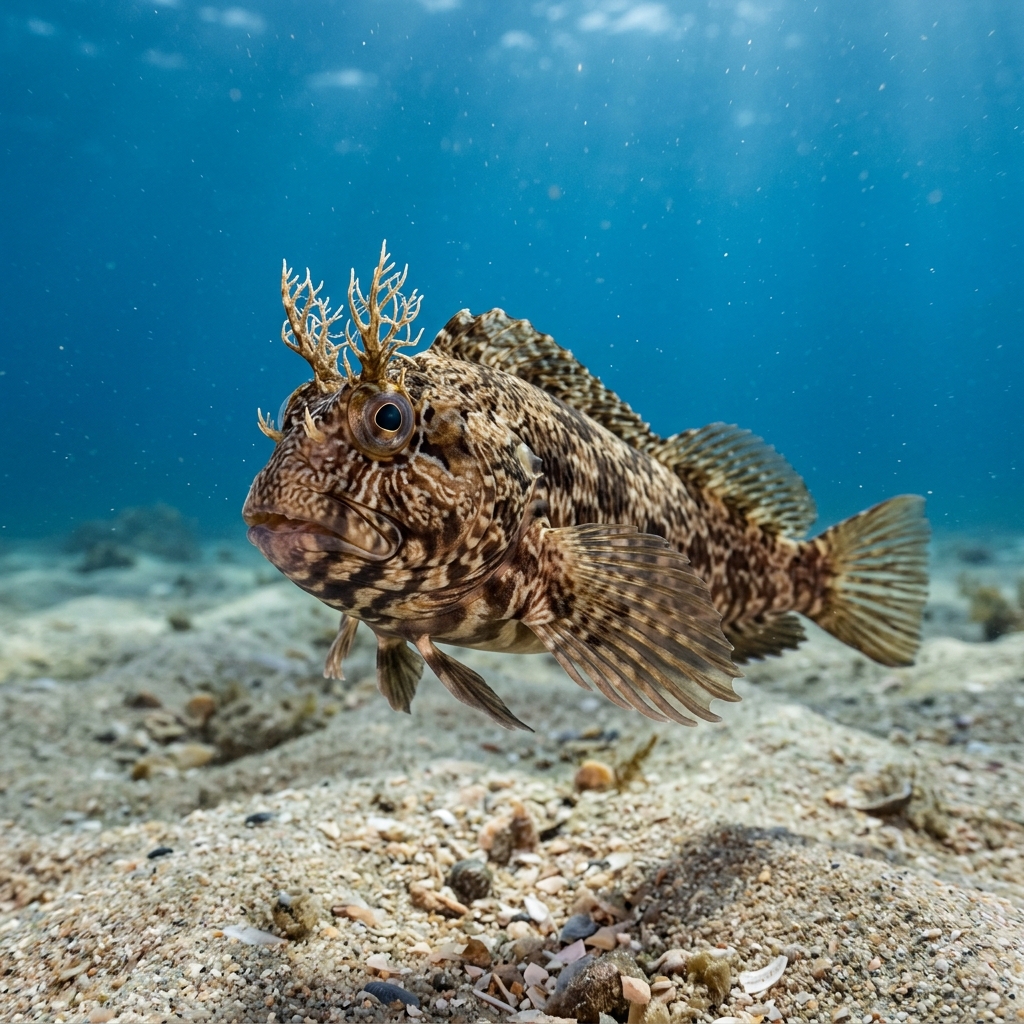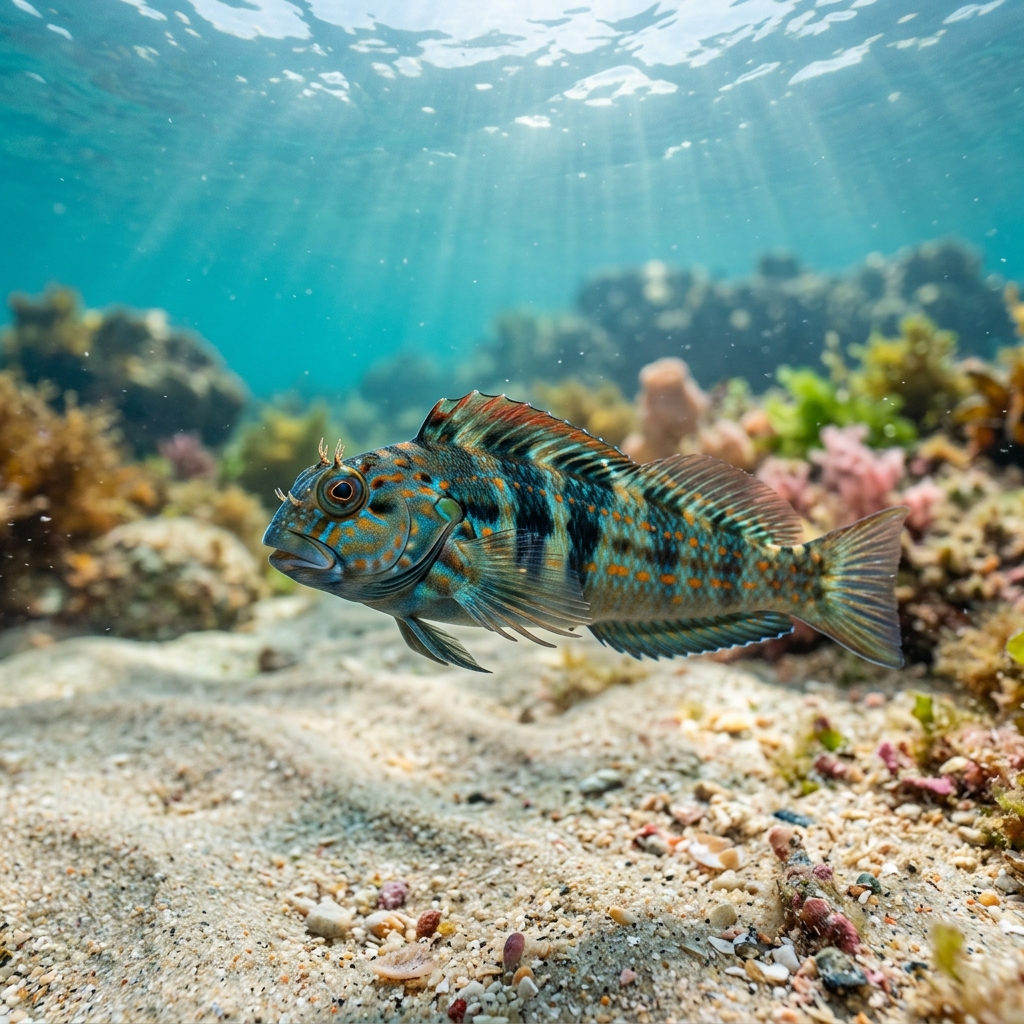
Tripterygiidae spp.
Spot triplefins across the French Riviera, Costa Brava and Western Australia. Breeding males flush vivid red. Here's where, when and how to find them.
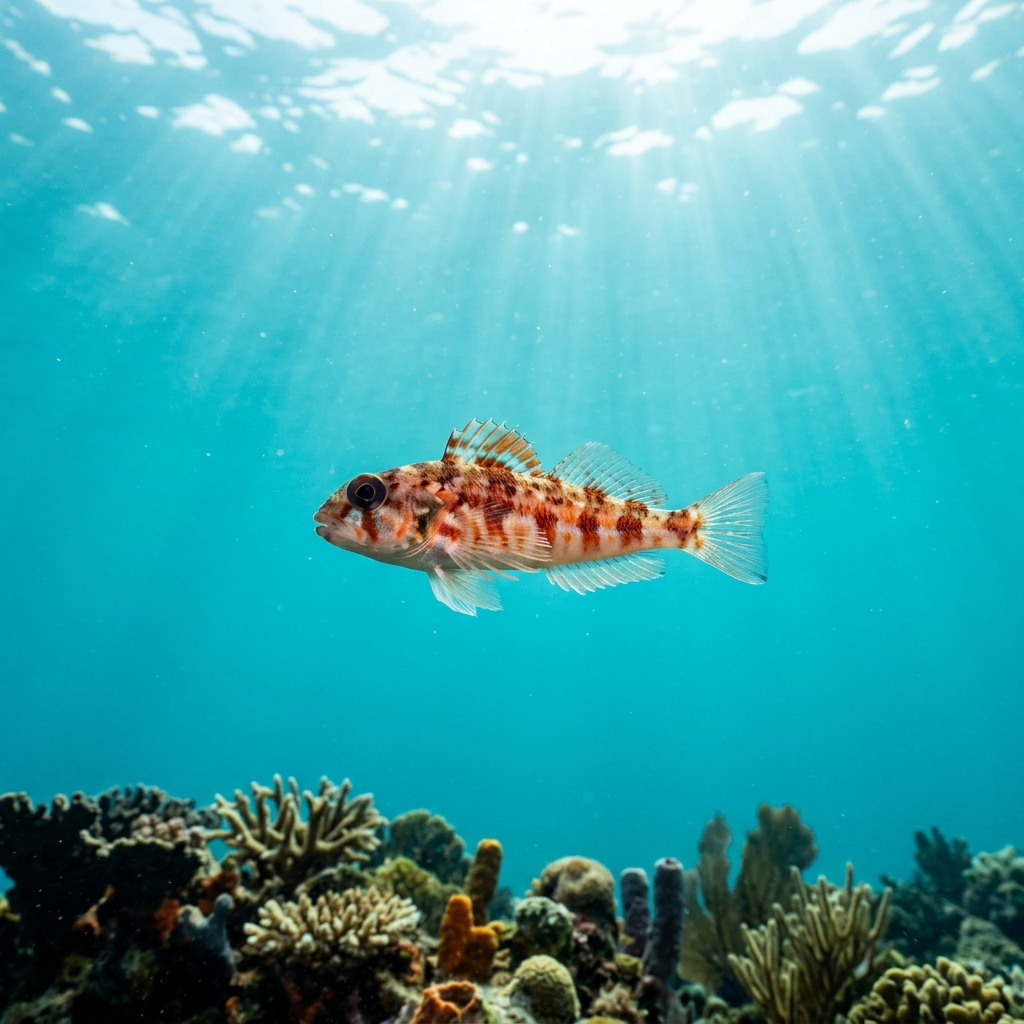
Three separate dorsal fins are the single most reliable field mark for the family: no other small reef fish in their range splits the dorsal into three distinct segments quite this way. Most individuals are small, cryptic, and mottled in browns and greys, sitting motionless on hard substrate in a head-up perching posture. Breeding males are the exception, developing vivid red or orange colouring on the head and front of the body, making them look like an entirely different animal. Because the family spans hundreds of species worldwide, exact colour pattern varies, but the three-part dorsal plus the perching habit narrow the ID considerably.
Triplefins are bottom-perchers: find them sitting on rocks, rubble, algae-covered reef, or even dead coral, propped up on their pelvic fins, watching for small invertebrates to pick off. They tolerate close, slow approaches well, often holding position long enough for a good look, but will dart a short distance into a crevice if you press too hard. Most activity happens in daylight hours, and they are rarely in open water, so the trick is scanning the substrate at close range rather than looking mid-water.
The family name says it all: the three-part dorsal fin is unique to Tripterygiidae and is thought to give breeding males finer control over display posturing during territorial and courtship interactions.
In the Northern Hemisphere, sightings concentrate from January through October, making spring and summer particularly reliable across Mediterranean and US sites. In the Southern Hemisphere, the season runs September through May, covering spring, summer, and autumn for Australian and southern-hemisphere destinations.
Reef neighbours a diver could mistake it for. Use the identification notes above to tell them apart.
Triplefins are most commonly logged in Mediterranean Europe, with Spain (especially the Costa Brava, Costa Blanca, and Balearic Islands), France (led by the French Riviera and Provence), Italy, Croatia, and Greece all showing strong records. Outside the Mediterranean, Australia (particularly Western Australia), Indonesia, and the United States round out the hotspots, so there is rarely a warm or temperate rocky reef dive trip where triplefins are completely off the table.
Mapping where Triplefin is logged…
The Mediterranean is the heartland: Spain's Costa Brava, Costa Blanca, and Balearic Islands, the French Riviera, Sardinia, Croatia's Kvarner Gulf, and Greece all have reliable populations. Western Australia and Indonesia are the top picks outside the Mediterranean, and they also appear along the US coast.
In the Northern Hemisphere, sightings are concentrated between January and October, peaking through spring and summer in Mediterranean waters. Southern Hemisphere divers should target September through May to cover the Australian warm season.
Look for a small, cryptic fish perched on rocky or algae-covered substrate with three visibly separate dorsal fins running along its back. Most are mottled brown, but breeding males glow orange-red on the head and body. The perching posture and three-part dorsal together are diagnostic.
Most triplefins are very small, typically only a few centimetres long, which is part of why they are easy to overlook on a dive. A few larger species exist, but most you will encounter in the Mediterranean or Australia are under 5 cm.
No. Triplefins pose no threat to divers. They are small, shy, and will retreat into crevices if approached too quickly. You are far more likely to have trouble spotting one than to have any negative encounter.
Site and sighting data is aggregated from diver logs, iNaturalist and GBIF. For taxonomy and conservation status:
Rusty Blenny
2,605 sites