Parupeneus ciliatus
Reddish-grey goatfish with a pale saddle patch, most reliably spotted around Saint-Leu in Reunion and Okinawa's reefs, 24-29C year-round.
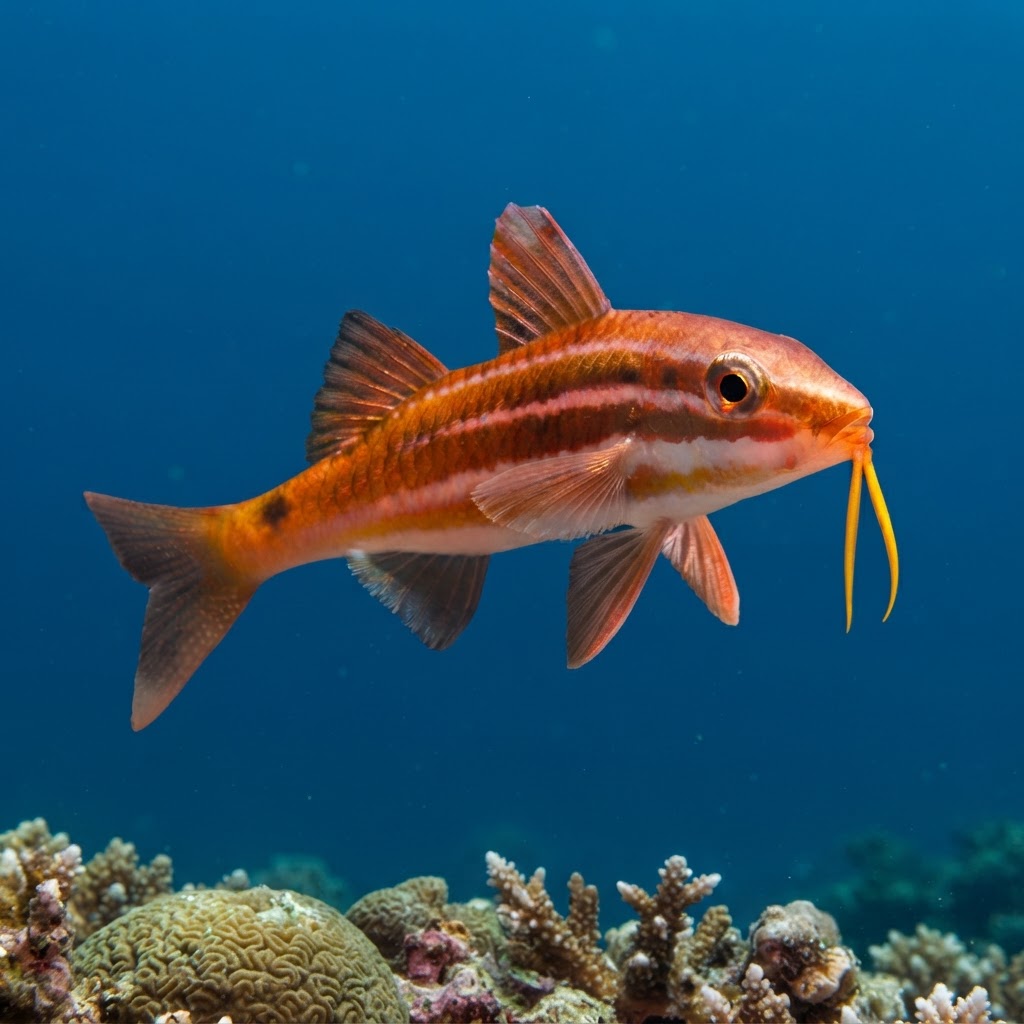
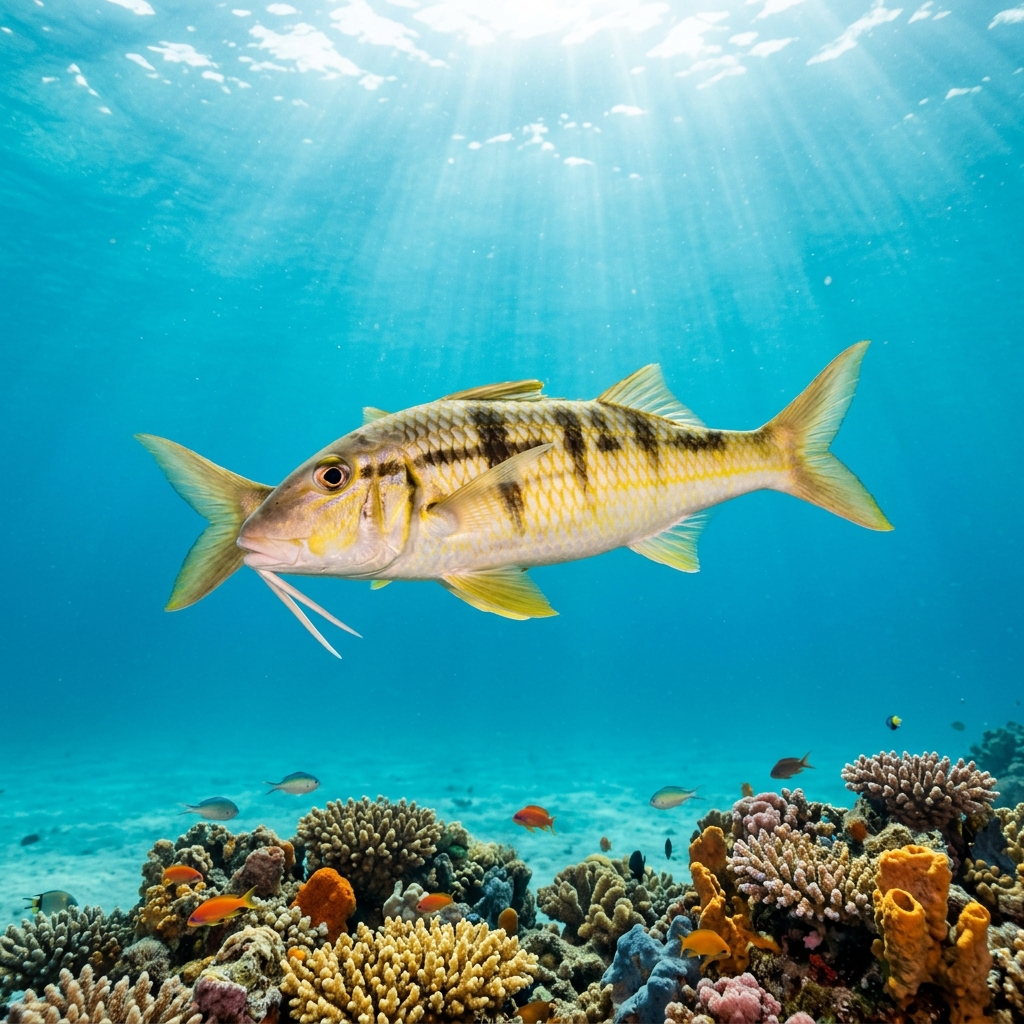
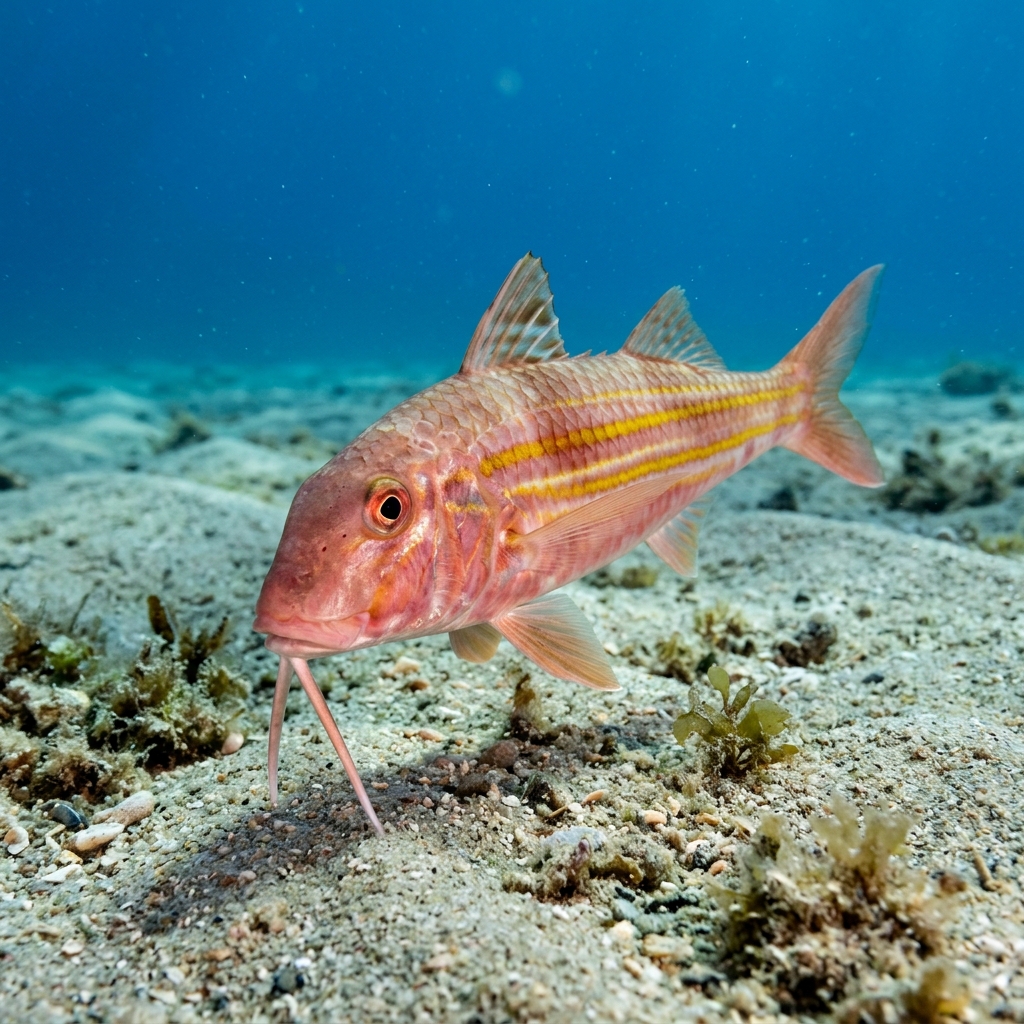
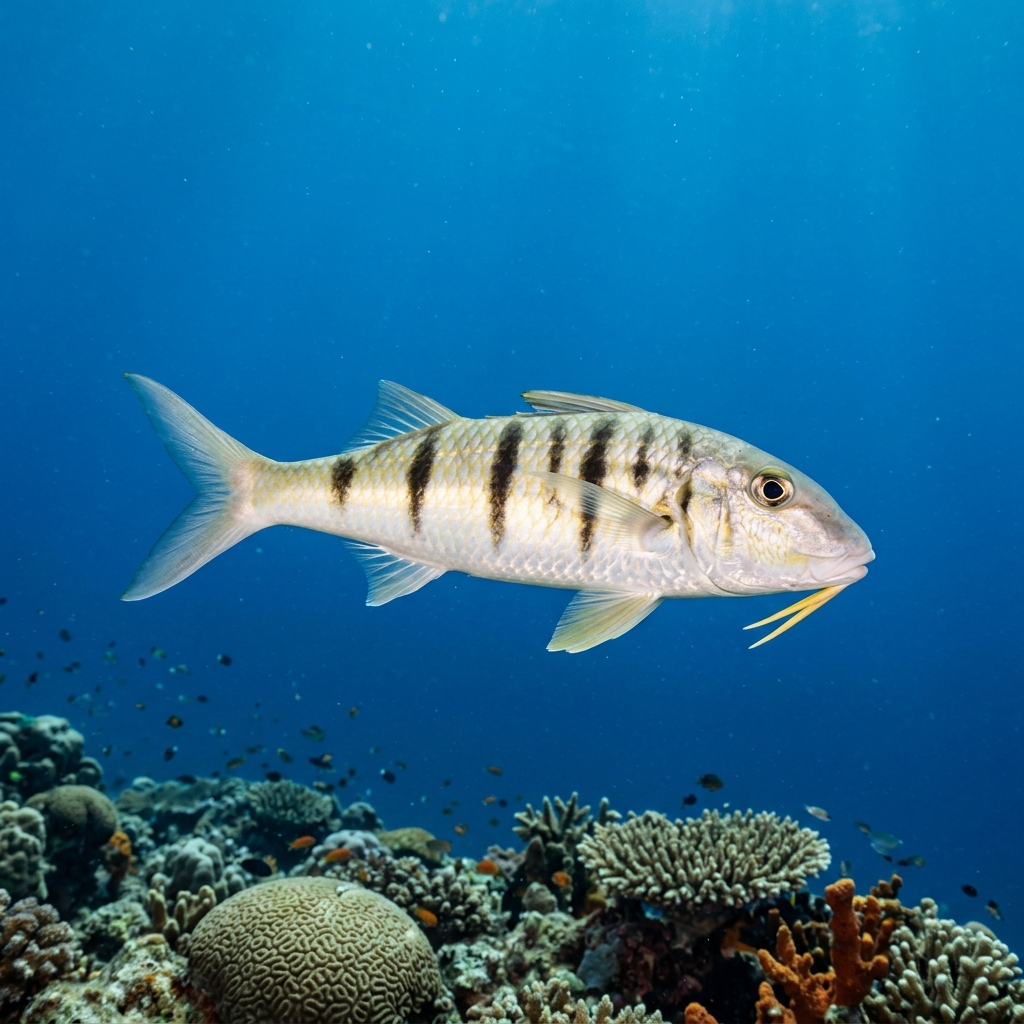
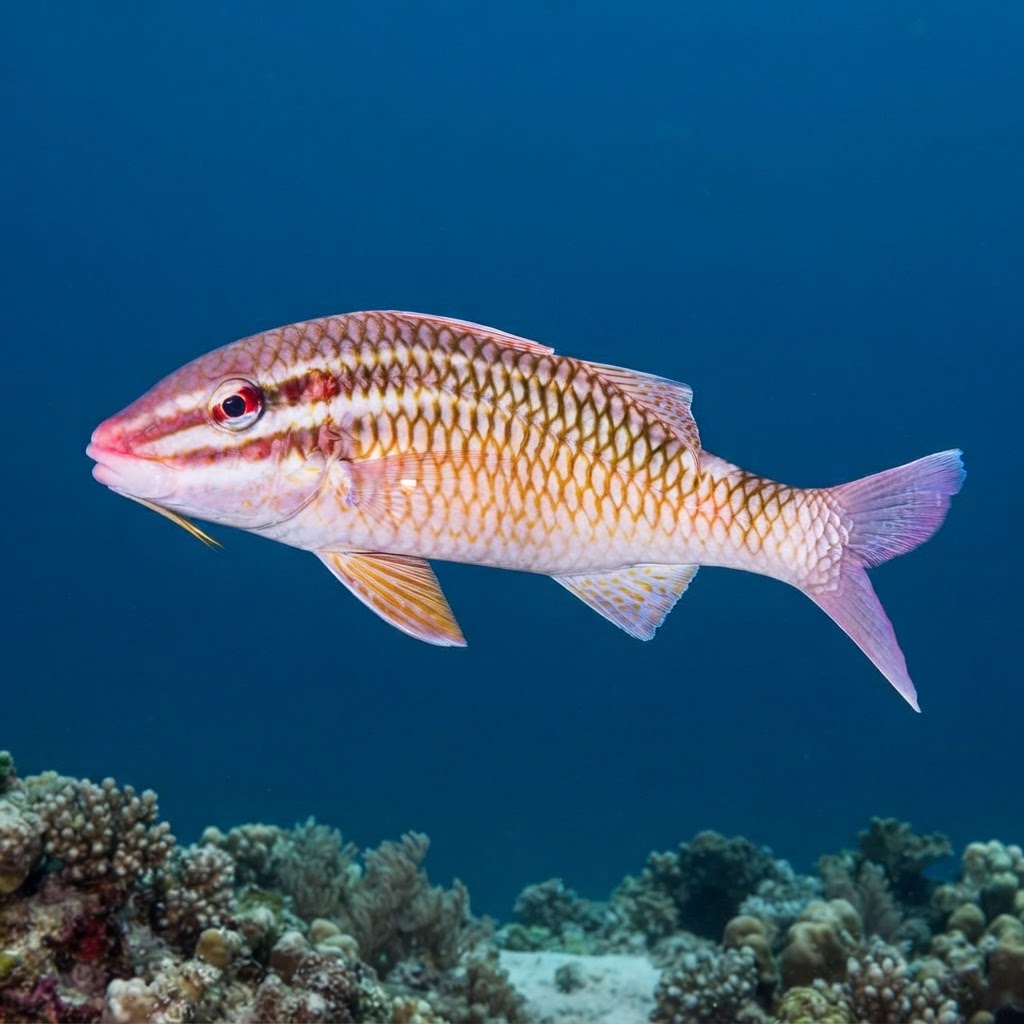
Look for a slim, reddish-grey to brownish body around 26 cm long, with a pale, whitish saddle-shaped patch across the upper back near the tail, the feature that gives this fish its name. Two long chin barbels (whisker-like feelers) are usually visible sweeping the sand as it searches for food. Colour can shift between a mottled reddish phase and a paler, blotchy phase, so the saddle mark is the more dependable clue than overall body tone.
Watch for it working close to the sand or rubble, poking its chin barbels into the substrate to flush out small invertebrates, often alone or loosely paired rather than in groups. It tends to keep moving along the reef base and bottom rather than hovering, and it's generally unbothered by divers who keep a bit of distance. Logged as uncommon at the sites where it turns up, so it's more of a nice find during a slow bottom scan than a fish you'll see on every dive.
Those chin barbels are loaded with chemical and touch sensors, letting the fish taste the sand for buried prey before it even digs, a foraging trick shared across the goatfish family.
No clear seasonal pattern shows up in the sightings, and its comfort range of roughly 24 to 29C covers reef temperatures on these sites for most of the year, so it's a year-round find rather than a seasonal target.
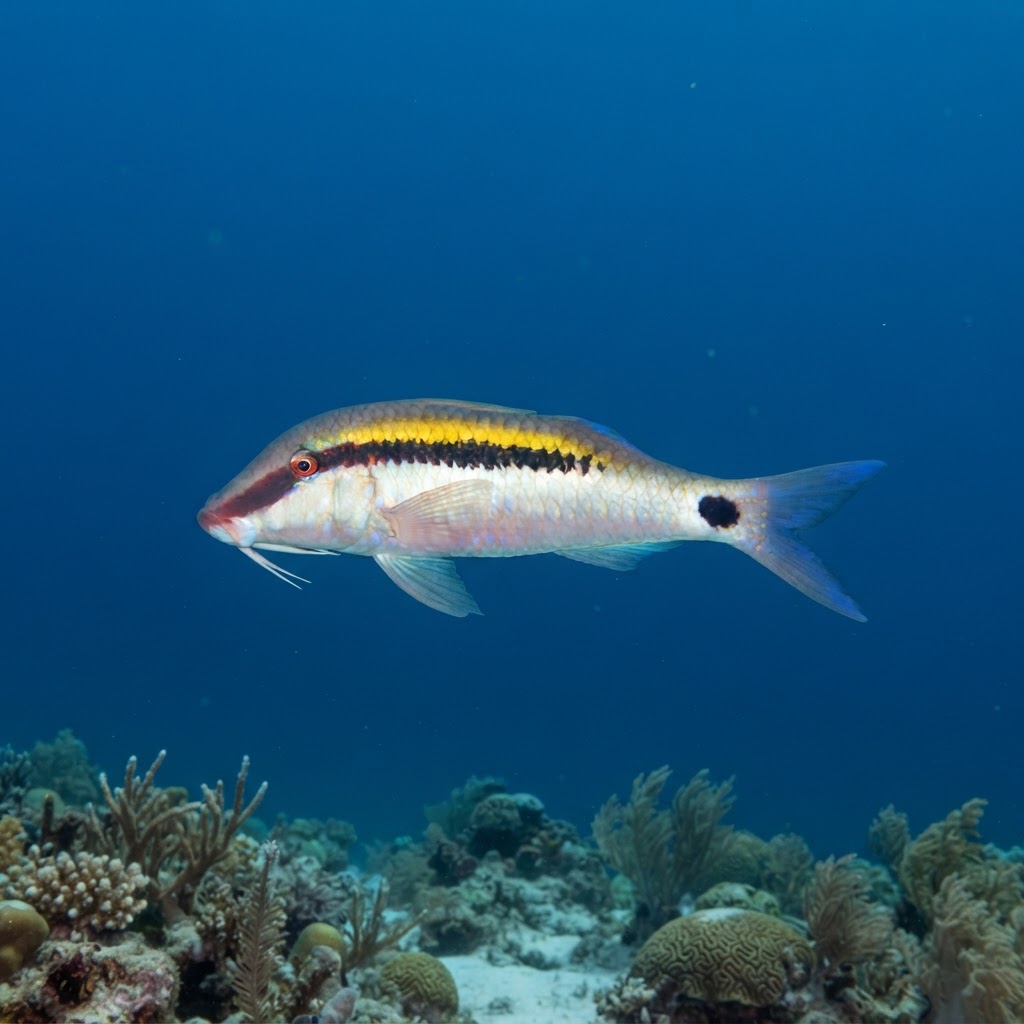
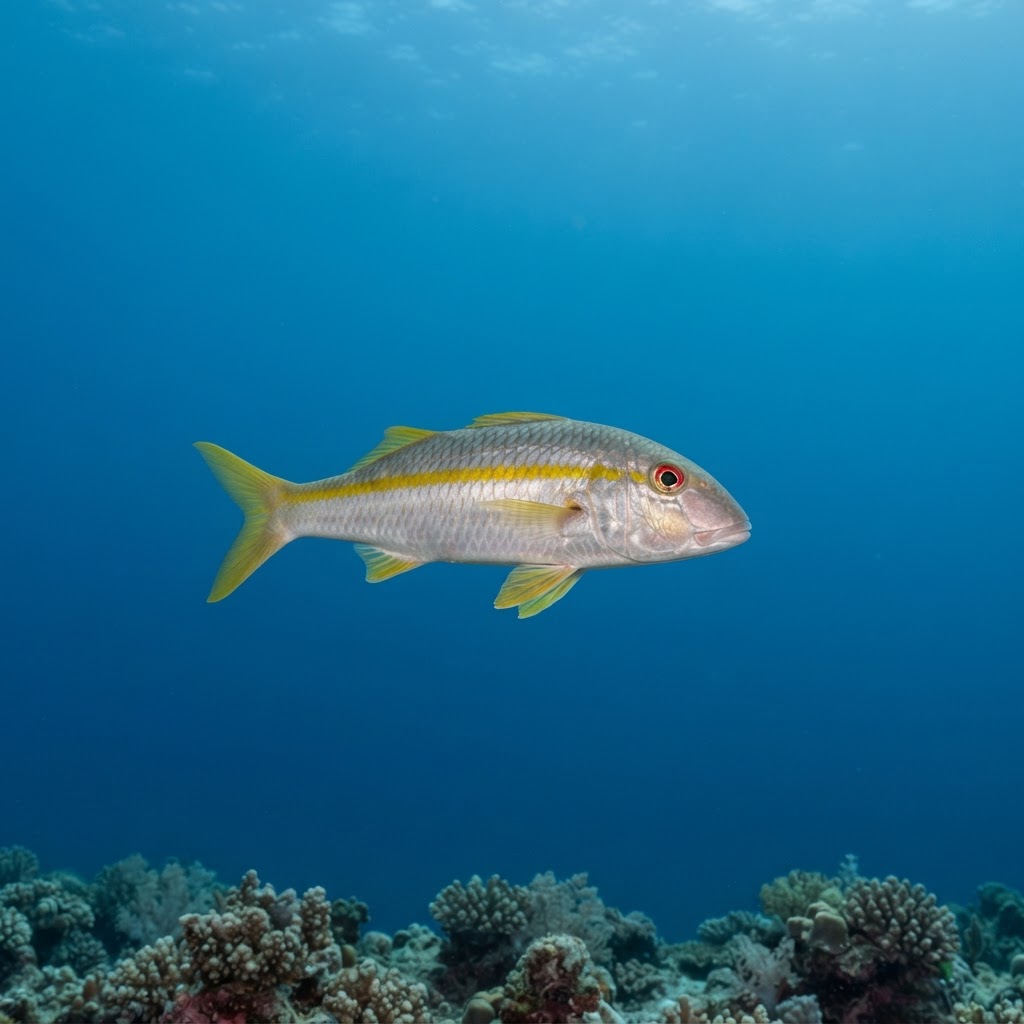
Reef neighbours a diver could mistake it for. Use the identification notes above to tell them apart.
Most consistently logged around Saint-Leu in Reunion, with further strong records through Okinawa and the Ryukyu Islands in Japan and Blue Bay in Mauritius. Divers also report it in Queensland, Australia, around Apra Harbor in Guam, and off Nouméa in New Caledonia, with occasional sightings in Norfolk Island and Taiwan.
Mapping where Whitesaddle Goatfish is logged…
Saint-Leu in Reunion has the strongest run of sightings, followed by Okinawa and the Ryukyu Islands in Japan and Blue Bay in Mauritius. Smaller numbers turn up in Queensland, Guam, and New Caledonia.
There's no strong seasonal pattern in the sightings, and warm reef water in the 24 to 29C range suits it year-round, so any month is a reasonable bet at the right sites.
Check for a reddish to brownish body around 26 cm with a pale saddle-shaped patch on the upper back near the tail. Long chin barbels used for foraging are another giveaway when visible.
They typically reach around 26 cm in length, a modest reef fish size that keeps them close to the sand and rubble rather than out in open water.
No, they're not considered a risk to divers. They forage quietly along the bottom and move off rather than react defensively if approached.
Site and sighting data is aggregated from diver logs, iNaturalist and GBIF. For taxonomy and conservation status:
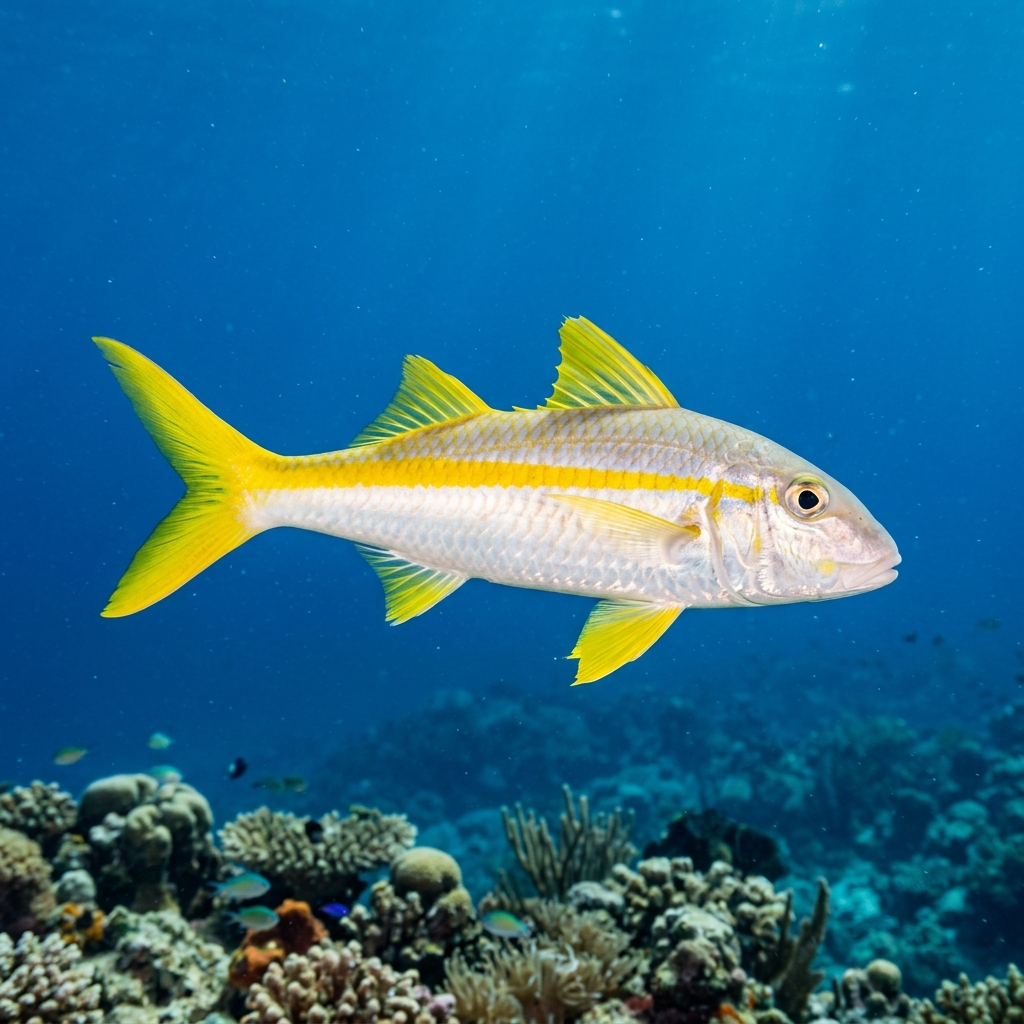
Yellowfin Goatfish
2,241 sites