Uraspis helvola
Deep-bodied jack seen off Galápagos and Palau's Rock Islands, in water from 14.5 to 26.8 C, mostly as an uncommon solo sighting.
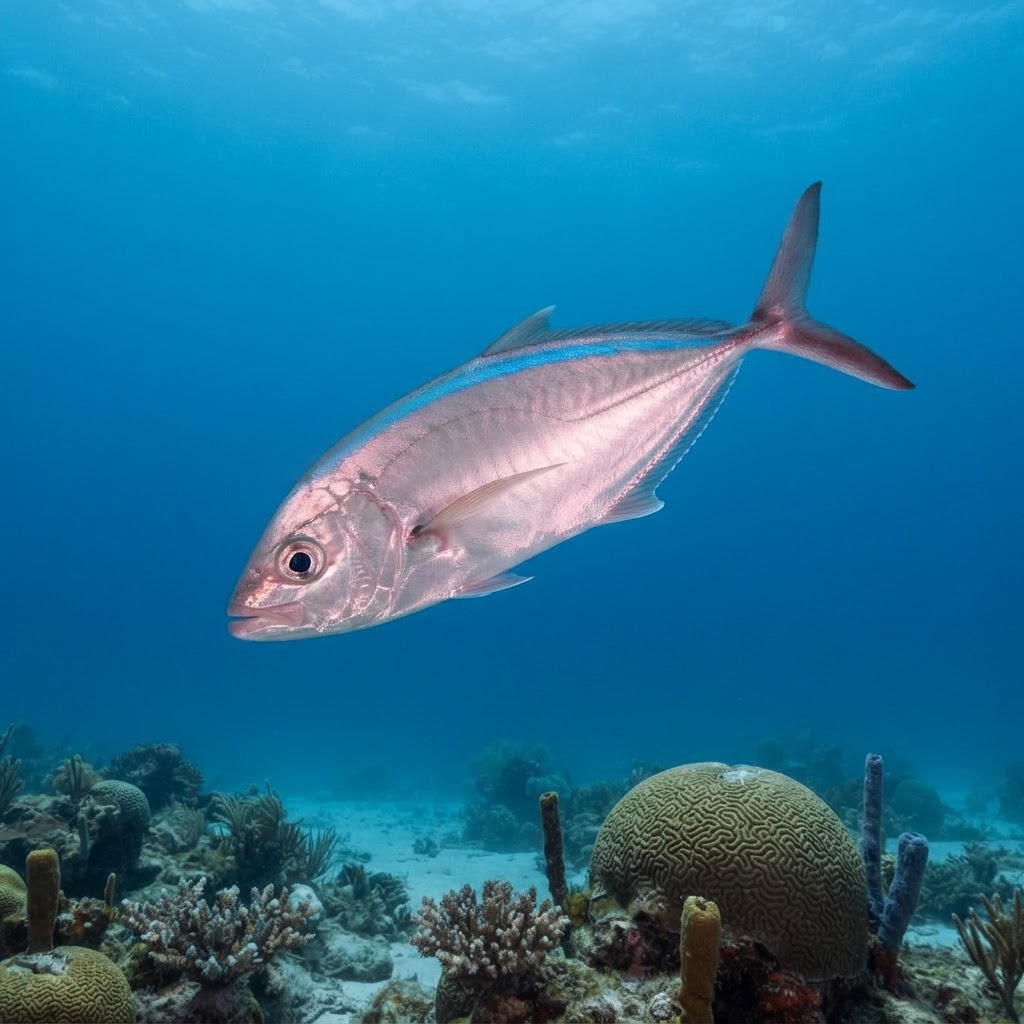
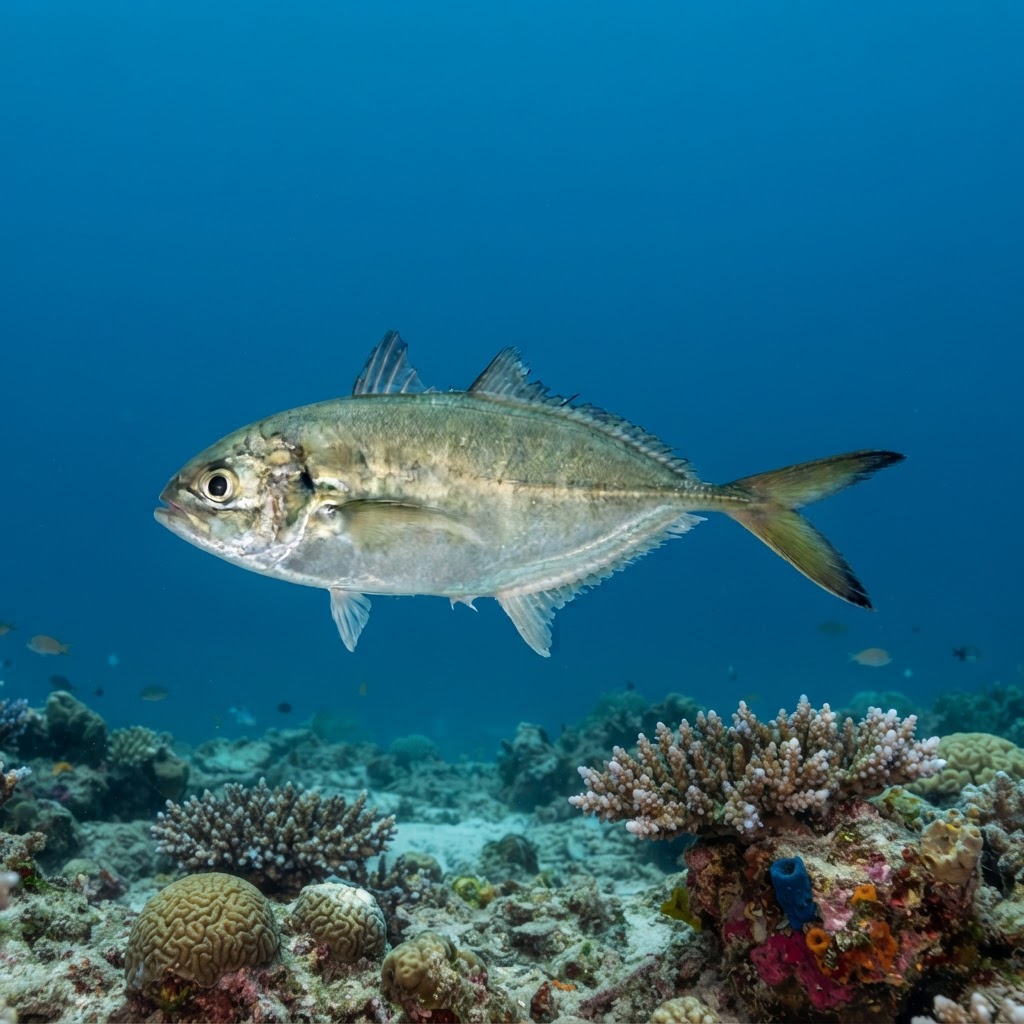
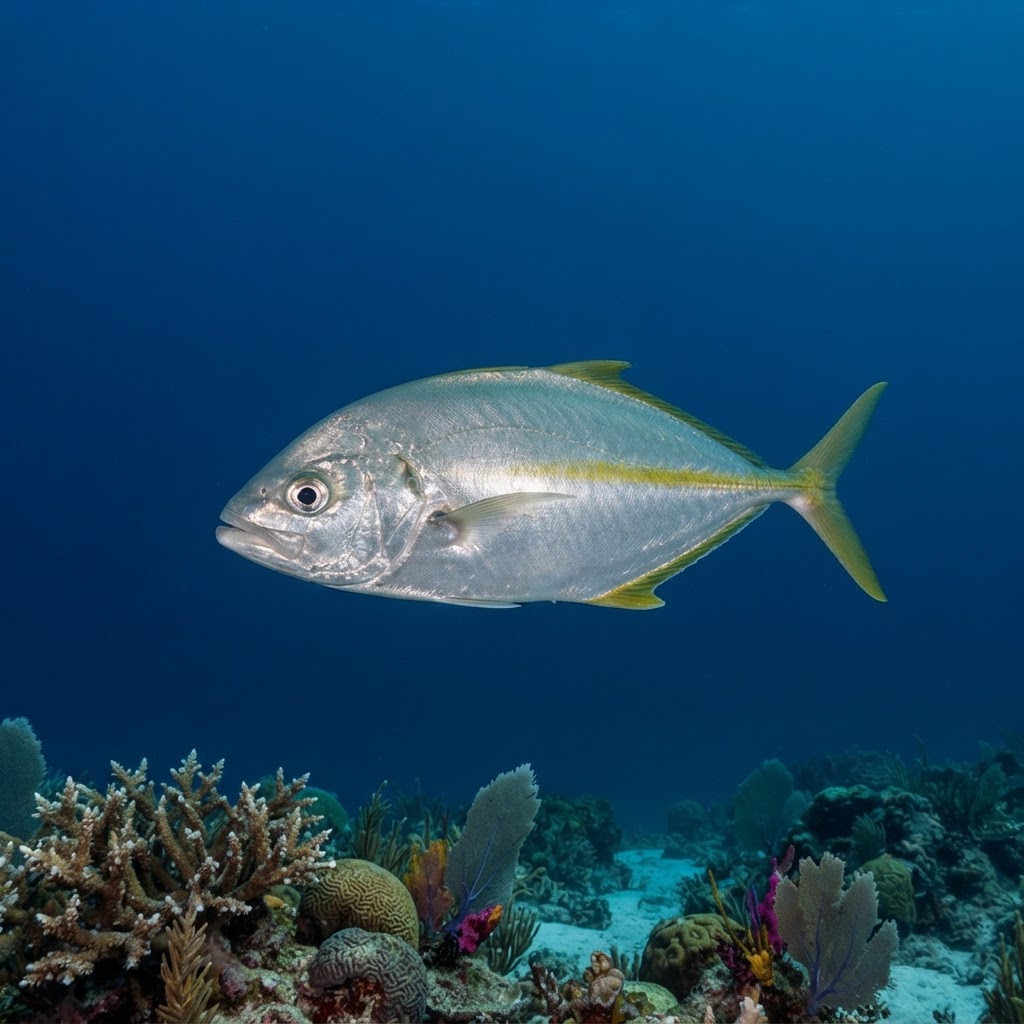
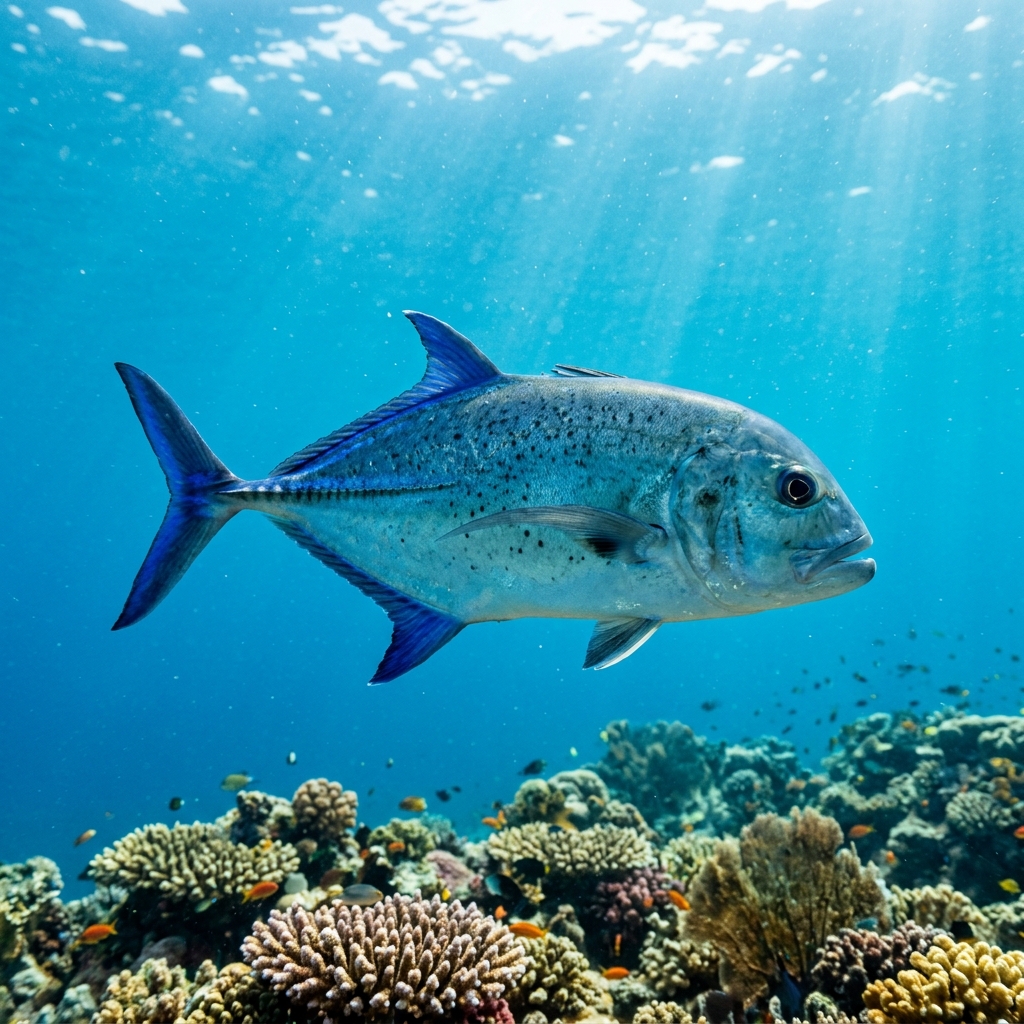
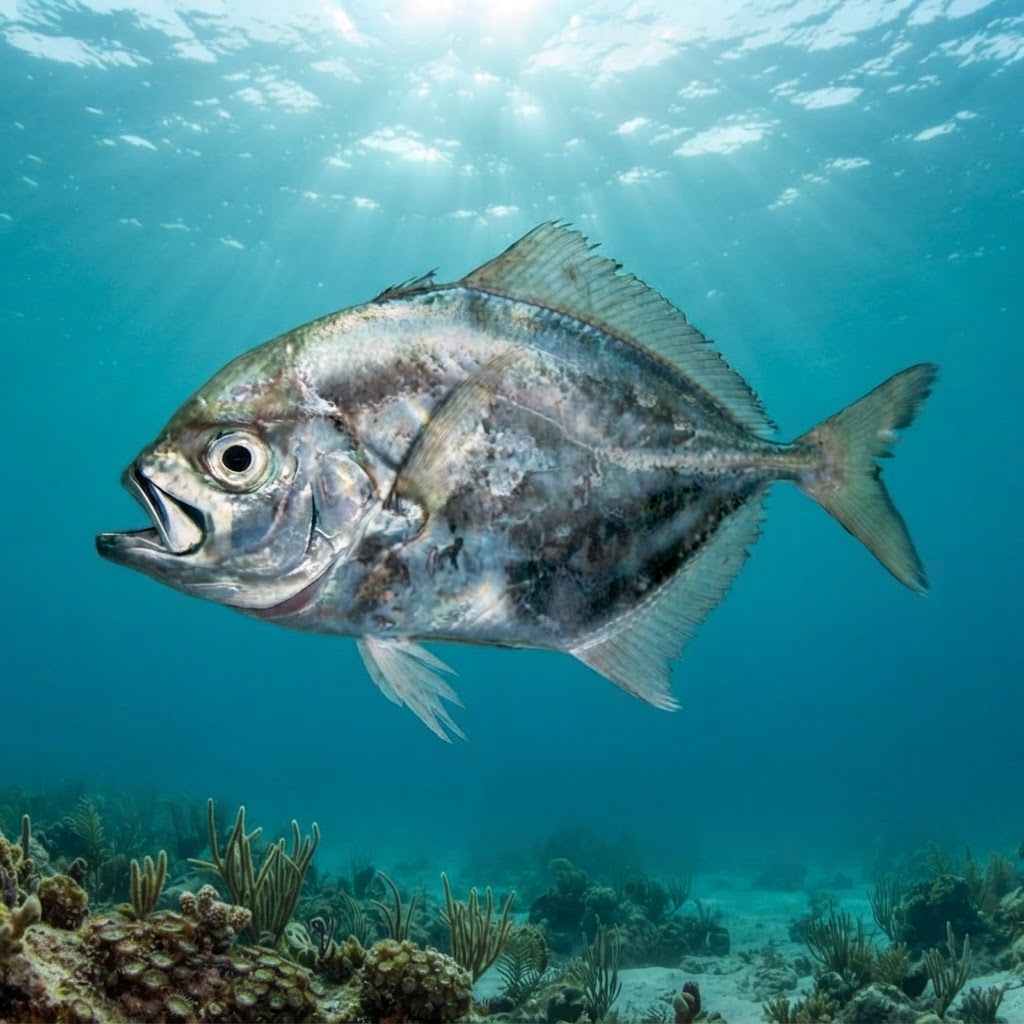
Deep, laterally flattened body with a steep forehead profile that makes it look almost humped compared to slimmer jacks. Colouring runs silver-grey to bronze with dusky fins, and the mouth interior shows the pale white lining that gives the species its name, though you usually need a close look to catch it. At 41 cm it sits mid-size for a jack, and it tends to hang alone or in small loose groups rather than tight schools.
Divers typically find it cruising alone or in small numbers along rocky reef structure and drop-offs rather than in the open water column favoured by bigger jack schools. It keeps a fairly relaxed distance from divers, neither bolting nor approaching, and seems equally likely to turn up on a morning or afternoon dive. Because it's uncommon to rare at most sites, most logged encounters are brief, single passes rather than extended interactions.
Its deep-water-lining common name comes from a mouth feature you'd only ever confirm with a very close, careful look, which is part of why it's an underreported and probably underrecognised jack on many reefs.
Recorded across a wide range from 14.5 to 26.8 C, which lines up with a year-round presence rather than a tight season. Sightings so far don't cluster in any particular months, so plan around the destination's general dive season rather than this species specifically.
Reef neighbours a diver could mistake it for. Use the identification notes above to tell them apart.
Most reliably logged around the Galápagos Islands in Ecuador and the Rock Islands of Palau, with an occasional sighting at Cocos Island in Costa Rica. Galápagos sites turn it up a bit more often, but even there it stays an uncommon find rather than a given, and Palau sightings run rarer still.
Mapping where Whitemouth Jack is logged…
The strongest sightings come from the Galápagos Islands in Ecuador, with a second population around Palau's Rock Islands. It's also been recorded at Cocos Island in Costa Rica, though less often.
There's no clear seasonal pattern in current sightings, and it's been recorded across a broad temperature range from 14.5 to 26.8 C. Treat it as a year-round possibility rather than something tied to a specific month.
Look for a deep, steep-fronted body shape rather than the sleeker profile of most jacks, in silver-grey to bronze tones with dusky fin edges. It's usually seen alone or in small numbers near rocky reef structure rather than schooling in open water.
They reach around 41 cm, a mid-sized jack that's noticeably deep-bodied for its length rather than long and torpedo-shaped.
No, they pose no danger to divers and are simply a reef fish to observe passing by.
Site and sighting data is aggregated from diver logs, iNaturalist and GBIF. For taxonomy and conservation status:
Bigeye Trevally
2,591 sites