Pseudocaranx dentex
Silvery schools cruise Tenerife and Lanzarote reefs year-round, comfortable in 15 to 26C water and easy to spot at depth.
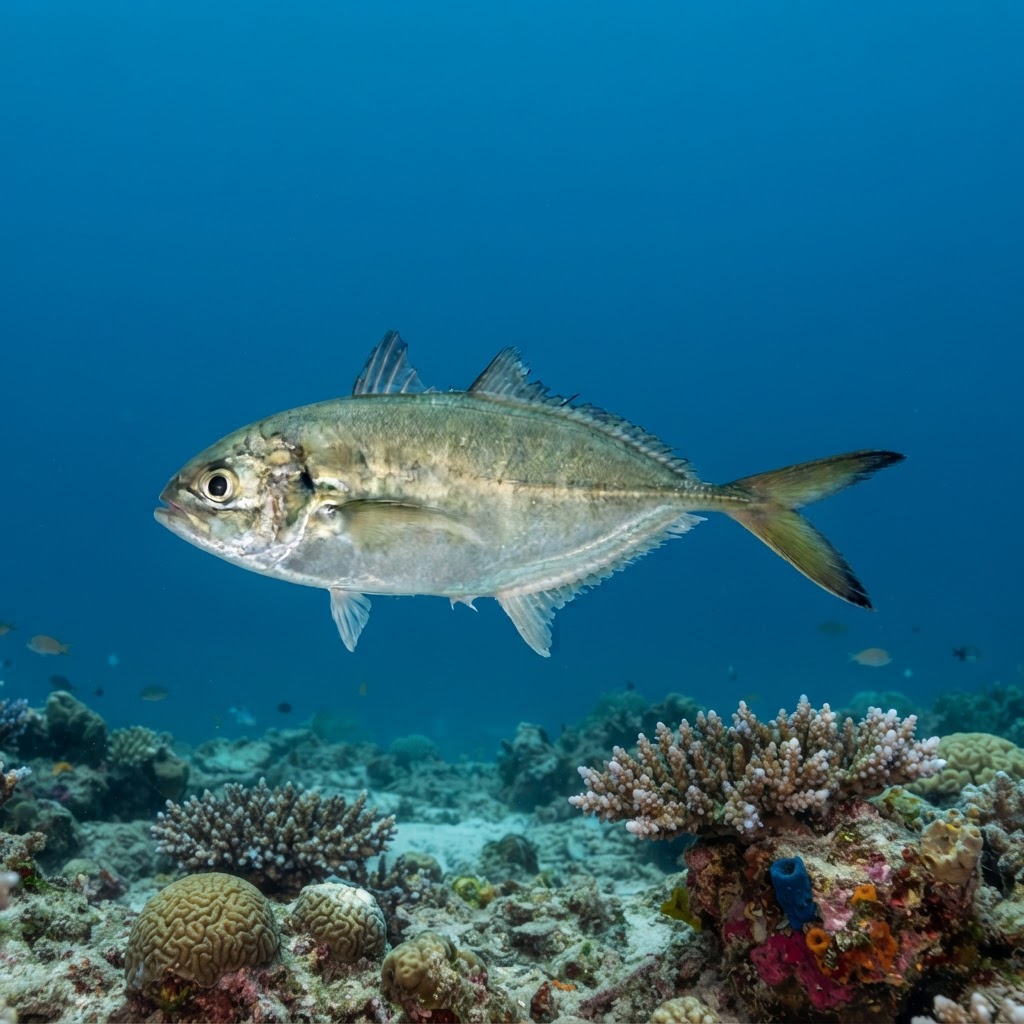
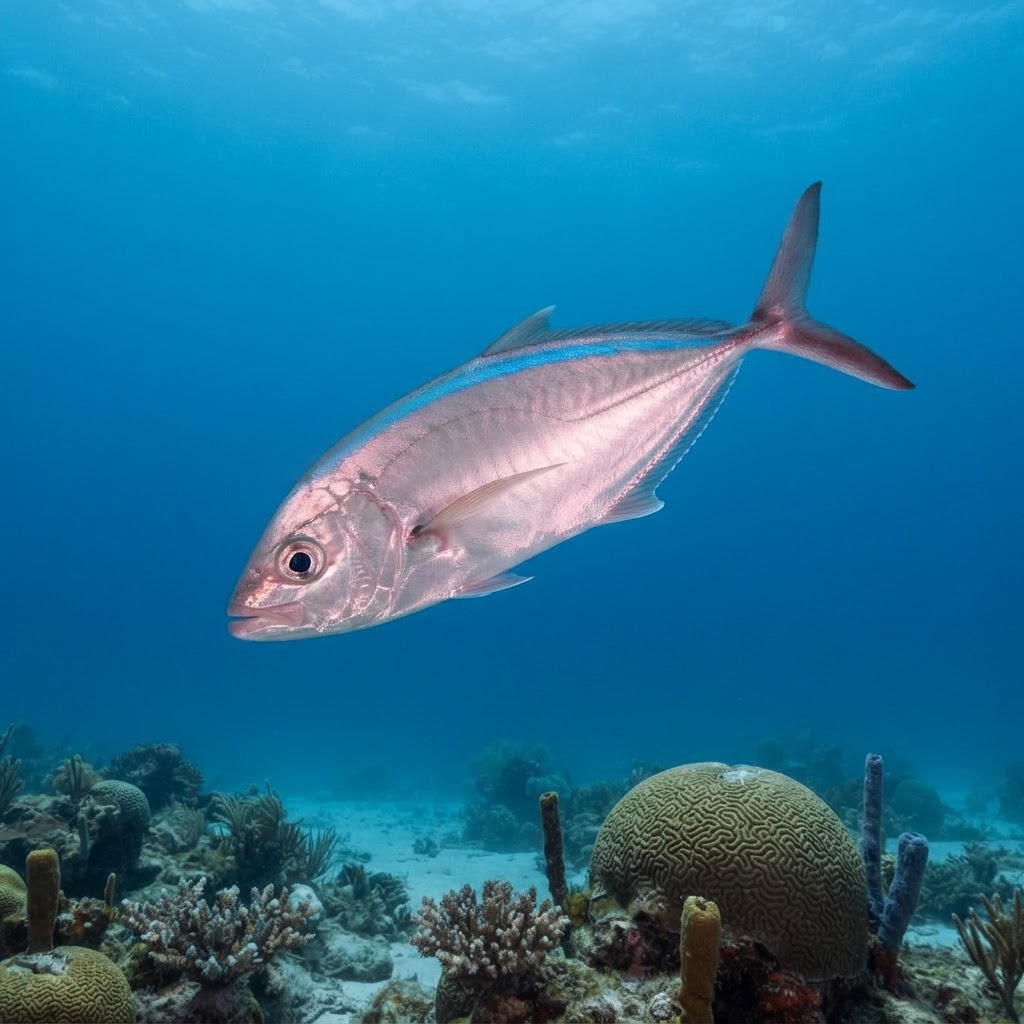
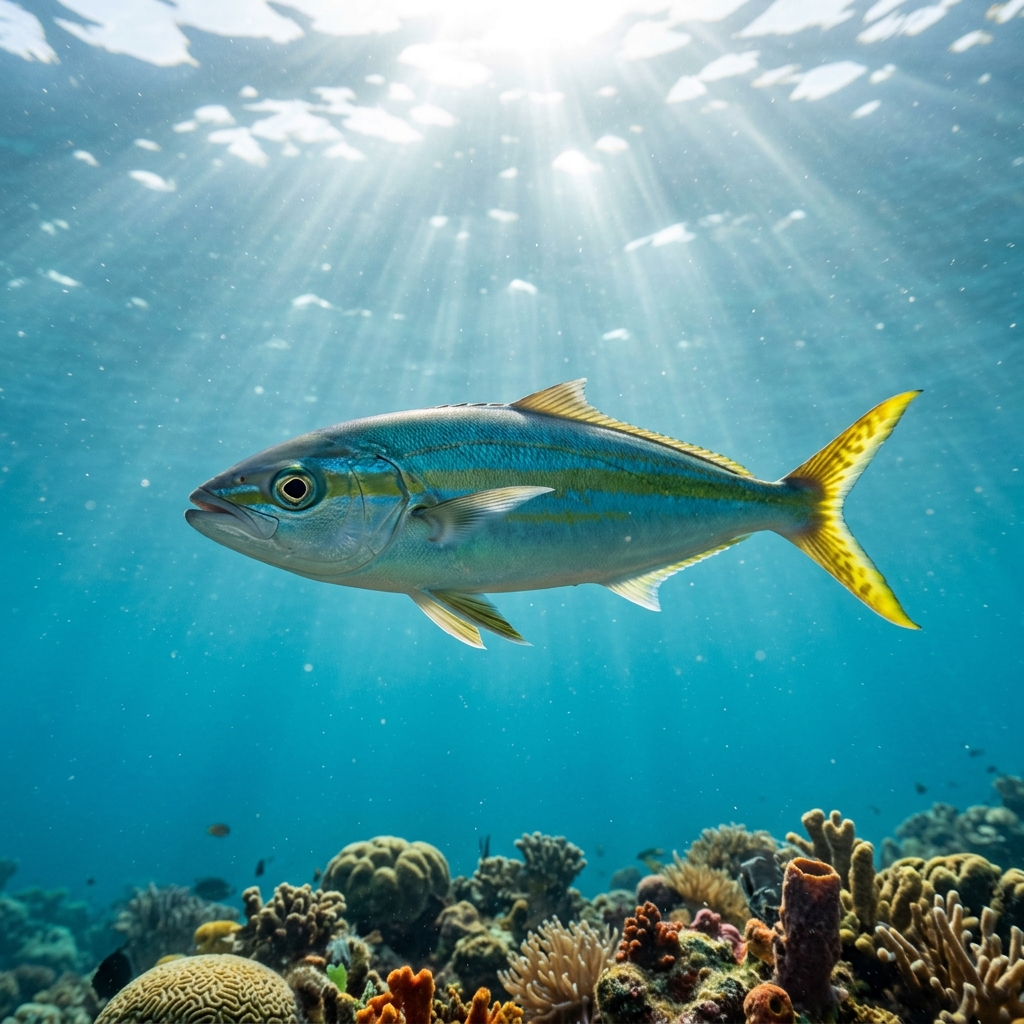
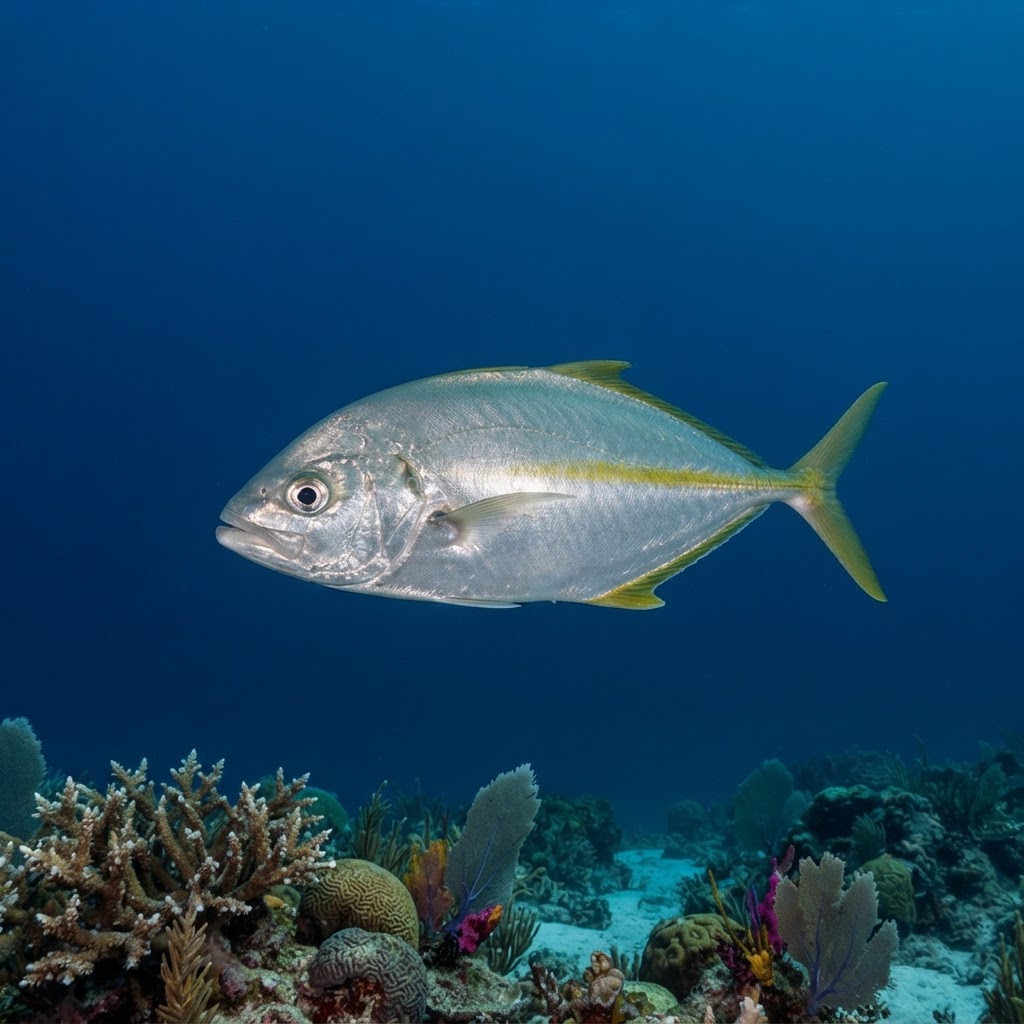
Deep-bodied and silvery with a slightly humped forehead and a strongly forked tail, white trevally often show a faint yellowish stripe along the flank in good light. At up to 85cm they read as a solid, compact jack rather than a slender runner, usually seen in loose groups holding just off the reef rather than tight against it.
Divers most often find white trevally hanging in loose, unhurried schools over reef structure and rocky slopes, sometimes well below recreational depths given how far this species ranges. They tend to keep a comfortable distance from divers rather than approach, cruising steadily rather than darting, and are as likely to appear mid-water as tight to the bottom.
Its depth range runs remarkably deep for a reef-associated jack, with records down past 200 metres, so the schools you see on a typical Canary Islands reef dive are only the shallow edge of a population that mostly lives well beyond diver range.
No clear seasonal peak shows in the data, and the recorded temperature range of 15.3 to 25.9C spans the Canary Islands' mild winters and warmer summers alike, so it's a fair year-round target there. Treat any dive trip to Tenerife, Lanzarote or the Azores as a reasonable shot at this species regardless of month.
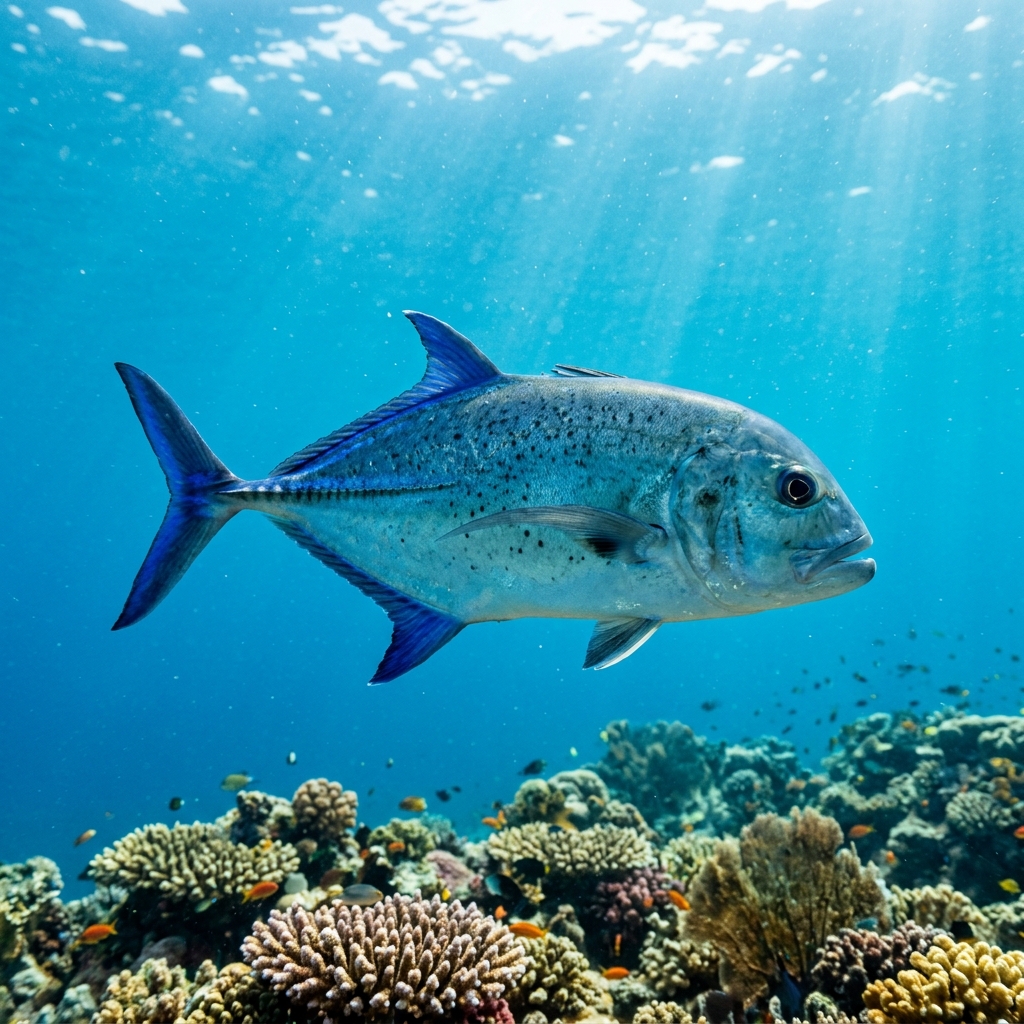
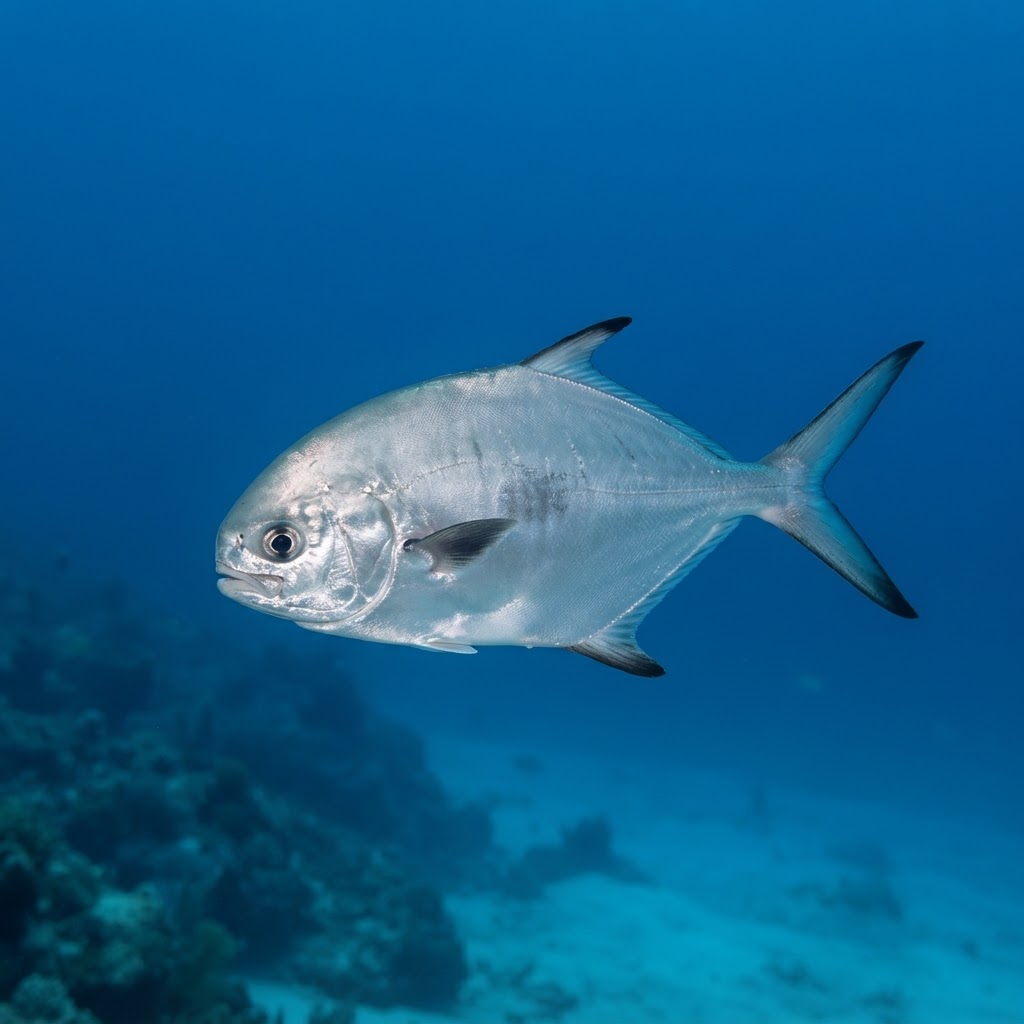
Reef neighbours a diver could mistake it for. Use the identification notes above to tell them apart.
This is very much a Canary Islands fish, most reliably logged around Tenerife, Lanzarote, Gran Canaria and Fuerteventura, with strong numbers also off El Hierro. Beyond Spain's Atlantic islands it turns up consistently in the Azores and Madeira, with smaller but dependable populations around Cape Verde's São Vicente and along Turkey's coast.
Mapping where White Trevally is logged…
The Canary Islands are the stronghold, especially Tenerife, Lanzarote, Gran Canaria and Fuerteventura, with the Azores and Madeira also reliable. Smaller populations show up off Cape Verde and Turkey.
There's no strong season in the sighting data, so it's considered a year-round species in the Canary Islands and Azores, where water temperature stays within its comfortable 15 to 26C range.
Look for a deep, silvery, slightly humped-forehead body with a strongly forked tail, often loosely schooling off the reef rather than tucked against it. A faint yellowish flank stripe can show in clear light.
They reach around 85cm, making them a solidly built, medium-large jack rather than a slender baitfish-type species.
No, they're not considered dangerous to divers and typically keep a comfortable distance rather than approach.
Site and sighting data is aggregated from diver logs, iNaturalist and GBIF. For taxonomy and conservation status:
Bigeye Trevally
2,591 sites