Verconia norba
An uncommon nudibranch find in Luzon, Philippines, on warm reefs between 23.4 and 29.4C, spotted year-round by patient divers.
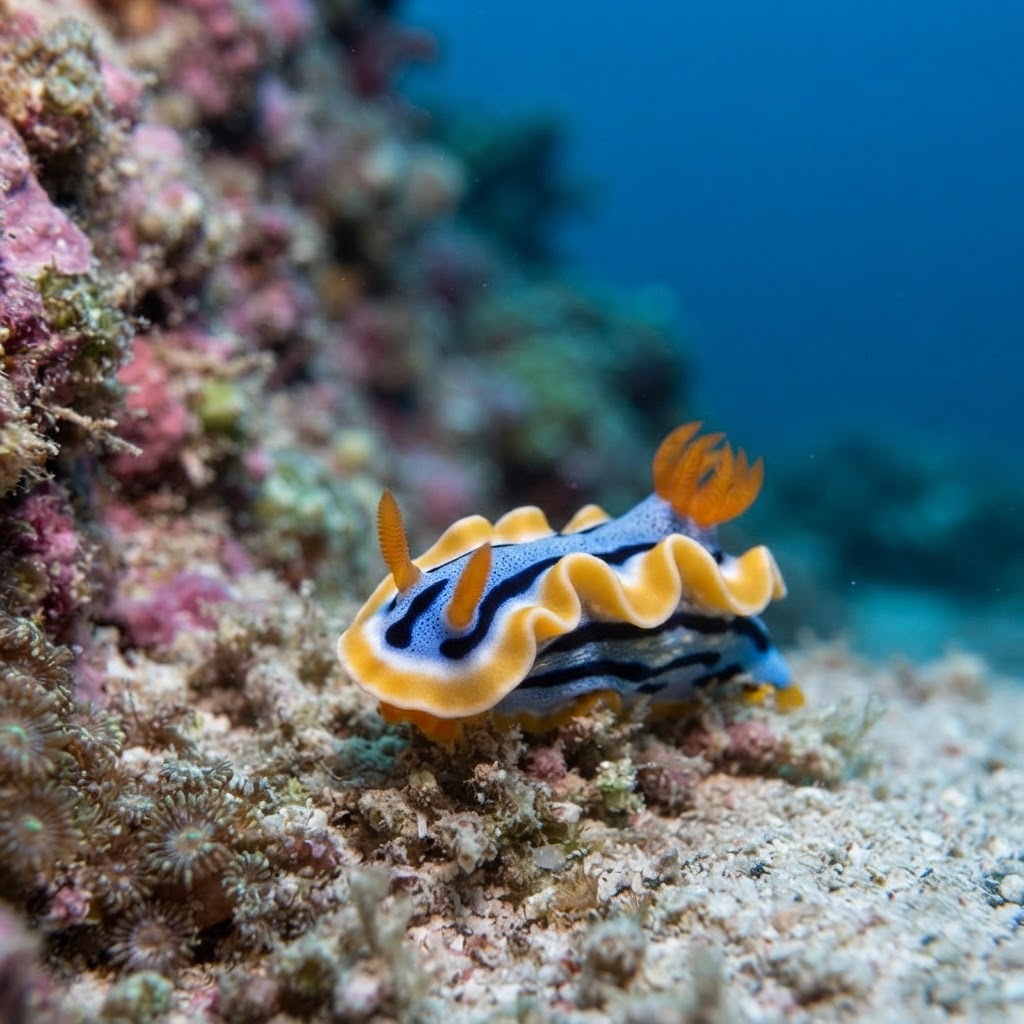
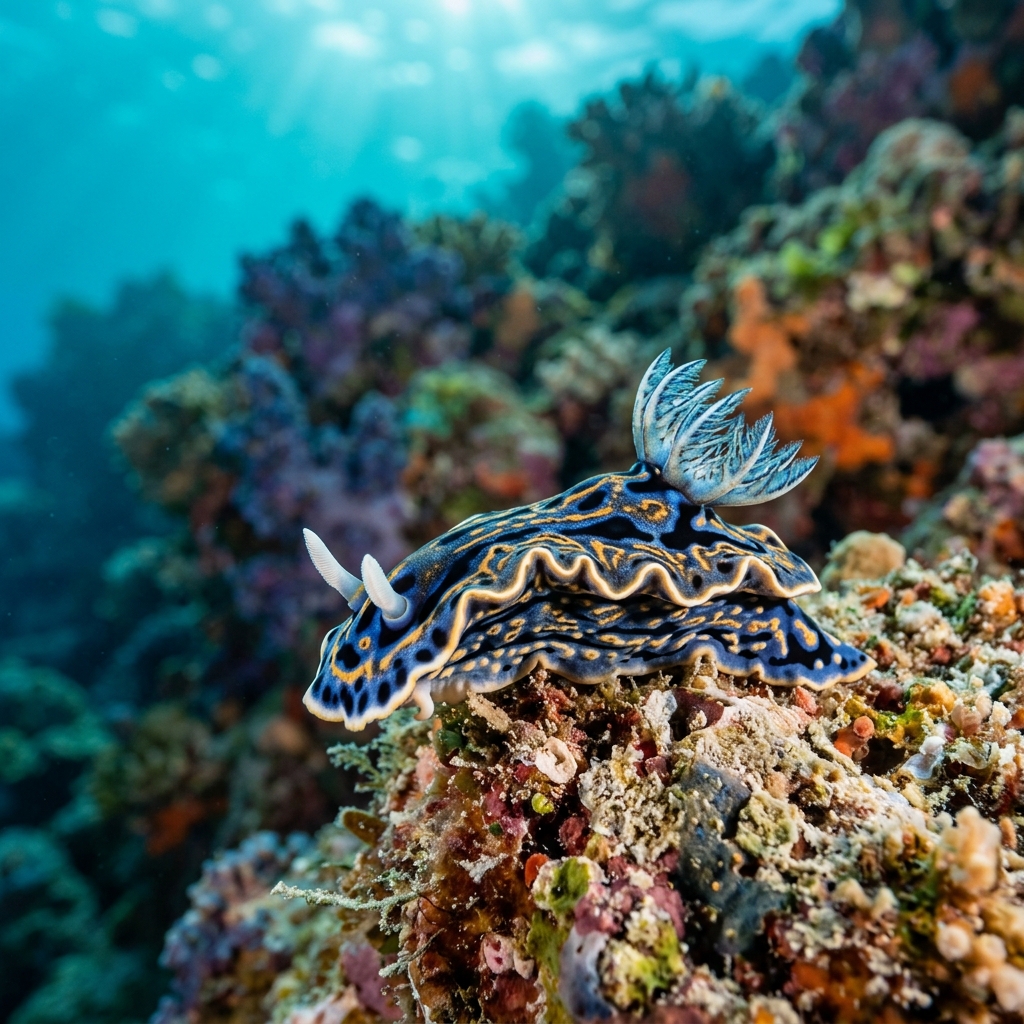
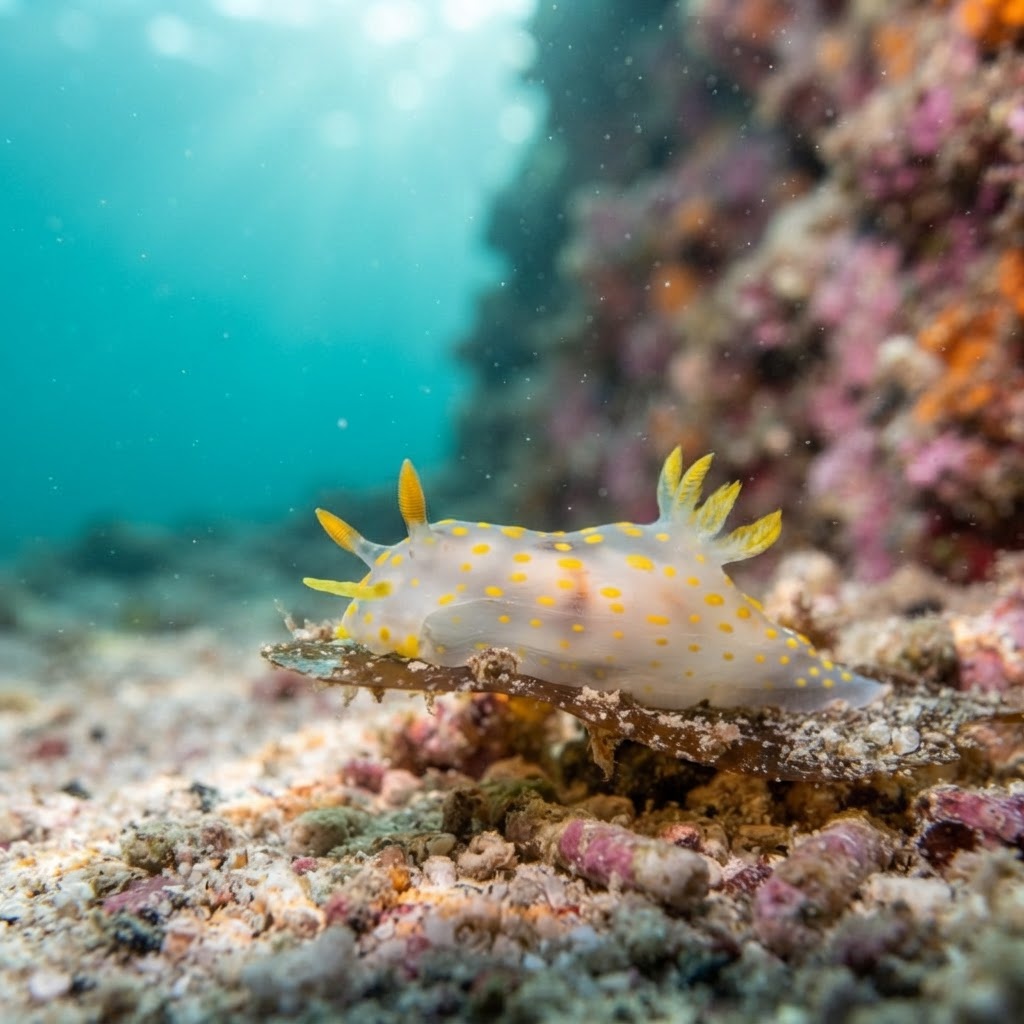
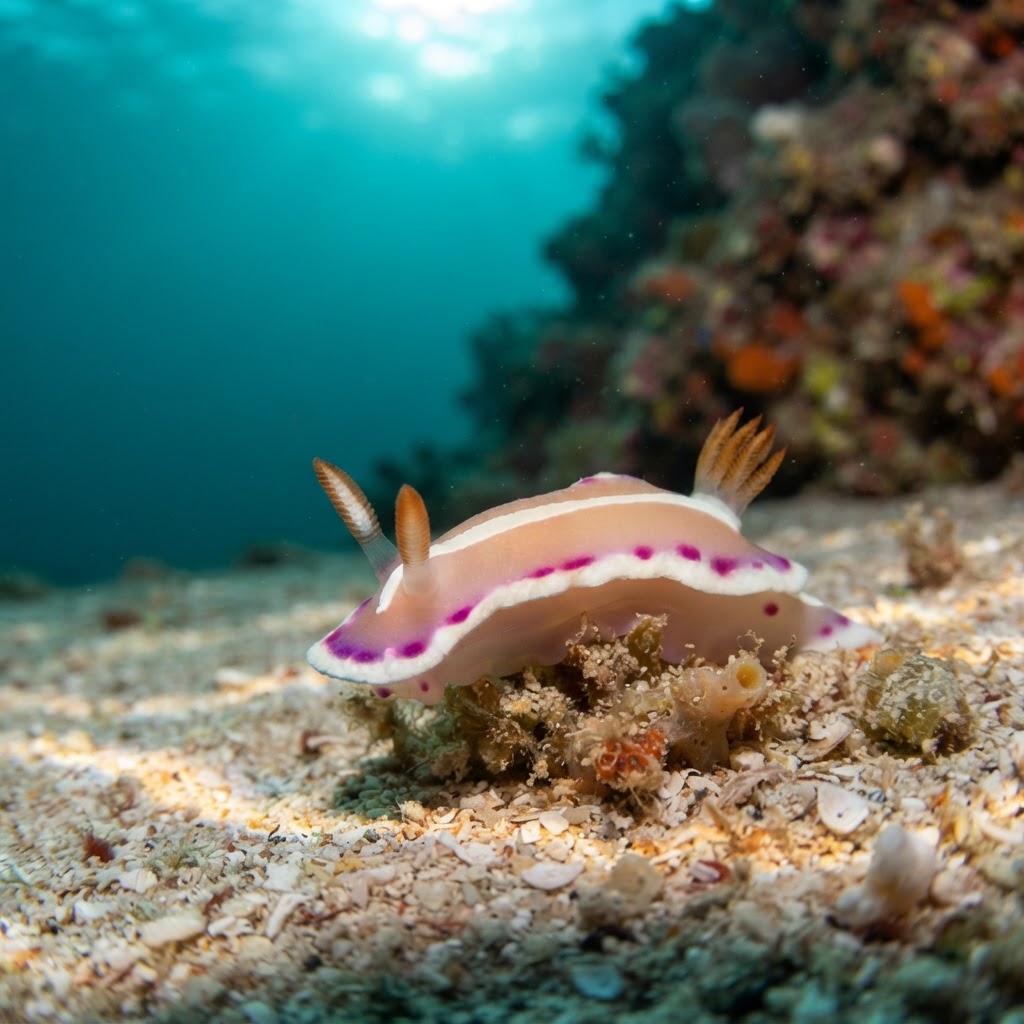
A small nudibranch (sea slug) identified mainly by the pale white stripe running down the centre of its back against a darker mantle. Like other chromodorids, it has a soft-bodied, oval shape with a frilly gill cluster (rhinophores excluded) at the rear and short sensory tentacles up front. Size in the water is small, so divers usually spot it moving slowly across rock or coral rubble rather than swimming.
Like most dorid nudibranchs, it moves at a crawl over hard substrate and sponge-covered rock, grazing as it goes rather than reacting to divers. Expect to find it during slow, close-focus searches on a wall or rubble patch rather than out in the open water column. It shows no defensive display or fast escape response, so a calm, patient look is the best way to appreciate the stripe pattern.
As a member of the Chromodorididae, it almost certainly feeds on sponges and stores chemical compounds from that diet in its skin as a defence against predators, the same trick that lets its relatives flaunt such bold colours without needing to hide.
No clear seasonal pattern shows up in the sighting data, and with a comfortable range of 23.4 to 29.4C it likely stays active on Luzon's reefs year-round. Plan around good visibility and calm conditions rather than a particular month.
Reef neighbours a diver could mistake it for. Use the identification notes above to tell them apart.
Currently logged from Luzon in the Philippines, making this the one confirmed spot for this species on divers' radar. If you're chasing it specifically, Luzon's muck and reef sites are the known starting point until more sightings turn up elsewhere.
Mapping where White-stripe Rainbow Dorid is logged…
The only confirmed sightings so far come from Luzon in the Philippines. It's an uncommon find even there, so treat any encounter as a bonus rather than a guarantee on a muck or reef dive.
There's no detected season in the sighting data, and it tolerates a wide warm-water range of 23.4 to 29.4C, so it's reasonable to look for it on any dive in Luzon through the year.
Look for a small, slow-moving nudibranch with a single pale white stripe running down the middle of its back. Check the overall body shape and gill cluster against similar chromodorids nearby, since colour alone can be misleading in this family.
No. It poses no threat to divers and is safe to observe closely without any risk of sting or bite.
As a chromodorid, it likely feeds on sponges and repurposes chemicals from that diet as a built-in defence, letting it wear bright markings openly instead of hiding from predators.
Site and sighting data is aggregated from diver logs, iNaturalist and GBIF. For taxonomy and conservation status:
Blue Dragon
3,163 sites