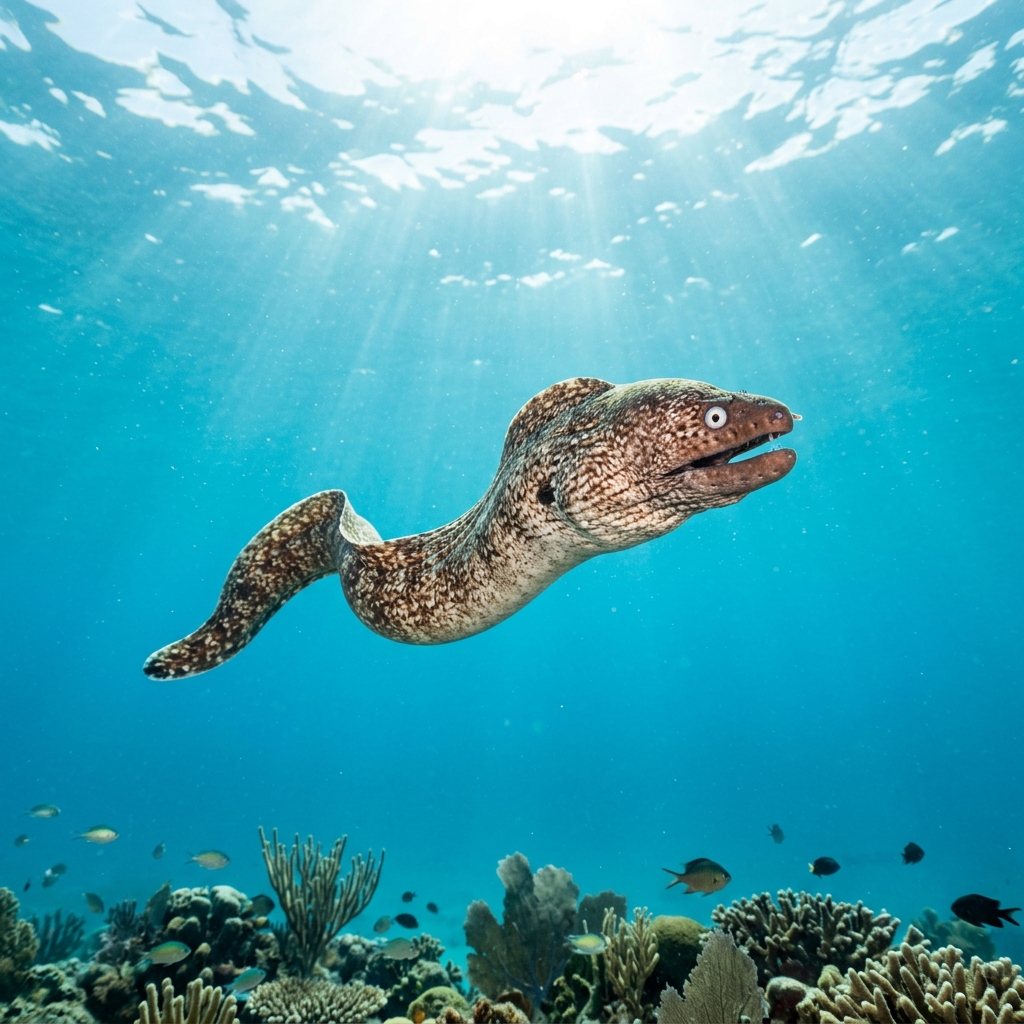
Gymnothorax thyrsoideus
Spot the White Eyed Moray across the Philippines, Indonesia and Malaysia. Know what to look for and when to dive for best sightings in the Visayas.
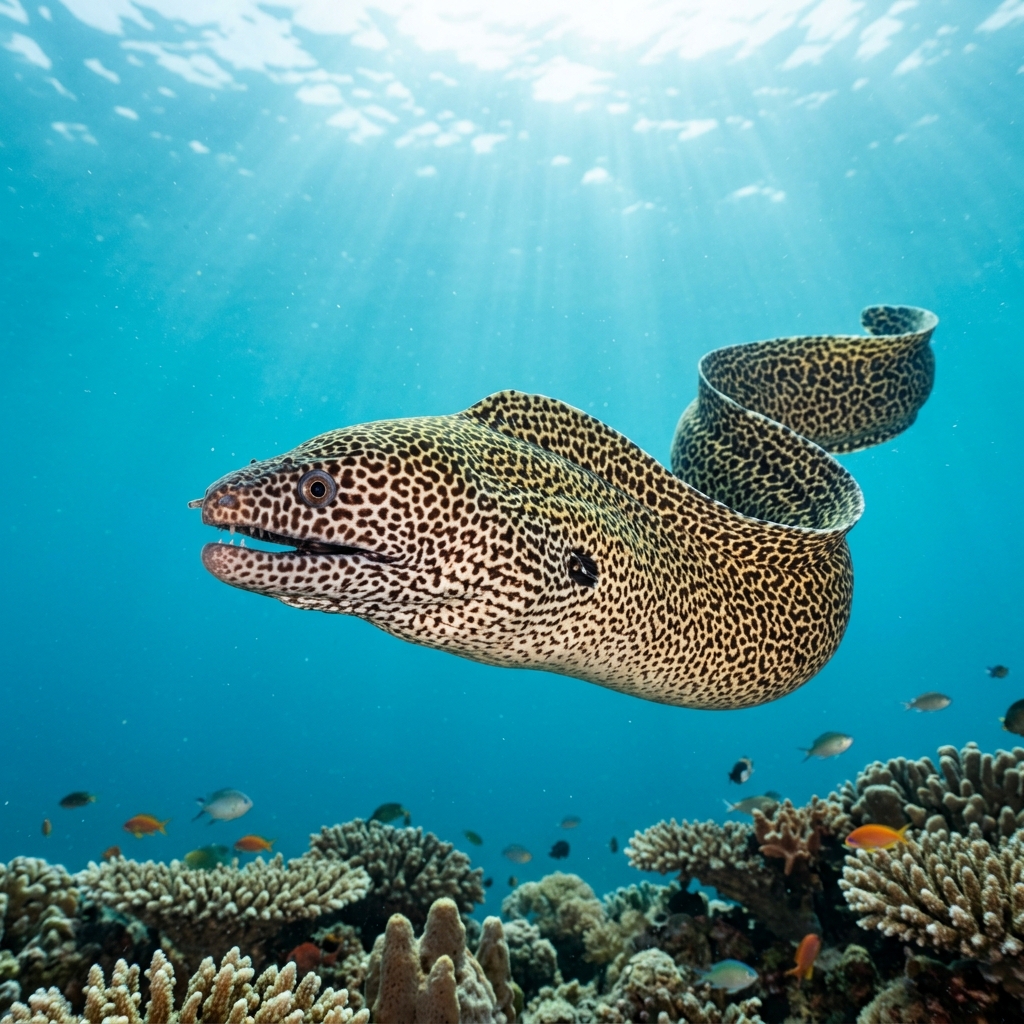
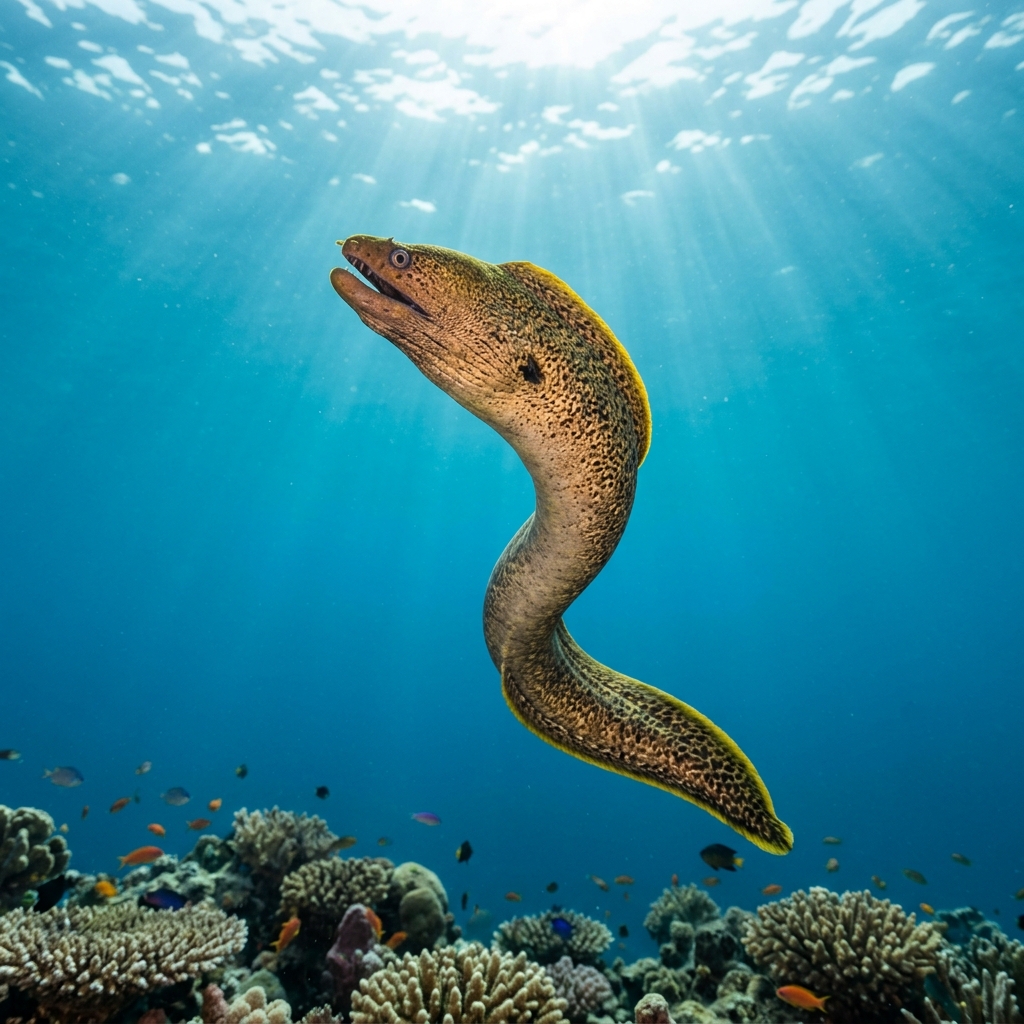
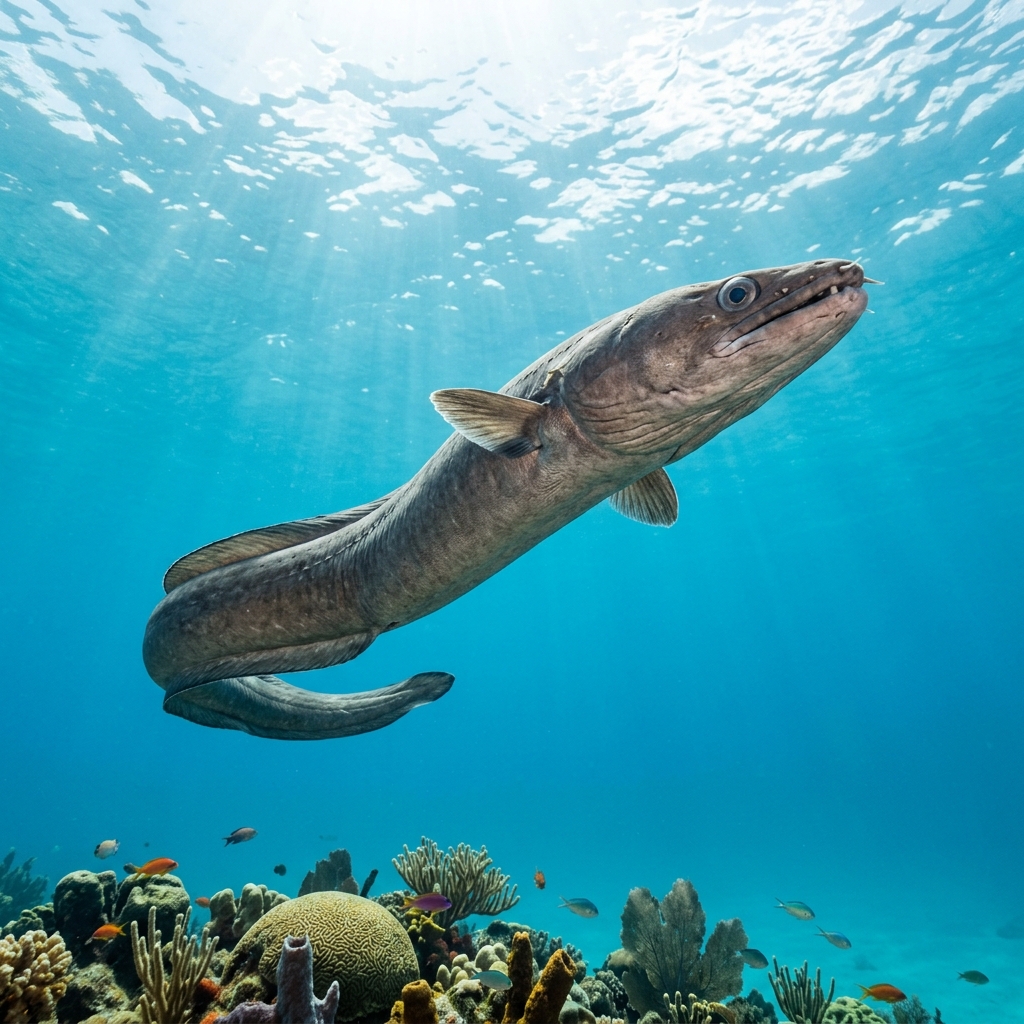
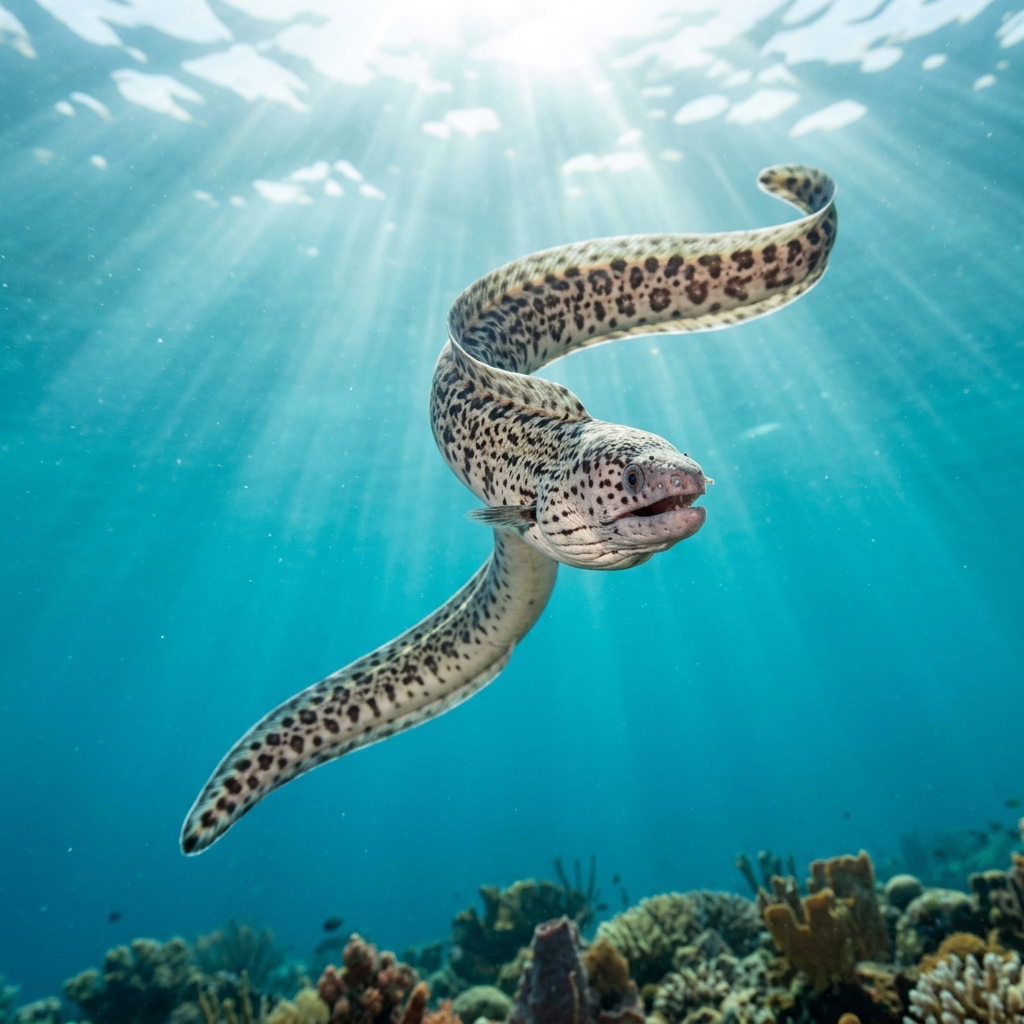
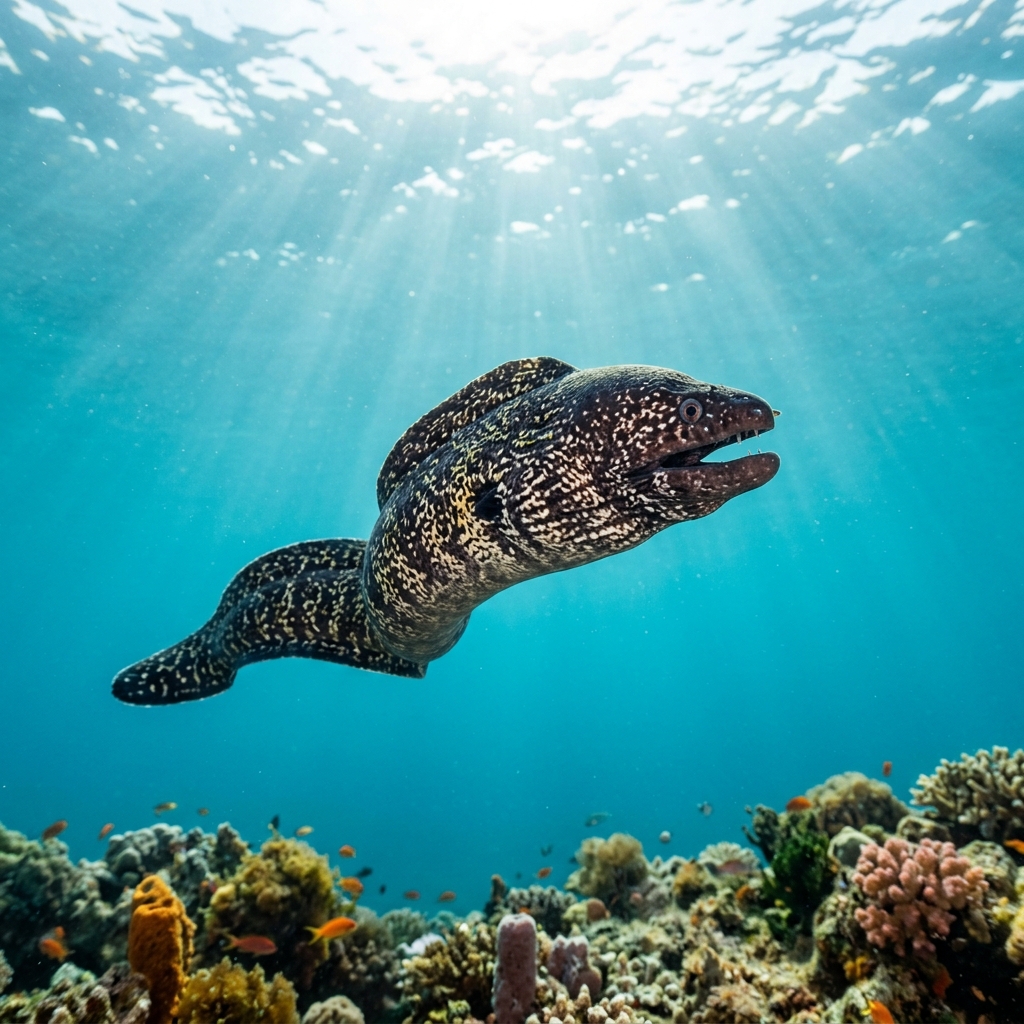
A slender, pale cream to yellowish-brown moray reaching around 50 cm, peppered with fine dark spots or speckles across the body. The feature that names it is the conspicuously white iris, which stands out clearly against the eye when you get close. Look also for a relatively uniform, lightly mottled pattern without bold blotches or contrasting bands. At reef depth it can look washed-out and plain compared to more boldly patterned morays, so that white eye is your best field mark.
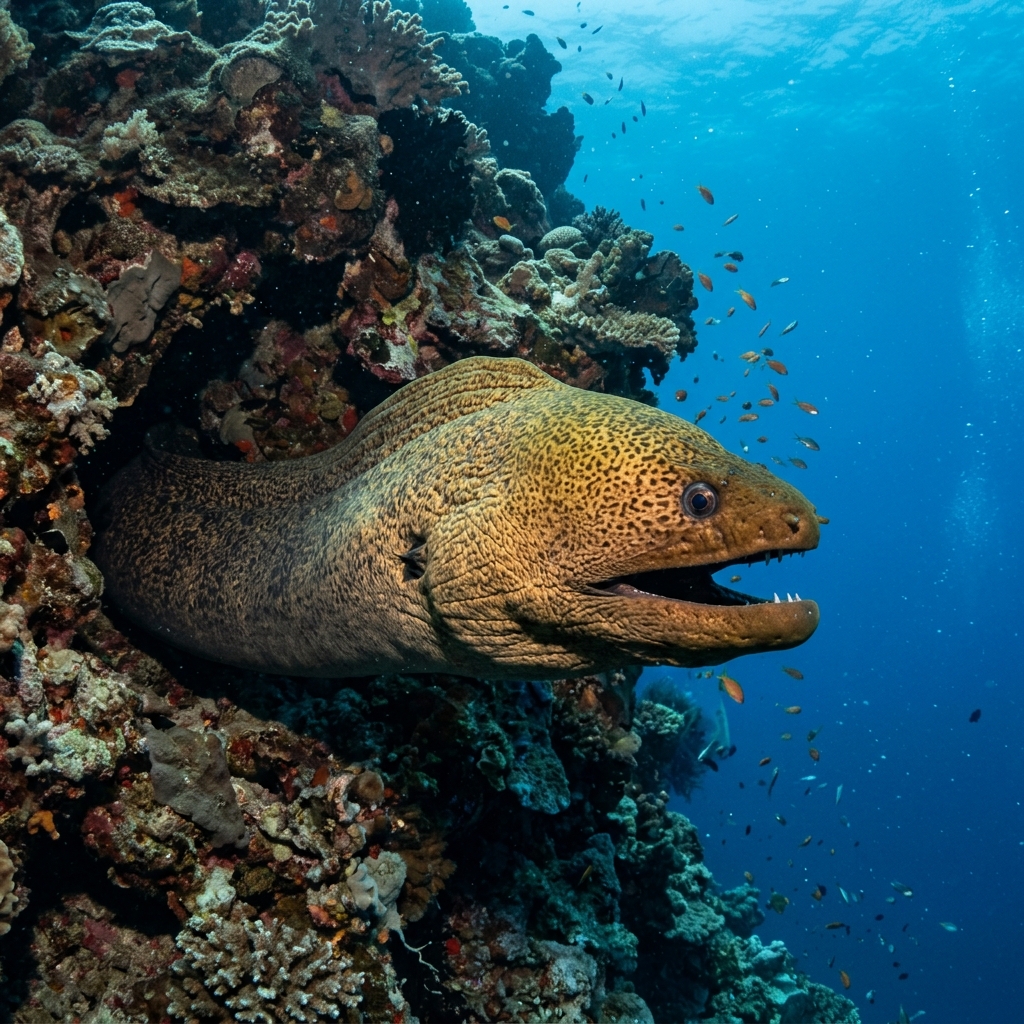
Like most morays, it spends the day wedged into reef crevices or coral rubble with just its head showing, slowly working its jaw as it breathes through its gills rather than gulping air. At night it becomes more active, hunting small fish and crustaceans along the reef. Most divers report it as indifferent to observation provided they keep a respectful distance and avoid poking a torch into its retreat.
That constant open-and-close jaw movement is not aggression; morays pump water over their gills this way because they lack the opercular (gill-cover) flap most fish use to breathe. It looks threatening but is purely respiratory.
In Northern Hemisphere destinations like the Philippines and Thailand, sightings concentrate between November and March. Southern Hemisphere sites such as Queensland show records across December through September, suggesting near year-round presence there within the species' comfortable water-temperature range of roughly 25 to 29 °C.
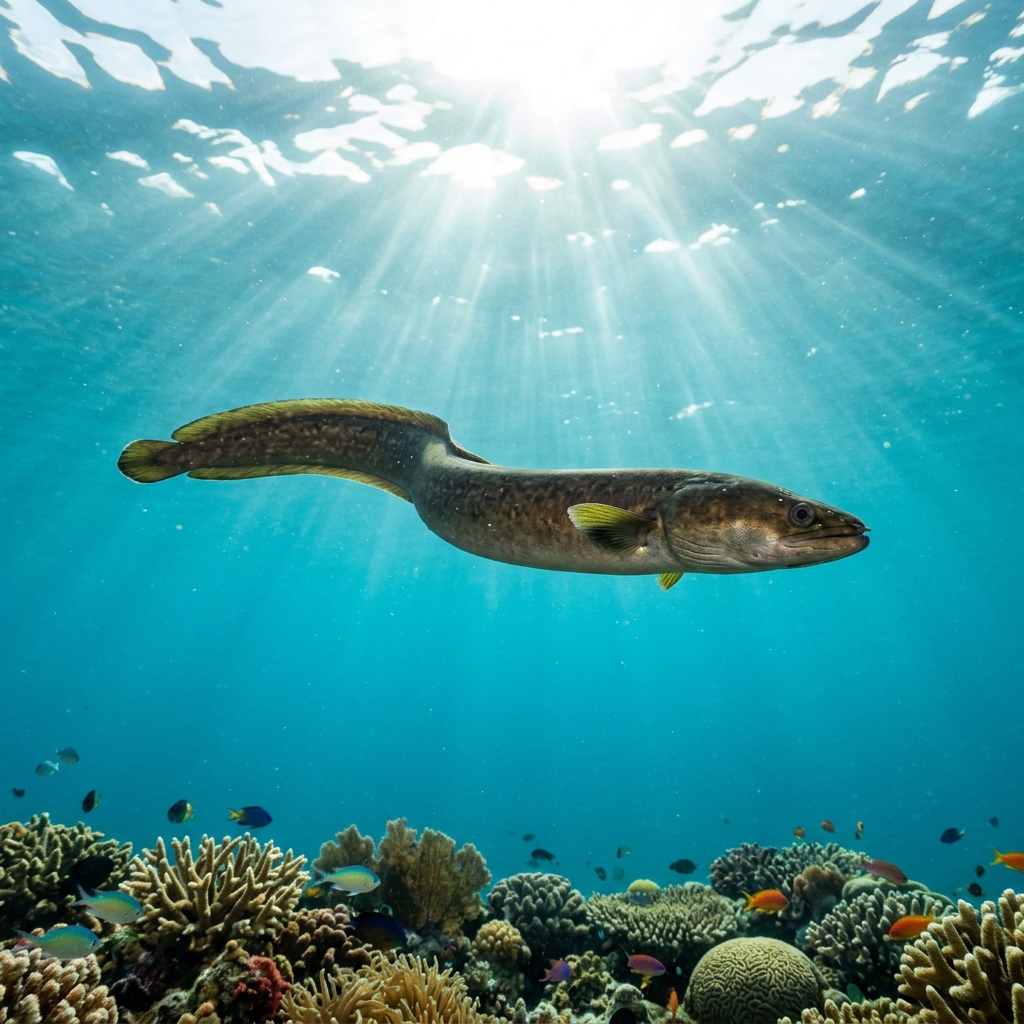
Reef neighbours a diver could mistake it for. Use the identification notes above to tell them apart.
Most consistently logged across the Philippines, Indonesia, and Malaysia, with the Visayas (Central, East and North) and Luzon leading the count by a wide margin. Strong populations are also recorded in Bali, Lombok and Java in Indonesia, the Perhentian and Redang islands of Malaysia, and Queensland in Australia. Thailand's Phuket and Phi Phi islands round out the reliable spots for Southeast Asian divers.
Mapping where White Eyed Moray is logged…
The species is most widely logged in the Philippines, particularly across the Visayas and Luzon, followed by Bali and Sulawesi in Indonesia and the Perhentian and Redang islands of Malaysia. Queensland in Australia also has solid records. It has been observed across more than two dozen countries in the Indo-Pacific region.
In the Philippines and Thailand, November through March is when sightings peak. In Queensland and other Southern Hemisphere sites, records span December to September. The species favours warm reef water between about 25 and 29 °C, so it is present in tropical destinations for much of the year.
Look for a pale cream to yellowish-brown moray around 50 cm long with fine dark speckles and, most importantly, a clearly white iris. That white eye is the key field mark separating it from similarly plain morays. The body pattern is fairly uniform without bold bands or large blotches.
They are a small to medium moray, typically reaching around 50 to 51 cm in length. This makes them noticeably slender and compact compared to large species like the Giant Moray, so they fit into tighter reef crevices.
No. White Eyed Morays are not considered dangerous. They are shy reef dwellers that will retreat rather than confront a diver. As with any moray, avoid reaching into crevices where one might be resting; they can bite defensively if they feel cornered, but unprovoked aggression is not a feature of this species.
Sighting frequency across logged dive sites rates it as uncommon at most locations, with a smaller number of sites where it appears regularly. It is a reef-associated moray found from the shallows down to about 30 m, so patient divers searching crevices and coral rubble on night dives give themselves the best chance.
Site and sighting data is aggregated from diver logs, iNaturalist and GBIF. For taxonomy and conservation status:
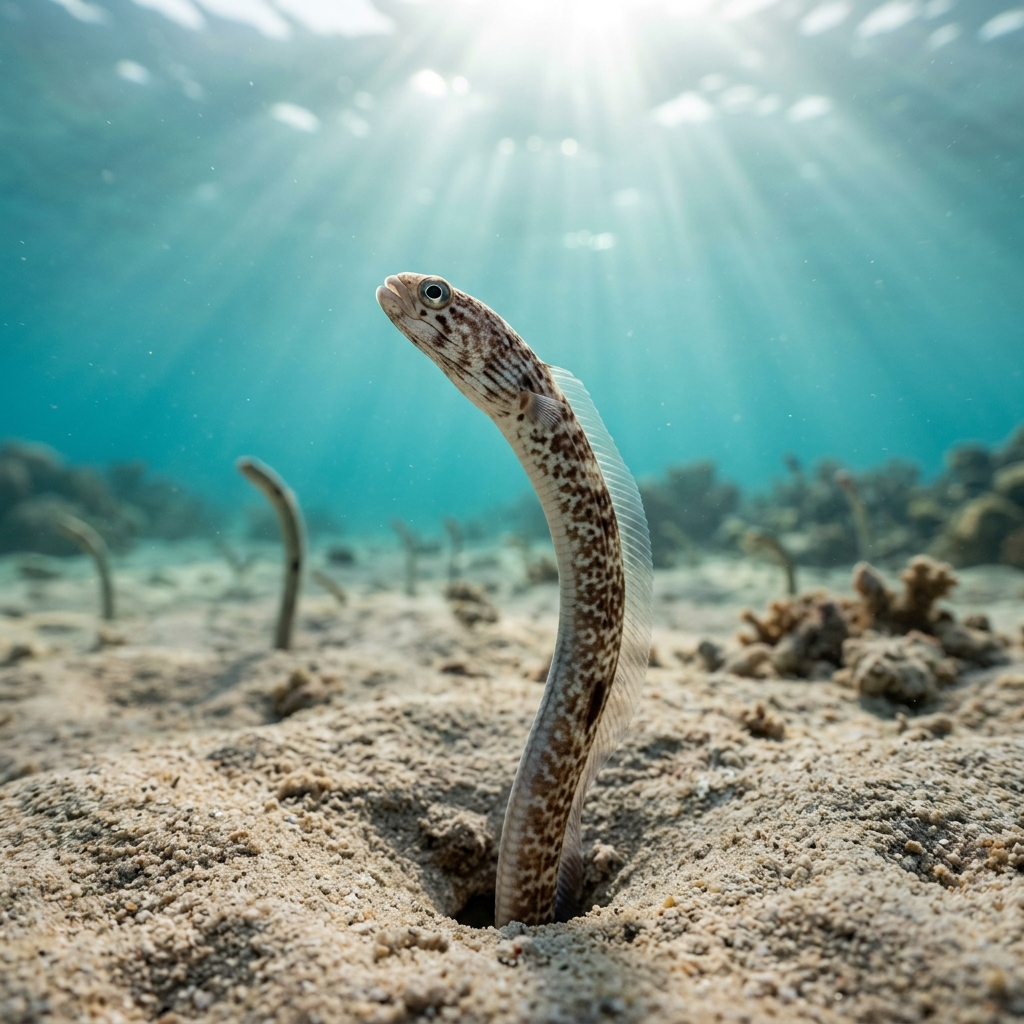
Garden Eel
2,448 sites