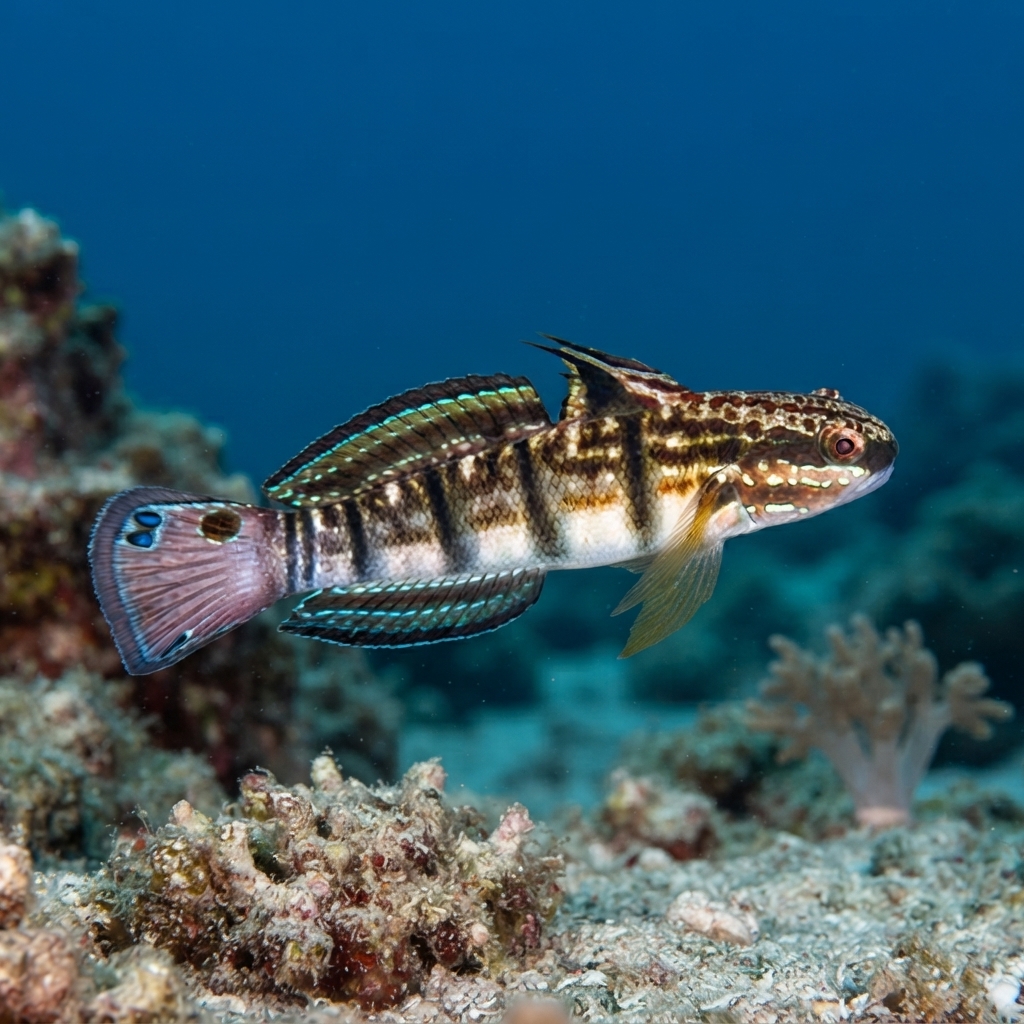
Amblygobius phalaena
Sand-dwelling goby common on reefs from Queensland to Sabah, hovering just above the bottom in 23-30C water year-round.
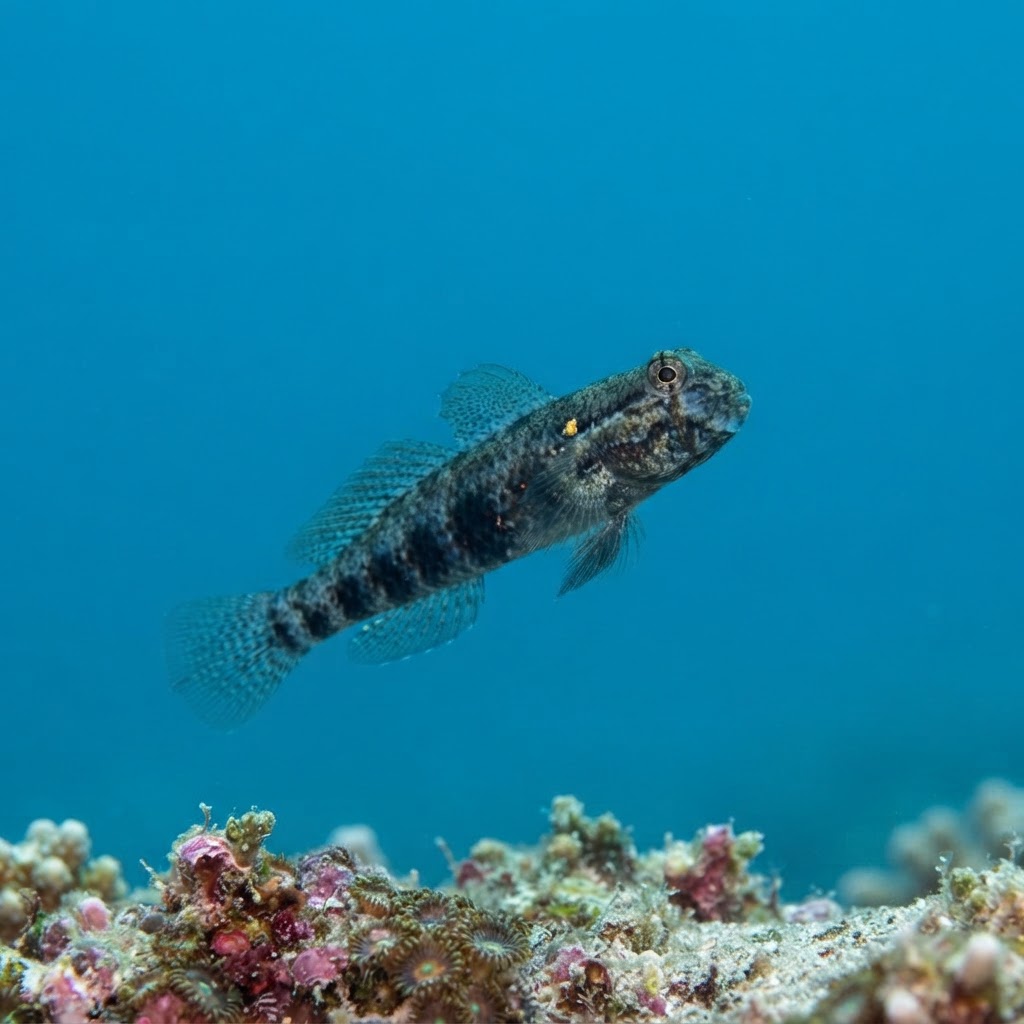
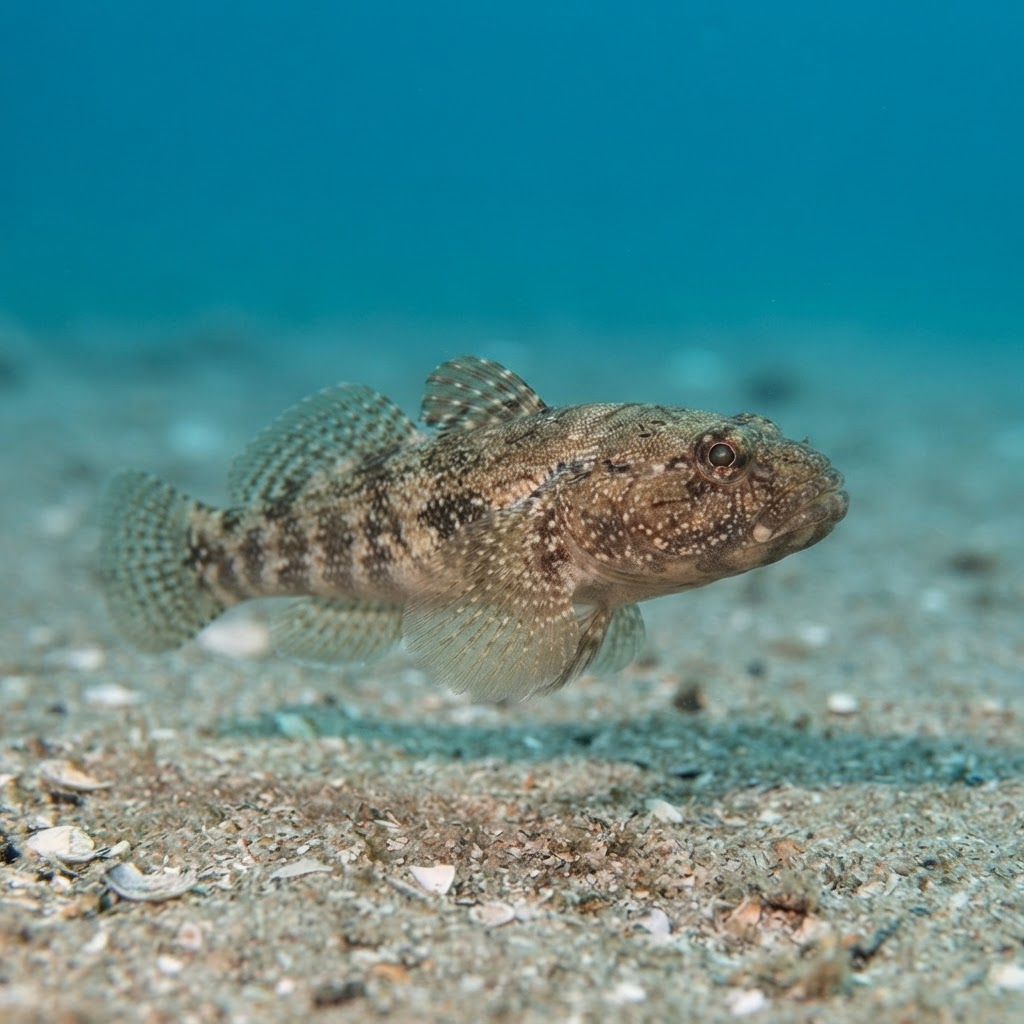
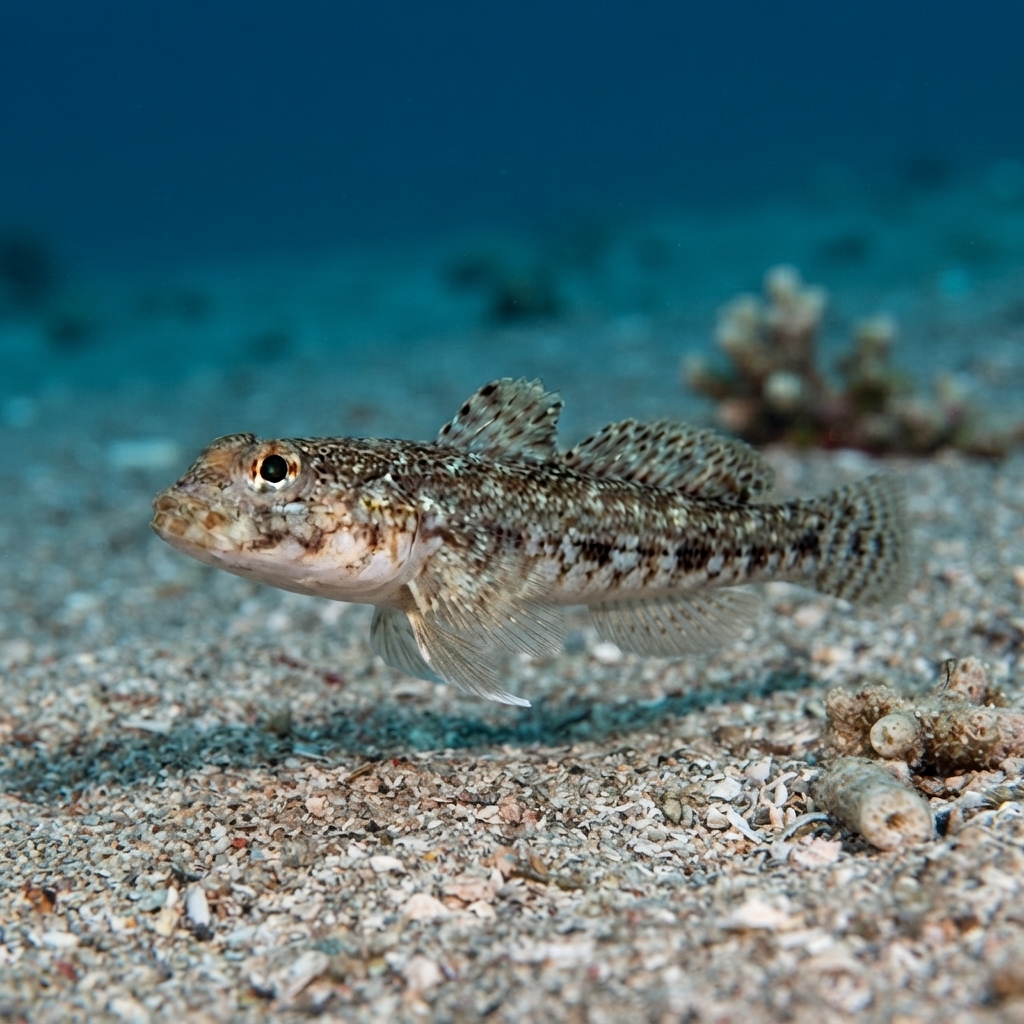
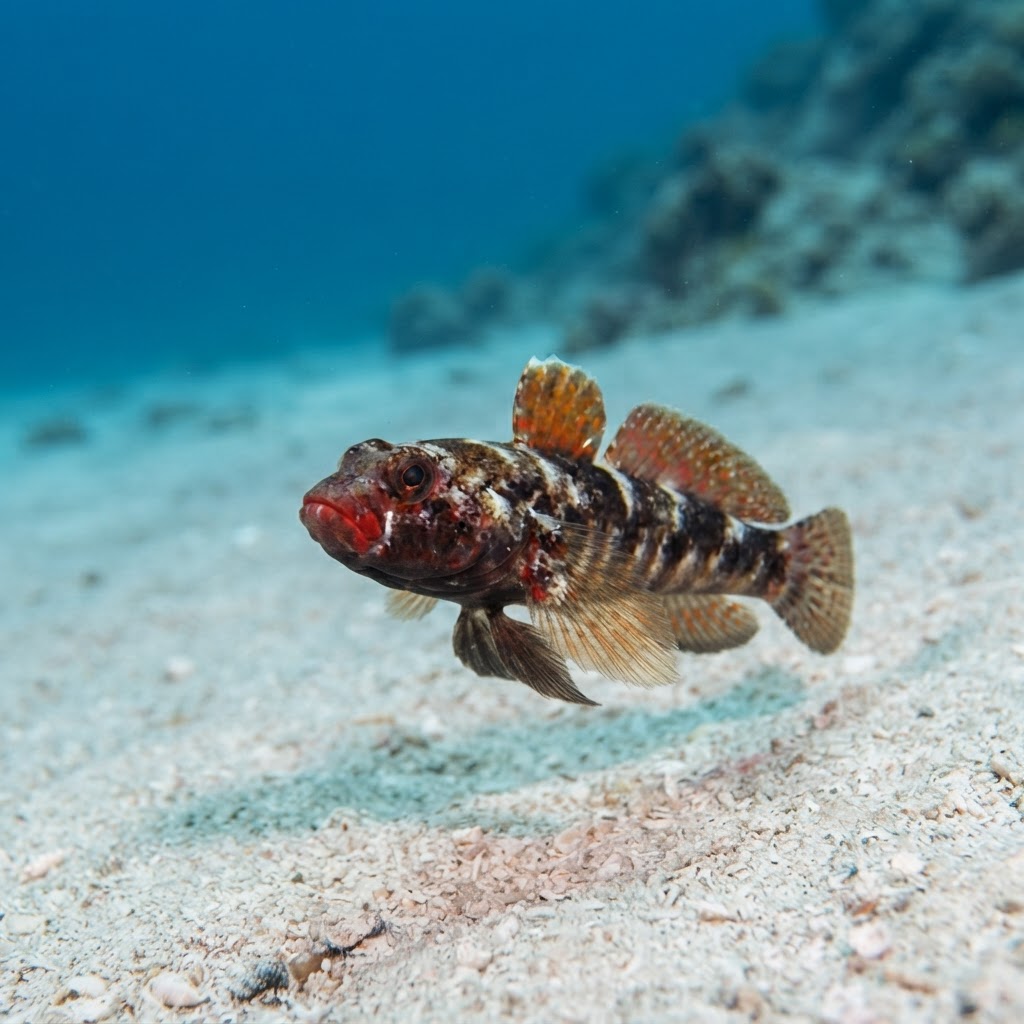
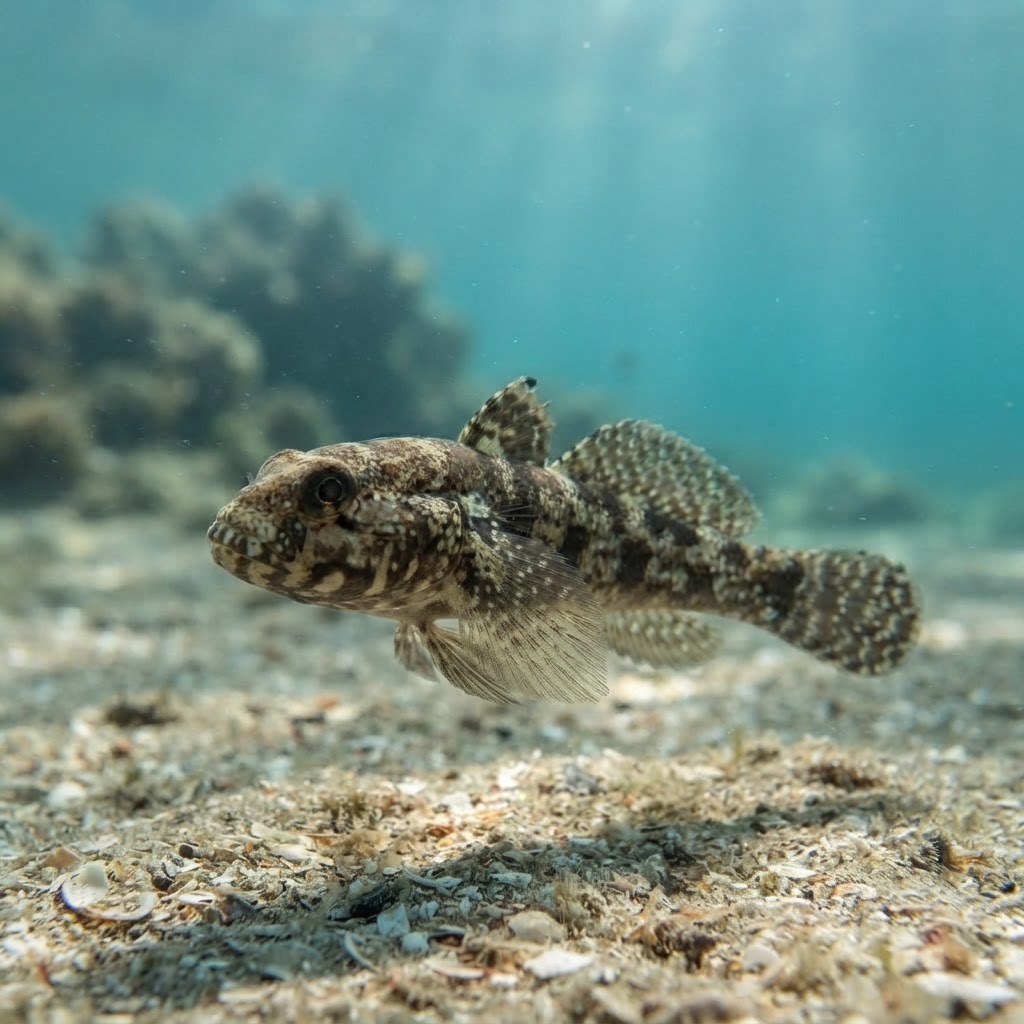
A stocky little goby around 10 cm long, pale grey-brown with a series of darker vertical bars along the flanks and a blunt, slightly humped head. It sits propped on its pelvic fins just above the sand or rubble rather than swimming freely, and the bars fade into a more mottled pattern towards the tail. Look for the perched, alert posture close to a burrow rather than any single bold marking.
Divers usually spot it hovering just off the sand near a burrow entrance, picking at algae and detritus on the substrate rather than chasing anything down. It holds its ground fairly well for a small goby, ducking into its burrow only when a diver gets close rather than bolting across the reef. Most sightings are on sandy patches and rubble edges bordering reef structure, the kind of unglamorous in-between ground that's easy to swim past if you're not looking down.
It's an omnivore that sifts sand and grazes algae in roughly equal measure, making it one of the reef's quieter clean-up crew members working the substrate between coral heads.
No clear seasonal pattern shows in the sightings, and with a comfortable range of about 23 to 30C it turns up on tropical reefs in any month. Treat it as a year-round species rather than one tied to a particular dive season.
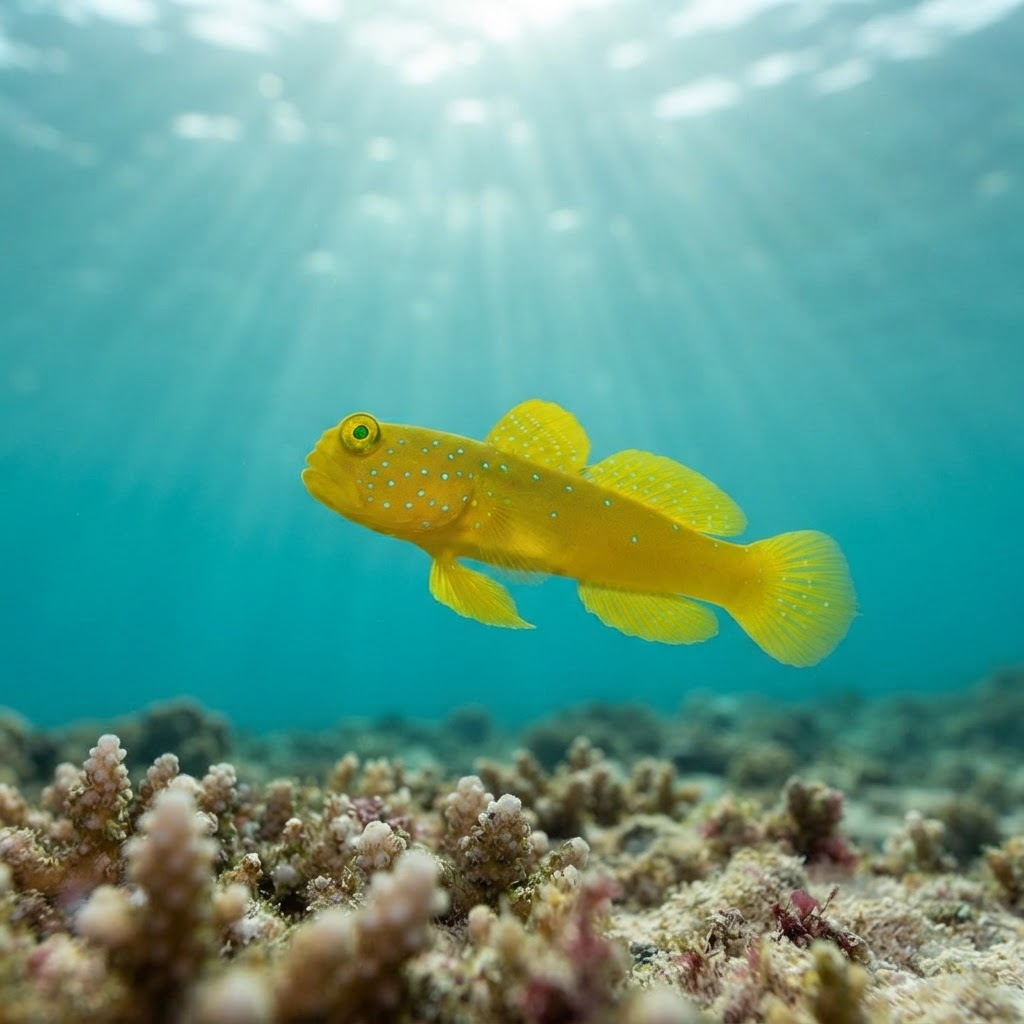
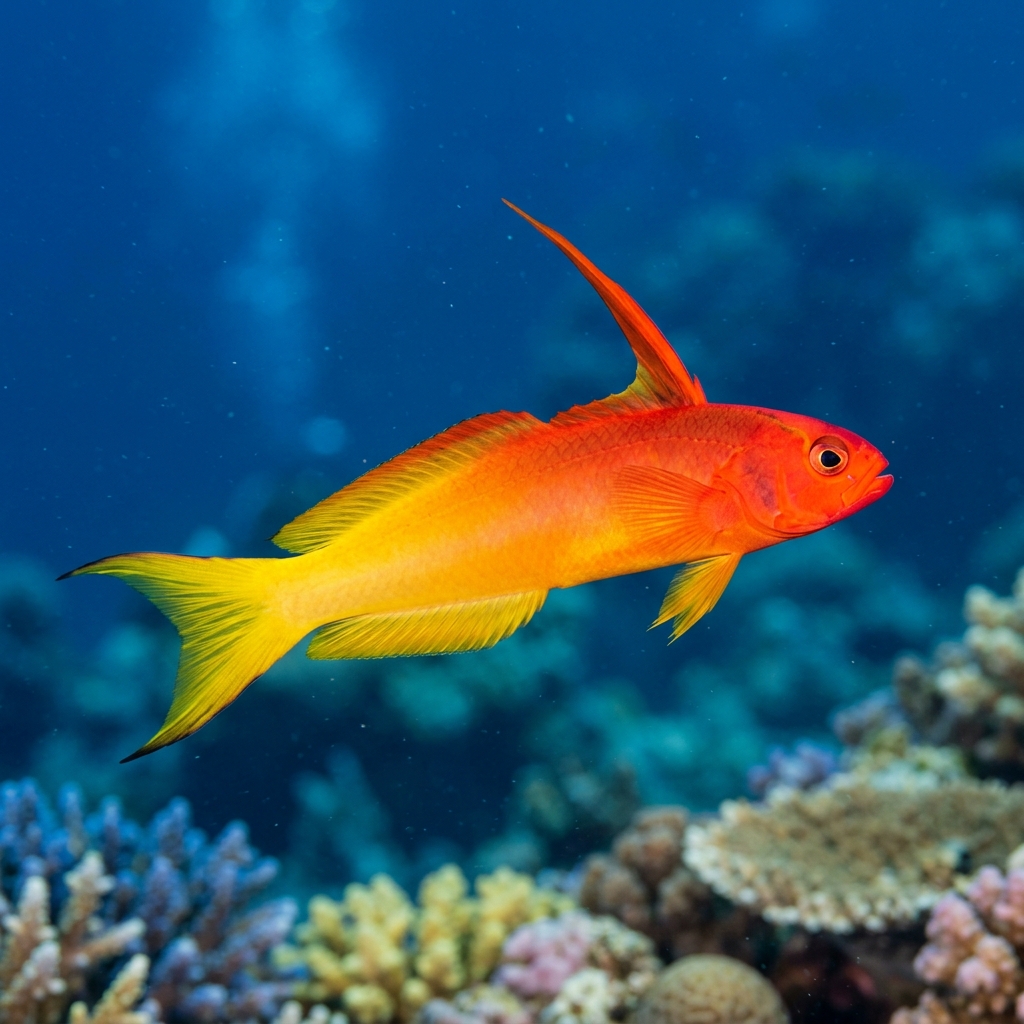
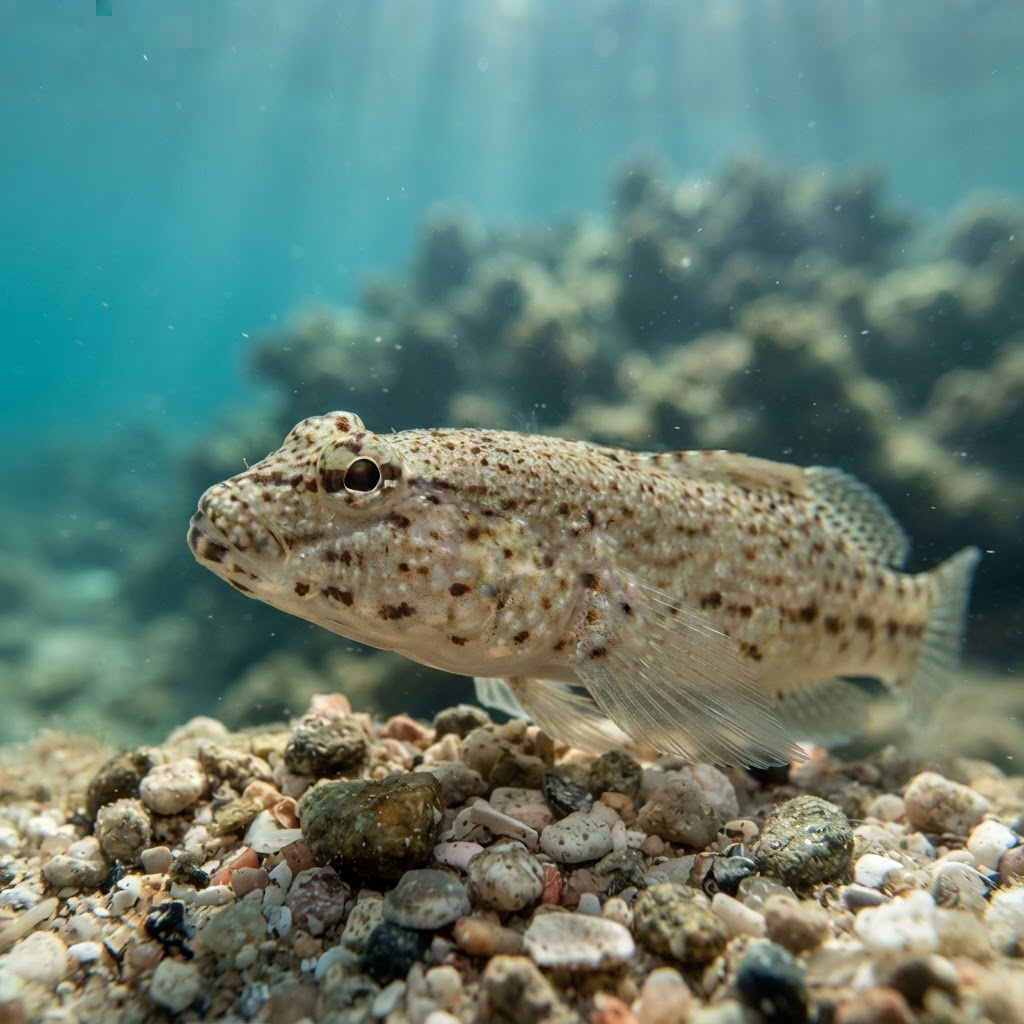
Reef neighbours a diver could mistake it for. Use the identification notes above to tell them apart.
Most consistently logged on reefs in Queensland and Western Australia, with strong numbers also reported from Sabah in Malaysia, the Visayas in the Philippines, and Koh Tao in Thailand. Fiji's Viti Levu, New Caledonia's Nouméa coast, and Guam's Apra Harbor round out a wide reef-associated range across the Indo-Pacific.
Mapping where White-barred Goby is logged…
It's most reliably seen on reefs in Queensland and Western Australia, plus Sabah in Malaysia, the Visayas in the Philippines, and Koh Tao in Thailand. Fiji, New Caledonia, and Guam also have healthy populations.
There's no strong season in the data, and it tolerates water from about 23 to 30C, so it's a year-round sighting on tropical Indo-Pacific reefs.
Look for a small, stocky goby around 10 cm long with pale vertical bars on a grey-brown body, perched just above sand or rubble near a burrow rather than swimming in open water.
They max out at around 10 cm, making them one of the smaller gobies you'll spot while scanning sandy patches on a reef.
No. They're small, harmless reef fish that retreat into a burrow if you approach too closely rather than posing any threat.
Site and sighting data is aggregated from diver logs, iNaturalist and GBIF. For taxonomy and conservation status:
Slender Goby
806 sites