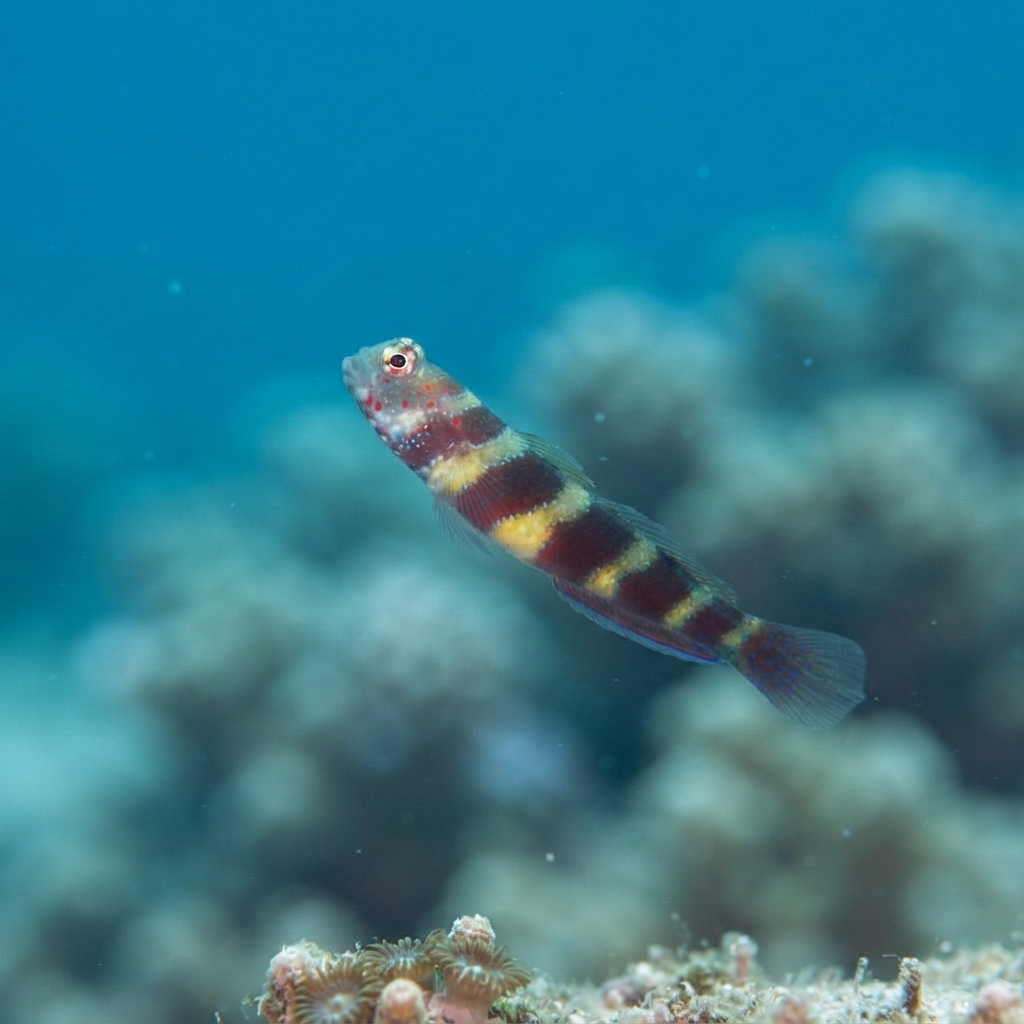
Amblyeleotris wheeleri
Pale orange bars over white, a nervous burrow-mate of a goby, most reliably found across the Visayas in the Philippines. Water sits at 25.5-29.3C.
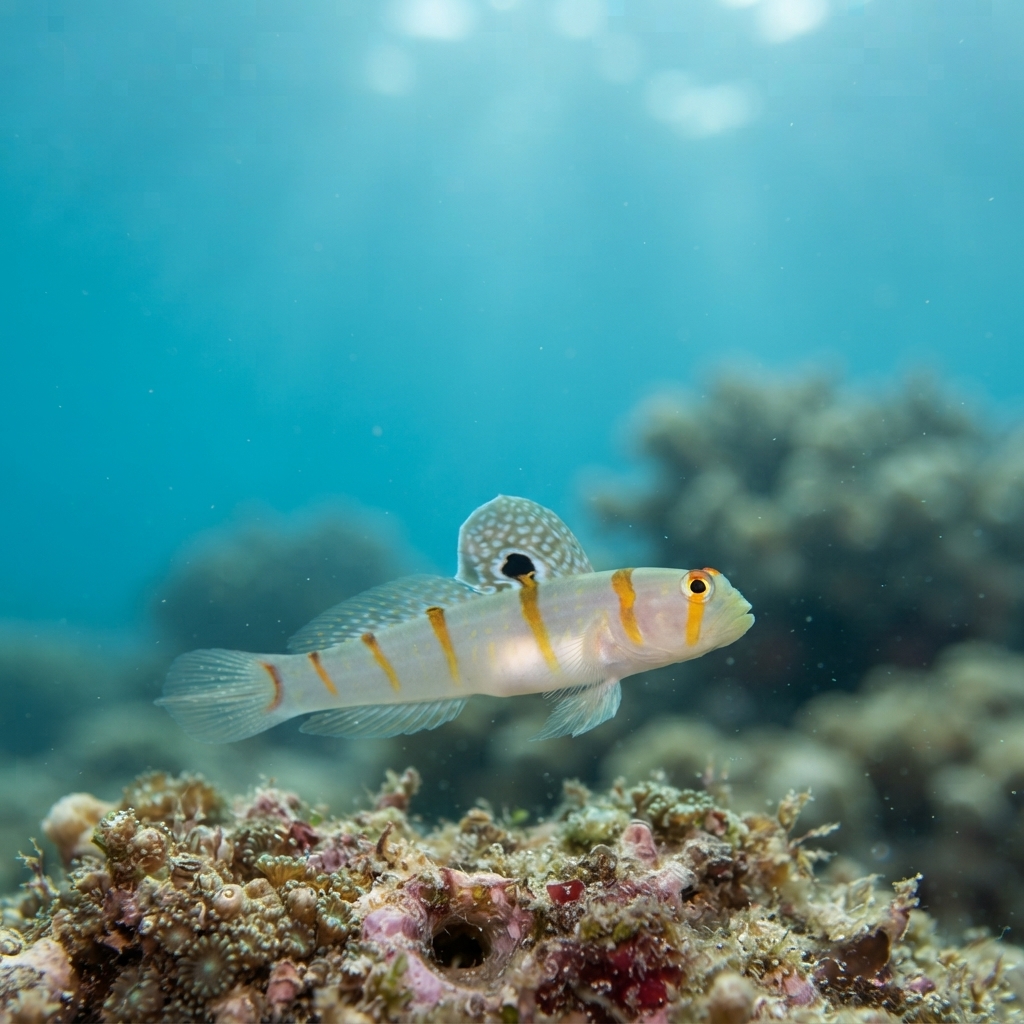
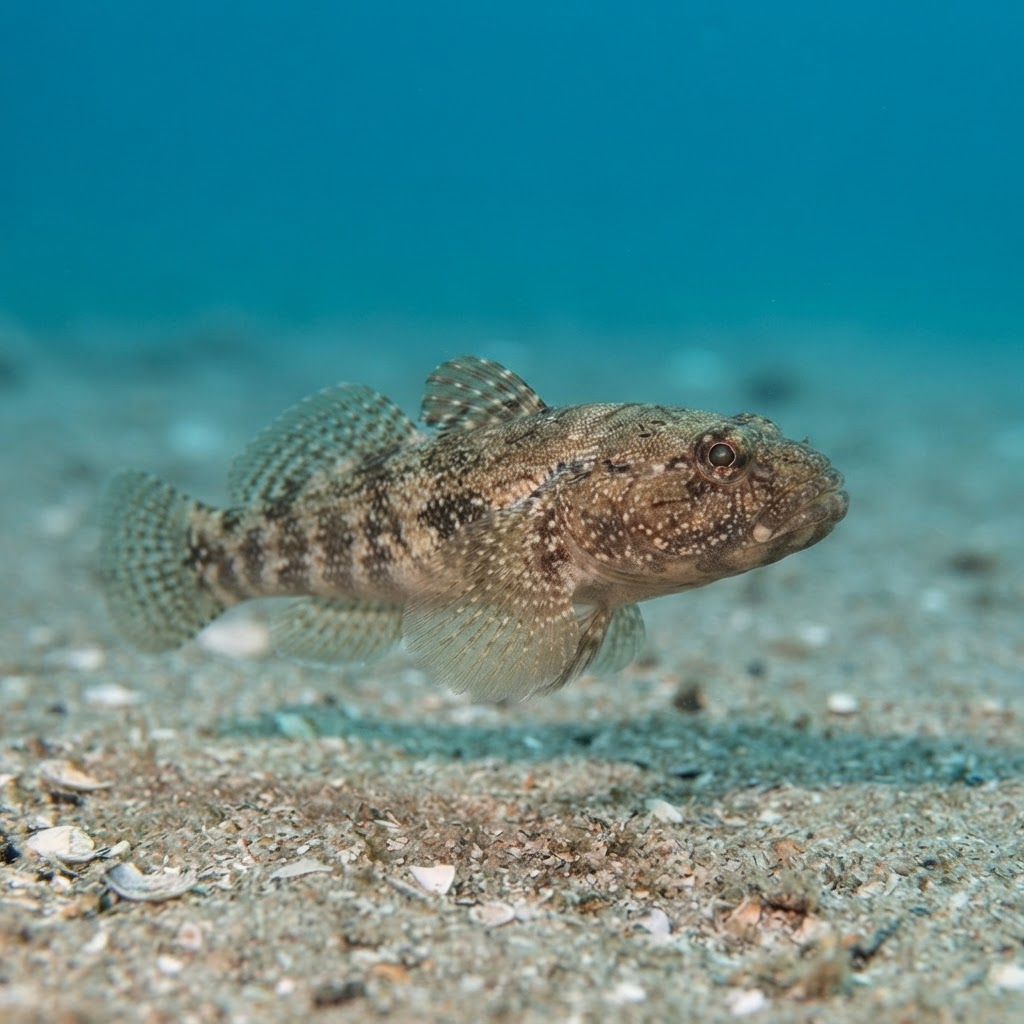
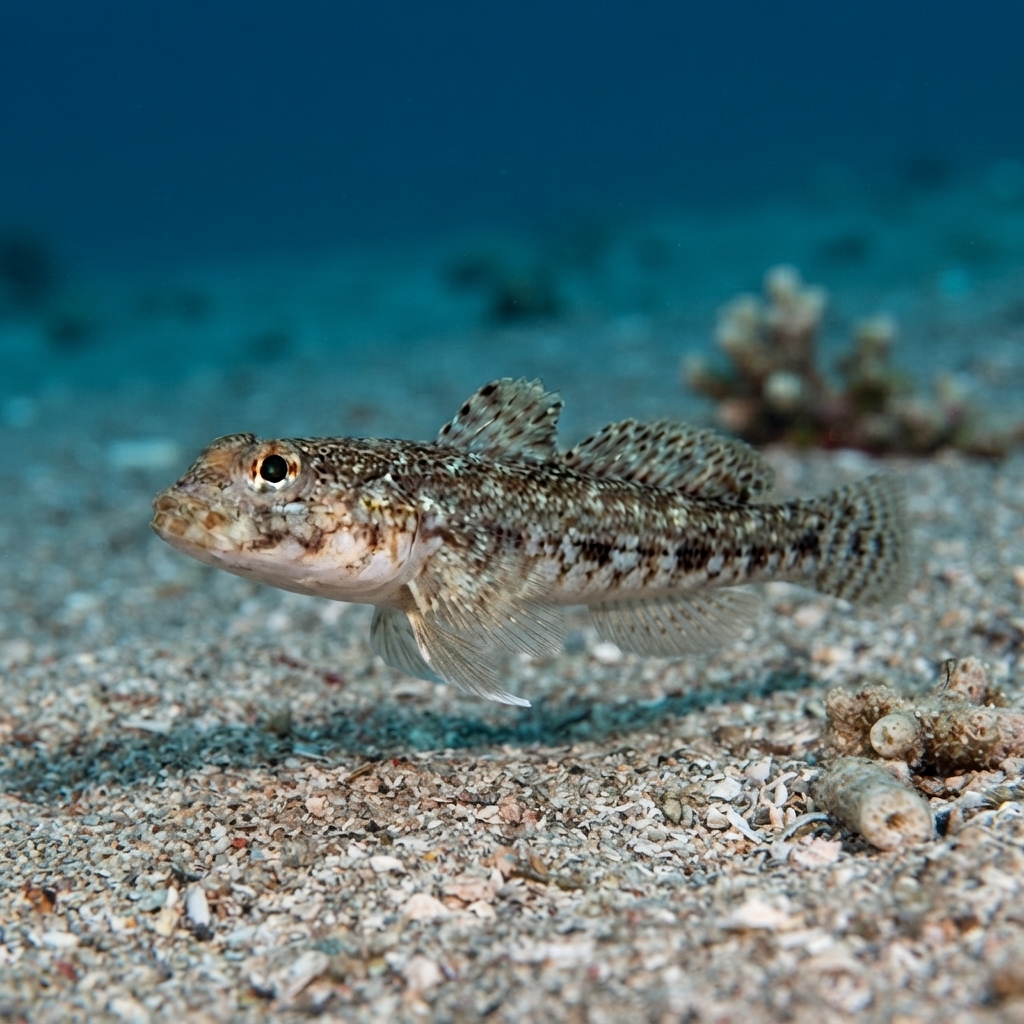
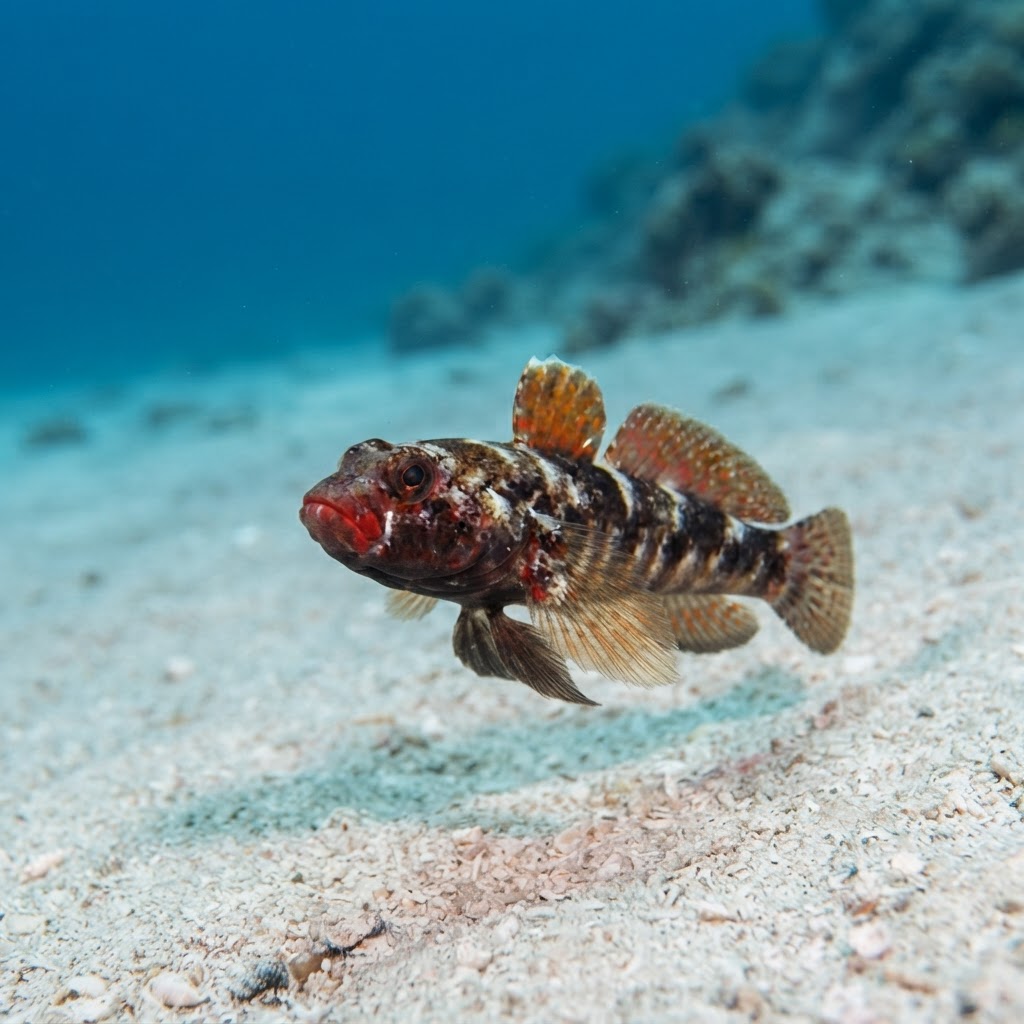
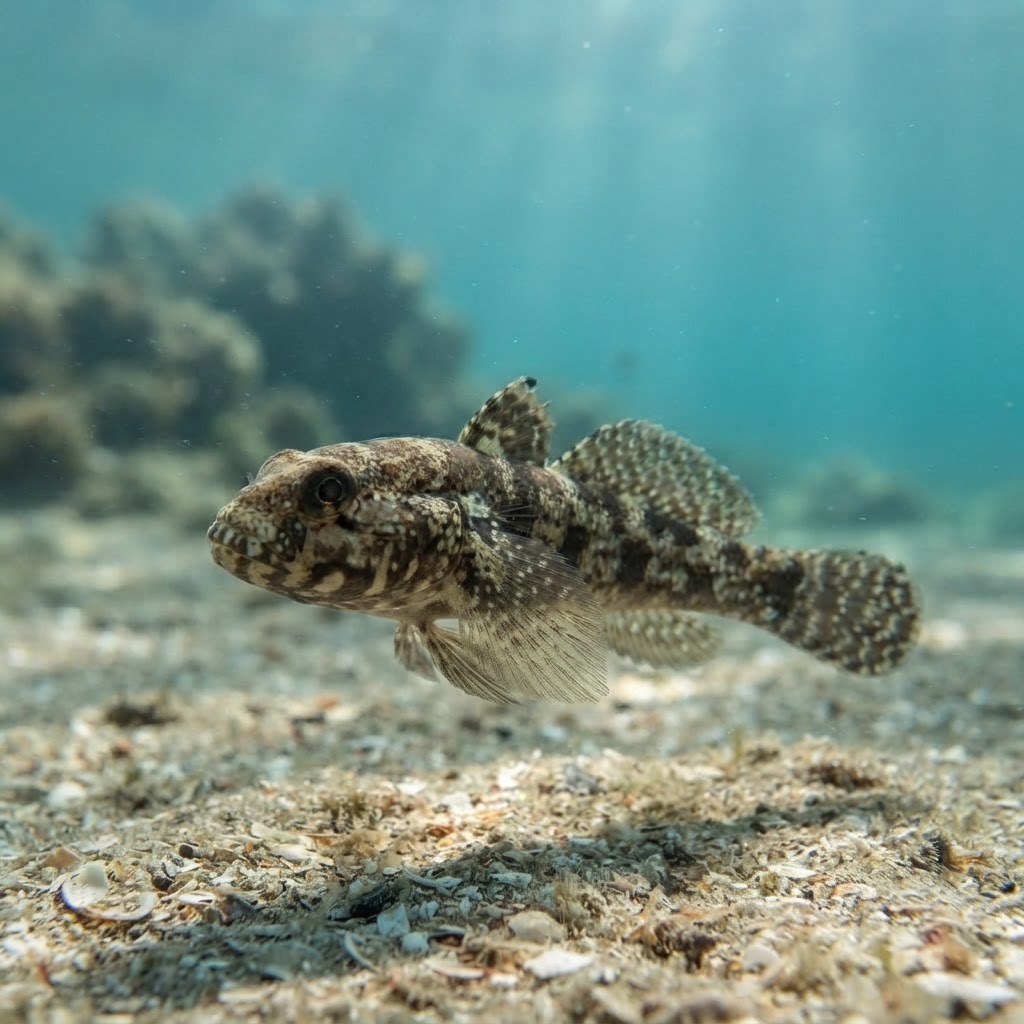
A slender, pale body no longer than about 7 cm marked with a series of orange-red to reddish-brown bars running down its sides, with a paler, almost translucent tail region carrying faint spots. It hovers with its front half raised near a burrow mouth on sand or rubble, ready to drop in tail-first at the slightest disturbance. Look for the two large first-dorsal-fin spines that stand slightly taller than the rest of the fin, a useful giveaway when the bars alone are hard to judge in low light.
Spend most of a dive parked at the entrance to a shared sand or rubble burrow, sitting just above the opening with fins flicking gently while keeping watch. It shares that burrow with a partner shrimp that does the digging, and the goby's job is lookout duty, retreating backward into the hole the moment a diver gets too close or moves too fast. Slow, low approaches from the side give the best chance of a decent look before it bolts.
Runs a mutualism with a burrowing shrimp: the nearly blind shrimp constantly excavates and maintains the shared tunnel while the goby, which can see, keeps watch outside and flicks its tail to warn the shrimp when danger is near.
No clear seasonal pattern shows in the sightings, and its comfort range of roughly 25.5 to 29.3C matches tropical reef conditions year-round, so any month works across its range. In the Philippines and Indonesia especially, divers log it consistently across the calendar rather than in a particular window.
Reef neighbours a diver could mistake it for. Use the identification notes above to tell them apart.
Most consistently logged across the Visayas in the Philippines, where sightings are dense enough to make it a near-guaranteed sand-slope find. Also turns up reliably in Raja Ampat in Indonesia and around Khao Lak in Thailand, with smaller but steady numbers reported from Dili in Timor-Leste, Kenting in Taiwan and sites in Western Australia.
Mapping where Wheeler's Shrimp Goby is logged…
The Visayas region in the Philippines has by far the strongest run of sightings, making it the most dependable spot to look. Raja Ampat in Indonesia and Khao Lak in Thailand are also solid bets, with smaller populations reported around Dili in Timor-Leste and Kenting in Taiwan.
There's no detected seasonal pattern in sightings, and its preferred water temperature of roughly 25.5 to 29.3C is available on tropical reefs all year. Divers report it consistently across the calendar in the Philippines and Indonesia rather than in one particular season.
Look for a small, pale-bodied goby around 7 cm long with orange-red bars along its sides, hovering upright near a burrow entrance on sand or rubble. Its raised first-dorsal-fin spines and jumpy retreat into the burrow are good confirming clues.
They stay small, topping out around 7 cm, which is typical for shrimp gobies. That size keeps them easy to miss on a sand slope unless you're scanning carefully near burrow openings.
It shares its burrow with a partner shrimp in a classic mutualism: the shrimp digs and maintains the tunnel while the sharp-eyed goby stands guard outside, warning its shrimp partner of danger with quick tail flicks.
Site and sighting data is aggregated from diver logs, iNaturalist and GBIF. For taxonomy and conservation status:
Slender Goby
806 sites