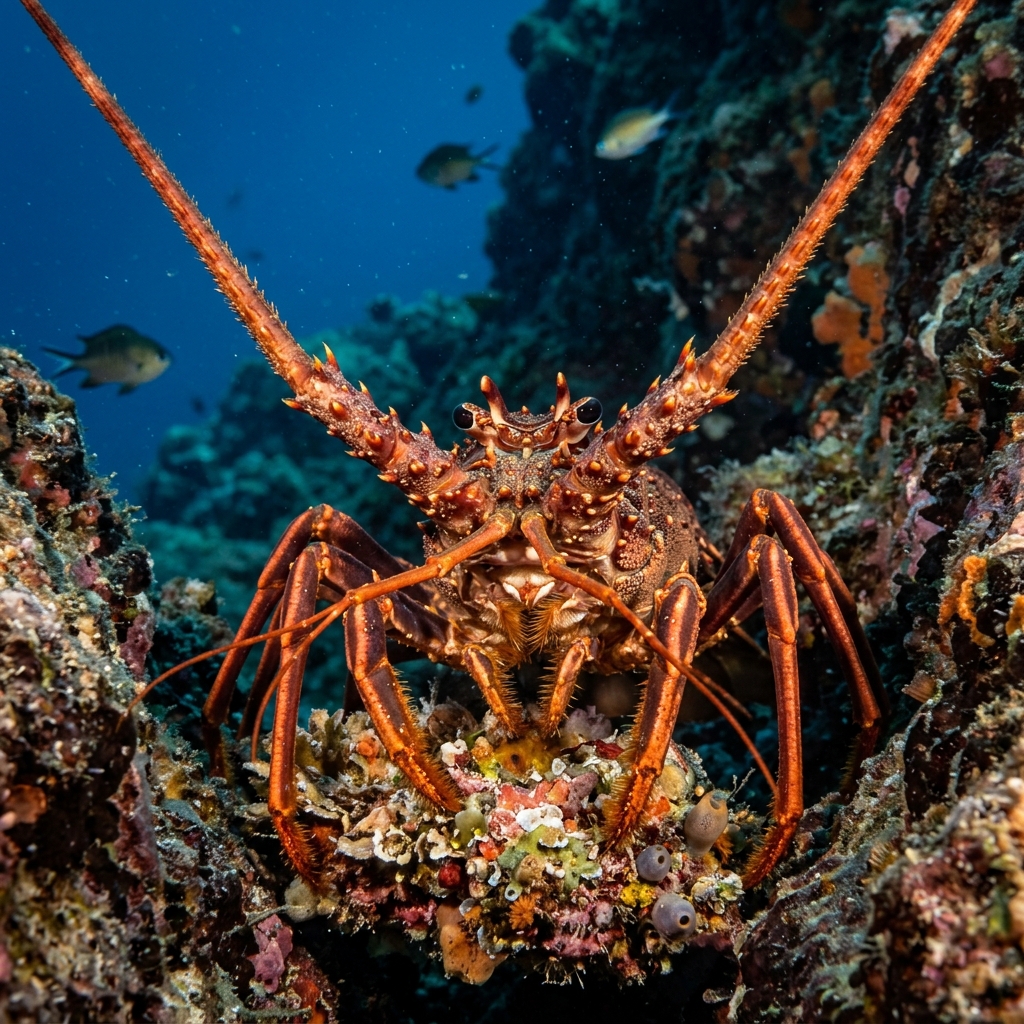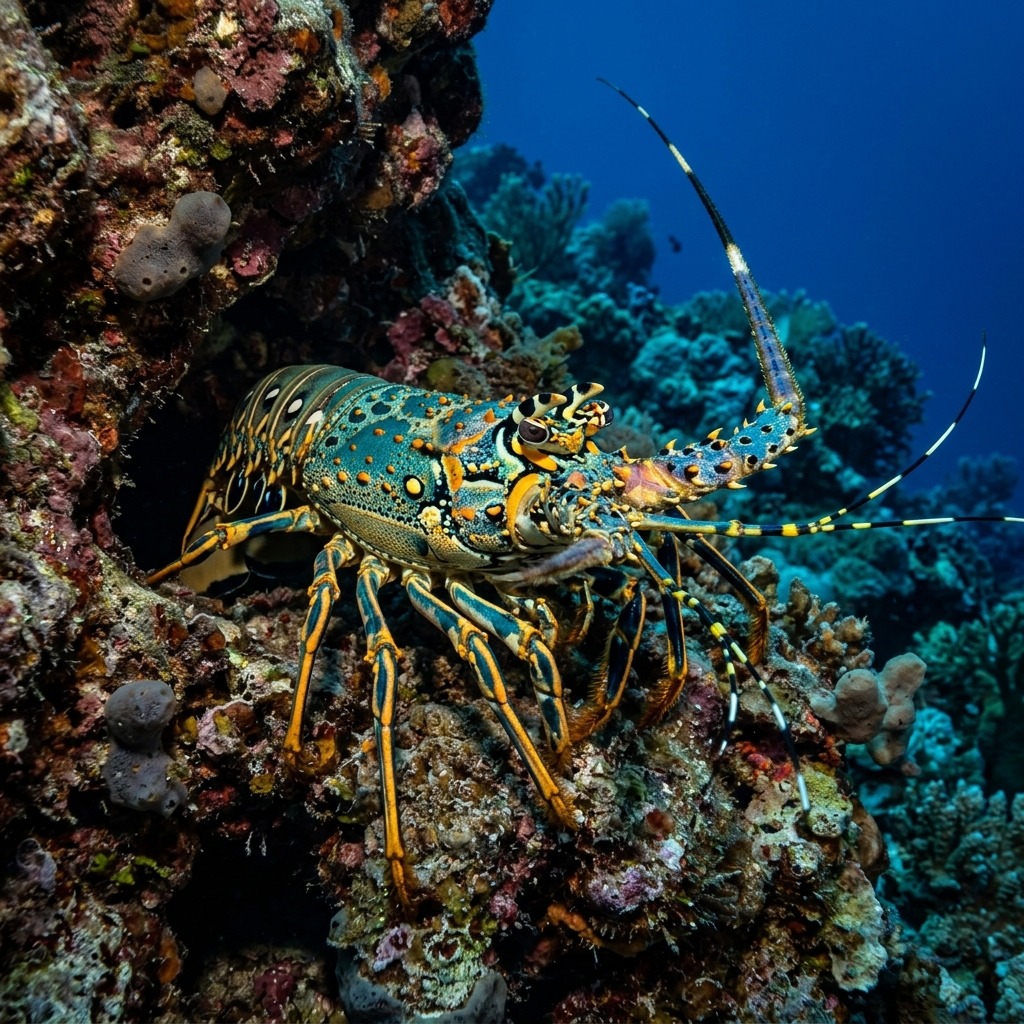
Panulirus versicolor
Spot Painted Spiny Lobster in the Maldives, Indonesia and Malaysia. Nocturnal and shy, they hide under reef ledges in 20-22°C water. Here's where to look.
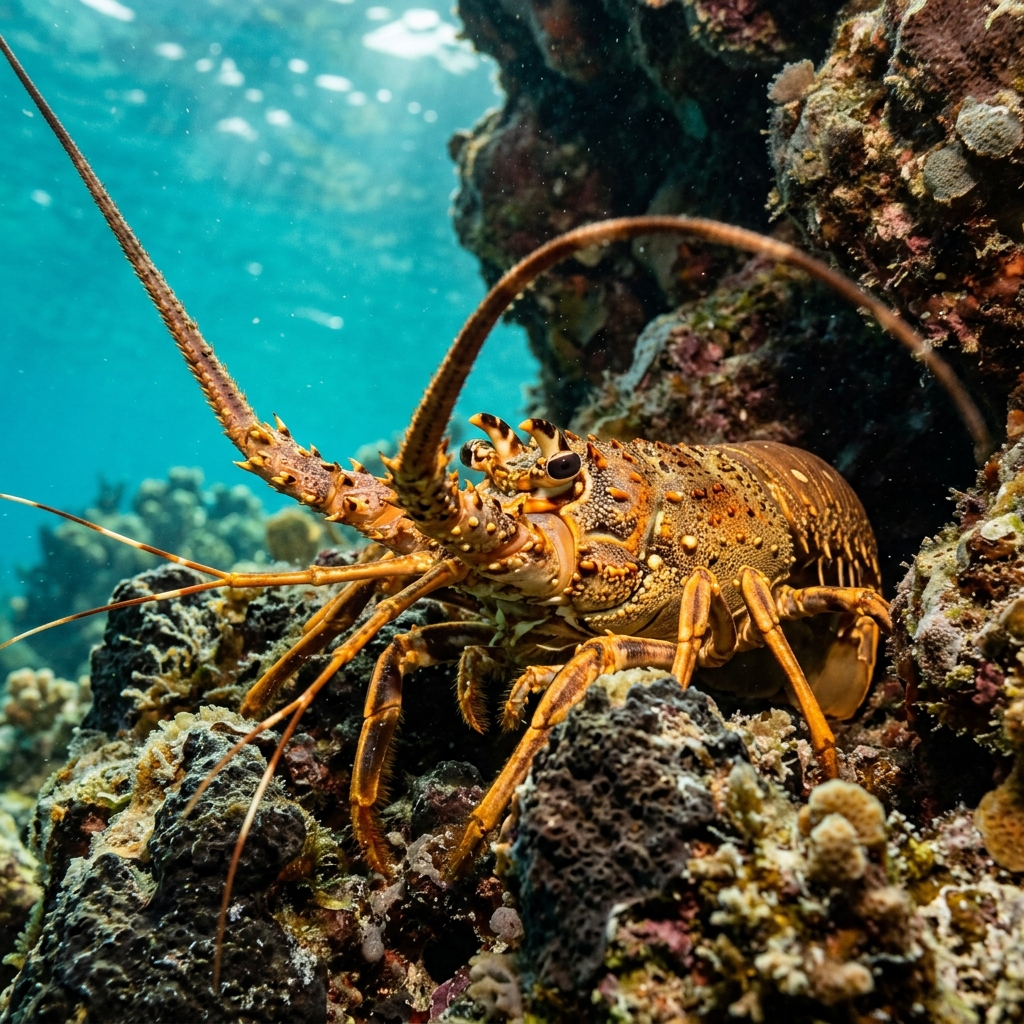
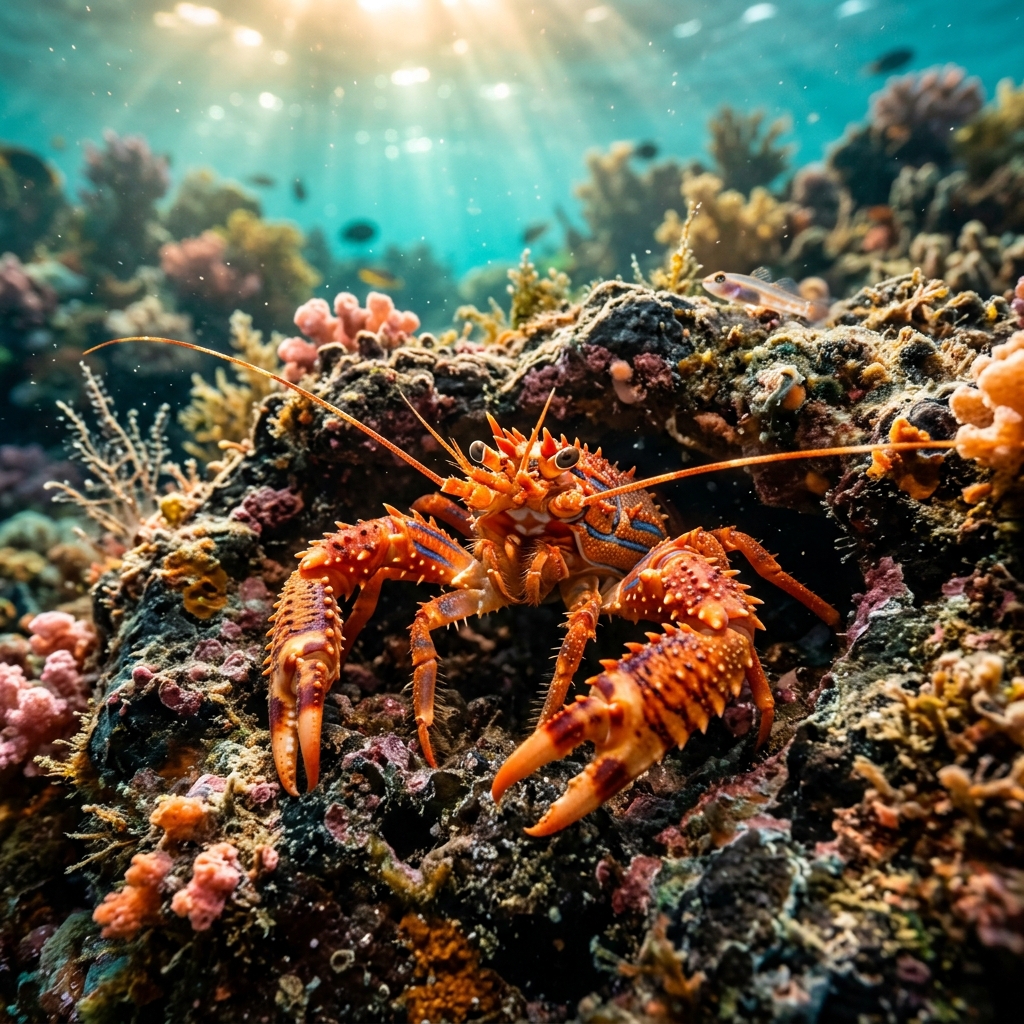
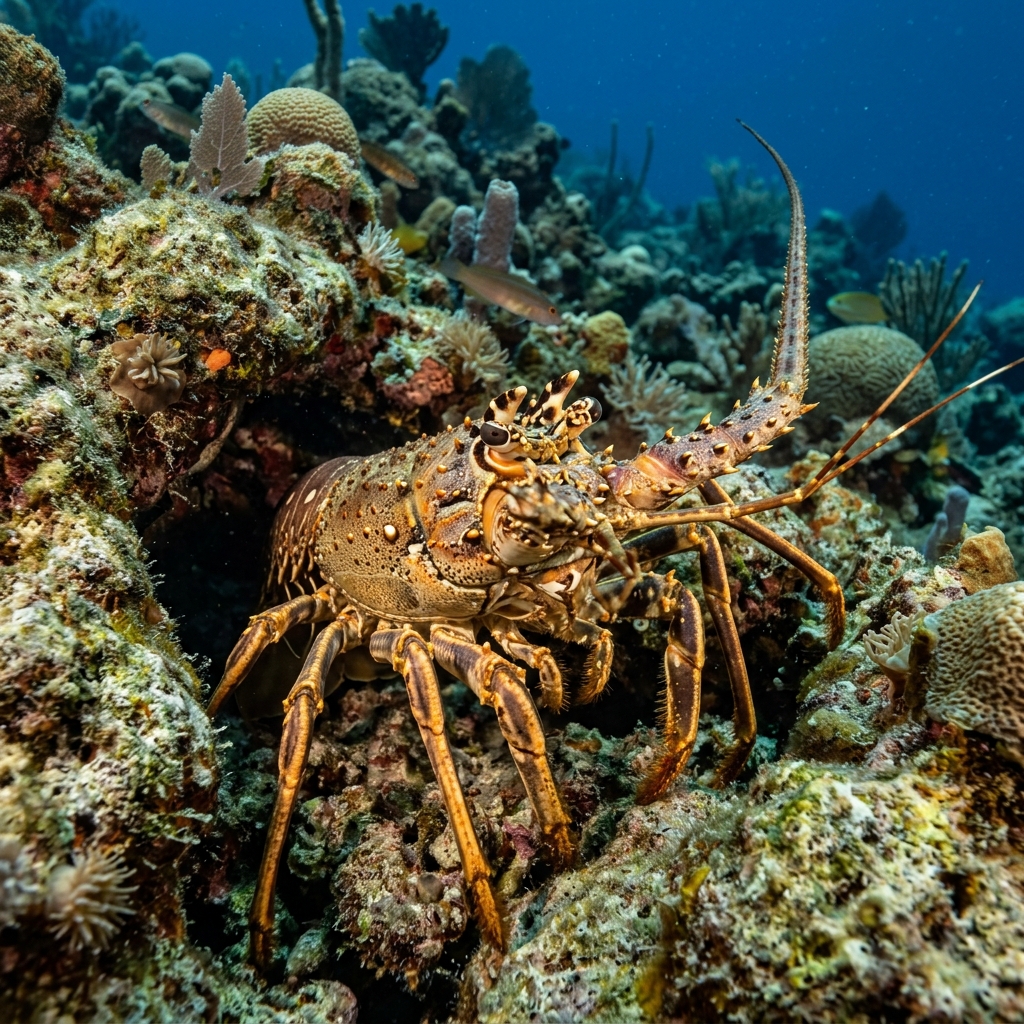
Vivid colouring is the key: the body is dark blue-green with bold white spots, while the legs are banded in alternating blue and white, making it one of the most distinctively marked lobsters on the Indo-Pacific reef. At roughly 28 cm it is a solid, medium-large crustacean, broad across the carapace (the fused head-and-body shell) with two long, prominently striped antennae that often extend well beyond the ledge it is hiding under. Those antennae, combined with the striking blue-and-white leg banding, separate it from most other spiny lobsters at a glance. Look for the tail fan, which is also edged in white against dark blue.
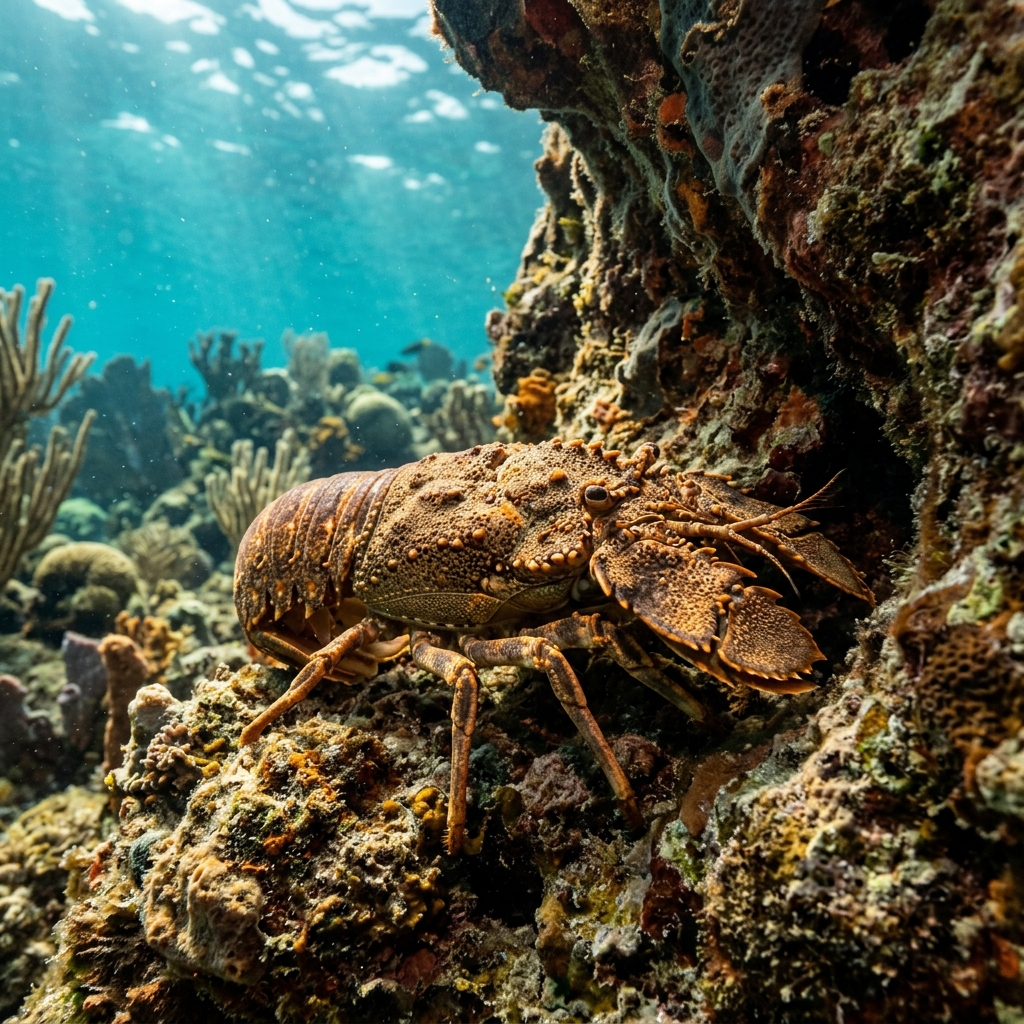
Painted spiny lobsters are nocturnal, so daytime dives mean searching under ledges, inside caves, and in reef crevices where they spend the light hours tucked well back in the shadows, often with only their striped antennae visible. If you approach too quickly or get too close, they will reverse deeper into the crack using a rapid tail-flip, so slow, deliberate movement from a respectful distance gives you the longest look. Night dives offer the best chance of seeing them out in the open, foraging actively on the reef.
Like other spiny lobsters, the painted spiny lobster lacks the heavy crushing claws of true lobsters and instead relies on its spiny carapace and fast escape reflexes for defence. Its long antennae are not just sensory tools; they can be scraped together to produce a rasping sound that deters predators.
In Northern Hemisphere destinations like the Maldives, Thailand, and Malaysia, sightings concentrate between July and February. In Southern Hemisphere sites, including parts of Australia and eastern Indonesia, the productive window runs from December through April.
Reef neighbours a diver could mistake it for. Use the identification notes above to tell them apart.
Most consistently logged across Indonesia, Malaysia, and the Maldives, with the Male and Ari Atolls of the Maldives standing out as the single strongest region in the data. Pulau Tioman in Malaysia, Sulawesi, and the Maluku and Papua regions of Indonesia are also reliable areas, and solid numbers of sightings come from Thailand's Andaman North coast and the Western Visayas in the Philippines. Beyond Southeast Asia, Oman represents a notable presence in the Arabian Sea.
Mapping where Painted Spiny Lobster is logged…
The strongest populations in the dive logs are in the Maldives (particularly the Male and Ari Atolls), Indonesia (Sulawesi, Maluku and Papua, Bali and Lombok), and Malaysia (Pulau Tioman). Thailand's Andaman coast and the Philippines' Western Visayas are also solid options, with additional sightings logged in Oman and Australia.
In northern Indo-Pacific destinations like the Maldives, Thailand, and Malaysia, sightings peak from July through February. For southern sites such as parts of Australia and eastern Indonesia, December to April is the most productive window. Night dives at any time of year improve your odds considerably.
Look for the vivid blue-green body covered in white spots and, most distinctively, the legs banded in sharp blue and white. The tail fan is dark with white edging. Long striped antennae projecting from a ledge are often the first thing a diver notices. No other common Indo-Pacific lobster combines that bold blue-and-white banding on the legs with a spotted carapace.
They typically reach around 28 cm in body length, making them a medium-to-large reef crustacean. Their long antennae can double the apparent size, often extending well beyond the ledge the animal is resting under.
No. They have no claws and pose no threat to divers. The spines on their carapace can scratch skin if you handle them, but they are a shy, retreating animal. Keep your distance and let them behave naturally.
The painted spiny lobster is currently listed as Least Concern on the IUCN Red List, meaning it is not considered at risk globally. That said, like most reef crustaceans it is sensitive to habitat degradation, so diving without touching or disturbing it remains good practice.
Site and sighting data is aggregated from diver logs, iNaturalist and GBIF. For taxonomy and conservation status:
Caribbean Spiny Lobster
2,209 sites