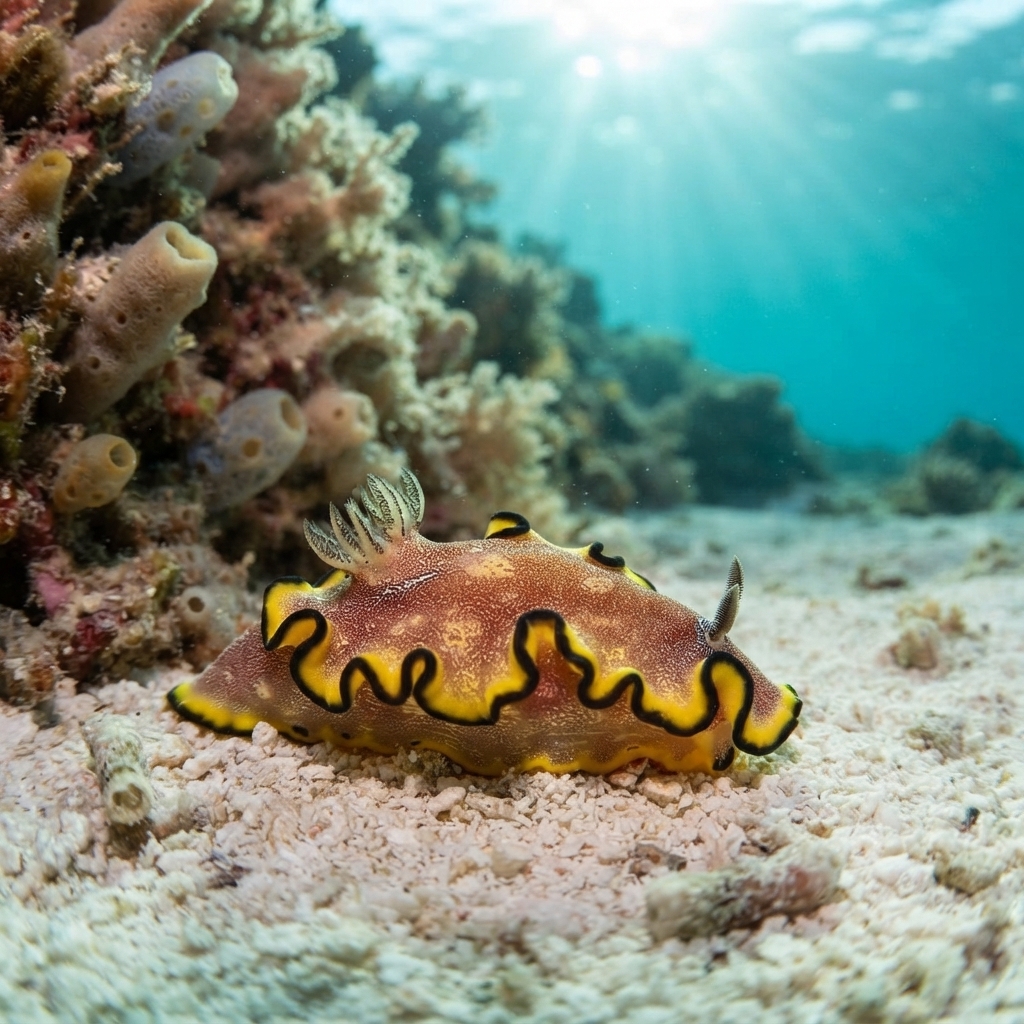
Glossodoris bonwanga
An uncommon nudibranch turning up on KwaZulu-Natal reefs year-round in 22 to 28C water: here's how to spot it.
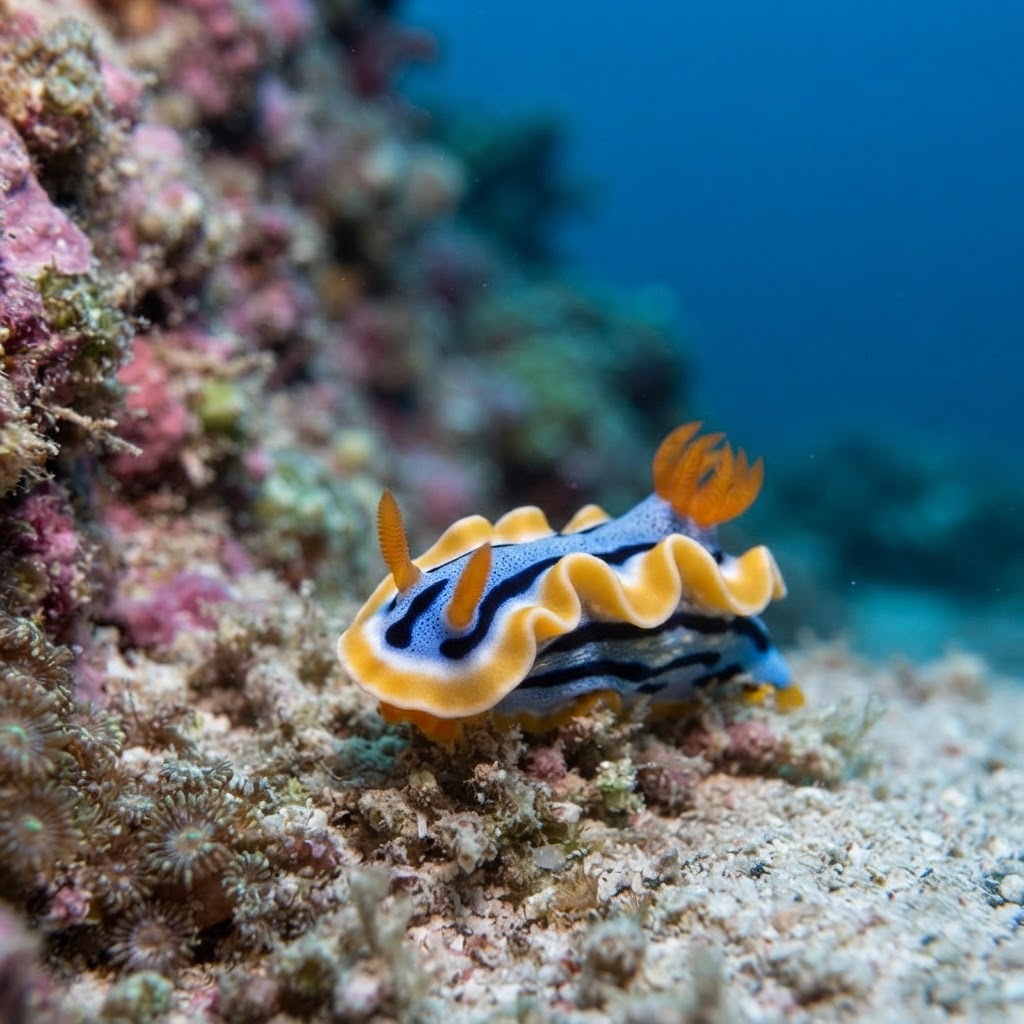
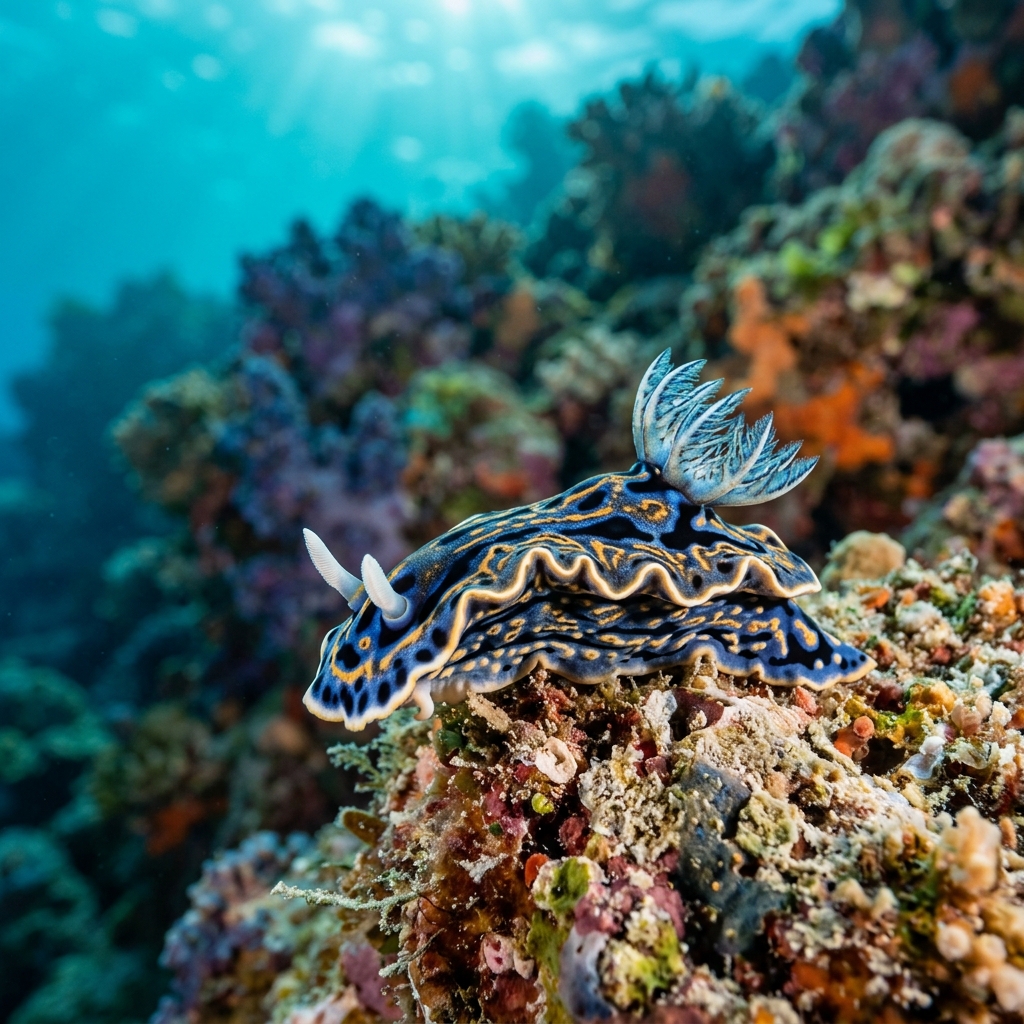
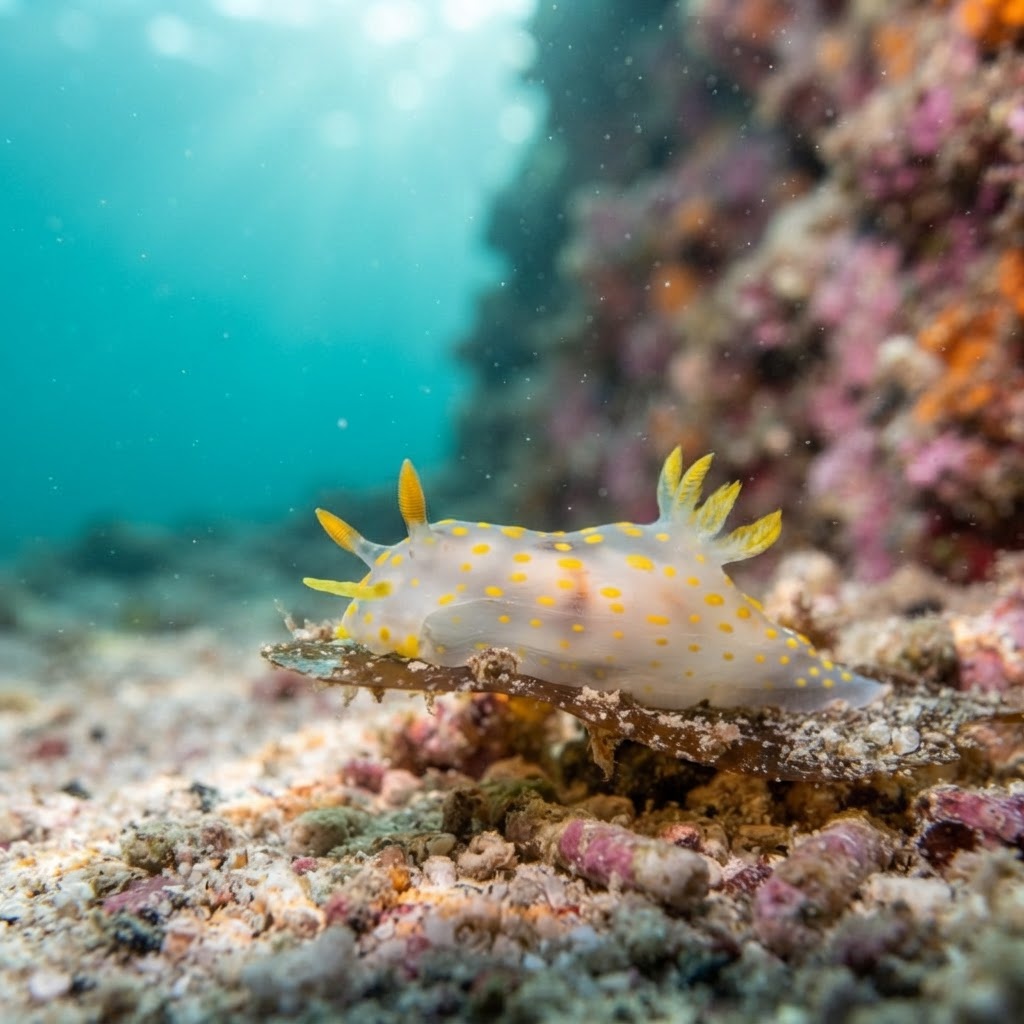
A small, soft-bodied sea slug with a broad, ruffled mantle carrying the bold banded or spotted pattern typical of chromodorid nudibranchs, in contrasting colours against a paler base. Two rhinophores (sensory tentacles) sit up front and a feathery gill cluster shows at the rear of the mantle. It moves slowly across the reef surface, so once you spot the pattern it's an easy, stationary ID.
Found grazing slowly over reef substrate, typically on sponges and encrusting growth that make up its diet, moving little and reacting even less to divers nearby. It's the kind of animal you find by scanning the reef surface closely rather than by watching the water column, and it turns up at any time of day divers are logging reef life. Most sightings describe it as uncommon rather than everywhere, so it rewards a patient, close look rather than a passing glance.
Like other chromodorid nudibranchs, it likely stores or repurposes chemical compounds from the sponges it grazes on as a defence against predators, which is part of why its colours are so bold rather than camouflaged.
Sightings show no clear seasonal pattern, and with water logged between 21.7 and 27.7C it seems to be present across the year rather than tied to a single season. Treat it as a year-round possibility on KZN reef dives.
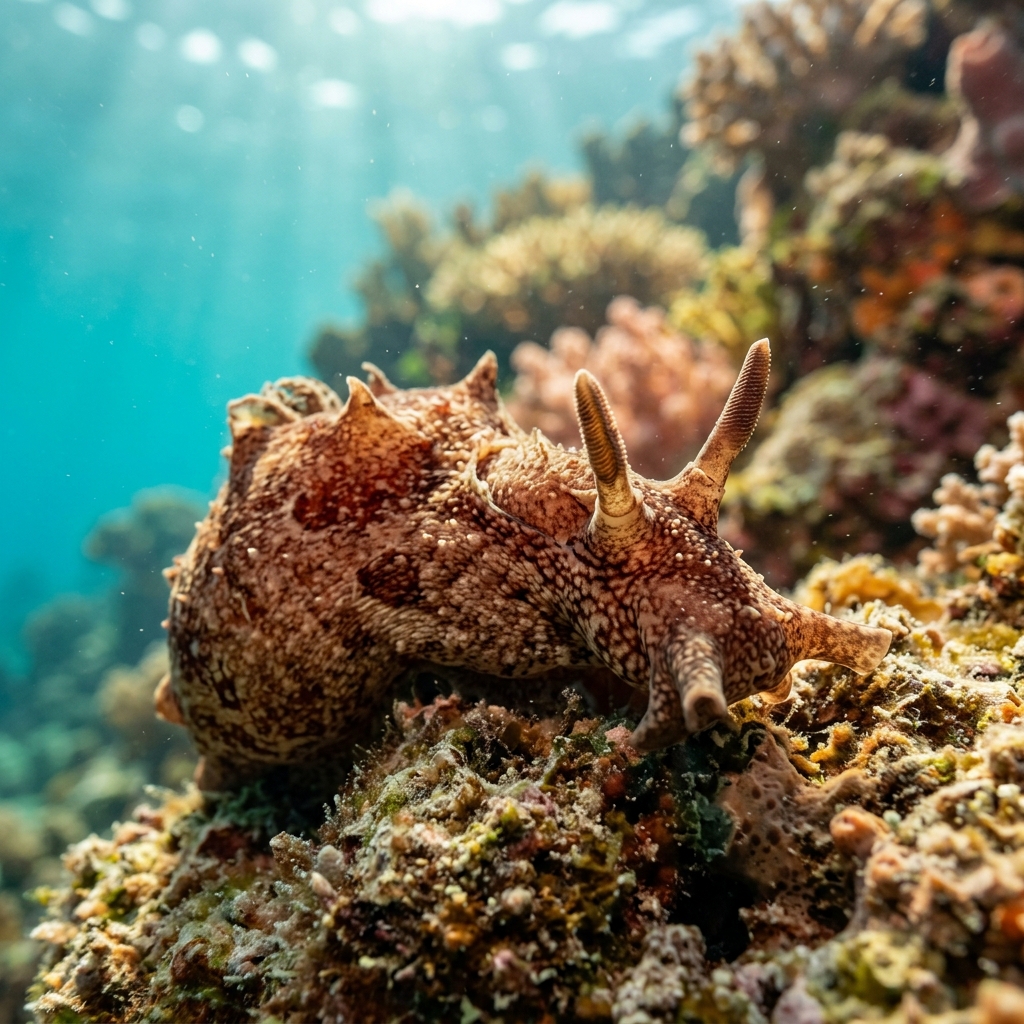
Reef neighbours a diver could mistake it for. Use the identification notes above to tell them apart.
This one is very much a KwaZulu-Natal specialty, logged across a wide spread of dive sites along South Africa's KZN coast and nowhere else in the current data. If you're diving that stretch of the Indian Ocean coastline, it's worth a slow look over sponge-covered reef and rubble patches.
Mapping where Wasp Rainbow Dorid is logged…
Almost all logged sightings come from KwaZulu-Natal, South Africa, where it's been recorded across a wide range of dive sites. It hasn't turned up in diver records outside this region so far.
There's no strong seasonal pattern in the sighting data, and it's been recorded in water from 21.7 to 27.7C, so it appears to be a year-round find on KZN reefs rather than a seasonal one.
Look for a small, slow-moving nudibranch with a boldly patterned, ruffled mantle in contrasting colours, plus two rhinophores up front and a feathery gill tuft at the rear. It's usually found sitting still on sponge-covered reef rather than swimming.
No. It poses no threat to divers and can be safely observed and photographed up close without disturbing it.
It's logged as uncommon at nearly all the sites where divers have recorded it, with only a couple of sites reporting it as rare. That makes it a nice find rather than a guaranteed one on any given KZN dive.
Site and sighting data is aggregated from diver logs, iNaturalist and GBIF. For taxonomy and conservation status:
Light-spotted Aegires
3,168 sites