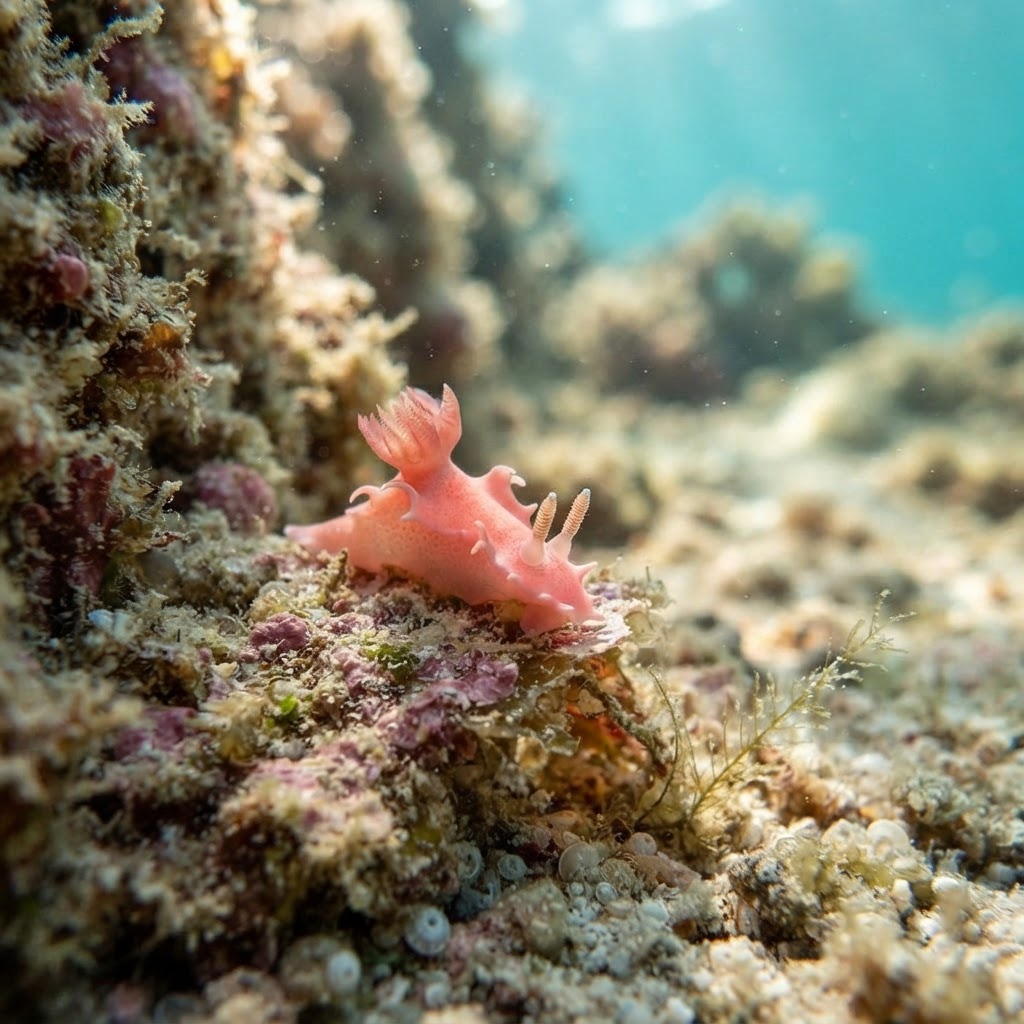
Verconia verconis
Tiny nudibranch spotted most often in Victoria, Australia, in cool 14.7-21.6 C water; here's how to spot it and where locals log it.
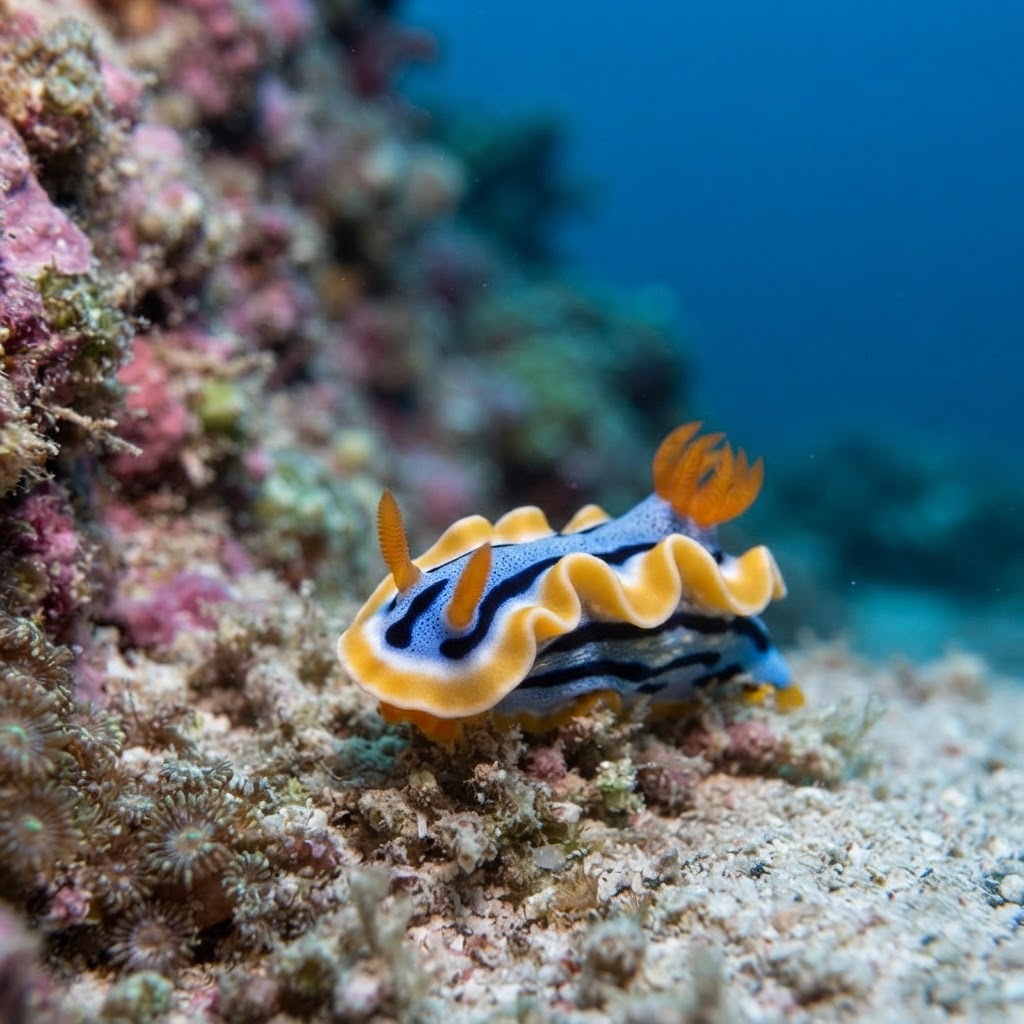
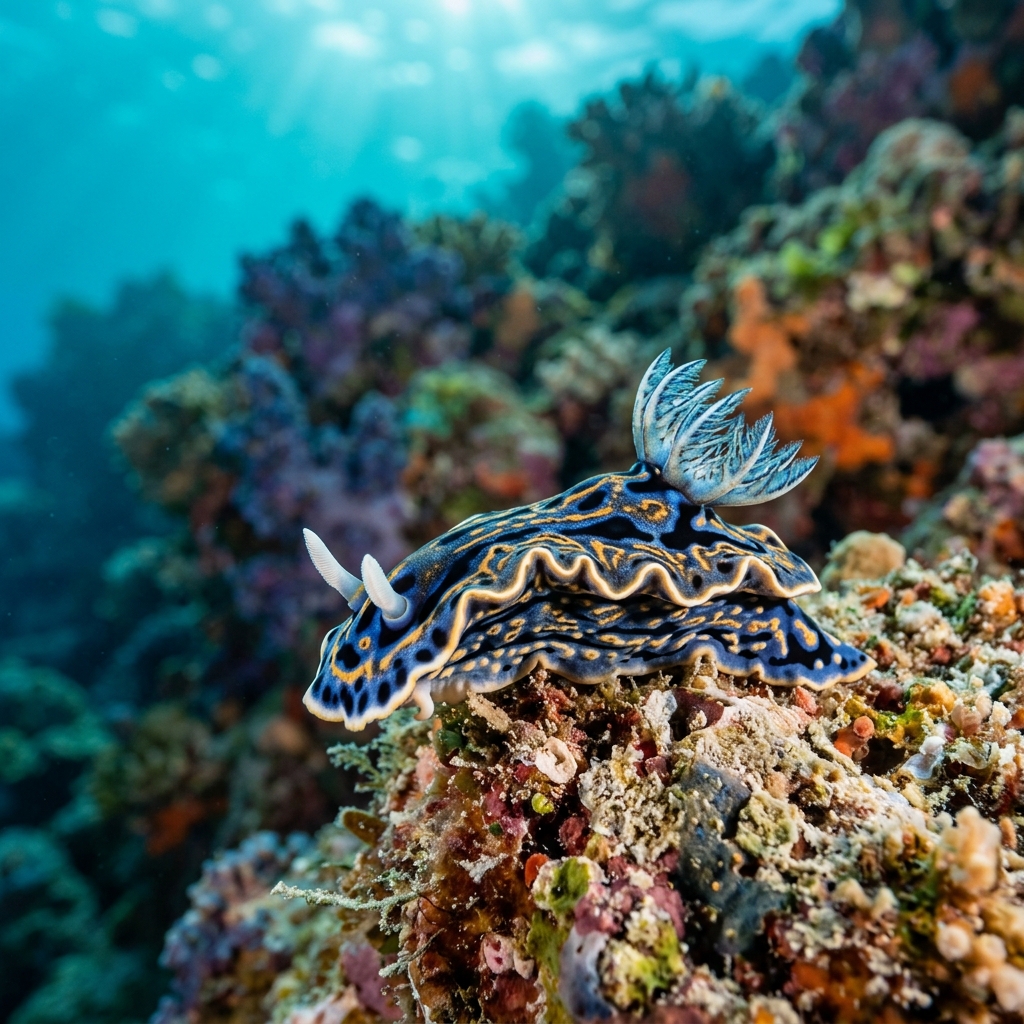
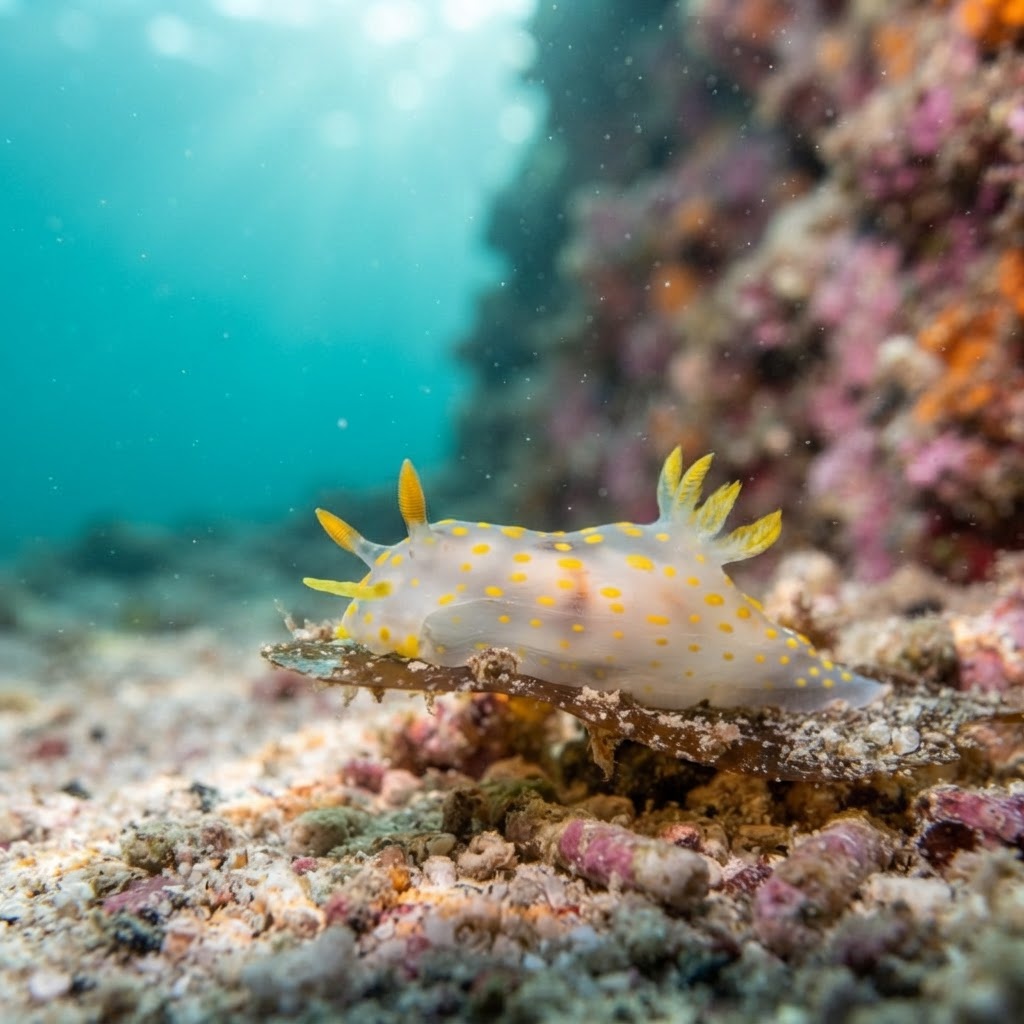
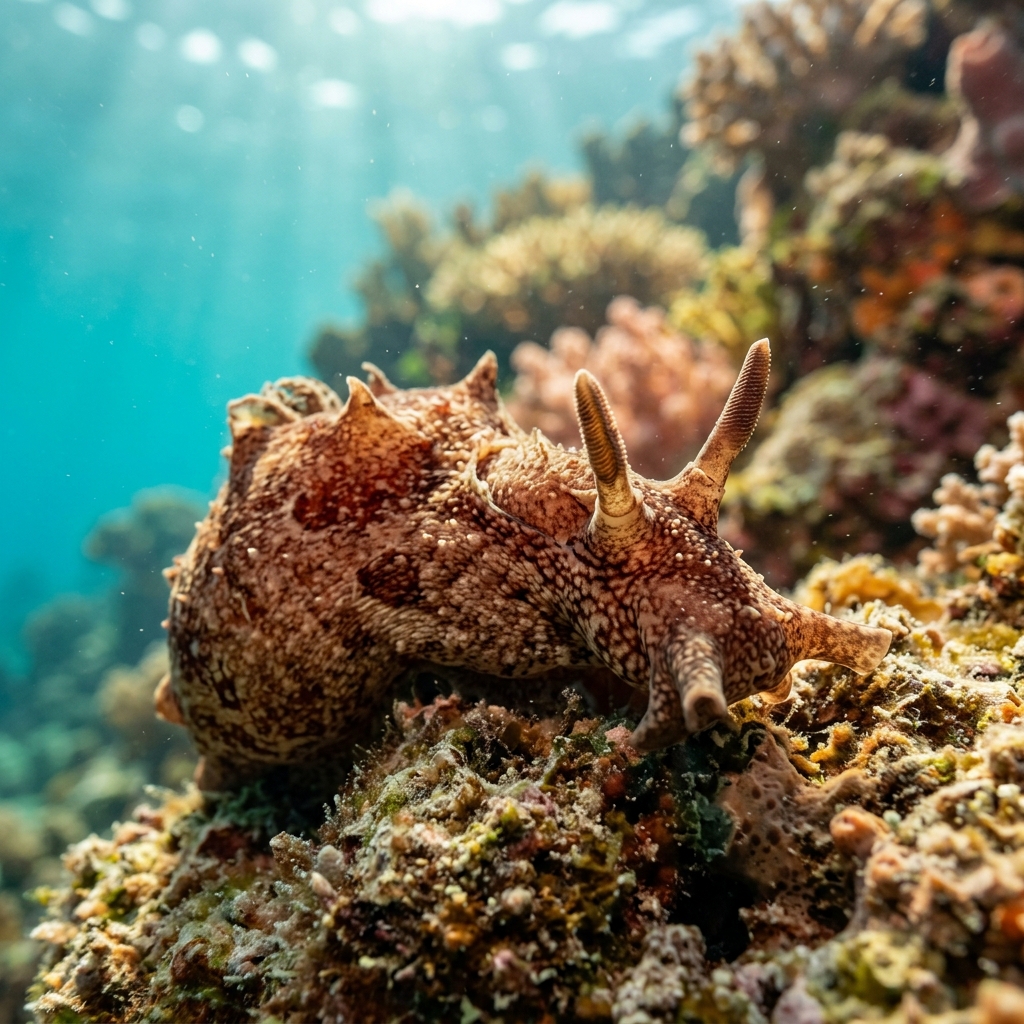
A small nudibranch topping out around 3 cm, so you're hunting on the reef floor or rubble rather than in open water. Look for a low, soft-bodied slug shape with a mantle that carries the mottled pattern typical of chromodorid nudibranchs, and paired rhinophores (small sensory horns) up front. Its size and muted colouring mean it's easy to swim straight past unless you're moving slowly and scanning close to the substrate.
Divers find it moving slowly over reef and rubble, doing what nudibranchs do best: grazing quietly and paying no attention to anything nearby. It shows no reaction to divers beyond continuing about its business, so a close, unhurried look with a torch or macro lens is the way to actually spot one. Most logs describe it as rare to uncommon at a given site, so treat any sighting as a bit of a find rather than a given.
Like other chromodorid nudibranchs, it likely feeds on sponges and stores or repurposes chemical compounds from that diet as a defence, which is part of why divers are told to look rather than touch.
Sighting data doesn't show a clear seasonal pattern, so treat it as a year-round find. Its observed range of 14.7 to 21.6 C fits the cooler temperate waters of southern Australia across most of the year, rather than a narrow warm-season window.
Reef neighbours a diver could mistake it for. Use the identification notes above to tell them apart.
This is an Australian speciality, most reliably logged in Victoria, with a smaller but steady presence in Western Australia and a single site recorded in South Australia. Victoria carries the bulk of sightings, making the southern Australian coast the place to focus a search.
Mapping where Verco's Verconia is logged…
It's most commonly logged in Victoria, Australia, with additional sightings in Western Australia and a smaller presence in South Australia. Outside Australia it hasn't been documented in the dive-sighting data.
There's no strong seasonal signal in the sighting data, so it's considered a year-round species in the cooler waters it favours, roughly 14.7 to 21.6 C.
Look for a small, roughly 3 cm nudibranch with a soft mottled mantle and a pair of rhinophores at the front, moving slowly over reef or rubble. Its small size means slow, close scanning is key to spotting one at all.
They're small, reaching around 3 cm in length, so they're easy to overlook without a close, deliberate search of the substrate.
No, they pose no danger to divers. Like most nudibranchs, they're best appreciated with eyes or a camera rather than touch.
As a chromodorid nudibranch, it likely feeds on sponges and may retain chemical compounds from that diet as a defence against predators, a common strategy in this family.
Site and sighting data is aggregated from diver logs, iNaturalist and GBIF. For taxonomy and conservation status:
Light-spotted Aegires
3,168 sites