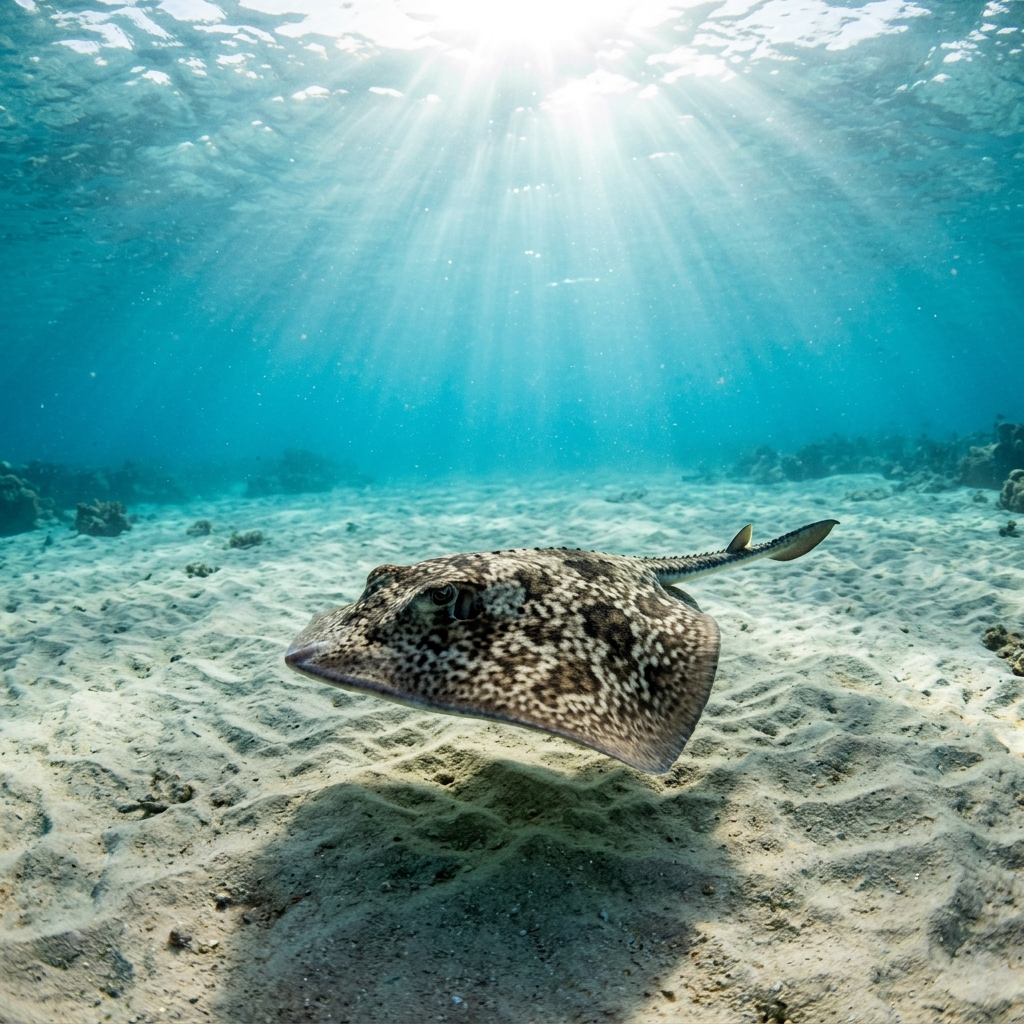
Urolophus kapalensis
Spot the Kapala Stingray along Australia's south-east coast, from New South Wales to Tasmania, in 17-23 °C waters between September and February.
If you're stung
Venomous tail barbGeneral first-aid guidance, not a substitute for professional medical care. In an emergency, call your local emergency number.
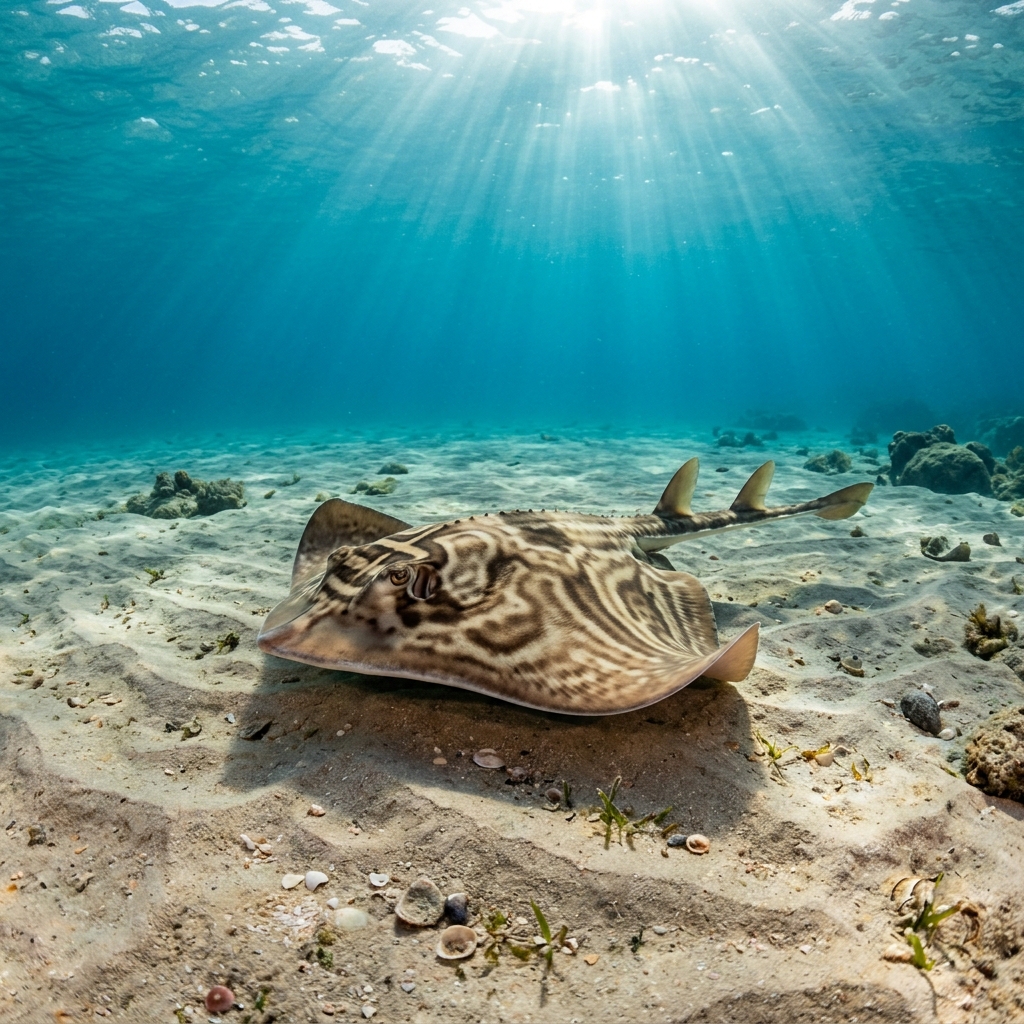
A small, oval-disc stingray with a relatively short tail and a single venomous spine near the base. The dorsal surface is typically mottled brown or greyish-brown, helping it blend into sandy and silty substrates where it rests. The tail lacks the long, whip-like length of larger stingrays, and the rounded disc shape is the clearest field mark distinguishing it from more elongated rays.
Divers most often encounter Kapala Stingrays resting motionless on sand or silt, relying on their mottled colouring to stay inconspicuous. When approached slowly, individuals tend to hold their position before gliding away with gentle wingbeats. Look for them on open sandy patches adjacent to reefs or seagrass beds in temperate coastal waters.
Like other members of the southern-hemisphere family Urolophidae, they give birth to live young rather than laying eggs, a reproductive strategy called viviparity that is unusual among cartilaginous fish that appear so small and unassuming.
Sightings concentrate between September and February, late austral spring through summer, which aligns with the warmer end of its observed temperature range of around 18 to 23 °C.
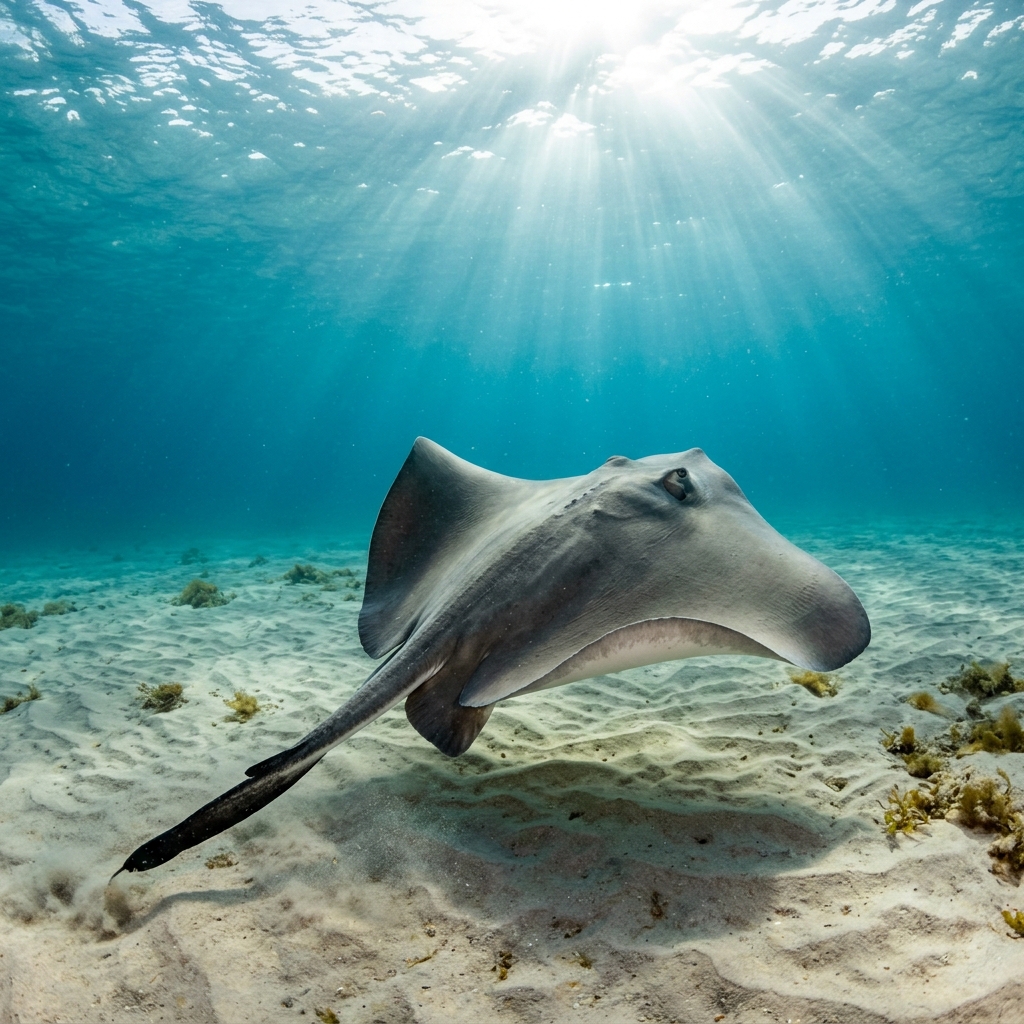
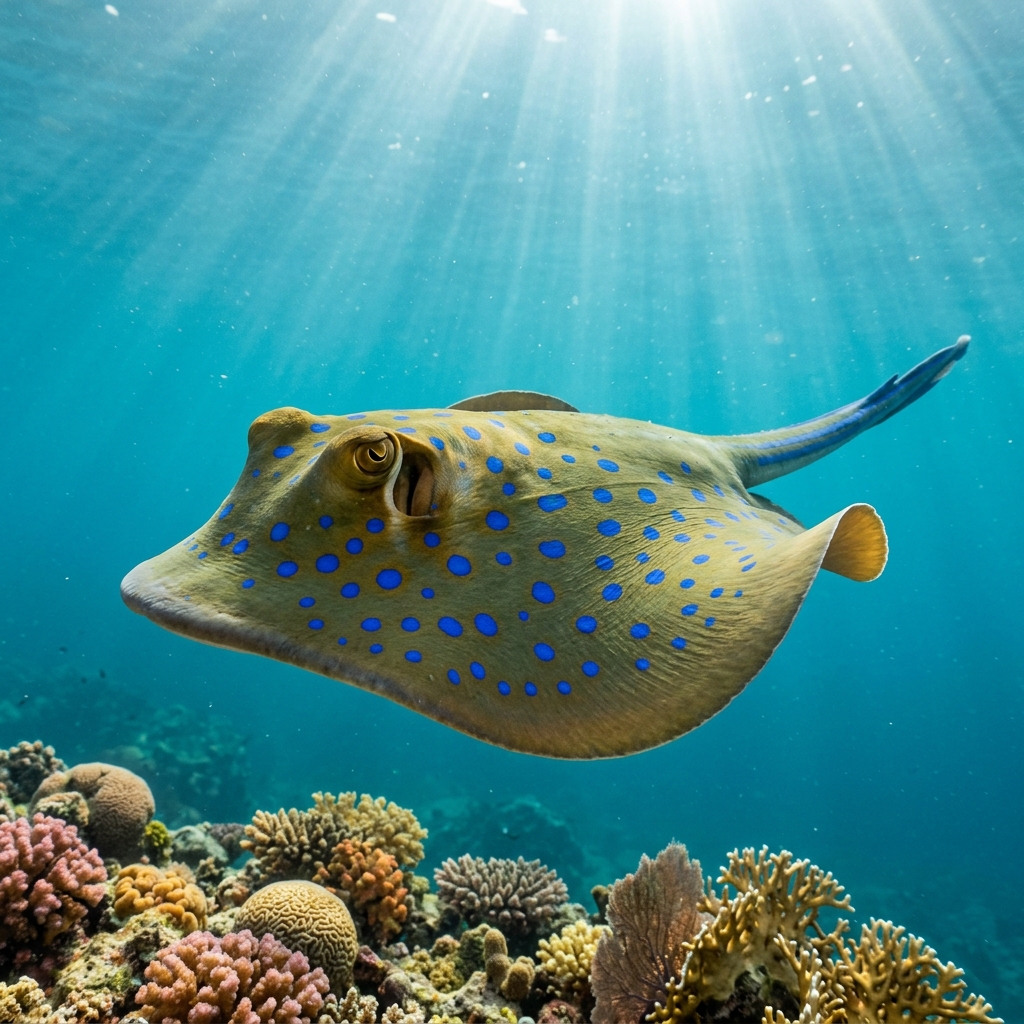
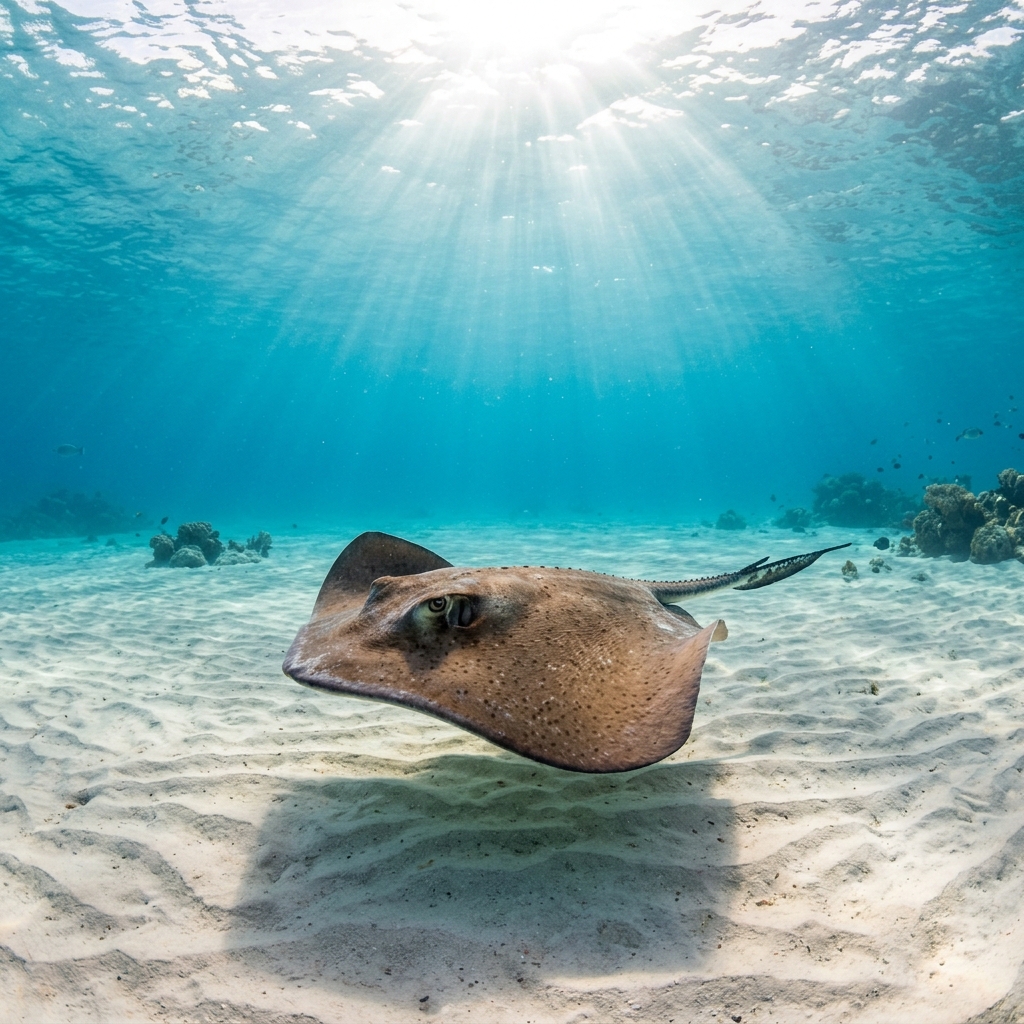
Reef neighbours a diver could mistake it for. Use the identification notes above to tell them apart.
Almost all recorded sightings come from Australia, concentrated along the south-east coast. New South Wales leads with the greatest number of logged sites, followed by Victoria and Tasmania. Smaller numbers of sightings extend into South Australia and Western Australia.
Mapping where Kapala Stingray is logged…
All known dive sightings are from Australia, with New South Wales providing the strongest concentration of records, followed by Victoria and Tasmania. A small number of sightings have also been logged in South Australia and Western Australia.
Sightings peak between September and February along Australia's south-east coast. This period corresponds to late spring and summer, when water temperatures in the region sit within the 18 to 23 °C range the species favours.
Look for a small, rounded disc ray resting on sandy or silty seafloor with mottled brown dorsal colouring and a short tail. The compact disc shape and short tail distinguish it from larger stingrays with long whip-like tails.
They are not considered dangerous. Like all stingrays they carry a venomous spine on the tail, but they are not aggressive and will typically rest or swim away calmly. Simply avoid placing hands near the tail and observe without touching.
They are listed as Near Threatened. Their range appears limited to temperate Australian waters, making population monitoring important. Logging verified photo sightings through dive platforms or iNaturalist directly supports the science on this species.
At most sites where they appear in dive logs, sightings are rated uncommon, with a portion of sites rating them rare. Common sightings exist at a smaller number of locations. Patience and slow, low-impact diving technique improve your chances considerably.
Site and sighting data is aggregated from diver logs, iNaturalist and GBIF. For taxonomy and conservation status:
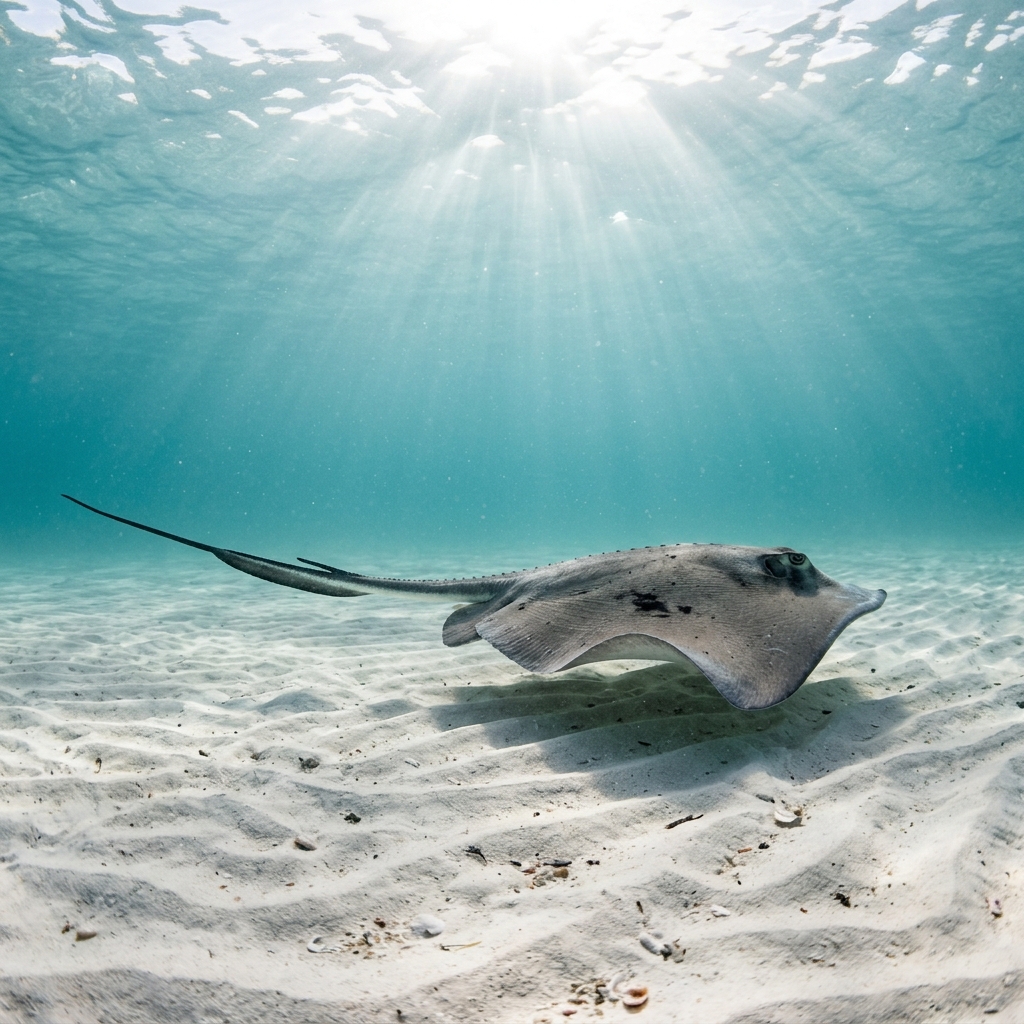
Whiptail Stingray
1,747 sites