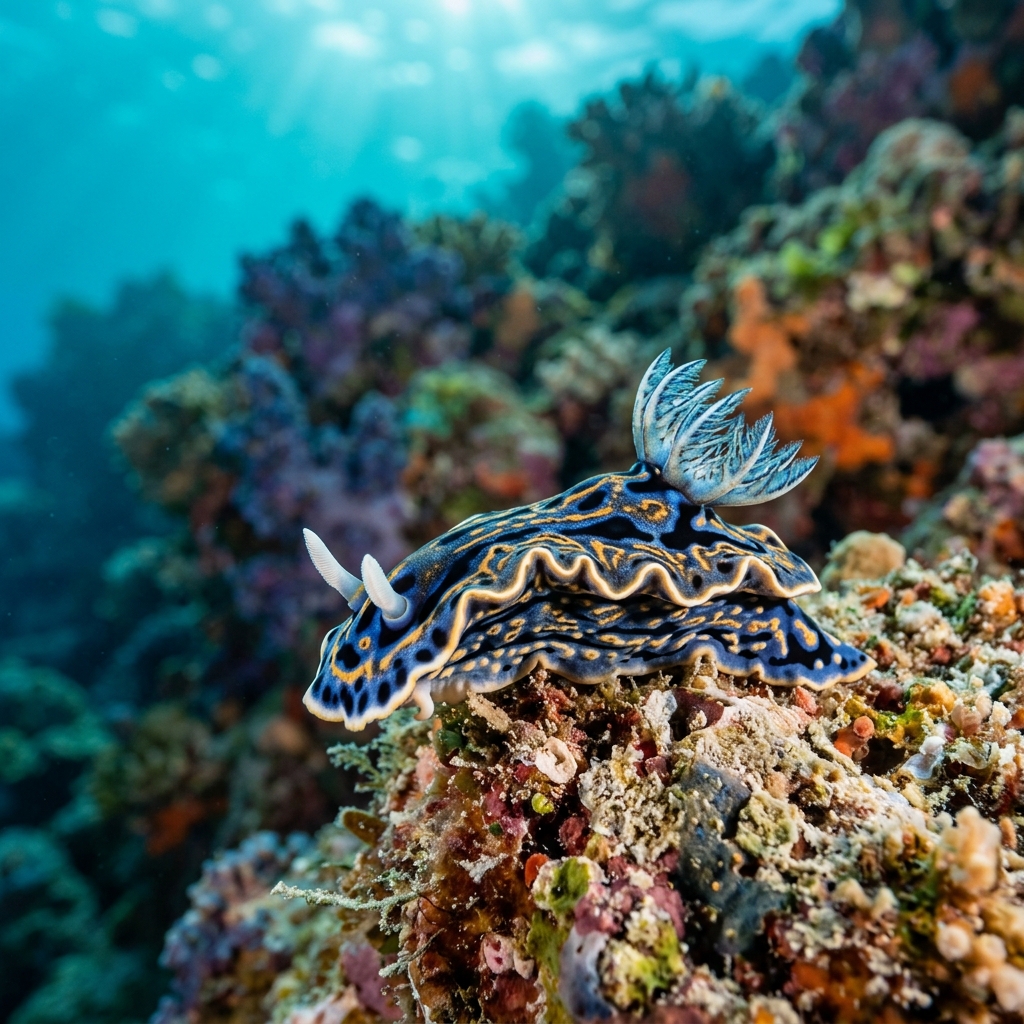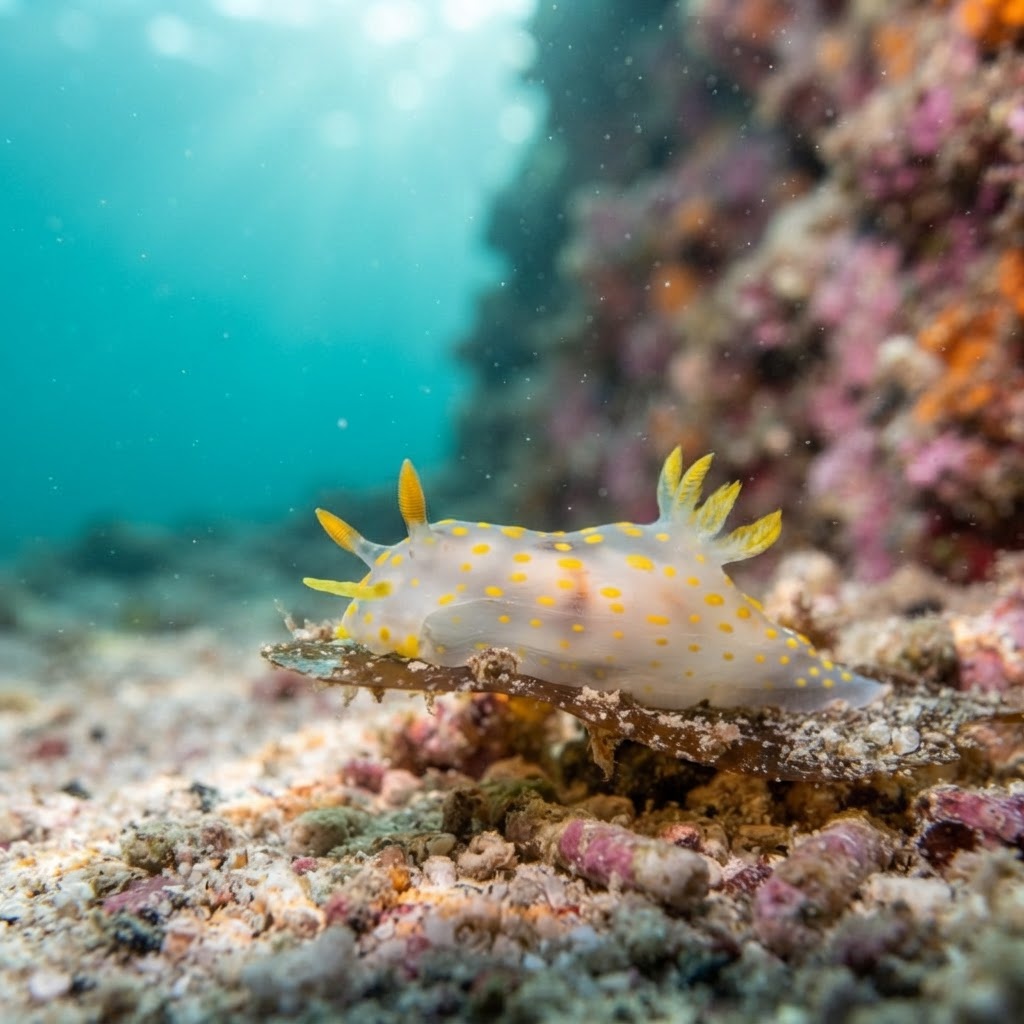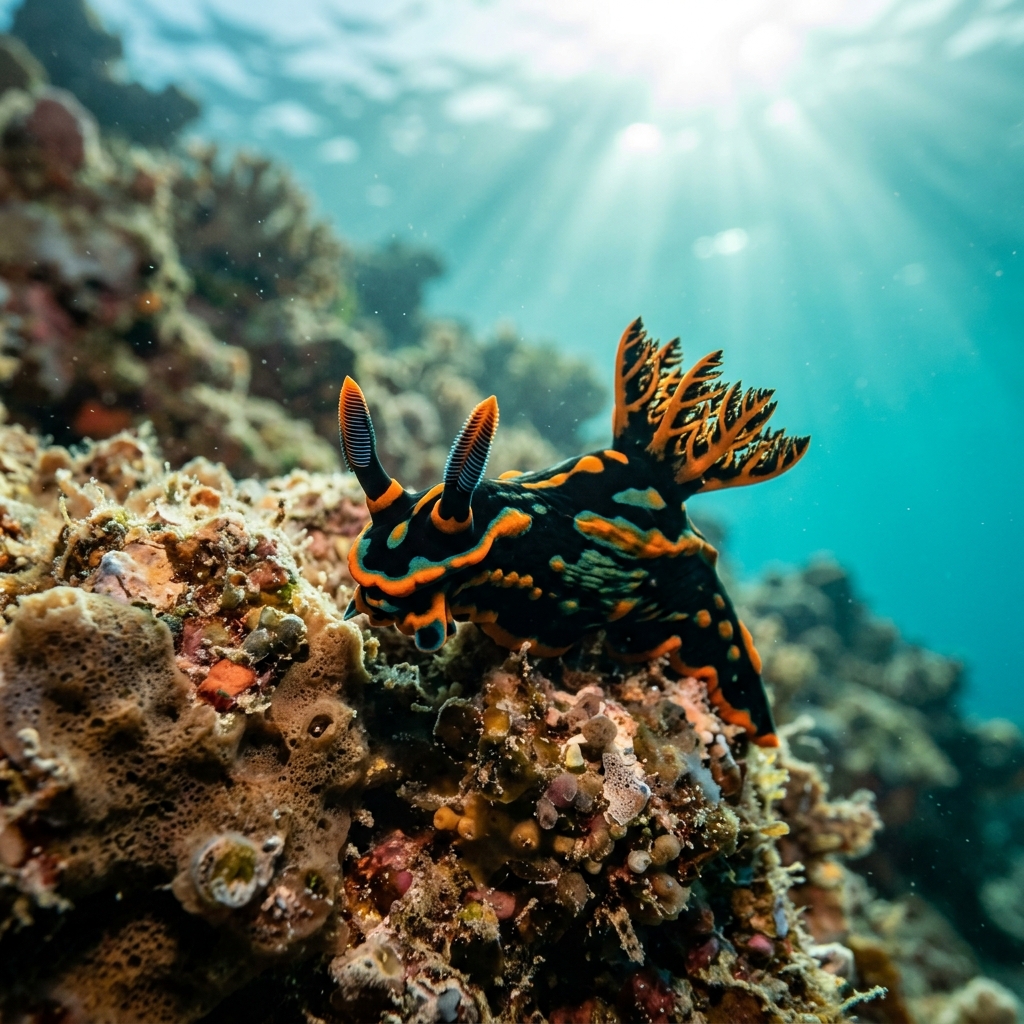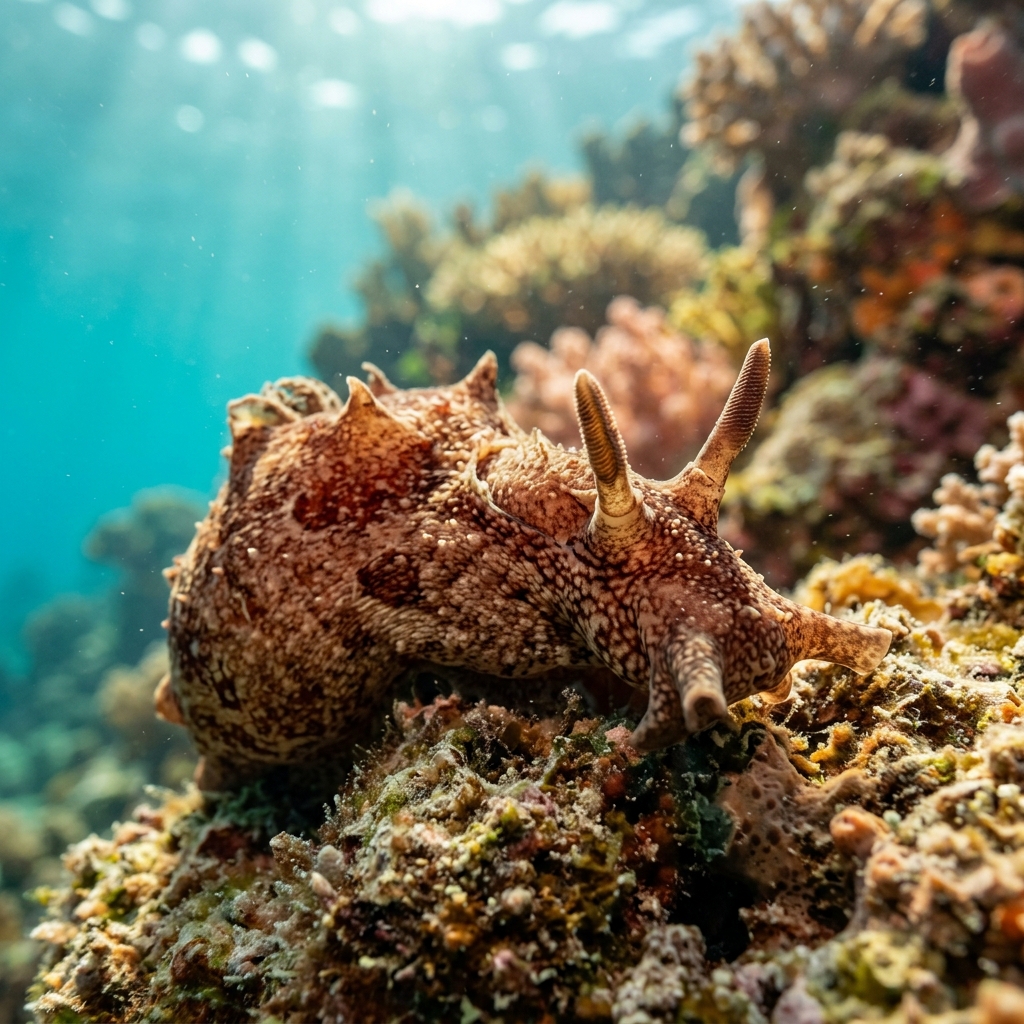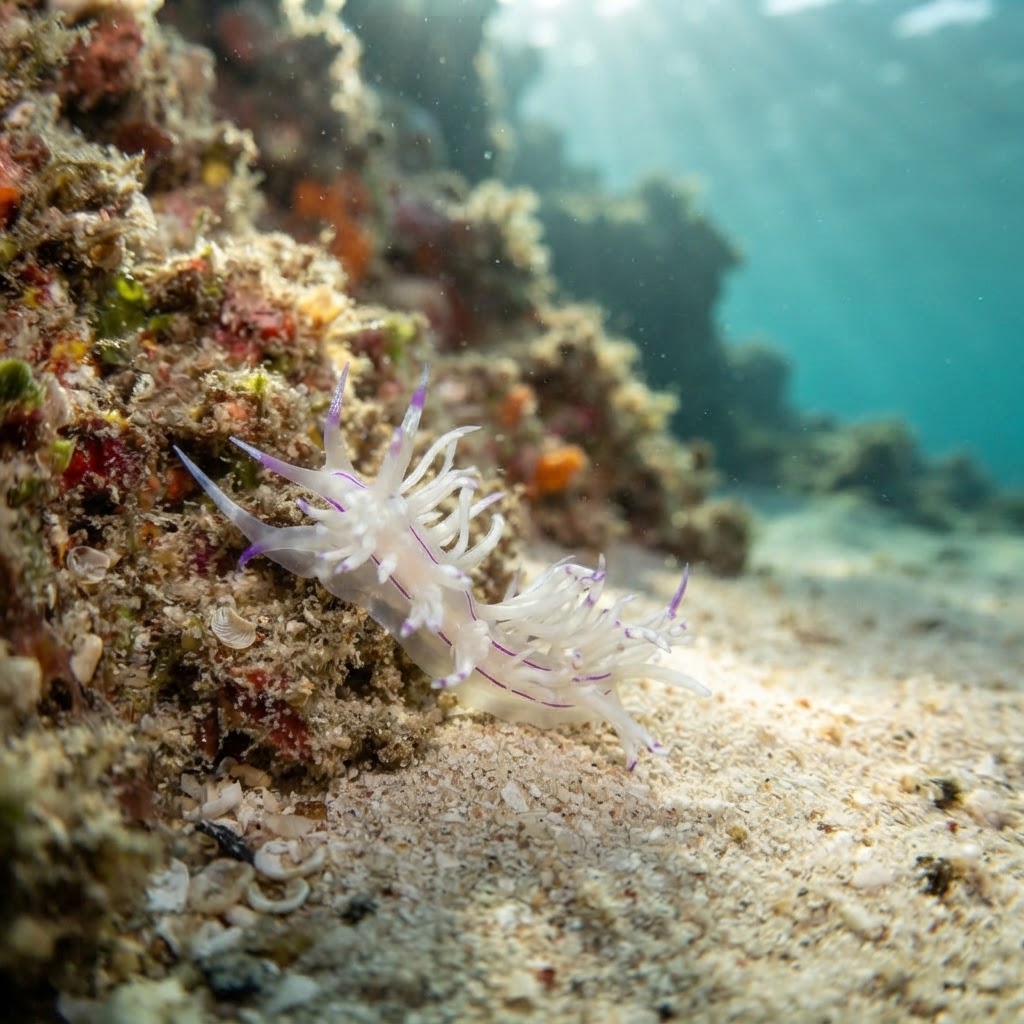
Unidentia sandramillenae
A little-documented nudibranch logged almost exclusively around Bali, in warm 25.6 to 31.6 C water, year-round.
A small sea slug (nudibranch) best picked out by dive guides who know the local reef life rather than by an obvious flashy pattern, since detailed size and colour data are not yet standardised for this species. Look for it on hard substrate and rubble patches where other nudibranch species cluster, moving slowly across the surface as it grazes. There is no confirmed difference in appearance between juveniles and adults or between sexes in the available records.
Divers typically find it moving slowly over reef rubble and hard bottom, going about the unhurried grazing that nudibranchs are known for. It shows no reaction to divers beyond continuing to feed, and like most nudibranchs it is easiest to spot with a careful, slow scan of the substrate rather than in open water. Most sightings come from the same muck and rubble habitats that make Bali popular for small-critter diving.
Like other nudibranchs, it almost certainly gets both its colouring and any chemical defences from the specific sponges or other prey it feeds on, meaning its appearance is tied directly to its diet rather than being fixed from birth.
Records show no detectable seasonal pattern, and with water temperatures logged between 25.6 and 31.6 C, conditions stay suitable for it on Bali's reefs throughout the year. Treat it as a year-round possibility rather than a species tied to a particular month.
Reef neighbours a diver could mistake it for. Use the identification notes above to tell them apart.
Almost every logged sighting comes from Indonesia, with Bali standing out as by far the strongest area for this species and a single record from Sulawesi. Within Bali, it turns up at scattered sites often enough to be worth asking your guide about, though it is generally logged as uncommon rather than a guaranteed find.
Mapping where Sandra Millen's Unidentia is logged…
Bali, Indonesia is by far the strongest area for this species, with a single additional record from Sulawesi. It is not yet documented outside Indonesia in diver observation data.
There is no detected seasonal pattern, and it has been recorded in water from 25.6 to 31.6 C, so it is considered a year-round sighting on Bali's reefs rather than a seasonal specialty.
Detailed size and colour descriptions are not well established for this species, so identification usually relies on comparing it against similar nudibranchs on site, such as Chromodoris and Nembrotha species, with a local guide's help.
Exact size data has not been confirmed for this species, though like most nudibranchs it is likely a small, easily overlooked animal best spotted with a slow scan of the reef substrate.
No, it poses no danger to divers. As with all nudibranchs, simply avoid touching it and let it go about its business on the reef.
Site and sighting data is aggregated from diver logs, iNaturalist and GBIF. For taxonomy and conservation status:
Light-spotted Aegires
3,168 sites