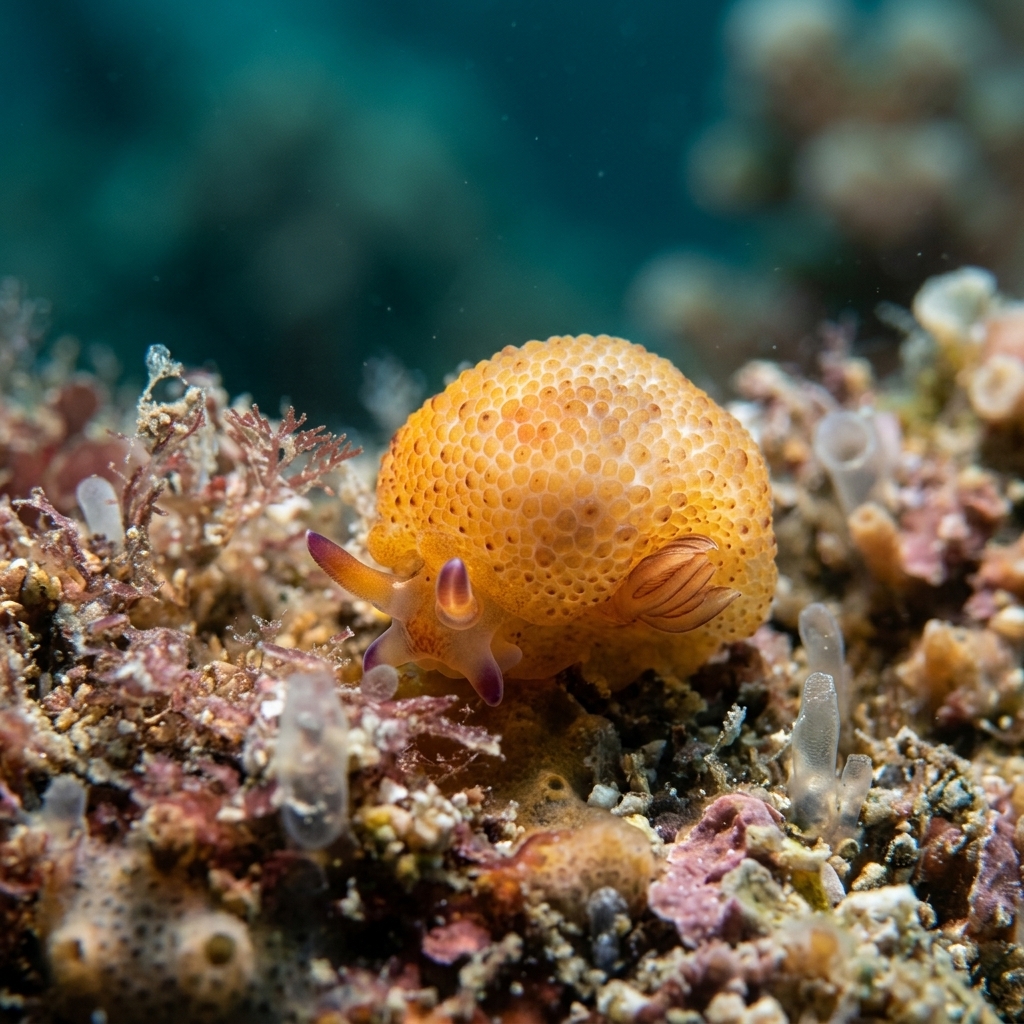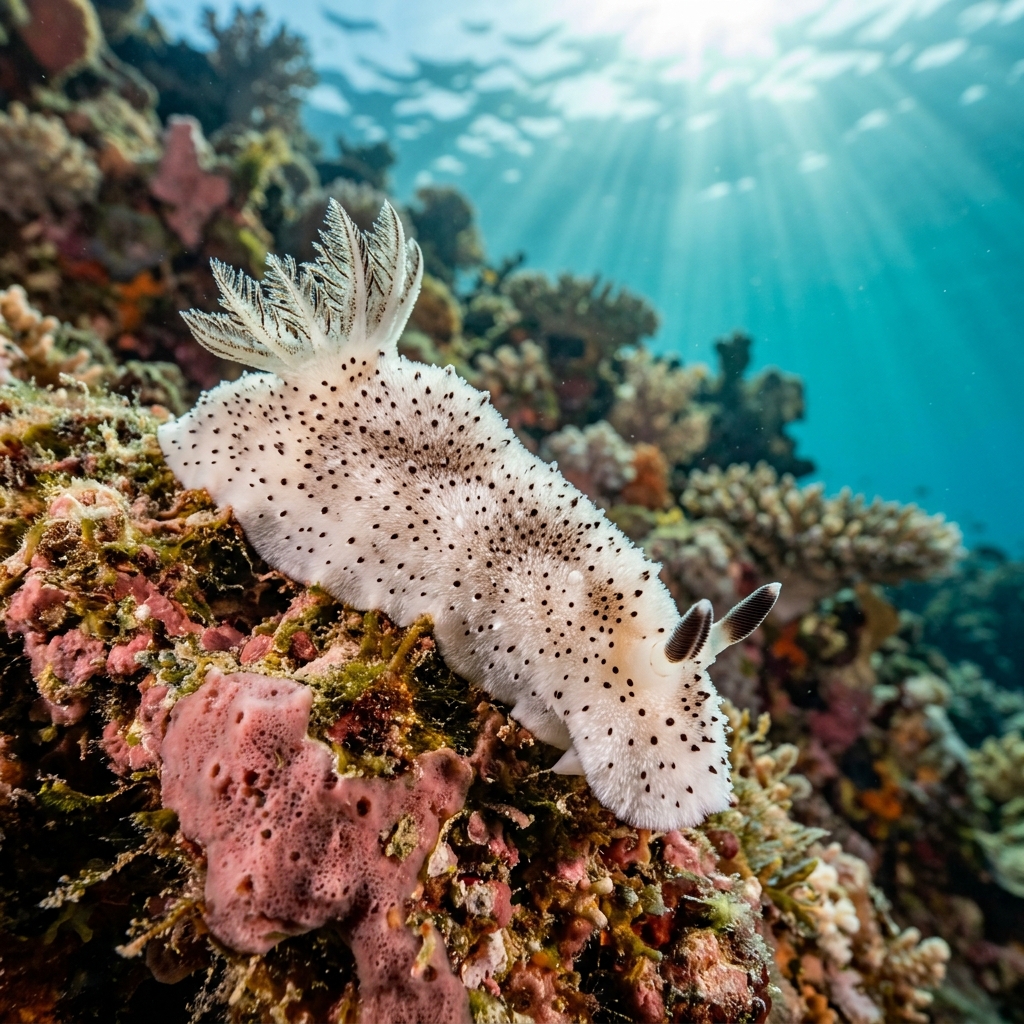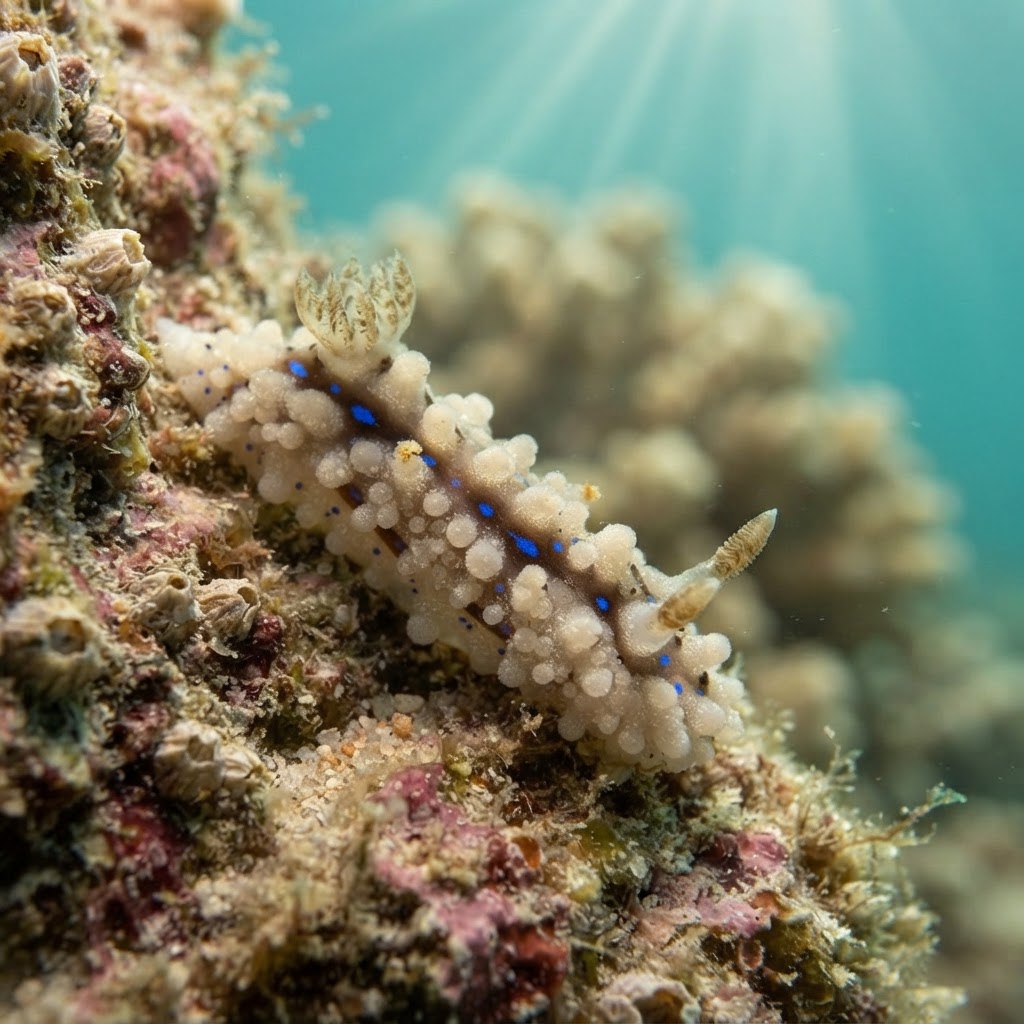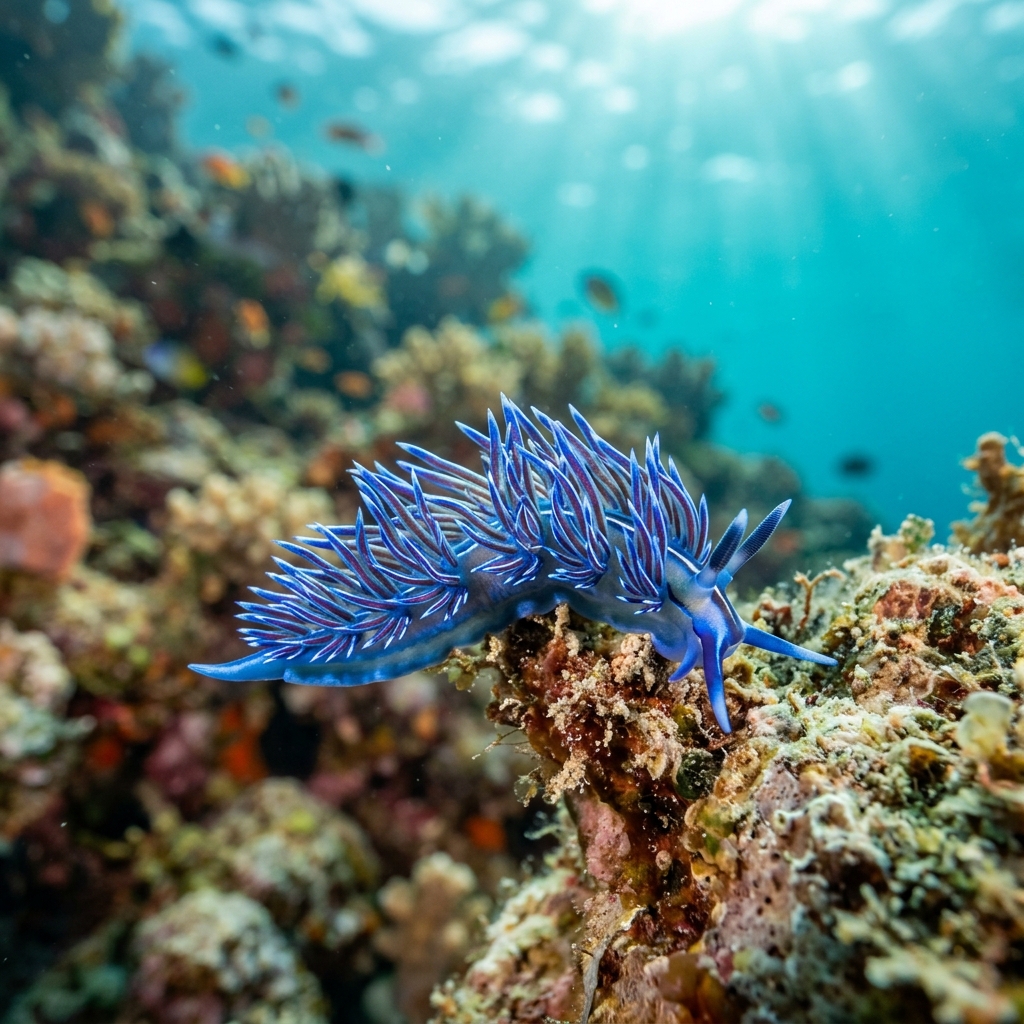
Nembrotha spp.
Spot Nembrotha nudibranchs across the Visayas, Sulawesi, and Bali in 20-29°C Indo-Pacific waters. Learn the bold markings that separate them from look-alikes.
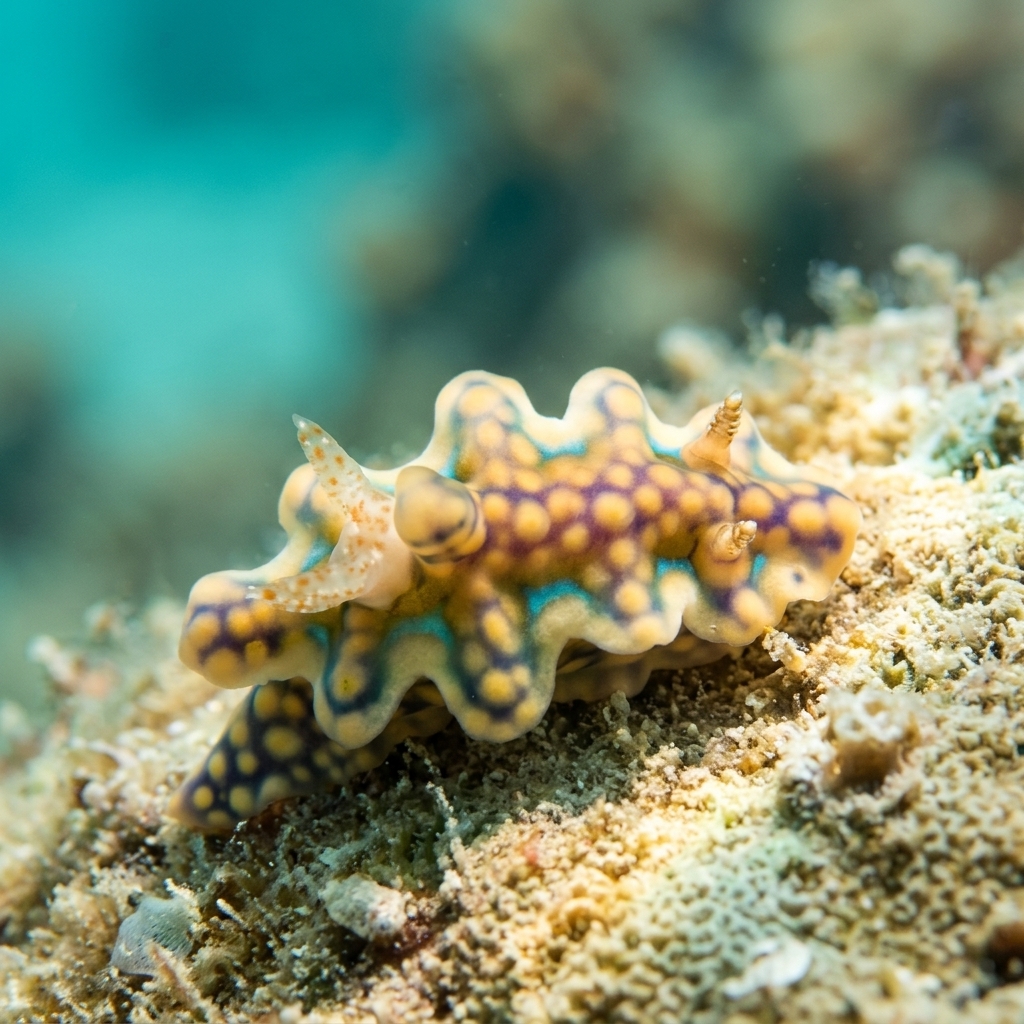
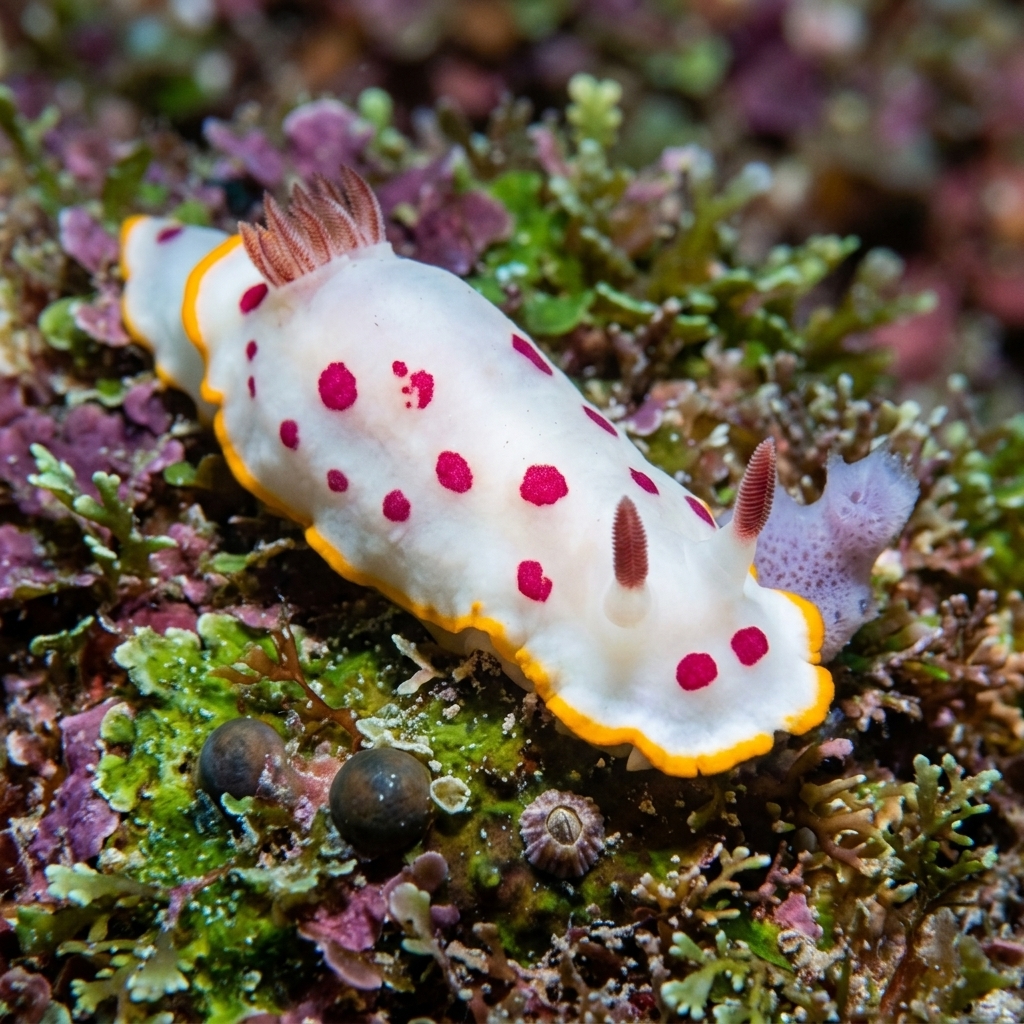
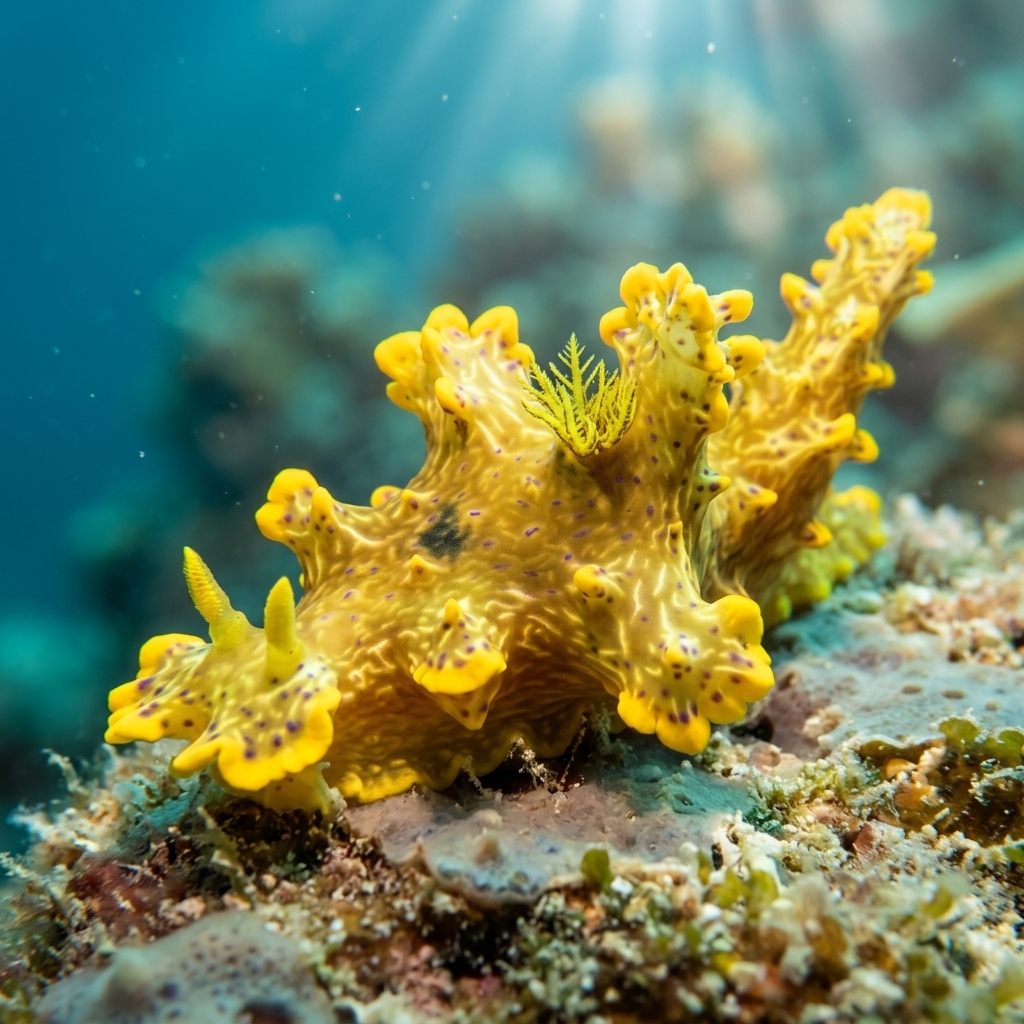
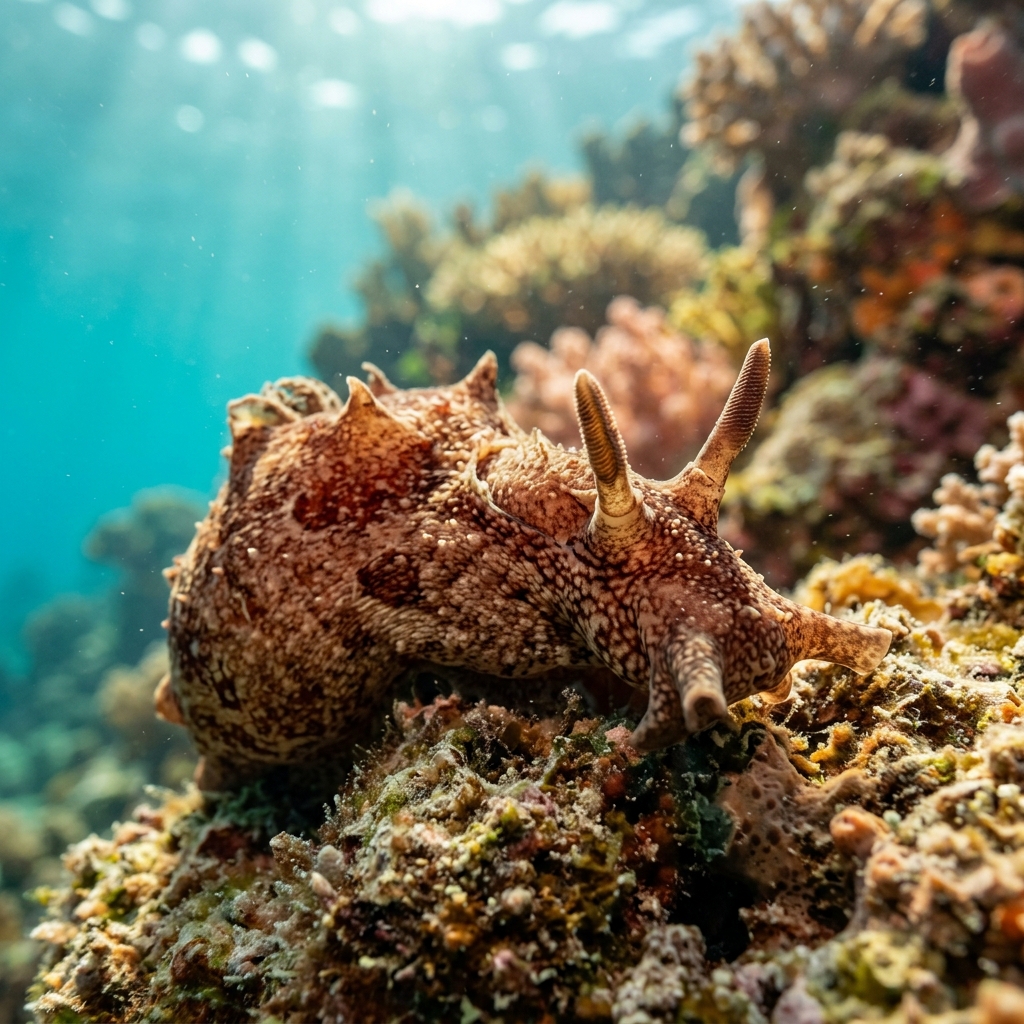
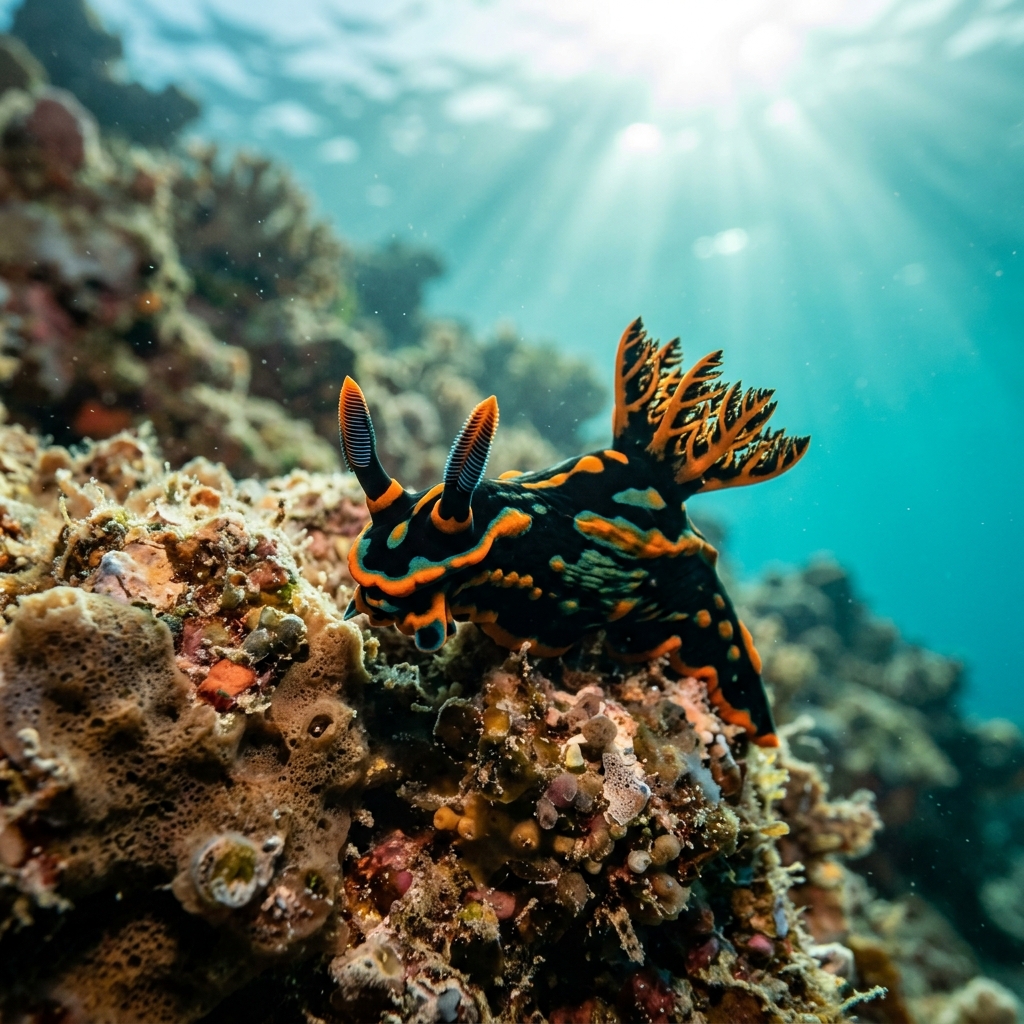
Nembrotha species share a dark base colour, typically deep green, black, or charcoal, overlaid with contrasting ridges, spots, or edge markings in vivid orange, red, or green. The gill plumes (cerata) and rhinophores (the sensory horns on the head) are usually brightly tipped, making them easy to clock against the reef. Body shape is elongated and relatively robust for a nudibranch, and most species are large enough to spot without a macro lens. Key in on that dark body with bold accent colour combination; it is the group's signature underwater look.
You will most often find Nembrotha nudibranchs moving slowly across hard coral, tunicates (sea squirts), or rocky substrate, grazing on the colonial tunicates that make up much of their diet. They tend to be indifferent to divers and will carry on feeding or crawling if you approach carefully and without disturbing the reef. Encounters are usually solitary, though during mating periods two individuals can sometimes be found side by side, exchanging sperm as simultaneous hermaphrodites.
Nembrotha nudibranchs sequester toxic compounds from the tunicates they eat and advertise this chemical defence through their vivid colouration, a strategy called aposematism. Predators learn to avoid them, which is why they can afford to crawl slowly and conspicuously in plain sight.
In the Northern Hemisphere, where the vast majority of sightings occur, Nembrotha nudibranchs are present year-round with no concentrated season, which makes sense given their comfort in the 20-29°C water temperatures typical of Indo-Pacific tropical and subtropical reefs. Southern Hemisphere sightings concentrate between March and January, so avoid the southern summer peak in February if numbers matter to you.
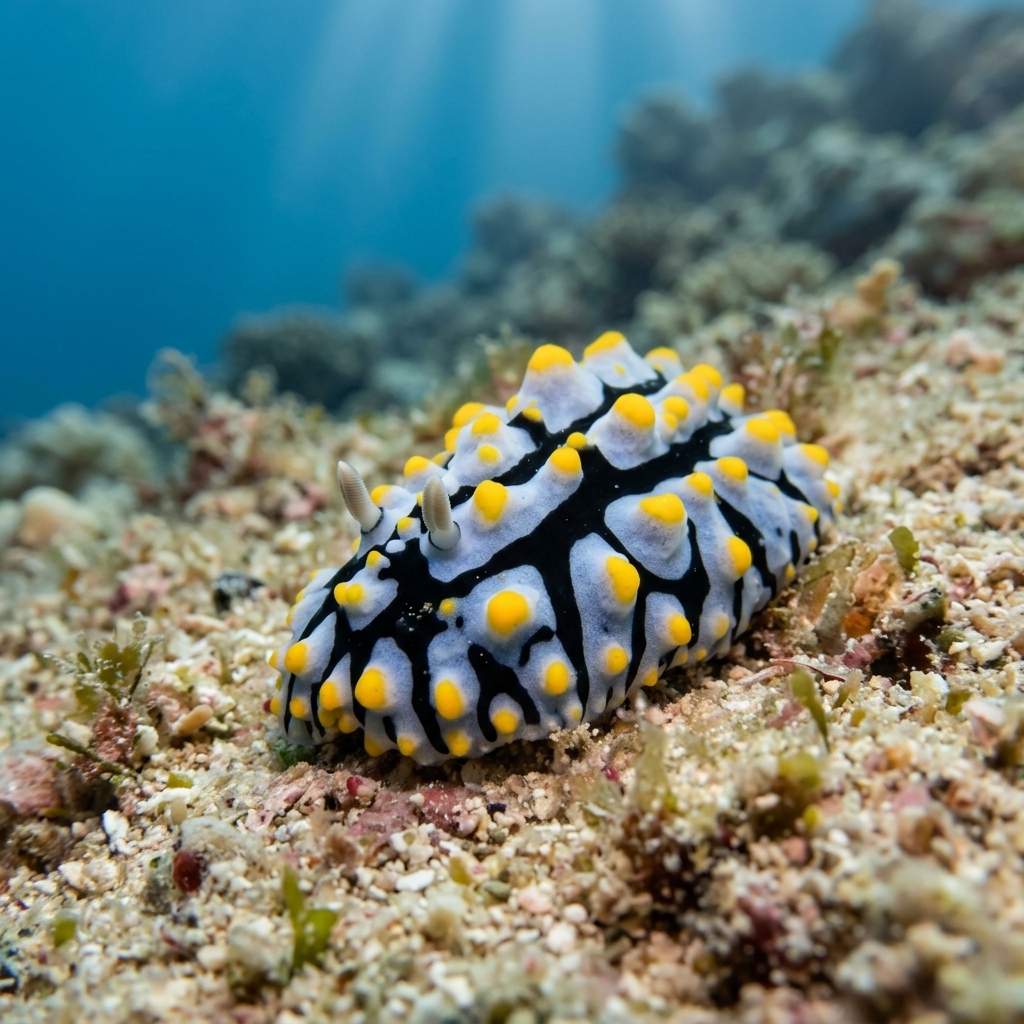
Reef neighbours a diver could mistake it for. Use the identification notes above to tell them apart.
Nembrotha nudibranchs are most consistently logged across the Philippines, particularly in the Visayas and around Luzon, which together account for the strongest concentration of sightings anywhere in their range. Indonesia follows closely, with Sulawesi, Bali, and the Nusa Tenggara region all producing reliable records. Beyond Southeast Asia, strong populations have been documented in the Maldives, Malaysian Borneo around Sipadan, Australia, Japan, and Tanzania, reflecting a broad Indo-Pacific distribution.
Mapping where Nembrotha Nudibranch is logged…
The Philippines is the top destination, especially the Visayas and Luzon. Indonesia is equally productive, with Sulawesi, Bali, and the Banda Sea all delivering sightings. Further afield, the Maldives, Sipadan in Malaysian Borneo, and parts of coastal Australia are also strong bets across the broader Indo-Pacific.
In the Northern Hemisphere, covering the Philippines, Indonesia, Malaysia, and the Maldives, they appear year-round with no strong seasonal peak. Water temperatures in the 20-29°C range keep them active on tropical reefs throughout the year, so there is no bad month to look.
Look for a dark body, usually black, charcoal, or deep green, with contrasting orange, red, or bright green markings along the ridges or margins. The gill plumes and rhinophores are typically brightly tipped. The combination of a robust elongated body and dark-plus-vivid-accent colour scheme is the group's clearest field mark.
Sizes vary across the group, but many species reach 40-80 mm in length, making them relatively large nudibranchs and comfortably visible to a diver without specialist macro equipment. Some of the larger members can exceed 100 mm.
Their bold patterns are a warning signal to predators. Nembrotha species feed on colonial tunicates and accumulate toxic or distasteful chemicals from their prey. The vivid colouration advertises that toxicity, a defence strategy called aposematism, which is why they can afford to move slowly and openly across the reef without hiding.
Site and sighting data is aggregated from diver logs, iNaturalist and GBIF. For taxonomy and conservation status:
Light-spotted Aegires
3,168 sites