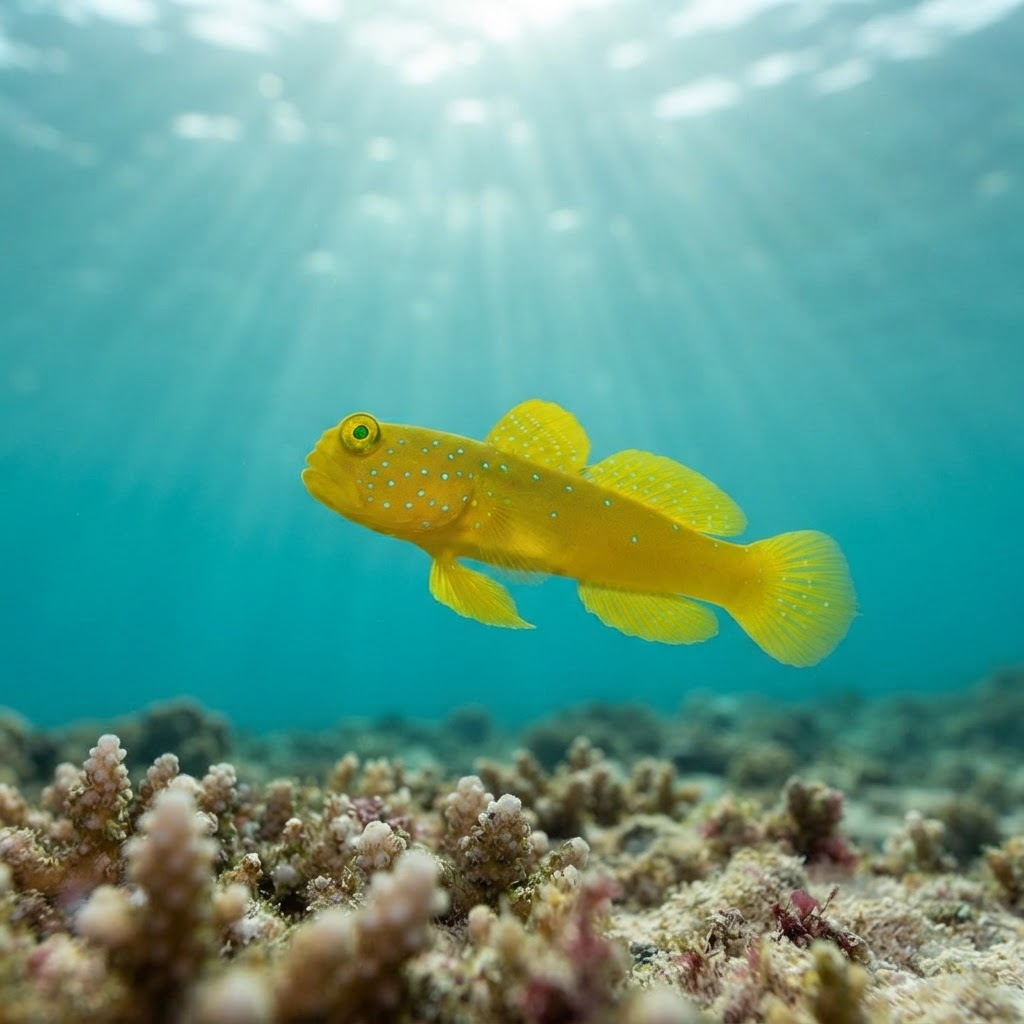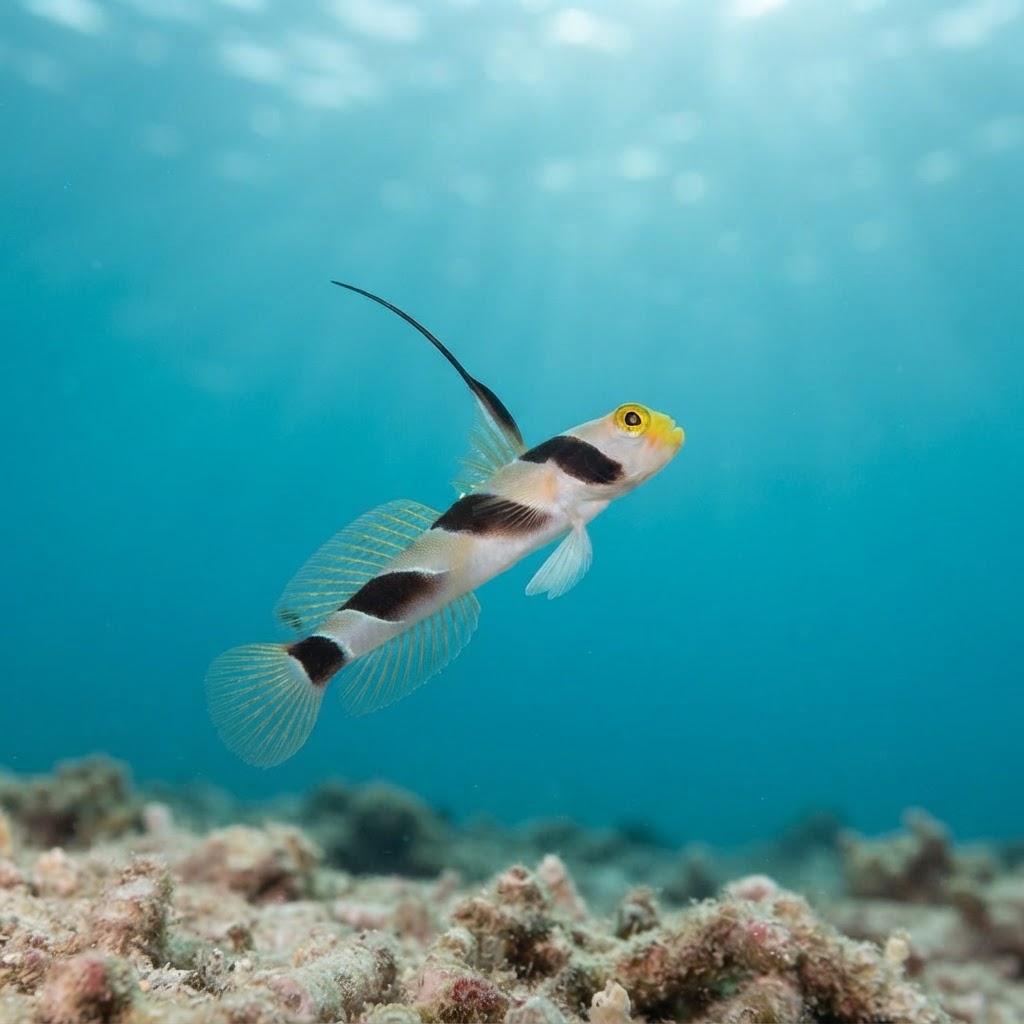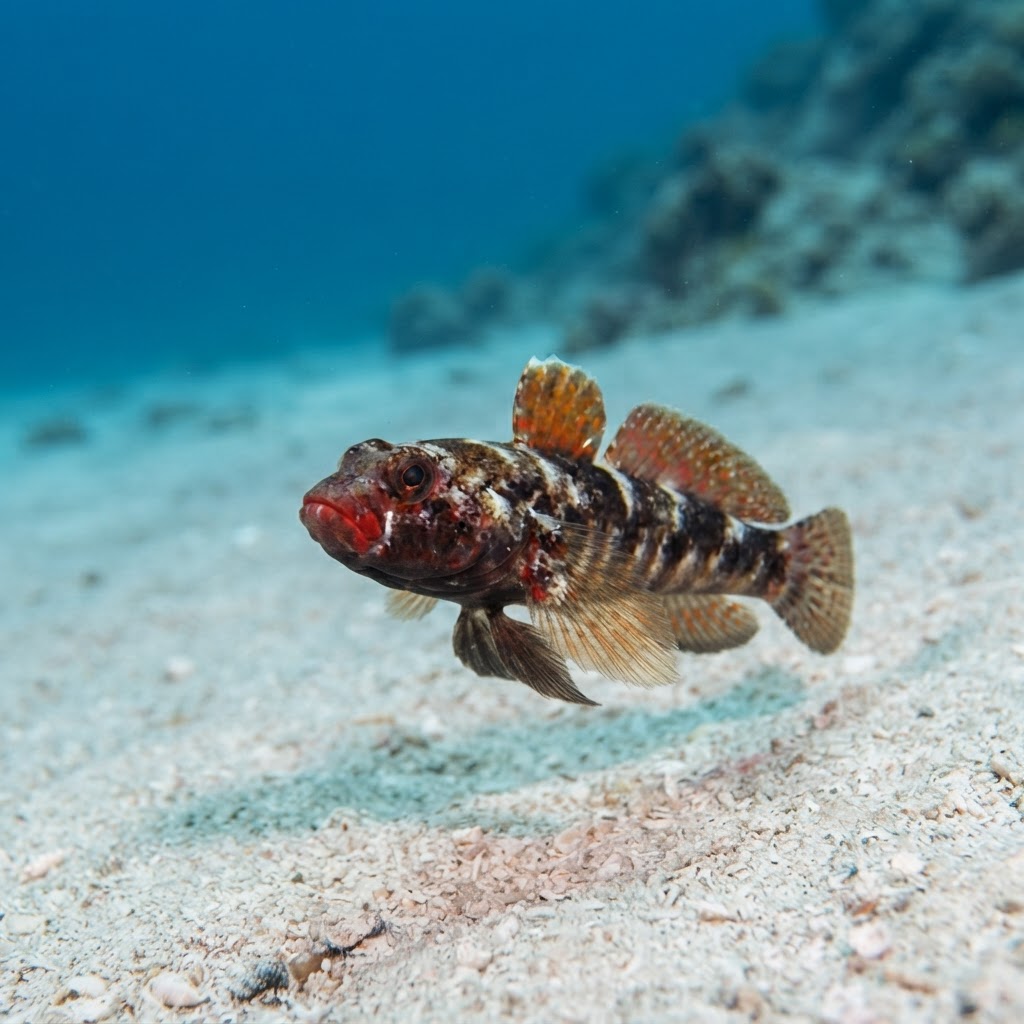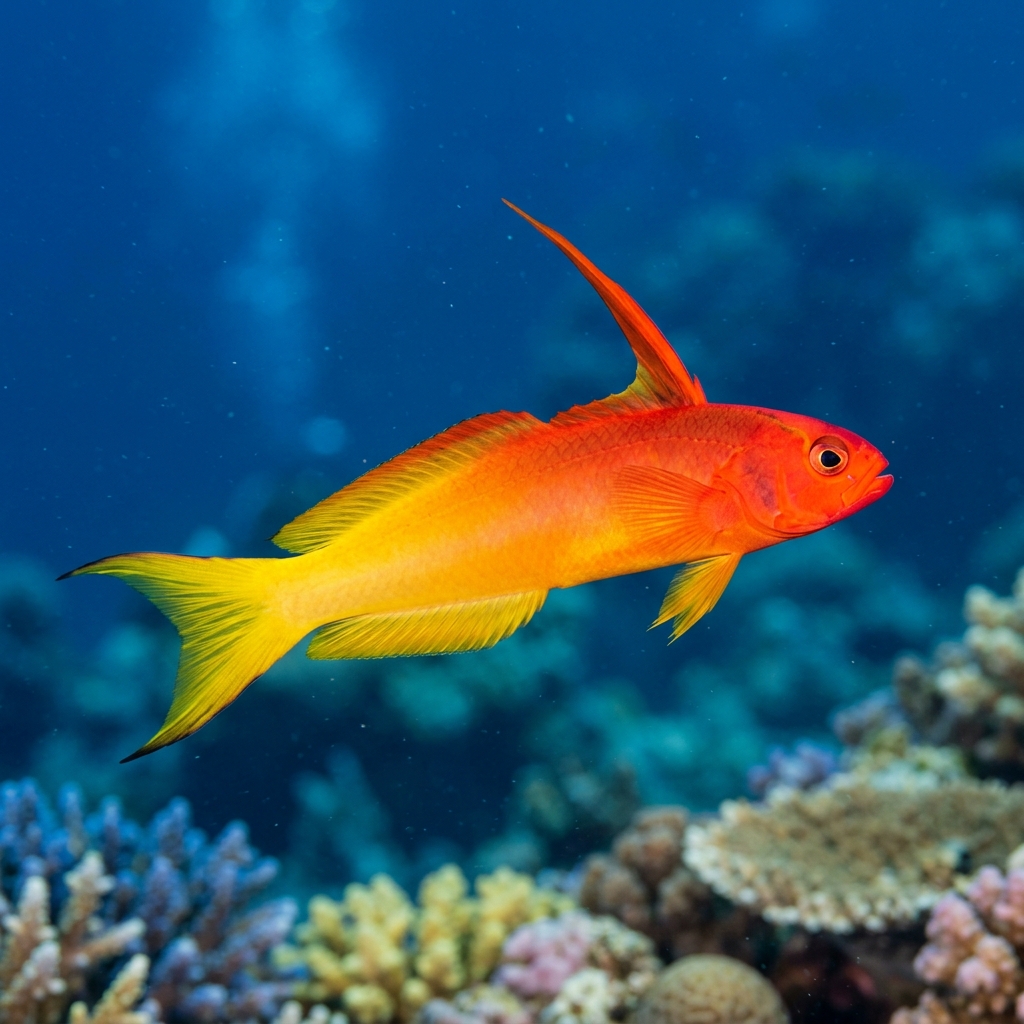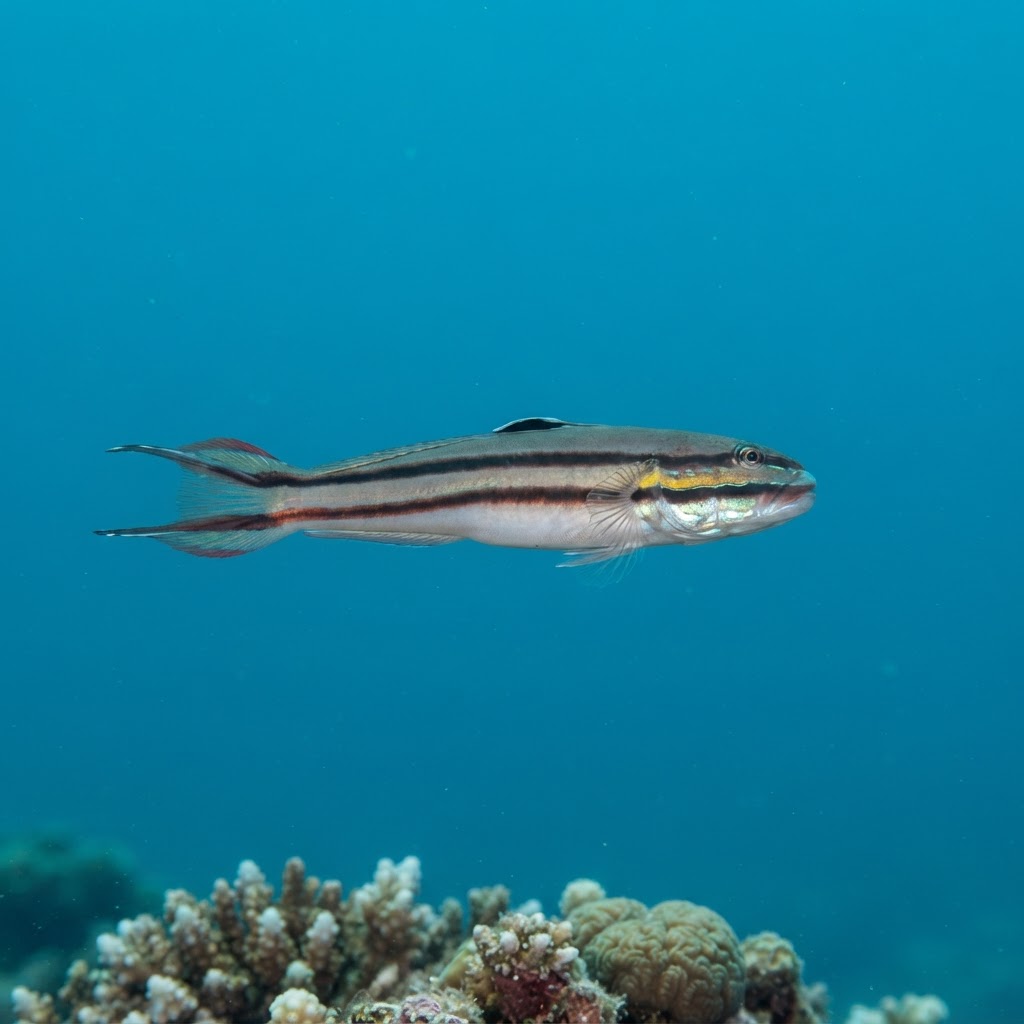
Valenciennea helsdingenii
Pale grey goby with two dark stripes, hovering over sand in West Papua and Maluku reefs at 24-29C, year-round and uncommon.
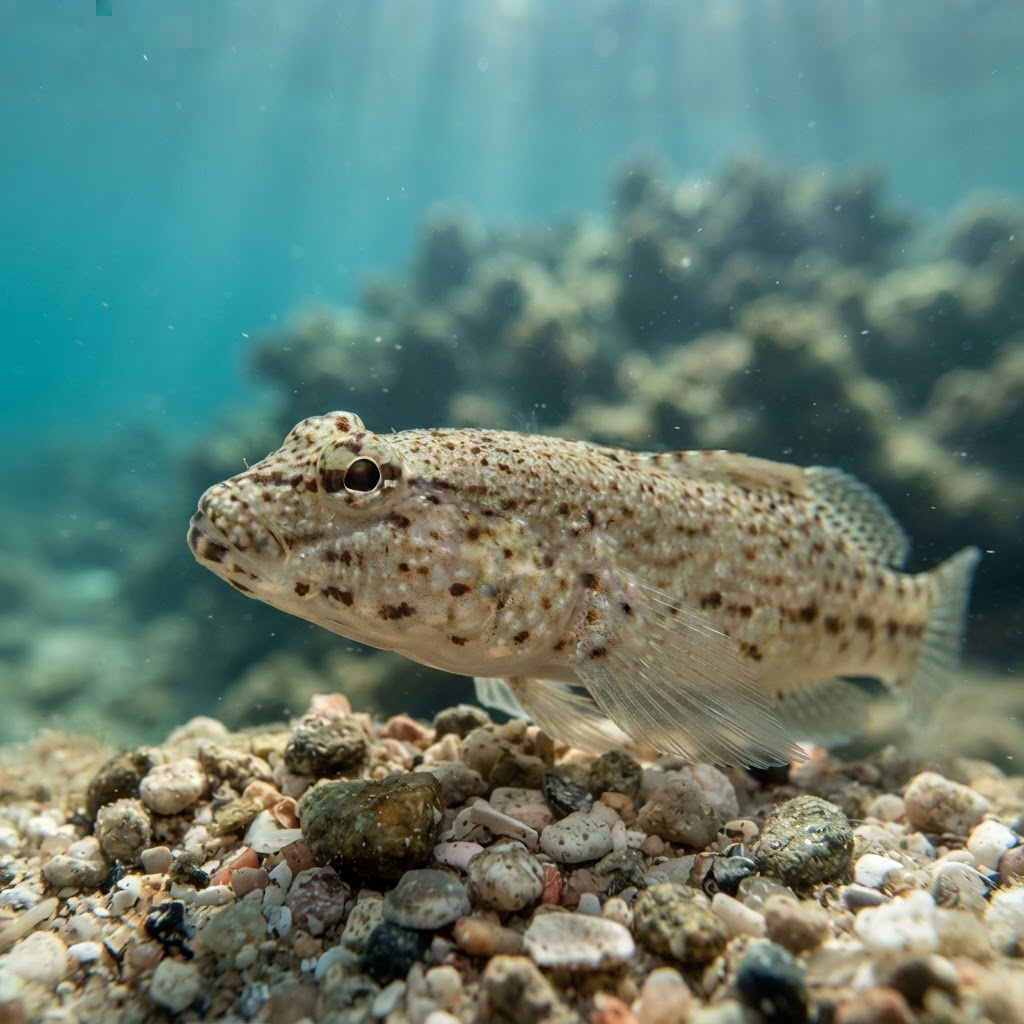
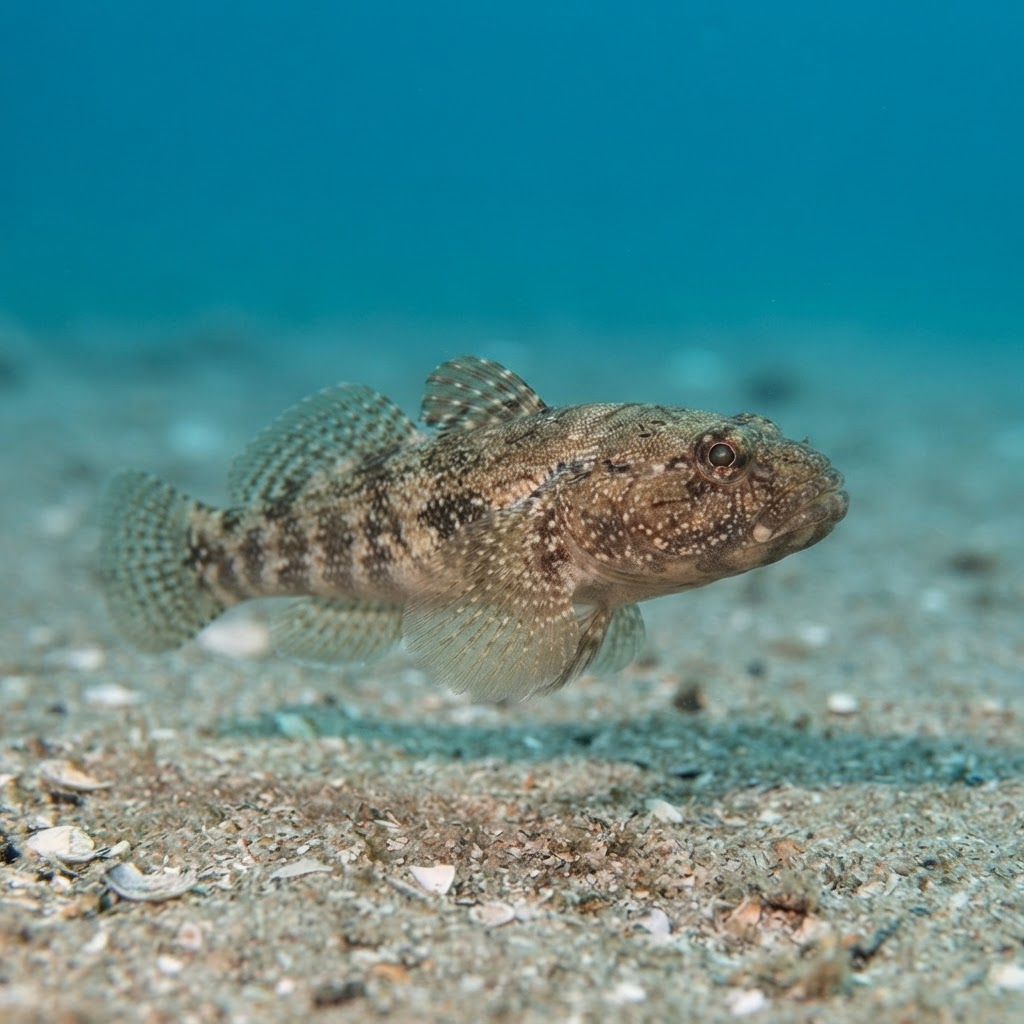
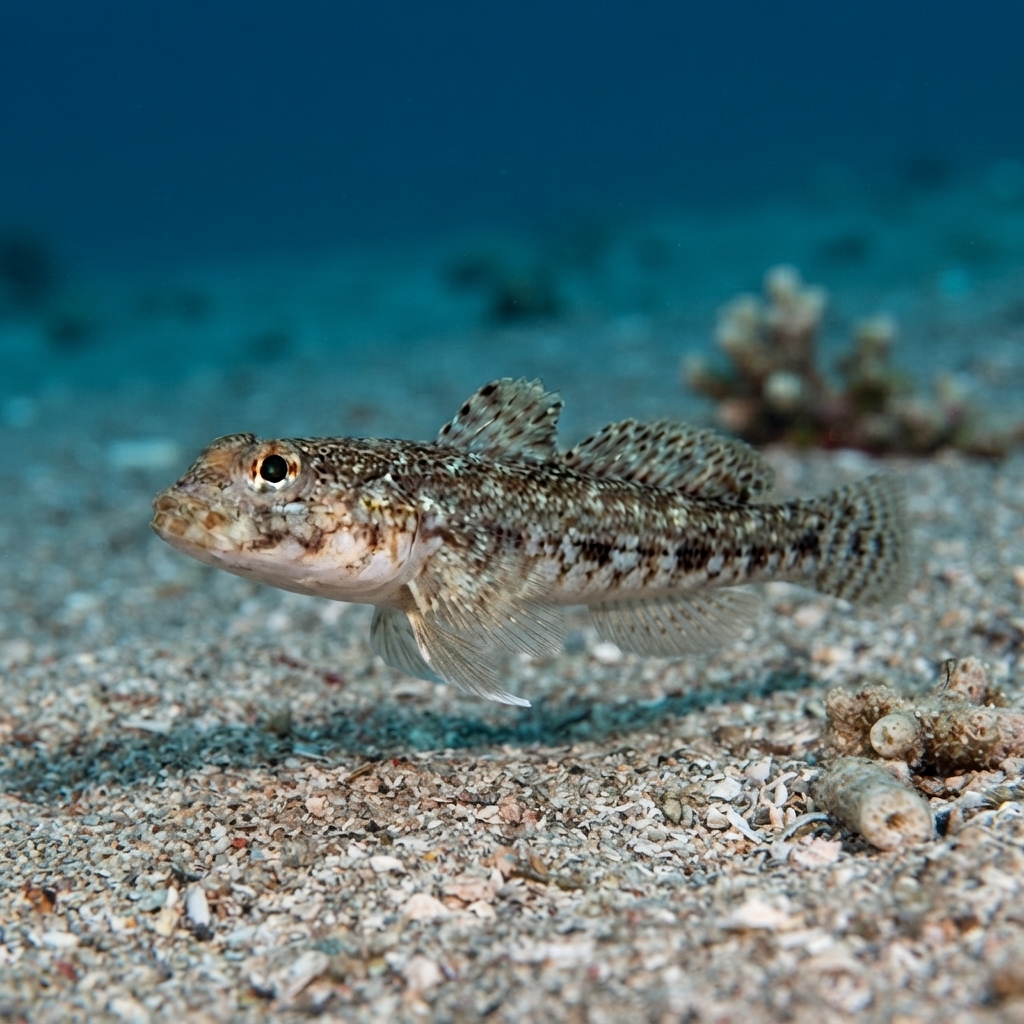
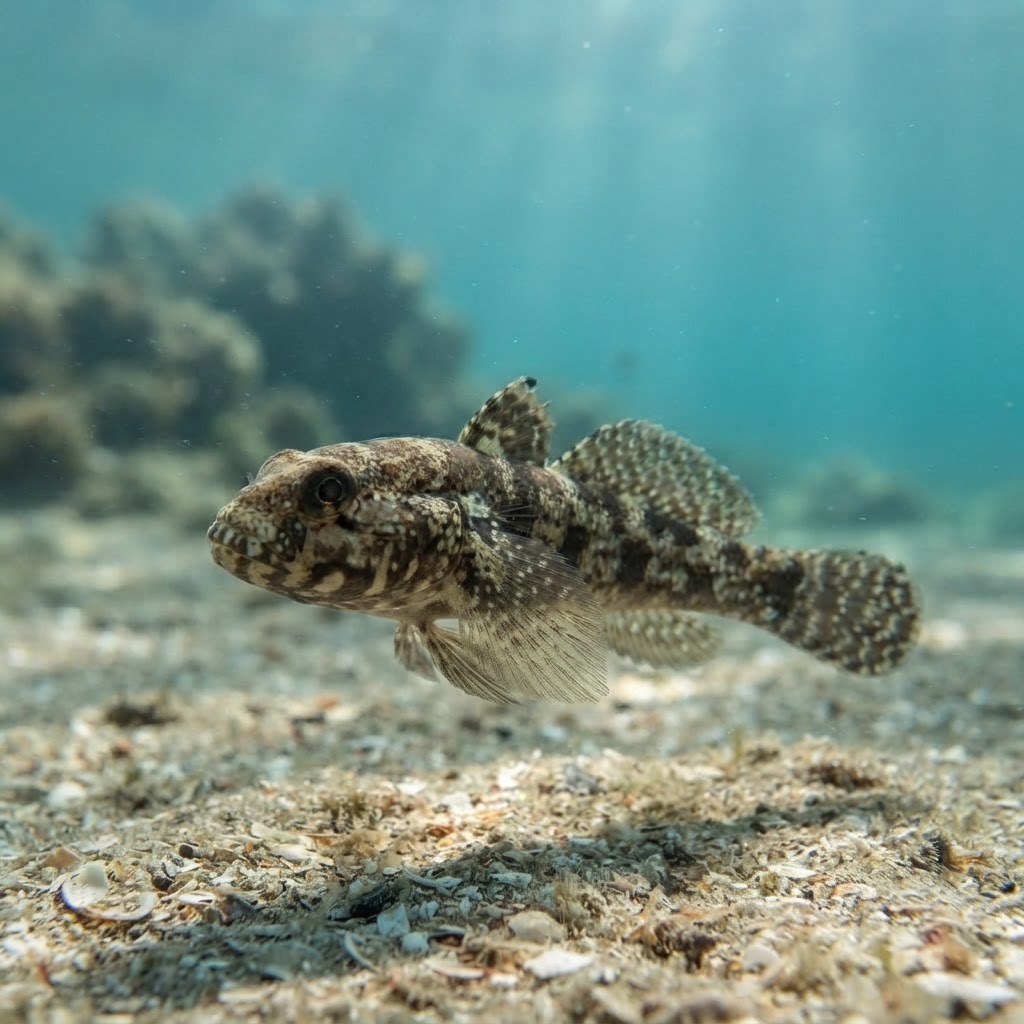
Grows to around 17 cm, with an elongated, slightly plump body typical of sand-dwelling gobies. Pale grey to whitish base colour marked by two bold dark stripes running the length of the body, one along the back and one through the eye to the tail, which is the main feature to key on. Usually seen propped on its pelvic fins just above the substrate rather than swimming freely, with a blunt head and large eyes that track passing divers.
Spends most of its time hovering low over sand and rubble patches at the edge of reef structure, often in pairs, picking at the substrate for small invertebrates. It tends to stay close to a burrow or shelter and will duck for cover if a diver approaches too fast, but holds position for a slow, low approach. Sightings are logged across a wide depth range from the shallows down to 45 metres, so it is worth scanning sand flats at any depth on a dive.
Like other Valenciennea gobies, it sifts mouthfuls of sand through its gills to filter out small prey, leaving small piles of cleaned sand near its burrow entrance as a giveaway sign it is nearby.
No clear seasonal pattern shows up in the sightings, and with a comfortable range of 24.4 to 29.0C it stays on tropical reefs year-round, so any month works for a dive plan built around this species.
Reef neighbours a diver could mistake it for. Use the identification notes above to tell them apart.
Most reliably logged on Indonesian reefs, with West Papua and Maluku the strongest regions and Bali also producing regular sightings. Recorded outside Indonesia too, with single logged sites in Shimoni, Kenya, and New South Wales, Australia, so it turns up well beyond its Coral Triangle stronghold if you know where to check sandy reef edges.
Mapping where Twostripe Goby is logged…
Indonesia is by far the strongest area, especially West Papua, Maluku, and Bali. It has also been logged at single sites in Shimoni, Kenya, and New South Wales, Australia, so it is not exclusive to the Coral Triangle.
There is no detected season in the sighting data, and its temperature niche of 24.4 to 29.0C covers tropical reef conditions all year, so it can be looked for in any month.
Look for a pale grey body with two dark stripes running its length, one along the back and one through the eye. It typically hovers just above sand or rubble on its pelvic fins rather than swimming in open water.
They reach around 17 centimetres in length, a mid-sized goby that is easiest to spot by its stripe pattern rather than its bulk.
It feeds by taking mouthfuls of sand and sifting them through its gills to extract small invertebrates, then spitting out the cleaned sand, often leaving small telltale piles near its burrow.
No, they pose no threat to divers and will simply retreat to a burrow or nearby shelter if approached too quickly.
Site and sighting data is aggregated from diver logs, iNaturalist and GBIF. For taxonomy and conservation status:
Slender Goby
806 sites