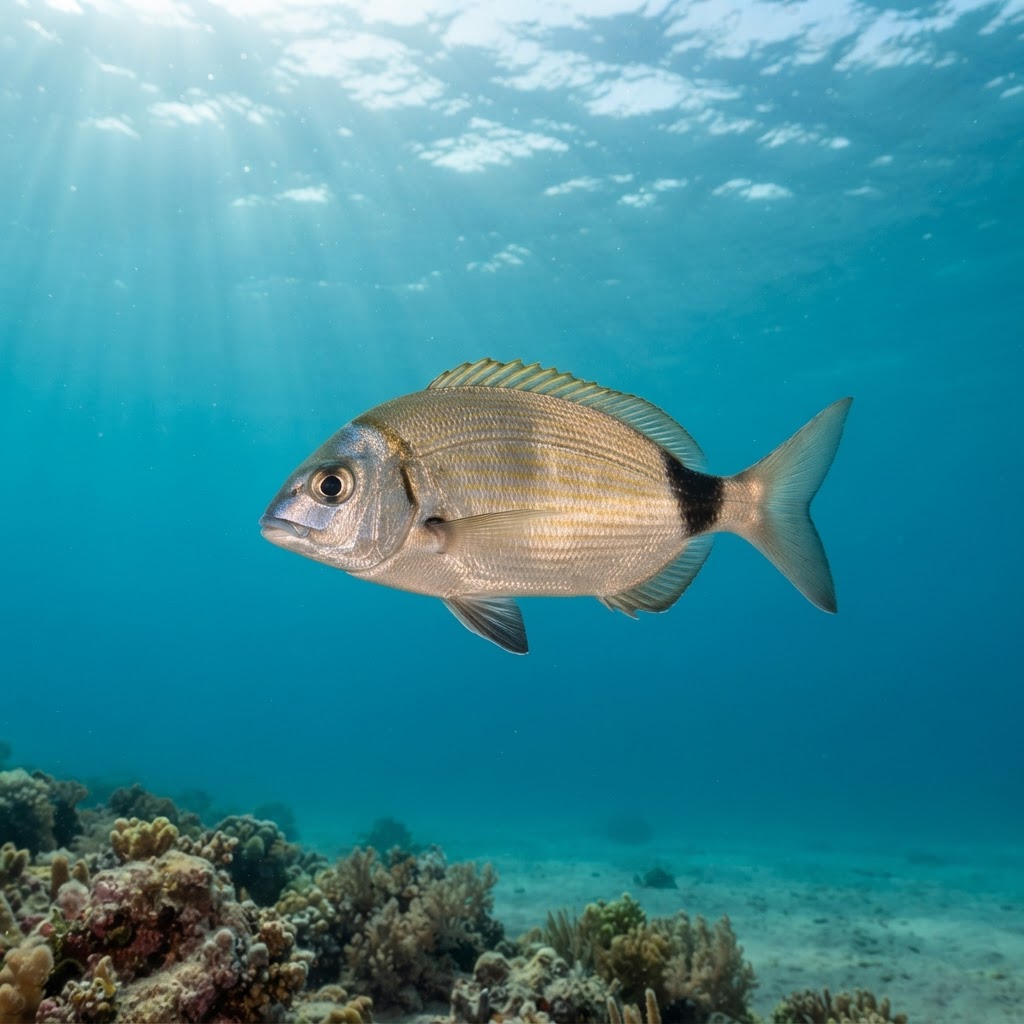
Diplodus prayensis
Uncommon but steady sighting around São Vicente and Sal, Cape Verde, in warm 21-27°C water year-round. Here's how to pick it out.
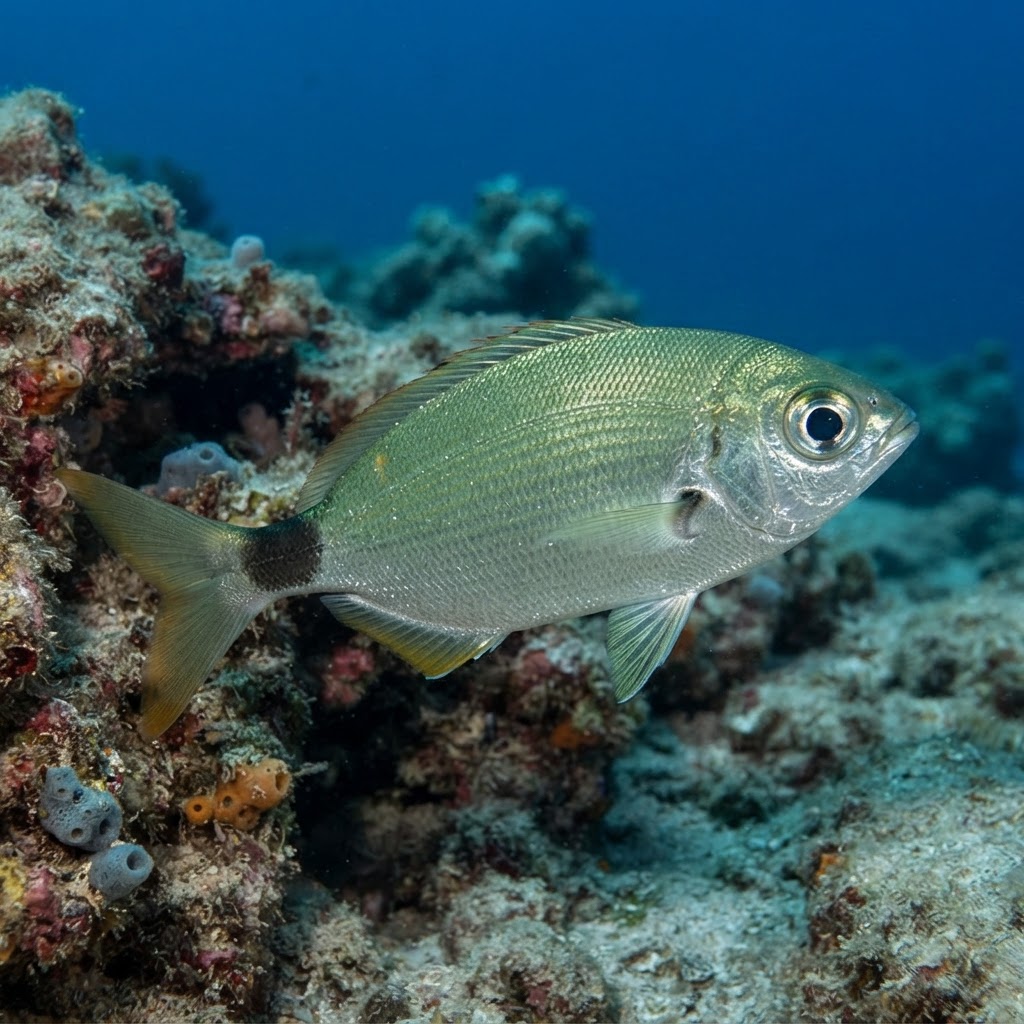
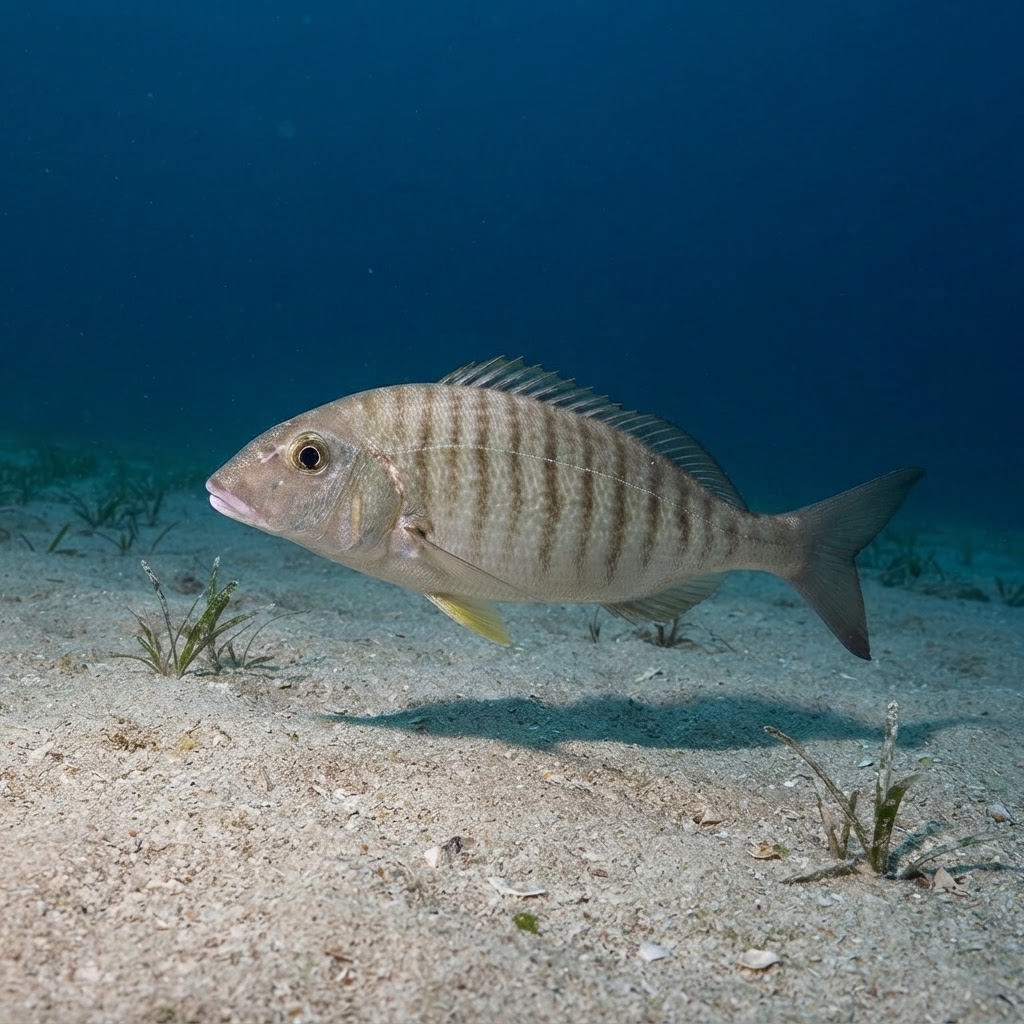
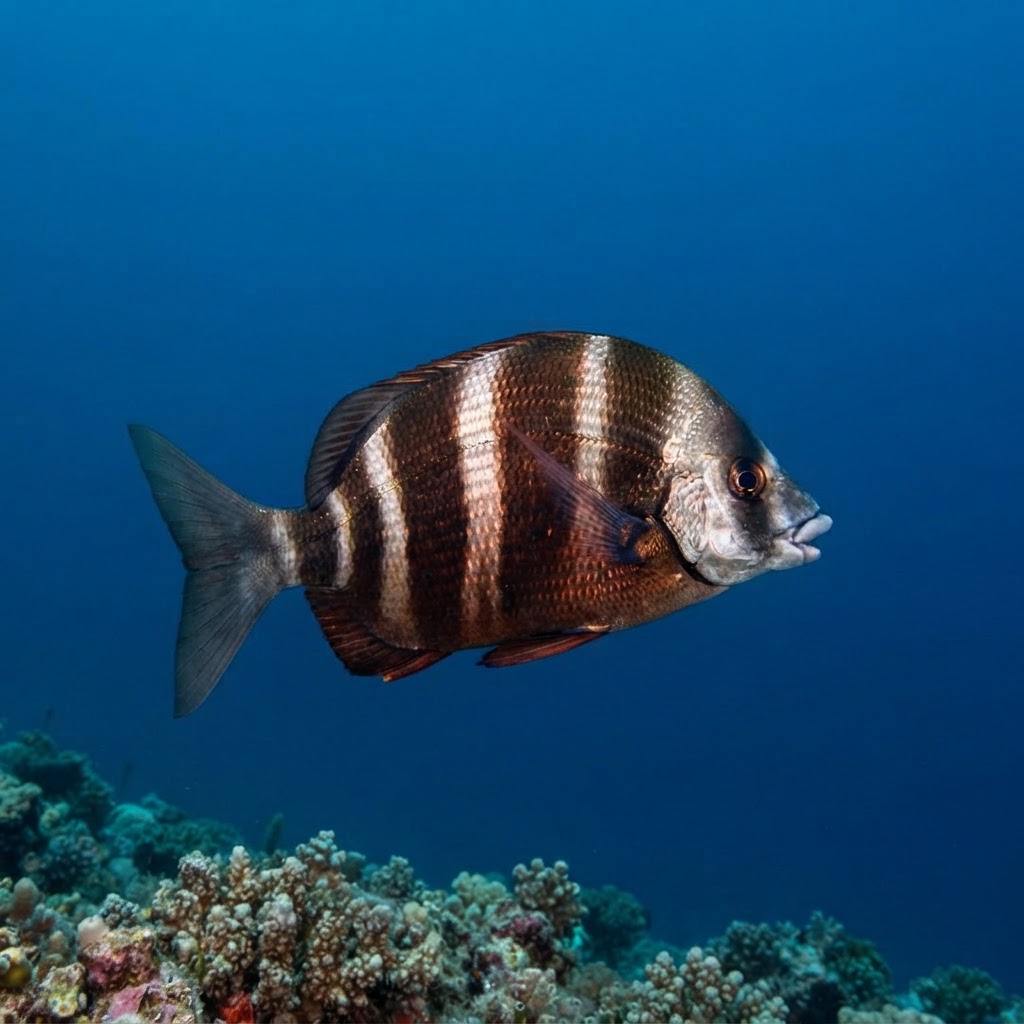
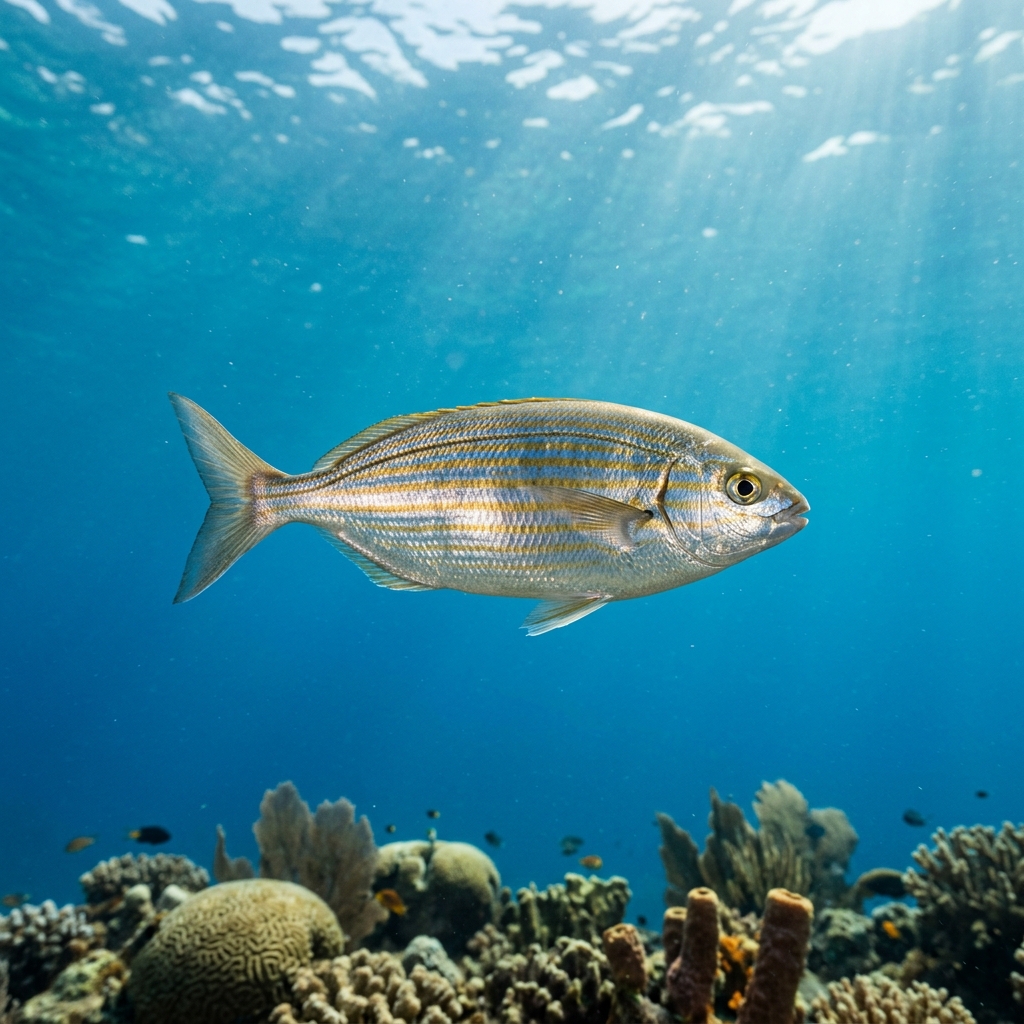
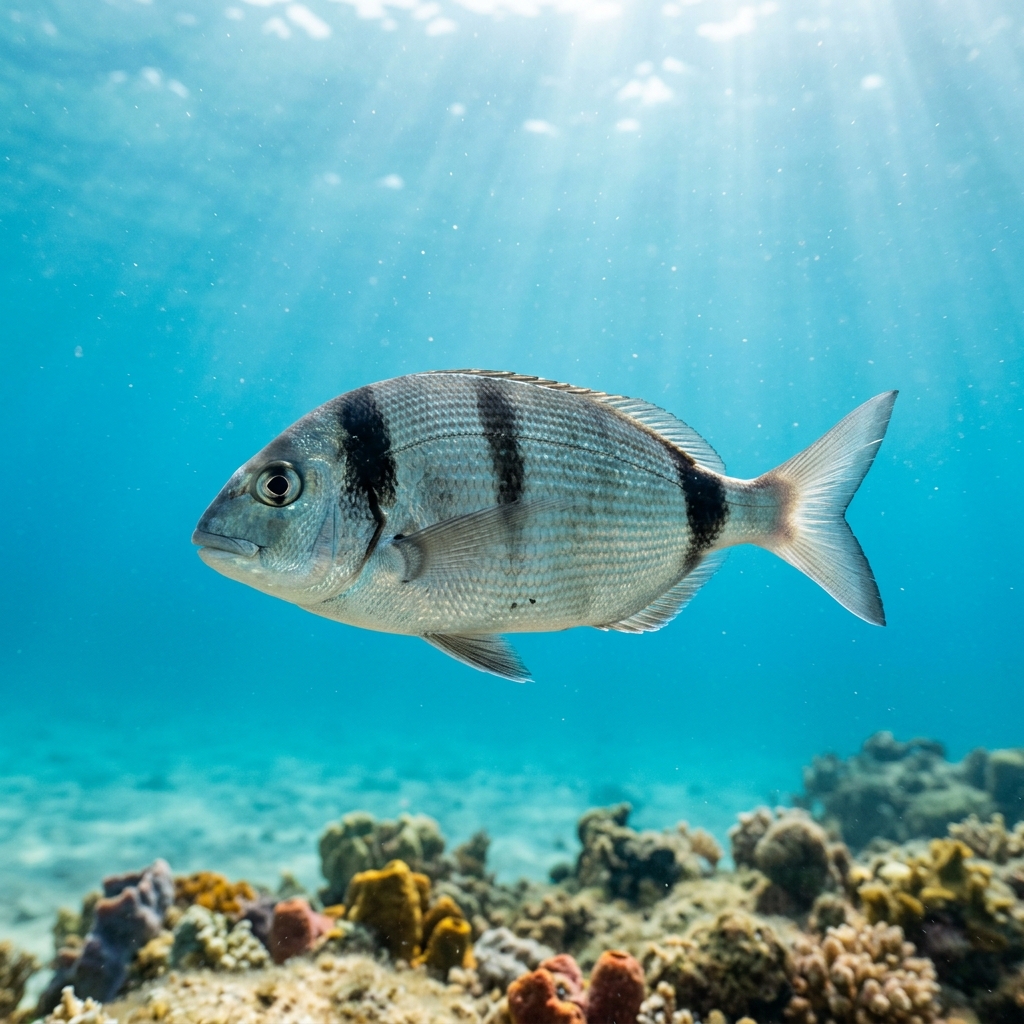
A silvery, deep-bodied fish around 24 cm with two bold dark vertical bands, one crossing the head near the eye and another across the tail base. The rest of the body stays plain silver-grey, which makes the two bands stand out as the main thing to key on. Body shape is a typical sea bream oval, flattened side-to-side, with no other strong striping in between.
Divers mostly log it as an uncommon find hanging around rocky and reef terrain rather than open sand, moving in small numbers rather than big schools. It doesn't appear to be flighty around divers, sitting close to structure where it can be approached for a decent look. A handful of sites report it as common, so on the right patch of reef you may run into more than one.
No clear seasonal pattern shows up in the data, and the 21.3 to 27.3°C range it's logged in matches Cape Verde's water temperature for most of the year, so it's a reasonable year-round sighting rather than a seasonal one.
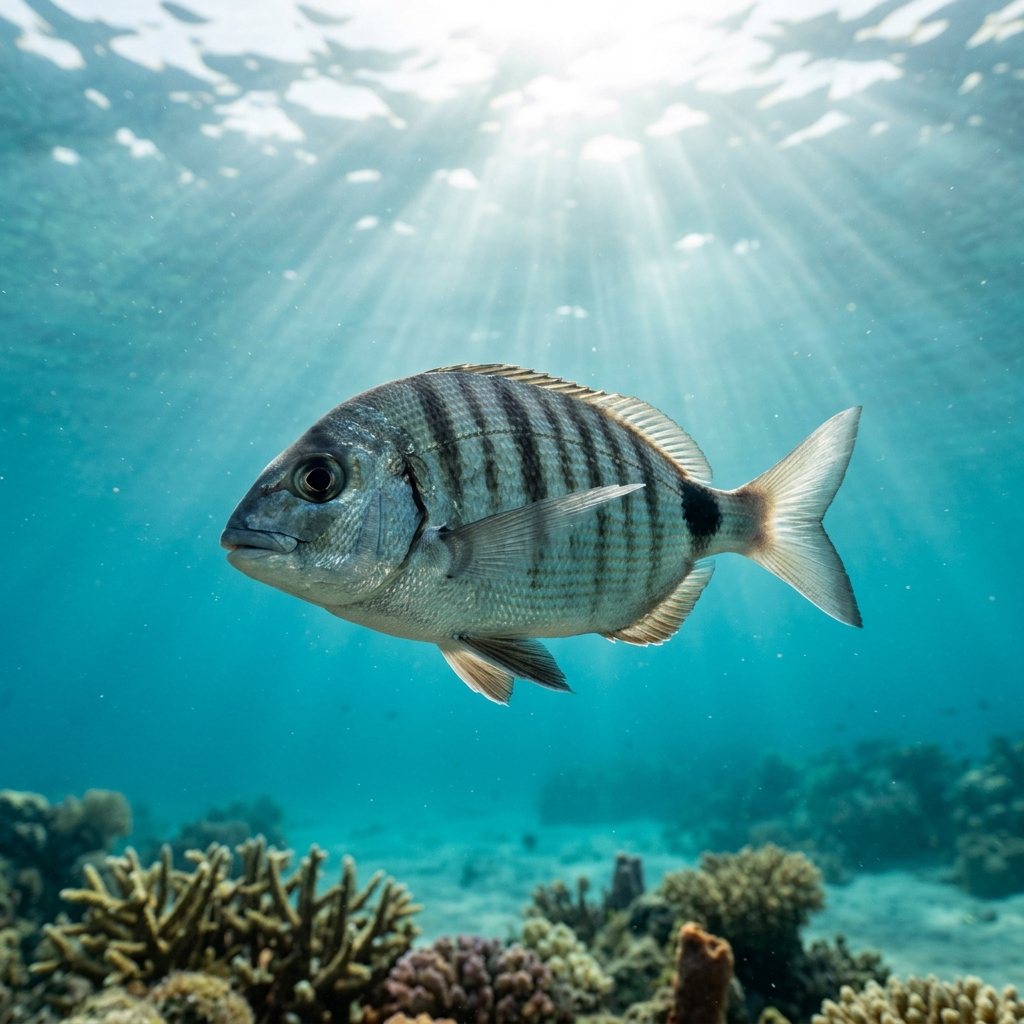
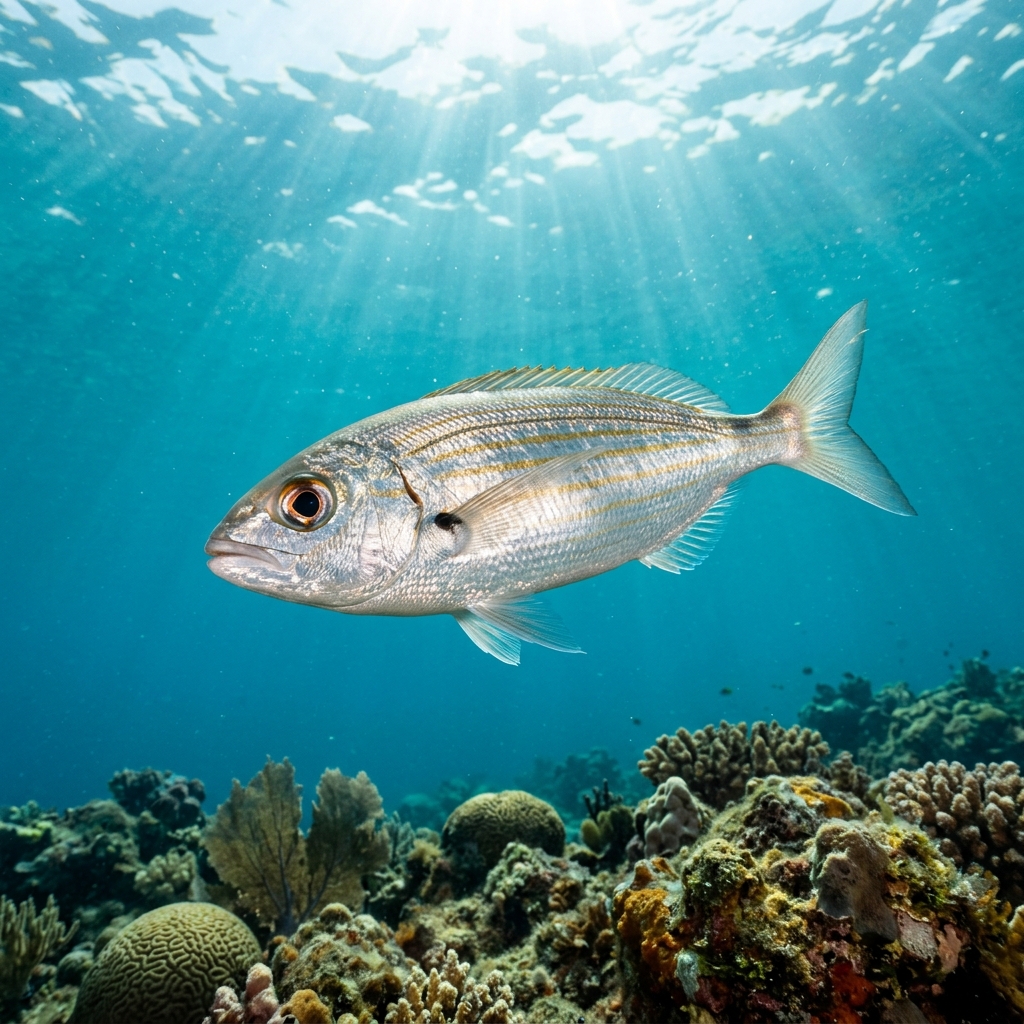
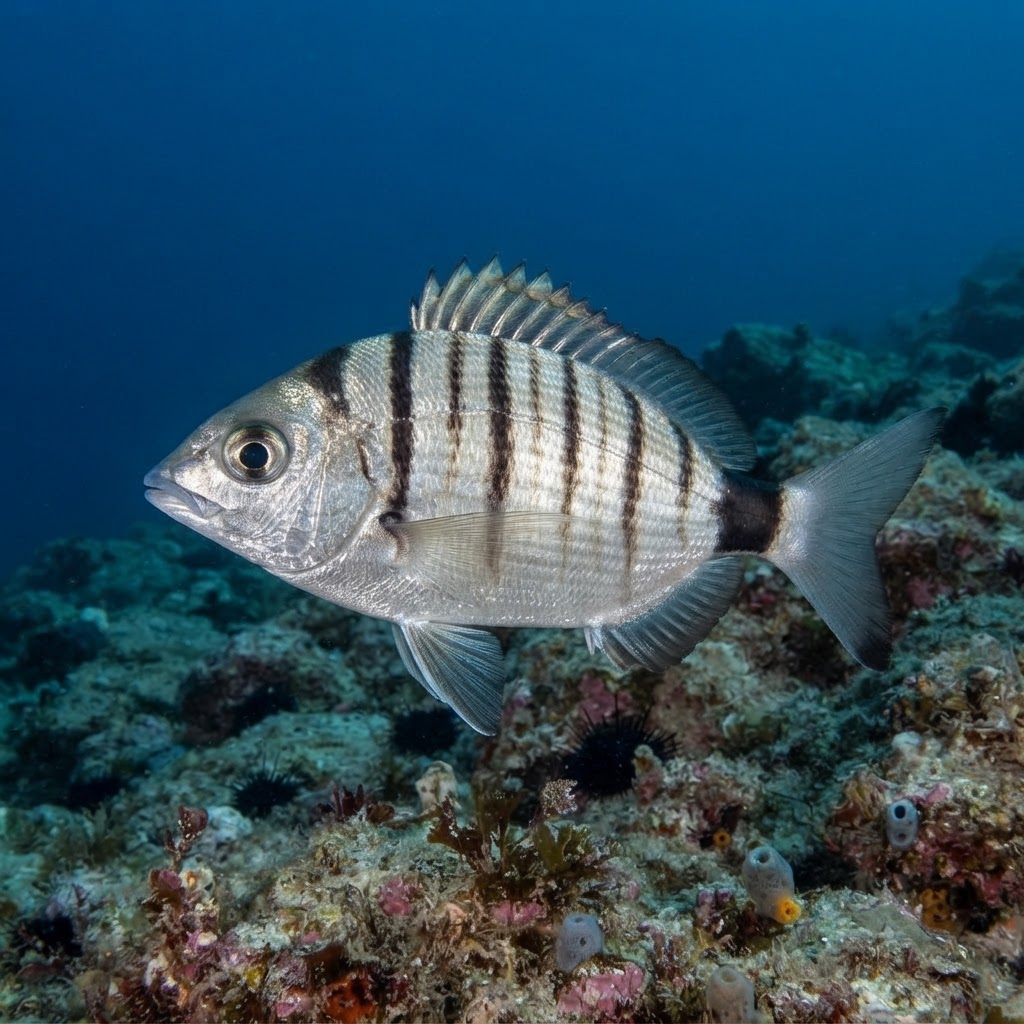
Reef neighbours a diver could mistake it for. Use the identification notes above to tell them apart.
This one is essentially a Cape Verde speciality among logged dives, with sightings spread across São Vicente, Sal and Santiago. São Vicente and Sal between them account for most of the reports, so those two islands are the reliable bet if you want to look for it specifically.
Mapping where Two-banded Seabream is logged…
Cape Verde is the place to look, with the strongest logs coming from São Vicente and Sal, and further sightings from Santiago. It's not reported from other countries in current diver data.
There's no detected season, and the water it's found in stays between roughly 21 and 27°C across the year in Cape Verde, so it's considered a year-round sighting rather than tied to a particular month.
Look for a silvery, oval-bodied fish about 24 cm long with two dark vertical bands, one through the head and one near the tail. The plain silver body in between and the double-band pattern are the main giveaways underwater.
Around 24 cm is typical for adults seen on Cape Verde dive sites, a medium-sized sea bream comfortably distinguishable from smaller reef fish nearby.
No, they pose no danger to divers and can be approached and observed without any special caution.
Site and sighting data is aggregated from diver logs, iNaturalist and GBIF. For taxonomy and conservation status:
Saddled Bream
3,846 sites