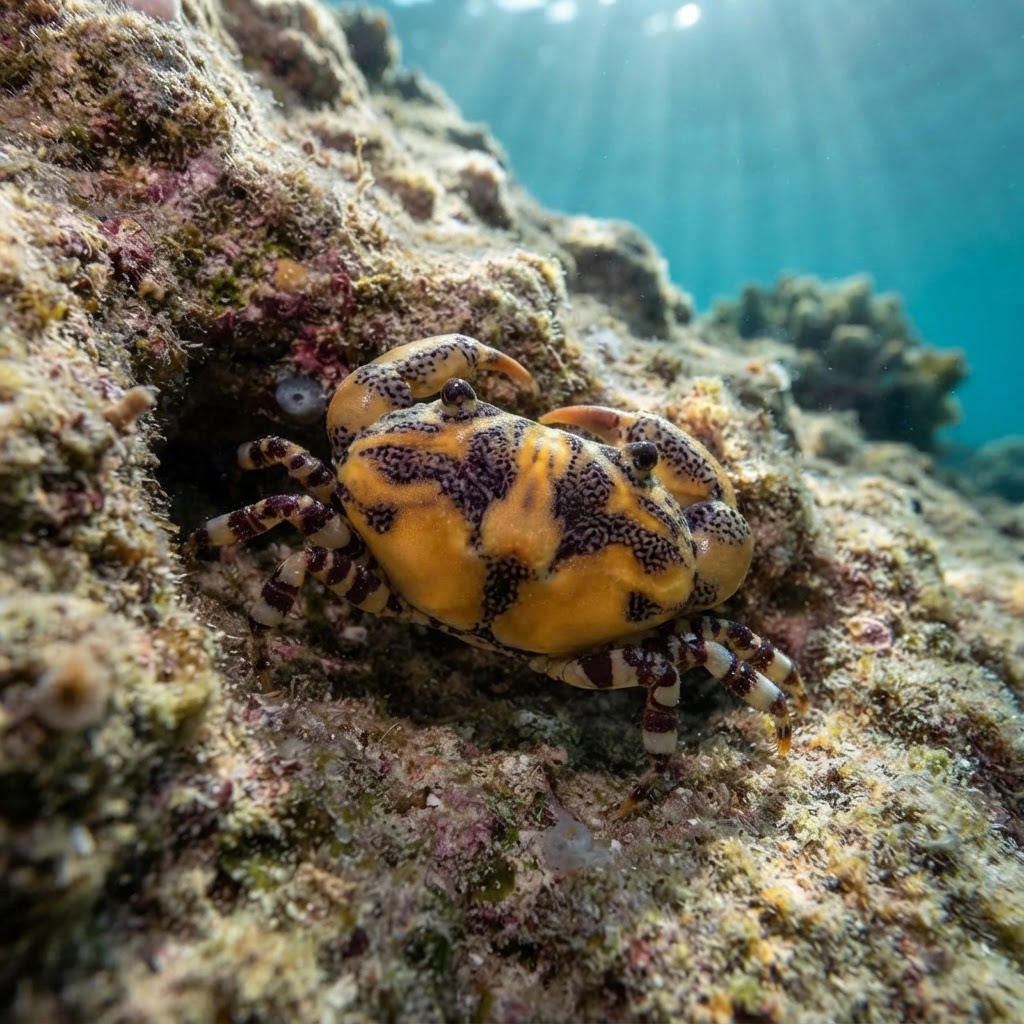
Lydia annulipes
A speckled reef crab most commonly logged around Orchid Island, Taiwan and Okinawa, active year-round in warm 23-29C water.
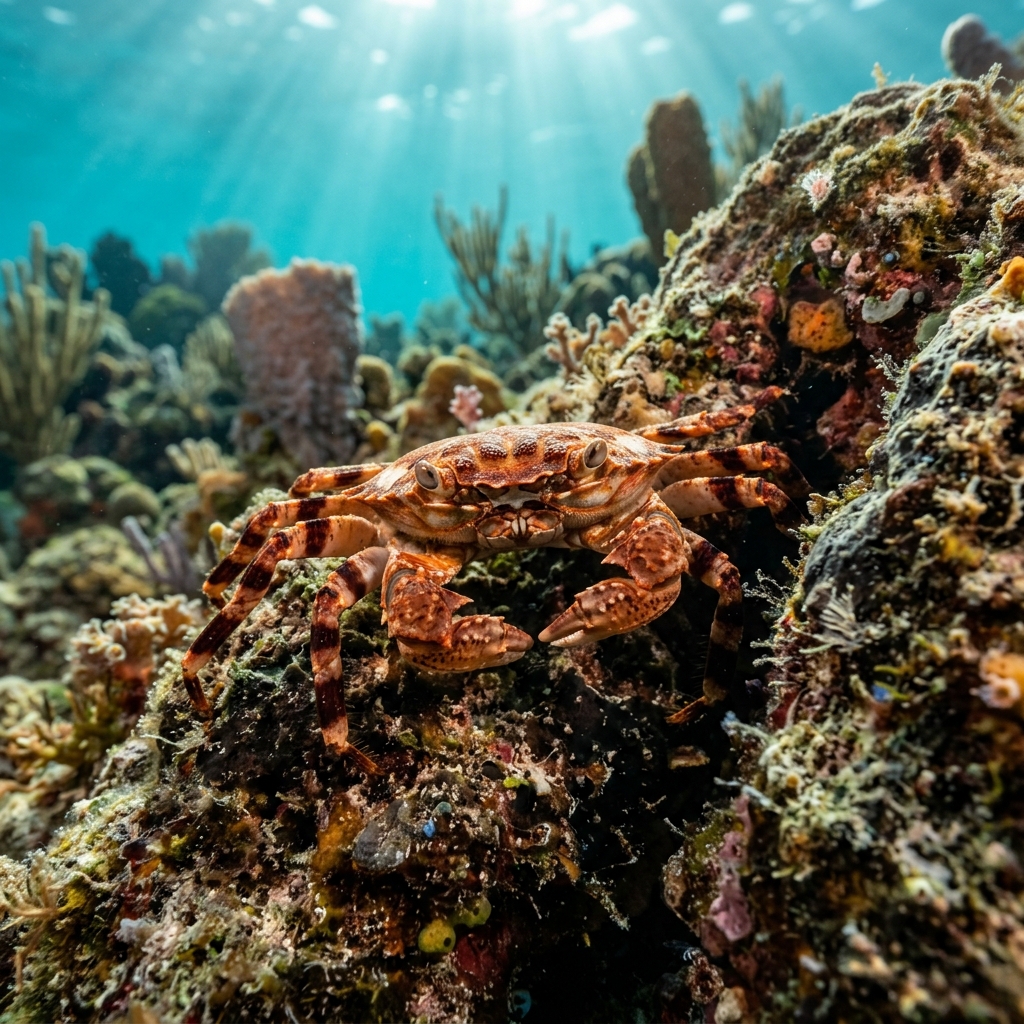
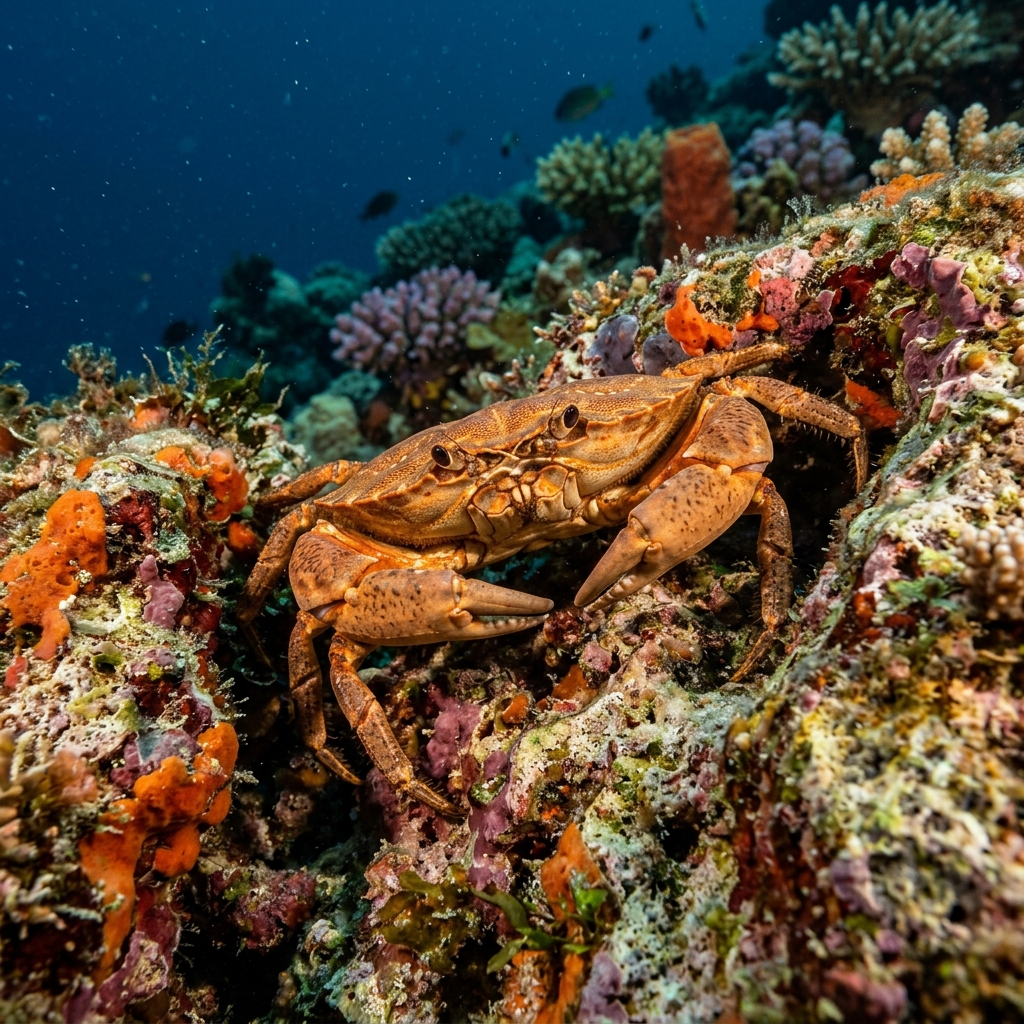
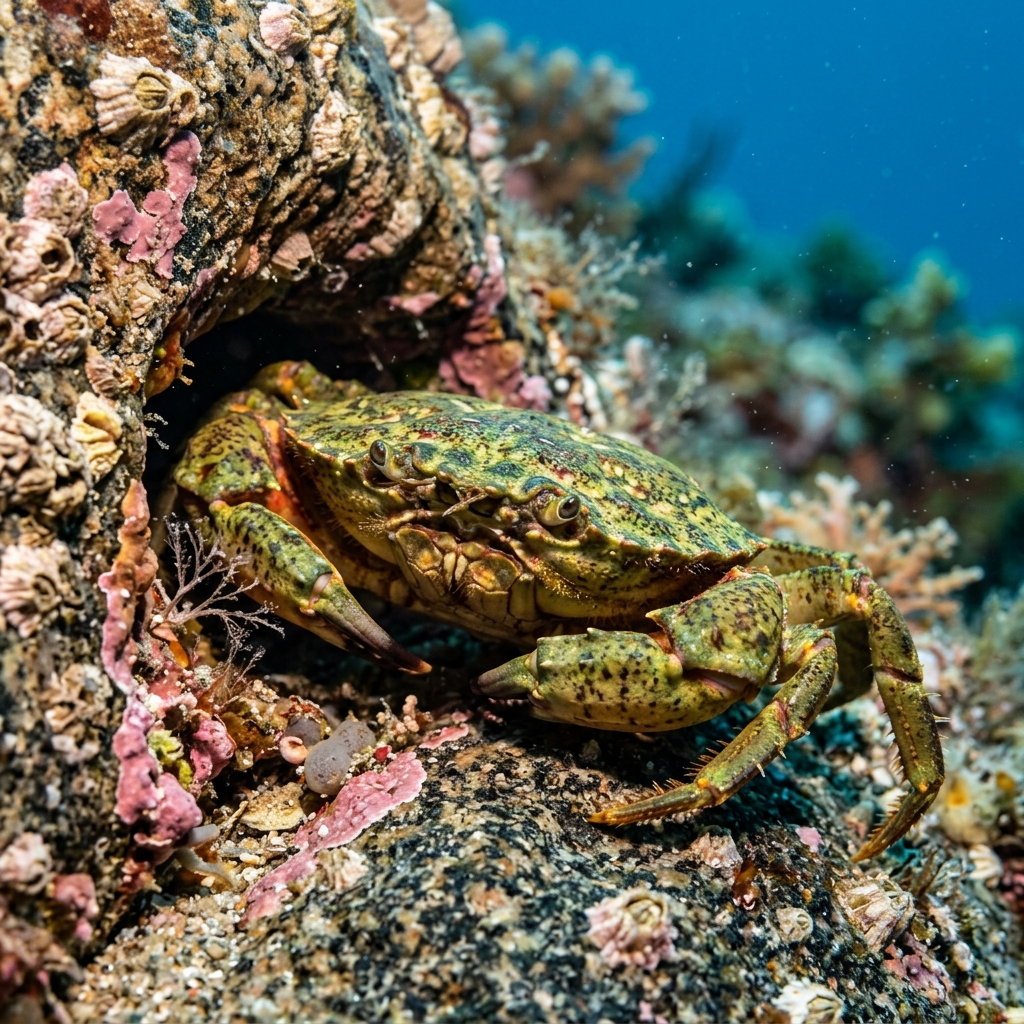
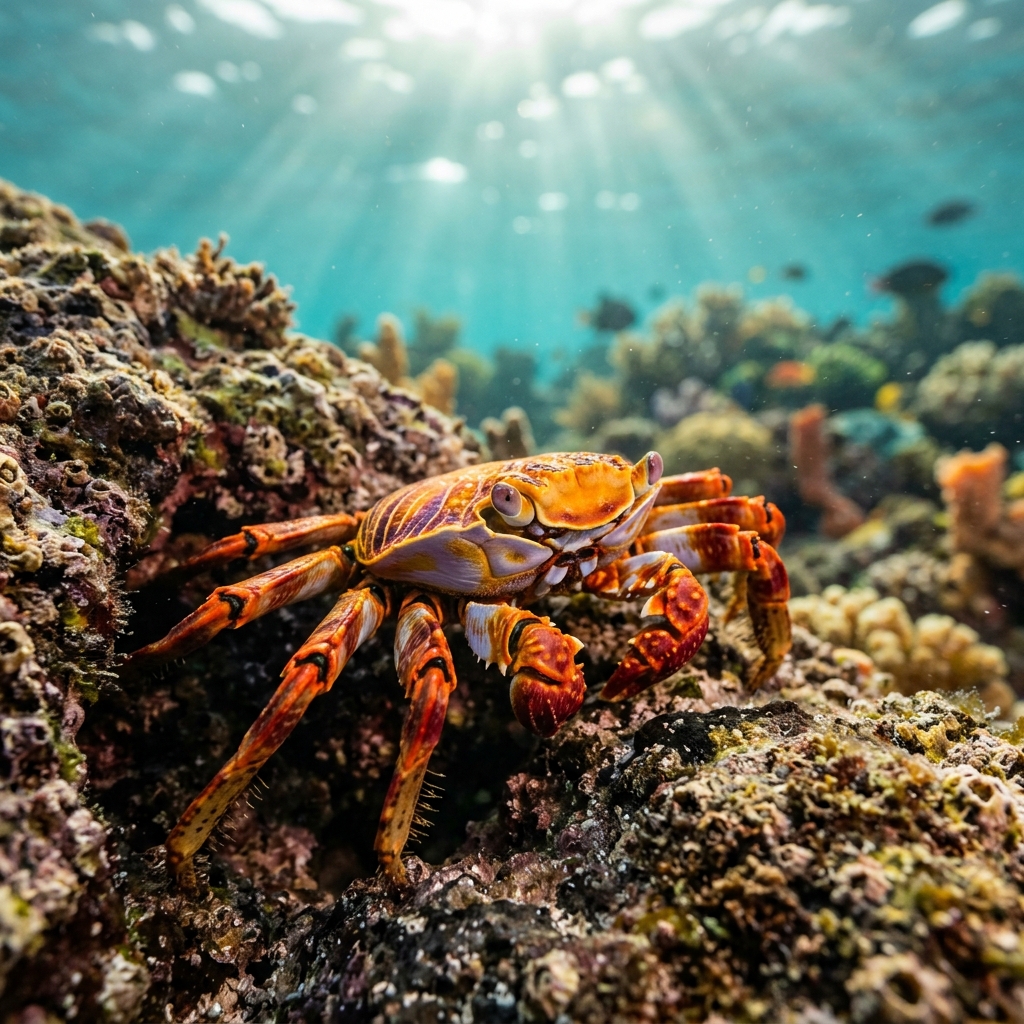
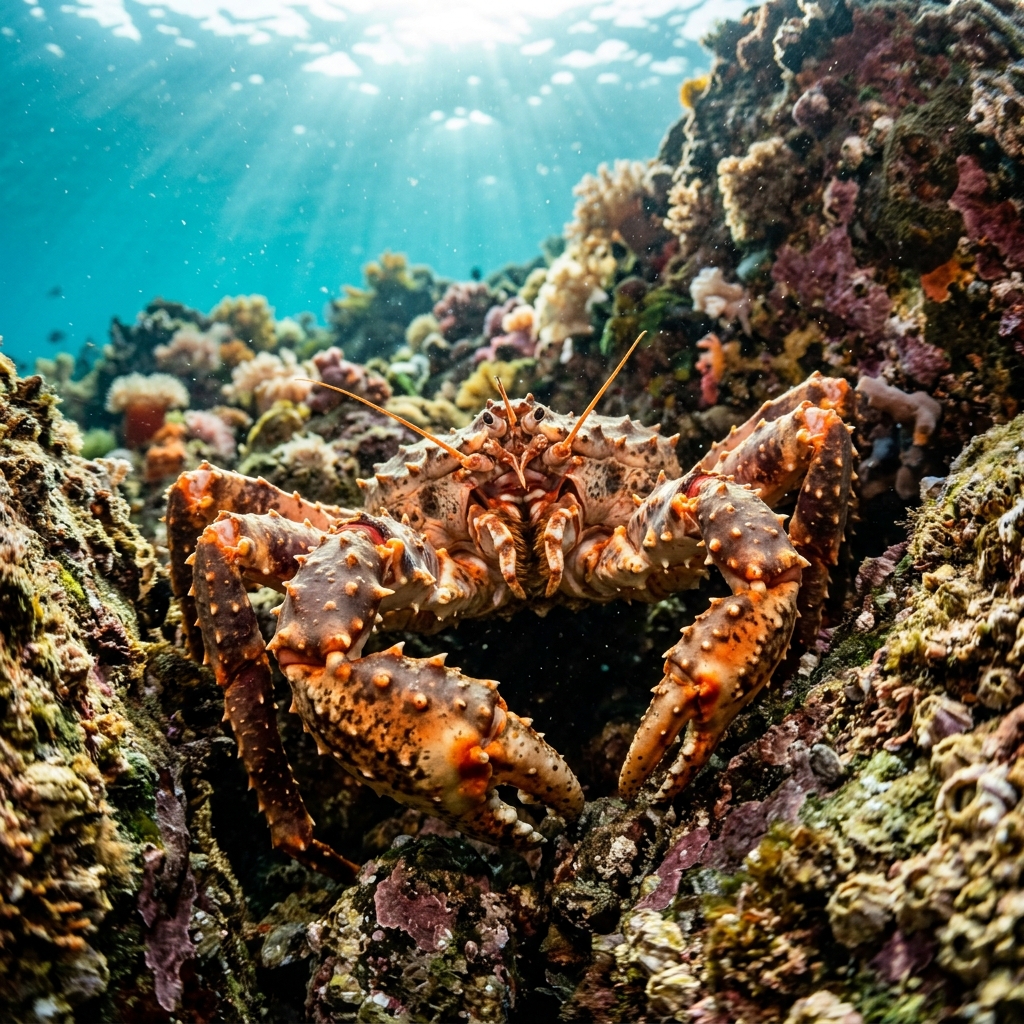
A small, boxy crab with a mottled brown, tan and cream carapace (shell) that breaks up its outline against rubble and coral rock. The pattern is irregular and blotchy rather than banded, and the legs are often faintly hairy or textured, helping it blend into encrusted reef surfaces. It sits low and tucked into crevices rather than out in the open, so divers usually spot it by shape first, colour second.
Divers typically find this crab wedged into reef crevices or under rubble rather than out foraging in the open, which is why it reads as uncommon at most sites even where it is present. It tends to hold still or retreat deeper into its hiding spot when a torch or diver passes close, rather than bolting across open reef. Most sightings come from slow, careful looks into holes and under ledges rather than mid-water encounters.
Its blotchy, encrusted-looking shell is a form of camouflage that mimics the algae- and sponge-covered rock it lives on, which is exactly why it is so easy to swim straight past.
No clear seasonal pattern shows up in the data, and with a comfortable range of 23 to 29C it seems to stay active on these subtropical reefs all year. Plan around good visibility and calm conditions at your chosen site rather than a particular month.
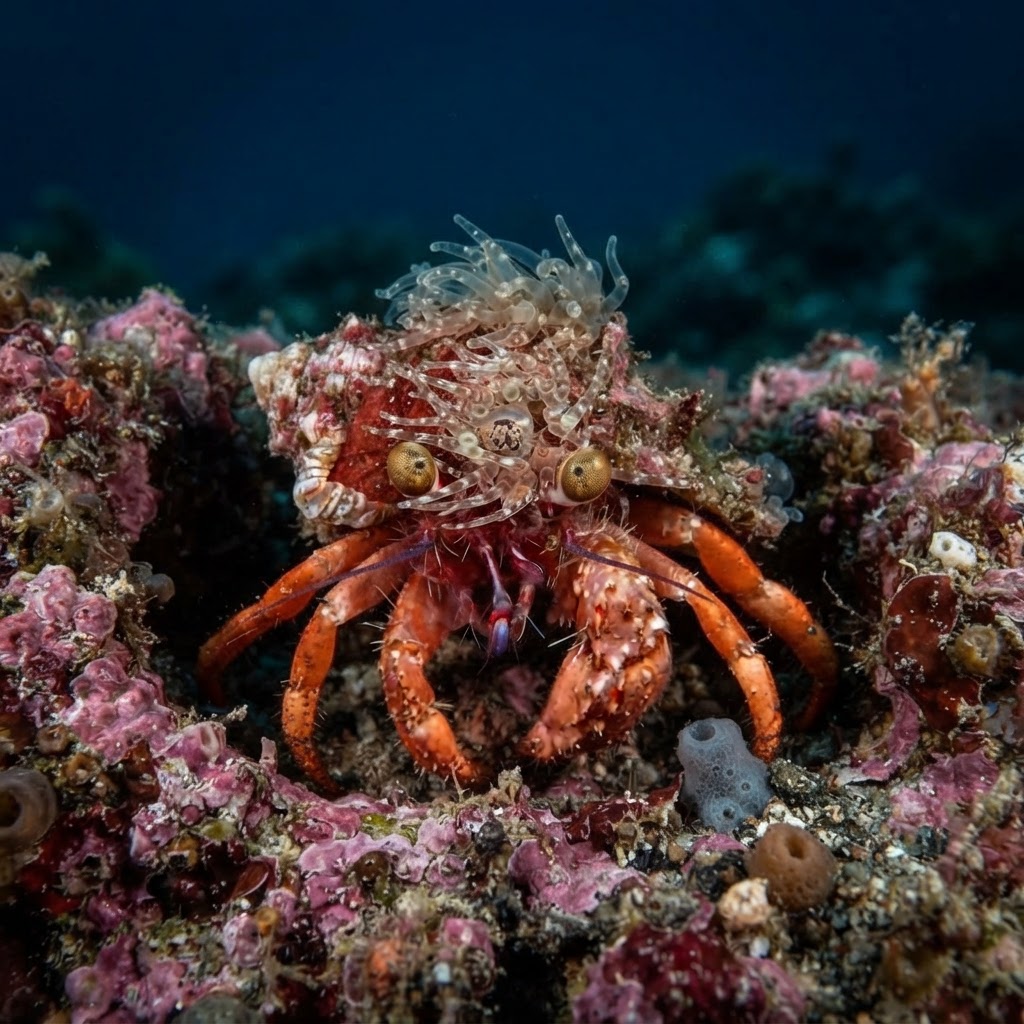
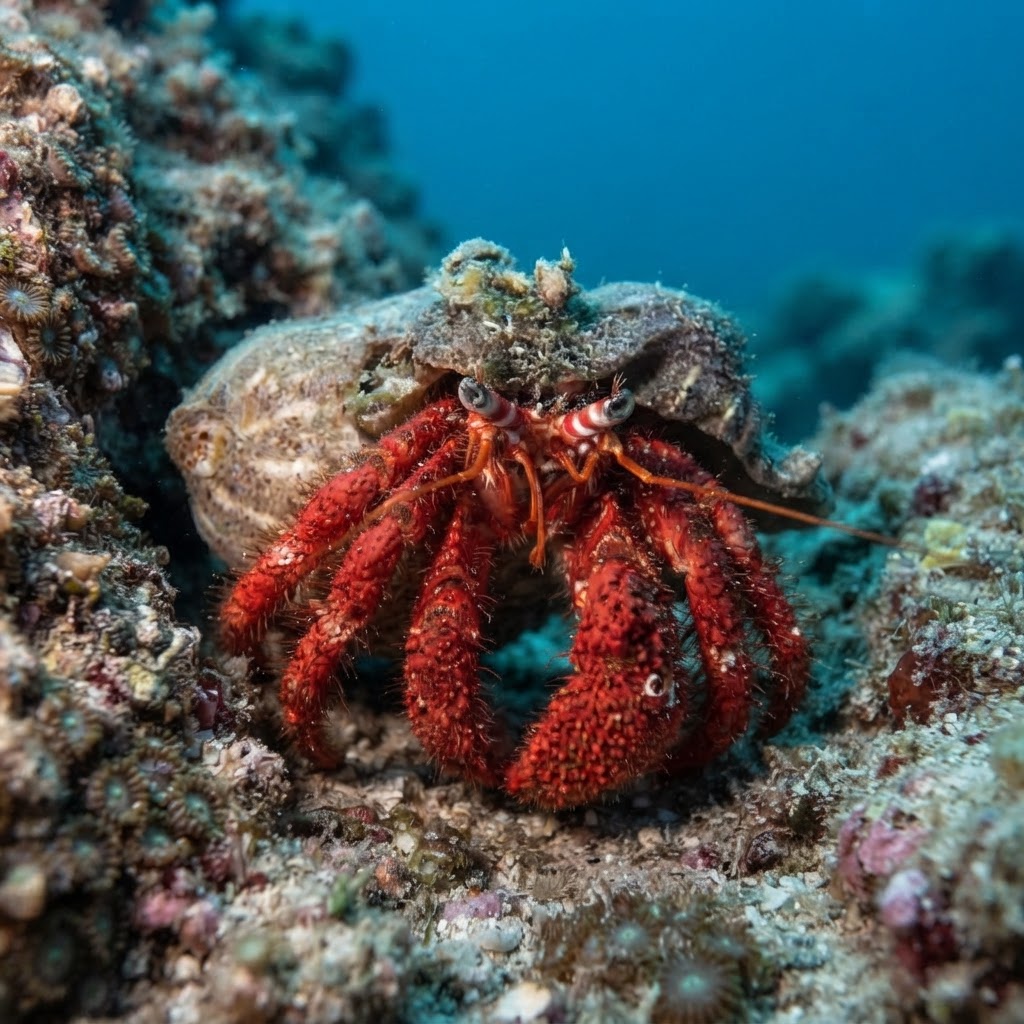
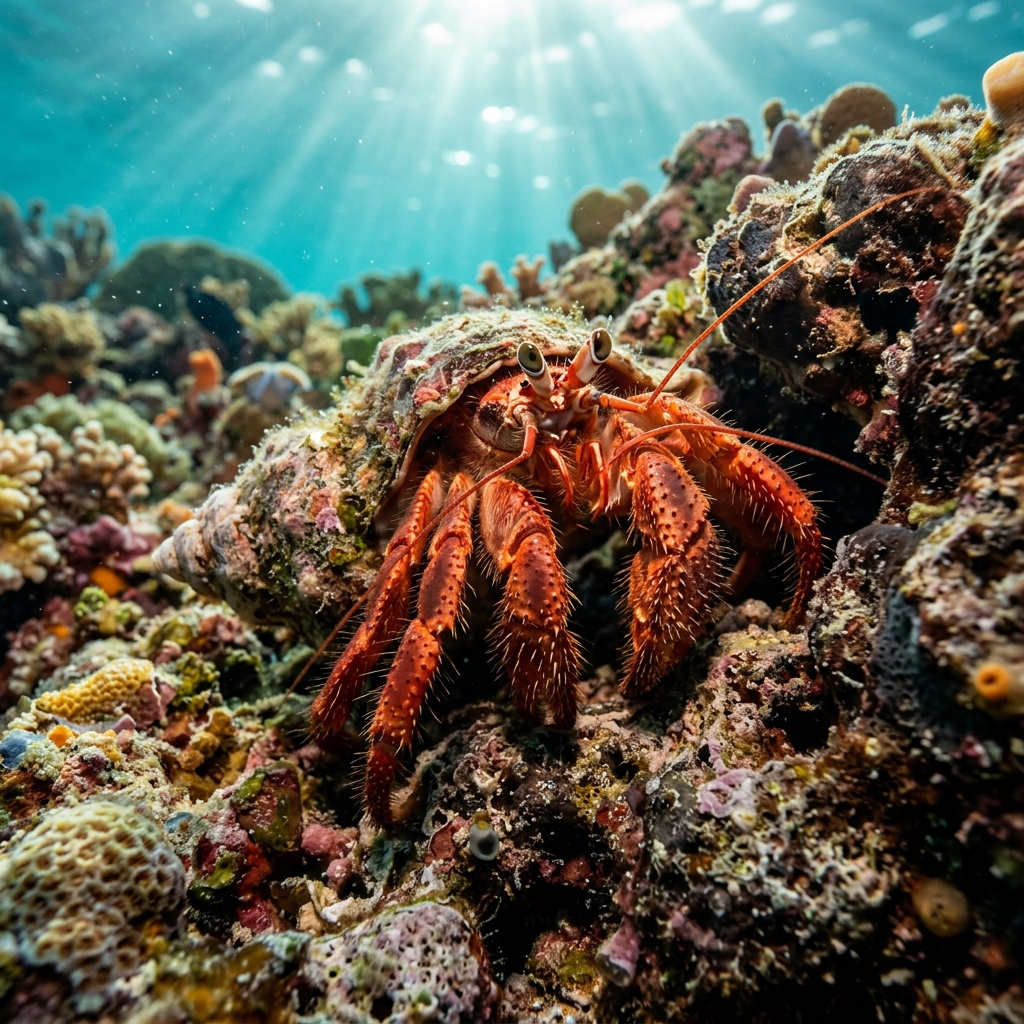
Reef neighbours a diver could mistake it for. Use the identification notes above to tell them apart.
Most reliably logged around Orchid Island, Kenting and Green Island in Taiwan, which together account for the bulk of sightings, with a solid secondary population across Okinawa and the Ryukyu Islands in Japan. Outside these two countries it has not been logged in the data, so Taiwan's outlying islands are the strongest bet for a planned search.
Mapping where Ringed Foot Crab is logged…
The strongest sightings come from Taiwan, particularly Orchid Island, Kenting and Green Island, with a further reliable population around Okinawa and the Ryukyu Islands in Japan.
There is no detected seasonal pattern, and the species tolerates a wide 23 to 29C range, so it can turn up on Taiwanese and Japanese reefs at any time of year.
Look for a small, boxy crab with a mottled brown and cream shell tucked into reef crevices or rubble rather than out in the open. The blotchy pattern breaks up its outline against encrusted rock, so it is easier to spot by scanning holes and ledges closely than by looking for movement.
No, they pose no threat to divers and are not known to bite or sting when approached; they simply retreat into their hiding spot if disturbed.
Exact size data isn't confirmed for this species, but like most crabs in the oziidae family it is a small, reef-dwelling crab best looked for at close range rather than spotted from a distance.
Their mottled shell mimics algae- and sponge-covered rock, and they wedge themselves into crevices rather than sitting in open view, so most divers log them as uncommon even at sites where they are actually present.
Site and sighting data is aggregated from diver logs, iNaturalist and GBIF. For taxonomy and conservation status:
European Green Crab
2,469 sites