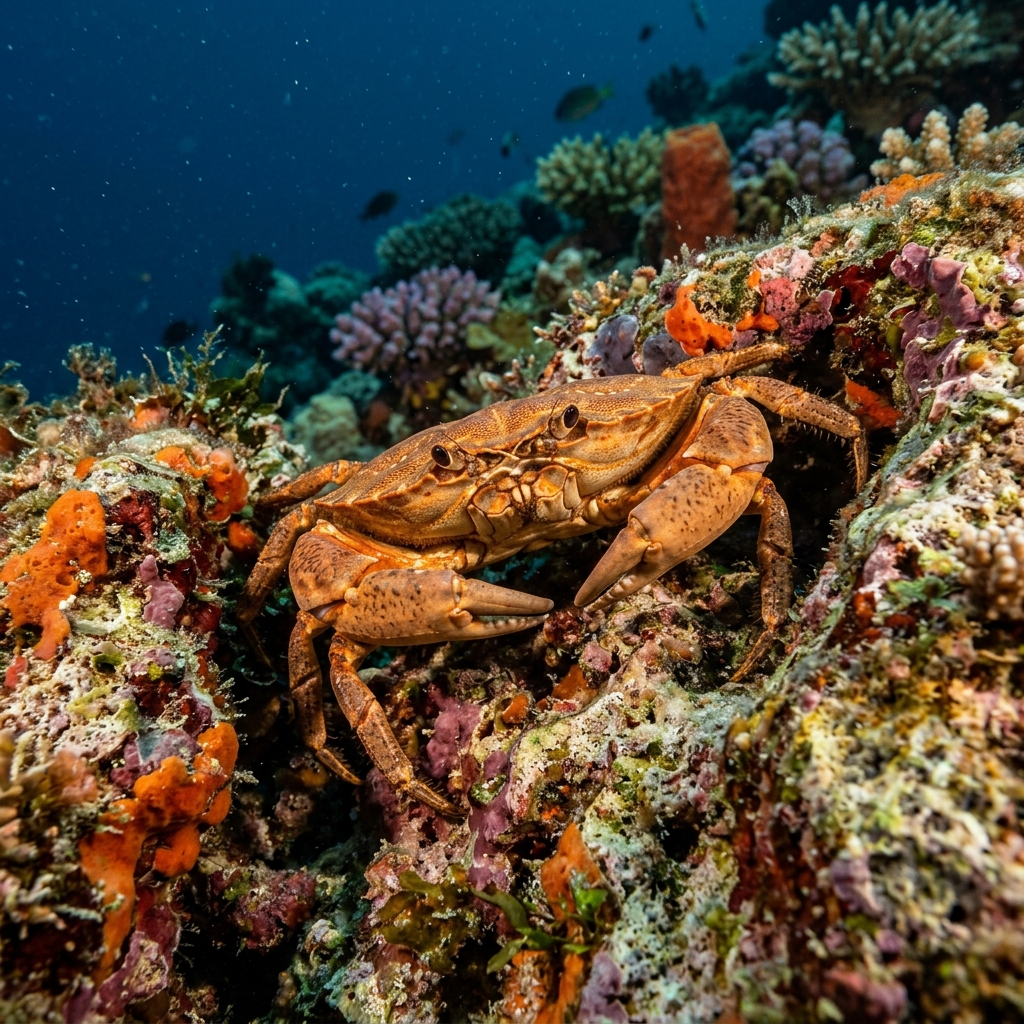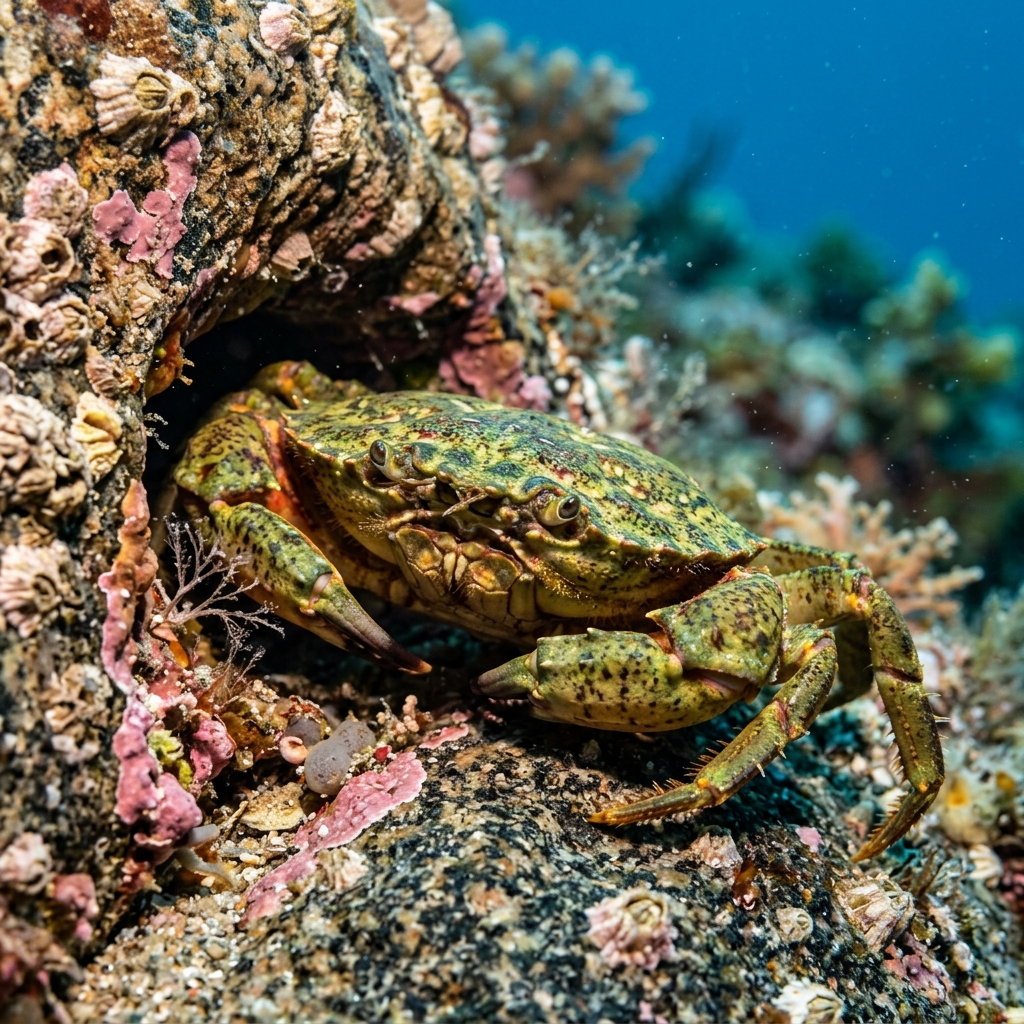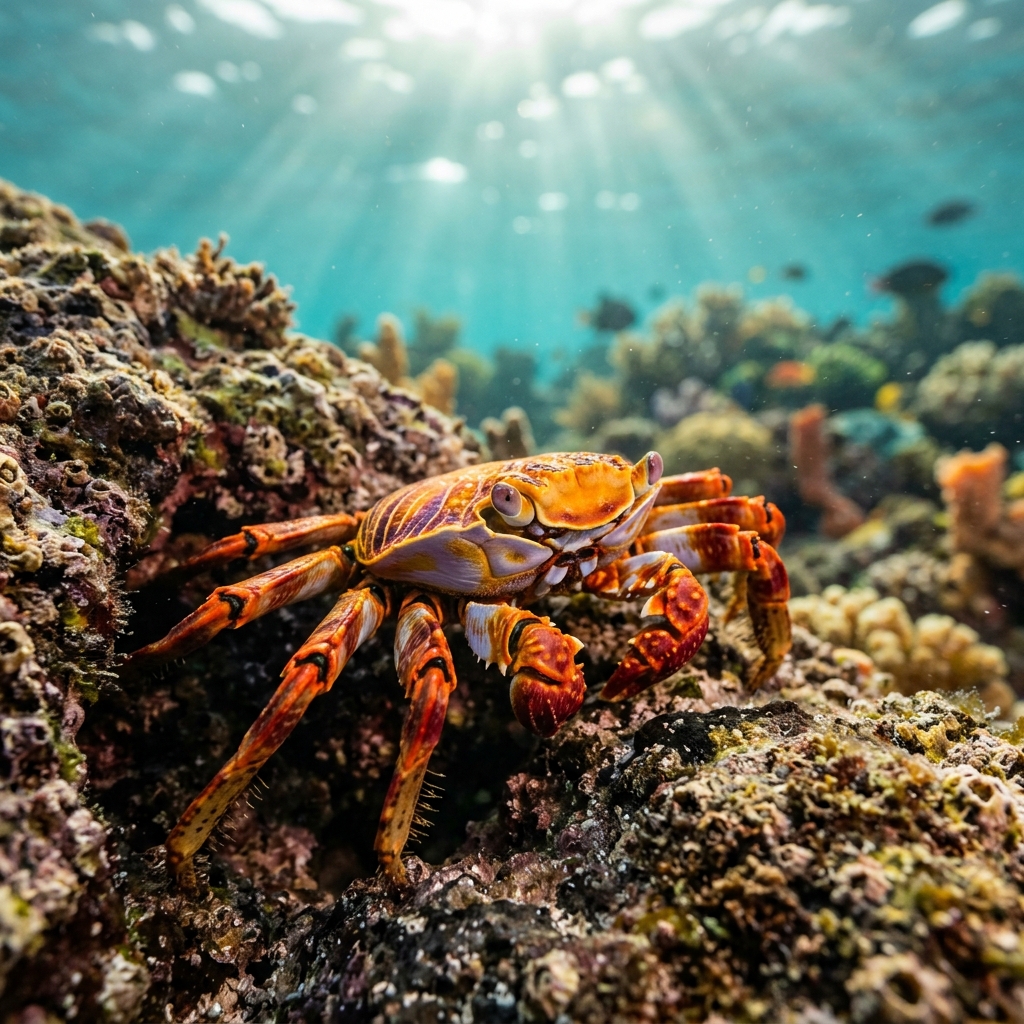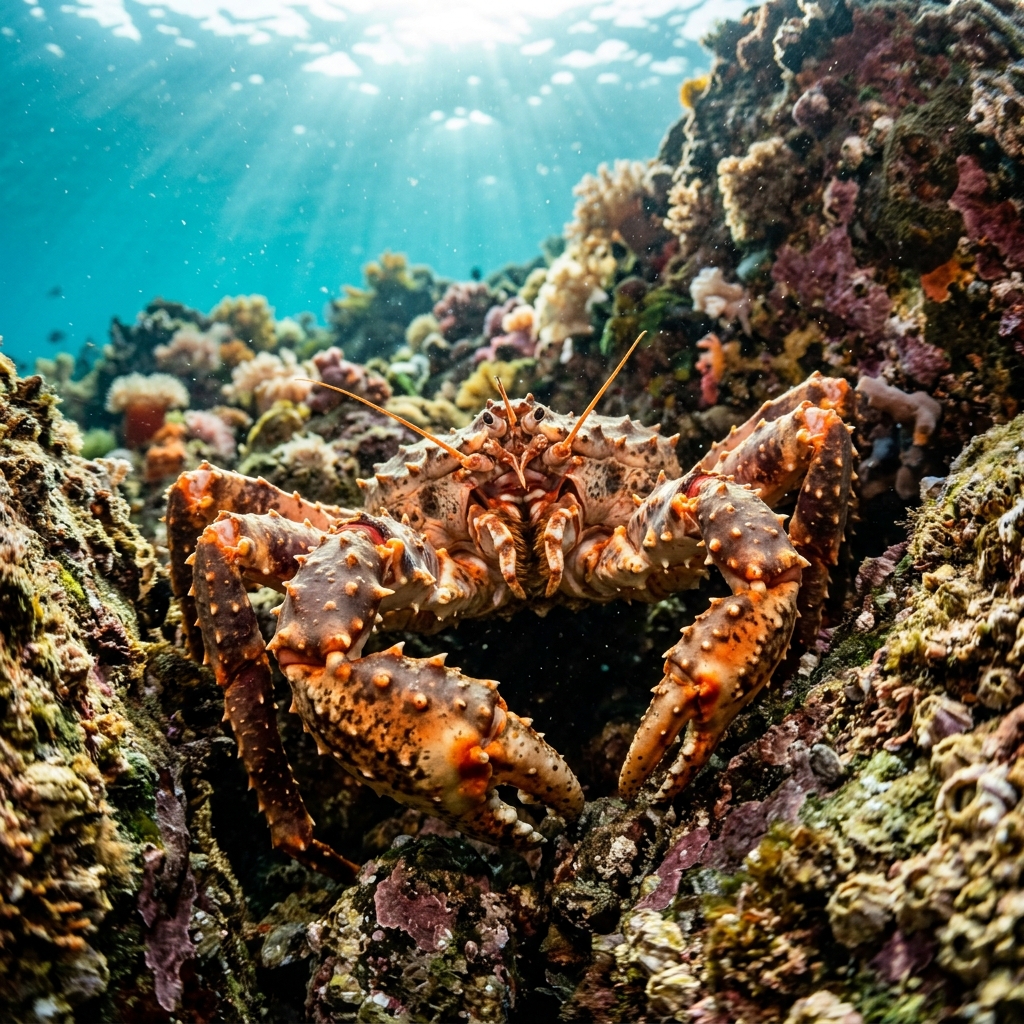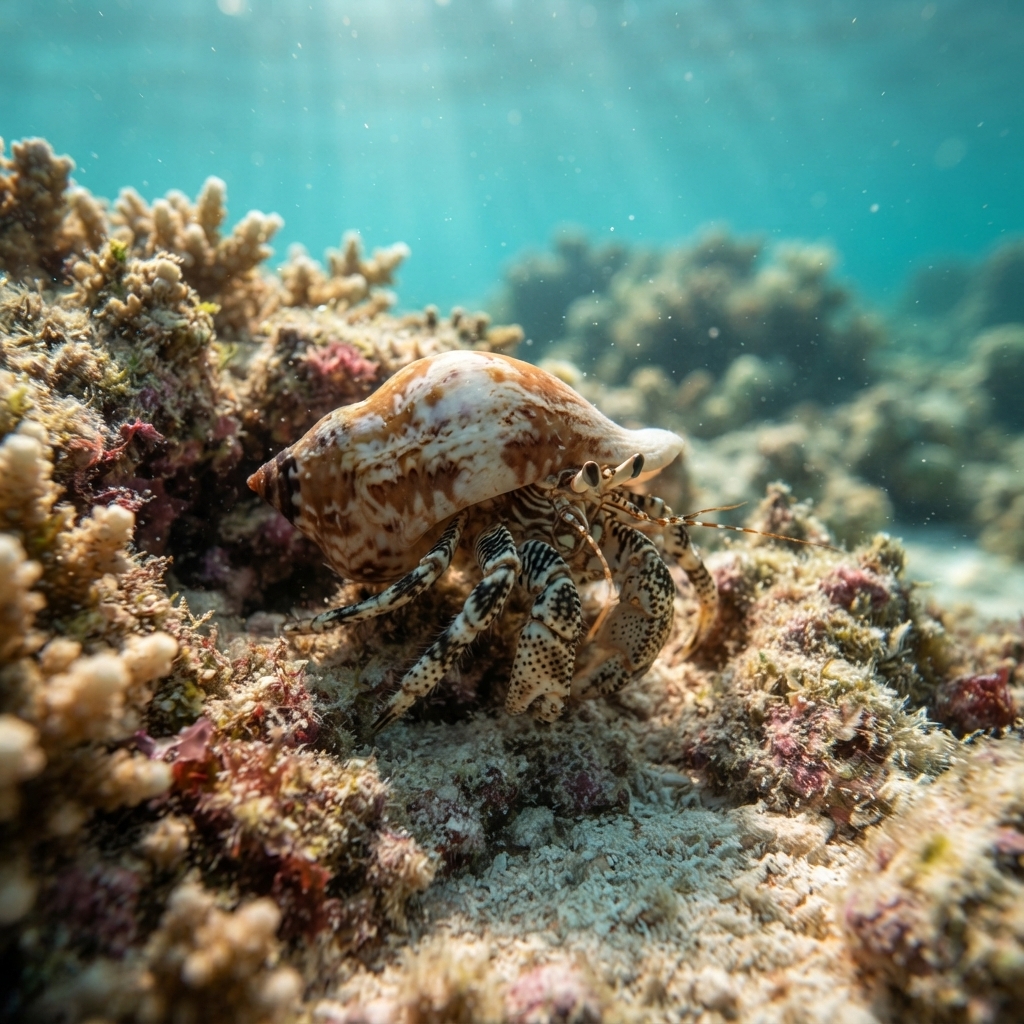
Clibanarius signatus
Spot this small striped hermit crab on reef rubble in Eilat, South Sinai and the UAE's East Coast, uncommon but worth the search.
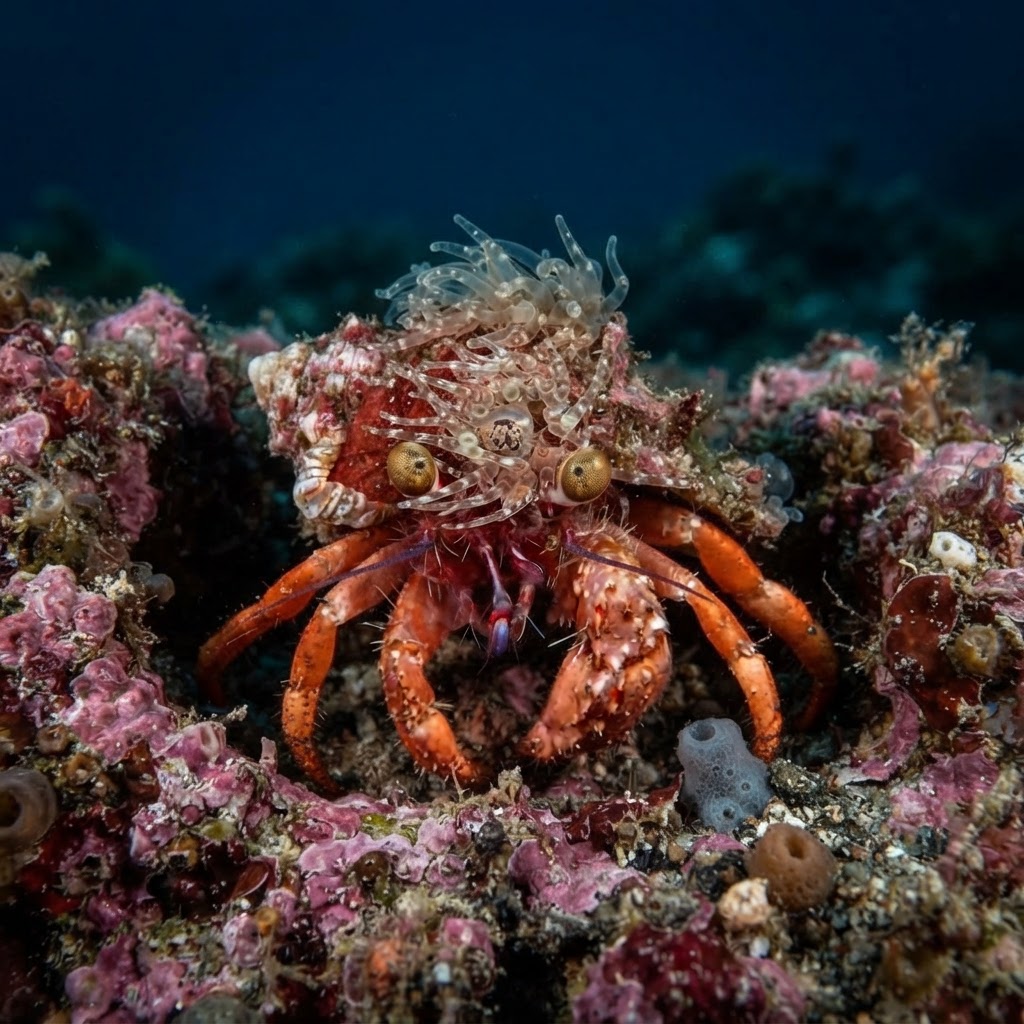
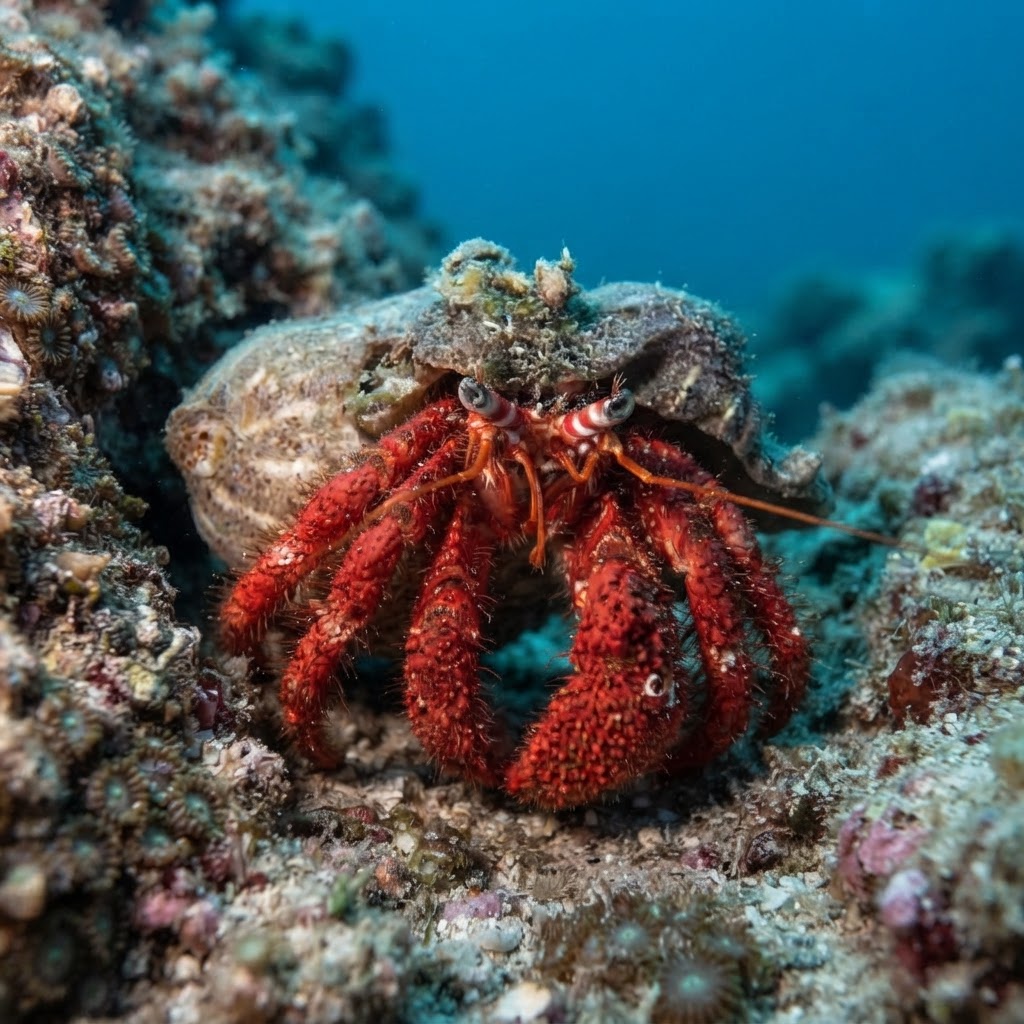
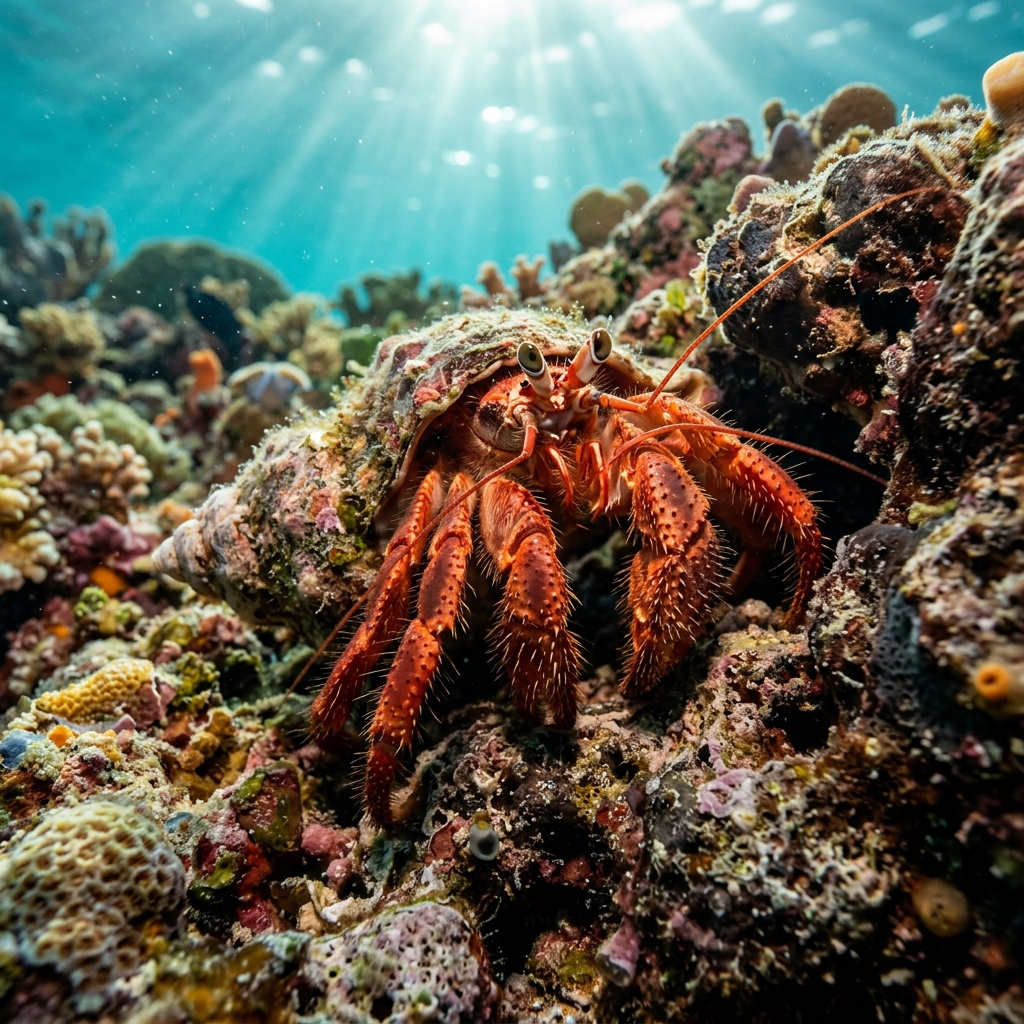
Look for a small crab dragging a scavenged snail shell across rubble or rock, with legs banded in alternating pale and dark stripes that stand out against the shell's dull surface. The claws are noticeably uneven in size, one larger and used to block the shell opening when it withdraws. Body size stays modest, easily overlooked among similarly patterned reef debris unless you slow down and scan the substrate closely.
Divers typically find these crabs picking over rubble, rock crevices and shallow reef flats, moving slowly as they graze on algae and detritus with their mouthparts. They tend to freeze or retreat into their borrowed shell the moment a torch beam or a diver's shadow passes over, so a still, patient approach gets the best look. Most sightings come from close, methodical searching rather than mid-water encounters, since they blend easily into rubble patches.
Like all hermit crabs, this species does not grow its own shell and must periodically abandon its current one for a larger scavenged shell as it grows, leaving it briefly exposed and vulnerable during the swap.
No clear seasonal pattern shows up in the sightings, and the observed temperature range of roughly 22 to 28 C spans most of the diving calendar in these regions, so year-round searching is the practical approach.
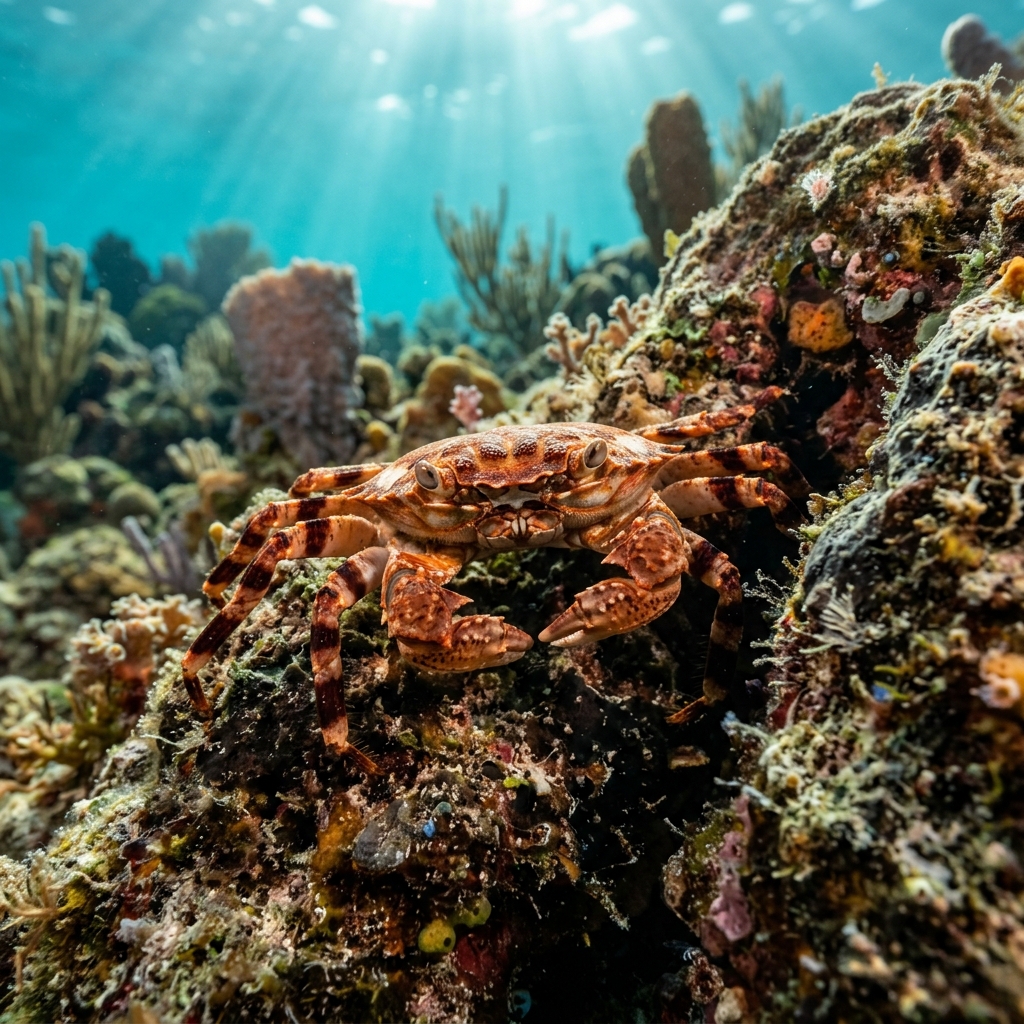
Reef neighbours a diver could mistake it for. Use the identification notes above to tell them apart.
Most reliably logged in Egypt, particularly across South Sinai and the Red Sea Riviera, and along the United Arab Emirates' East Coast region. Israel's Eilat sites also produce steady sightings, making the northern Red Sea and Gulf of Aqaba the strongest overall area to search for this species.
Mapping where Tropical Hermit Crab is logged…
South Sinai and the Red Sea Riviera in Egypt, the East Coast region of the United Arab Emirates, and Eilat in Israel are the strongest areas for sightings, making the northern Red Sea and Gulf of Aqaba the best overall bet.
There's no strong seasonal signal in the data, and the species tolerates a wide temperature range, so it can be found on rubble and reef flats throughout the year in these regions.
Check for a small crab dragging a scavenged shell, with legs banded in alternating light and dark stripes and one noticeably larger claw used to seal the shell opening when disturbed.
No, this species poses no danger to divers. It is a small scavenger that retreats into its shell rather than confronting anything nearby.
They never grow a shell of their own, instead scavenging and swapping into larger empty shells as they grow, leaving them briefly exposed and soft-bodied during each change.
Site and sighting data is aggregated from diver logs, iNaturalist and GBIF. For taxonomy and conservation status:
European Green Crab
2,469 sites