Hippopus hippopus
Spot the Bear Paw Clam on warm Indo-Pacific reefs from the Philippines to Queensland. ID tips, best dive regions, and when to look.
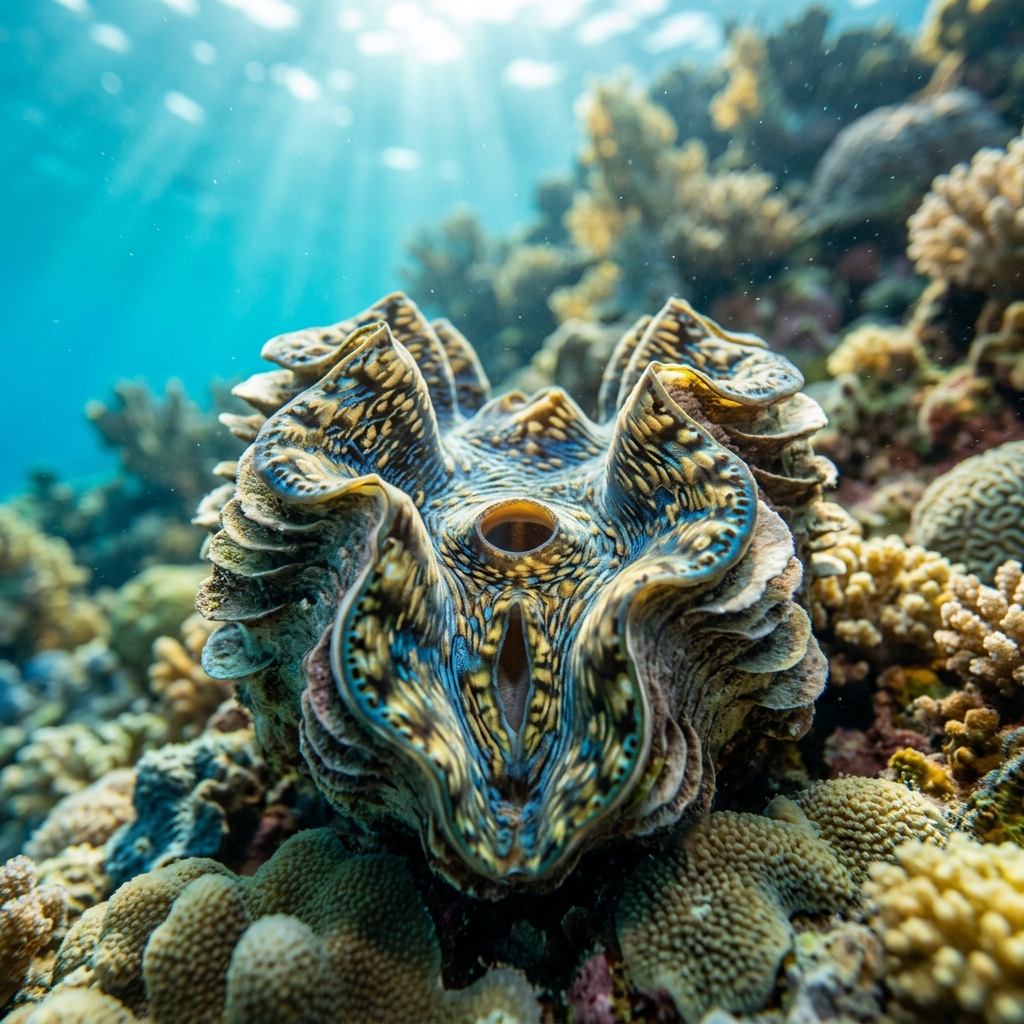
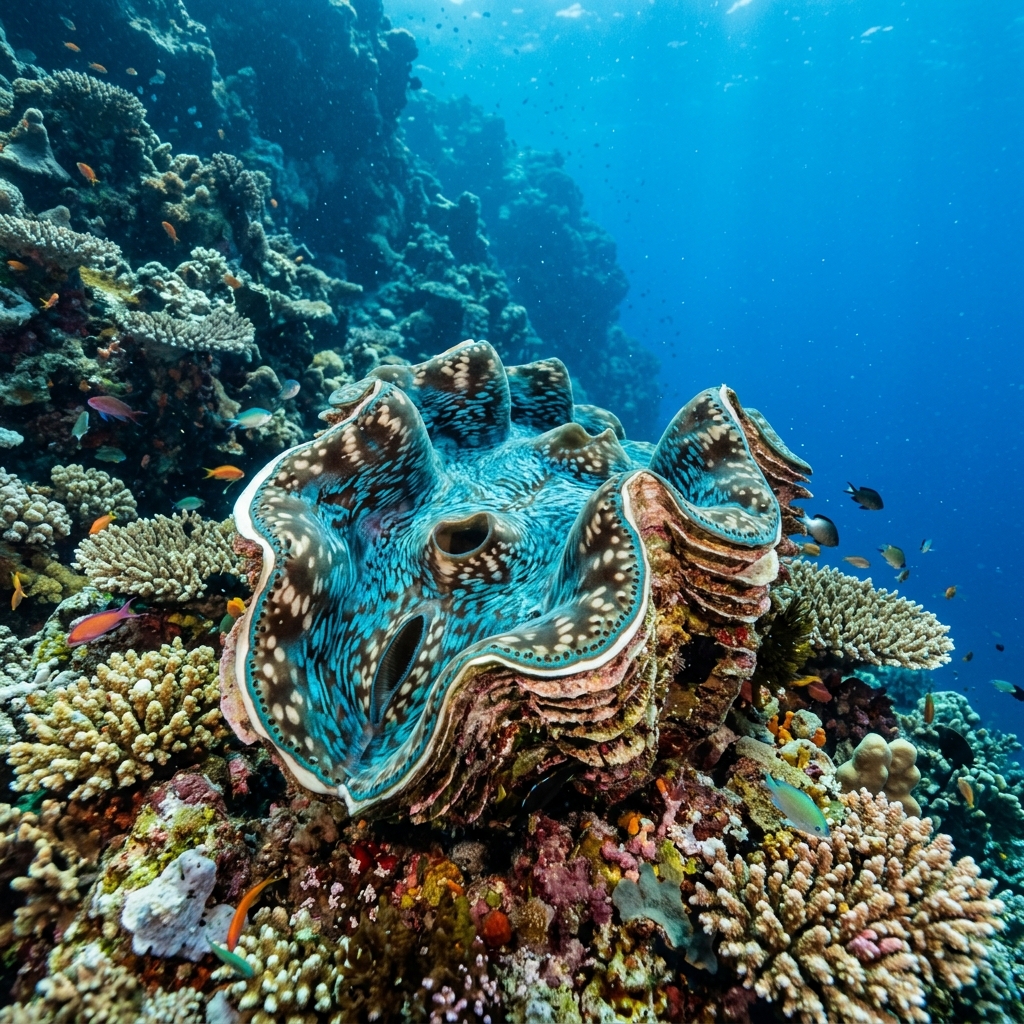
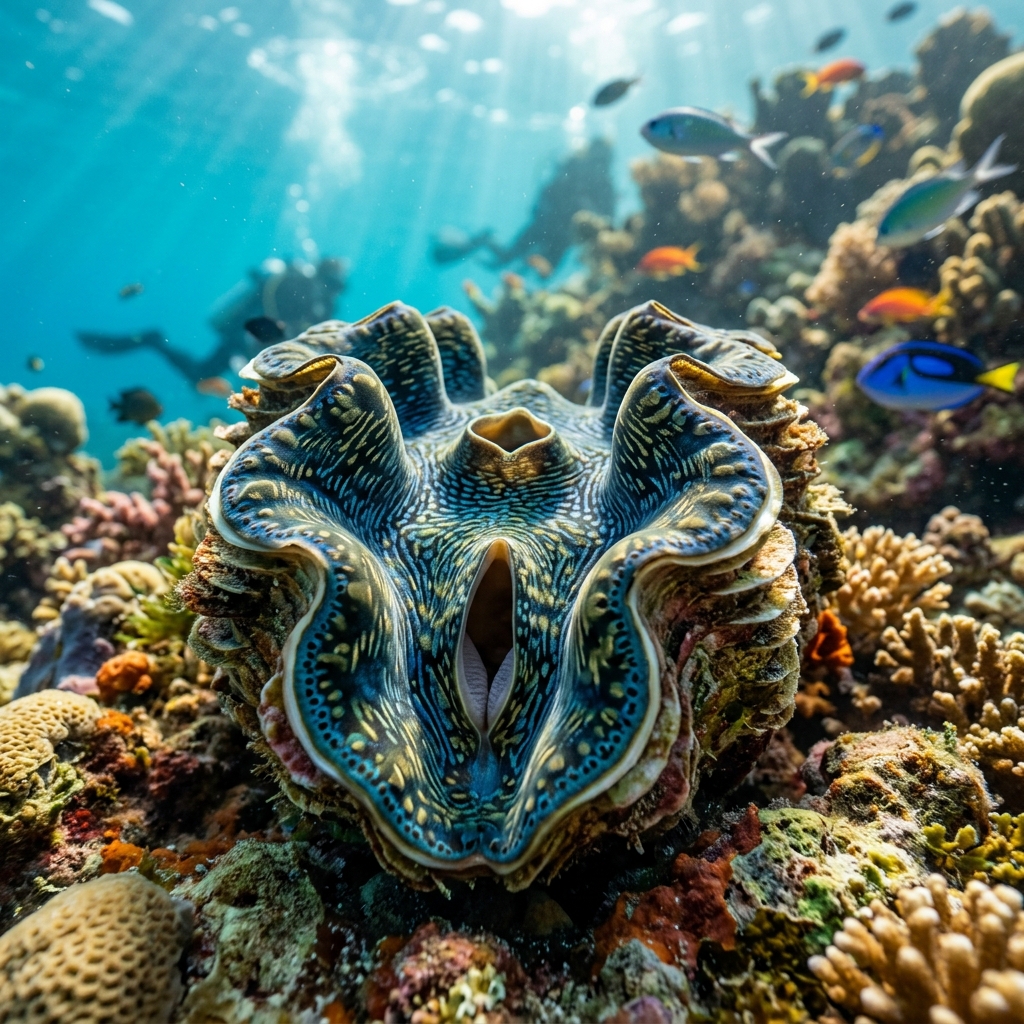
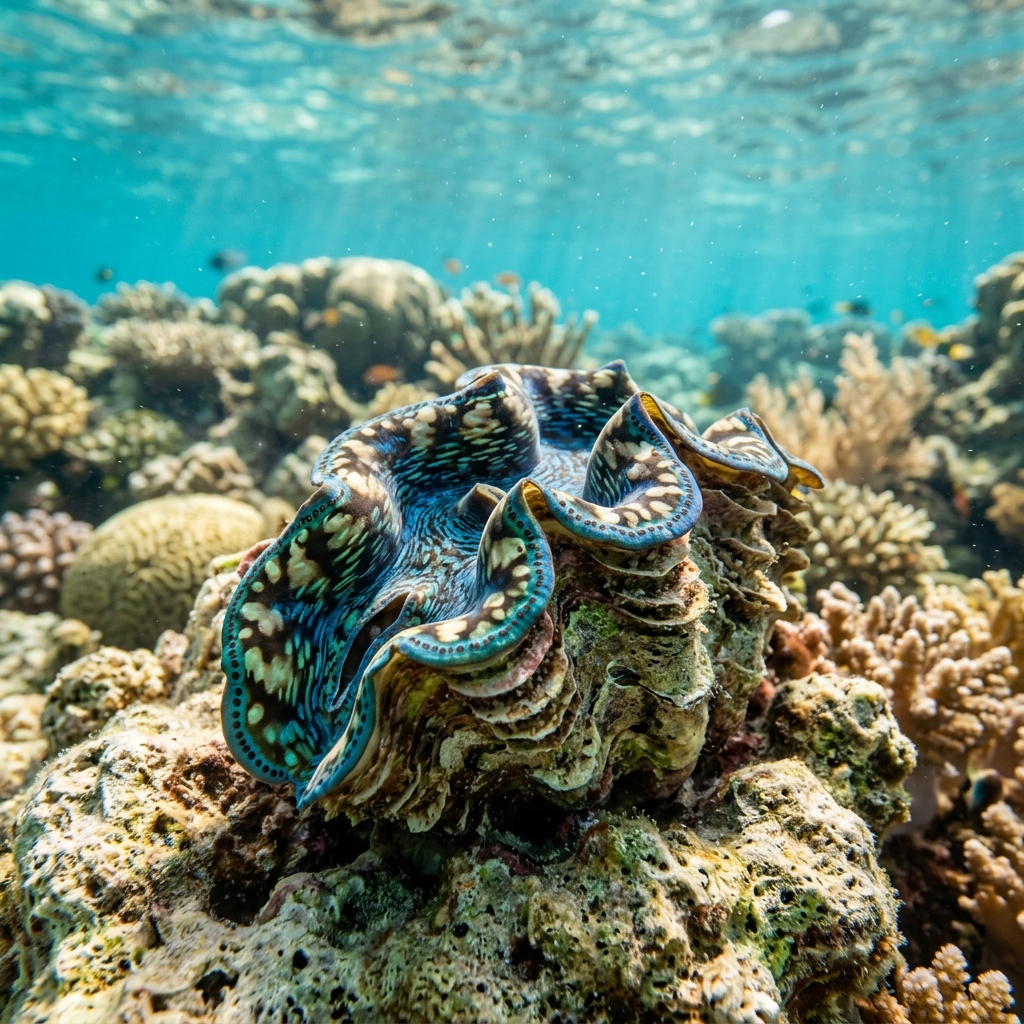
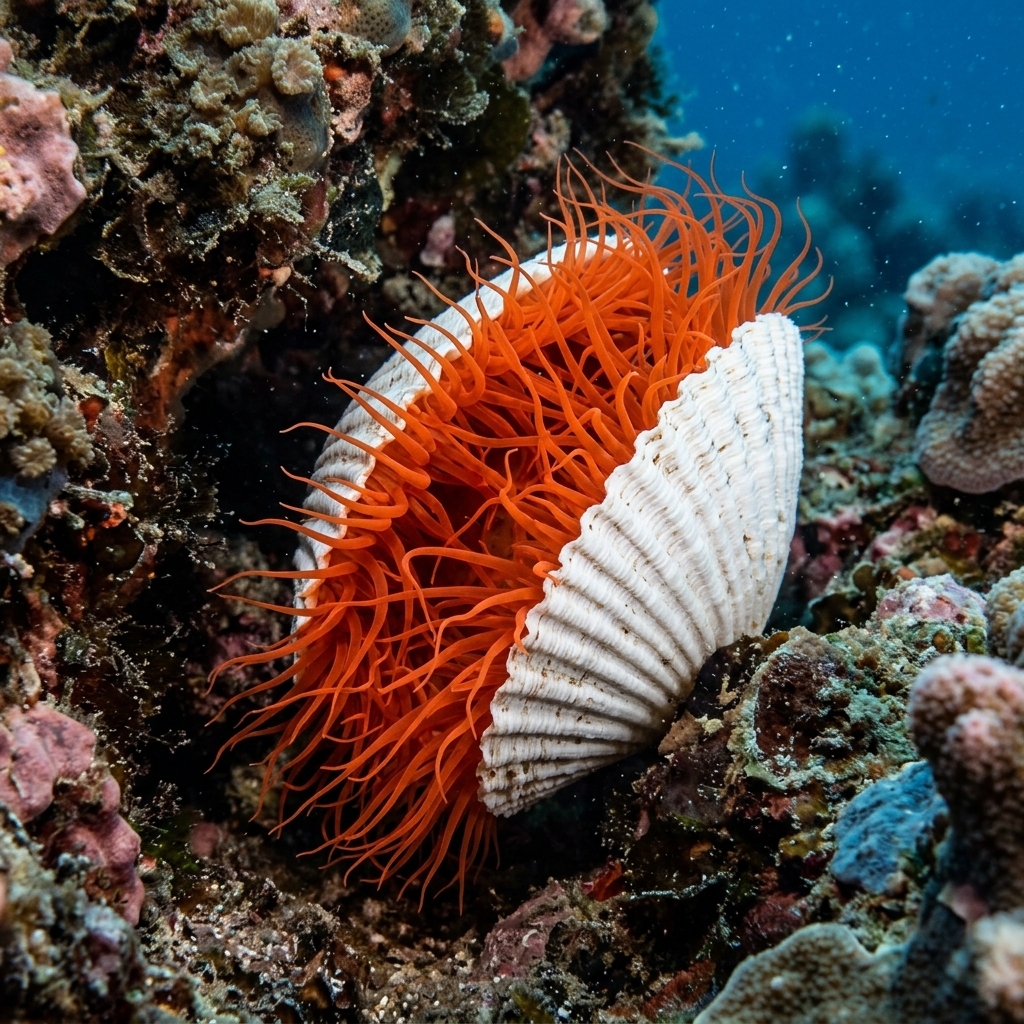
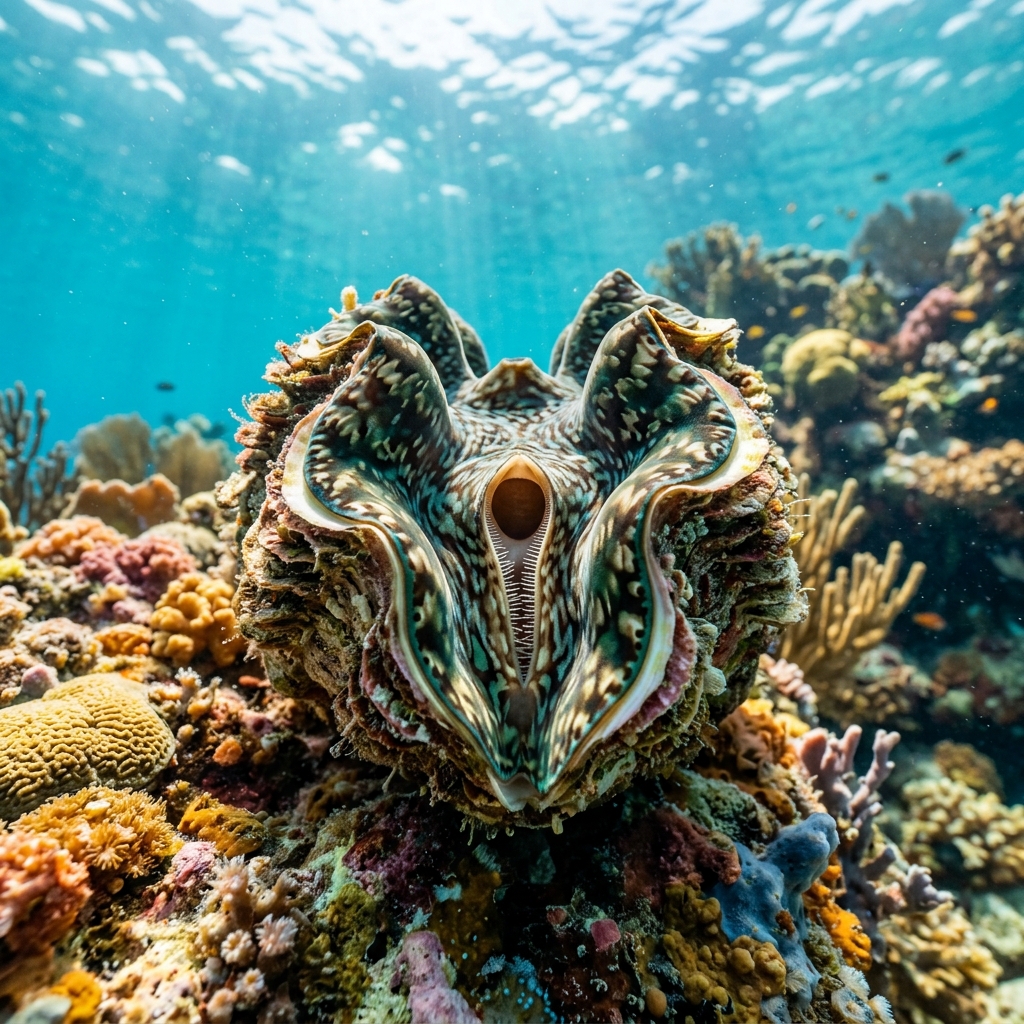
Thick, heavy shell with bold radial ribs running from hinge to margin gives it a distinctly chunky, rounded profile, reaching roughly 35 cm across. The outer shell is creamy white to pale grey, and the lower valve sits flat on the substrate while the upper valve opens slightly to reveal a fleshy, pale mantle. Look for the distinctive triangular-toothed shell margin, which resembles a bear's paw print and sets it apart from slimmer bivalves on the same reef.
Bear paw clams are sessile (fixed in place) once settled, so you will find them resting on sandy patches or rubble between coral heads in the neritic zone, typically from the shallows down to about 30 m. They open their valves slightly in good light to let symbiotic algae photosynthesise, and close slowly when a diver approaches or casts a shadow. Because they do not move, sightings are brief and quiet, but the same individual can often be revisited on repeated dives to the same site.
Like their Tridacna relatives, bear paw clams host zooxanthellae (photosynthetic algae) in their mantle tissue, gaining a significant share of their energy directly from sunlight rather than filter feeding alone.
No strong seasonal pattern emerges from the data, and the species sits comfortably in water between about 27 and 29 °C, meaning tropical reefs across its range hold bear paw clams year-round. Plan around local visibility conditions rather than a specific season.
Reef neighbours a diver could mistake it for. Use the identification notes above to tell them apart.
Most commonly logged in the Philippines and Indonesia, with the Visayas, Palawan and Apo Reef, and Sulawesi standing out as the strongest areas. Australia's Queensland coast also holds a solid population, and sightings extend through Micronesia, Malaysia, Fiji, and Papua New Guinea. Within the Indo-Pacific, it is a shallow-reef species, so most encounters happen at snorkel-to-recreational dive depths.
Mapping where Bear Paw Clam is logged…
The strongest diving for this species is in the Philippines, particularly around the Visayas and Palawan, and across Indonesian waters including Sulawesi and Maluku. Queensland in Australia is another reliable area, with further sightings logged in Micronesia, Malaysia, Fiji, and Papua New Guinea.
They are present year-round on tropical Indo-Pacific reefs. Water temperatures in the 27 to 29 °C range suit them well, so there is no single best season. Dive when local conditions, such as calm seas and good visibility, are at their best for your chosen region.
Look for a large, heavy bivalve with bold radial ribs and a jagged, tooth-like shell margin that resembles a bear's paw. The outer shell is white to pale grey and the lower valve lies flat on the reef. The chunky, almost triangular outline and the thick interlocking shell teeth distinguish it from slimmer giant clam species nearby.
Typical adults reach around 35 cm across the shell, making them notably large bivalves but considerably smaller than the giant clam. Their thick, heavy shell makes them look even more substantial on the reef than the measurement suggests.
They are currently classified as Vulnerable by the IUCN. Collection for the ornamental shell trade and reef degradation have reduced populations across the Indo-Pacific. Divers should observe without touching and report any obvious collection activity to local marine park authorities.
The Bear Paw Clam is listed as vulnerable by the IUCN. Observe from a distance, avoid touching or feeding it, and report sightings to local marine research organisations.
Listed as Vulnerable on the IUCN Red List, largely due to collection pressure and habitat loss across its Indo-Pacific range. Keep distance, avoid touching the shell, and never attempt to handle or move one.
Site and sighting data is aggregated from diver logs, iNaturalist and GBIF. For taxonomy and conservation status:
Elongate Clam
2,091 sites