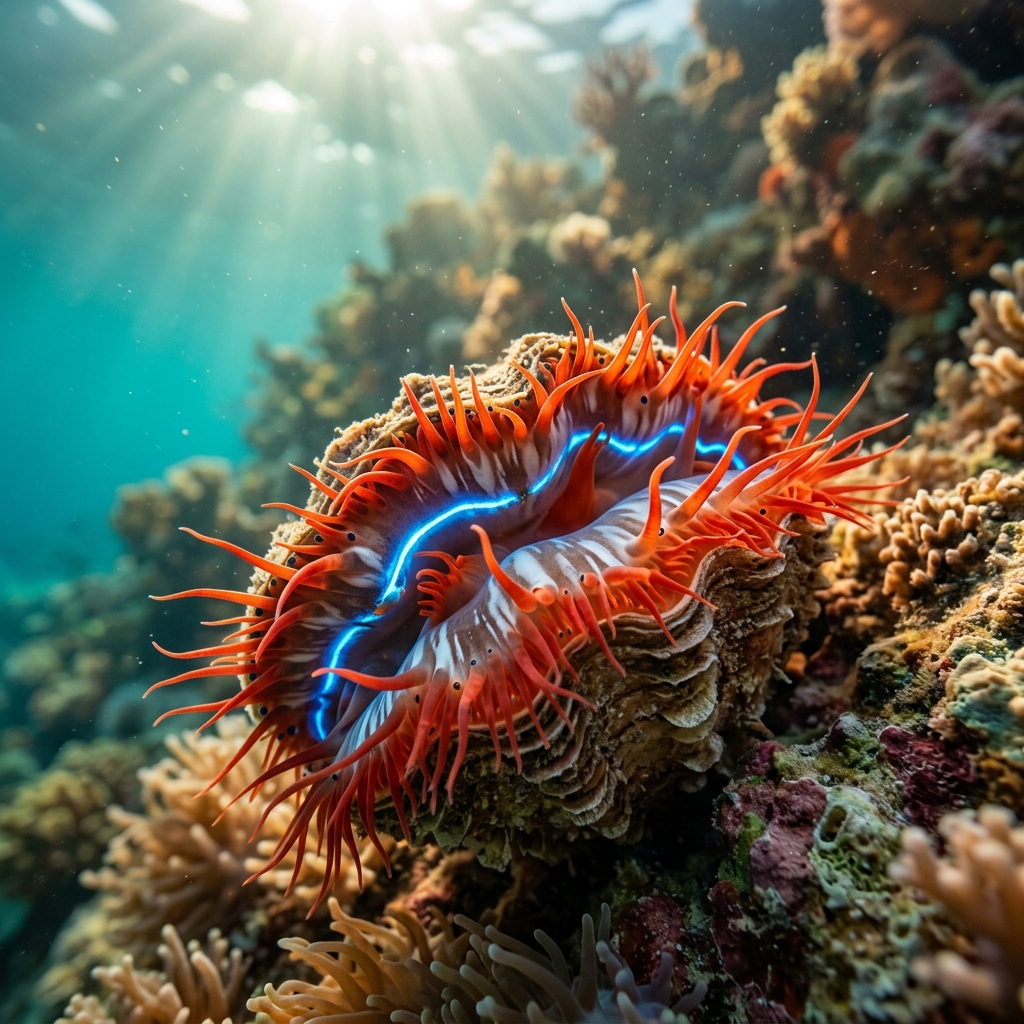
Ctenoides ales
Spot the Disco Clam's neon flashing rim in the Visayas, Palau, or Fiji. Rare but findable year-round in warm Indo-Pacific waters from 27 to 29 °C.
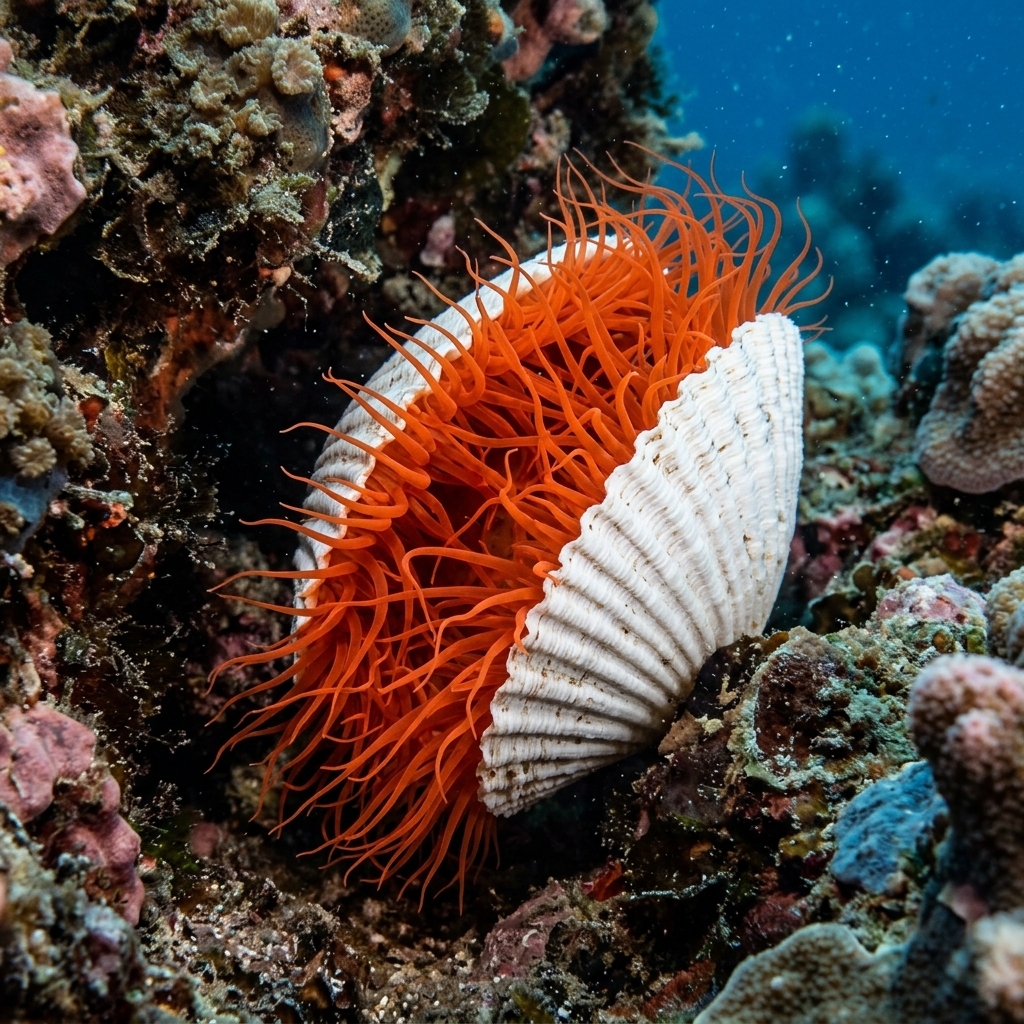
Look for a vivid orange-red mantle fringed by a thin lip that produces a rapid, alternating silver-and-black flash, the visual effect that earns it the name. This strobing is caused by light reflecting off silica spheres on one side of the mantle edge, not bioluminescence. The shell itself is relatively small and rounded, often tucked into a crevice or overhang with only the pulsing mantle exposed. The relentless flicker, unlike anything else on the reef, is the single feature you key on.
Disco clams wedge themselves into crevices, overhangs, and rocky recesses on the reef, often in shaded spots, so slow down and peer into gaps rather than scanning open wall. The constant mantle flashing continues regardless of whether a diver is present, so it draws your eye even in low light. If threatened, they can clap their shells together and swim short distances by jet propulsion, though most simply close up when closely approached.
The flashing effect is produced entirely by passive reflection: one side of the mantle edge is packed with tiny silica nanospheres that mirror ambient light brilliantly, while the other side is deeply pigmented and absorbs it. As the mantle rolls back and forth, the two sides alternate in view, creating the strobe.
No seasonal pattern emerges from the data, so disco clams can be treated as year-round residents wherever they occur. Their observed temperature range of roughly 27 to 29 °C aligns with permanently warm Indo-Pacific reef waters, meaning water temperature alone is not a useful timing guide.
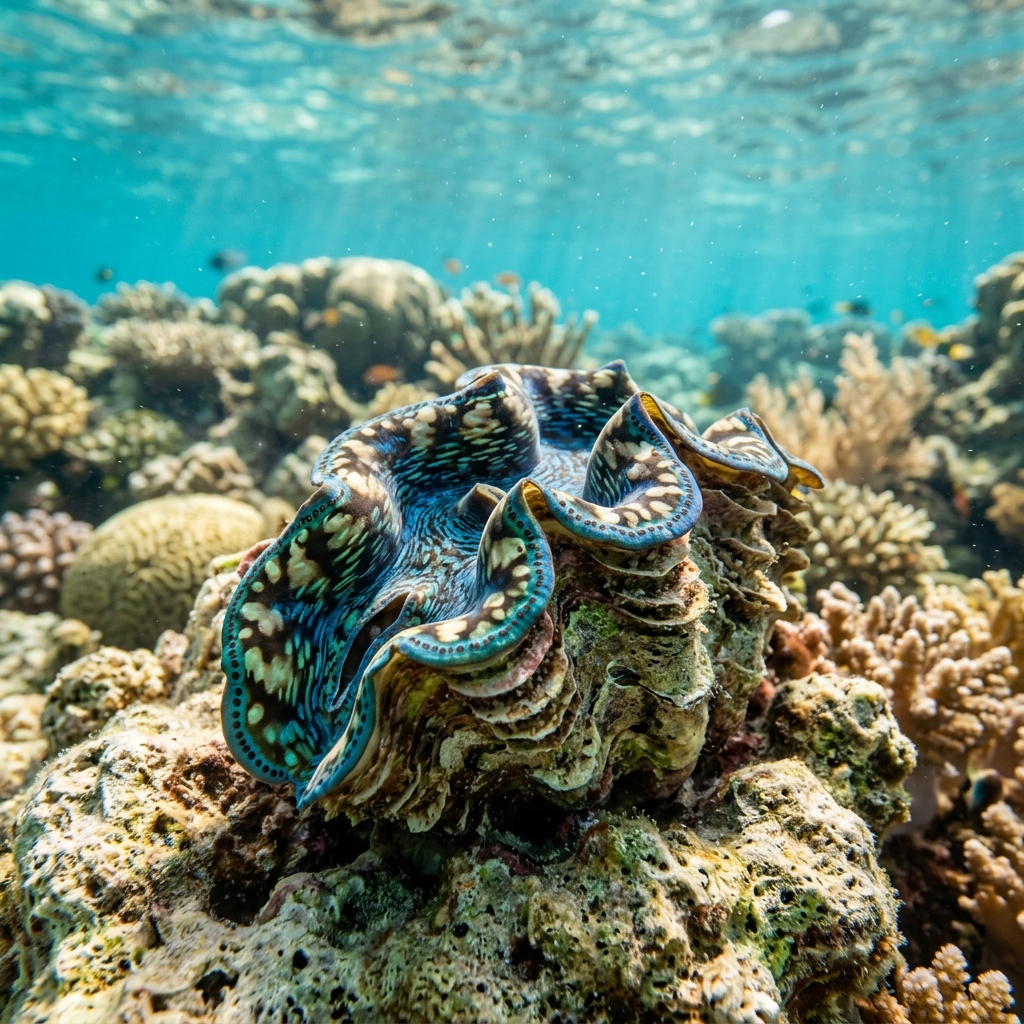
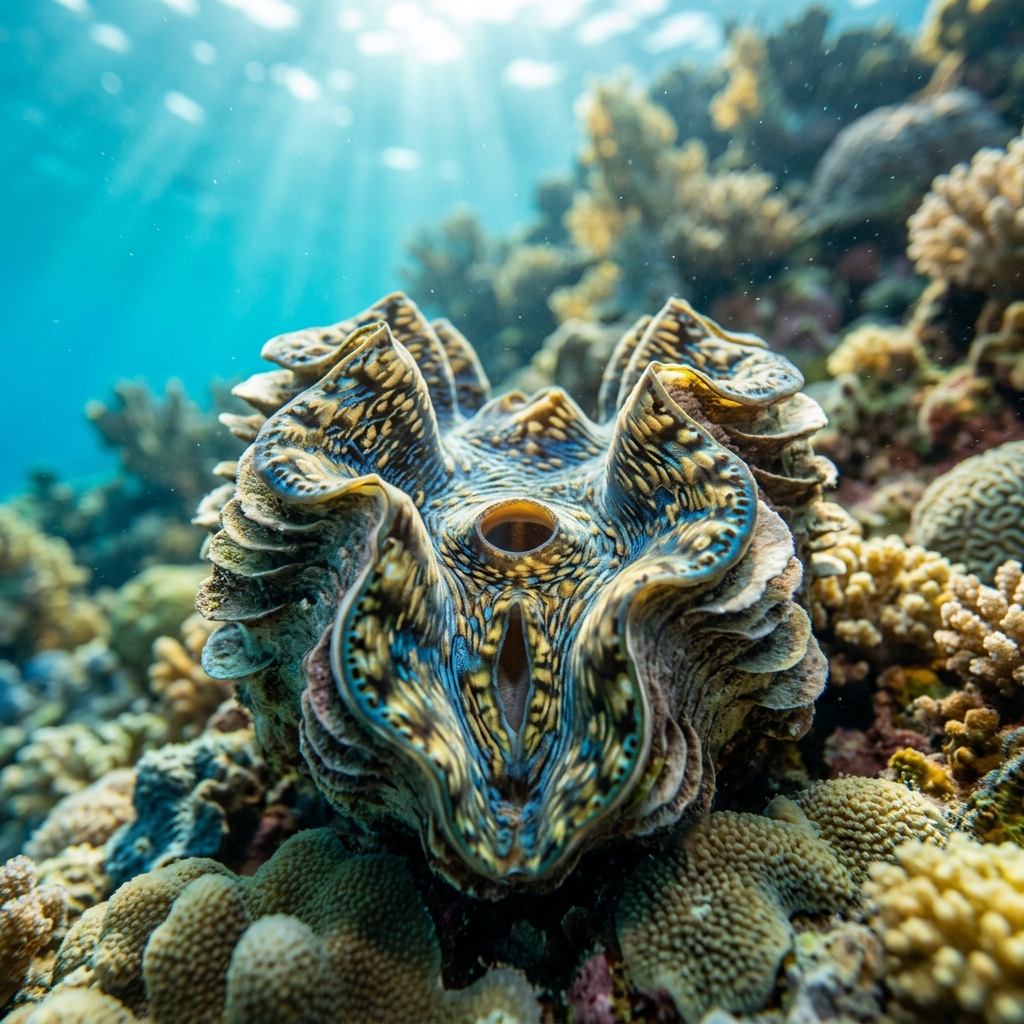
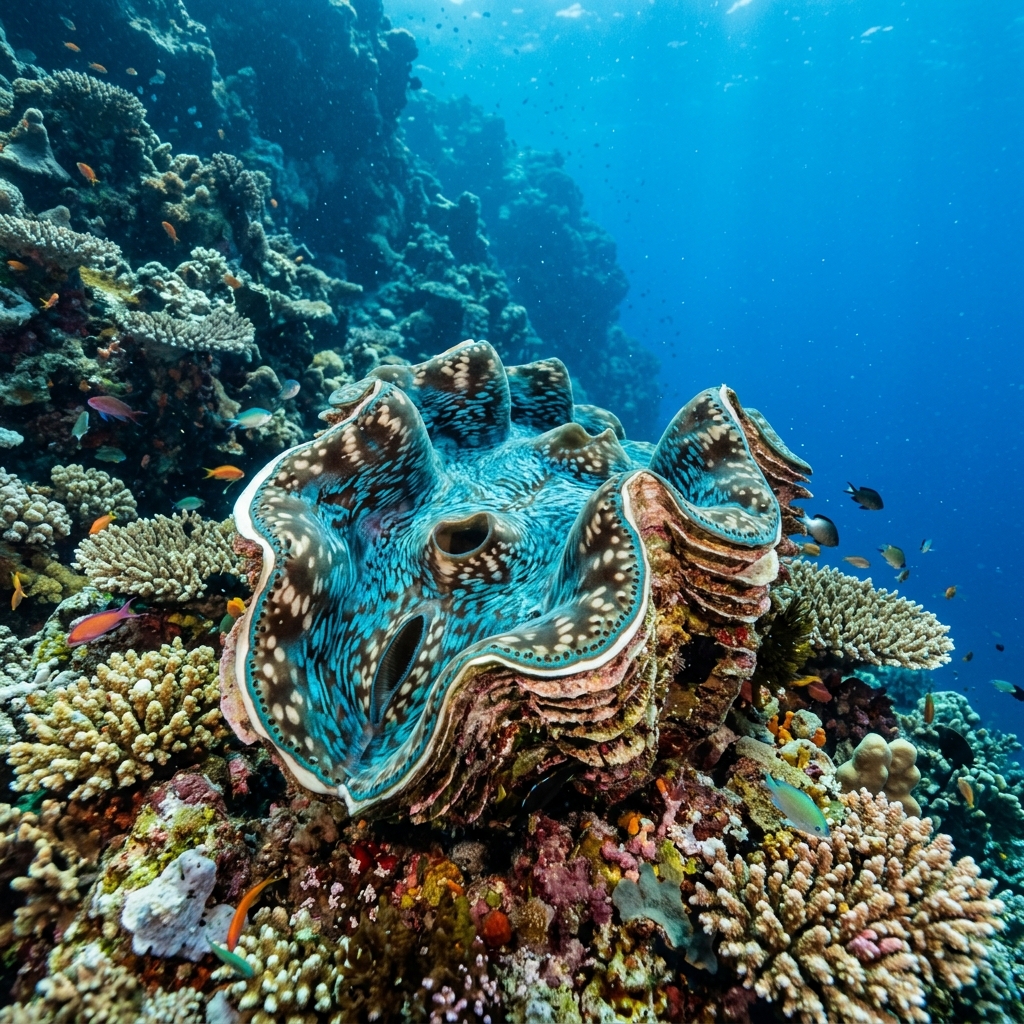
Reef neighbours a diver could mistake it for. Use the identification notes above to tell them apart.
The vast majority of sightings come from the Philippines, with the Visayas Central region, particularly around Cebu and Bohol, producing by far the most records. Palau's Ngemelis Islands and the Rock Islands are the next most reliable area, followed by Viti Levu in Fiji, Cayman Brac in the Cayman Islands, and Île des Pins in New Caledonia. Indonesia's Bali sites and a handful of sites in Australia and the United States round out the confirmed range.
Mapping where Disco Clam is logged…
The Philippines, especially the Visayas Central region around Cebu and Bohol, holds the greatest concentration of logged sightings. Palau's Ngemelis Islands and Rock Islands are the next most productive area, followed by Viti Levu in Fiji and Cayman Brac. Smaller numbers of sightings exist from New Caledonia, Indonesia, Australia, and the United States.
There is no identifiable peak season in the sighting data, so they can be encountered year-round at sites across their range. Their warm-water temperature preference of around 27 to 29 °C means tropical reefs remain suitable throughout the year.
The rapid, alternating silver-and-black flashing along the mantle edge is unmistakable and unlike any other reef animal. Look into shaded crevices and overhangs for a small orange-red clam with what appears to be a tiny strobe light built into its lip. Nothing else on a coral reef pulses quite like this.
It does not produce light itself. One side of the mantle edge is packed with tiny silica nanospheres that act as mirrors, reflecting ambient light intensely, while the opposite side is dark and absorbs light. As the mantle rolls continuously back and forth, the reflective and dark sides alternate in view, creating the impression of a rapidly flickering strobe.
Site and sighting data is aggregated from diver logs, iNaturalist and GBIF. For taxonomy and conservation status:
Elongate Clam
2,091 sites