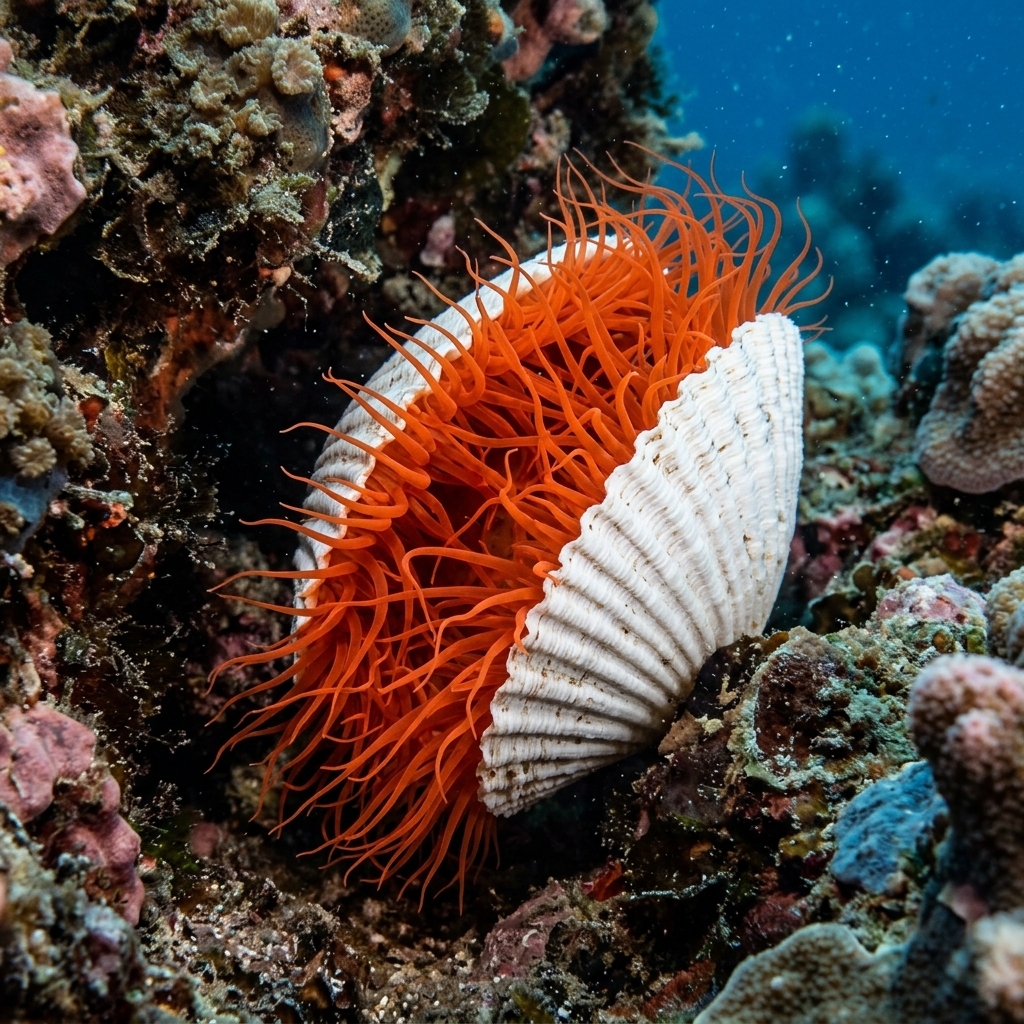
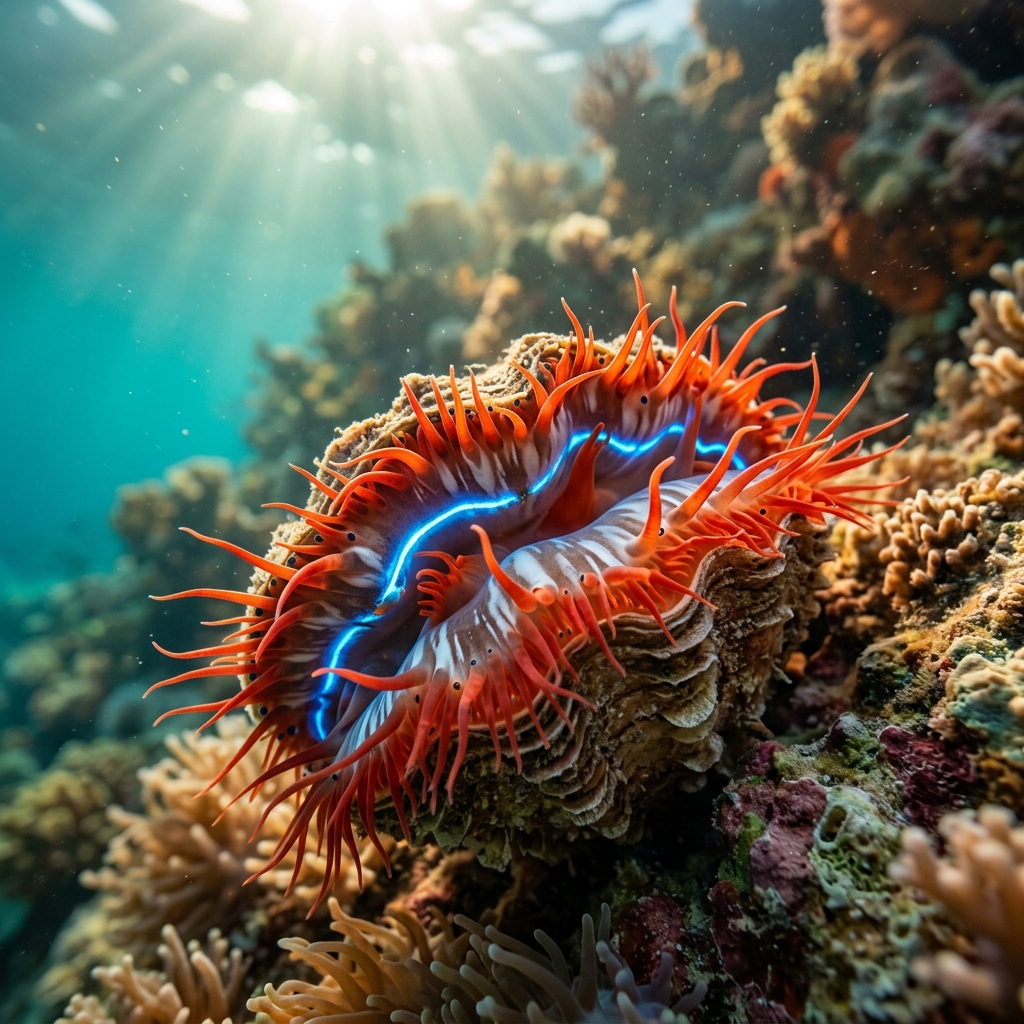
Tridacna spp.
Wavy, electric-blue mantles tucked into reef flats from Okinawa to the Maldives, visible year-round in warm 24-29C water.
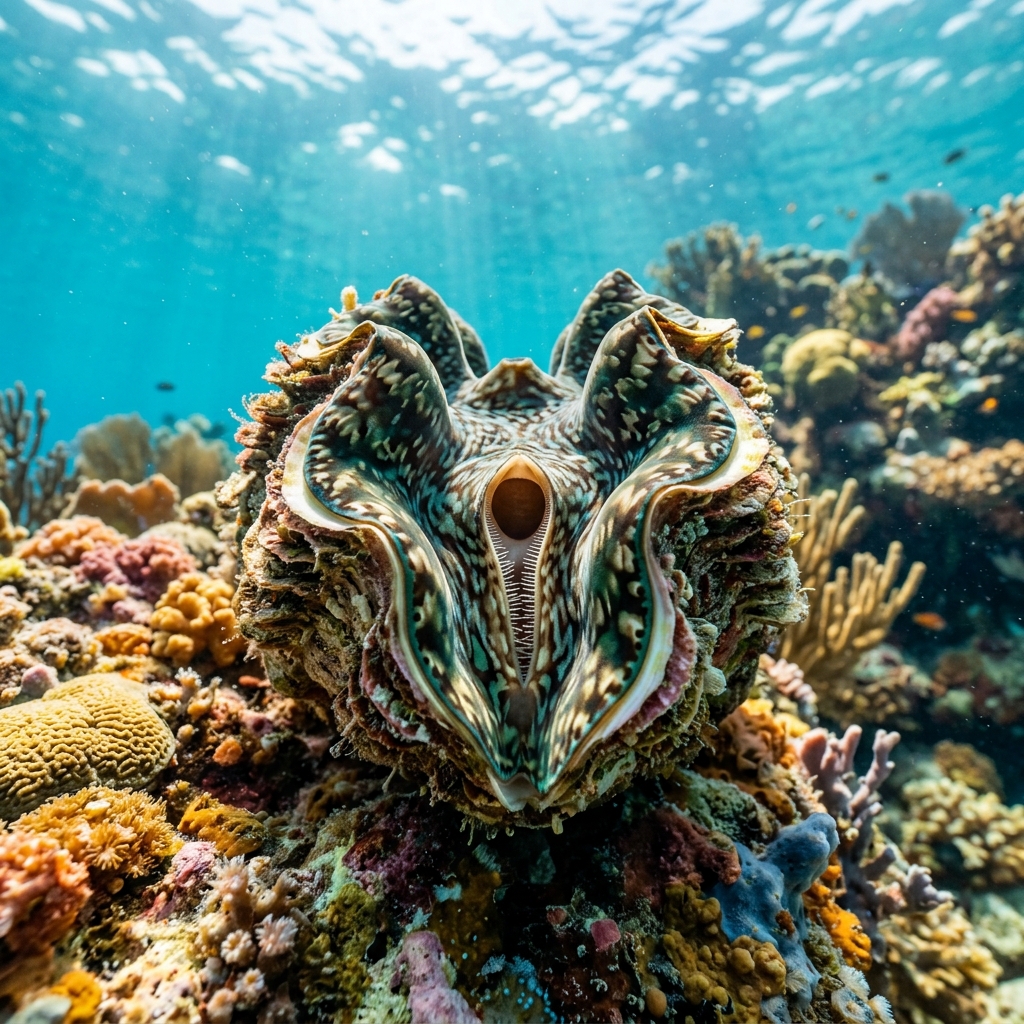
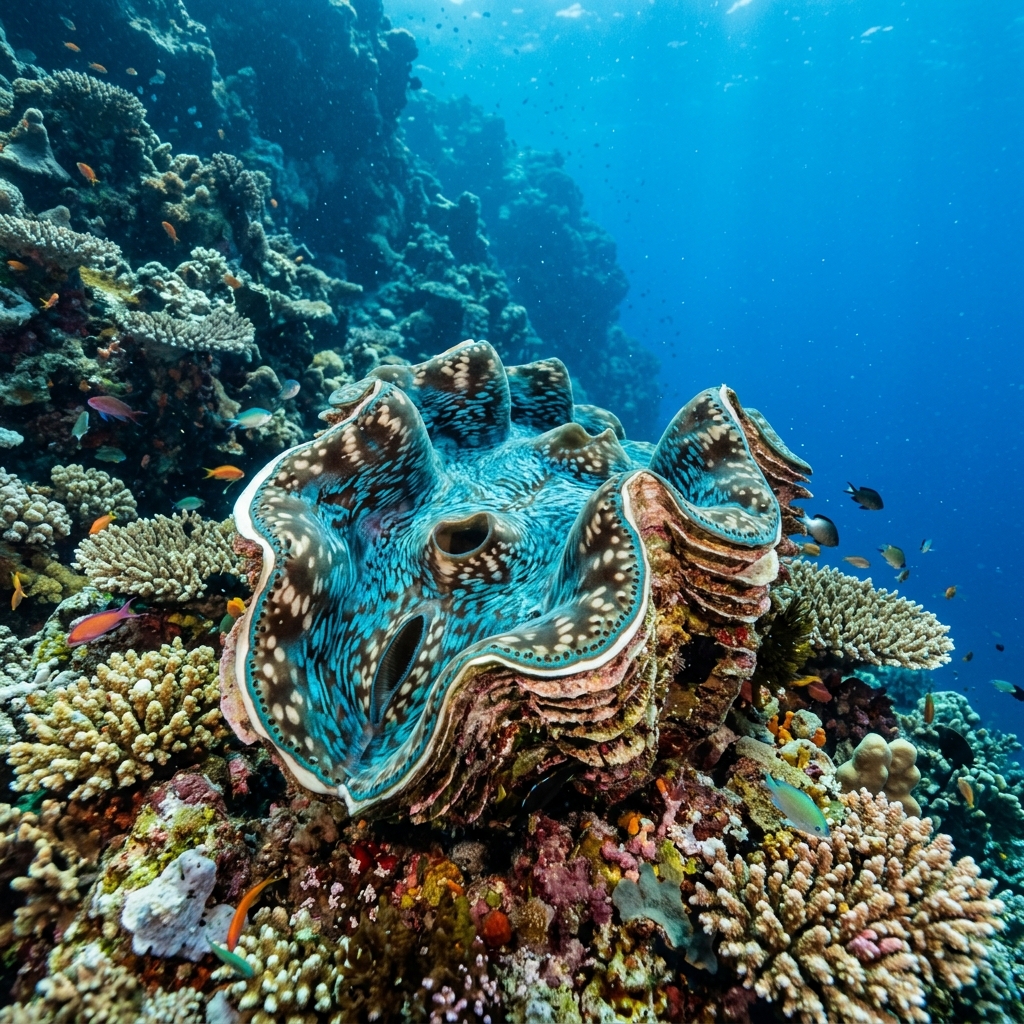
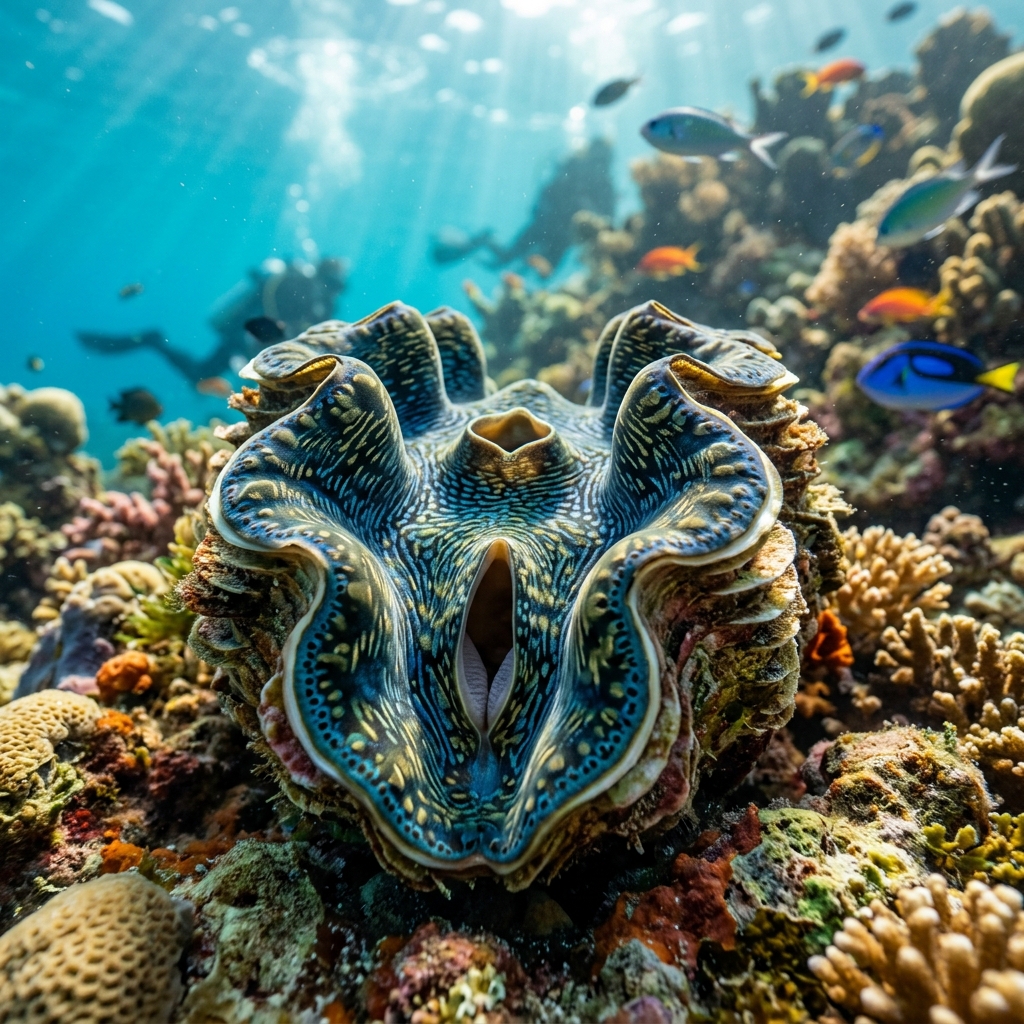
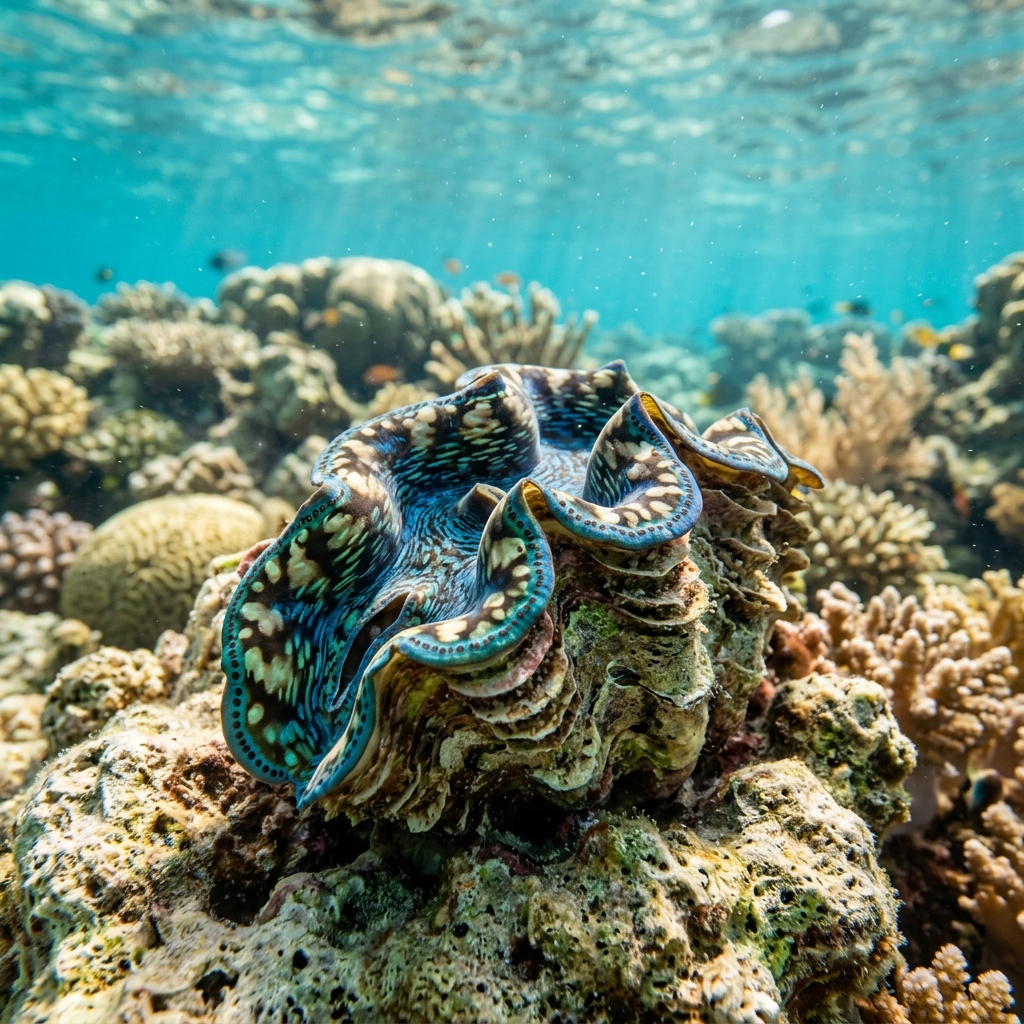
Look for a fluted, wavy-edged shell wedged directly into coral rock or rubble, with only the fleshy mantle exposed. That mantle is the giveaway: an iridescent patchwork of blues, greens, golds or browns, often with a speckled or spotted pattern unique to each individual. Size varies a lot within the genus, from fist-sized to well over the length of a diver's forearm, so don't rule an animal out just because it looks modest.
Once you spot one, don't expect drama: it stays anchored in the same spot in the reef, mantle fanned open to filter feed and soak up light, and simply retracts slightly if a torch beam or a diver's shadow passes close. Most sightings happen on shallow to mid-depth reef flats and slopes where light is good, since the mantle relies on it. Divers usually log them as an occasional, steady presence rather than something that needs searching out, most sites reporting them as uncommon to common rather than rare.
That colourful mantle tissue hosts symbiotic algae (zooxanthellae) which photosynthesise and share sugars with the clam, the same partnership that powers coral, which is why you only find healthy ones on sunlit reef.
No clear seasonal pattern shows up in the data, and with a comfort range of roughly 24 to 29C these clams sit happily on tropical reefs all year, so any month works for a dive trip built around finding them.
Reef neighbours a diver could mistake it for. Use the identification notes above to tell them apart.
This genus turns up on reef flats and slopes across the Coral Triangle and beyond, with the strongest logging in Indonesia, the Philippines and Malaysia, plus dense records through the Maldives and Australia. Within those countries, Okinawa and the Ryukyu Islands in Japan, the Northern Atolls of the Maldives, Queensland, Palawan, Sulawesi and Sabah stand out as particularly reliable regions to find one embedded in the reef.
Mapping where Small Giant Clam is logged…
Best logged across Indonesia, the Philippines, the Maldives, Australia and Malaysia, with strong regional hotspots in Okinawa, the Maldives' Northern Atolls, Queensland, Palawan and Sulawesi.
There's no strong season in the sightings data. They sit on warm tropical reefs (about 24 to 29C) year-round, so any month you're diving the Coral Triangle or Maldives works.
Check reef flats and rubble for a fluted shell with only a colourful, wavy mantle showing, patterned in blues, greens or golds. It stays fixed in place, unlike free-moving shells such as file shells.
Size in this genus ranges widely, from fist-sized individuals up to shells well over a forearm's length, so don't judge the species by a single small specimen.
No. They're stationary filter feeders with no sting or bite risk to divers, they simply retract their mantle slightly if disturbed.
Their mantle tissue farms its own algae, the same symbiotic partnership corals use, converting sunlight into food, which is why they only thrive on well-lit reef.
Site and sighting data is aggregated from diver logs, iNaturalist and GBIF. For taxonomy and conservation status:
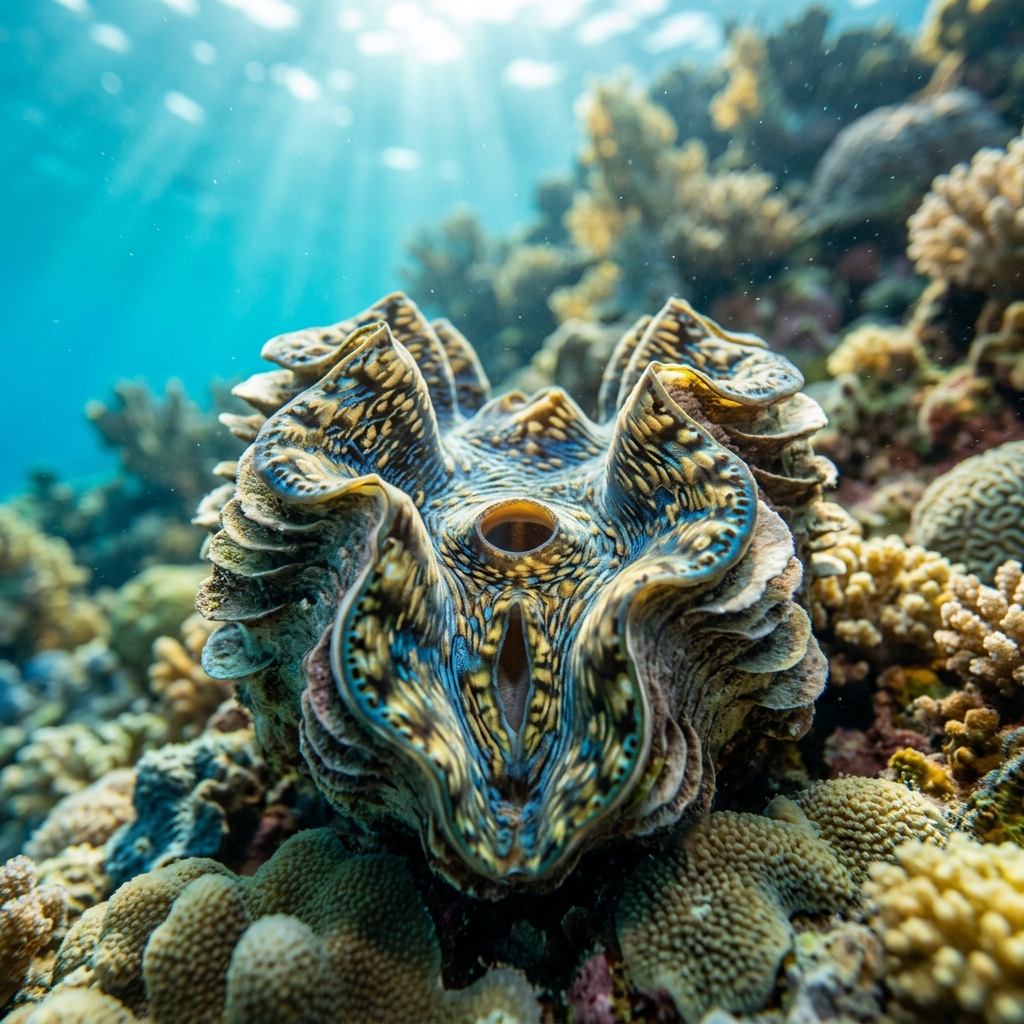
Fluted Clam
1,103 sites