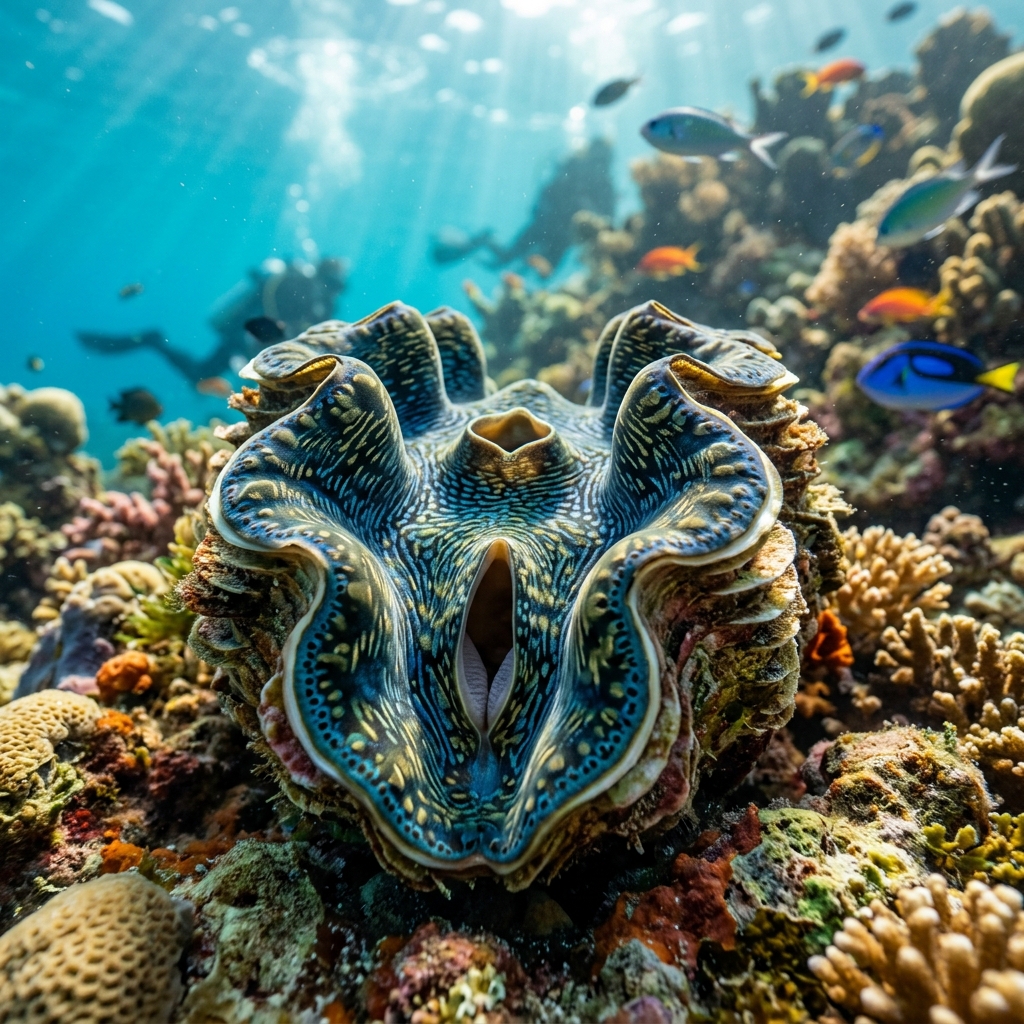
Tridacna derasa
Spot smooth giant clam in Japan's Yaeyama & Miyako Islands and Queensland, Australia. An endangered species worth finding on your next reef dive.
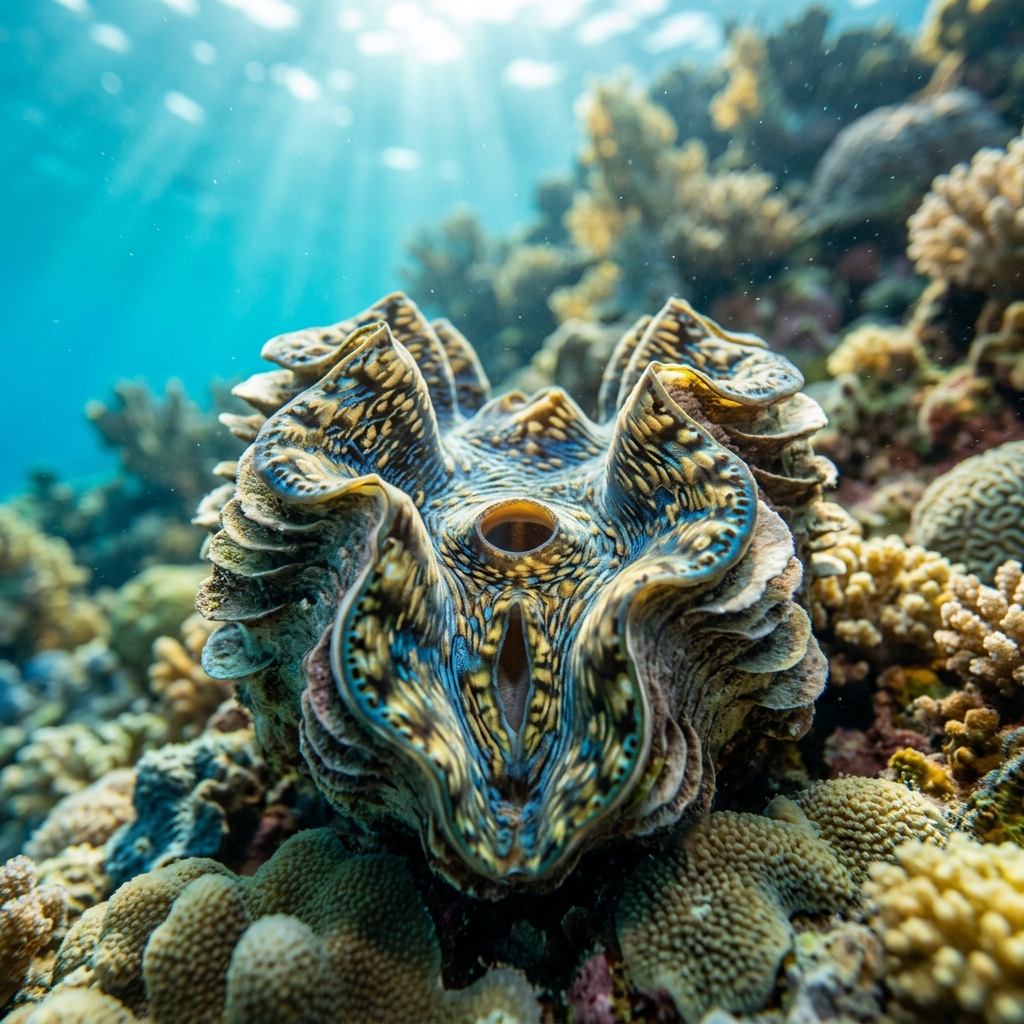
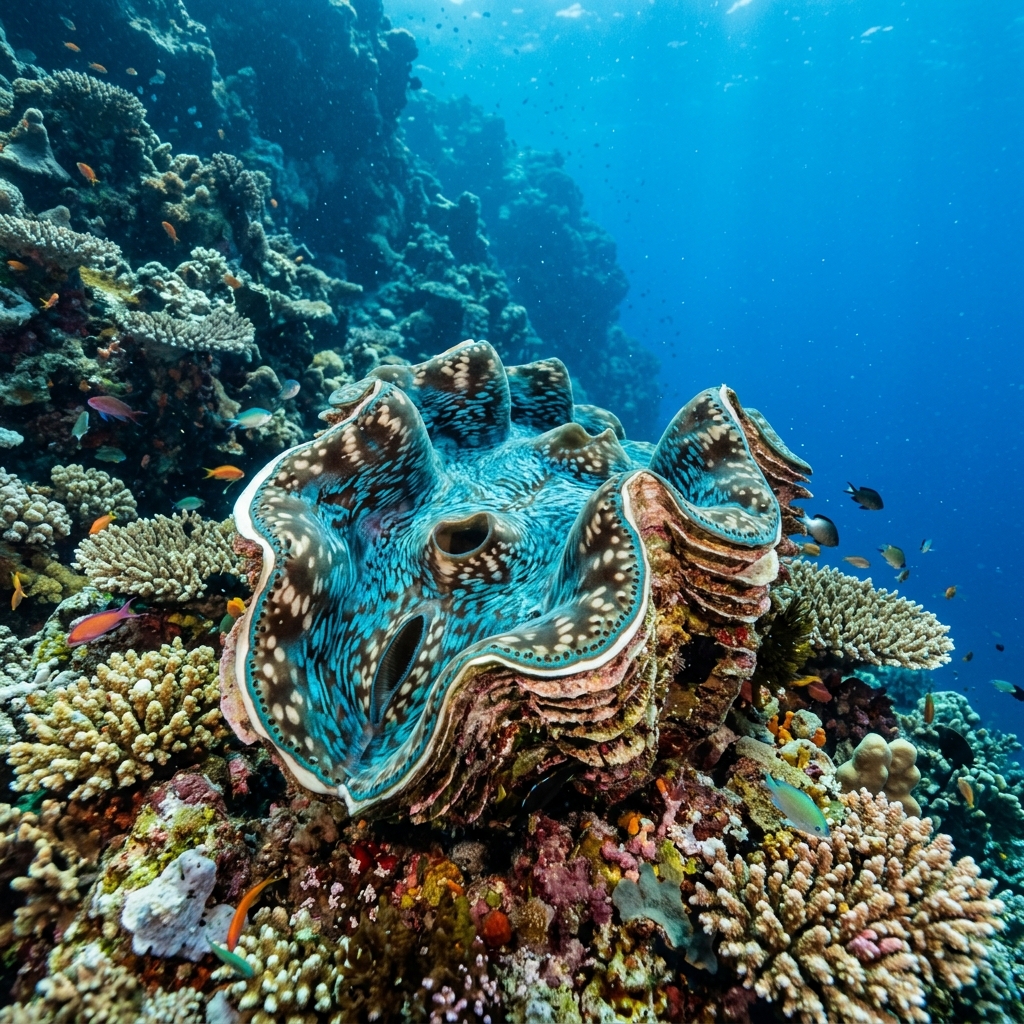
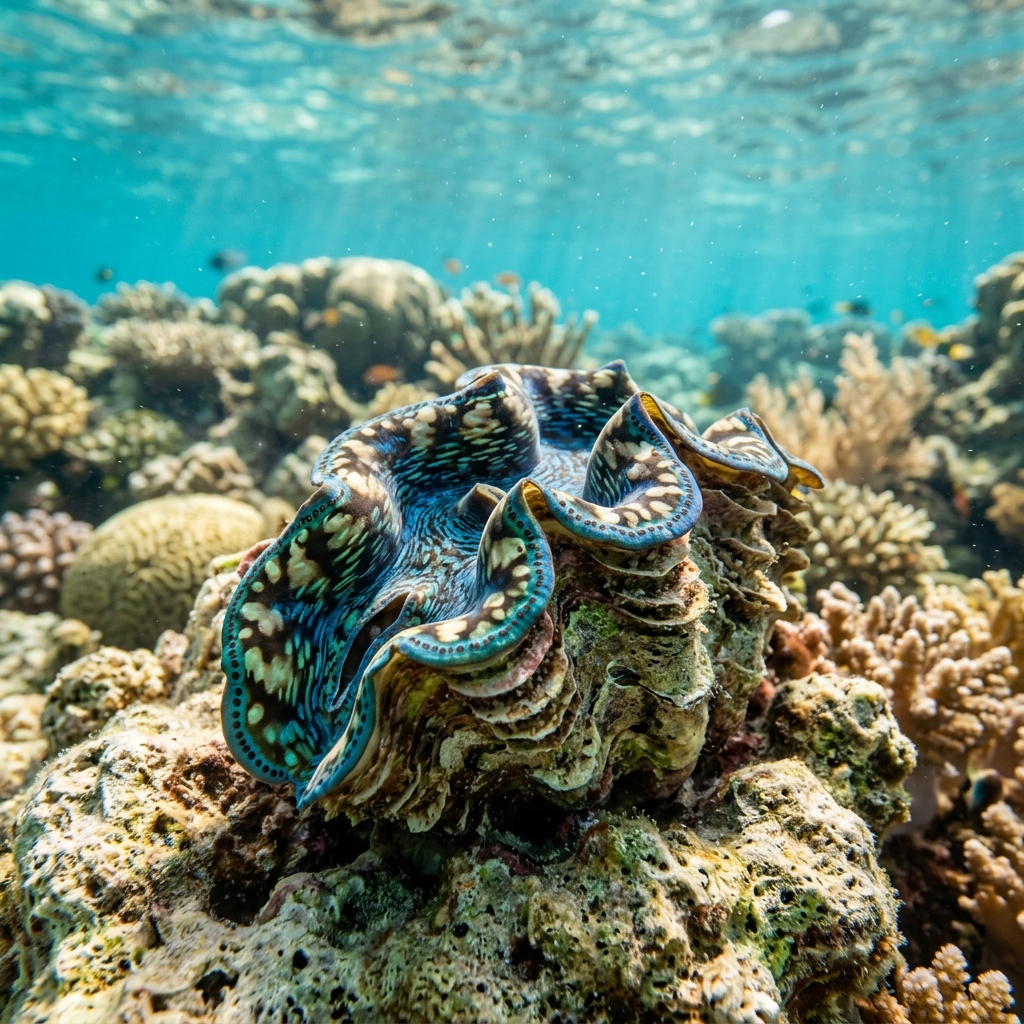
Look for a large clam sitting on the reef with its shell gaping open to expose a fleshy, often blue, brown, or green mantle. Unlike its close relatives, the shell has a notably smooth outer surface with few or no prominent scutes (the pointed projections seen on fluted giant clams), and the shell margin is gently wavy rather than deeply scalloped. It is one of the largest giant clam species, with adults reaching shell lengths comparable to a diver's torso. The mantle edge is relatively straight compared to other Tridacna species, which is the key underwater distinction.
Smooth giant clams are sedentary filter feeders, typically found sitting openly on rubble or hard reef, mantle spread wide to maximise light for their symbiotic algae (zooxanthellae). When a diver's shadow passes over them, they close slowly and partially rather than snapping shut. They are most active during daylight hours when photosynthesis drives energy production, so daytime dives give you the best chance of seeing the full, colourful mantle on display.
The vivid mantle colour is not pigment alone, it comes from specialised cells that concentrate and scatter light to optimise the output of symbiotic algae living inside the tissue, essentially using the mantle as a biological solar panel.
No clear seasonal pattern emerges from the available data, so it is treated as a year-round resident. Its observed water-temperature range of roughly 22 to 28 °C matches the conditions on tropical and subtropical reefs in both Japan and Australia throughout most of the year.
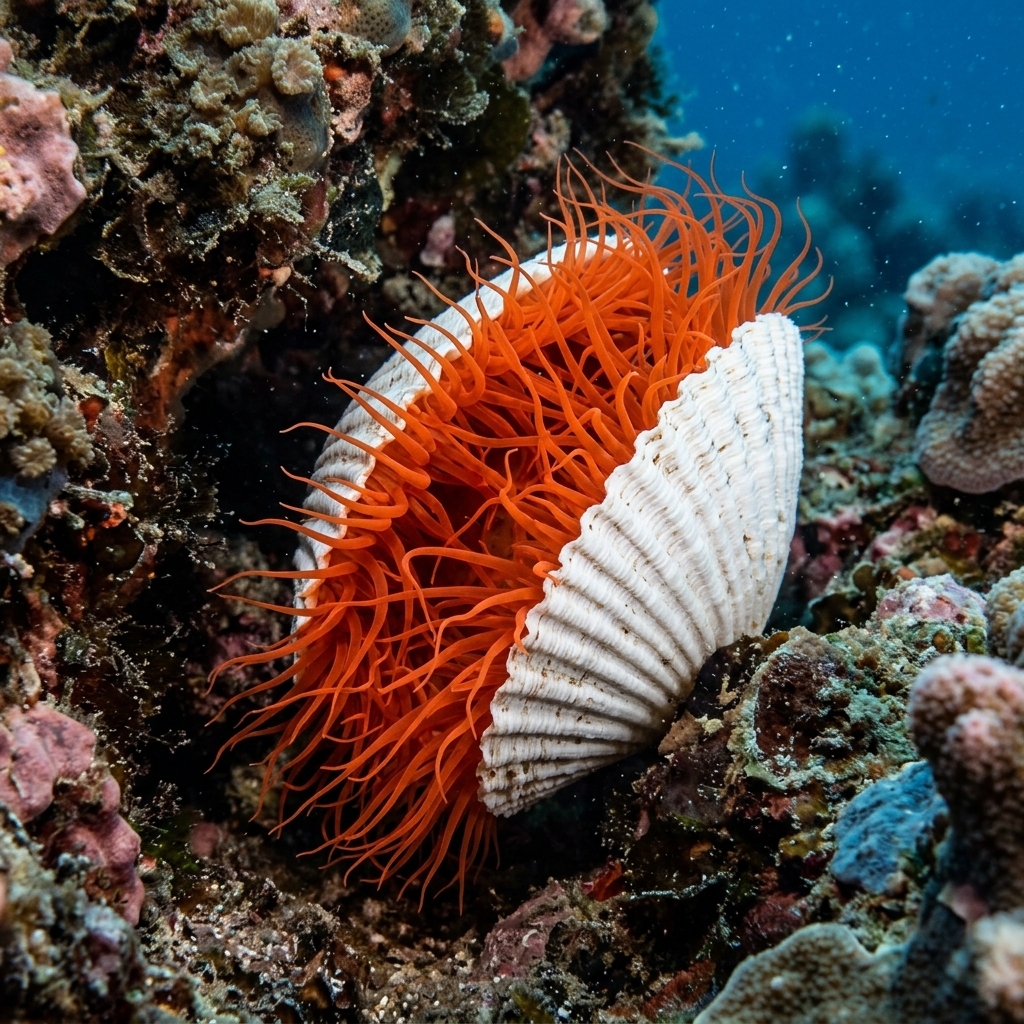
Reef neighbours a diver could mistake it for. Use the identification notes above to tell them apart.
Most sightings come from Japan's Yaeyama and Miyako Islands, making this the most reliable place to search for the species. A solid number of records also come from Queensland, Australia, particularly on offshore reef systems. Outside these two countries, logged encounters are scarce.
Mapping where Smooth Giant Clam is logged…
The most reliable spots are in Japan's Yaeyama and Miyako Islands in Okinawa Prefecture, and along Queensland's reef systems in Australia. These two regions account for almost all logged diver encounters. Sightings are uncommon rather than guaranteed, so ask local dive operators before planning a specific search.
There is no clear peak season in the sighting data, so the species is treated as year-round. Both Japan's Yaeyama Islands and Queensland's reefs sit within the clam's preferred temperature range of around 22 to 28 °C for much of the year, meaning any reef dive in either region has a reasonable chance of an encounter.
The name gives the main clue: the outer shell surface is smoother and less spiky than a fluted giant clam's. The shell margin is gently wavy rather than sharply scalloped, and the mantle edge is relatively straight. Mantle colour varies from brown to green to blue but is not a reliable ID feature on its own. Size helps too, adults are among the largest of all giant clams.
Smooth giant clams are one of the largest bivalves in the world, with shells commonly reaching around 50 cm and some individuals exceeding 60 cm in length. Underwater, a fully grown adult can look almost as wide as a diver's chest.
Yes. The species is listed as Endangered on the IUCN Red List. Populations declined sharply due to collection for shells and meat over several decades. Recovery is slow because the animals take years to reach reproductive maturity and need stable reef habitat. Marine protected areas in Japan and Australia now support some of the healthiest remaining populations.
The Smooth Giant Clam is listed as endangered by the IUCN. Observe from a distance, avoid touching or feeding it, and report sightings to local marine research organisations.
Smooth giant clam is listed as Endangered, primarily due to decades of over-collection and slow reproductive recovery. Give them plenty of space, never touch or handle them, and report any signs of collection or damage to local marine park authorities.
Site and sighting data is aggregated from diver logs, iNaturalist and GBIF. For taxonomy and conservation status:
Elongate Clam
2,091 sites