Lima lima
Spot the Frilled File Shell in the French Riviera, Italian coast, and Croatian waters. Here's where divers log it and how to recognise those vivid orange tentacles.
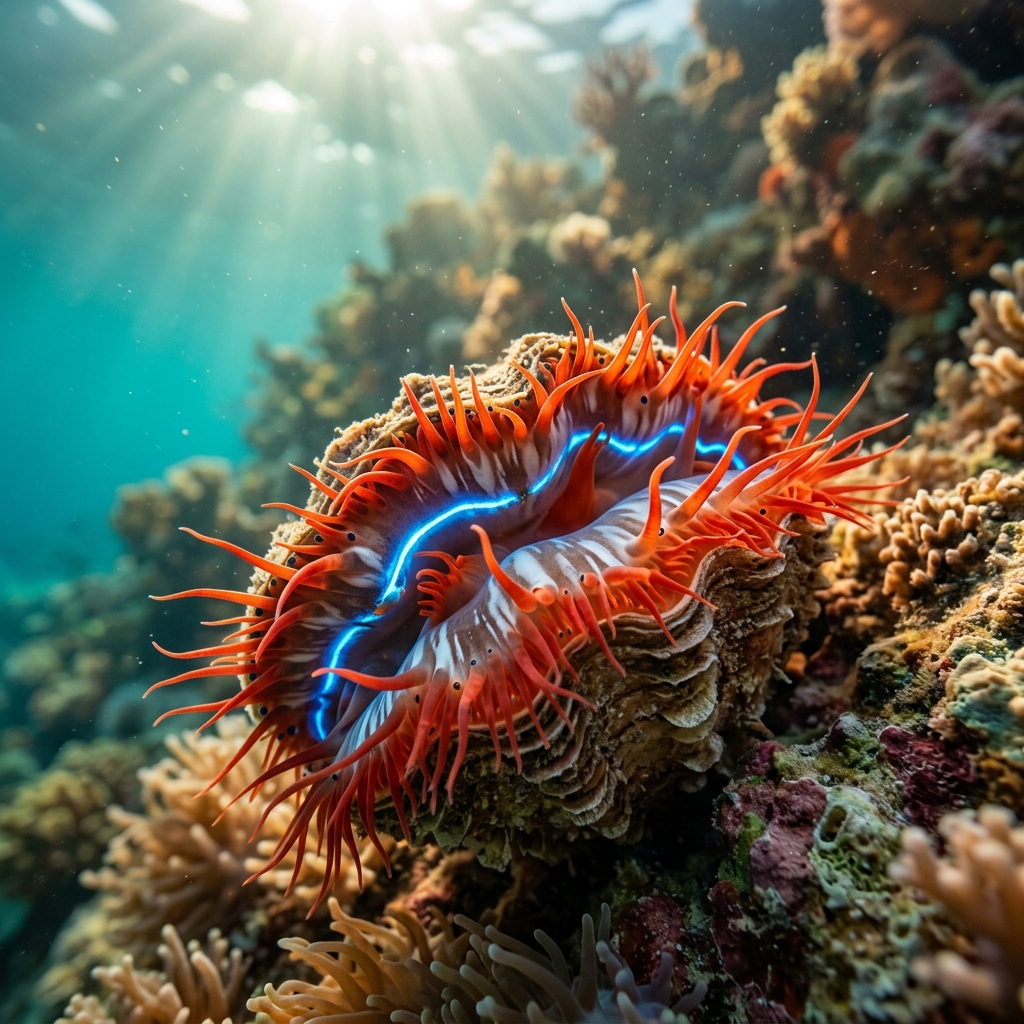
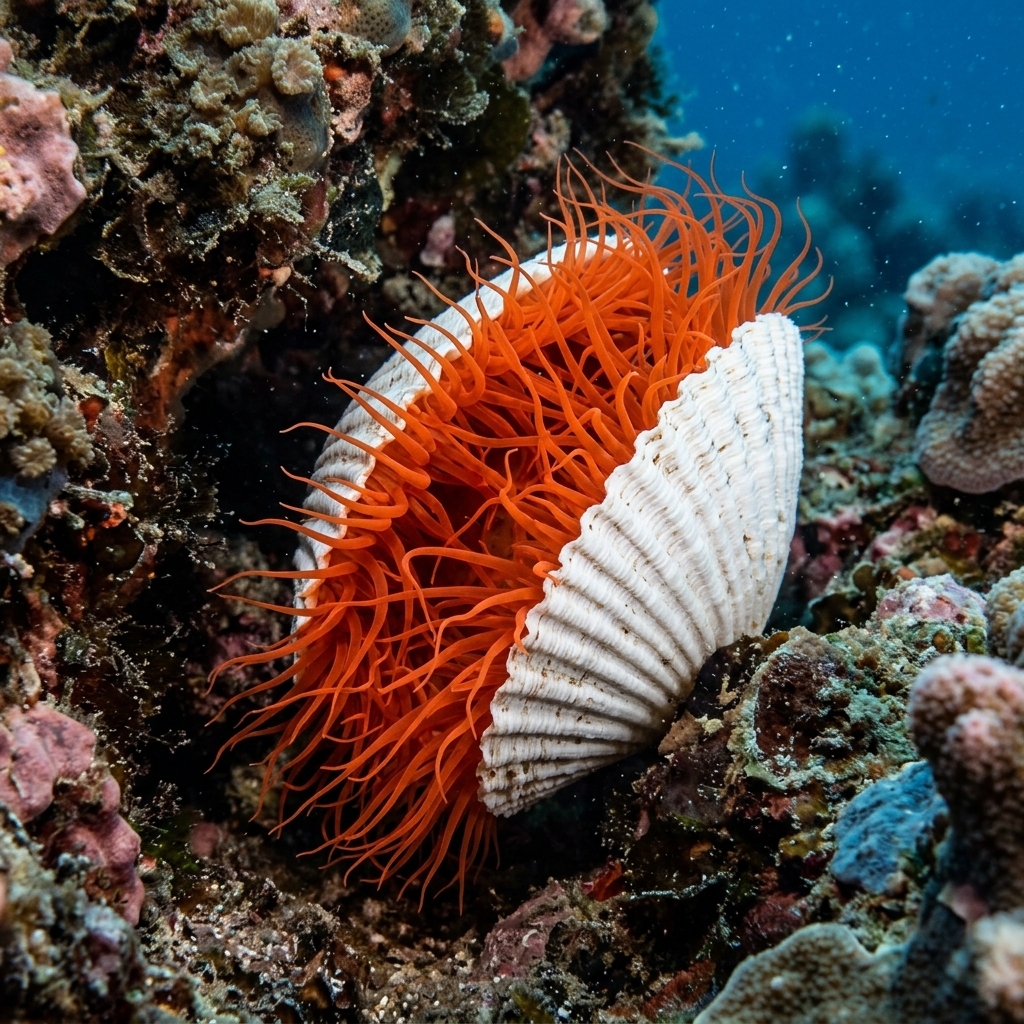
Look for a white to cream, strongly ribbed shell with a distinctive gape along one side from which a fringe of long, bright orange or red tentacles spills out like a curtain. The tentacles are the real giveaway underwater, no other Mediterranean bivalve flashes that vivid colour at rest. The shell itself is roughly oval and moderately sized, typically wedged into crevices or tucked against rocky substrate. If disturbed, it snaps the valves shut and the tentacles retract quickly.
Frilled file shells are typically seen sitting motionless in rocky crevices or under ledge overhangs, with their tentacles extended into the water column to catch particles. When a diver approaches closely, the tentacles retract fast and the shell claps shut, a surprisingly quick escape response for a bivalve. Because they tend to hide in low-light spots, slowing down and shining a torch into the reef rather than swimming past is usually the best way to spot one.
Like other file shells, Lima lima can swim, it escapes predators by rapidly clapping its valves together, jetting water and tumbling away in an erratic path that makes it hard to follow. It is one of very few bivalves with this active escape ability.
There is not enough monthly sighting data to point to a peak season, so treat it as a year-round possibility wherever it occurs. Observed water temperatures at sighting sites range from roughly 13 to 23 °C, which fits the seasonal range of Mediterranean and temperate Australian dive conditions throughout the year.
Most sightings are concentrated in the Mediterranean, particularly along the French Riviera and Provence coast, the northwest Italian coast, and the Istrian peninsula of Croatia. A smaller but notable number of records also comes from South Australia and New South Wales, and there are sightings from Gran Canaria in the Canary Islands and sites along the Spanish Costa Blanca.
Mapping where Frilled File Shell is logged…
The frilled file shell is most commonly logged in the Mediterranean: the French Riviera, the northwest Italian coast, and Istria in Croatia are the top regions. There are also confirmed sightings in South Australia, New South Wales, the Canary Islands, and Spain's Costa Blanca.
There is no clearly defined peak season in the available data, so it can be treated as a year-round species wherever it occurs. Sightings have been recorded across water temperatures from about 13 to 23 °C, covering much of the annual range in Mediterranean and temperate Australian dive sites.
The easiest feature to key on is the fringe of long, vivid orange or red tentacles that extend from the gap between the shell valves. The shell itself is white to cream with strong radiating ribs and an oval shape. It is usually tucked into a rocky crevice, so scanning ledges and overhangs with a torch is the best approach.
Yes. Like other members of the file shell family, Lima lima can swim by rapidly clapping its valves together and jetting water, producing a jerky, unpredictable movement that helps it escape predators. It is one of only a handful of bivalves capable of active swimming.
Site and sighting data is aggregated from diver logs, iNaturalist and GBIF. For taxonomy and conservation status:
Elongate Clam
2,091 sites