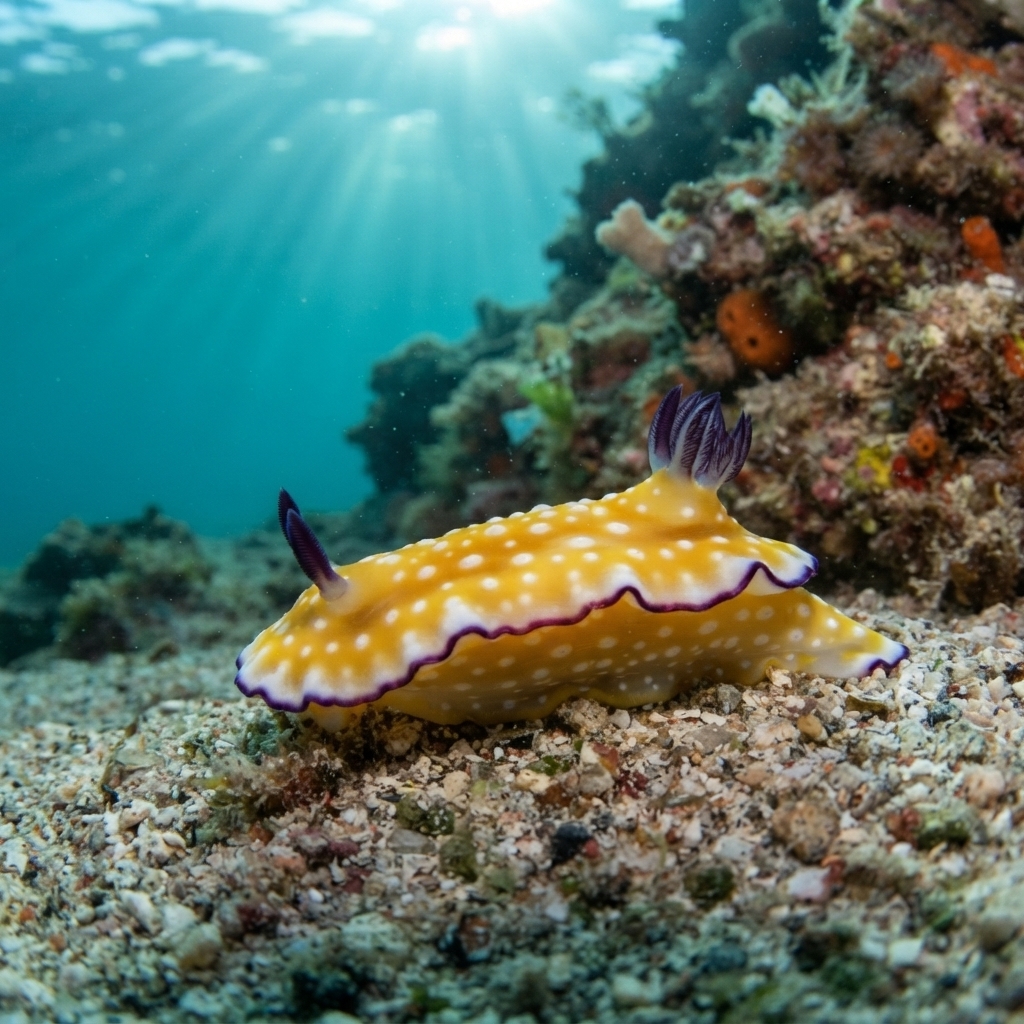
Goniobranchus vibratus
Trembling Nudibranch turns up on Hawaii's reefs year-round in 22-28C water, most reliably logged as an uncommon find.
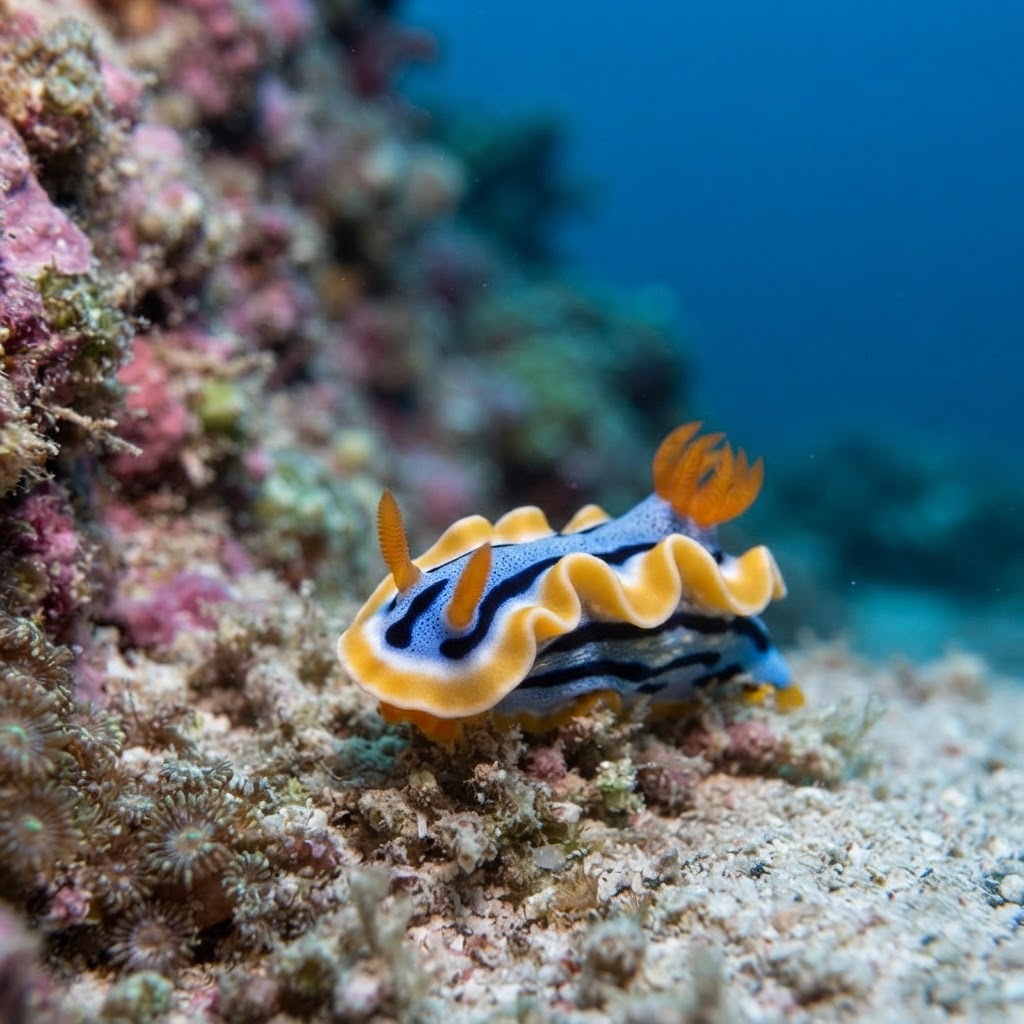
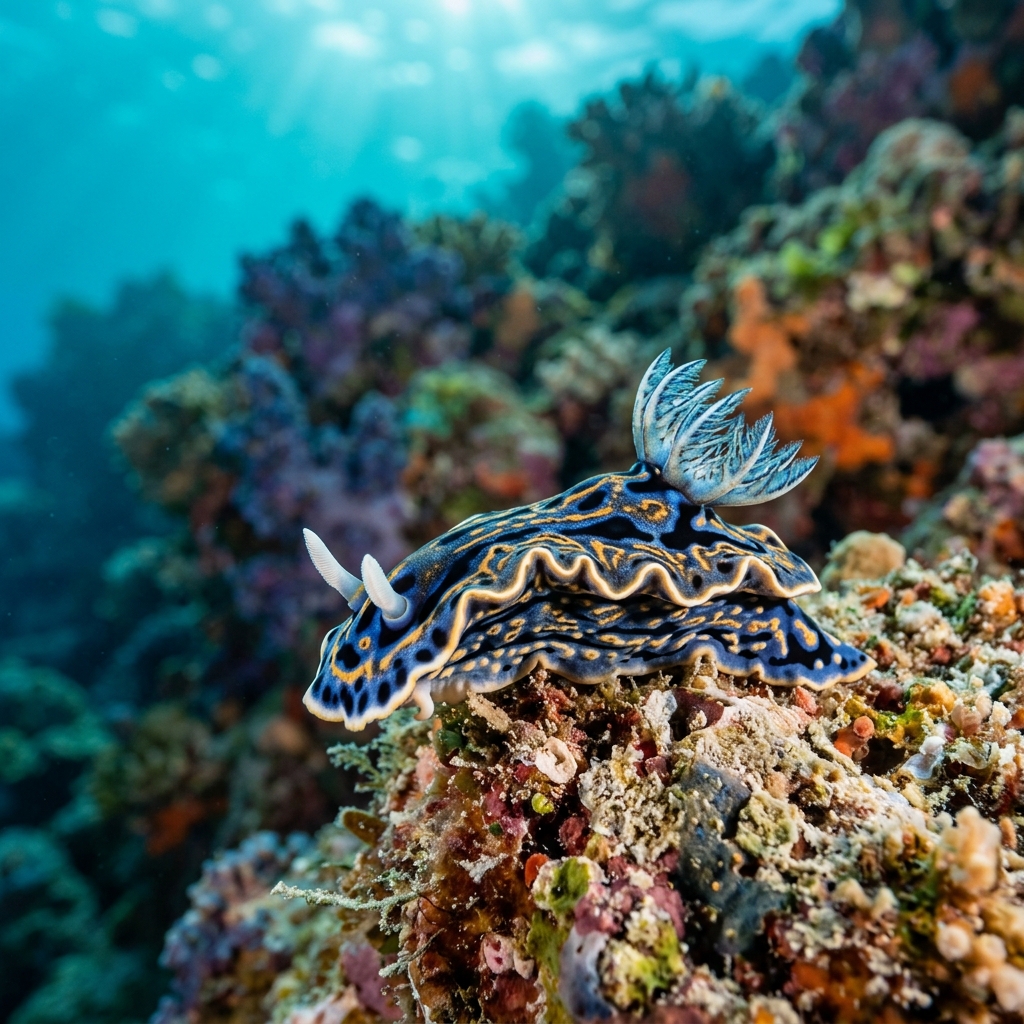
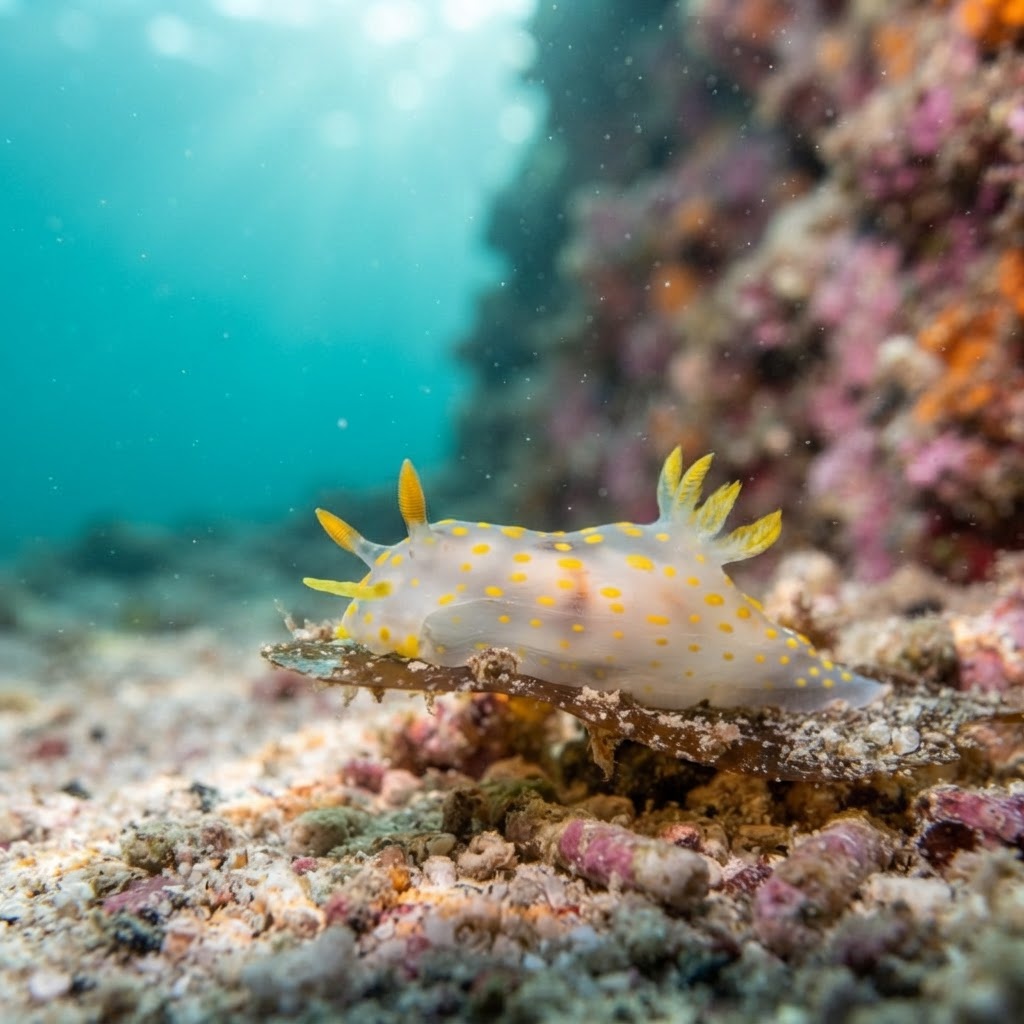
Small, soft-bodied sea slug with a mottled, textured mantle that gives it a slightly rough or granular look against smooth reef surfaces. It moves at a crawl over rock and rubble, so divers usually spot it by its raised, ruffled mantle edge rather than any fast movement. Colouring reads as a patchwork of muted tones that blends with algae-covered substrate, making it easy to swim past if you are not scanning closely.
Divers find it parked on the reef surface or slow-crawling over rock and rubble, doing the unhurried grazing that nudibranchs are known for. It shows no reaction to divers beyond simply continuing its crawl, so a slow, close look with a torch or careful eye is the best way to pick it out against the substrate.
Like other members of its family, it almost certainly relies on camouflage and diet-derived toxins from its prey rather than speed or shell to avoid predators, which is why it can sit exposed on open rock without bothering to hide.
No clear seasonal pattern shows up in the sightings, and with a comfortable range of 22.4 to 28.4C year-round in Hawaiian waters, it is reasonable to look for it on any dive regardless of month.
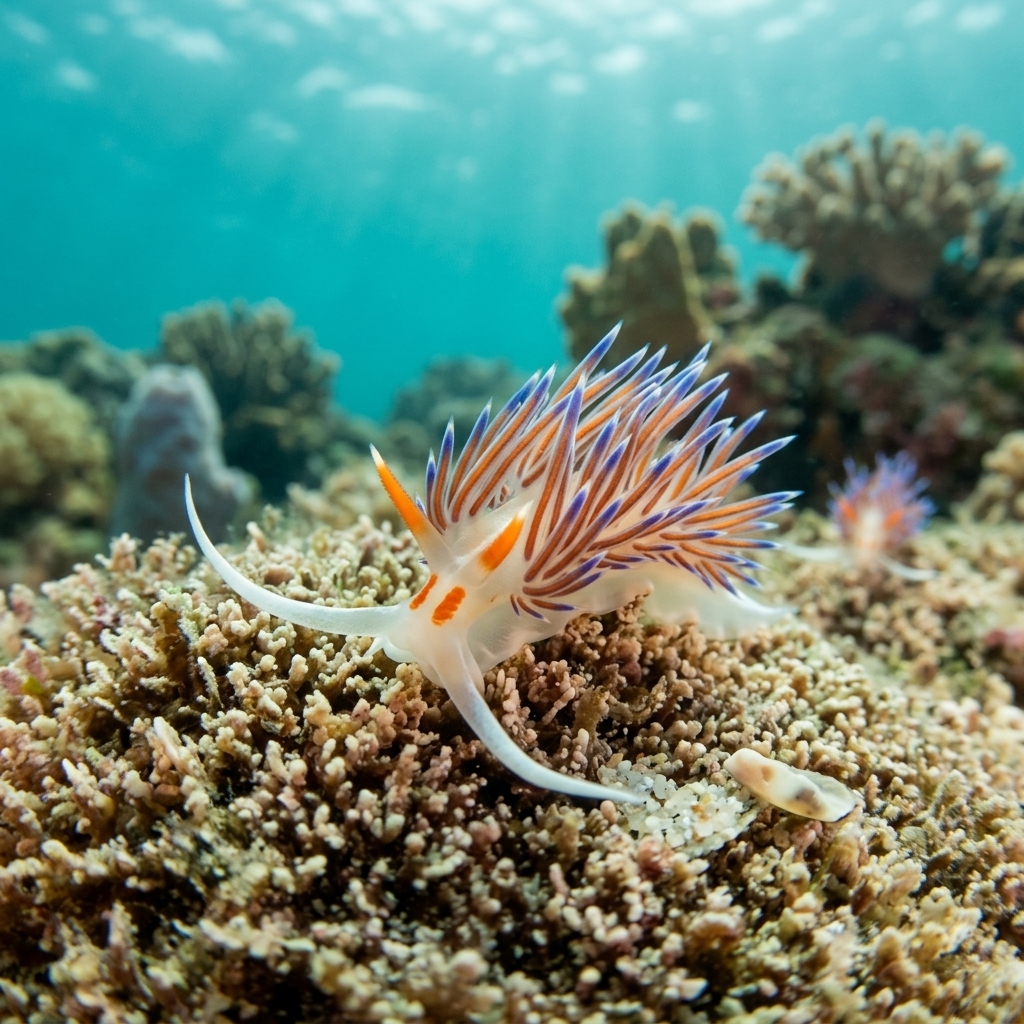
Reef neighbours a diver could mistake it for. Use the identification notes above to tell them apart.
Every logged sighting of this one comes from Hawaii, with United States sites carrying the entire known record, so Hawaiian reefs are currently the only reliable place to look for it. Within Hawaii it shows up across a broad spread of sites rather than clustering at one or two famous spots, so it is worth checking rubble and rocky patches on any local reef dive.
Mapping where Trembling Nudibranch is logged…
Currently it is only documented from Hawaii, spread across a wide range of dive sites there rather than concentrated in one location. It has not been logged elsewhere, so Hawaiian reef dives are the surest bet.
There is no detected seasonal pattern, and it tolerates a wide temperature band of roughly 22 to 28C, so it can be found year-round on Hawaiian reefs.
Look for a small, mottled, soft-bodied slug with a slightly ruffled mantle edge crawling slowly over rock or rubble. It blends well with algae-covered substrate, so a close, unhurried look is usually needed to pick it out.
No, it poses no threat to divers. It is a small, slow-moving benthic mollusk that simply continues grazing when approached.
Site and sighting data is aggregated from diver logs, iNaturalist and GBIF. For taxonomy and conservation status:
Nudibranch
3,168 sites