Torpedo panthera
A speckled electric ray divers spot resting on sand across South Sinai, most reliably in Egypt's Red Sea in water around 19 to 26 C.
Safety warning
It can deliver a real electric shock if handled, stepped on, or provoked, strong enough to be painful and disorienting rather than merely startling. Give it space, never touch or pin it against the sand, and if you spot one resting, admire from a body length or two away and let it be.
If you're shocked
Electric shockGeneral first-aid guidance, not a substitute for professional medical care. In an emergency, call your local emergency number.
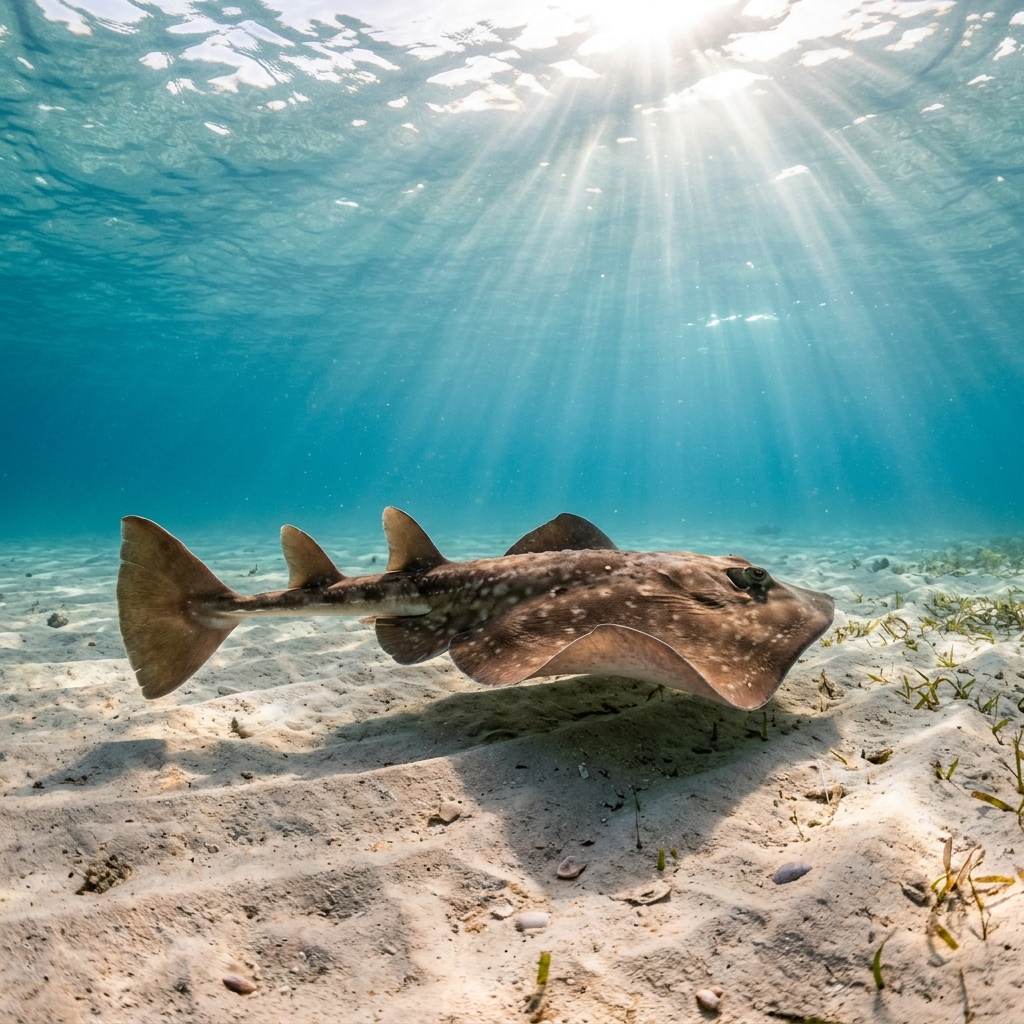
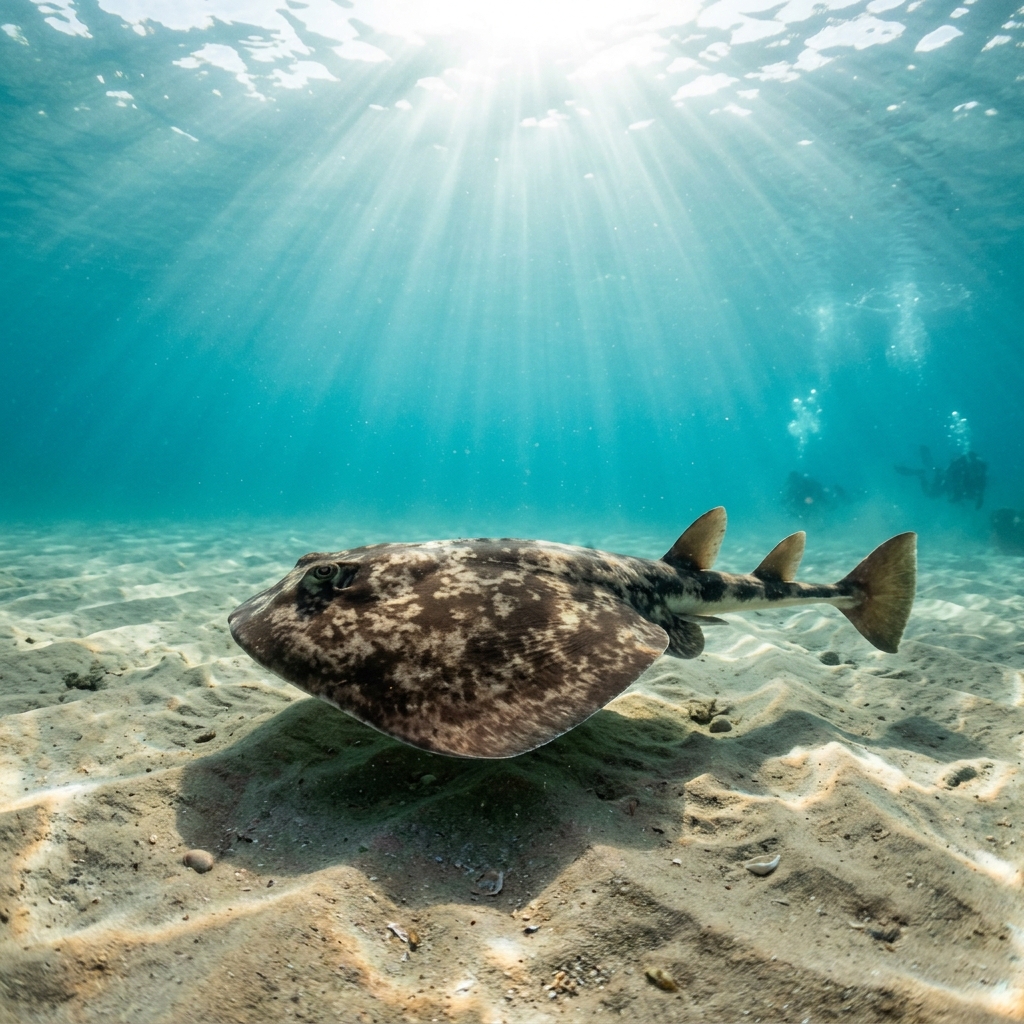
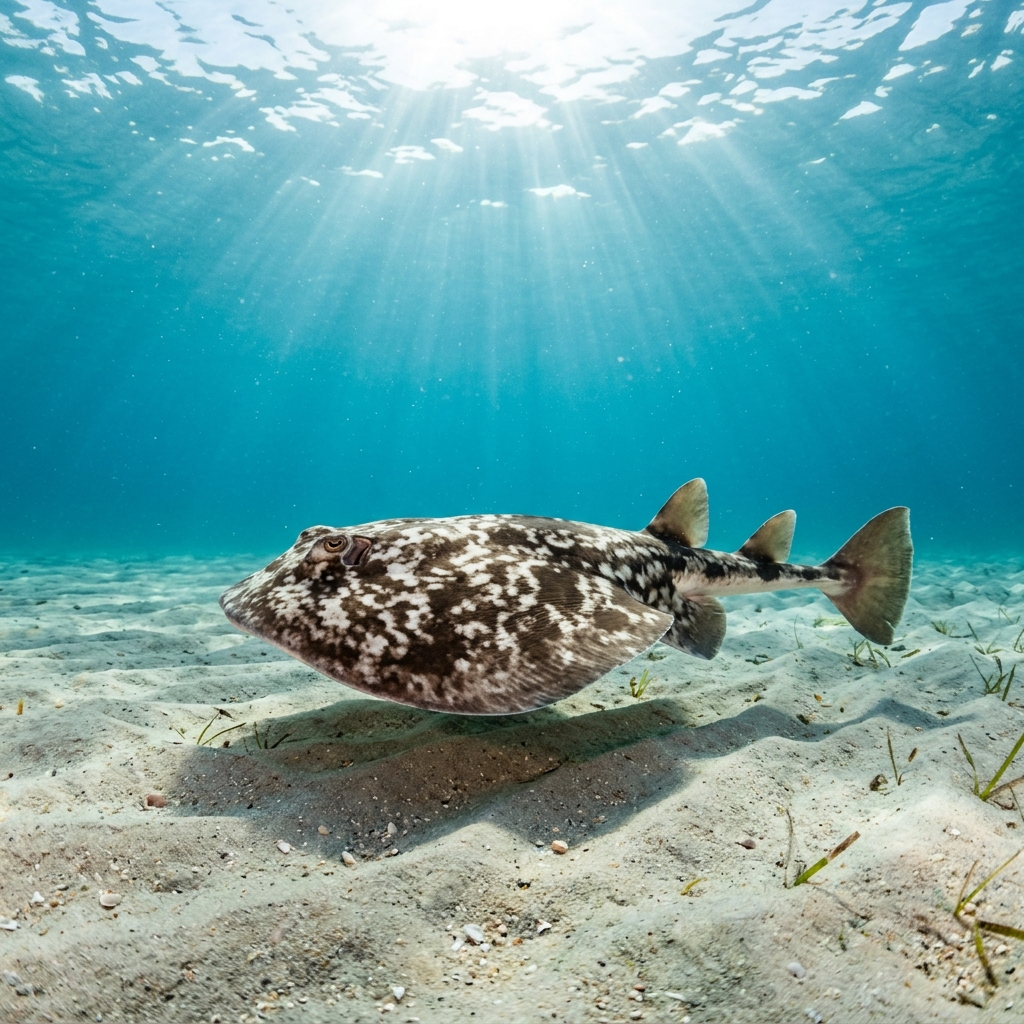
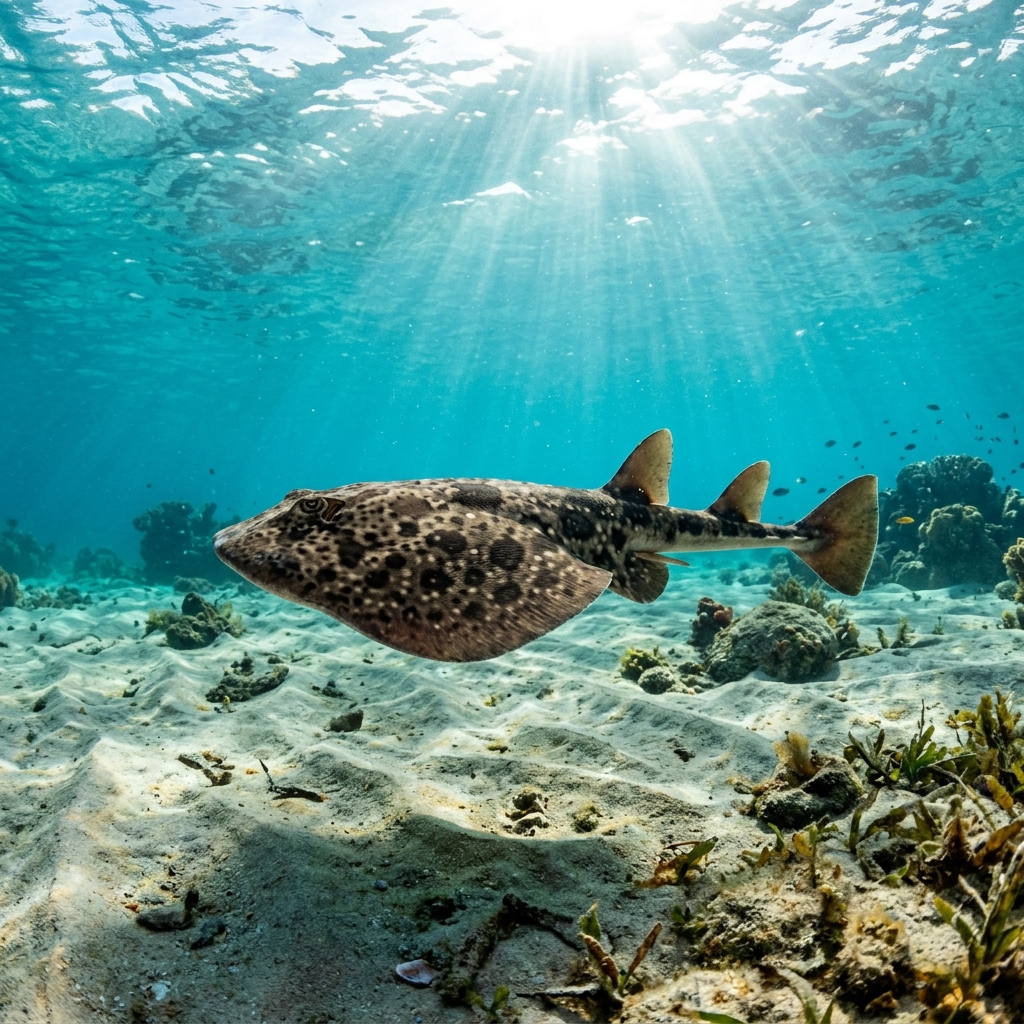
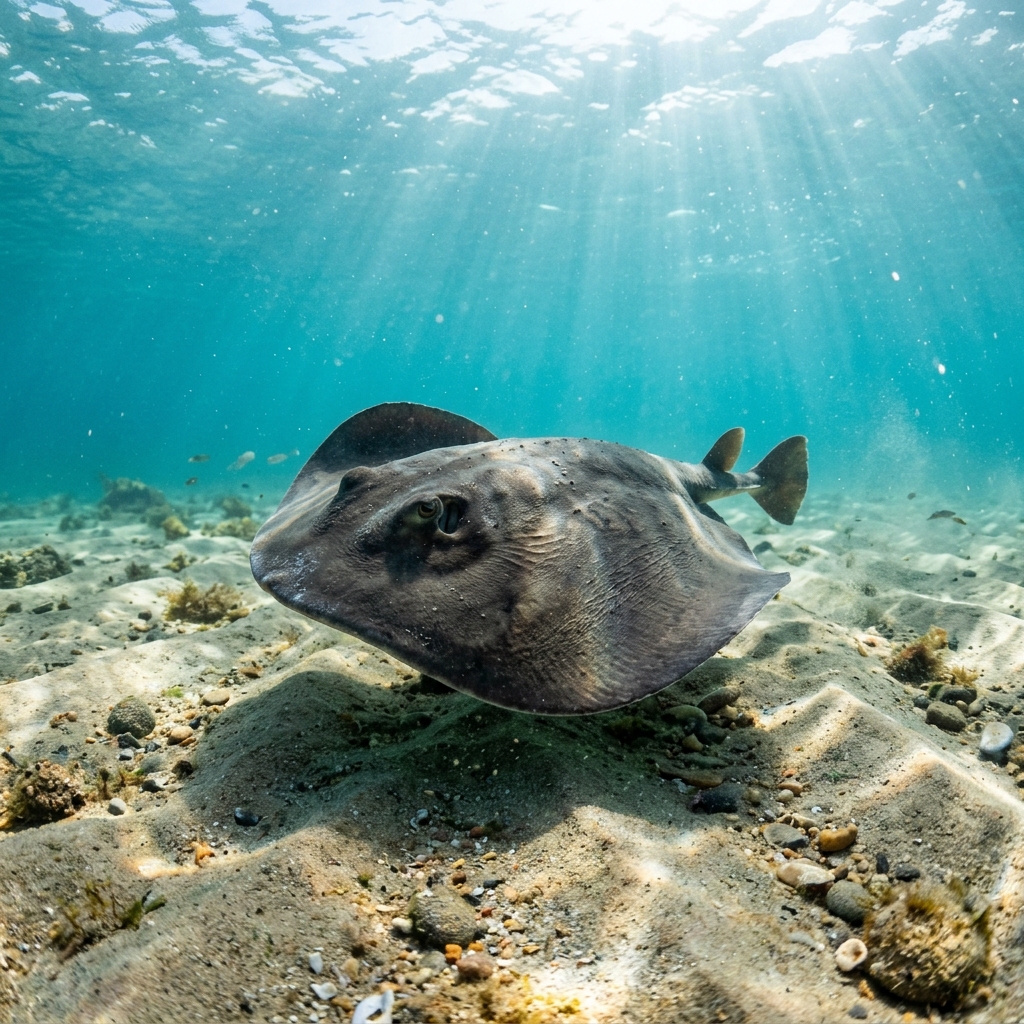
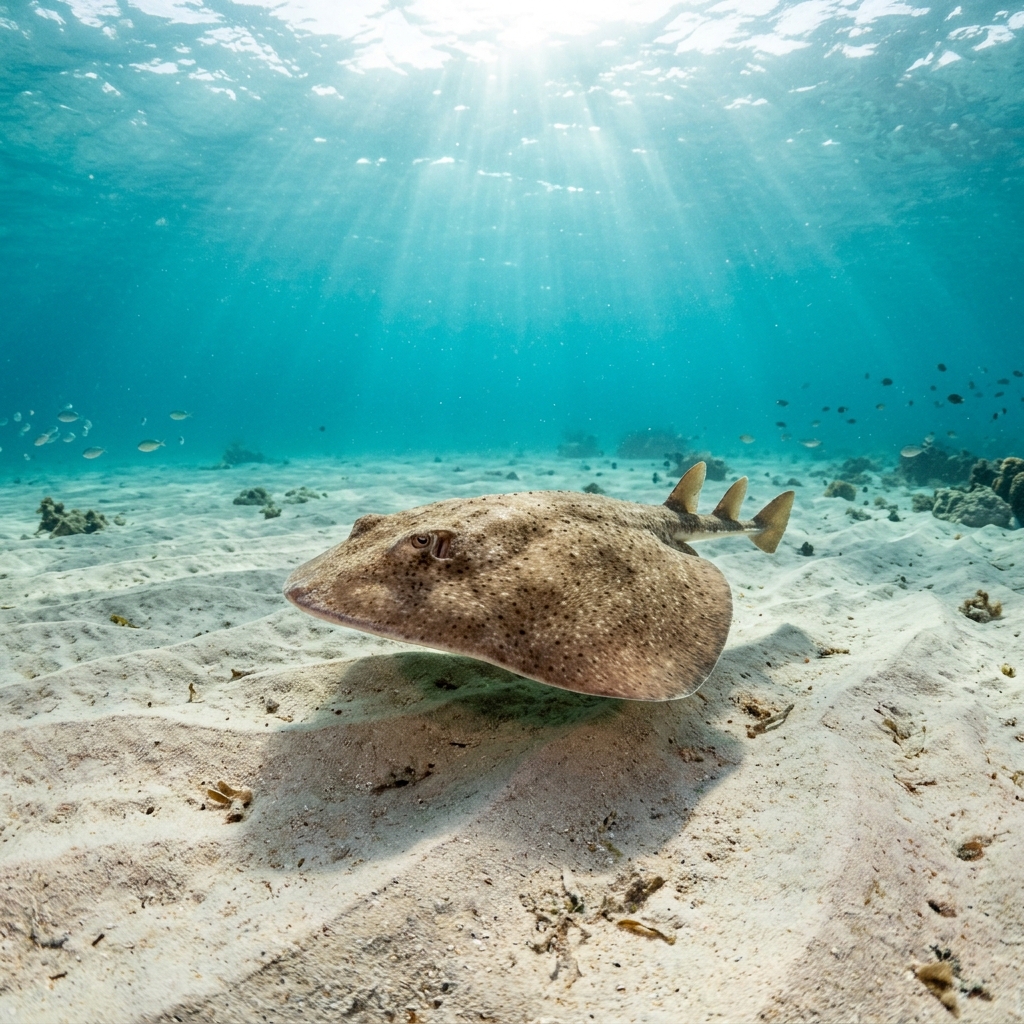
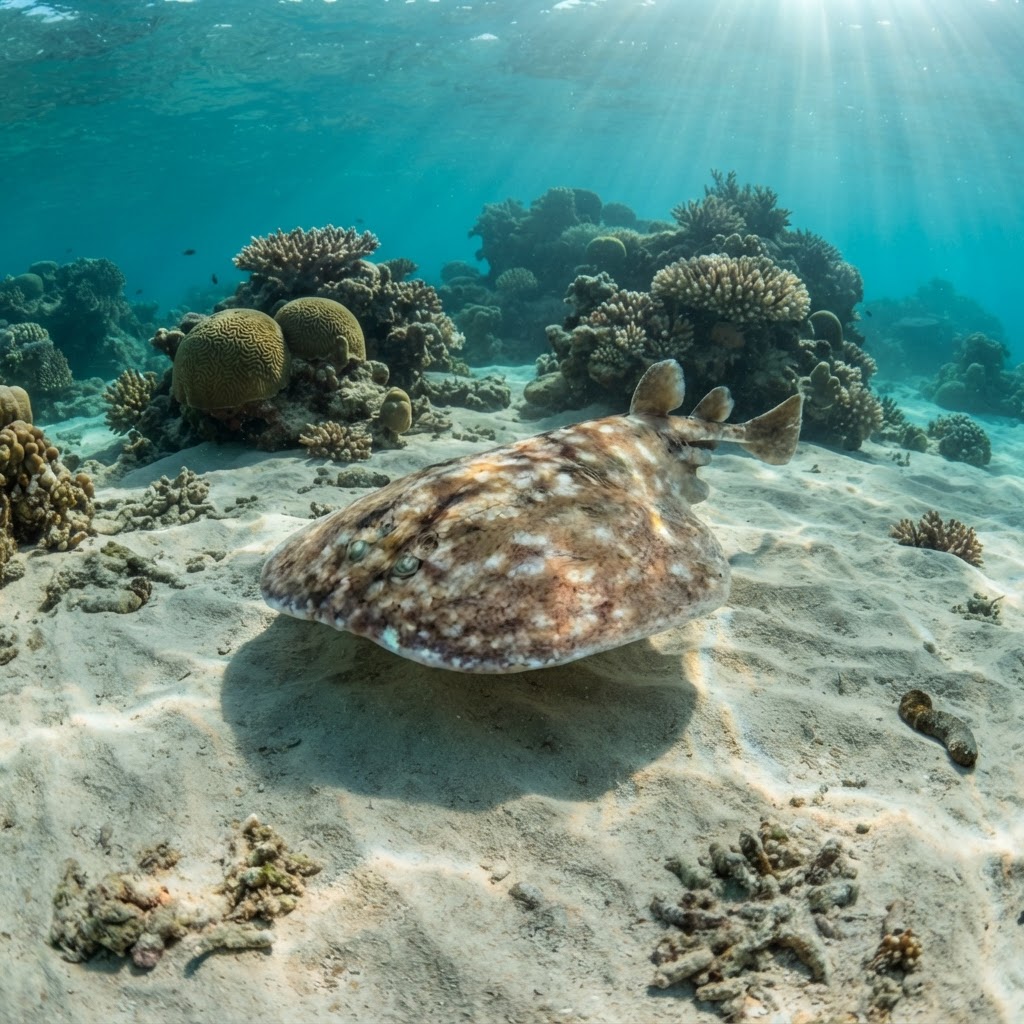
Round, flattened disc-shaped body about 70 cm long, coloured tan to grey-brown with dark leopard-style spotting scattered across the back. Two rounded pectoral fins fuse into that disc shape, tail is short and paddle-like compared to stingrays, and it usually lies still on sand or rubble rather than swimming in open water. The mottled pattern breaks up its outline against sand, so it often shows up as a shape rather than a colour first.
Divers most often find it lying motionless on open sand or rubble patches, partly settled into the substrate, rather than out swimming over the reef. It tends to stay put when approached calmly, relying on its pattern and stillness to go unnoticed, though it can move off with a quick flick if crowded. Most logs describe single animals on flat, sandy stretches near reef edges rather than deep in coral structure.
Like other torpedo rays it can generate a real electric shock from muscle tissue in its disc, used to stun prey and deter anything that gets too close, which is a fairly rare trick among rays divers are likely to encounter.
Sightings are spread across the year with no clear seasonal pattern, matching a comfortable water-temperature range of roughly 18.5 to 26.3 C that covers most of the diving calendar in the region. Treat it as a year-round possibility rather than a seasonal target.
Reef neighbours a diver could mistake it for. Use the identification notes above to tell them apart.
This is very much a Red Sea find, most commonly logged across South Sinai in Egypt, with further sightings around the Red Sea Riviera and Marsa Alam further south. A single confirmed sighting also comes from Eilat in Israel, at the top of the Gulf of Aqaba.
Mapping where Leopard Torpedo is logged…
South Sinai in Egypt is by far the strongest area, with additional sightings around the Red Sea Riviera and Marsa Alam, plus a rare record from Eilat in Israel.
There's no strong season in the data, sightings happen year-round in water between about 18.5 and 26.3 C, so any month diving South Sinai gives you a shot.
Yes, they can deliver a painful electric shock if touched or disturbed. They're not aggressive and mostly just lie still on sand, so the risk is almost entirely about divers getting too close or handling them.
Look for a rounded, flattened disc-shaped ray around 70 cm long with dark leopard-style spots on a tan or grey-brown body, usually resting still on sand rather than swimming.
They typically reach around 70 cm in length, making them a mid-sized ray that's easy to overlook against sand until you spot the spotted pattern.
It can produce a real electric shock from specialised muscle tissue in its disc, using it to stun prey and discourage predators, a trait shared with other torpedo rays but uncommon among reef animals divers meet.
Site and sighting data is aggregated from diver logs, iNaturalist and GBIF. For taxonomy and conservation status:
Pacific Electric Ray
73 sites