Hypnos monopterygius
Spot the coffin ray across New South Wales and beyond. Sightings concentrate Sep, Mar in 18-23 °C waters. Here's where to look and how to recognise it.
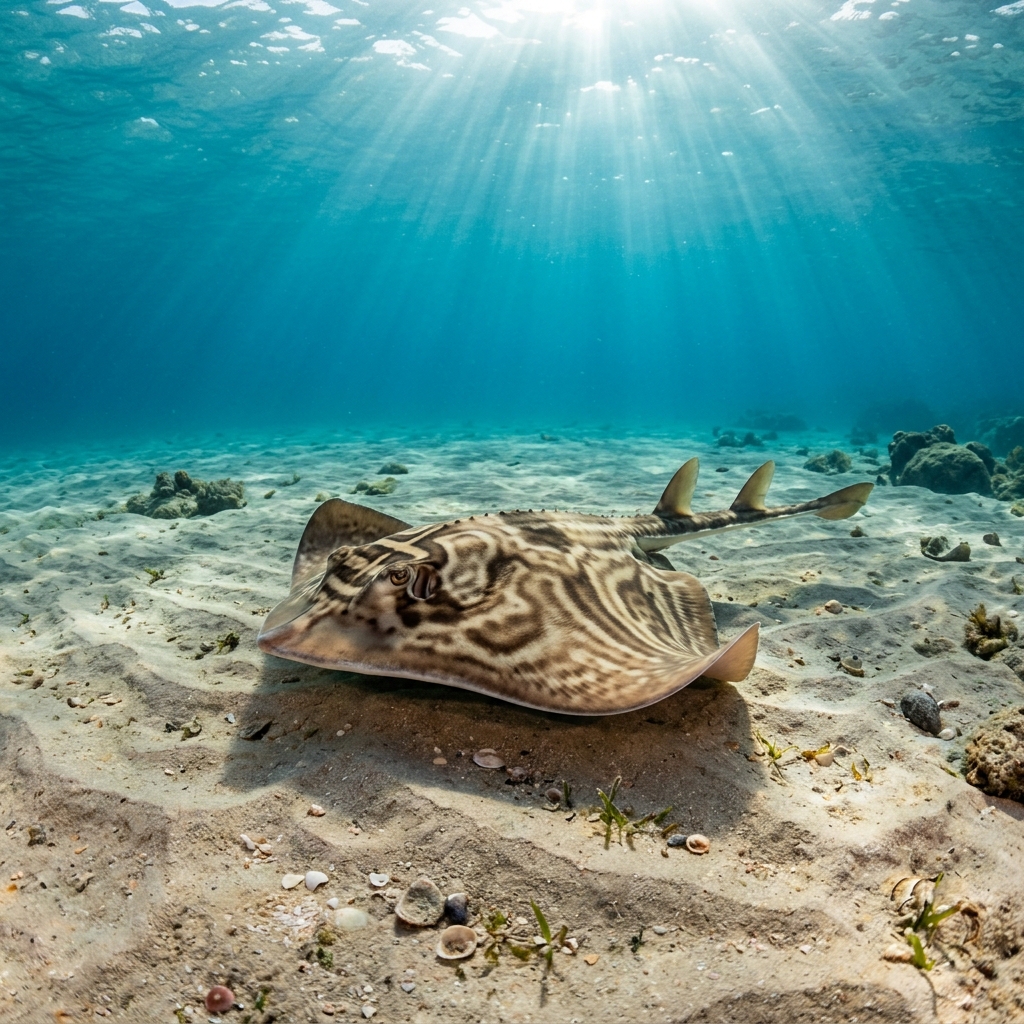
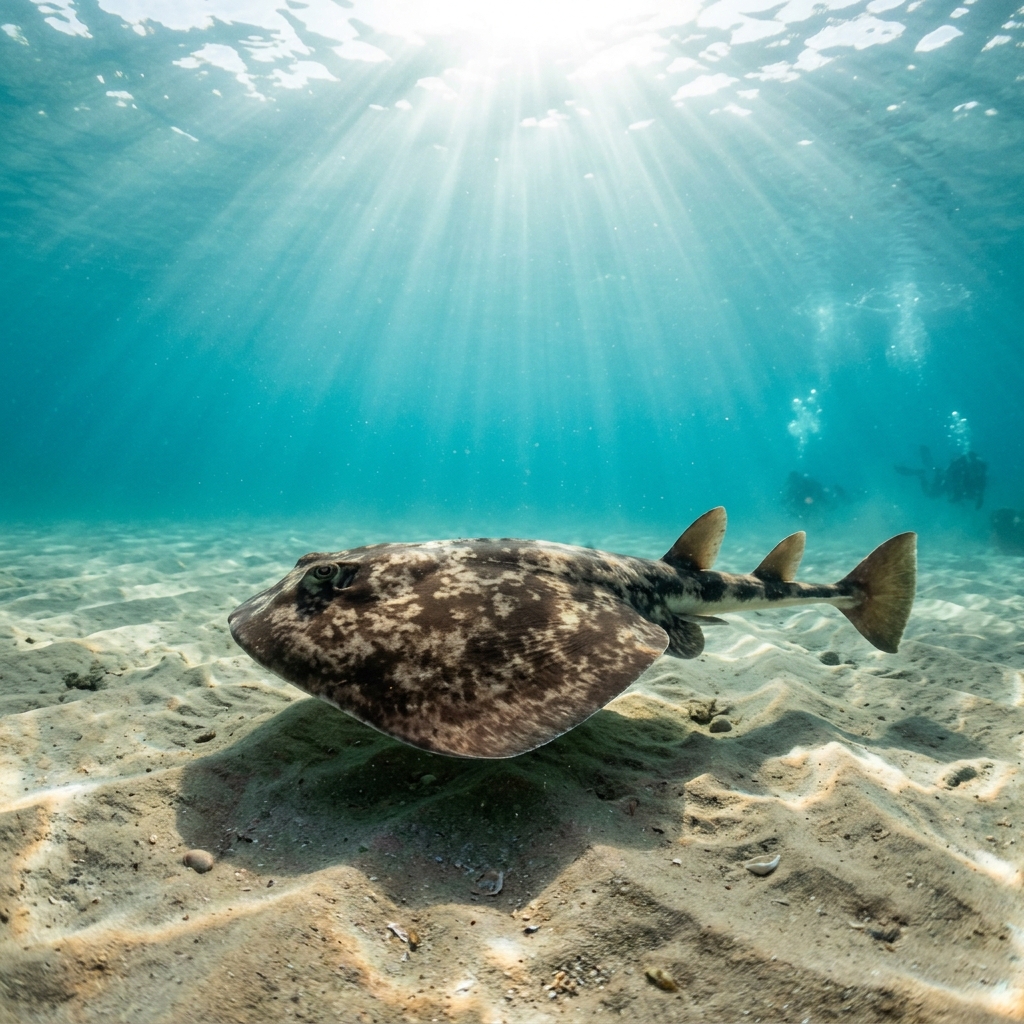
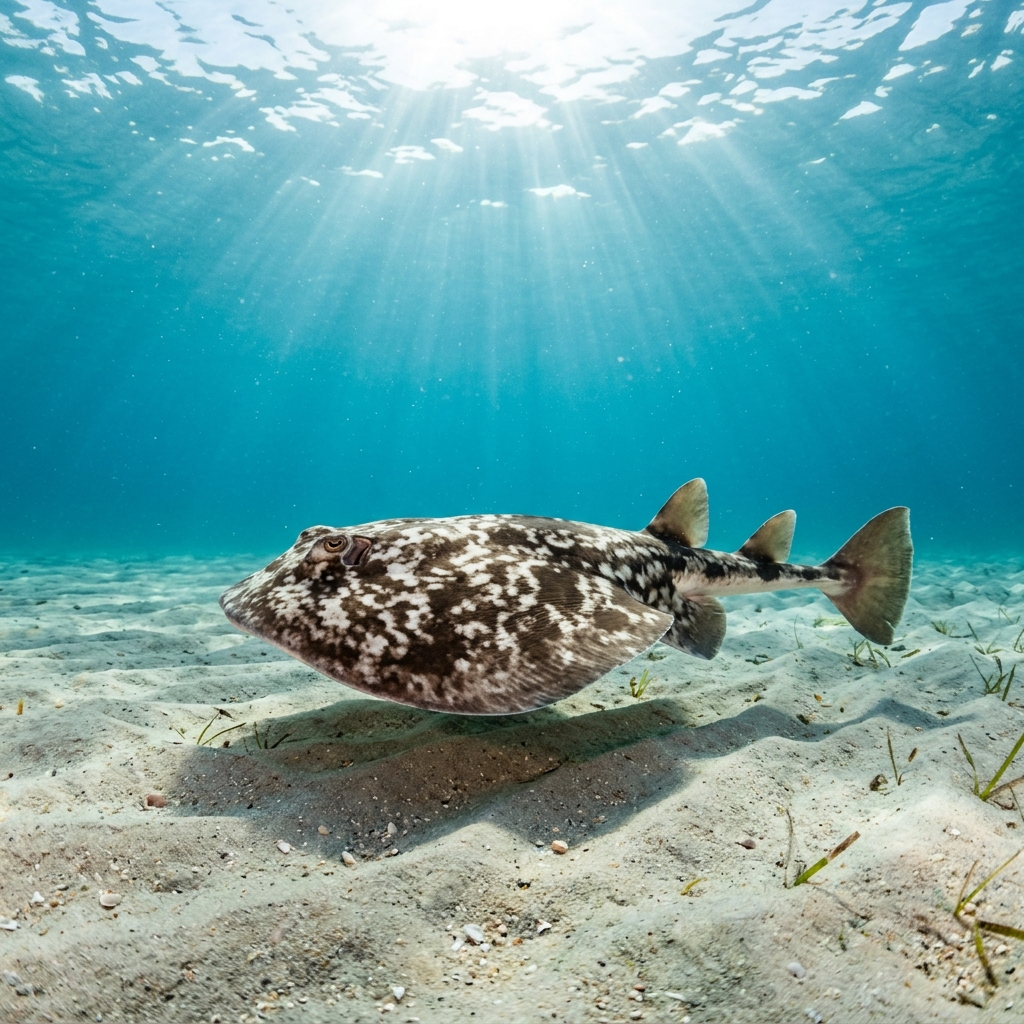
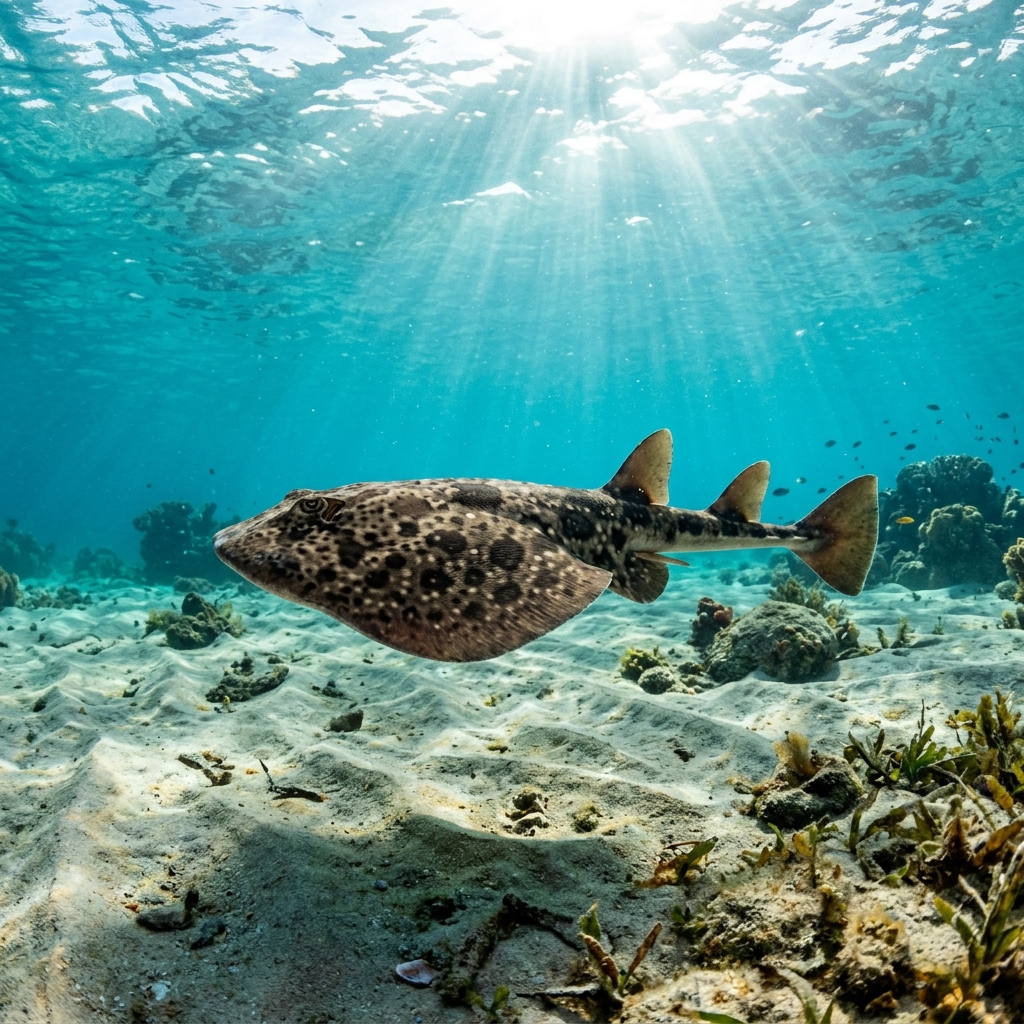
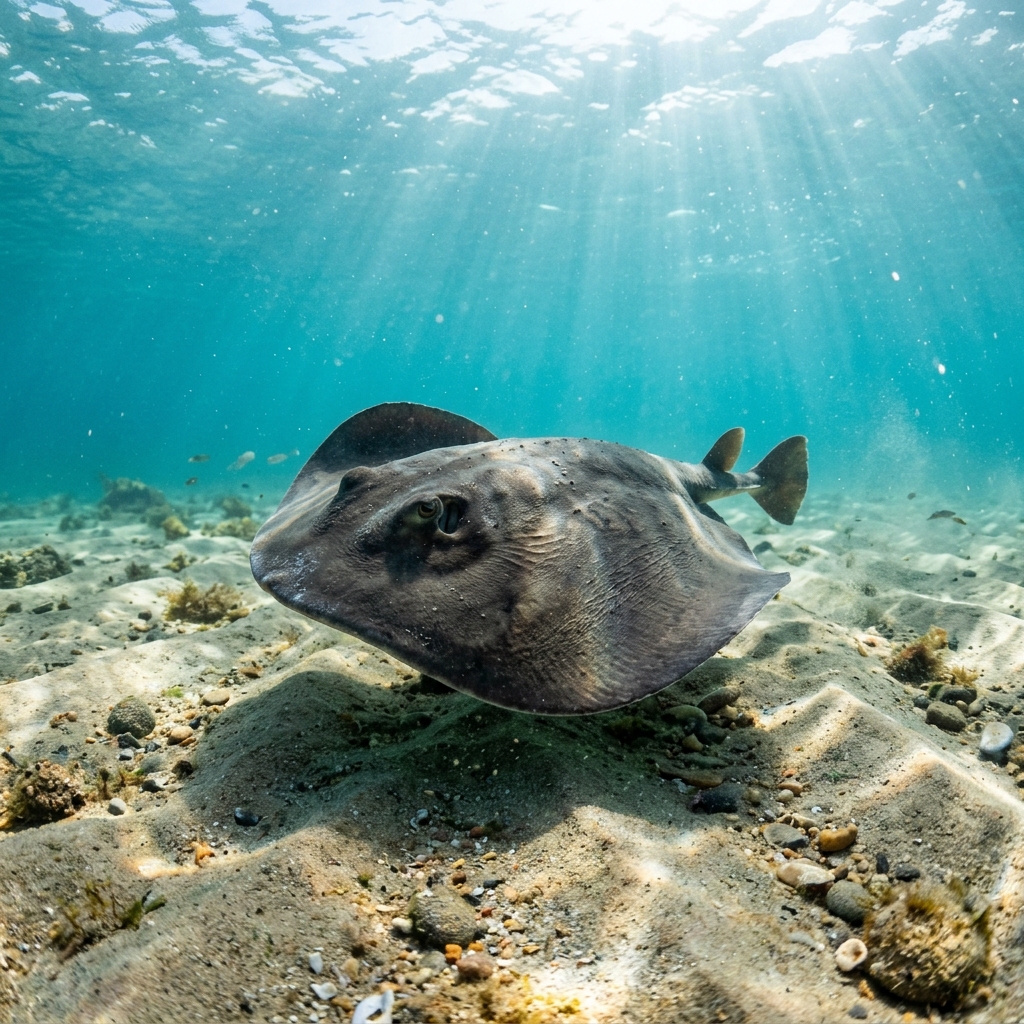
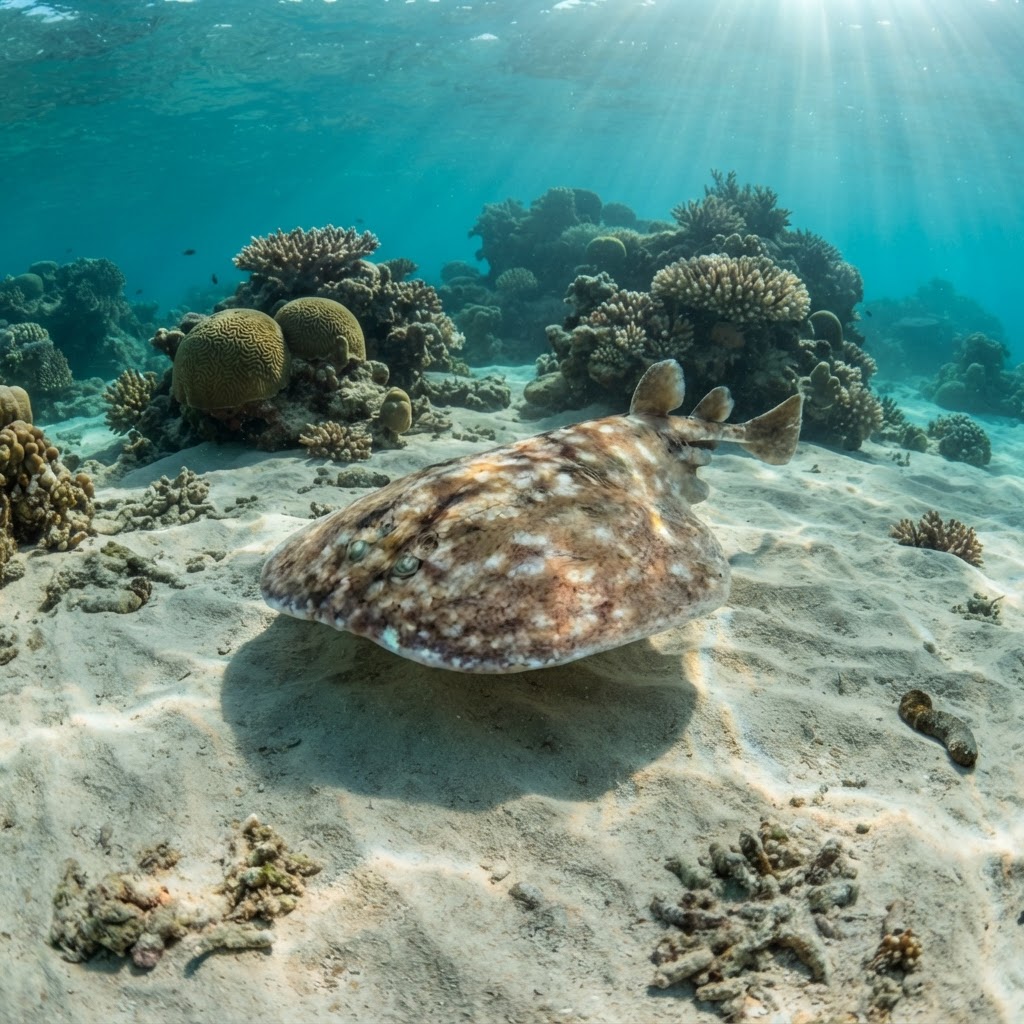
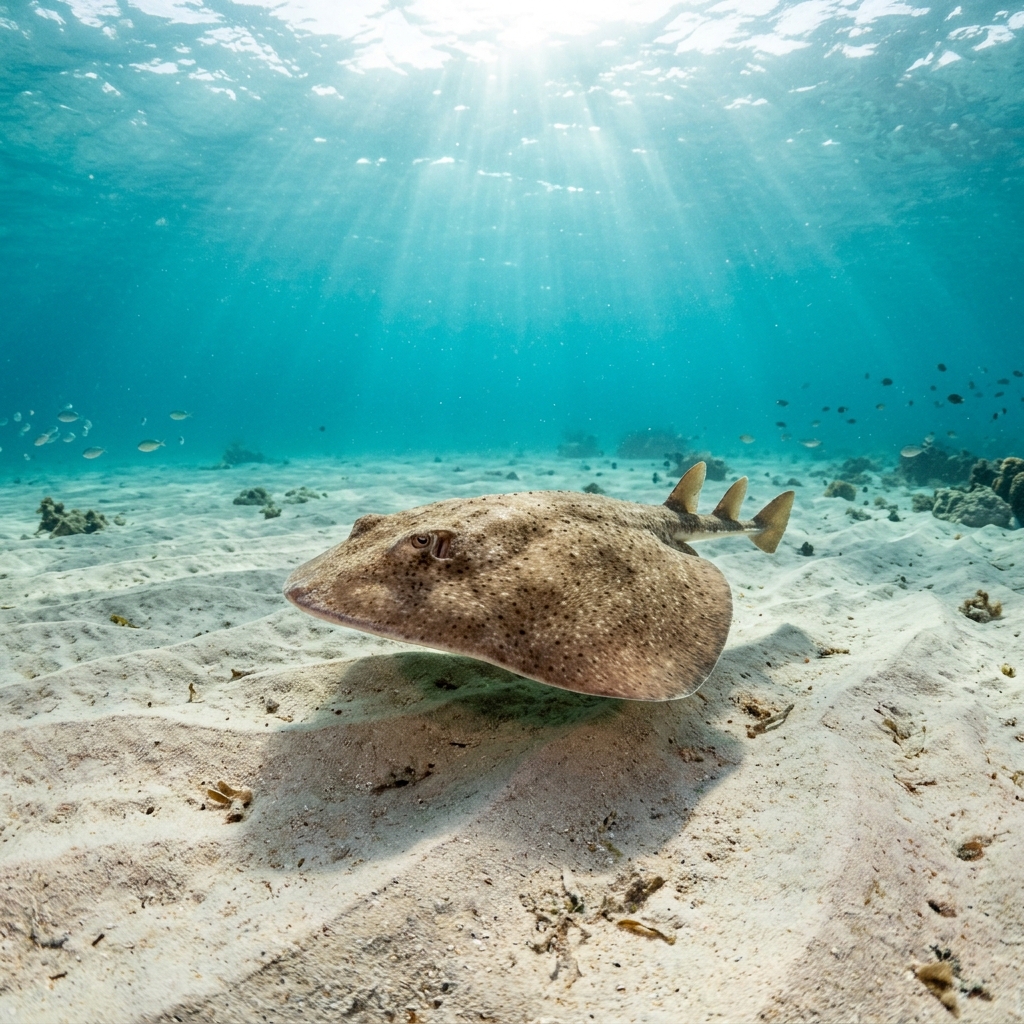
A small, almost circular ray with no true tail, just a short, thick, rounded stub, giving it a shape unlike any other Australian ray. Colouration is mottled brown to grey above, blending well with sandy or silty substrates where it rests motionless. The disc is notably thick and soft-looking compared to other rays, and there are no obvious spines or whip-like tail to confuse it with stingrays.
Coffin rays are typically found resting on sandy or muddy bottoms, often partially buried or tucked against reef edges, relying on camouflage rather than fleeing. They tend to be tolerant of slow-moving divers who approach carefully, remaining still until closely approached. Like other electric rays, they are capable of producing a strong electric discharge to stun prey, primarily small fish, but this is a hunting tool rather than a defensive response to divers.
Coffin rays are one of the few electric rays found in Australian waters and can generate a significant electric shock to immobilise prey. The electric organs occupy much of the disc, which explains that unusually thick, fleshy appearance that makes them so distinctive underwater.
In the Southern Hemisphere, sightings concentrate from September through March, which covers the Austral spring and summer when water temperatures sit in the 18-23 °C range favoured by this species.
Reef neighbours a diver could mistake it for. Use the identification notes above to tell them apart.
Almost all logged sightings come from Australia, with New South Wales by far the strongest region, covering the great majority of known dive sites. A smaller number of records exist from South Australia and Western Australia, so the temperate east coast is clearly the best place to look.
Mapping where Coffin Ray is logged…
Coffin rays are almost exclusively logged in Australia, with New South Wales accounting for the overwhelming majority of sightings. South Australia and Western Australia have a smaller number of records. Sandy and silty bays along the temperate east coast are your best bet.
Sightings in Australia concentrate from September through March, the Austral spring and summer. Water temperatures during this window typically fall in the 18-23 °C range that coffin rays seem to favour.
Look for a small, almost perfectly round, very thick disc with no proper tail, just a short, blunt stub. The mottled brown-grey colouration and rounded shape set it apart from every other ray in Australian waters. It usually sits still on the bottom, which gives you time for a good look.
Coffin rays are not considered dangerous to divers. They can produce an electric discharge, but this is used to stun prey, not as a defensive weapon. Avoid handling or standing on one buried in the sand, and you are very unlikely to have any unpleasant interaction.
Coffin rays are electric rays, the electric organs that fill most of their disc can deliver a powerful jolt to stun fish before swallowing them. This explains the unusually thick, fleshy look of the disc that makes them so recognisable underwater.
Site and sighting data is aggregated from diver logs, iNaturalist and GBIF. For taxonomy and conservation status:
Pacific Electric Ray
73 sites