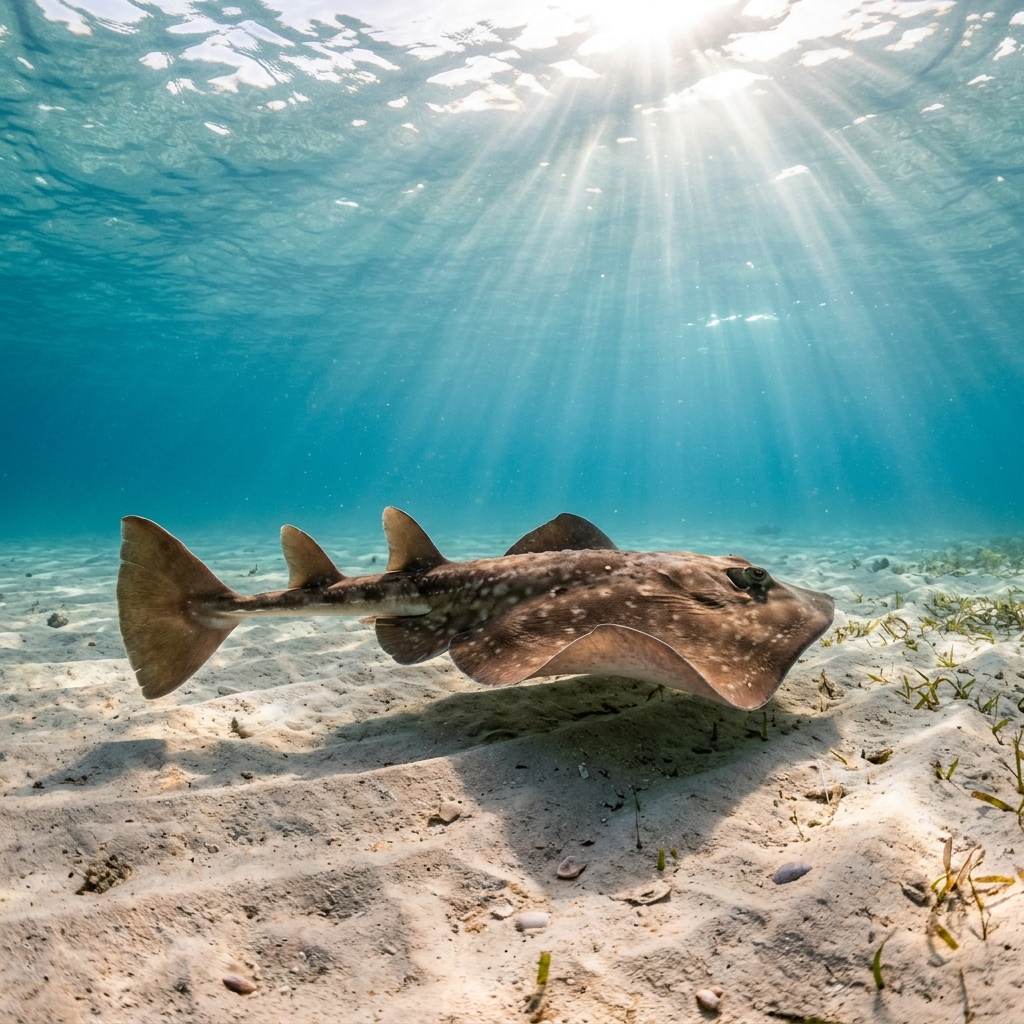
Narcinidae spp.
Spot electric rays off Brazil's Rio de Janeiro and São Paulo coast or Chile's Valparaíso region, in waters ranging from 8.7 to 27.4°C.
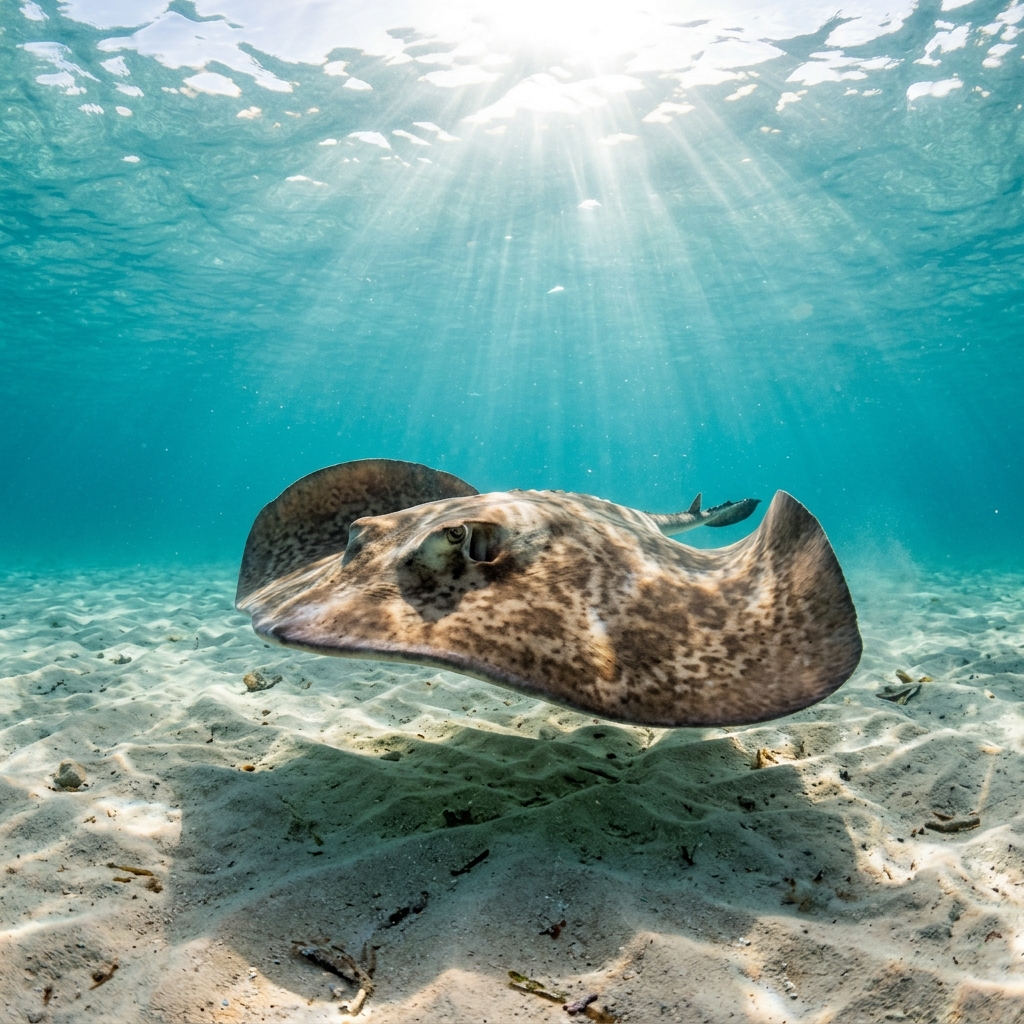
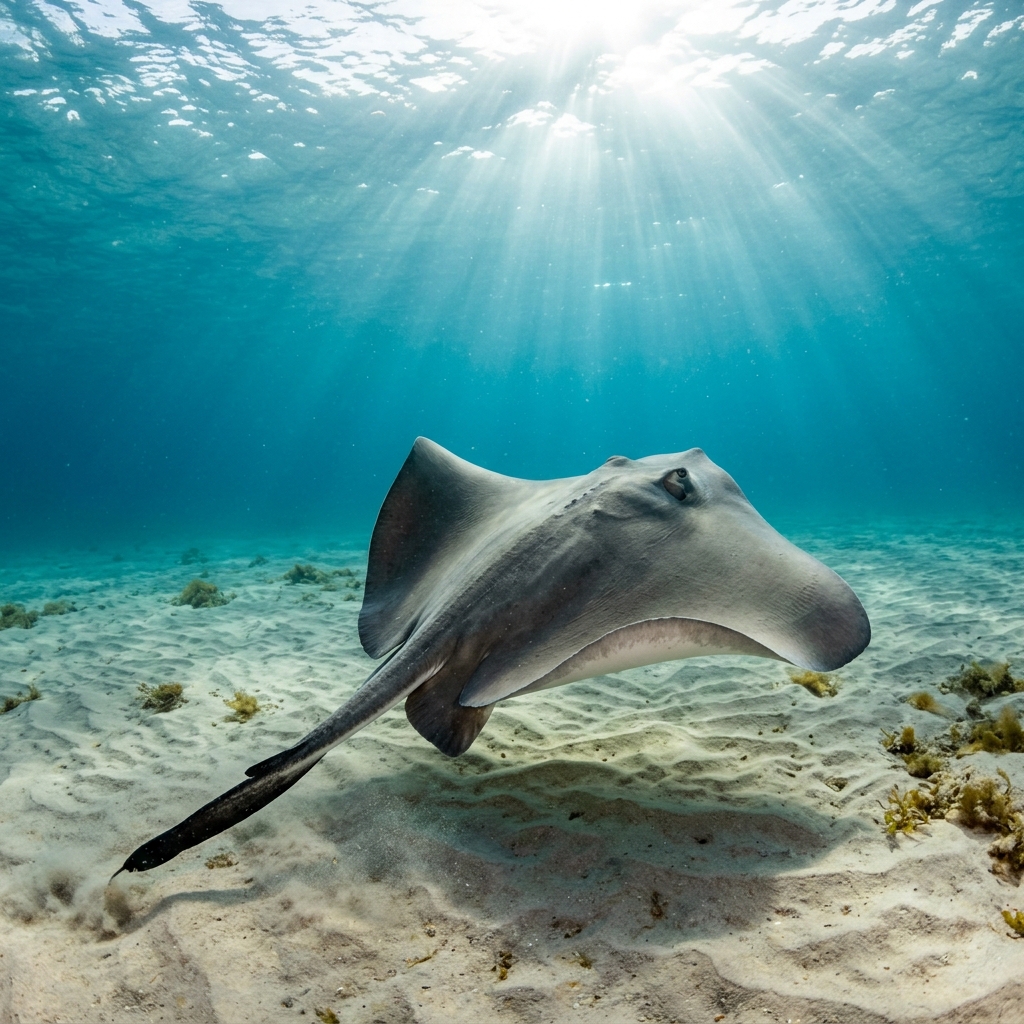
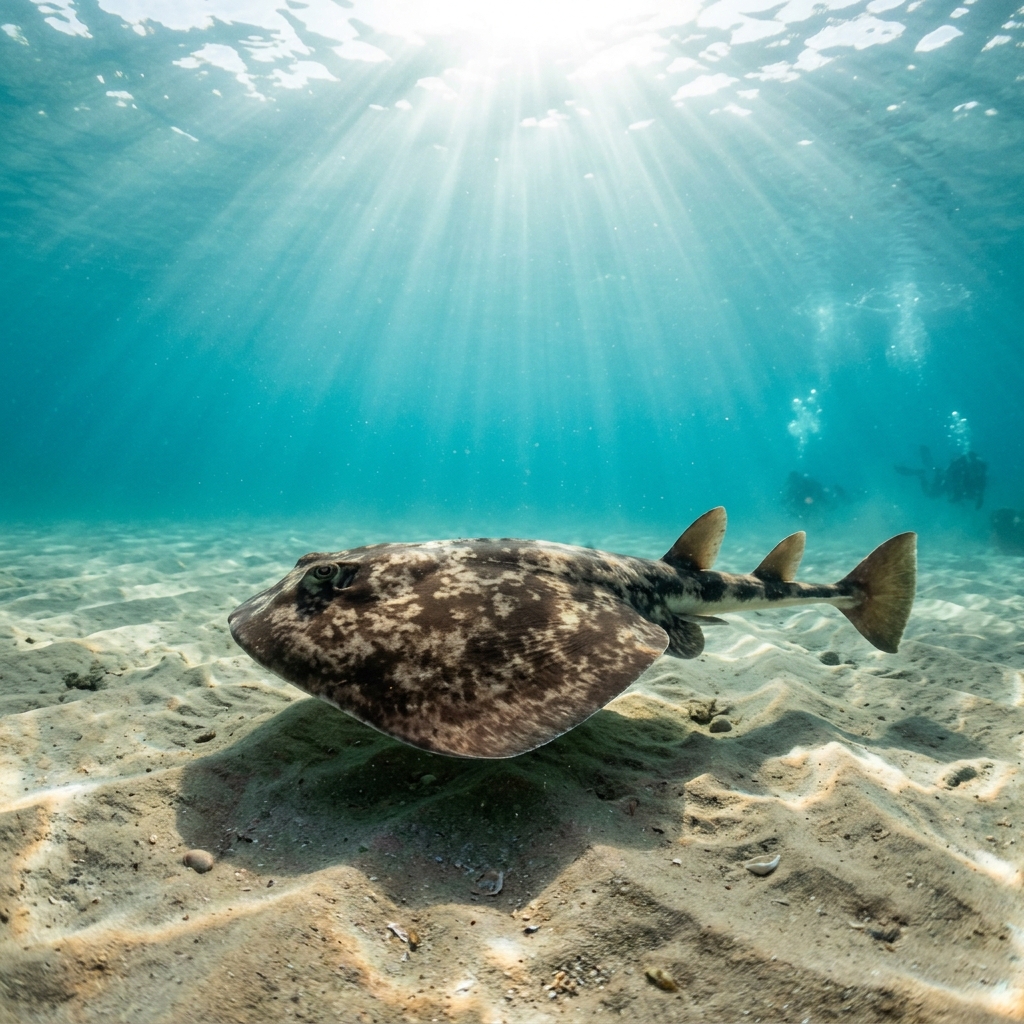
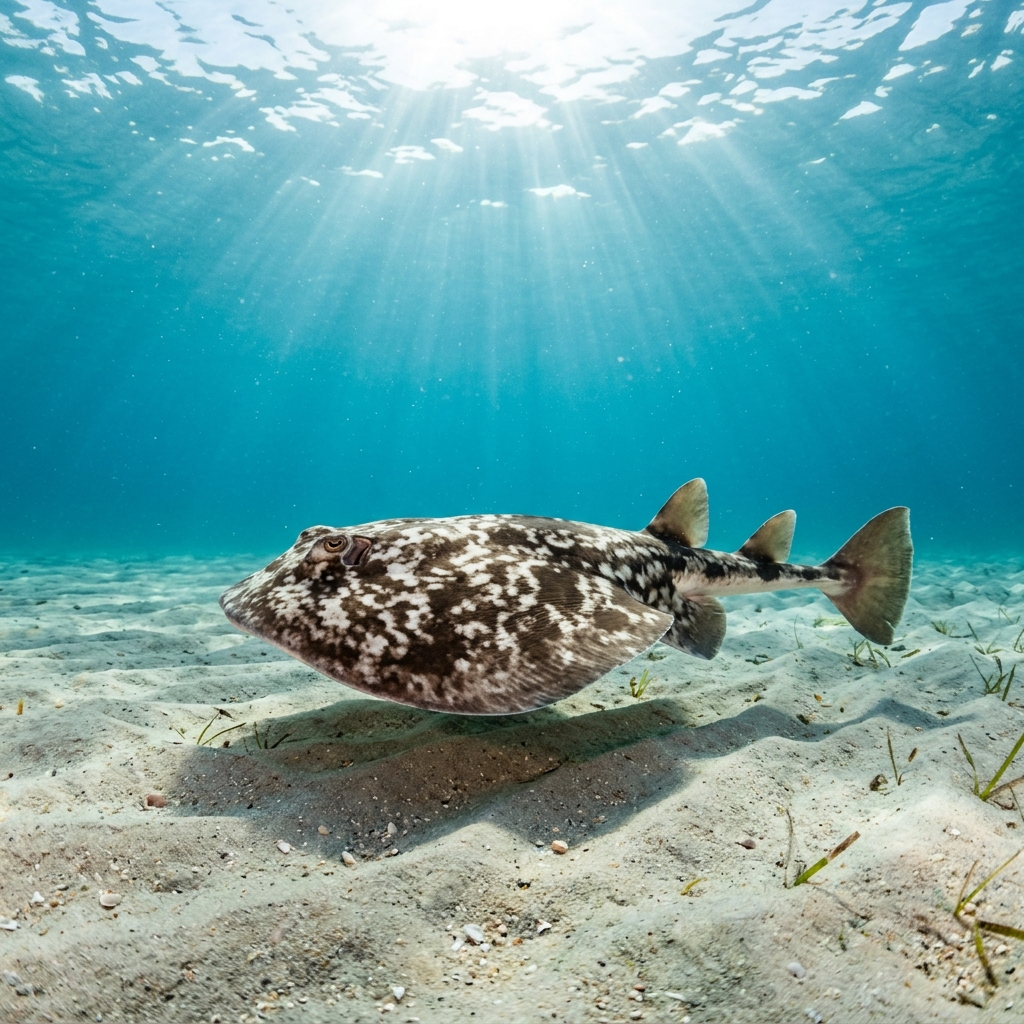
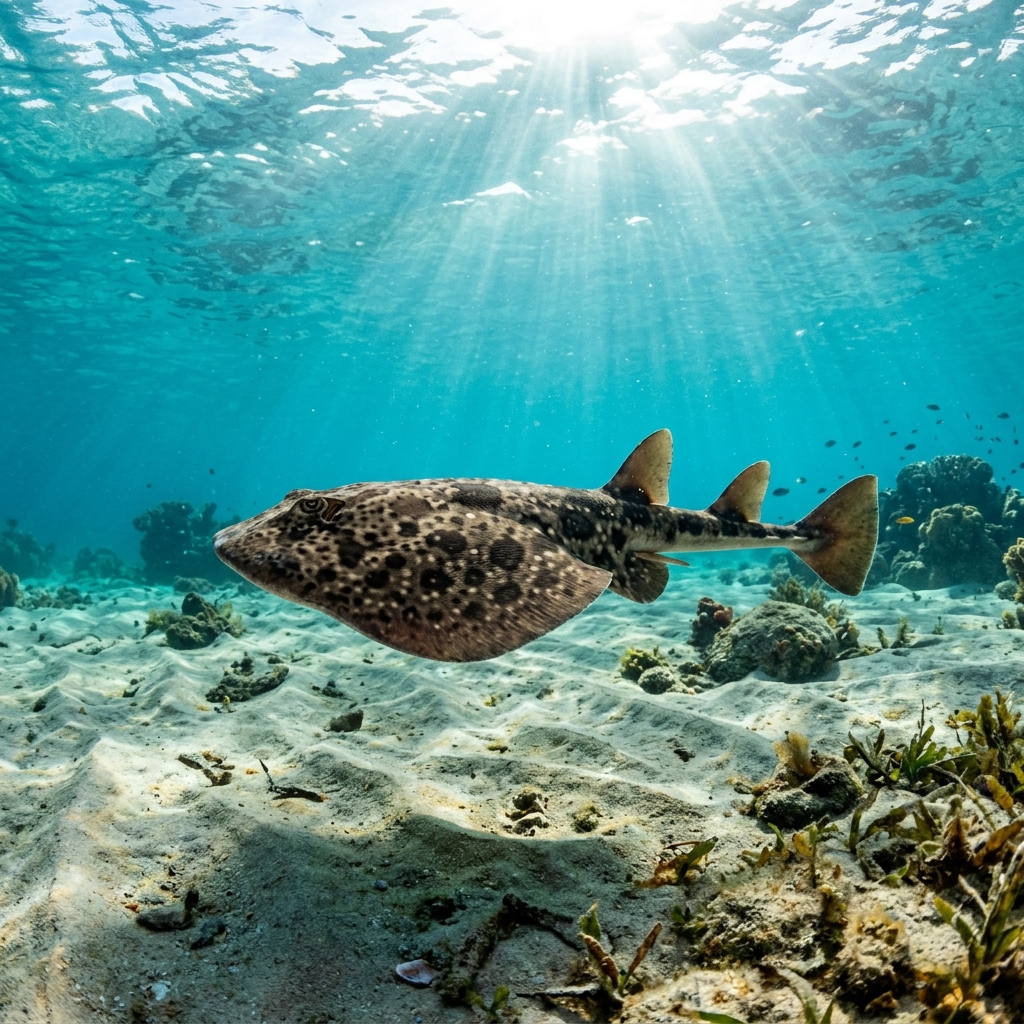
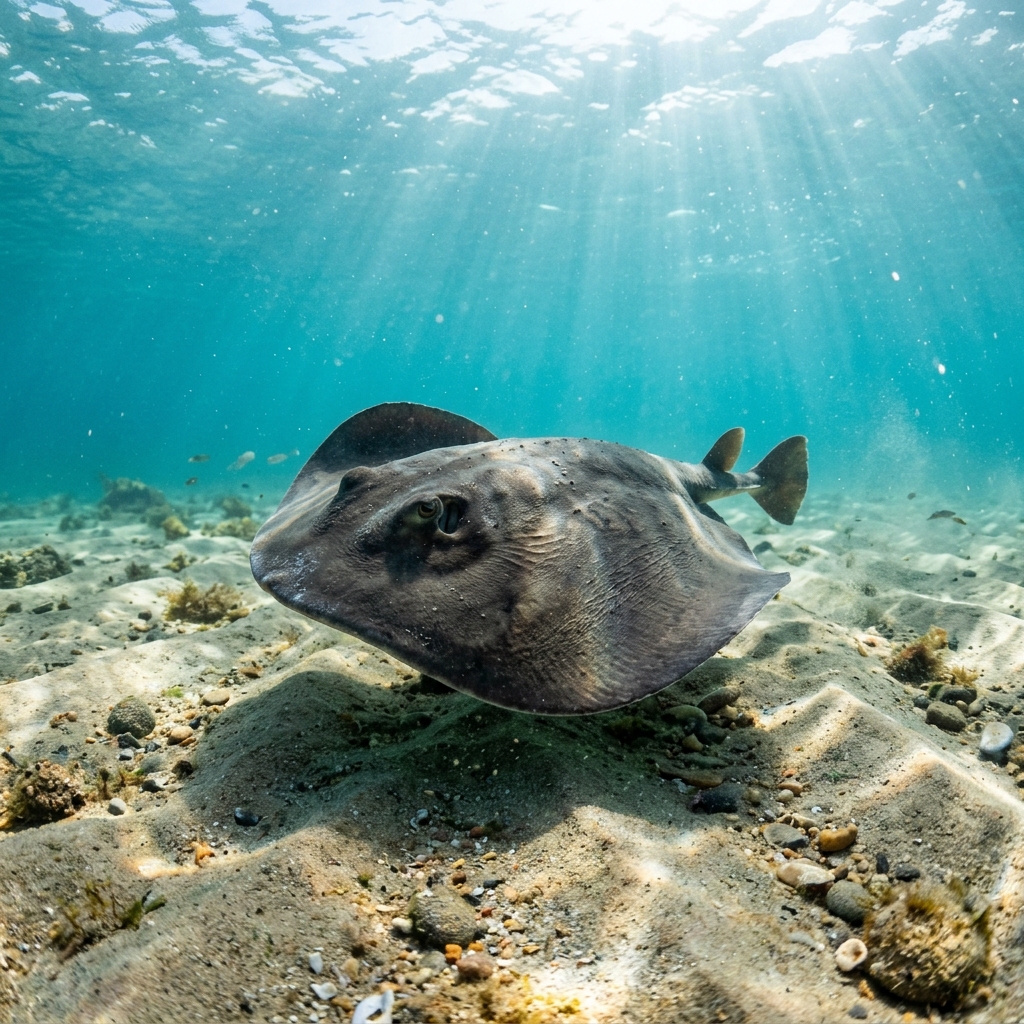
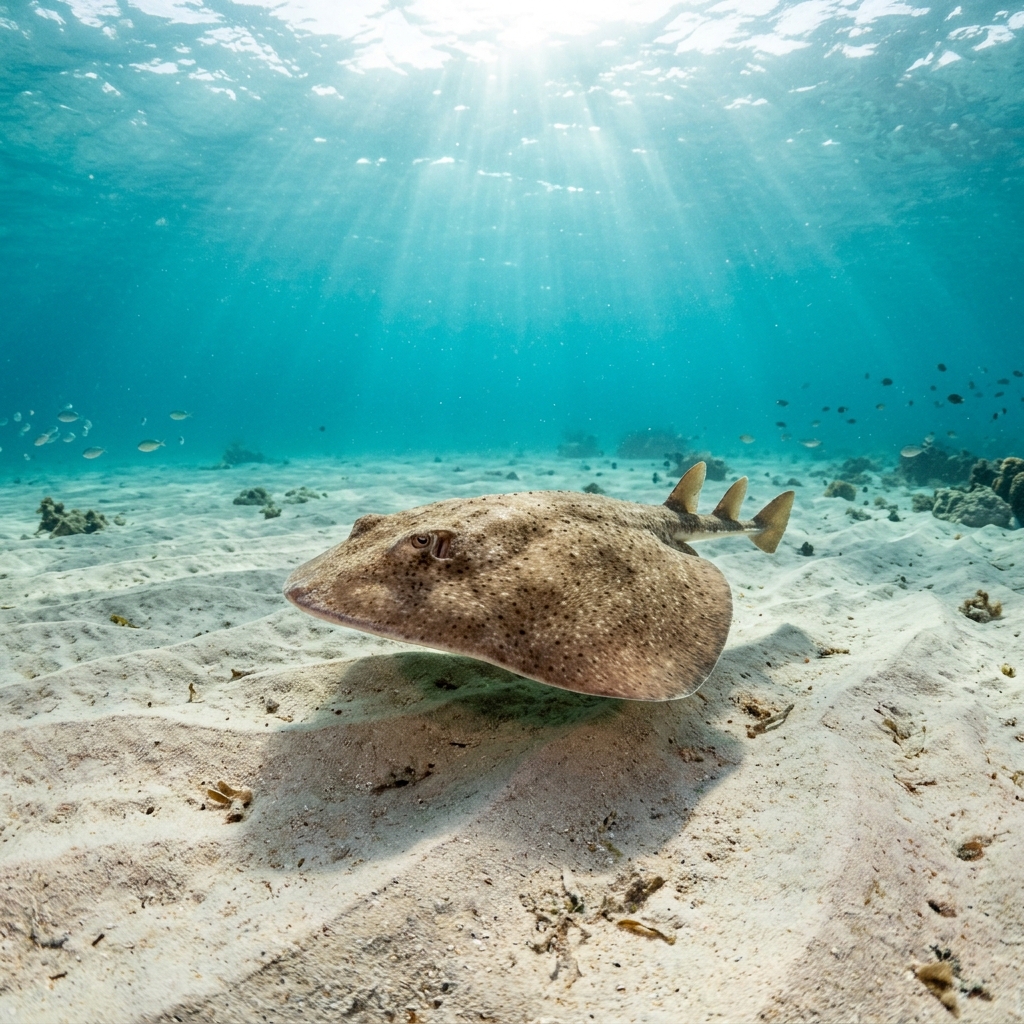
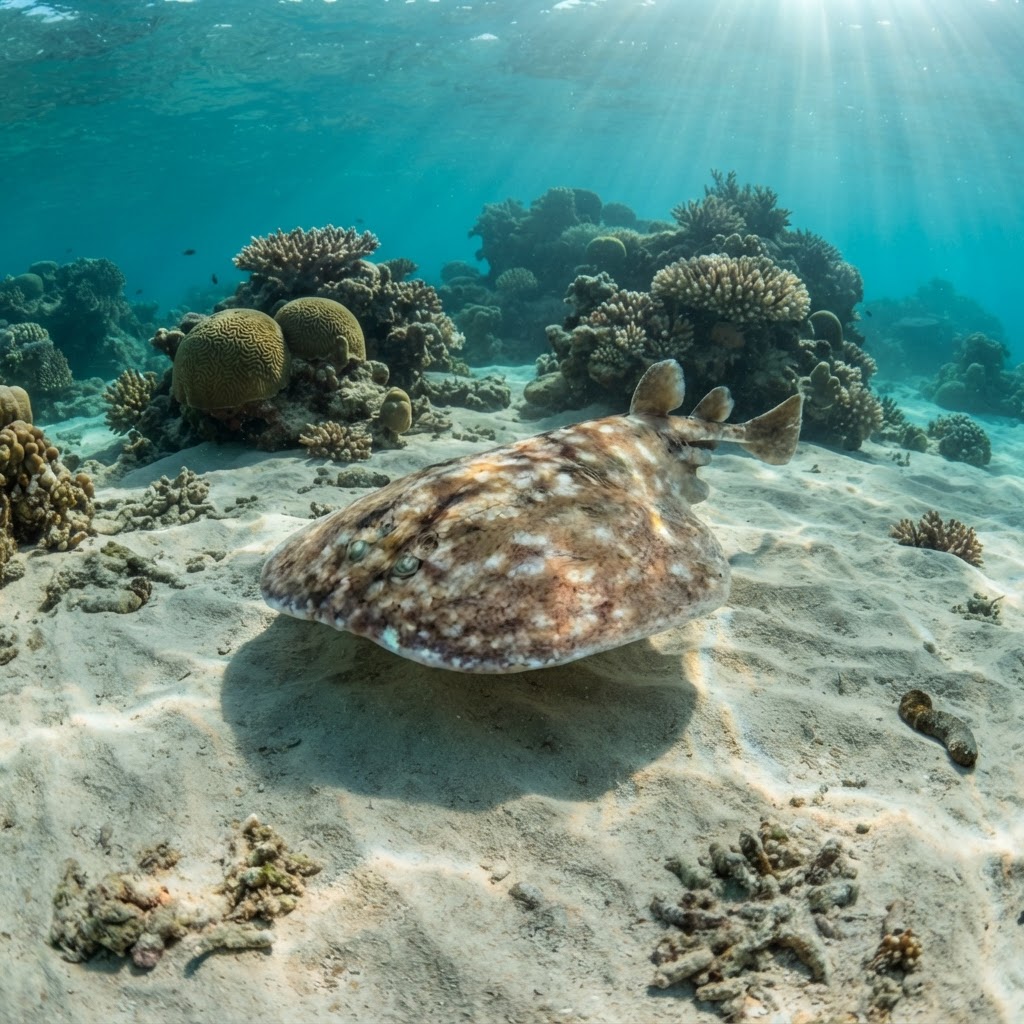
Electric rays are immediately recognisable by their almost perfectly circular, disc-shaped body, which sets them apart from the more angular or diamond-shaped outlines of most other rays. The body is soft and flabby rather than firm, a useful clue when you can see the animal from the side. Colouration varies across the family from plain brownish or greyish tones to mottled or spotted patterns depending on species, but the round disc and stubby, muscular tail remain the consistent clues. They typically sit motionless on or just above sandy or muddy bottoms, often partly buried.
You will almost always find electric rays doing very little, which is exactly the challenge in spotting them. They rest on sandy or soft-sediment bottoms, often with their disc partially sunk into the substrate, and can be easy to overlook against a matching seabed. When approached calmly they tend to stay put, relying on camouflage rather than fleeing, but a startled animal may slowly swim off with a rowing motion of the disc rather than the undulating tail movement you see in stingrays.
Every member of this family carries paired electric organs derived from modified muscle tissue on either side of the disc, capable of producing a real electric discharge used to stun prey and deter threats. The shock from larger species can be strong enough to knock a person off balance in the water, even without direct contact with the skin.
There is not enough monthly sighting data to pin down a peak season, so year-round diving is as good a guide as any. The group tolerates a wide temperature range from roughly 9°C to 27°C, suggesting presence across both warm Brazilian summer dives and cooler Chilean conditions.
Reef neighbours a diver could mistake it for. Use the identification notes above to tell them apart.
Most sightings come from the Brazilian coast, particularly the dive sites along the Rio de Janeiro and São Paulo coastline, which together account for the large majority of logged encounters. A smaller but consistent cluster of records comes from the Valparaíso region of Chile, where the cooler South Pacific waters fall well within the group's temperature tolerance.
Mapping where Electric Ray is logged…
Logged sightings come from coastal dive sites in Brazil, concentrated along the Rio de Janeiro and São Paulo coast, and from the Valparaíso region of Chile. Sandy and soft-sediment dive sites in these areas give you the best chance of an encounter.
There is no clear peak season in the available data, so they should be treated as a year-round possibility. Their tolerance for water temperatures from around 9°C to 27°C means they can be present across both warm and cool conditions at the logged sites.
Look for the perfectly round, disc-shaped body and a soft, almost floppy appearance compared to other rays. They rest motionless on sandy or muddy bottoms and may be partly buried. The stubby, muscular tail and round outline together are the key ID features that separate them from butterfly rays or stingrays.
They are not aggressive and will not chase a diver, but they can discharge electricity if touched or startled. Larger species produce shocks strong enough to cause a painful jolt or temporary muscle spasm. Treat them with the same respect you would any wild animal: observe without touching and give them space.
Each ray carries a pair of kidney-shaped electric organs on either side of its head, built from modified muscle cells called electrocytes. These cells stack like batteries and fire in synchrony, producing a burst of electricity used to stun prey or deter predators. The strength of the discharge varies by species.
Site and sighting data is aggregated from diver logs, iNaturalist and GBIF. For taxonomy and conservation status:
Pacific Electric Ray
73 sites