Tetronarce californica
Spot Pacific Electric Ray along the US Pacific Coast and British Columbia, year-round in cold water as chilly as 8.6°C. Here's where divers find them.
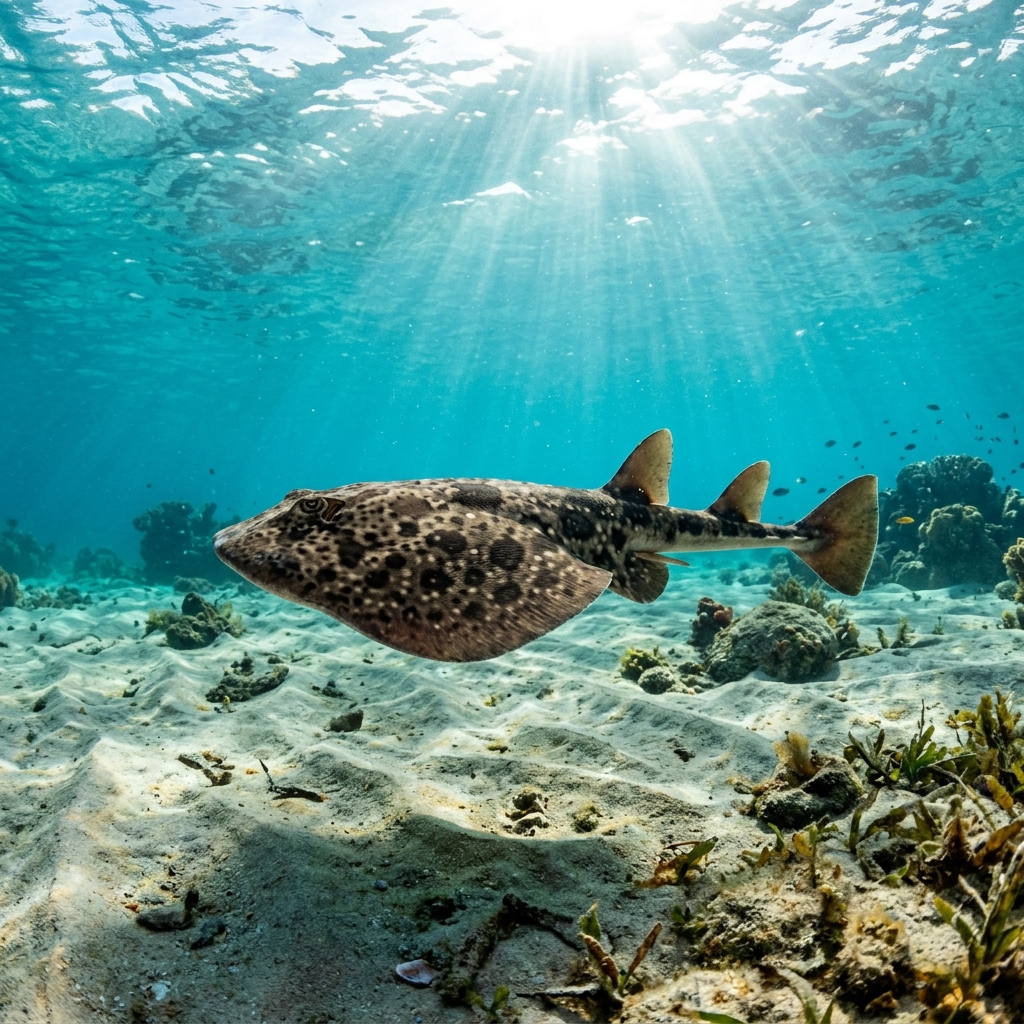
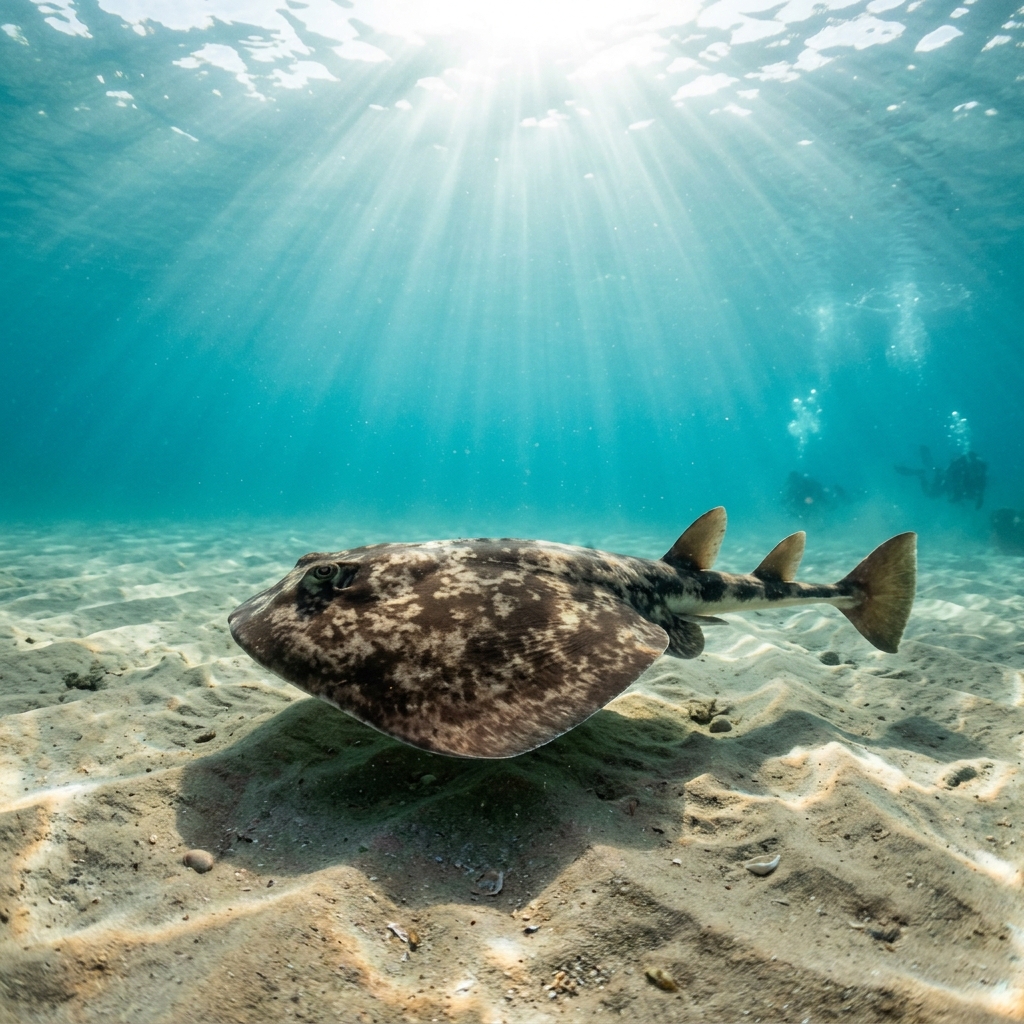
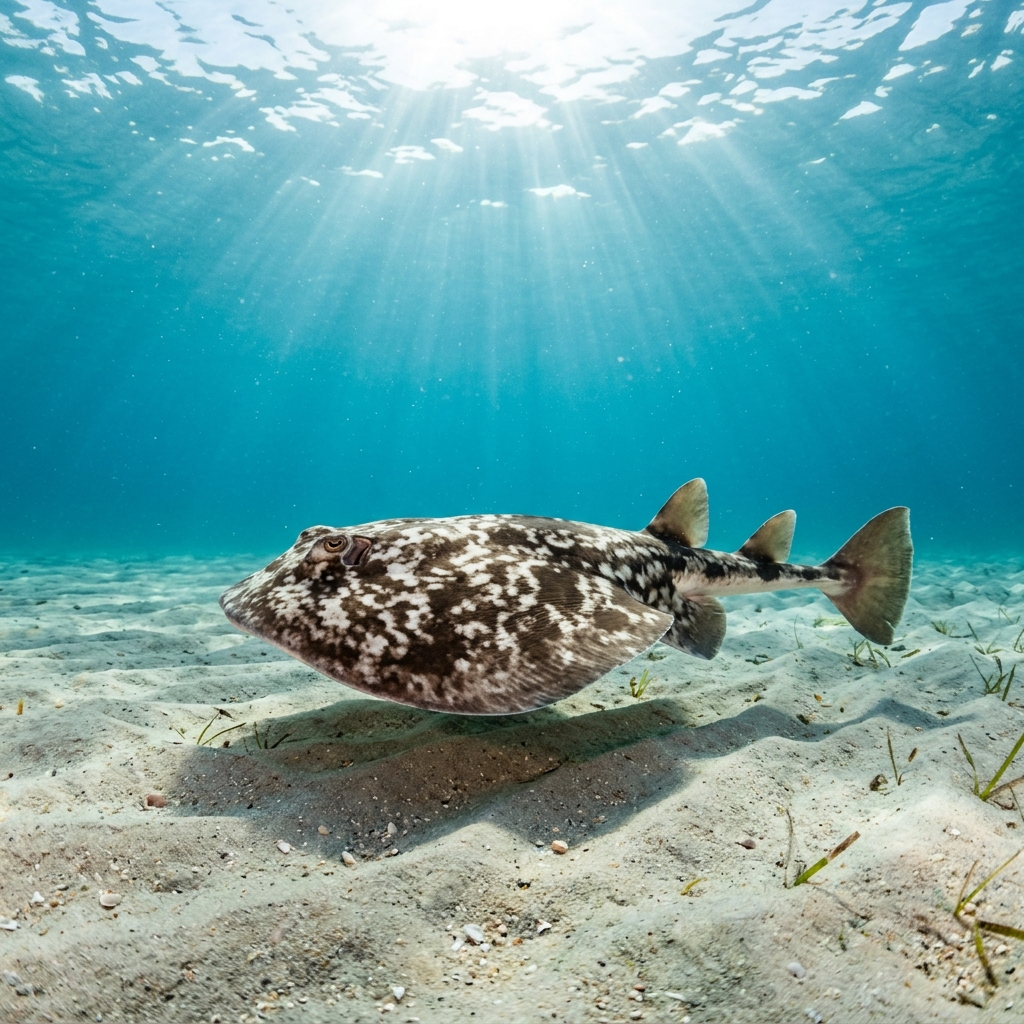
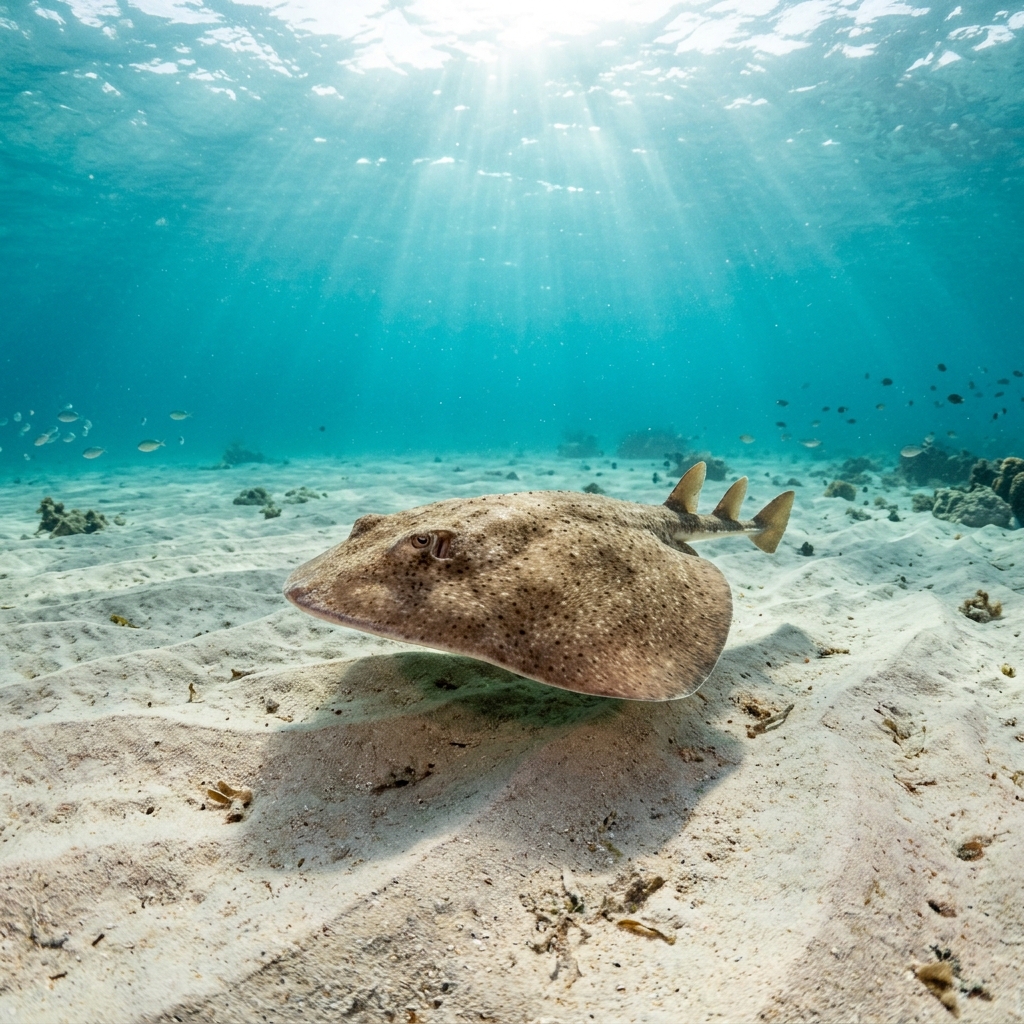
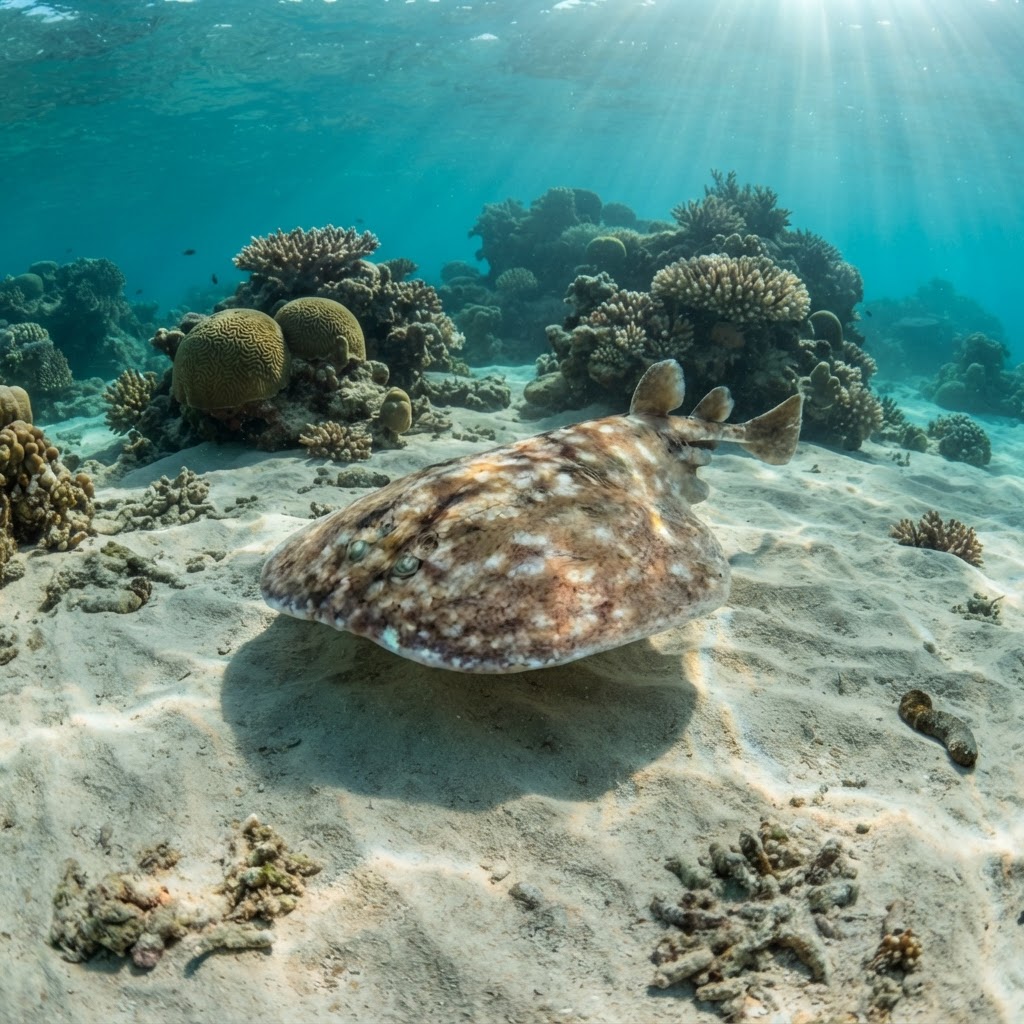
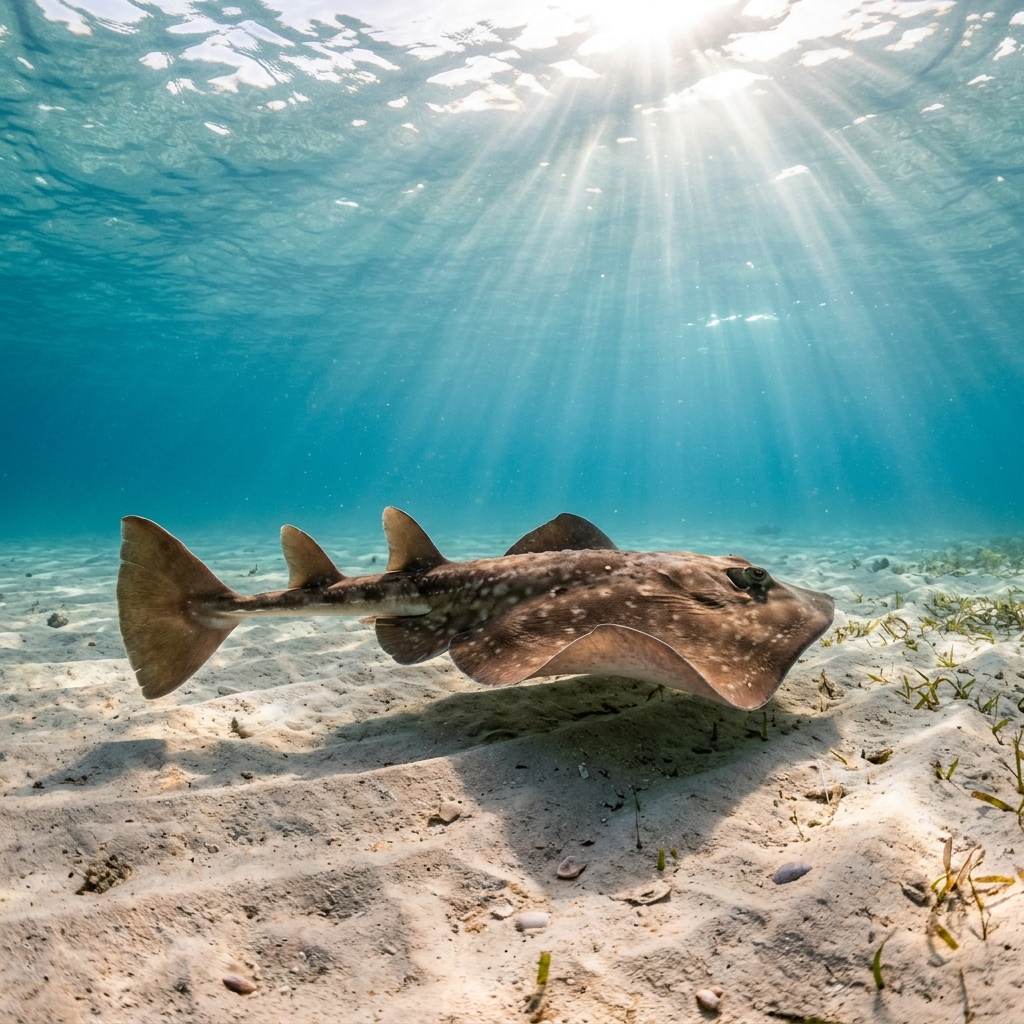
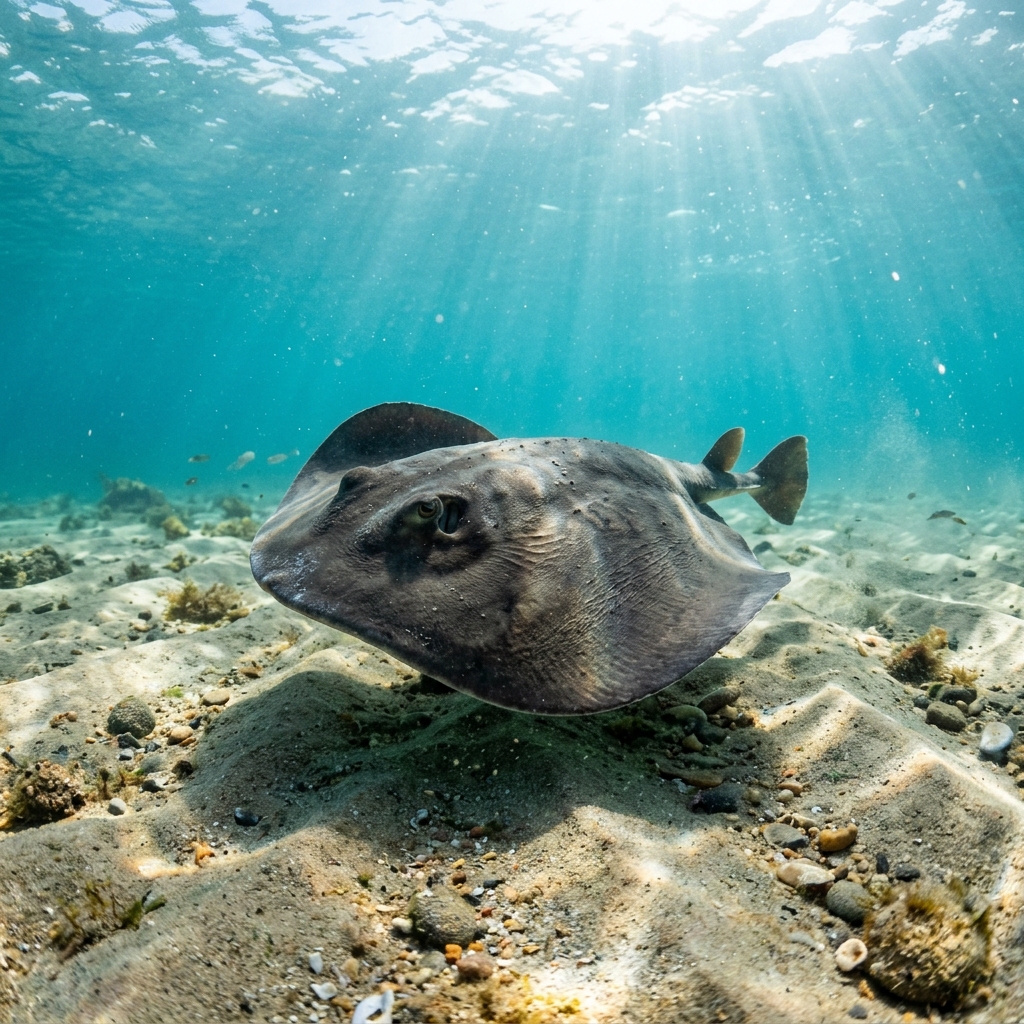
A broad, almost perfectly circular disc gives this ray an unmistakably blunt, flattened profile. Dorsal colouring is typically dark grey to blue-grey or brown, often with irregular darker patches, while the underside is pale cream or white. Two kidney-shaped electric organs sit on either side of the head, giving the disc's front edge a slightly swollen look that is hard to spot but helpful once you know it. The thick, muscular tail with two distinct dorsal fins distinguishes it quickly from skates or other rays sharing the same sandy bottoms.
Pacific electric rays are most often encountered lying motionless on sandy or muddy bottoms, where their colouring provides good camouflage against the substrate. They are generally unhurried and will sometimes allow close approach, but they can accelerate quickly and have been known to bump or press against divers who get too close. Encounters are typically daytime events on relatively shallow to moderate-depth dives over open sand adjacent to rocky reef.
Each electric organ can discharge up to 45 volts, enough to stun small fish that the ray ambushes. This is a real predatory tool, not just a defence mechanism, which is why the ray often stays so still while hunting.
Available data does not point to a concentrated season, so this is treated as a year-round species. It tolerates a wide temperature band, from about 8.6°C to 22.3°C, so divers visiting the Pacific Coast in any month have a reasonable chance of an encounter.
Reef neighbours a diver could mistake it for. Use the identification notes above to tell them apart.
Most records come from the US Pacific Coast, which accounts for the bulk of logged sites, with strong representation stretching up through British Columbia and Vancouver Island in Canada. Baja California and Mexico's northern Pacific coast add southern range options, while Alaska represents the northernmost reach for adventurous cold-water divers.
Mapping where Pacific Electric Ray is logged…
The best-documented diving for this species is along the US Pacific Coast and up through British Columbia and Vancouver Island in Canada. Baja California and Mexico's northern Pacific coast extend the range southward. Alaska sits at the northern edge for those seeking colder-water encounters.
There is no clear seasonal peak in the available data, so encounters are possible year-round. The species is comfortable across a wide temperature range, from roughly 8.6°C to 22.3°C, which means it remains present on Pacific Coast dive sites through cold winter months as well as warmer summer conditions.
They are not considered dangerous provided divers keep a respectful distance. Their electric discharge is a real defensive and predatory tool, capable of producing a sharp, unpleasant shock if the ray is touched or cornered. Watch from a distance, never handle one, and do not block its path.
Look for the almost perfectly circular, disc-shaped body in dark grey or blue-grey, lying flat on sandy or muddy substrate. The thick, muscular tail bearing two dorsal fins is a key difference from skates. The slightly swollen front corners of the disc, where the electric organs sit, add a subtle but distinctive look once you are familiar with the species.
Adults commonly reach around 90 cm to 1.4 m in disc width, making them one of the larger electric rays in the eastern Pacific. Females tend to be the bigger individuals. In the water they look broad and heavy-bodied rather than long.
Yes. Specialised electric organs on either side of the head can discharge up to around 45 volts. The ray uses this ability both to stun prey and to deter threats. It is not powerful enough to seriously injure a healthy adult diver, but it is an uncomfortable and startling experience, so give the animal space.
Site and sighting data is aggregated from diver logs, iNaturalist and GBIF. For taxonomy and conservation status:
Coffin Ray
61 sites