Narcine bancroftii
Spot Lesser Electric Ray in Florida, the Yucatán Peninsula and the Caribbean. Sightings concentrate Dec, Apr. Here's how to find and ID one.
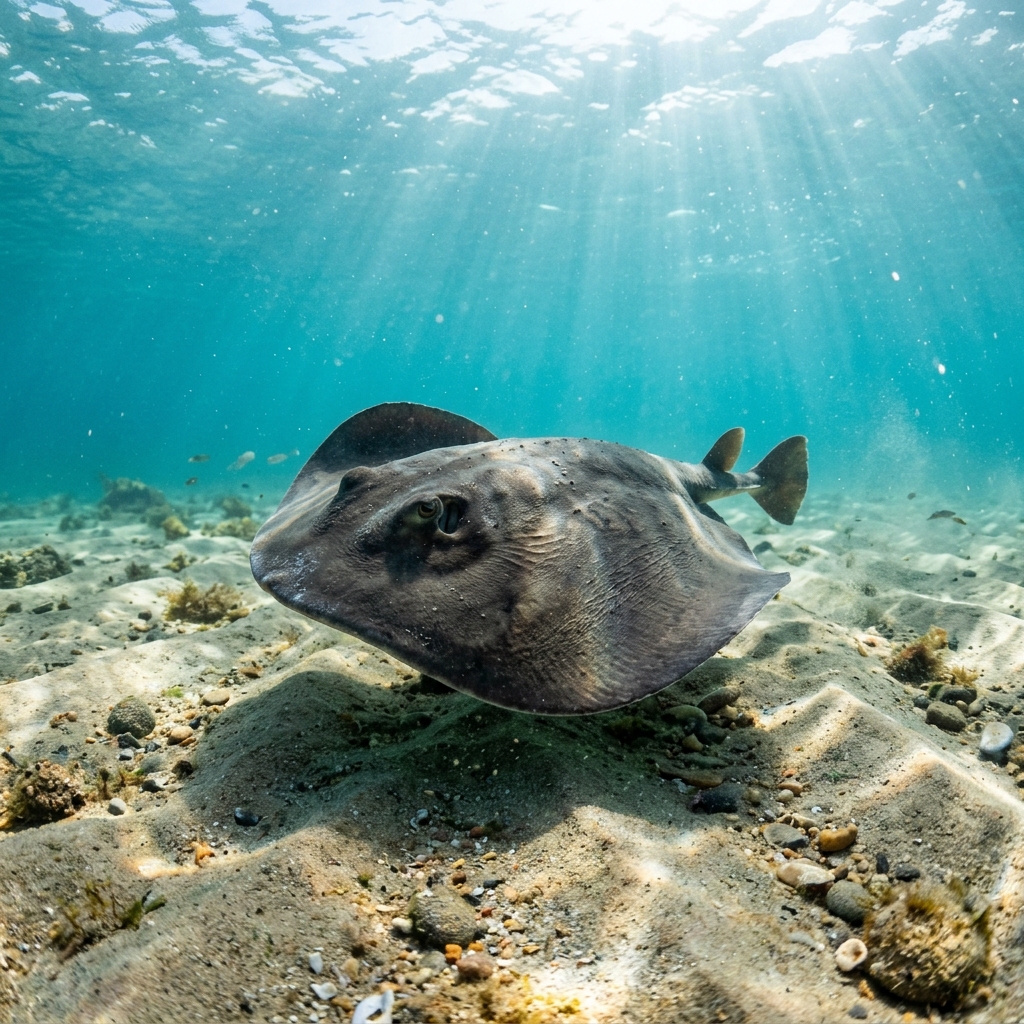
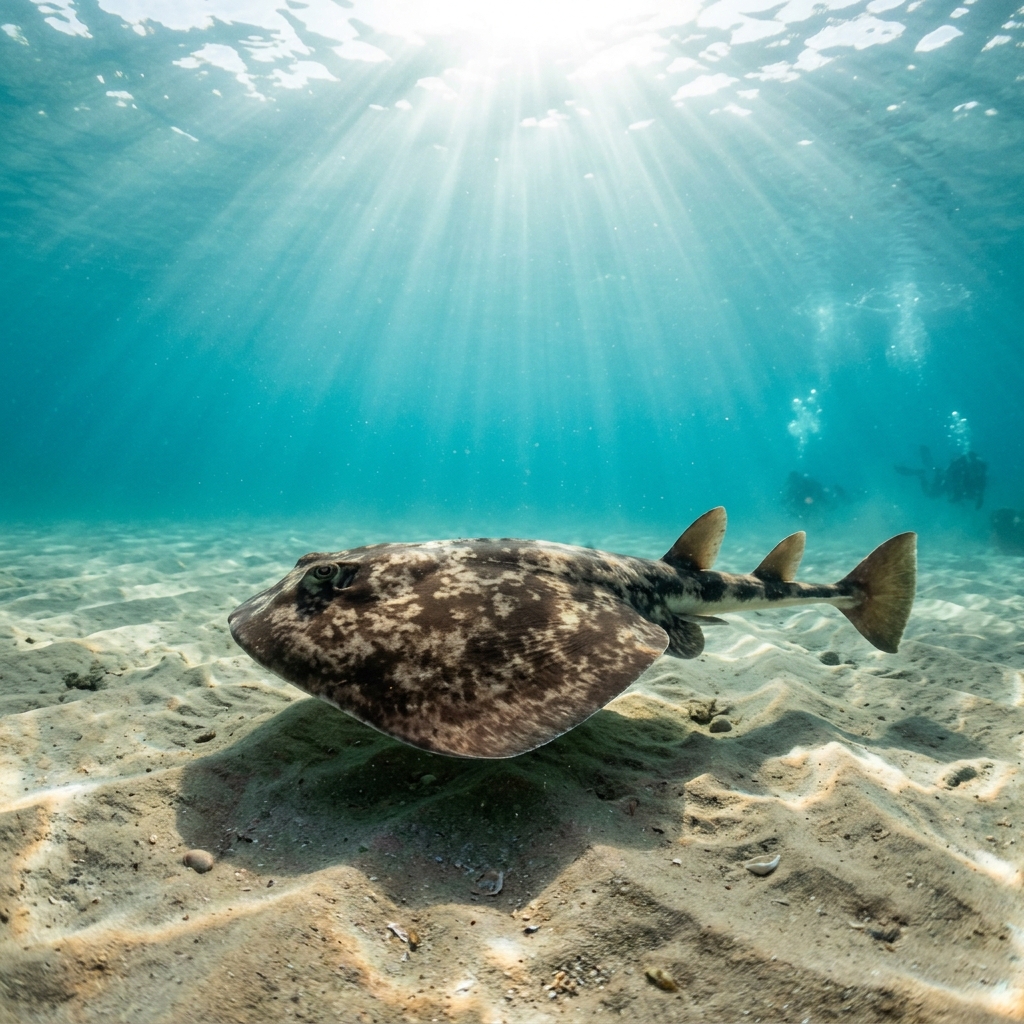
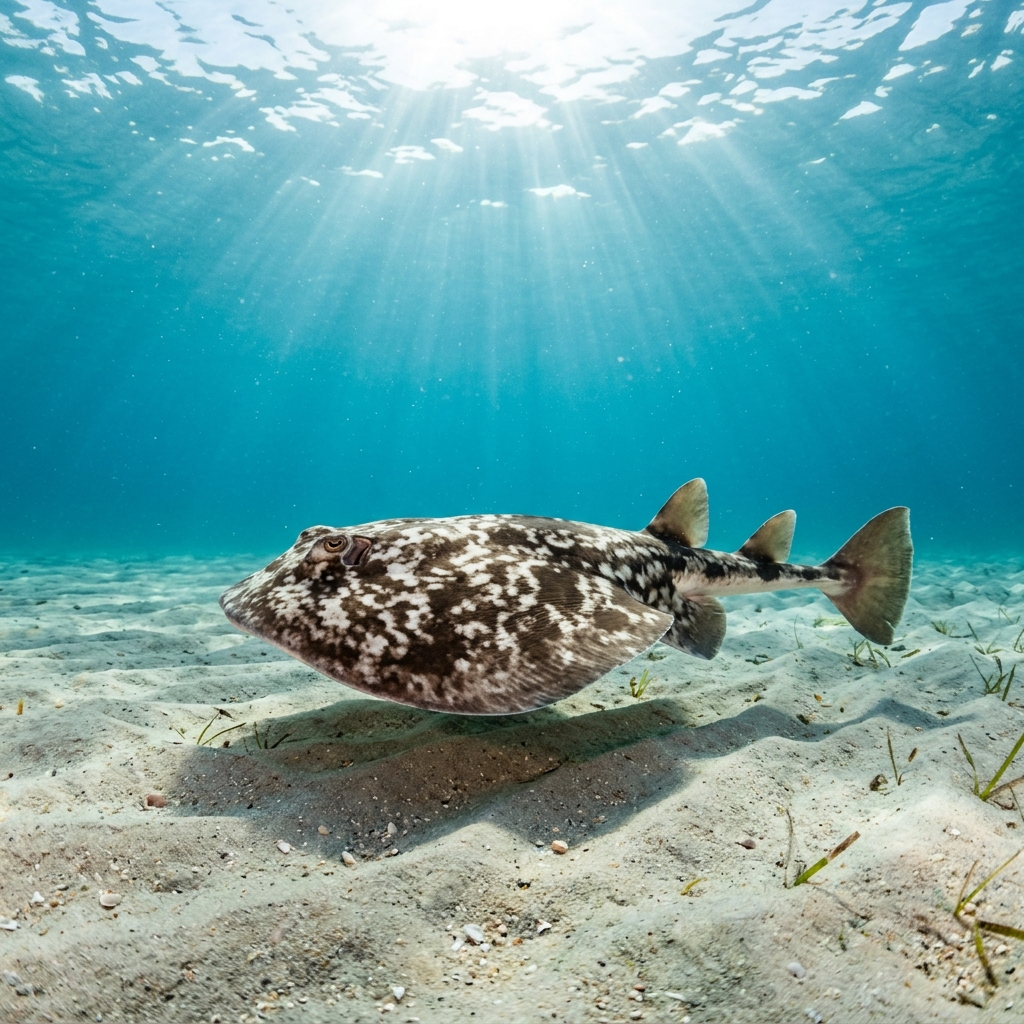
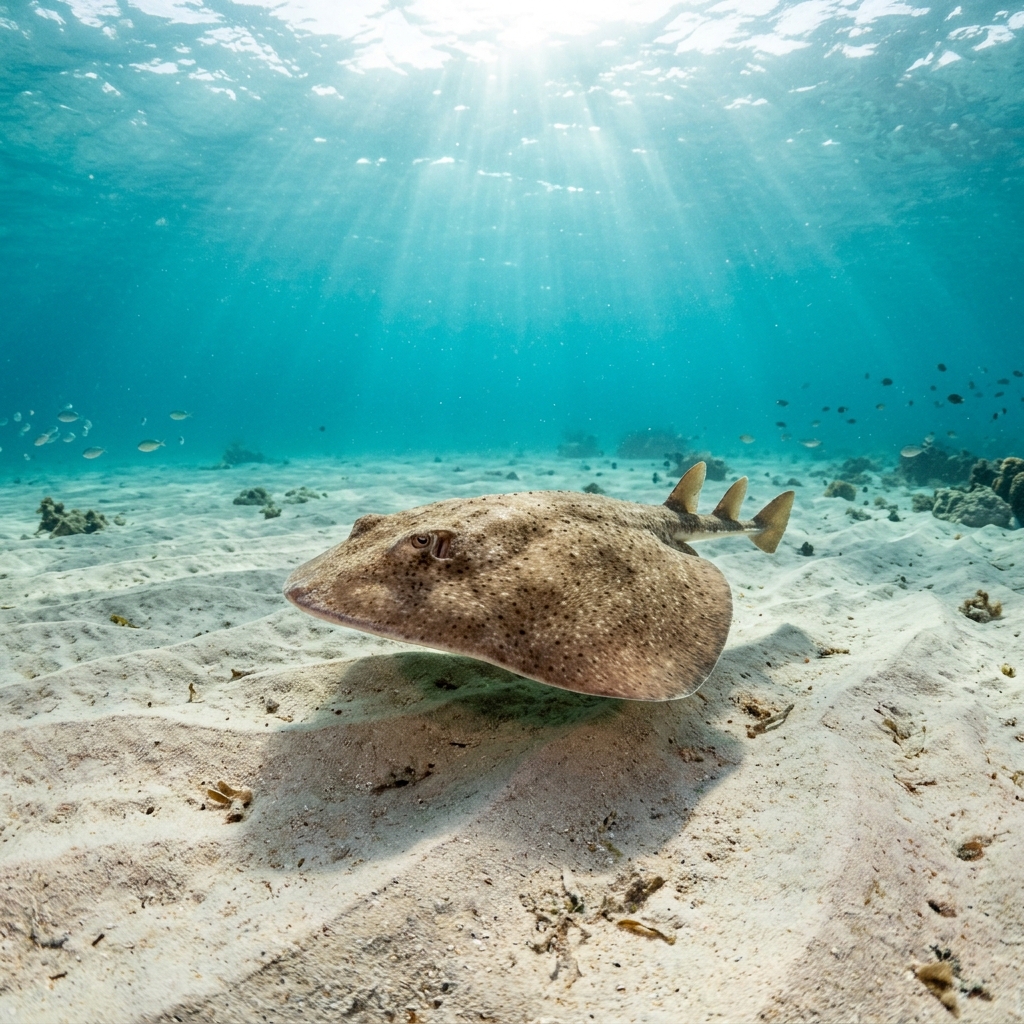
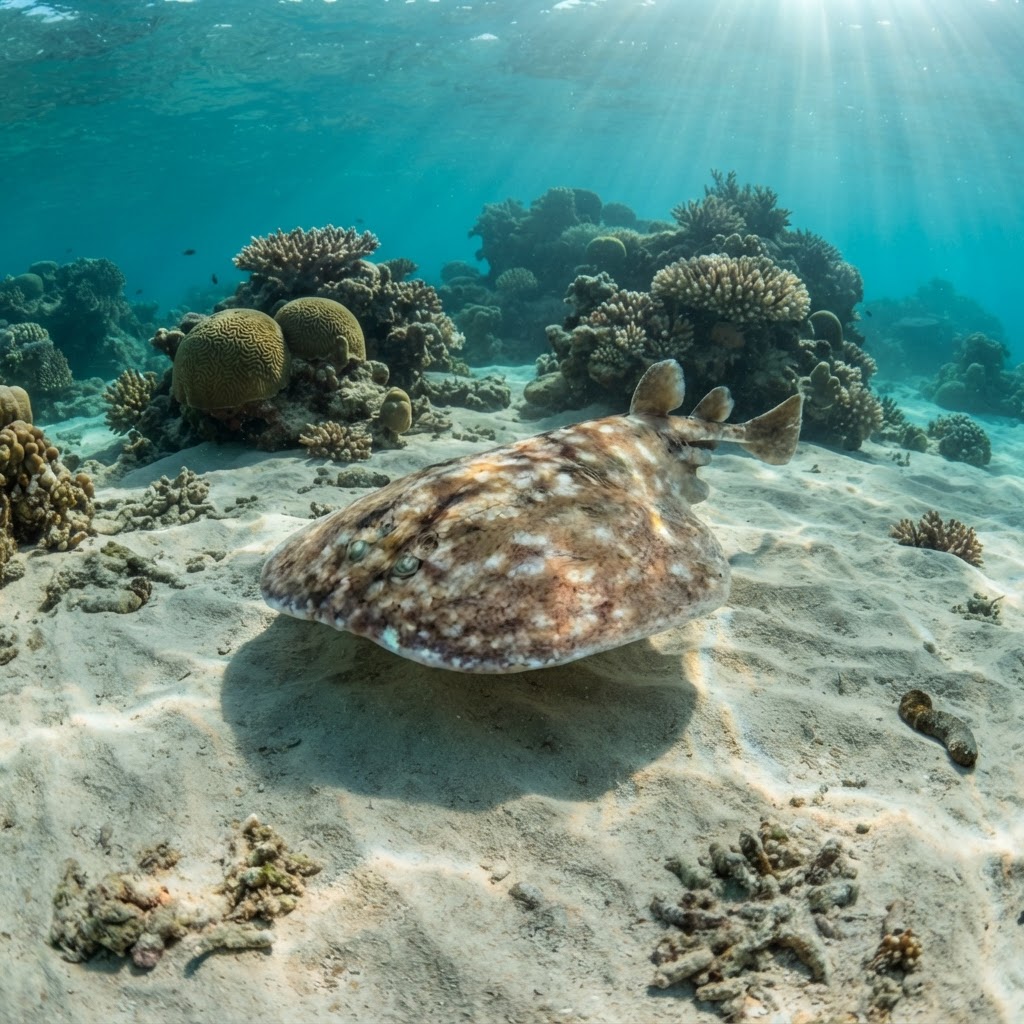
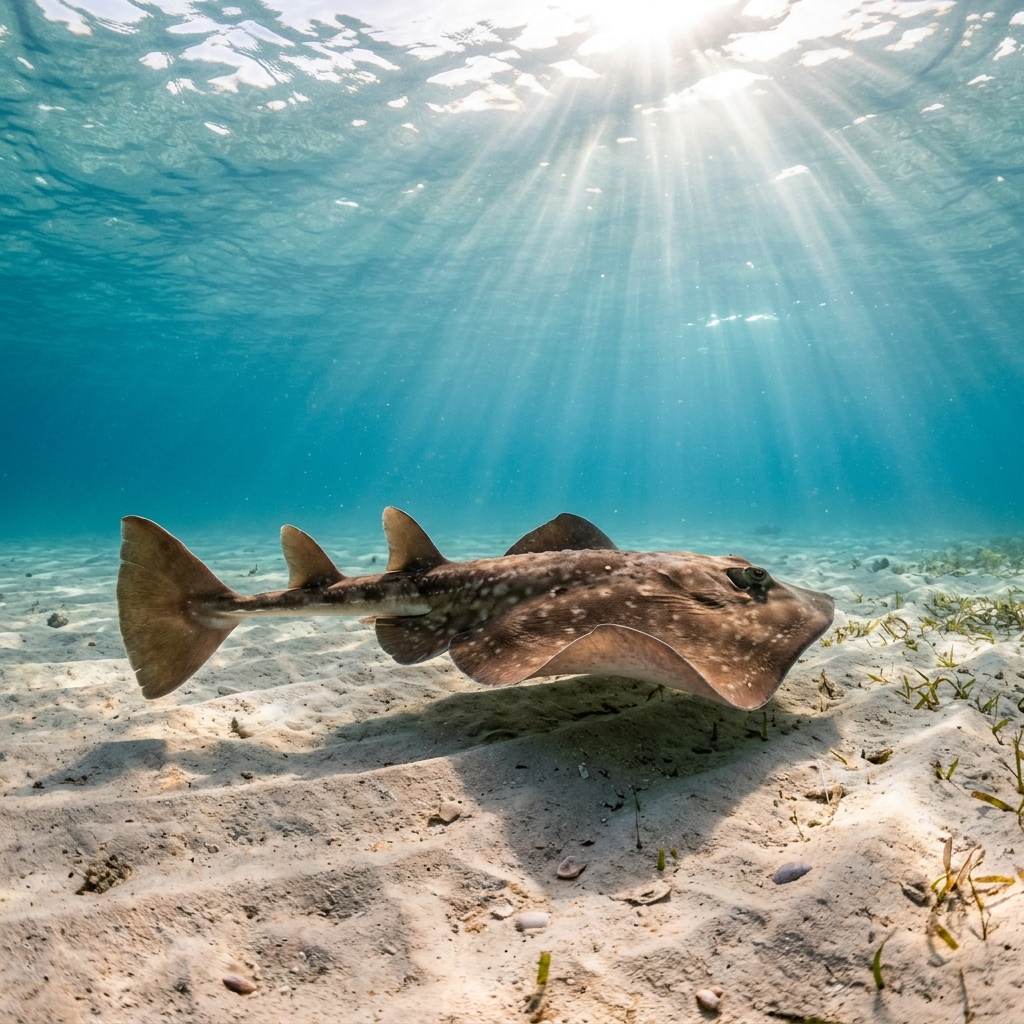
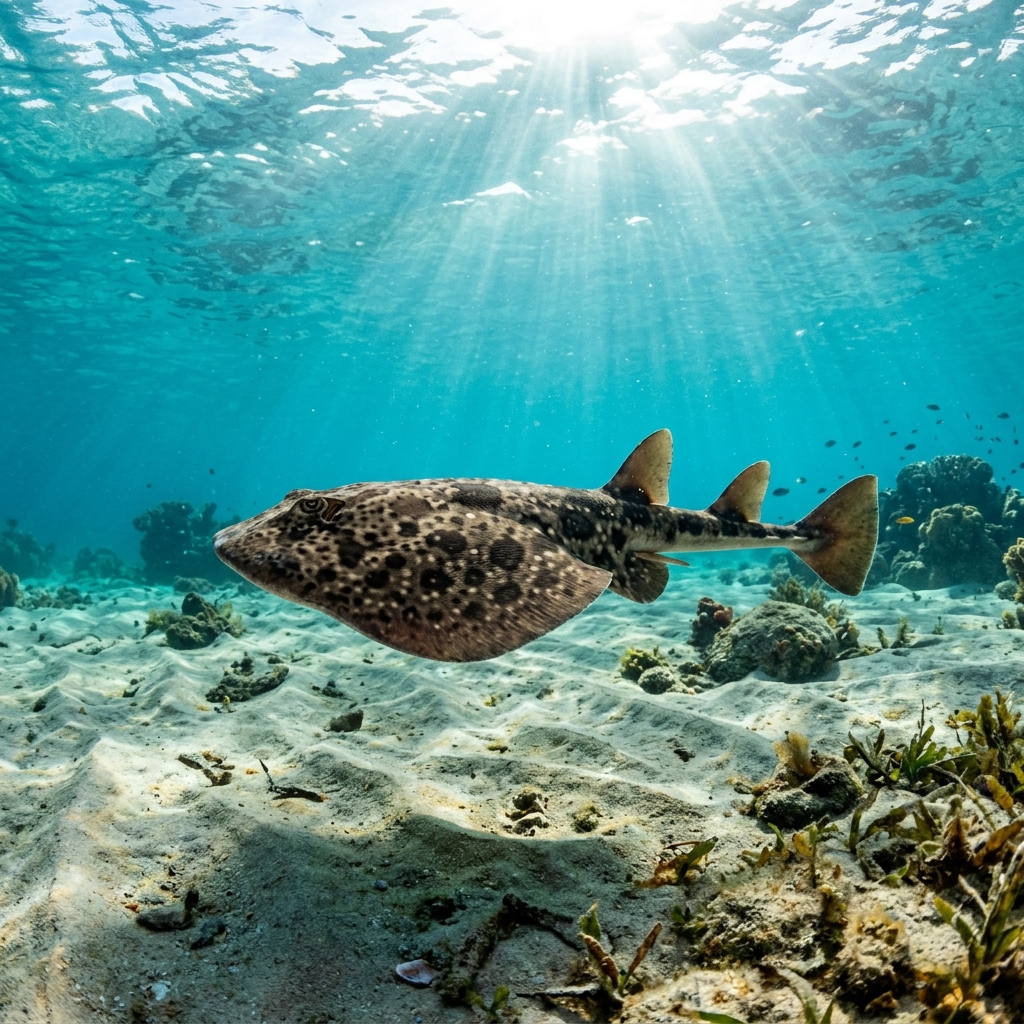
A small, nearly circular disc shape sets this ray apart immediately, with a rounded snout and a relatively short, stout tail. The upper surface is typically brownish or olive-grey, often with darker mottling or faint blotches that help it blend against sand and sediment. Two small but distinct dorsal fins sit close together near the tip of the tail. The electric organs are visible as kidney-shaped patches on either side of the head when viewed from above in good light.
Lesser electric rays are bottom-dwellers, typically found resting on or half-buried in sandy or silty substrate near reef edges and seagrass. They are generally passive when encountered, tending to sit still rather than flee, which can make them easy to approach slowly. Most sightings are of individuals resting alone during the day, though they are believed to be more active at night when hunting small worms and invertebrates.
Like all electric rays in the family Narcinidae, this species can generate an electric discharge from specialised muscle-derived organs in its disc. The discharge is used primarily to stun small prey buried in sediment rather than as a defence mechanism, but physical contact with the disc can still deliver a noticeable jolt.
Northern Hemisphere sightings concentrate between December and April, suggesting cooler-season activity in shallow coastal and reef-adjacent habitats. This aligns with winter and early-spring diving conditions across Florida and the wider Caribbean.
Reef neighbours a diver could mistake it for. Use the identification notes above to tell them apart.
Most commonly logged in the United States, particularly across Florida and the Southeast, making that region the strongest base for a dedicated sighting. The Yucatán Peninsula in Mexico and Cuba's Jardines del Rey are also well-represented, and there are solid records along the Caribbean Coast of Colombia and in the Bahamas. Venezuela and Belize round out the Caribbean range for divers exploring that part of the region.
Mapping where Lesser Electric Ray is logged…
Florida and the Southeast United States have the strongest concentration of recorded sightings, making them the go-to destination. The Yucatán Peninsula, Cuba's Jardines del Rey, the Bahamas, and the Caribbean Coast of Colombia are also reliable areas across the wider Atlantic and Caribbean range.
Based on recorded sightings, December through April is the peak window in the Northern Hemisphere. This winter-to-spring period covers prime diving conditions in Florida and the Caribbean, where most encounters are logged.
They are not considered dangerous, but the electric organs in the disc can deliver a mild shock if touched. The standard advice is to keep hands away from the disc and observe from a short distance without making contact. They do not actively threaten divers.
Look for a small, almost perfectly circular disc resting on sandy or muddy substrate, brownish with darker mottling on top. Two dorsal fins are visible close together near the tail tip. The kidney-shaped electric organs on the sides of the head are a distinctive feature when light conditions allow a clear top-down view.
Specialised organs derived from modified muscle tissue sit on either side of the head within the disc and can produce an electric discharge. This is used primarily to stun small invertebrates and worms hiding in sediment, effectively a hunting tool rather than a defensive weapon. The discharge is real but not life-threatening to a healthy adult diver who avoids direct contact.
Site and sighting data is aggregated from diver logs, iNaturalist and GBIF. For taxonomy and conservation status:
Coffin Ray
61 sites