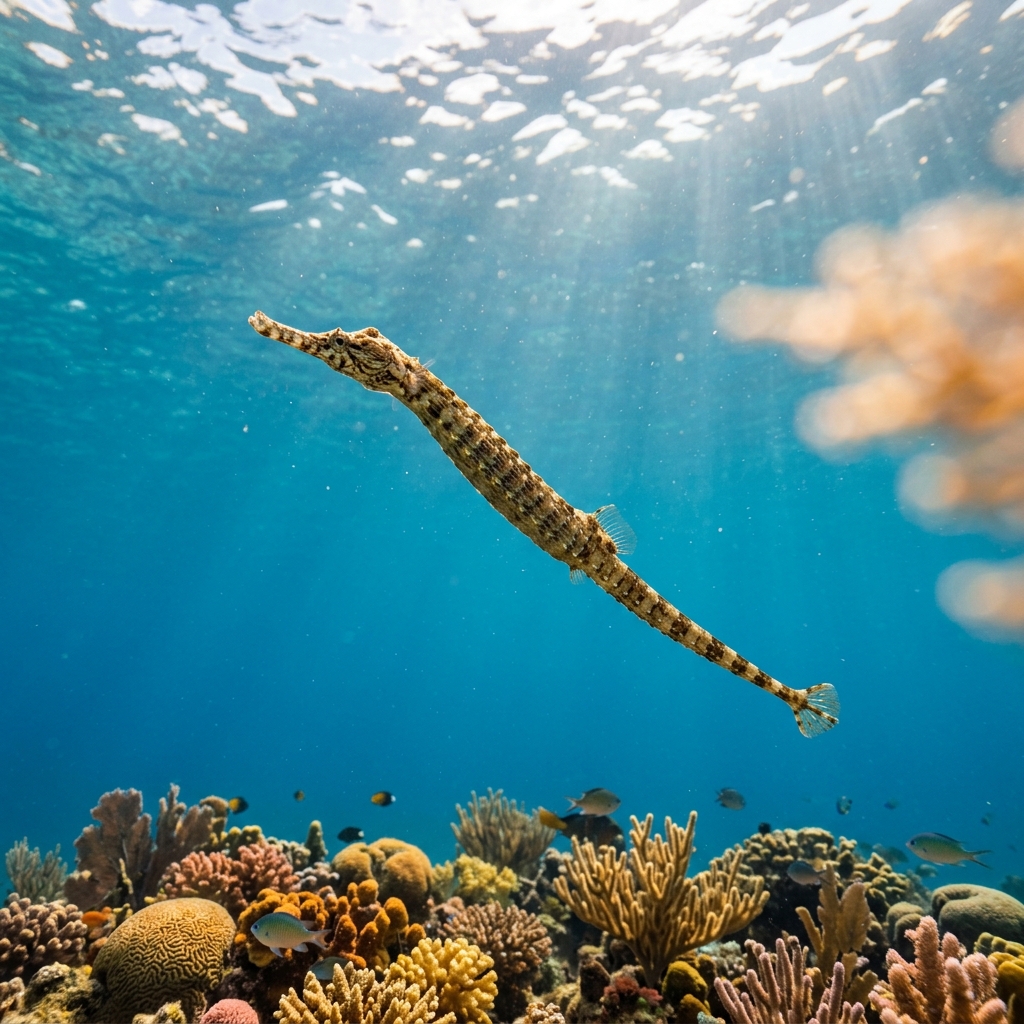
Hippocampus comes
A small reef seahorse with a striped tail, found on tropical reefs at 28-29 C, year-round with no fixed season yet mapped.
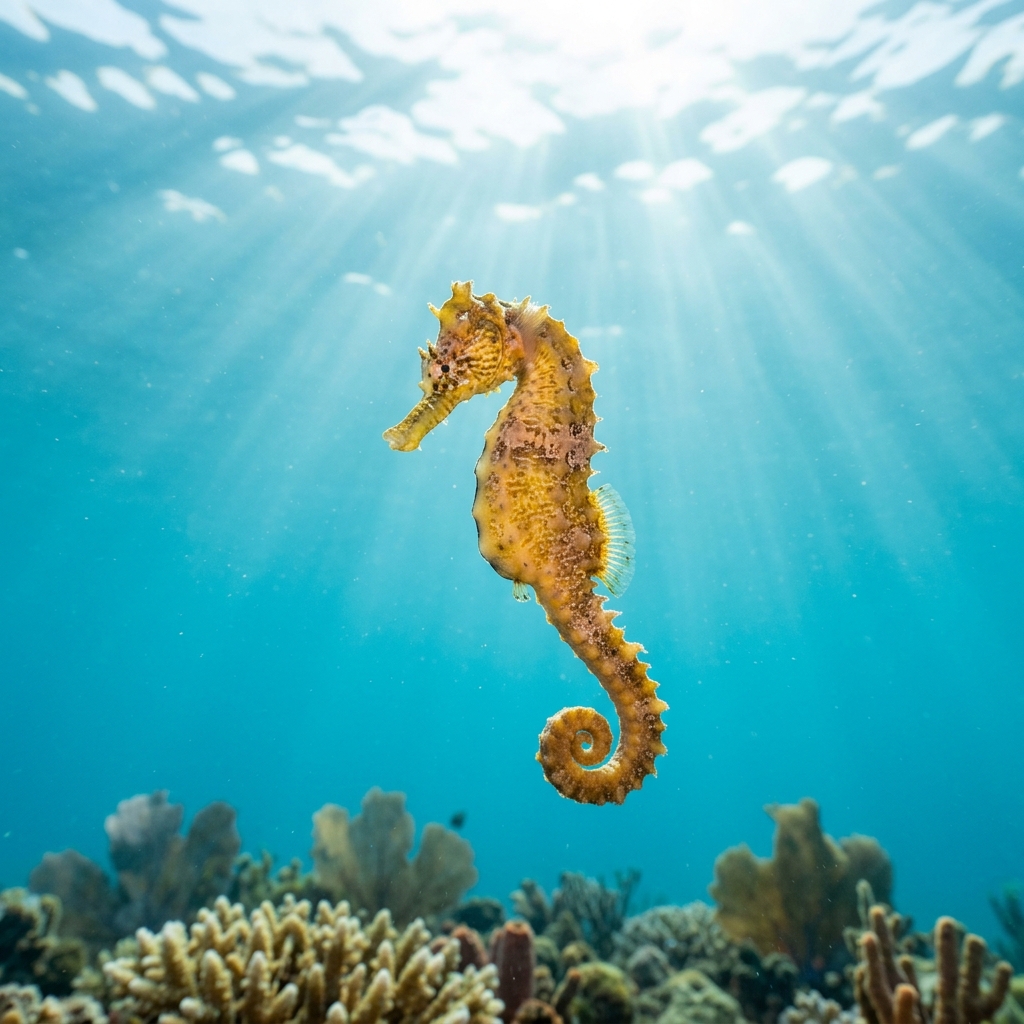
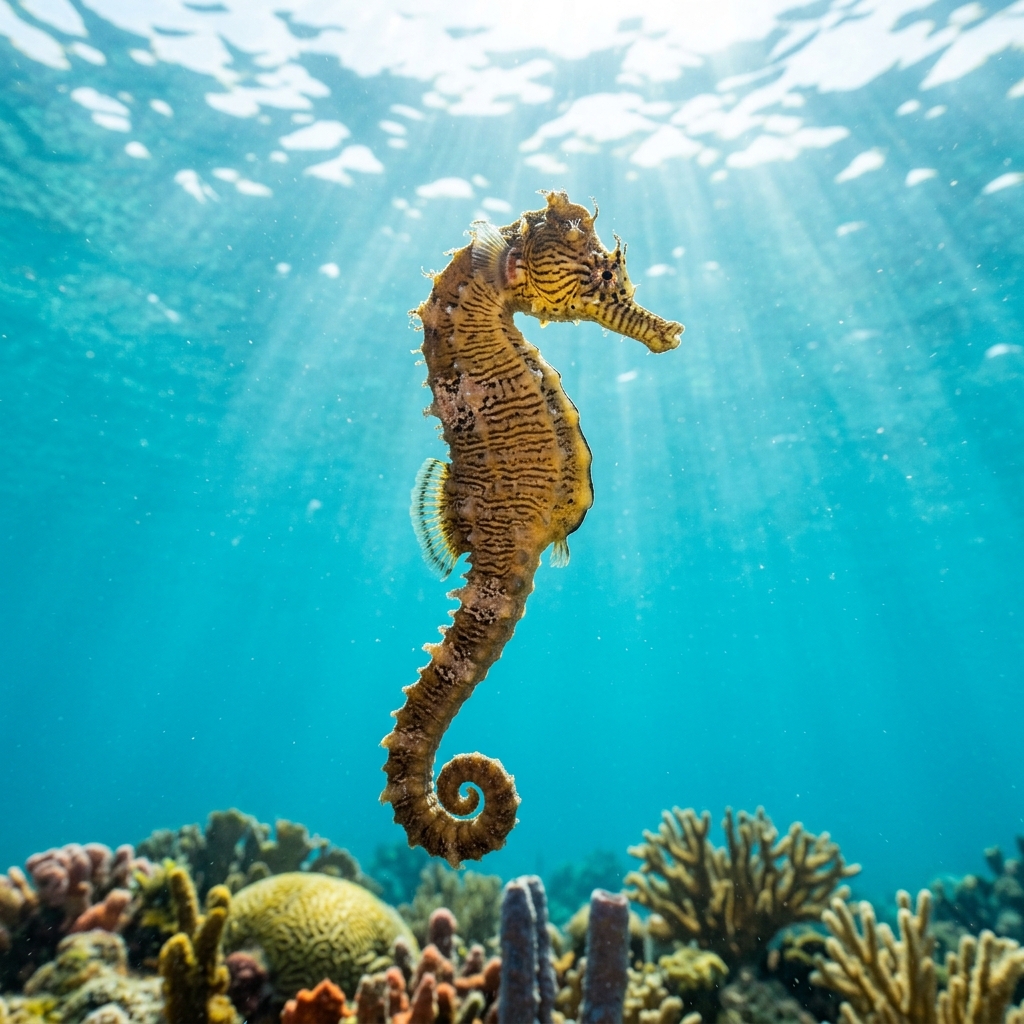
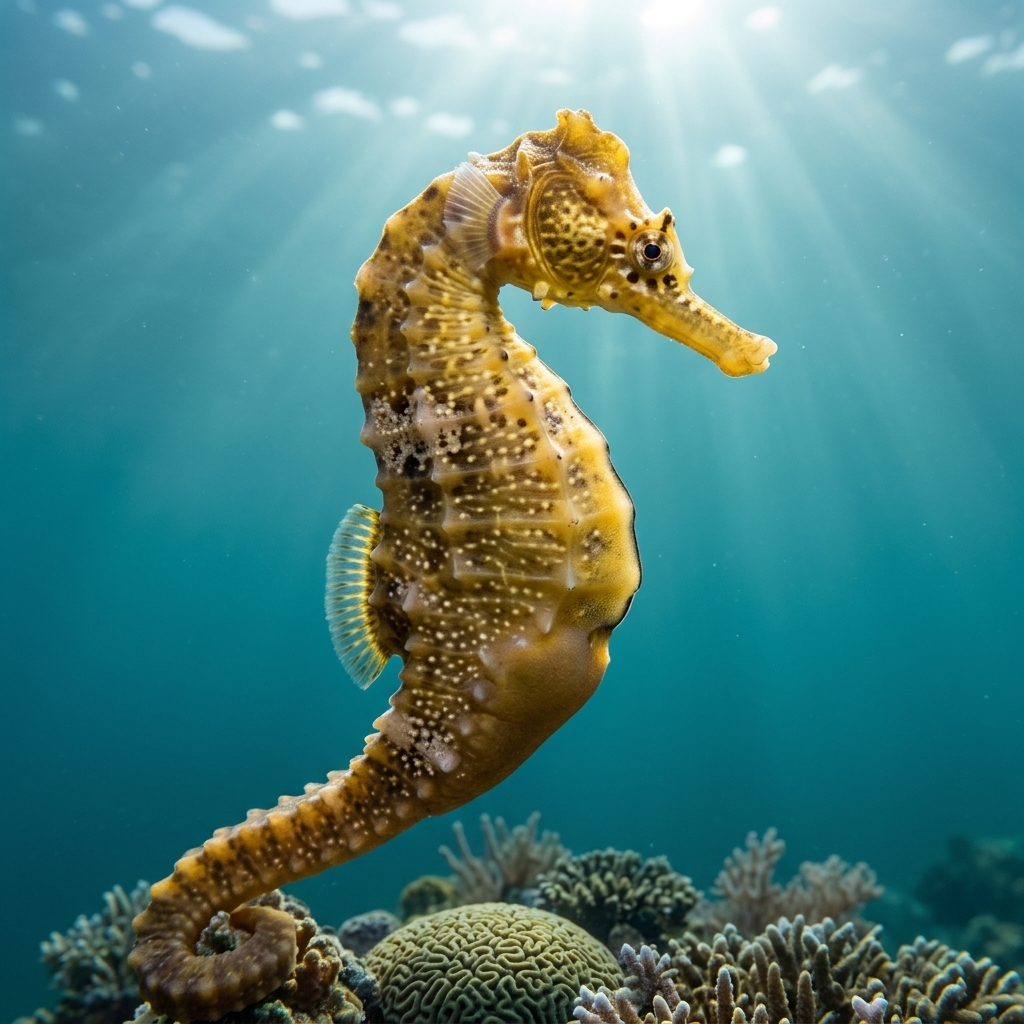
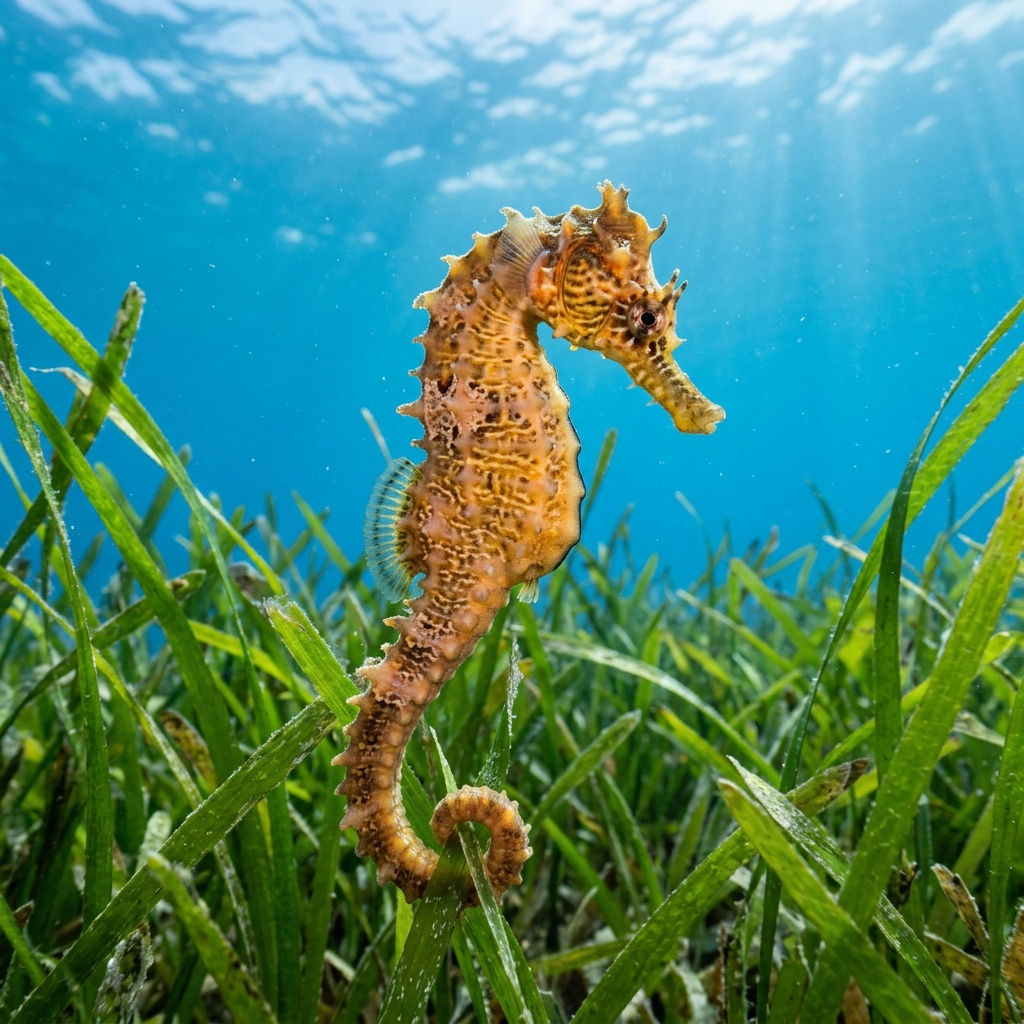
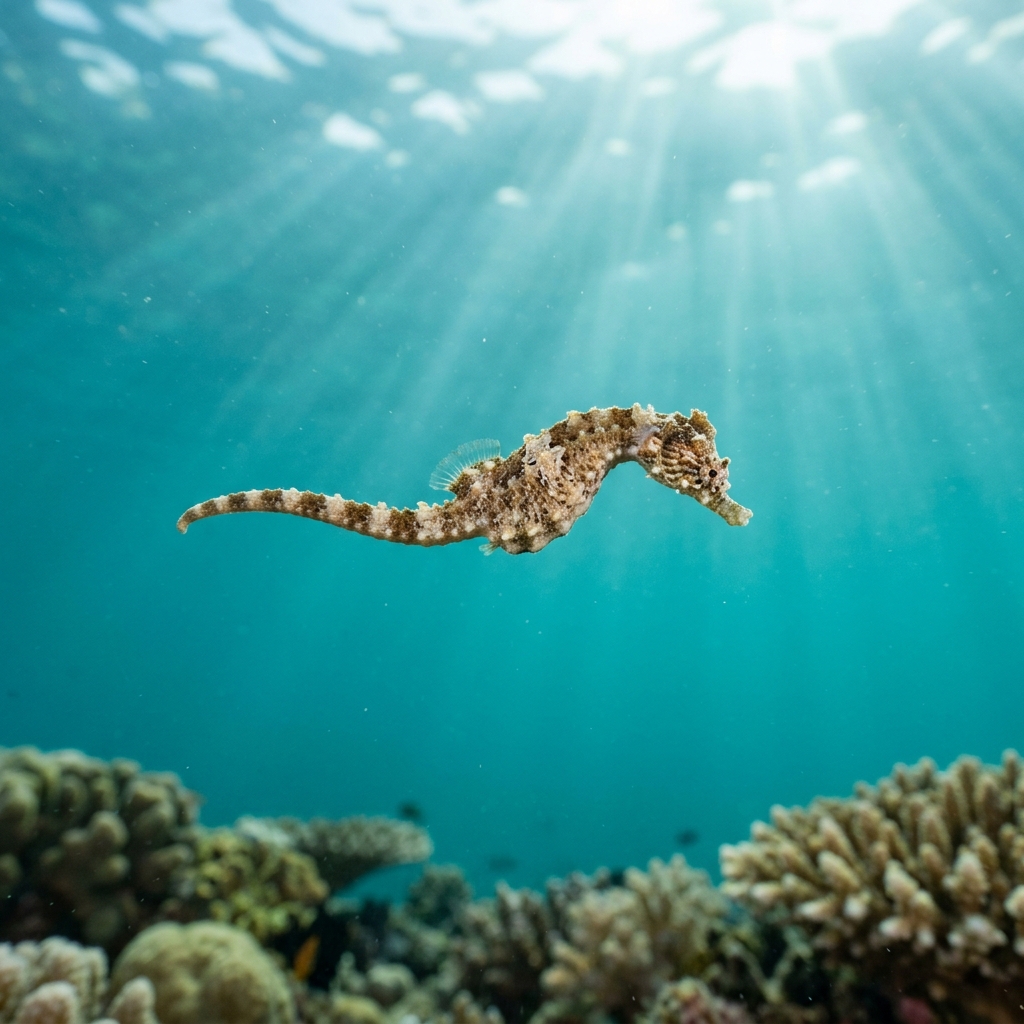
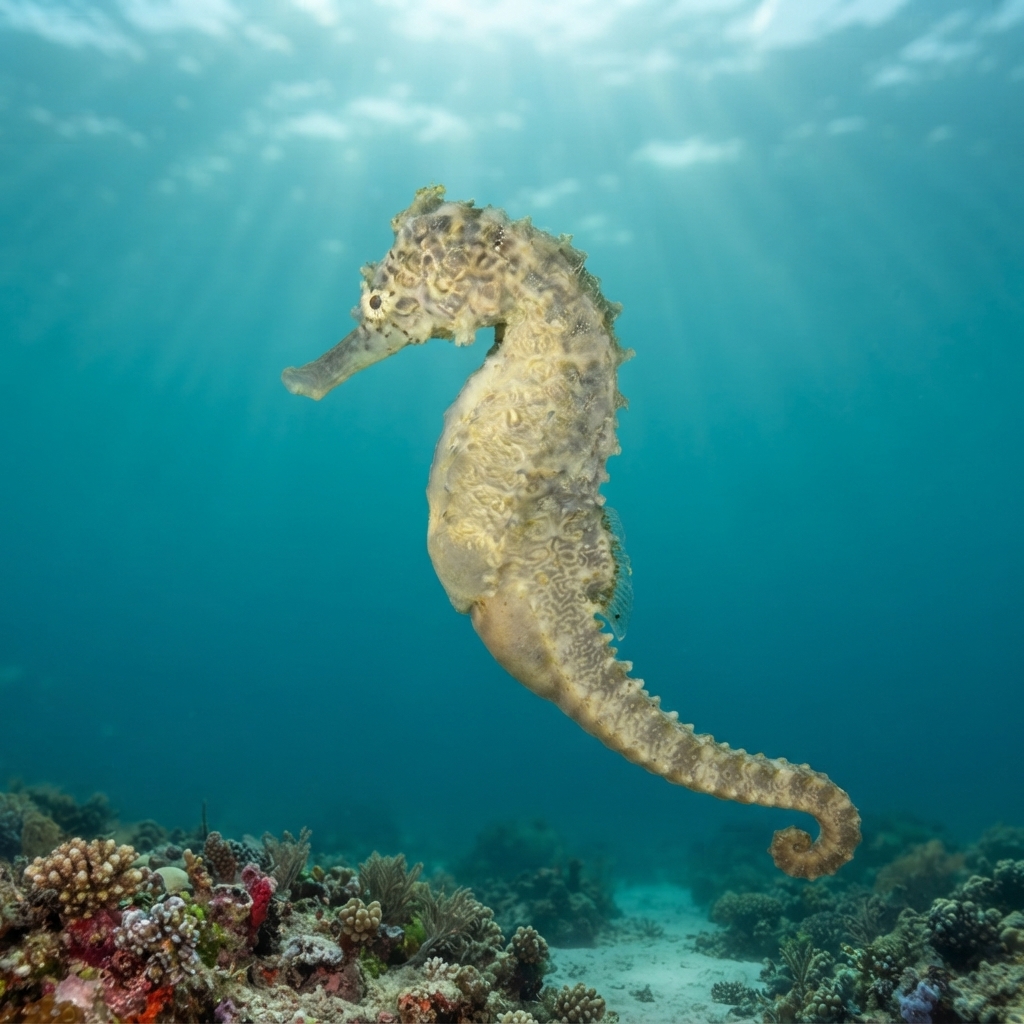
A slender seahorse reaching around 13 cm, usually spotted with its tail coiled tight around a coral branch or gorgonian stem. Colour ranges widely from yellow to orange, brown or near black, but the giveaway is the dark banding or striping running down the tail, which gives it a tiger-tail look against the paler body. Body ridges are fairly pronounced with small, low spines, giving it a slightly rougher, more angular profile than the smooth-bodied seahorses.
Look for it holding still with its tail wrapped firmly around a branch of soft coral, gorgonian or sea whip, often at a slight angle rather than upright in open water. It relies on staying motionless and blending in rather than moving off when divers approach, so a slow, careful scan of branching coral is more productive than swimming past quickly. Most sightings come from patient reef searches rather than open-water encounters, since it spends long stretches anchored to a single perch.
Like all seahorses, males carry developing eggs in a front-facing brood pouch and give birth to fully formed young, flipping the usual parenting roles seen in most fish.
Warm-water reefs sitting between 28.3 and 29.3 C stay in that range year-round, and there isn't enough logged data to show a distinct season, so treat sightings as possible on any dive in its range.
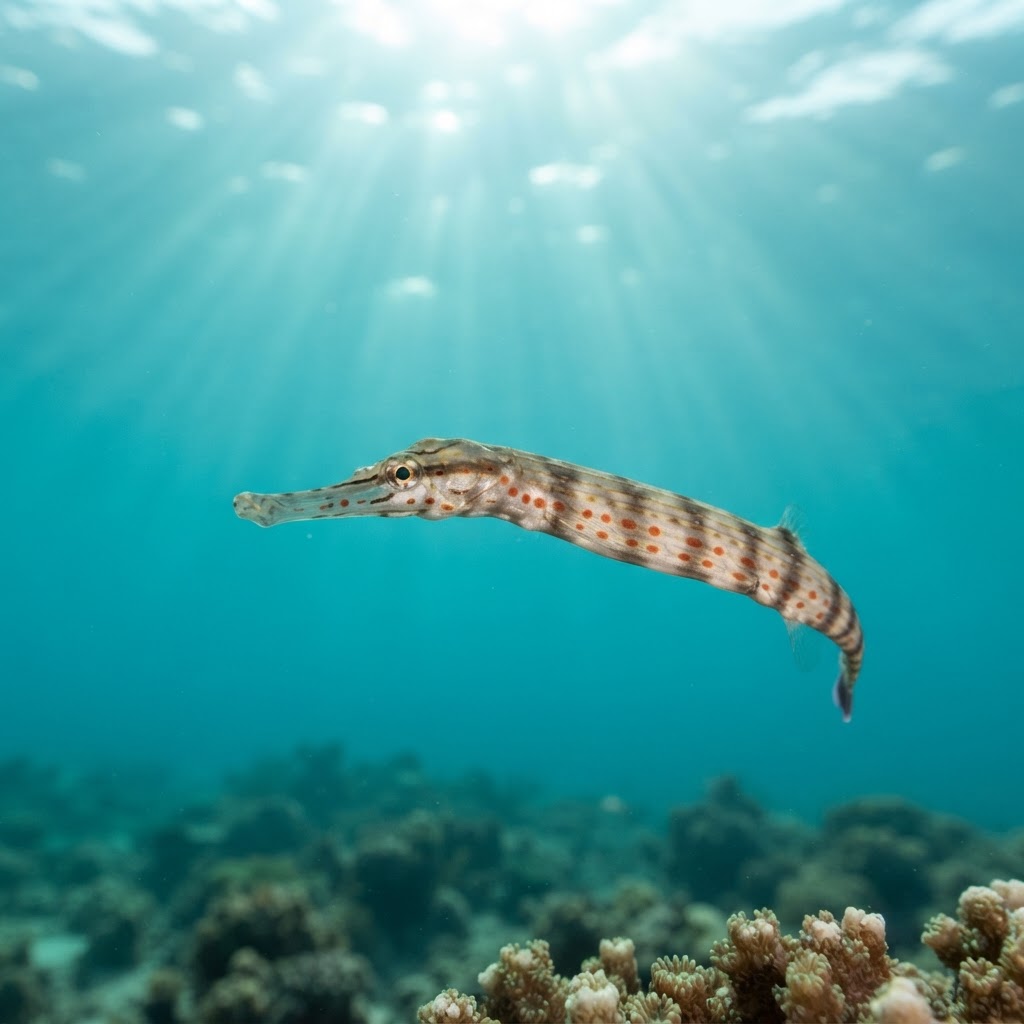
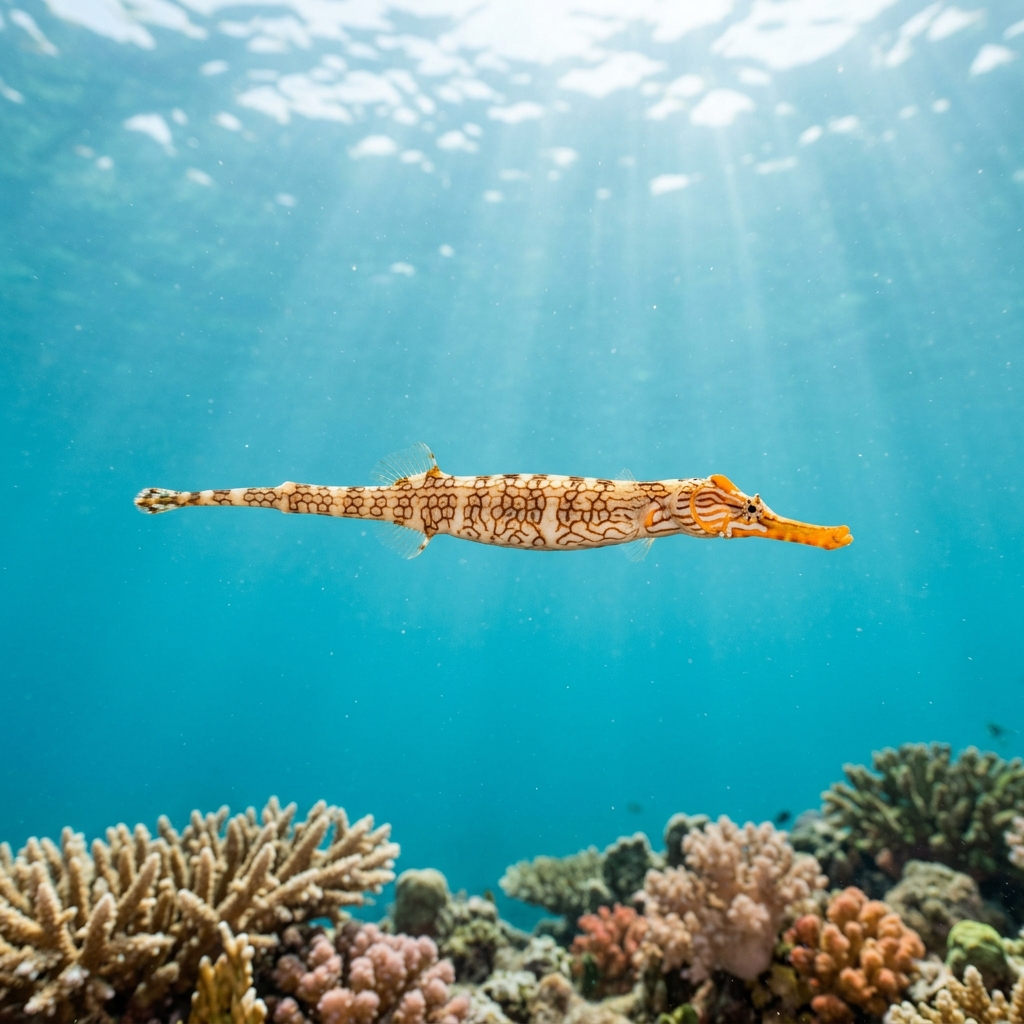
Reef neighbours a diver could mistake it for. Use the identification notes above to tell them apart.
Diver logs for this species are too thin right now to name reliable regions with confidence. It is a species of Indo-Pacific coral reefs, so sightings tend to cluster on sheltered reef slopes and gorgonian-covered walls in that range, but Fin doesn't yet have enough confirmed site data to point to specific top countries.
Mapping where Tiger Tail Seahorse is logged…
Check the tail first: it shows dark bands or stripes against a lighter body, unlike the plain tails of many similar seahorses. Body colour varies from yellow to near black, and it grips coral or gorgonian branches with its tail coiled tight rather than hanging straight.
They typically reach around 13 centimetres in length, making them a small to mid-sized reef seahorse, noticeably bigger than pygmy seahorses but smaller than pot-bellied seahorses.
There isn't enough logged data yet to point to a specific season. Water in its range stays a steady 28 to 29 C year-round, so sightings aren't tied to a particular month.
Males carry the eggs in a brood pouch on the front of the body and give birth to live young once they've developed, reversing the parenting role compared with most fish species.
No, they pose no risk to divers. The only real concern is disturbing them: keep a respectful distance and avoid touching the coral they're anchored to.
Site and sighting data is aggregated from diver logs, iNaturalist and GBIF. For taxonomy and conservation status:
Seahorse
1,346 sites