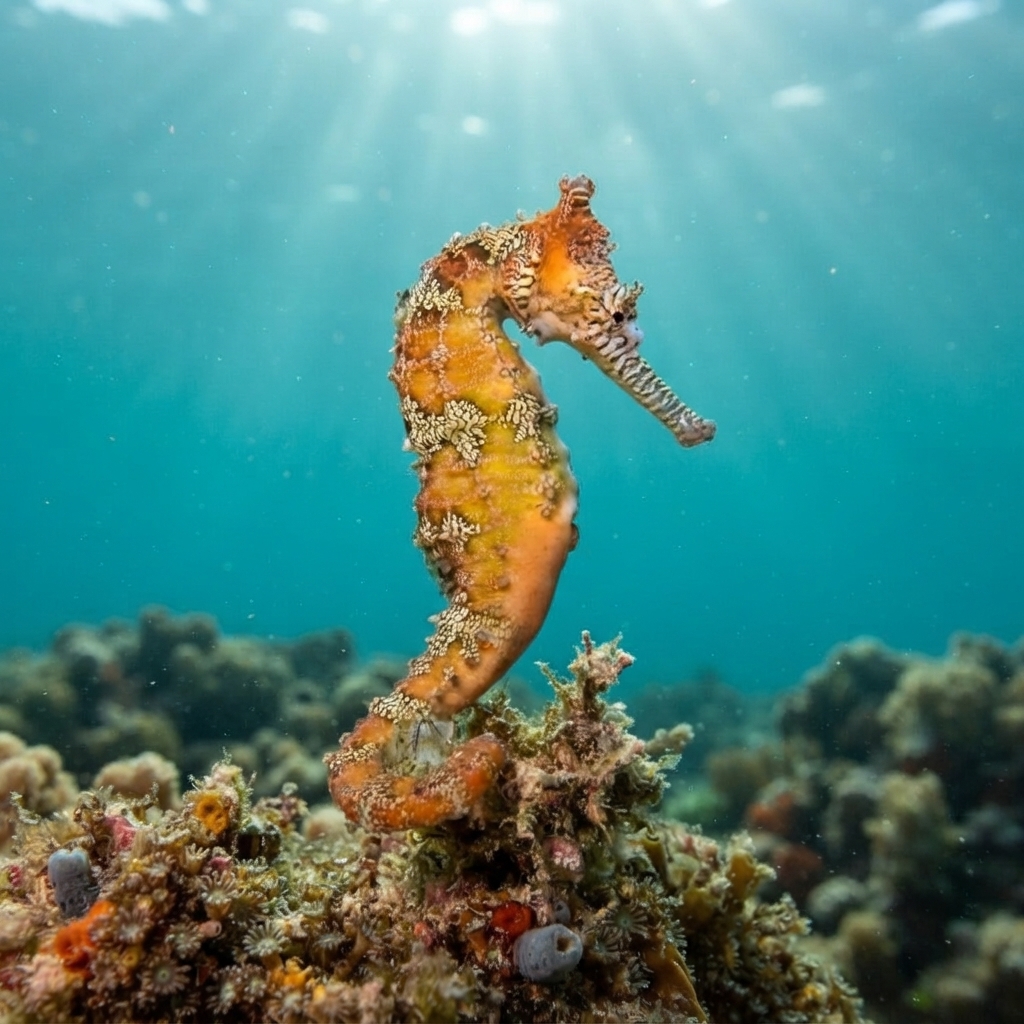
Hippocampus subelongatus
Elongated snout, banded body, found off Western Australia in water around 18-24C. Here's where to find one.
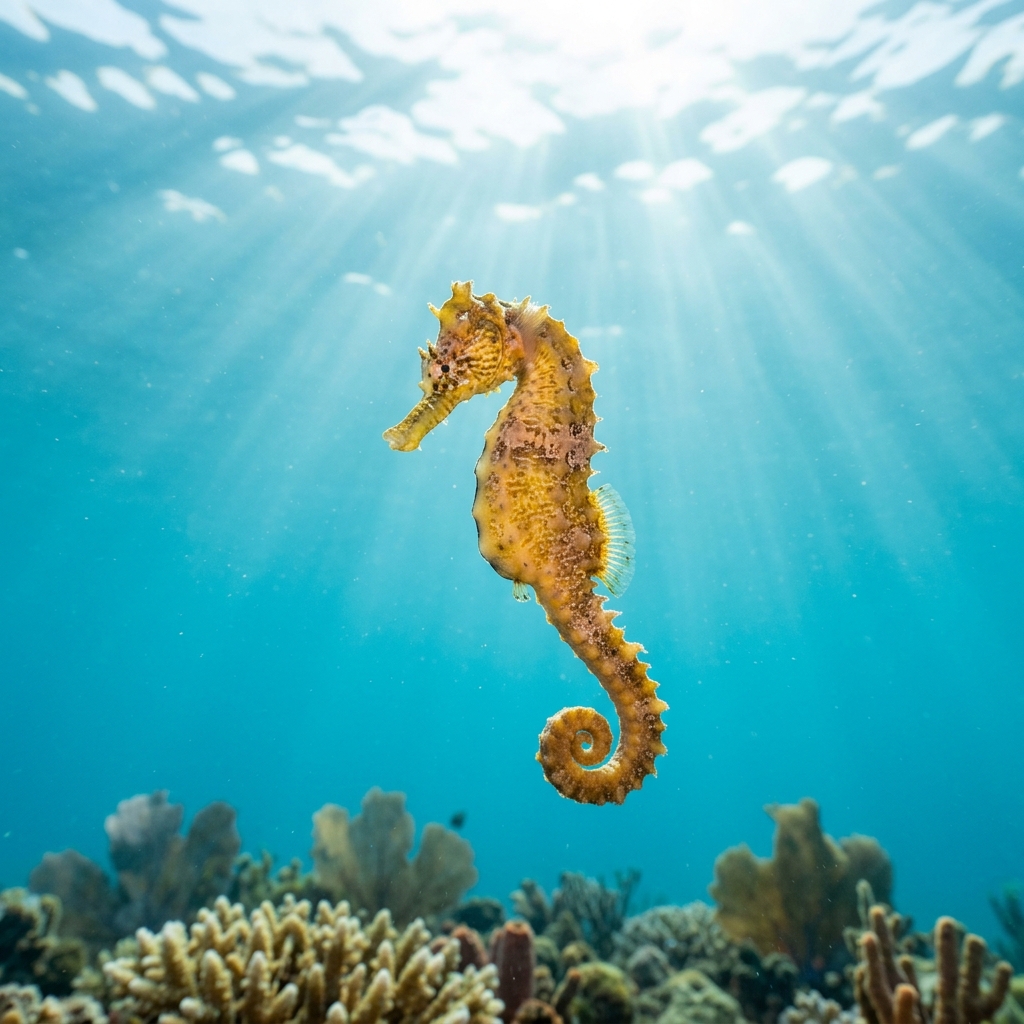
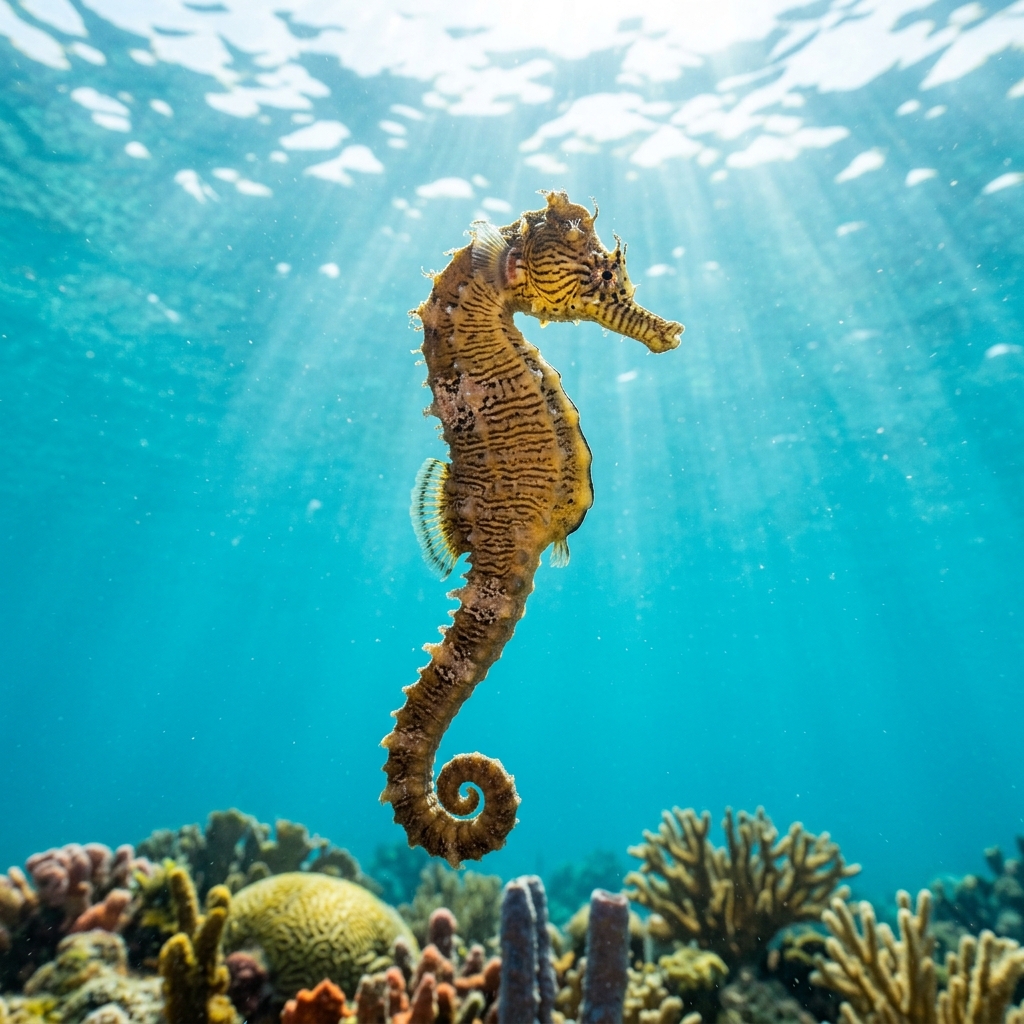
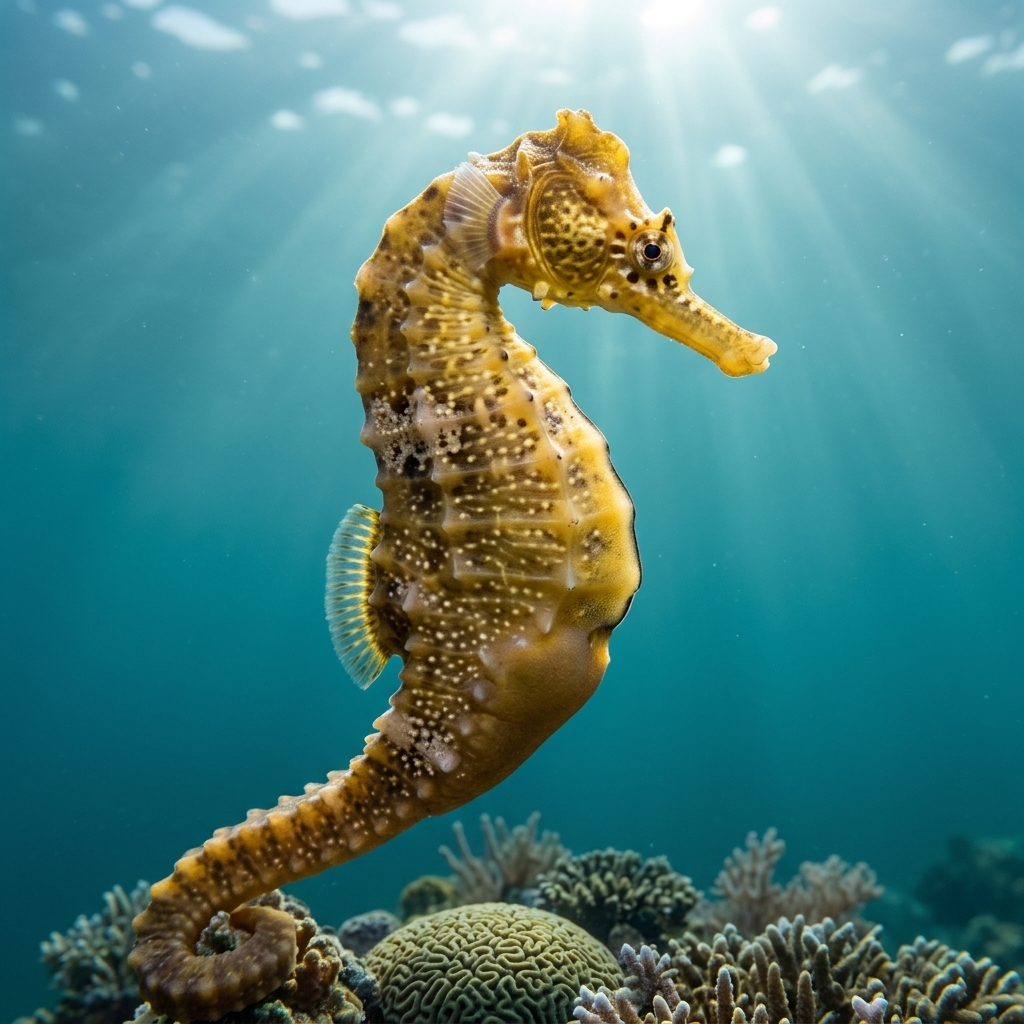
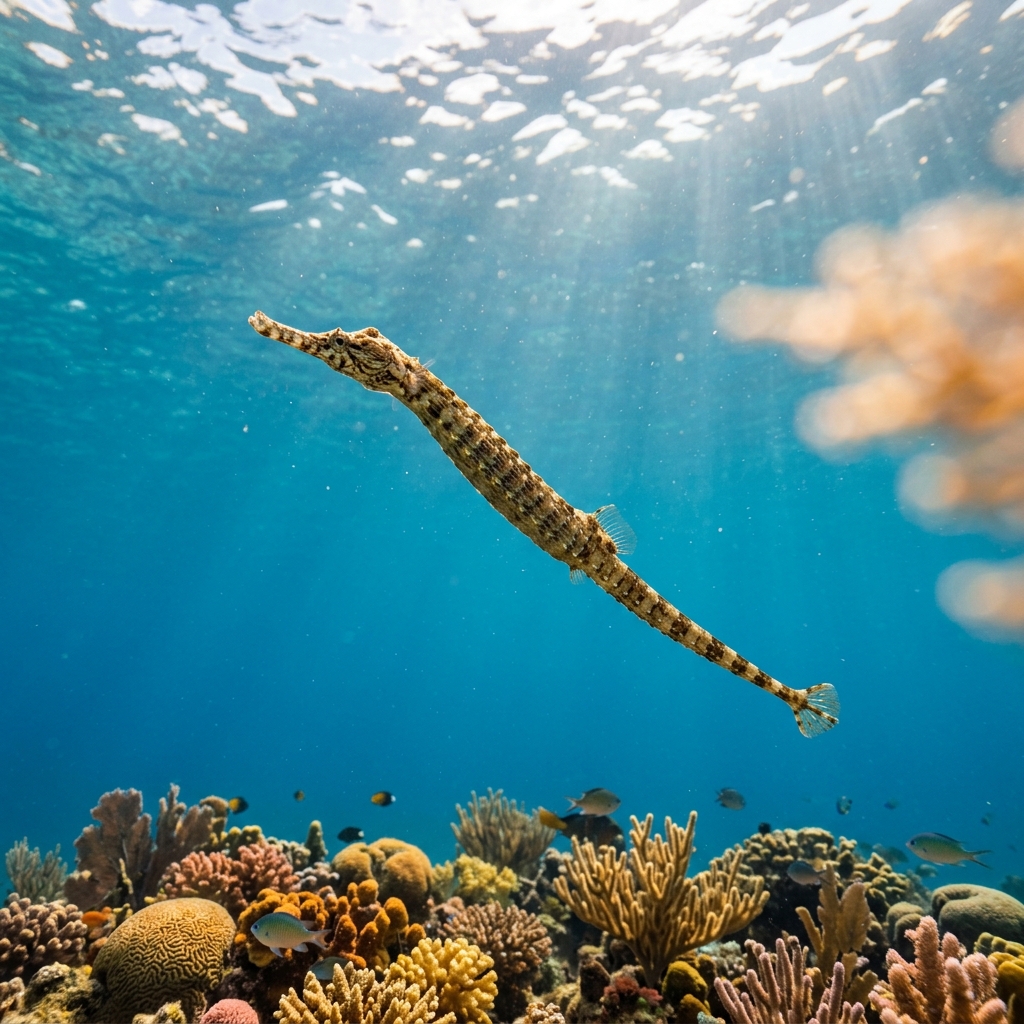
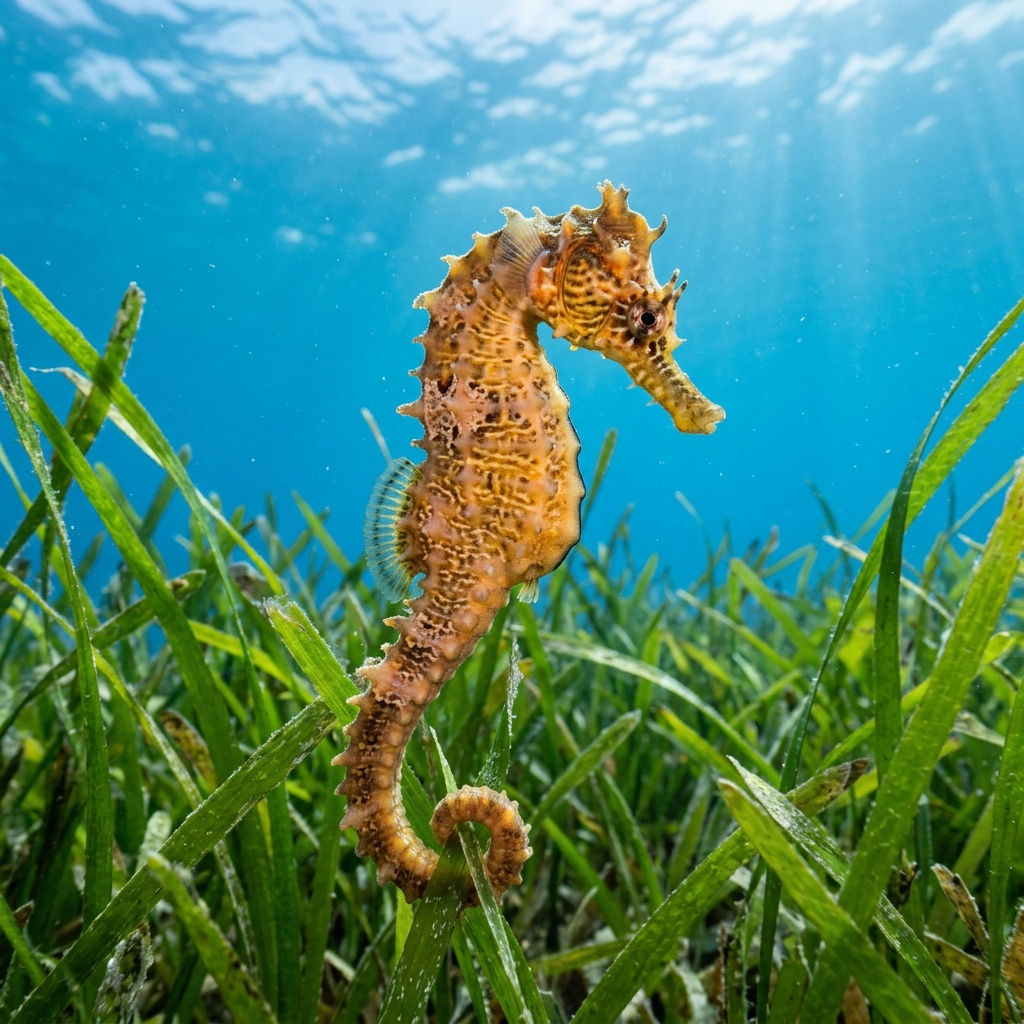
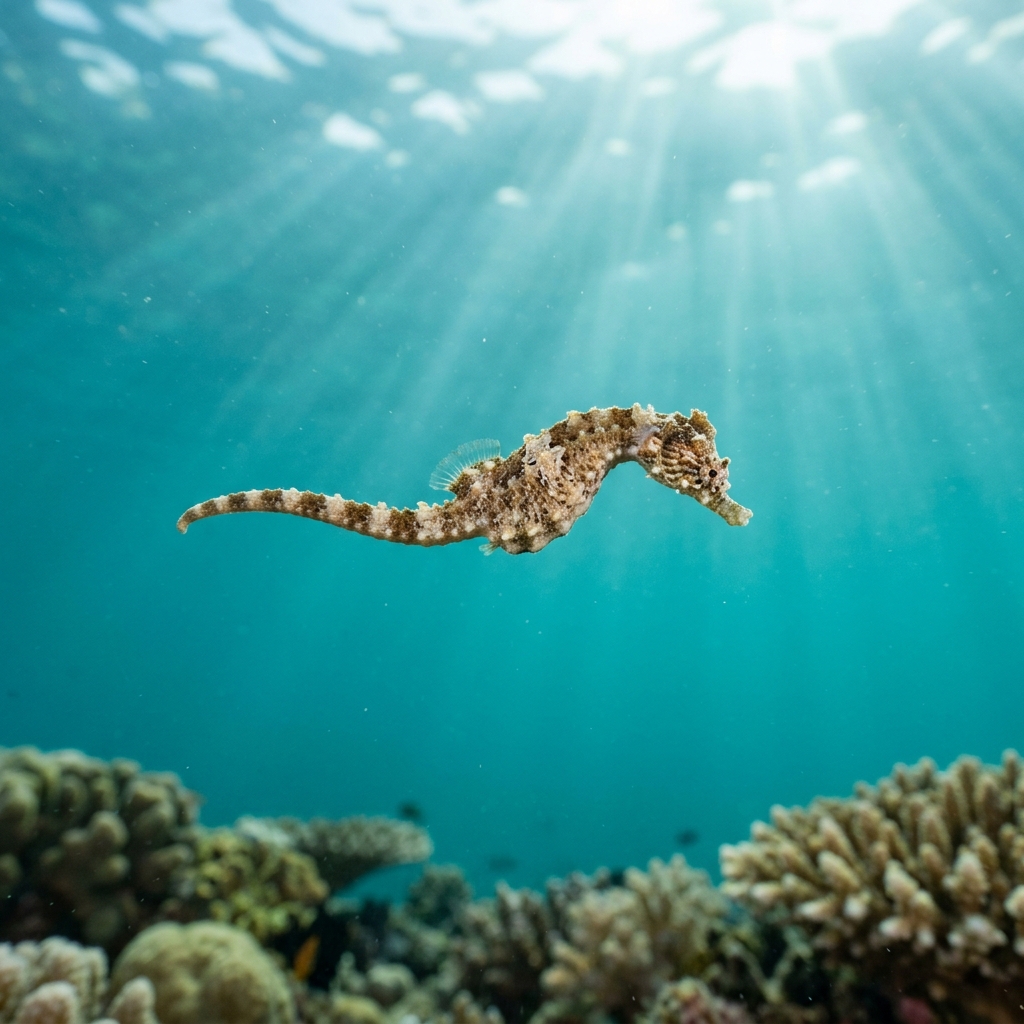
Grows to around 14cm with a notably long, slender snout that gives this seahorse its name. Body colour ranges from mottled brown to yellow-orange, often with darker banding or striping along the snout and trunk. Like other seahorses it holds itself upright, tail curled around a holdfast, relying on camouflage rather than movement to stay unnoticed.
Found gripping sponges, seagrass, jetty pilings and reef structure with its tail, usually sitting still and letting its mottled colouring do the work of hiding it. Divers who move slowly and scan holdfasts carefully tend to have the best luck, since this species doesn't swim off or react much once spotted. Most sightings are on the slower, muted end of the reef rather than in open water.
As with all seahorses, it's the males that carry and give birth to the young, brooding fertilised eggs in a belly pouch until they're released as fully formed miniature seahorses.
No strong seasonal pattern shows up in sightings, and it's logged across a water-temperature range of roughly 18 to 24C, so it's a reasonable year-round target on Western Australian dives.
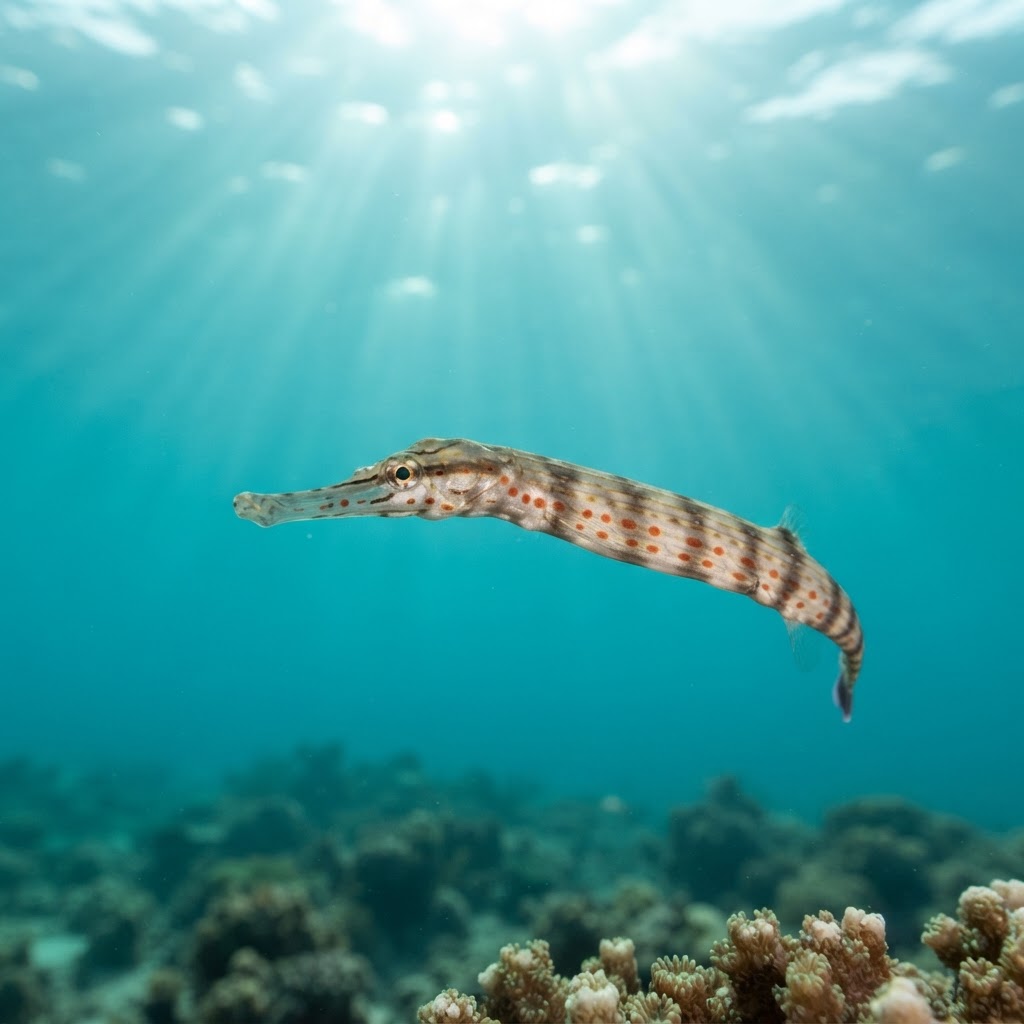
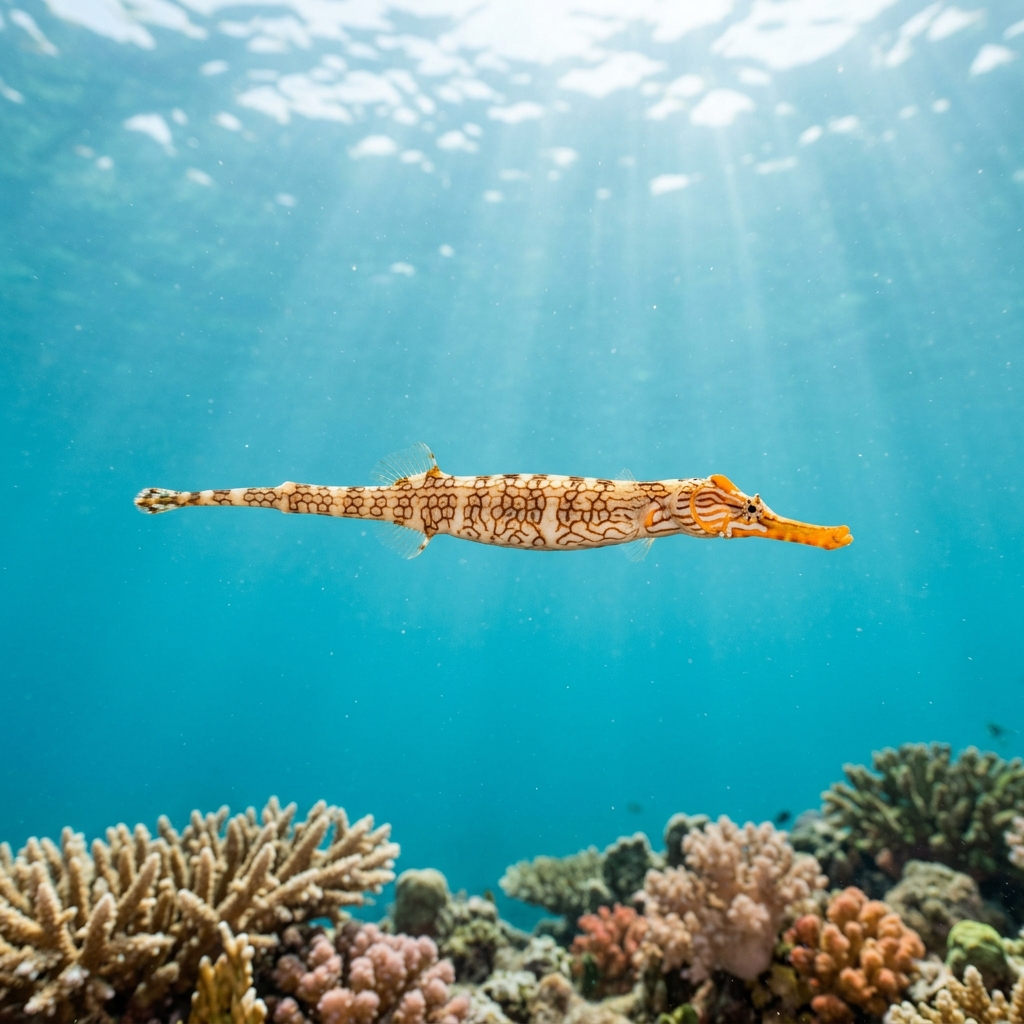
Reef neighbours a diver could mistake it for. Use the identification notes above to tell them apart.
This one is a Western Australia specialty, with every logged sighting coming from sites along that coast. If you're diving reefs and jetties in Western Australia you're in the right place, it's the most reliable region for this species by a clear margin.
Mapping where Tiger Snout Seahorse is logged…
Western Australia is the place to look, with sightings logged across reef and jetty sites along that coast. It's not commonly recorded outside Australia.
There's no clear seasonal pattern in sightings, and it's found across a fairly wide temperature range of about 18 to 24C, so any time of year on a Western Australian dive works.
Look for a small seahorse, around 14cm, with an unusually long, slender snout and mottled brown to orange banding along the body. It sits upright, tail wrapped around a sponge or seagrass blade, rather than swimming freely.
They reach around 14cm in length, making them a mid-sized seahorse, bigger than pygmy species but smaller than the larger pot-bellied seahorse.
Males carry the pregnancy, brooding fertilised eggs in a belly pouch until fully formed baby seahorses are released, a reproductive strategy unique to seahorses and their relatives.
Site and sighting data is aggregated from diver logs, iNaturalist and GBIF. For taxonomy and conservation status:
Seahorse
1,346 sites