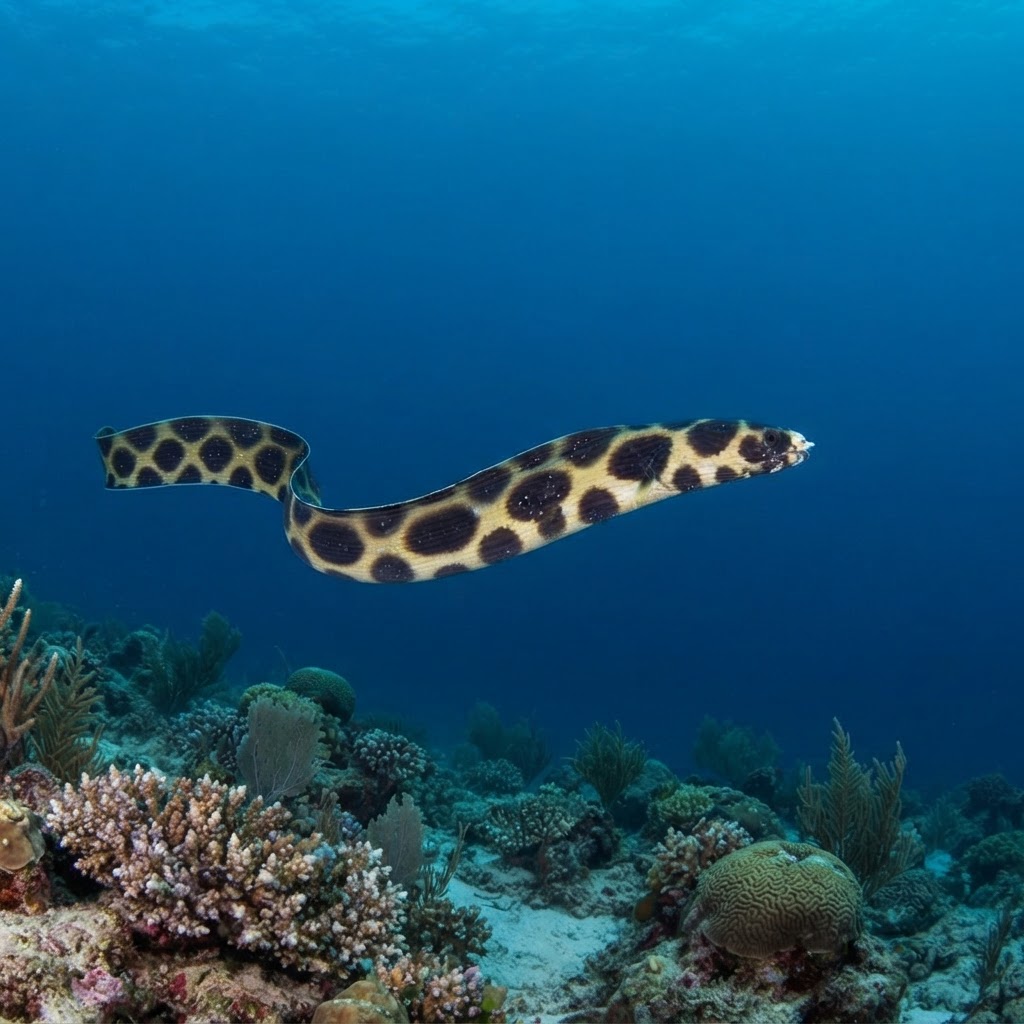
Myrichthys maculosus
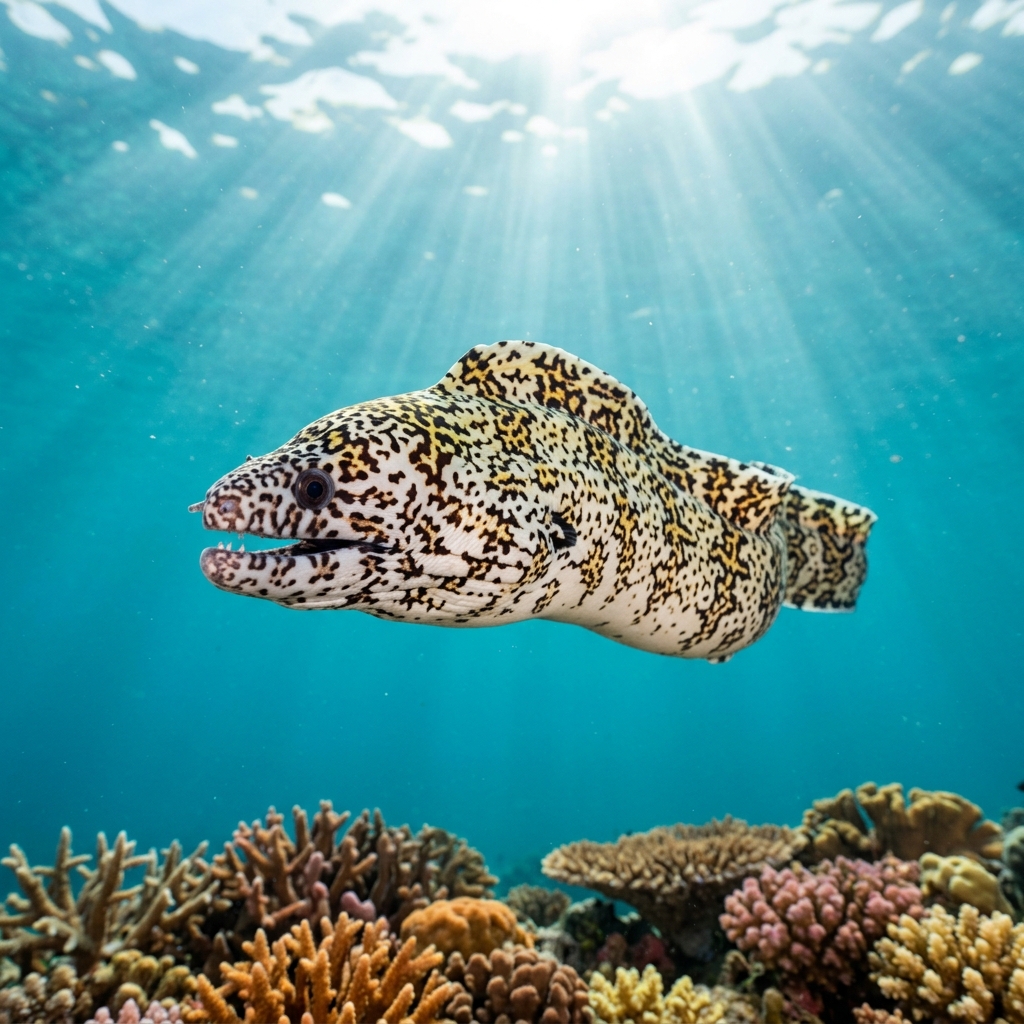
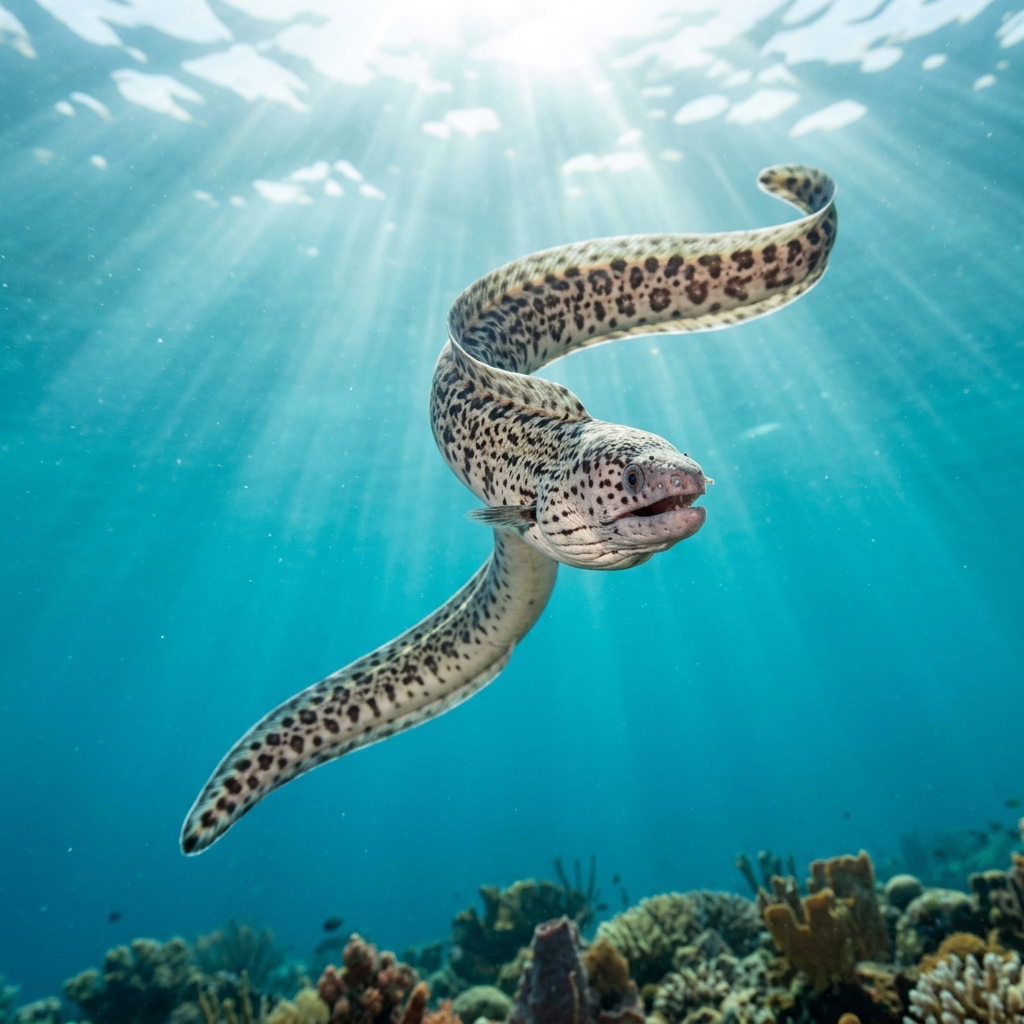
Cream body with bold brown blotches, cruising open sand in Zanzibar, Flic-en-Flac and Eilat year-round in 19-28C water.
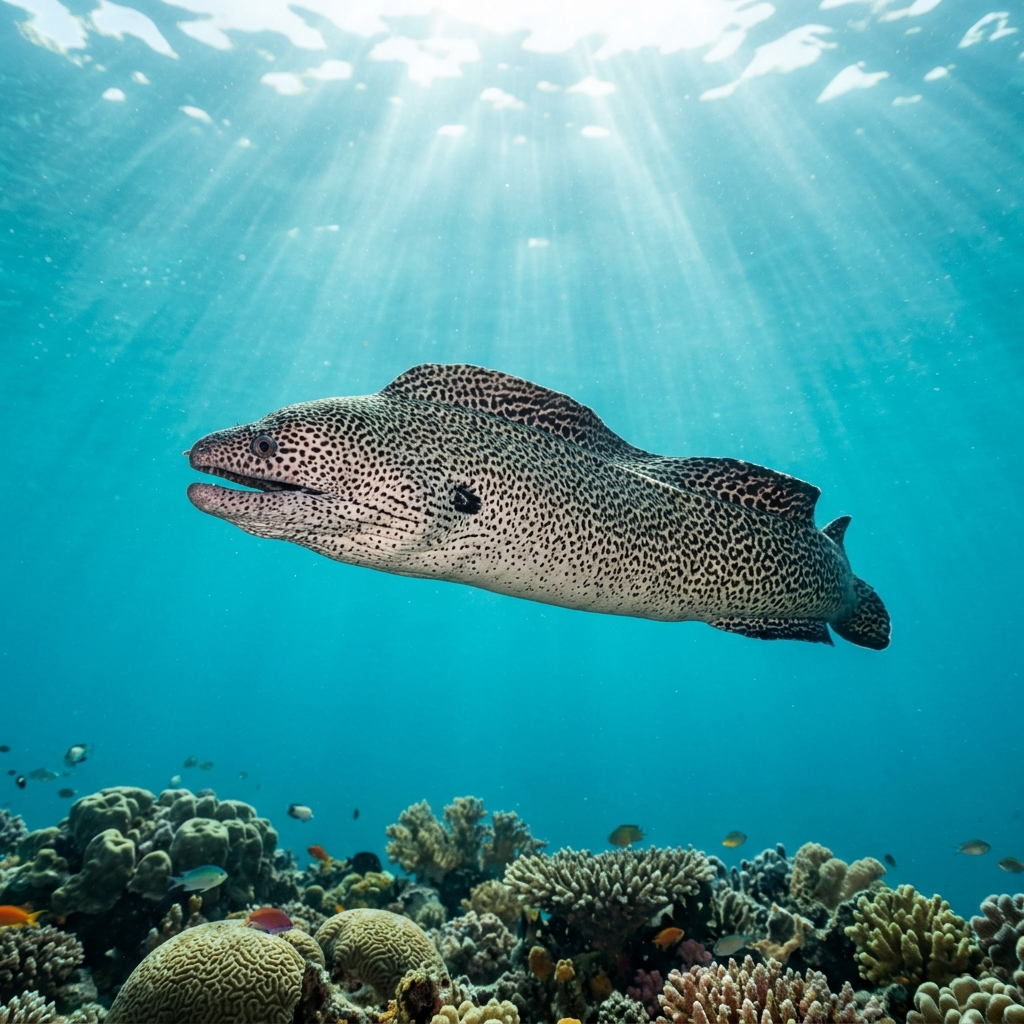
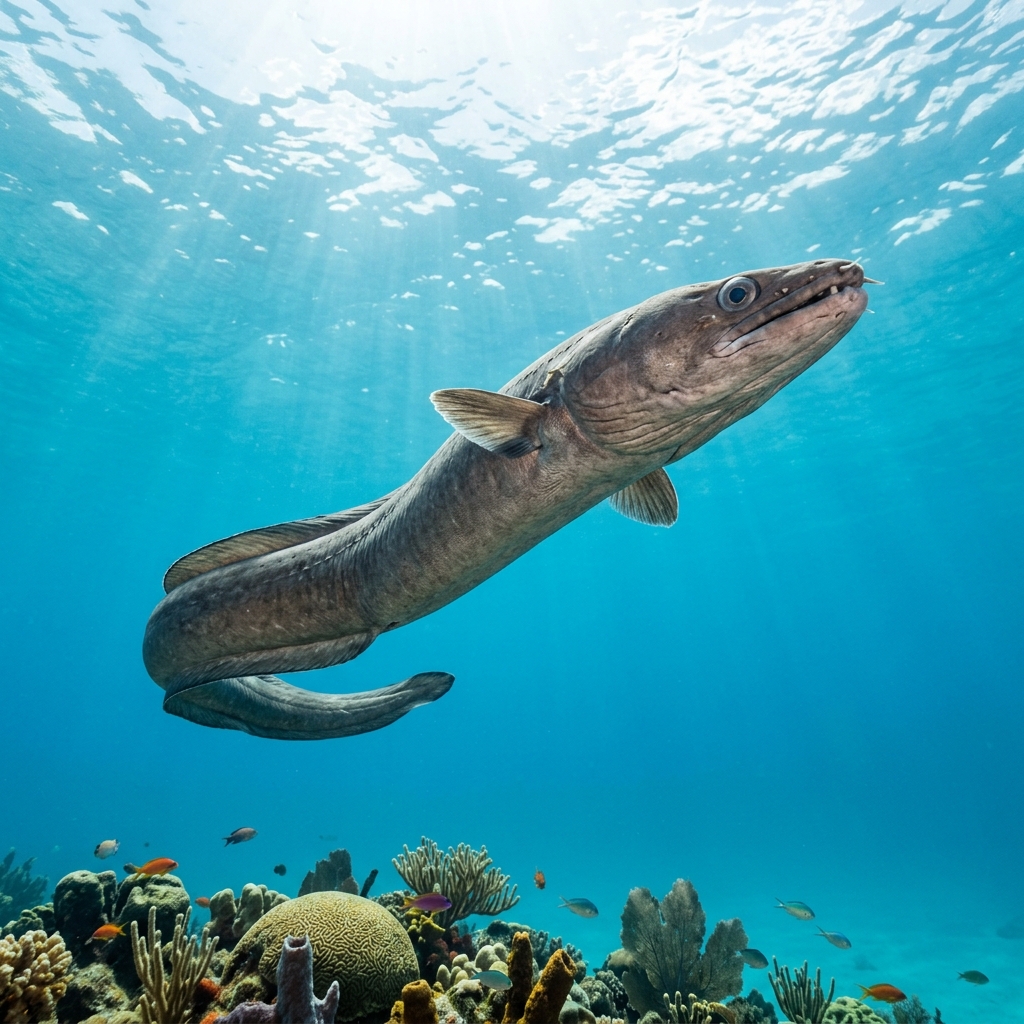
Long, slender body with a pointed snout, patterned in a cream to yellowish base overlaid with large, rounded brown to olive blotches running head to tail, giving it a leopard-like rather than striped look despite the name. It grows to around 70cm and moves with a snake-like swimming motion, often with much of its body exposed as it crosses open sand rather than hiding in a burrow. No fins run along most of the back, which combined with the smooth, patterned skin separates it at a glance from true morays.
Usually seen cruising or foraging over open sand and rubble patches next to the reef, poking its snout into the substrate as it hunts rather than lurking in a crevice like most eels divers know. It tends to ignore divers unless approached closely, giving good slow-swim views if you keep a bit of distance, and sightings happen at any time of day rather than being a strictly nocturnal encounter. Look for it on sandy flats and lagoon edges bordering reef, not deep in coral heads.
Unlike moray eels, snake eels lack the continuous dorsal fin and pointed tail tip is used to burrow backwards into sand for cover, a trick worth watching for if one bolts on your approach.
No clear seasonal pattern shows up in the sightings, and with a comfortable range of roughly 19 to 28C it turns up on these reefs across the year rather than in one particular window.
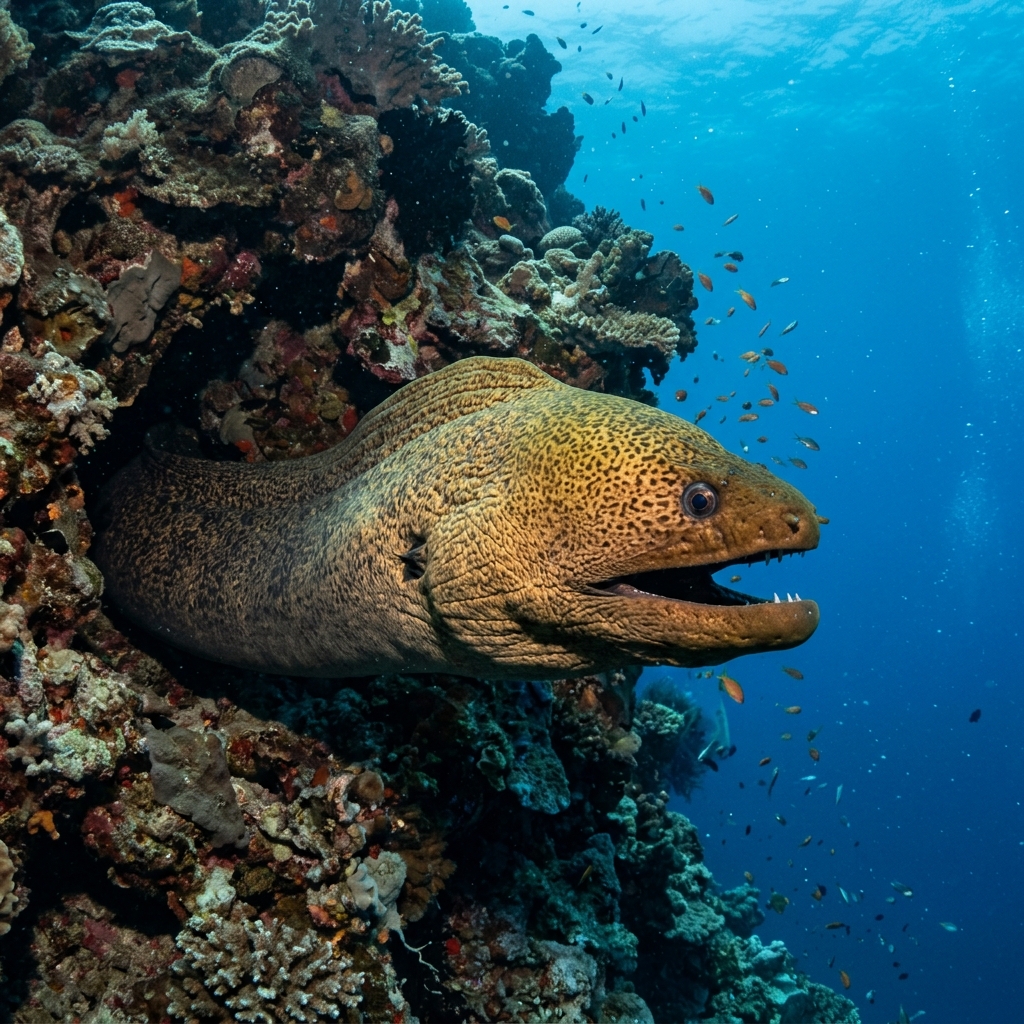
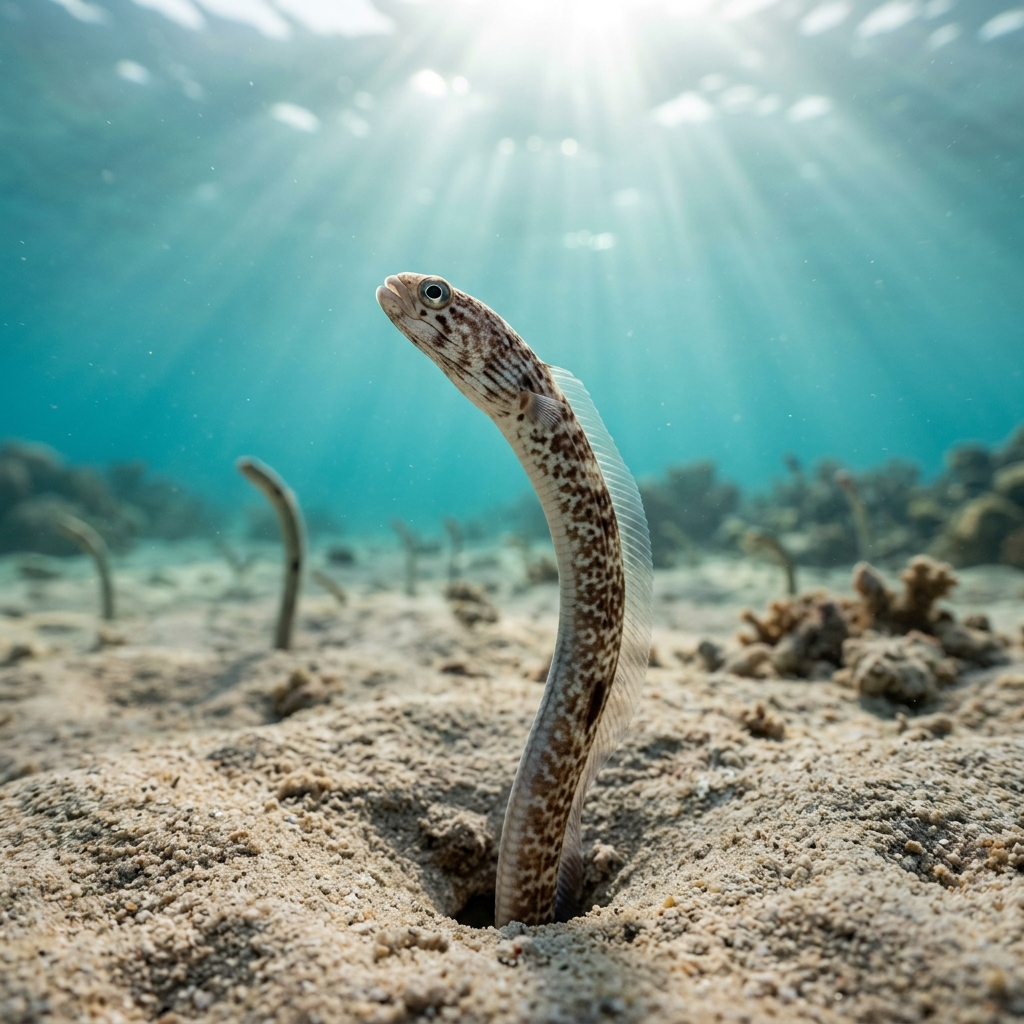
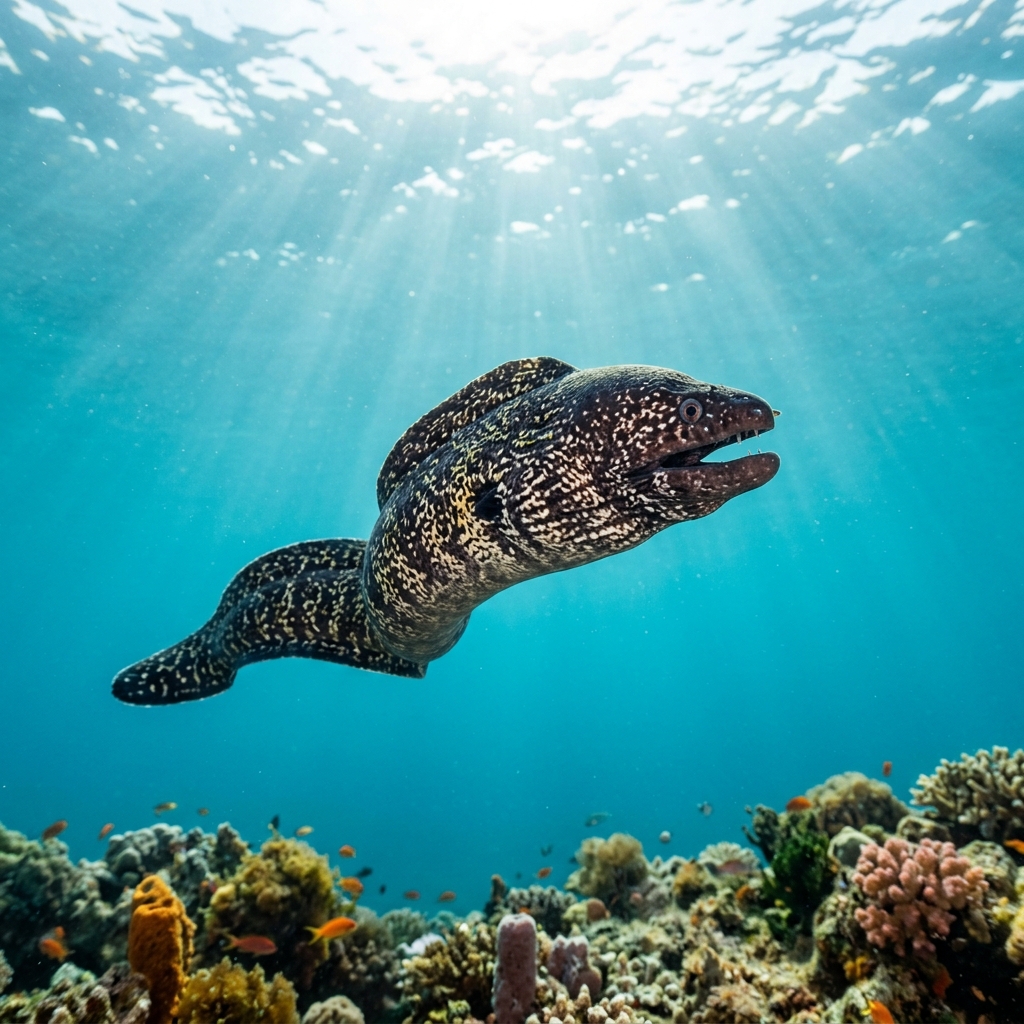
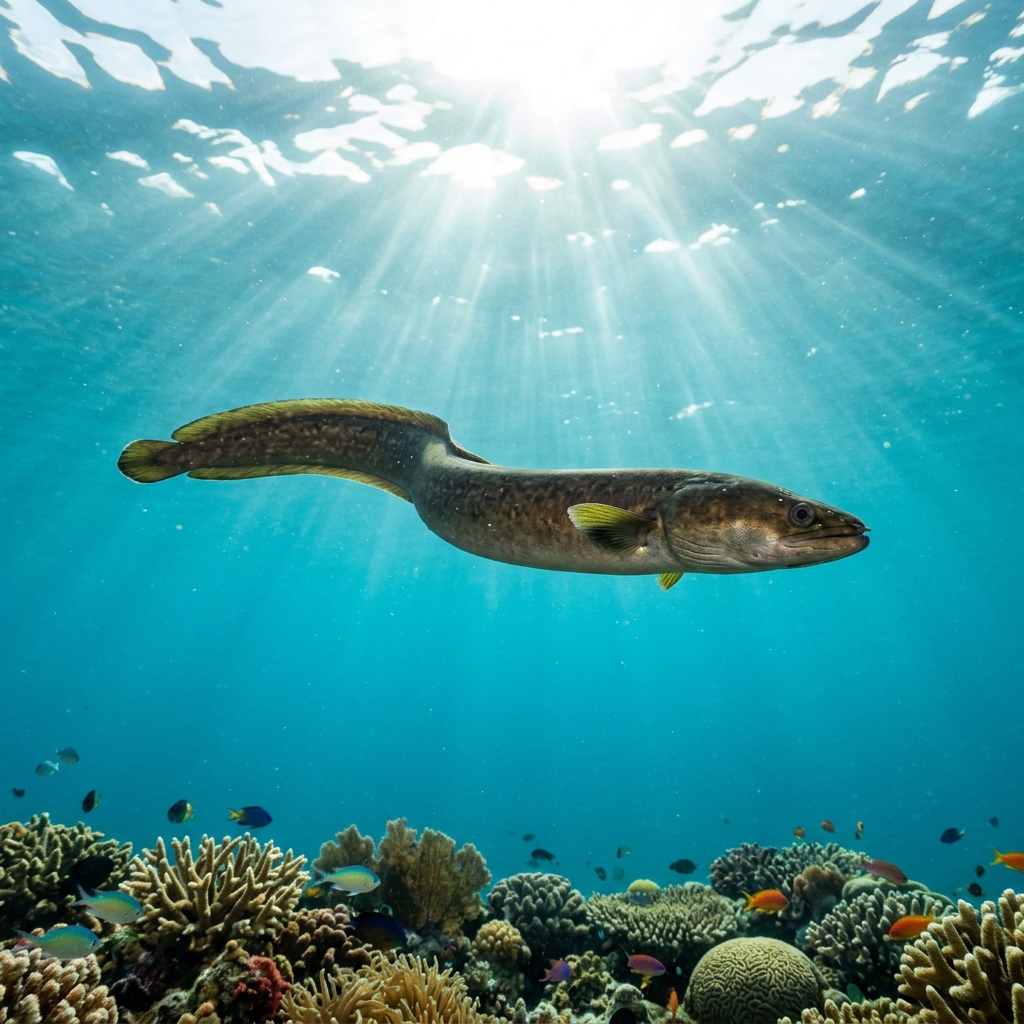
Reef neighbours a diver could mistake it for. Use the identification notes above to tell them apart.
Most reliably logged around Mauritius, especially Flic-en-Flac, Grand Baie and Trou aux Biches, and along the East African coast in Zanzibar (Tanzania), Diani (Kenya) and Tanzania's wider reefs. Also a solid find in the Red Sea and nearby waters, turning up regularly at Eilat in Israel, South Sinai in Egypt, and sites in Saudi Arabia and Jordan.
Mapping where Tiger Snake Eel is logged…
Mauritius is the strongest spot, particularly Flic-en-Flac, Grand Baie and Trou aux Biches, alongside Zanzibar in Tanzania and Diani in Kenya. It also shows up reliably in the Red Sea region, including Eilat in Israel and South Sinai in Egypt.
There's no strong seasonal pattern in the sightings, and it tolerates a wide temperature range of about 19 to 28C, so it's seen on these reefs throughout the year.
Look for a slender, snake-shaped body with a cream to yellowish background covered in large, rounded brown blotches, moving over open sand near reef edges. It lacks the tall dorsal fin of a true moray, giving it a smoother, more streamlined profile.
They typically reach around 70cm in length, a modest size that makes them easy to mistake for a smaller moray at a glance until you notice the blotched pattern and lack of a raised dorsal fin.
No, they're not considered a danger to divers. They tend to keep moving away from divers rather than defend a burrow, so a calm, distant approach is all you need for a good look.
Site and sighting data is aggregated from diver logs, iNaturalist and GBIF. For taxonomy and conservation status:
Garden Eel
2,448 sites