Thuridilla ratna
A small, uncommon sea slug found mostly in the Visayas, Philippines, on reefs holding steady 26 to 32C water year-round.
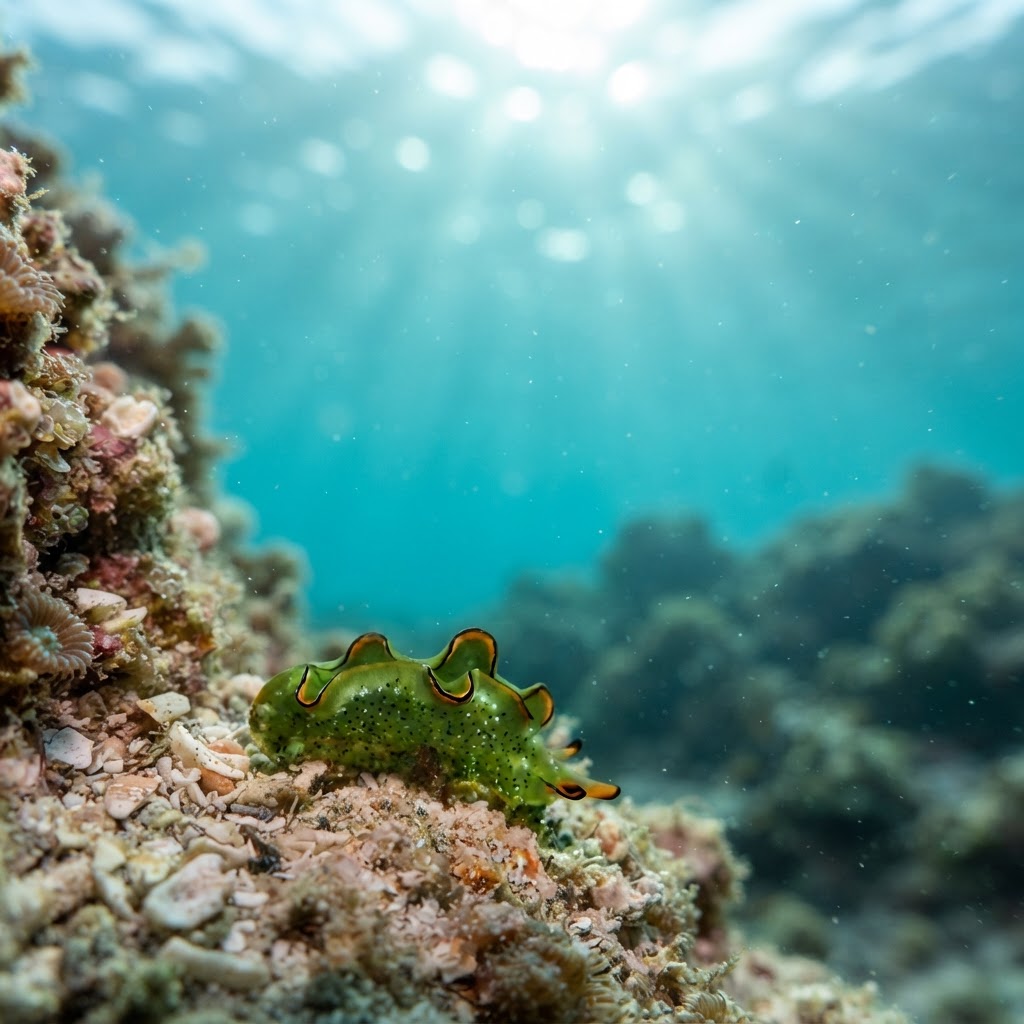
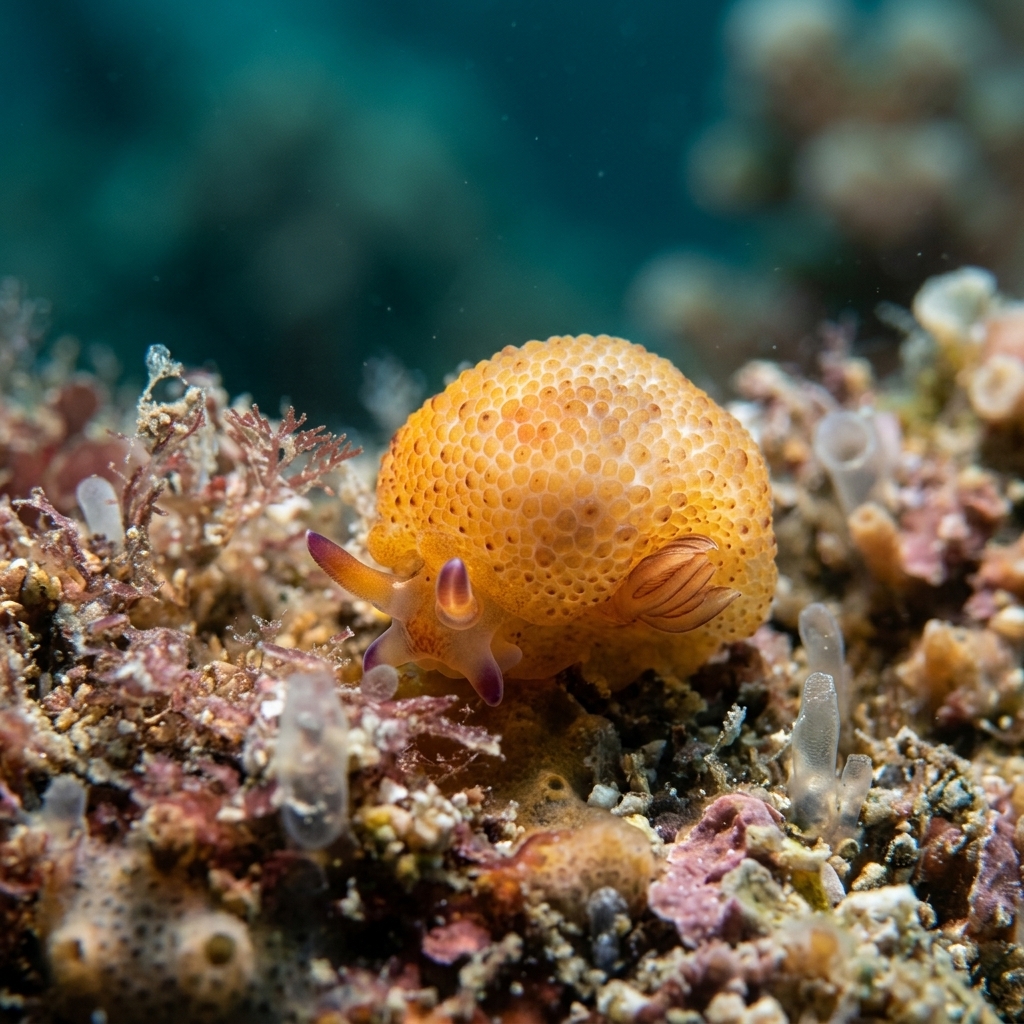
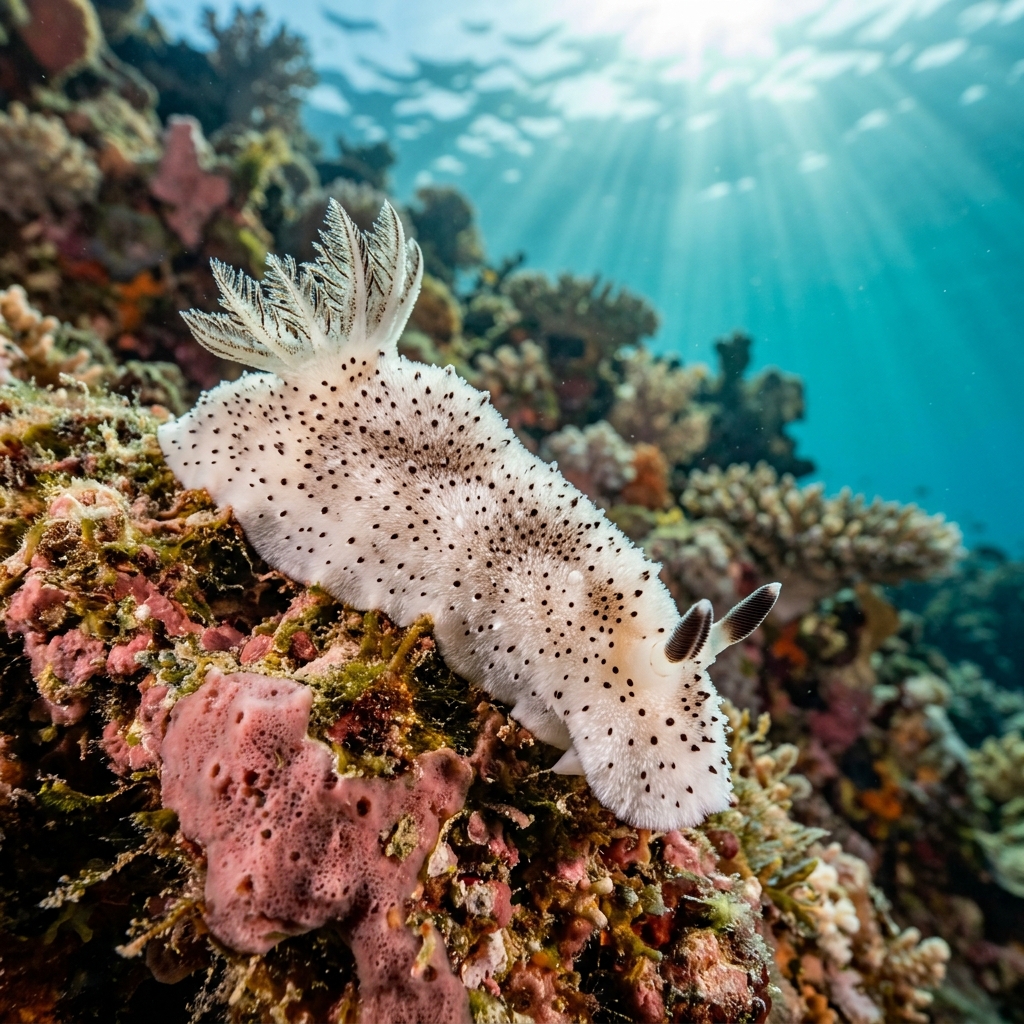
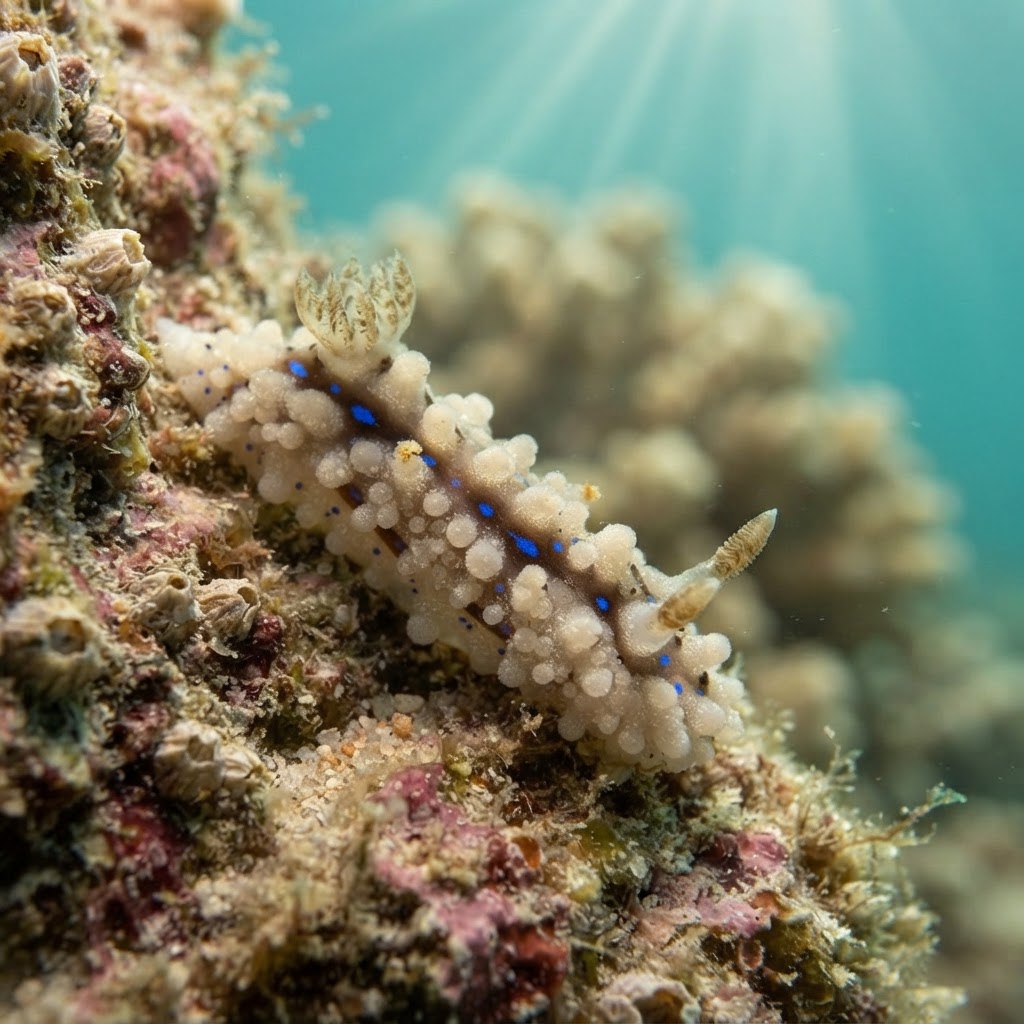
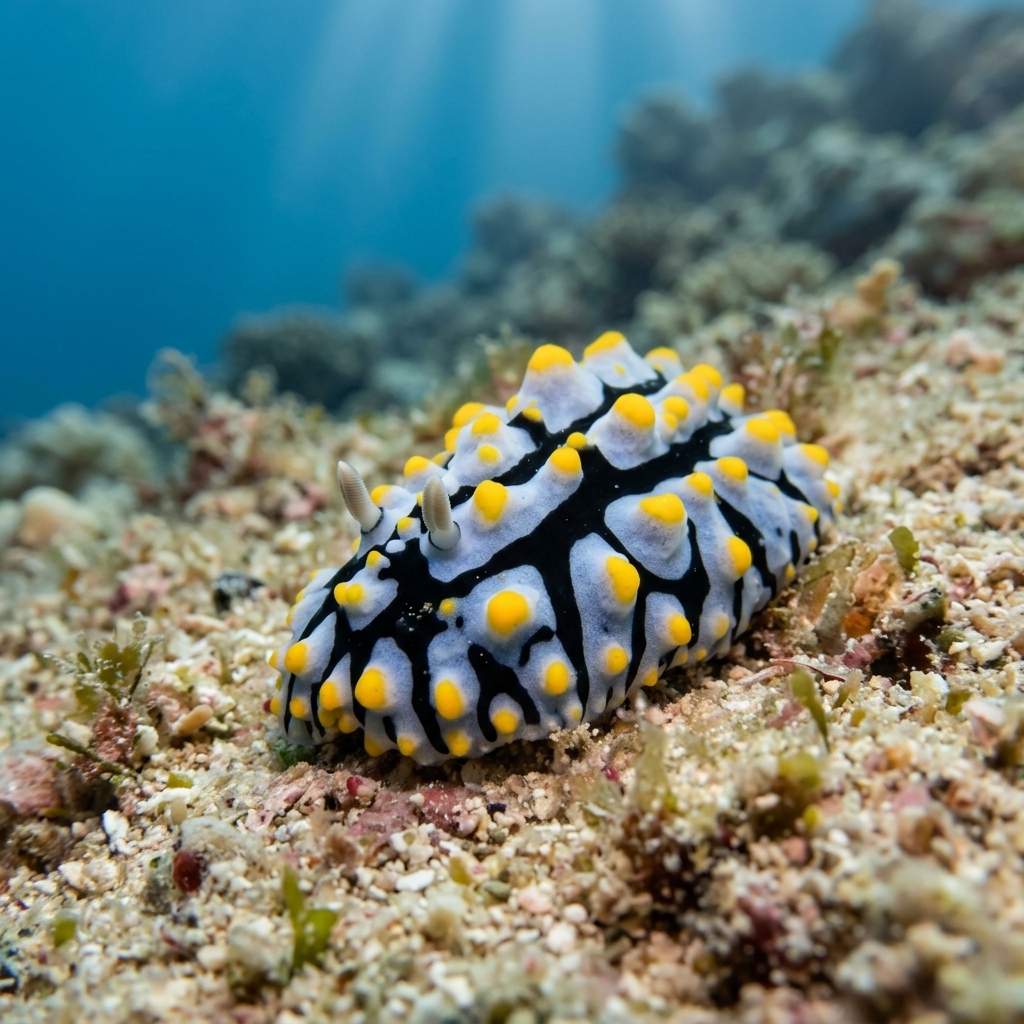
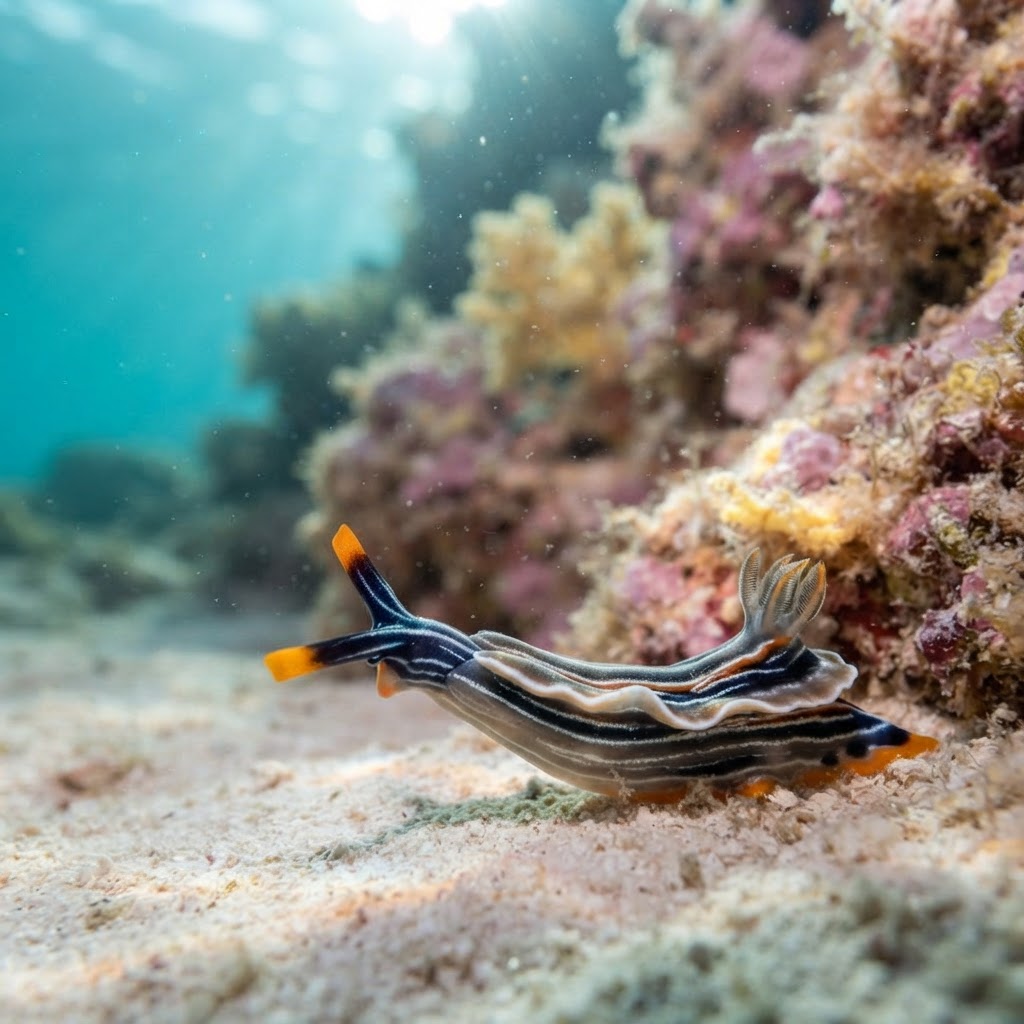
Look for a small, elongated sea slug with a slender body and a pair of raised, wing-like flaps (parapodia) running along its back that it can hold flat or curled upward. Colouring runs toward mottled greens and browns with fine blue and orange edging along the flap margins, which is the detail most divers key on to separate it from similar sap-sucking slugs. It sits low on algae-covered rock or rubble rather than swimming, so a slow, close look at the substrate is usually how it gets found.
Divers typically find this slug grazing slowly over algae-covered rock or rubble, moving little and staying close to the substrate rather than swimming into open water. It shows no reaction to divers beyond continuing to feed, making it an easy subject for a macro lens once spotted. Most logged sightings come from reef and rubble patches rather than open sand, suggesting it favours structure with algal growth to browse on.
Like other sap-sucking slugs in its family, it likely feeds on algae and can retain photosynthetic pigments from its food in its tissue, a trait that has made related Thuridilla species useful subjects for studying slug-algae relationships.
Sighting data shows no clear seasonal pattern, and the observed water temperature range of 25.8 to 31.8C spans typical year-round tropical conditions, so it's reasonable to look for it on any dive in its range regardless of month.
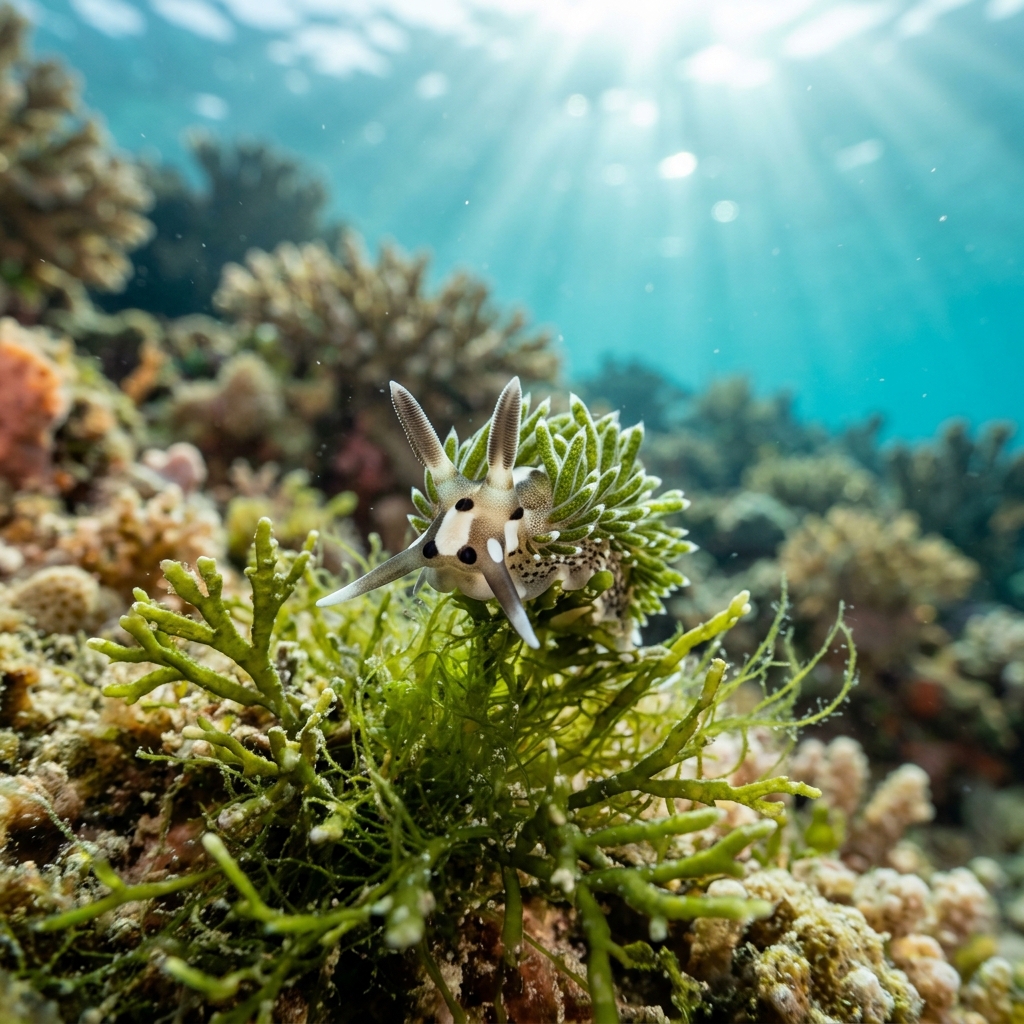
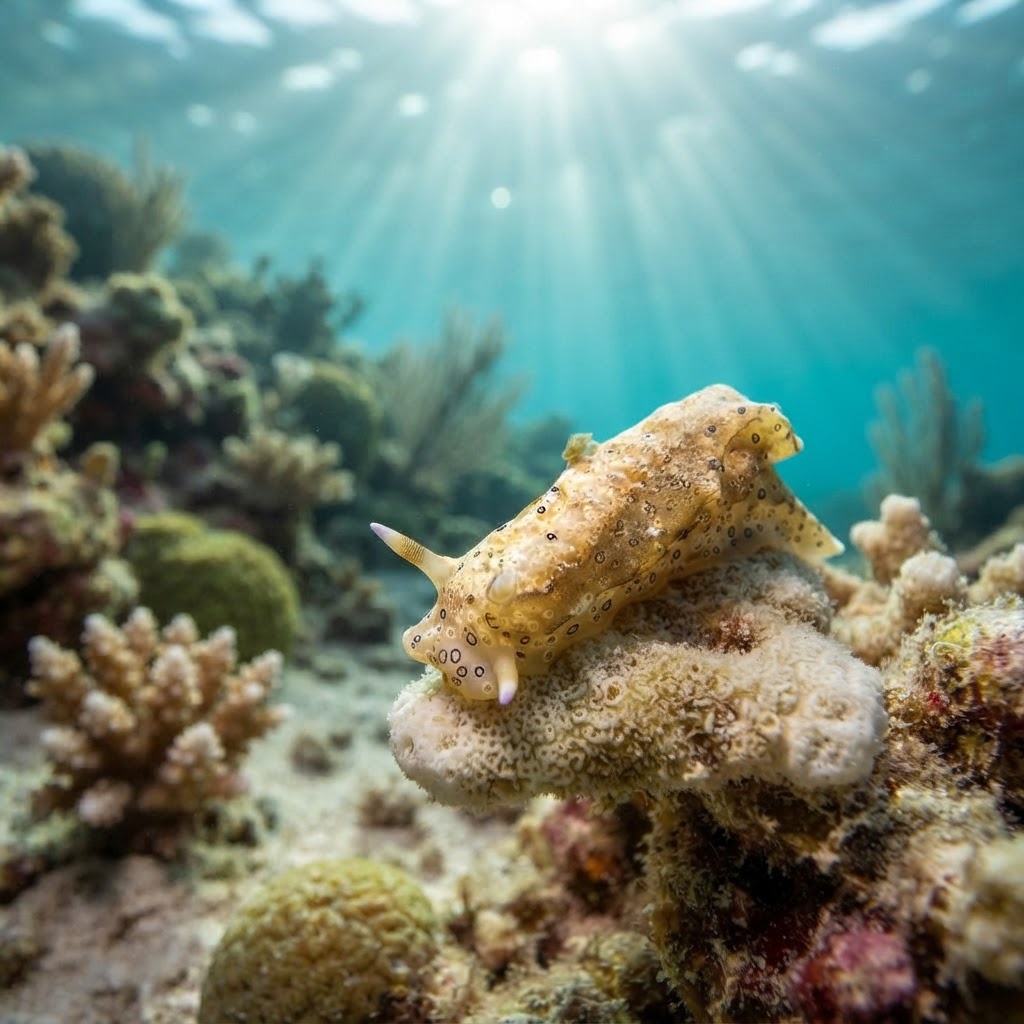
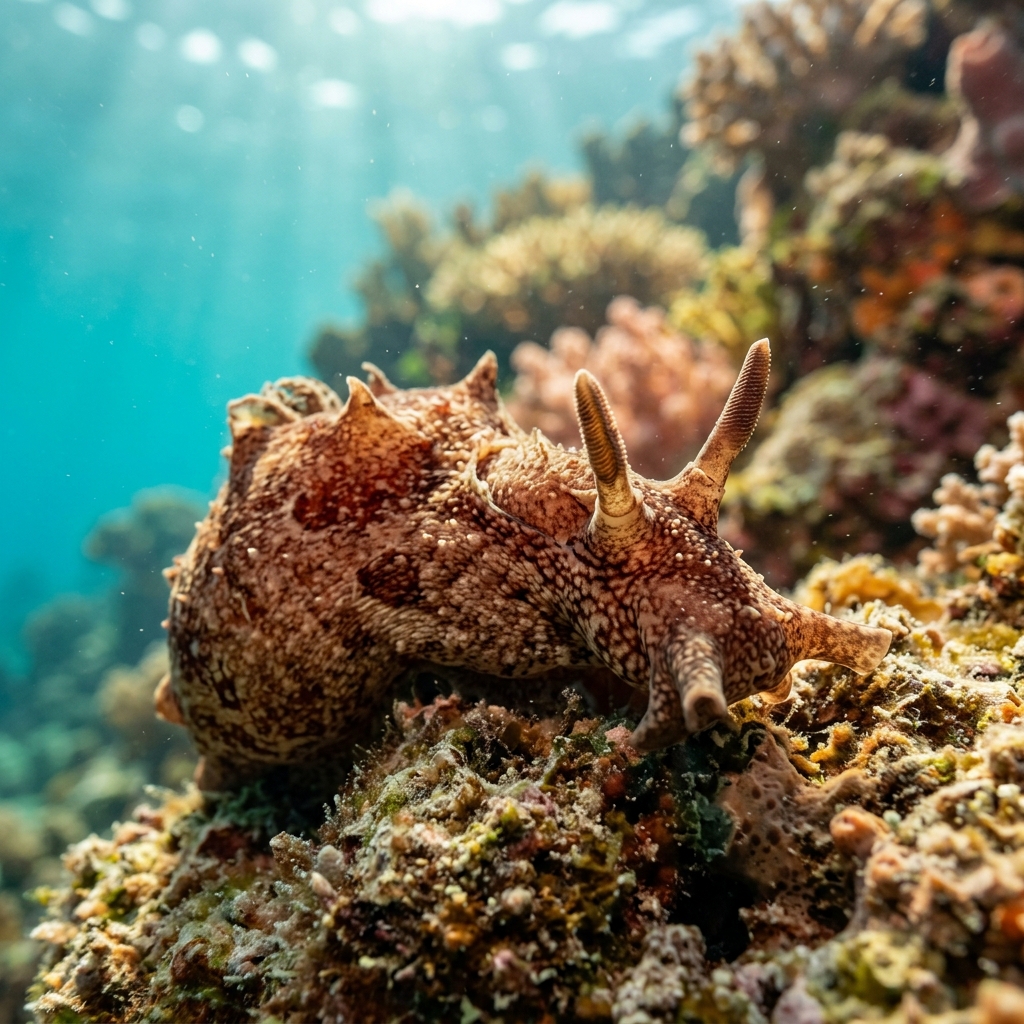
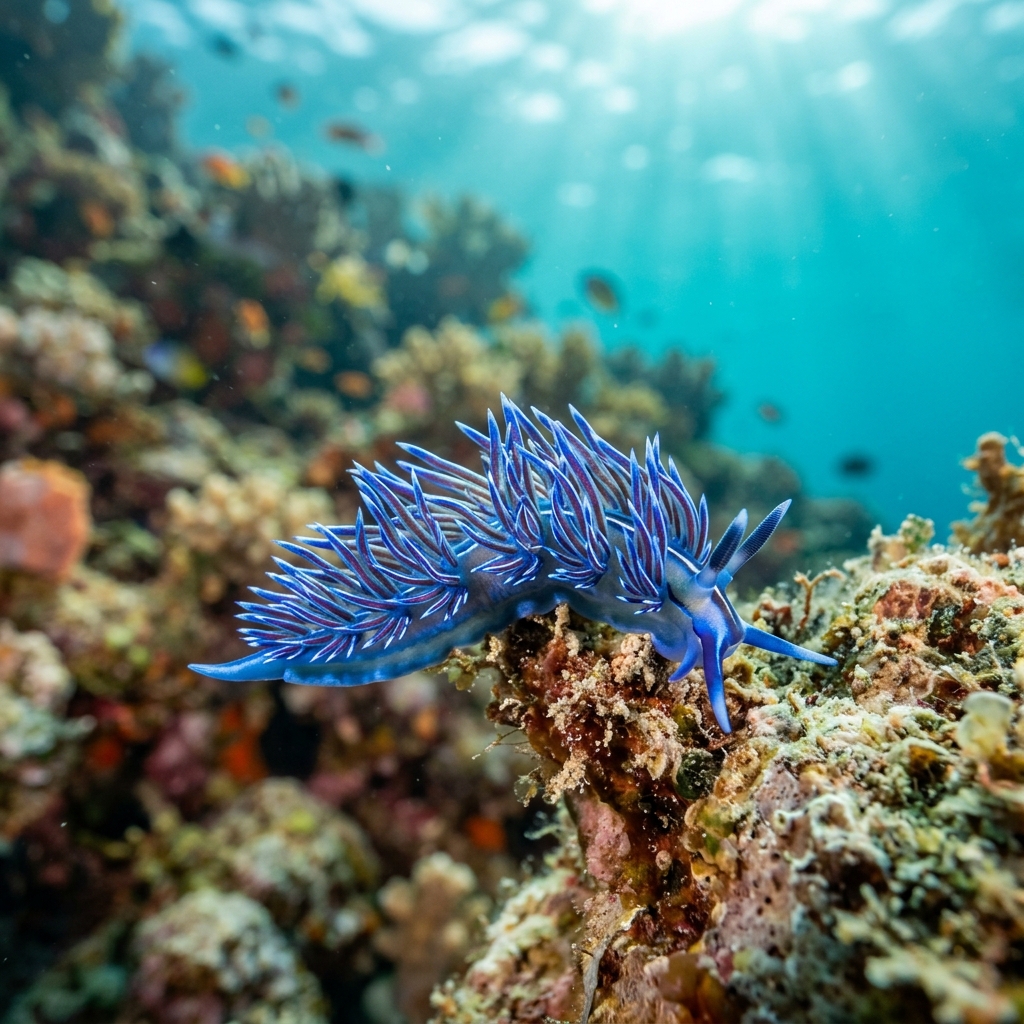
Reef neighbours a diver could mistake it for. Use the identification notes above to tell them apart.
Most reliably logged in the Philippines, particularly across the Visayas region, with a smaller but consistent presence in Singapore's Southern Islands. Sightings are generally uncommon at most sites, though a couple of Philippine locations report it as a regular find, so patient reef scanning pays off there.
Mapping where Jewel Thuridilla is logged…
It's most often logged in the Philippines, especially across the Visayas region, with additional sightings in Singapore's Southern Islands. Most sites report it as an uncommon find, so it takes a careful look at algae-covered substrate to spot one.
There's no detected seasonal pattern in the sighting data, and it's recorded across a warm 25.8 to 31.8C range, so it can turn up on any dive in its range through the year.
Check for a small, slender-bodied sea slug with raised wing-like flaps along its back edged in blue and orange, sitting still on algae-covered rock or rubble. It doesn't swim actively, so a slow scan of the substrate near reef structure is the best way to find one.
No, it poses no danger to divers. It's a small, slow-moving grazer that can be observed and photographed up close without any risk.
As a member of the sap-sucking slug family, it likely takes up pigments from the algae it grazes on, a trick some related species use to blend into their surroundings or even harness a bit of solar energy.
Site and sighting data is aggregated from diver logs, iNaturalist and GBIF. For taxonomy and conservation status:
Light-spotted Aegires
3,168 sites