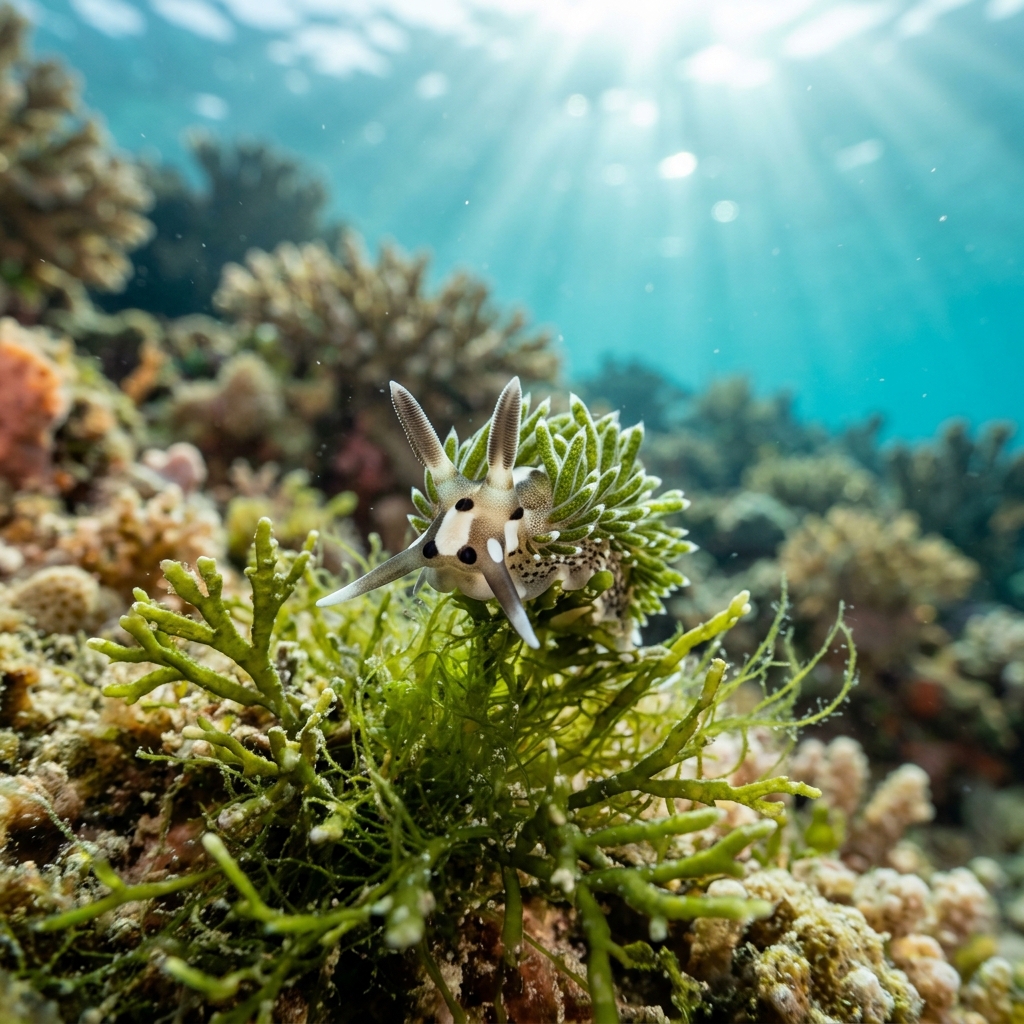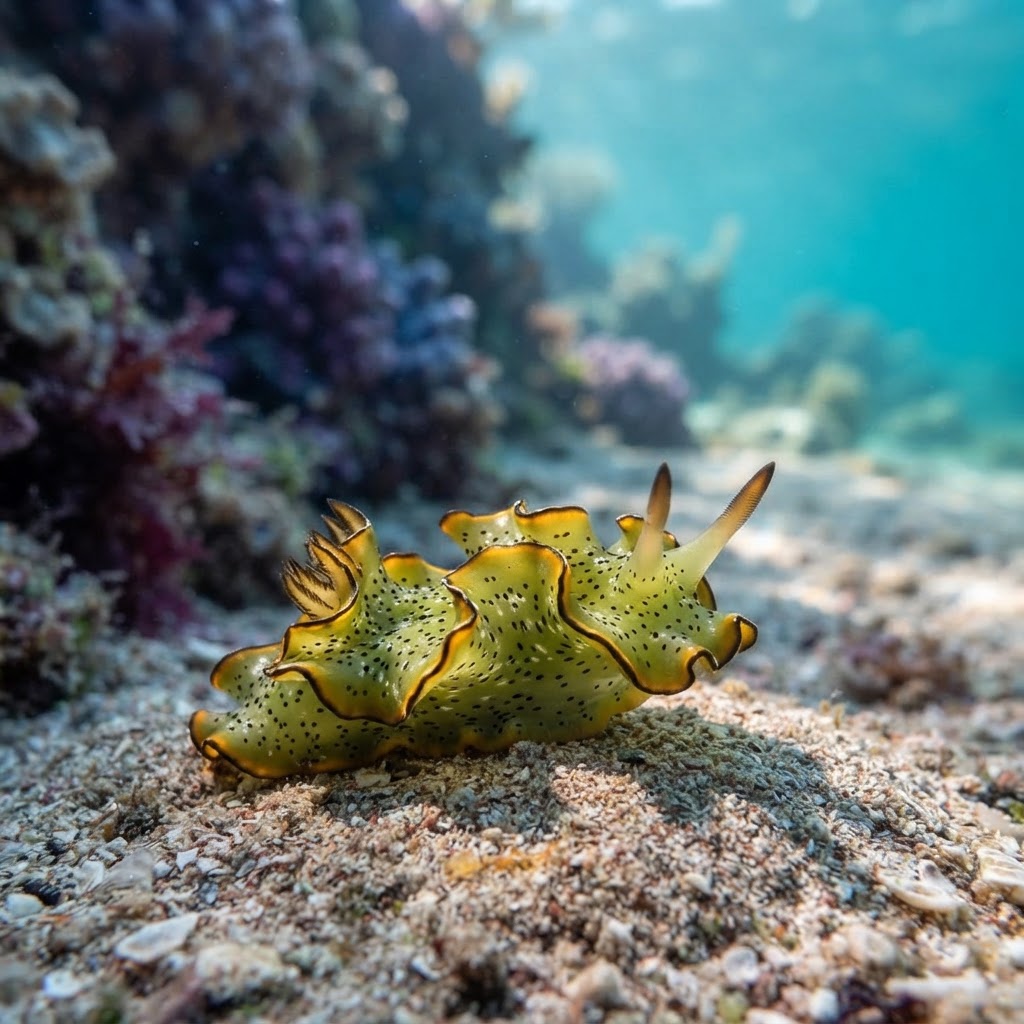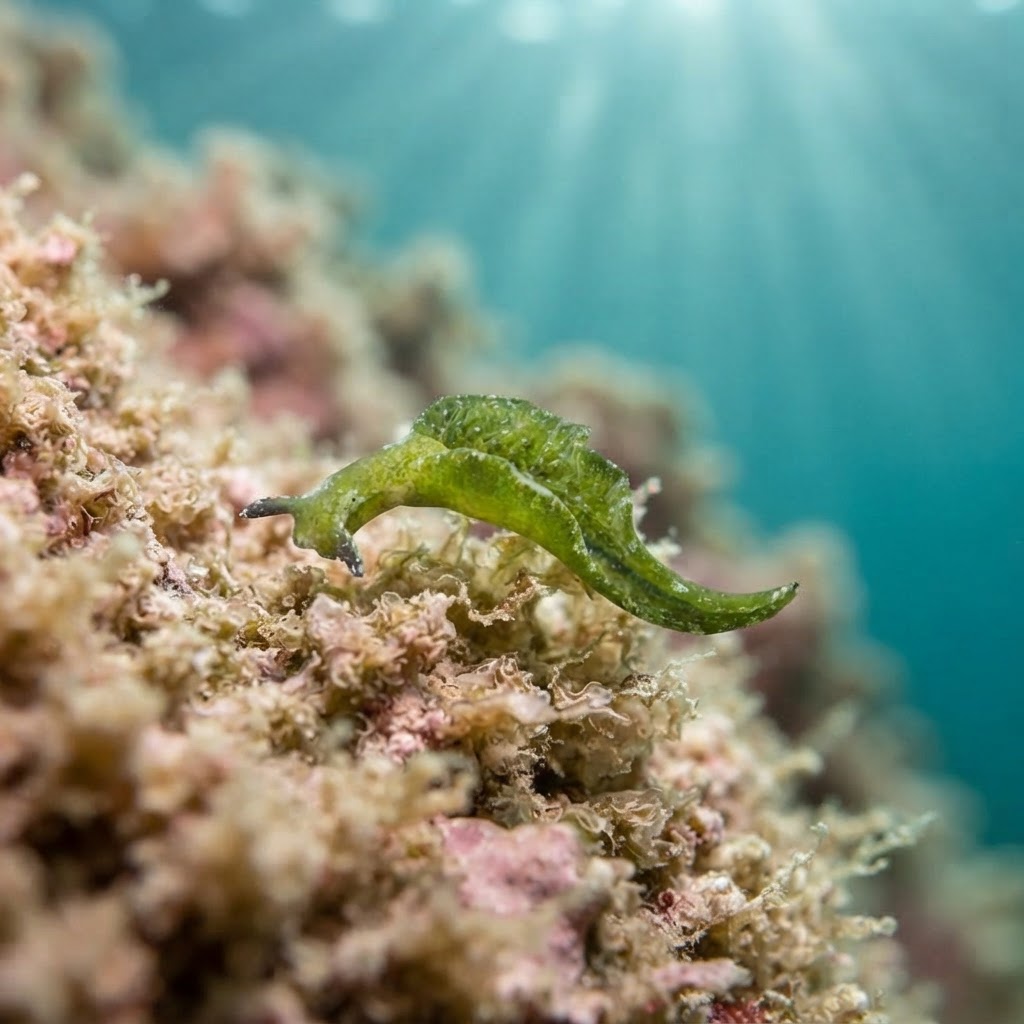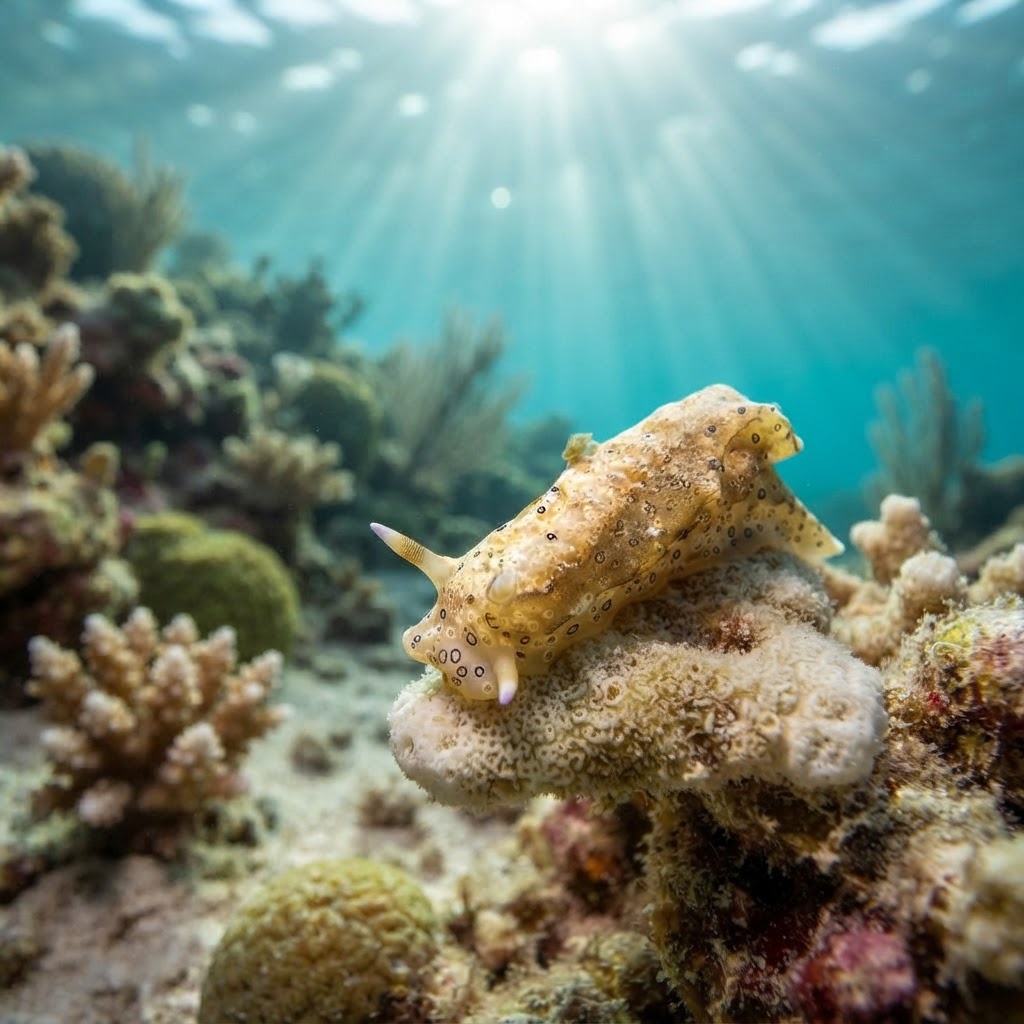
Plakobranchus ocellatus
Small, cryptic, and common on reefs in the Philippines' Visayas and Okinawa - here's how to spot this sap-sucking slug at 23-29C.
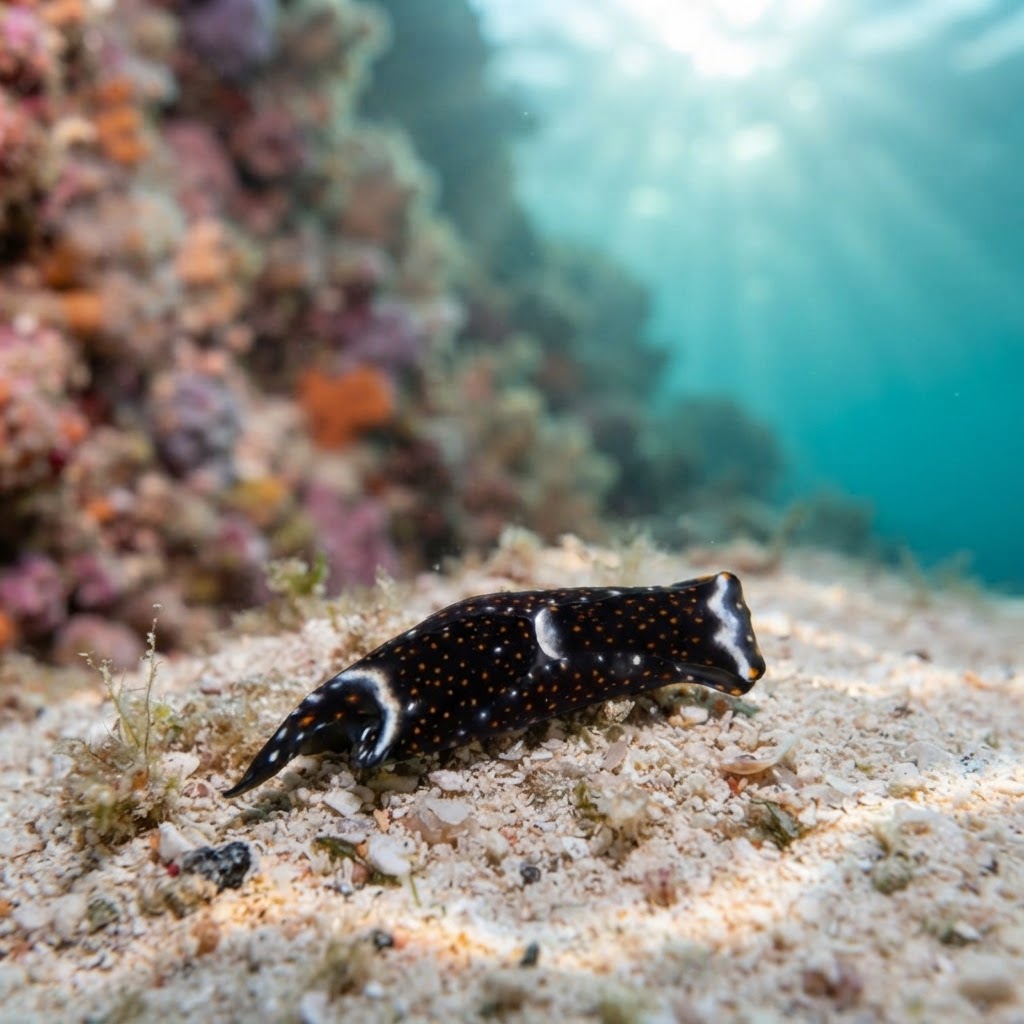
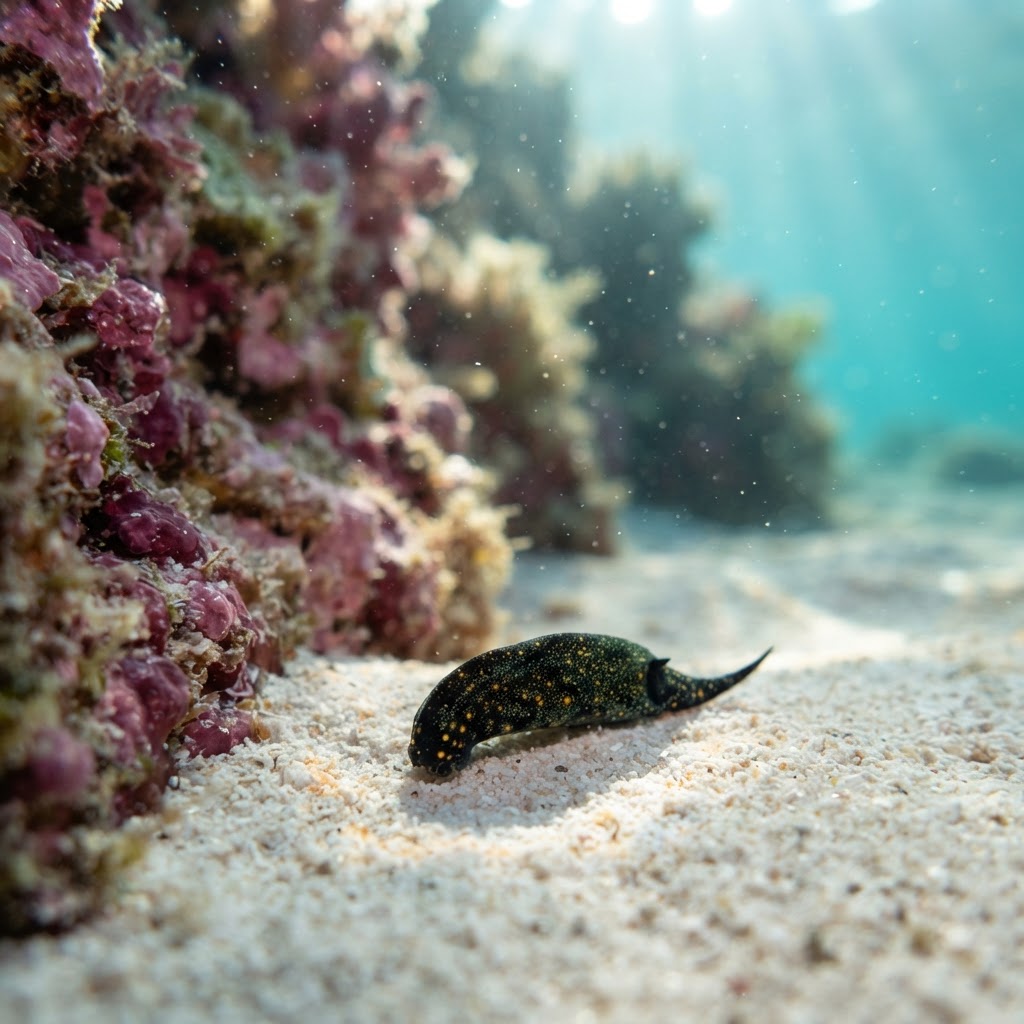
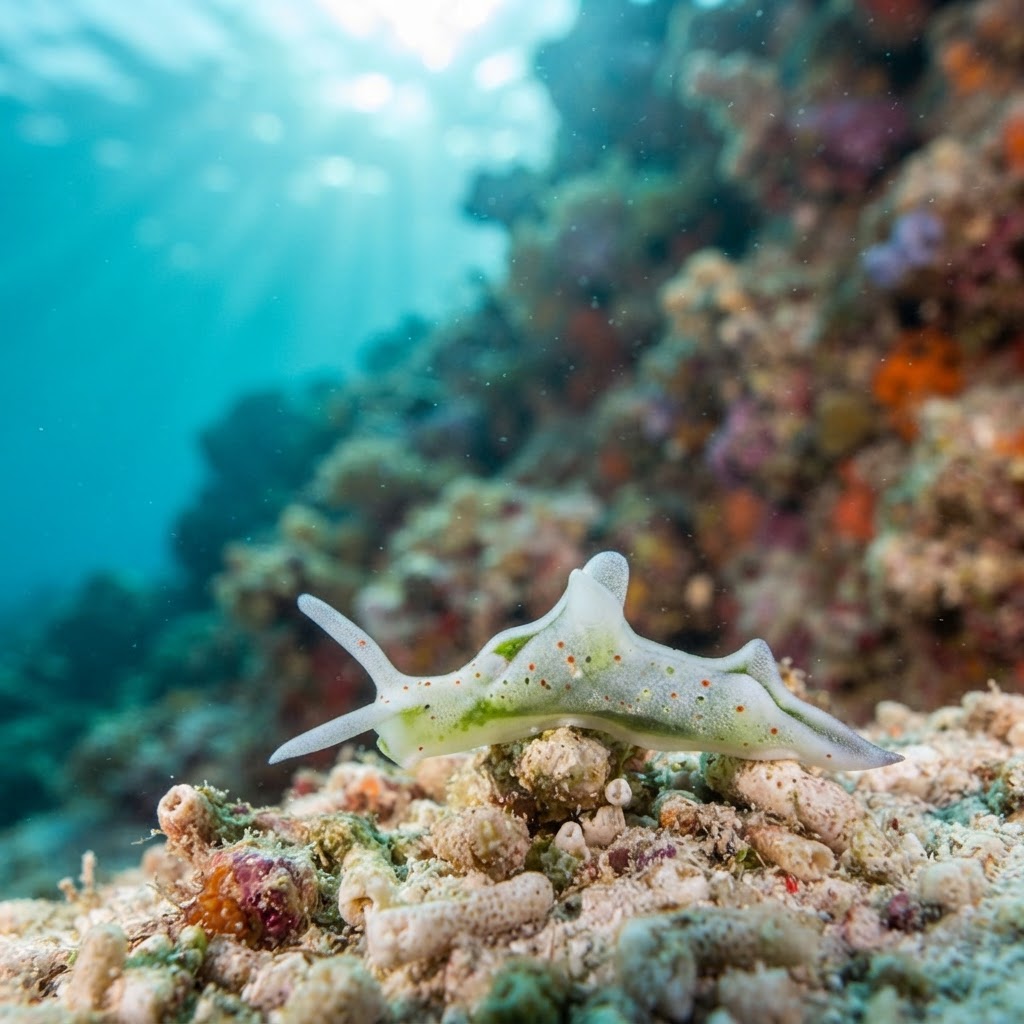
Only about 2cm long, this slug has a soft, leaf-shaped body in mottled green, brown or grey tones that blends into sand and algae rather than standing out. Look for faint pale rings or spots scattered across the upper surface, which give it its common name, and a slightly ruffled, wing-like fold running along each side of the body. It moves slowly and low over the substrate, so divers usually spot it by pattern rather than motion.
Divers find it parked on sand, rubble or low algae, moving at a crawl as it grazes rather than actively hunting. It shows no reaction to divers beyond retracting slightly if disturbed, and it is most often noticed on slow macro-focused dives where people are scanning the substrate closely rather than looking at open water.
Like other sacoglossan slugs, it can hold onto chloroplasts from the algae it eats and keep them functioning in its own tissue for a while, effectively running on a bit of solar power between meals.
No clear seasonal pattern shows up in sightings, and it sits comfortably in water from 23.4 to 29.5C, so it turns up year-round on the tropical reefs where it lives.
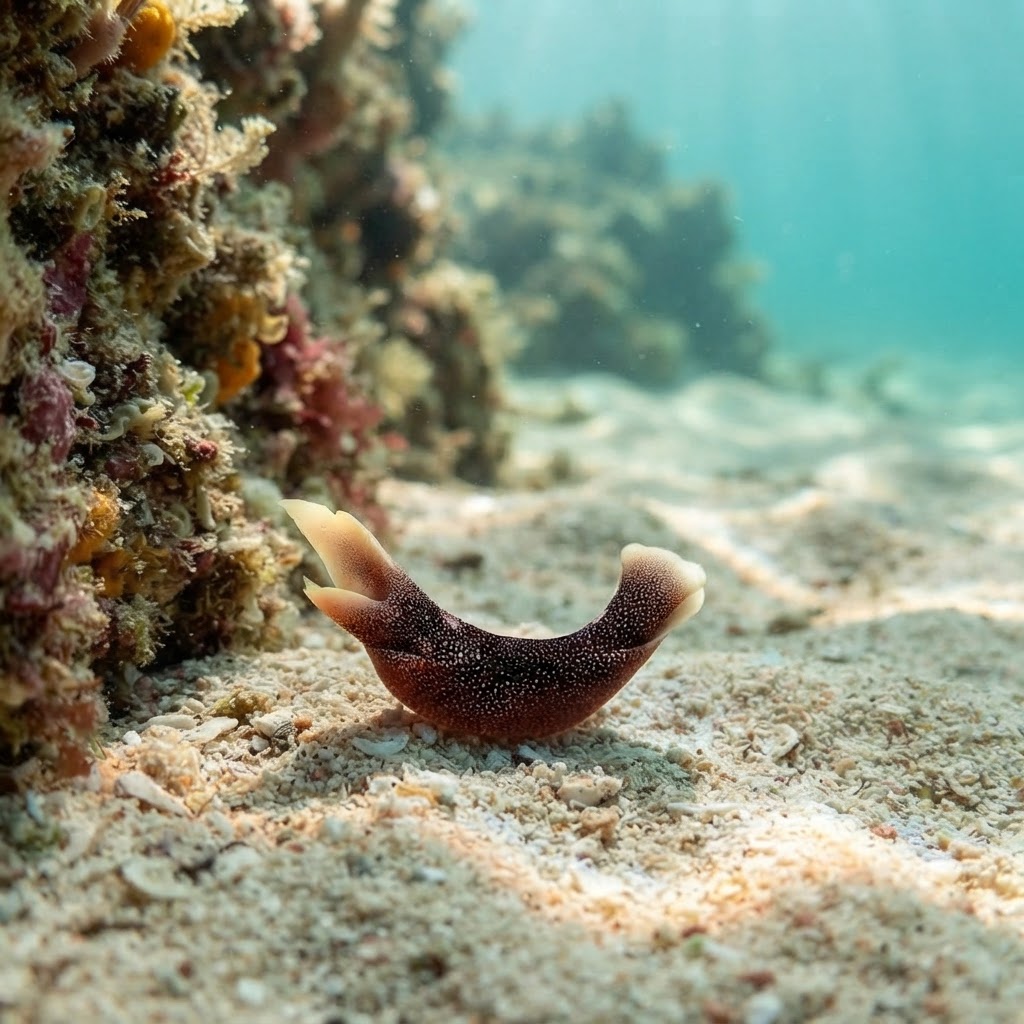
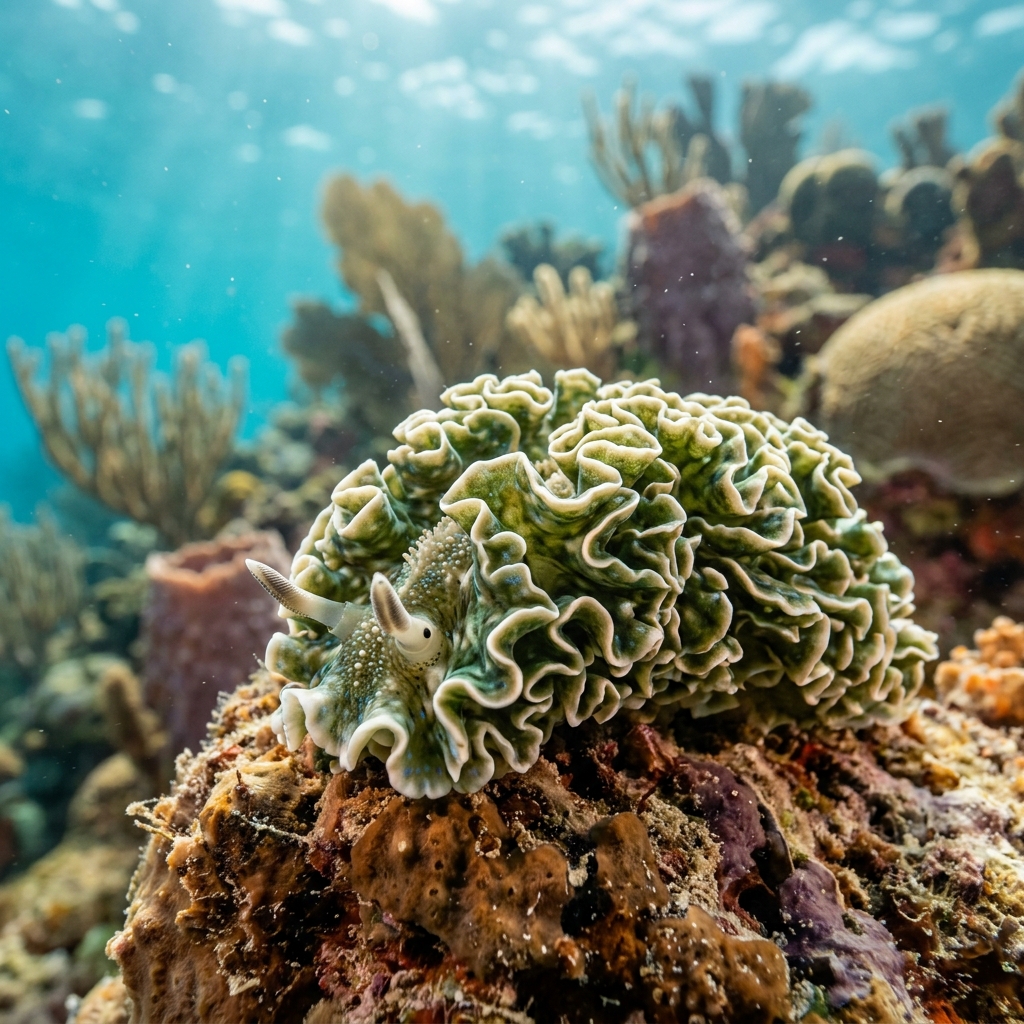
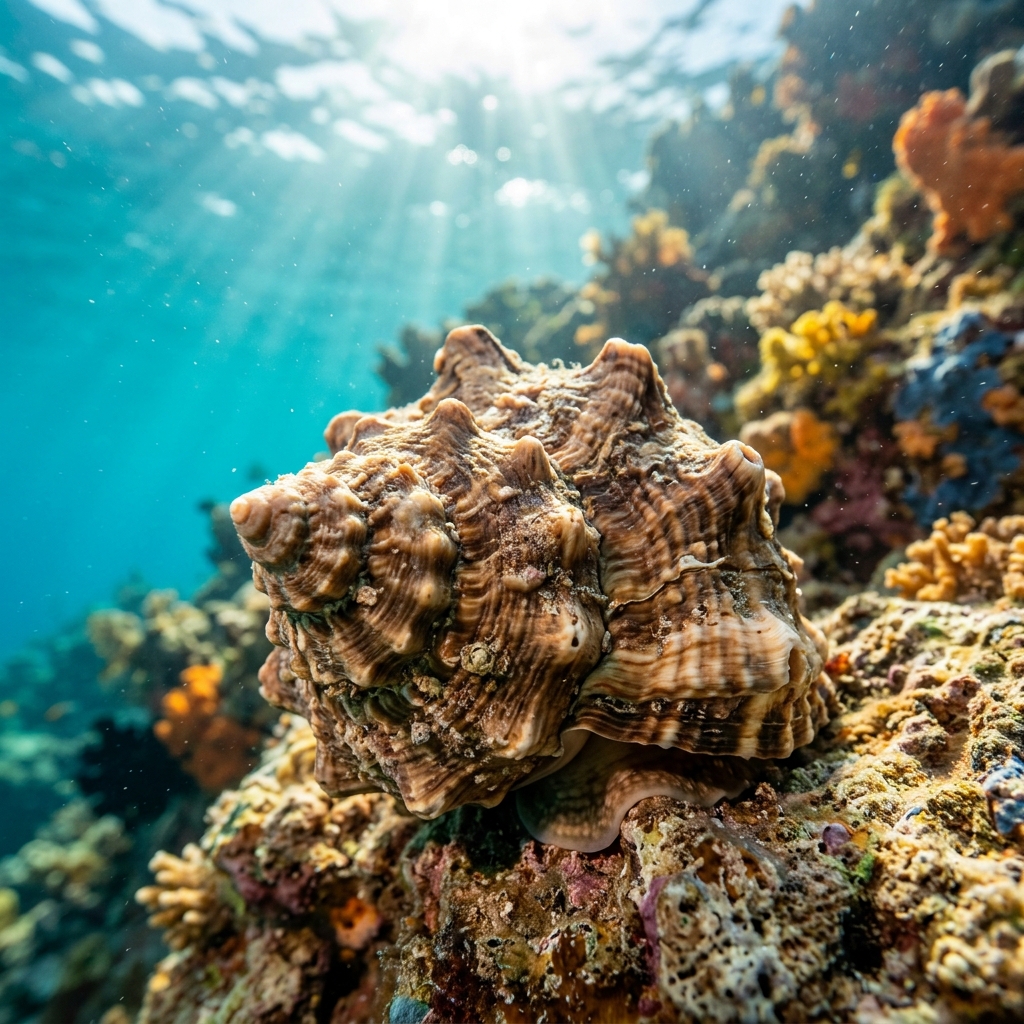
Reef neighbours a diver could mistake it for. Use the identification notes above to tell them apart.
Most consistently logged in the Visayas region of the Philippines and around Okinawa and the Ryukyu Islands in Japan, with a strong showing at sites near Sihanoukville, Cambodia. Divers also report it reliably in the Andaman Islands of India and around Hawaii, with smaller pockets in Saipan, Luzon, Queensland and the Seychelles.
Mapping where Ringed Sap-sucking Slug is logged…
It shows up most reliably in the Visayas region of the Philippines and around Okinawa in Japan, with good numbers also reported near Sihanoukville, Cambodia and in India's Andaman Islands. Hawaii is another solid spot for sightings.
There is no strong seasonal signal in sightings, and it tolerates a wide warm-water range of roughly 23 to 29C, so it can be found on tropical reefs at any time of year.
Look for a small, roughly 2cm slug with a mottled green or brown body and faint pale rings across its back. It sits low on sand or rubble and moves slowly, blending in more than standing out.
They stay small, typically around 2cm long, which makes them a macro-photography subject rather than something you'll spot from a distance.
It can retain functioning chloroplasts from the algae it feeds on, letting its tissue photosynthesise for a period after a meal, a trait shared with other sap-sucking sea slugs.
No. It has no known sting or venom risk to divers and simply retracts slightly if disturbed while grazing on the reef floor.
Site and sighting data is aggregated from diver logs, iNaturalist and GBIF. For taxonomy and conservation status:
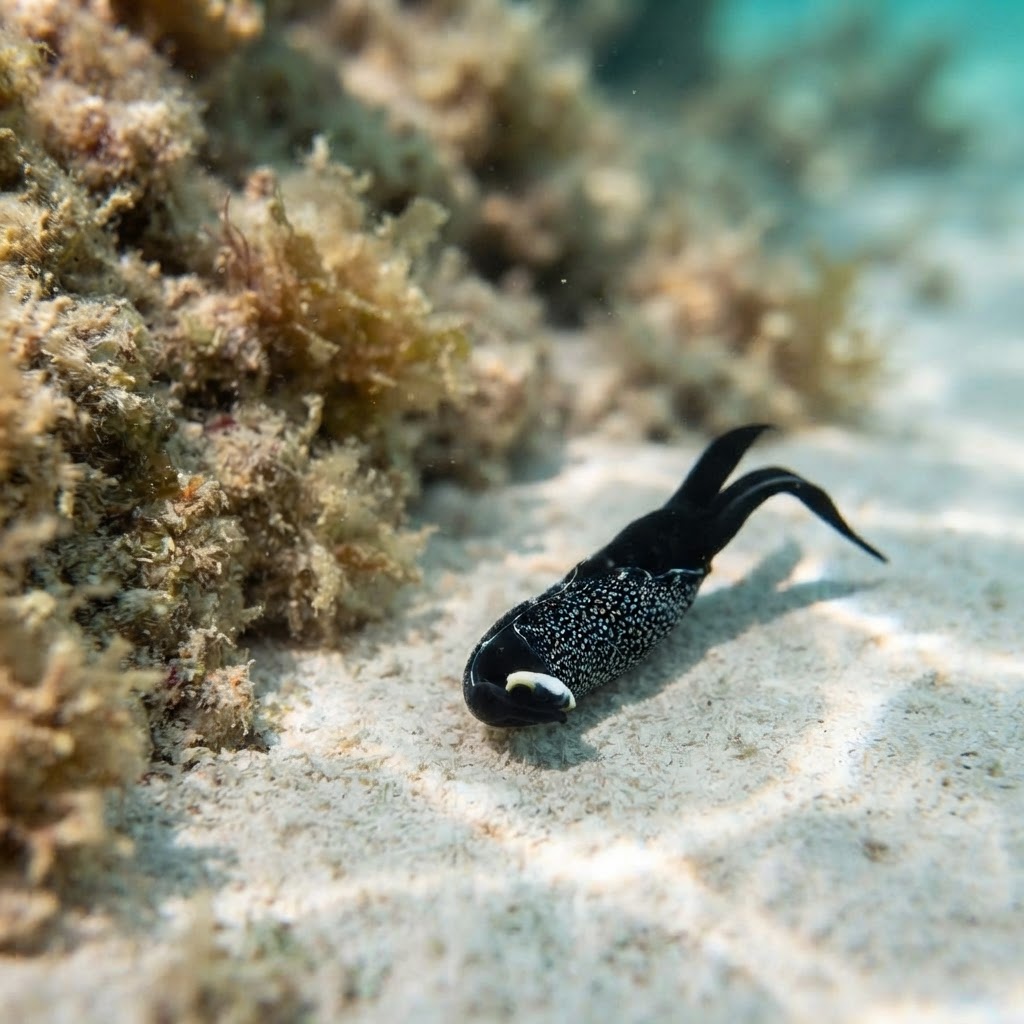
Mariaglaja inornata
Elysia Timida
573 sites