Costasiella usagi
Spot the Rabbit Sapsucking Slug in the Visayas and Bali at 27-29 °C. ID tips, top dive sites, and how to find this tiny nudibranch relative.
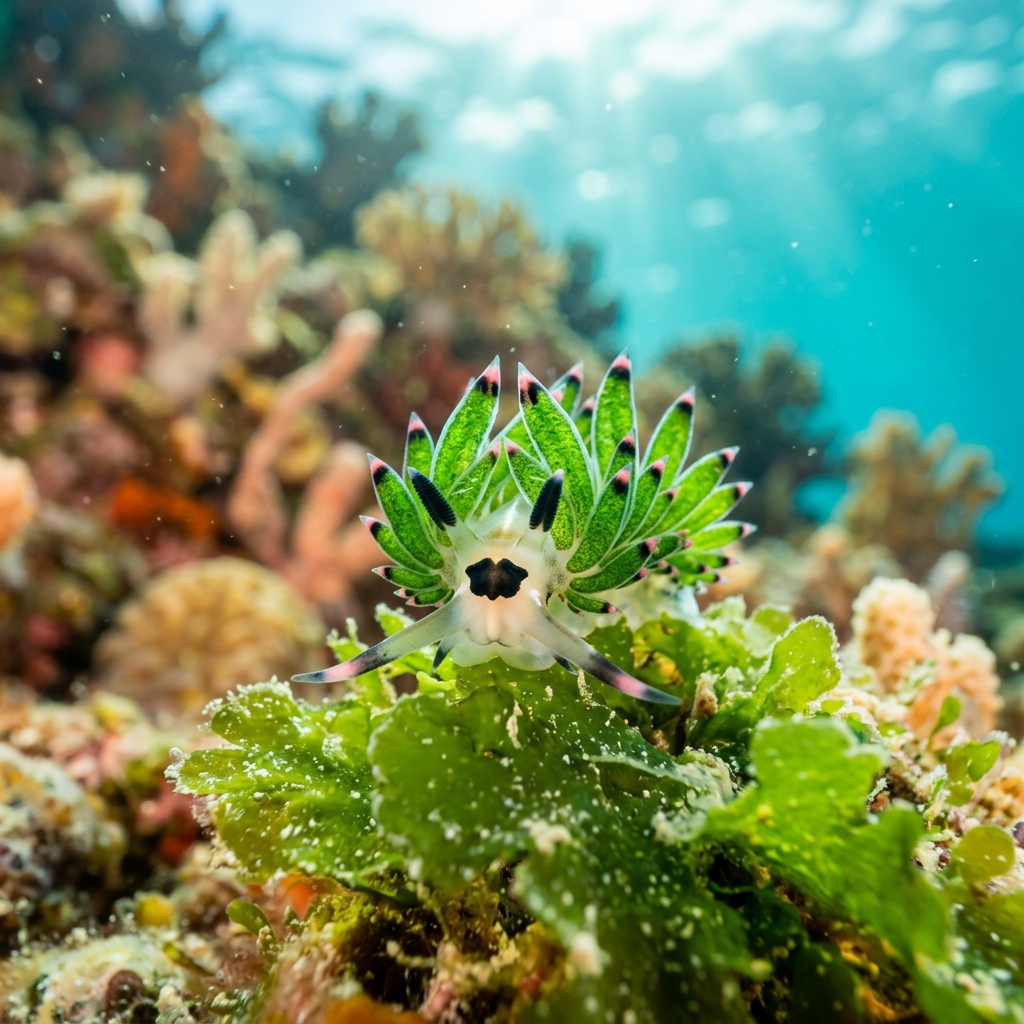
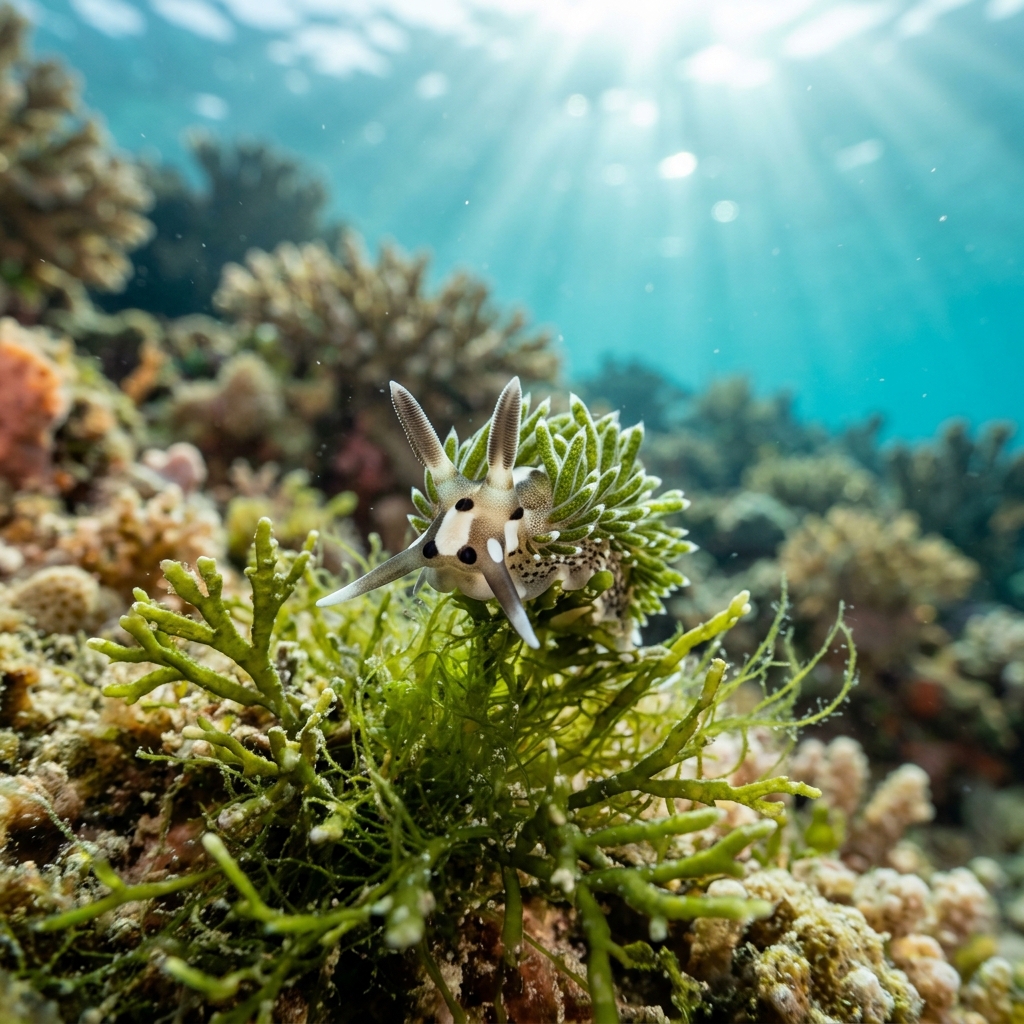
Tiny and easily overlooked, this sacoglossan (sap-sucking sea slug) is best known for its two long, upright rhinophores that resemble rabbit ears, giving it its name. The body is translucent white to pale, often with a greenish tinge from the algal chloroplasts it incorporates through feeding. Rows of club-shaped cerata (the leaf-like projections along the back) are typically tipped with a darker or reddish-brown spot. Size is minute, so spotting it usually requires close focus on the surface of its host algae.
You will almost always find one perched directly on its host algae, often Avrainvillea or similar green macroalgae, feeding by piercing cells and drawing out chloroplast-rich sap. It moves very little and is easy to miss at first glance because it blends with the algae surface. Divers report it showing little reaction to close approach, making it a rewarding subject for macro photographers willing to move slowly.
Like other sacoglossans, this species practises kleptoplasty: it steals functional chloroplasts from the algae it eats and keeps them active inside its own body tissues, essentially running a solar panel system for supplemental energy.
No clear seasonal peak has emerged from the data, so it is treated as a year-round resident. Its observed temperature range of roughly 27 to 29 °C fits comfortably within the warm tropical waters of its core range throughout the year.
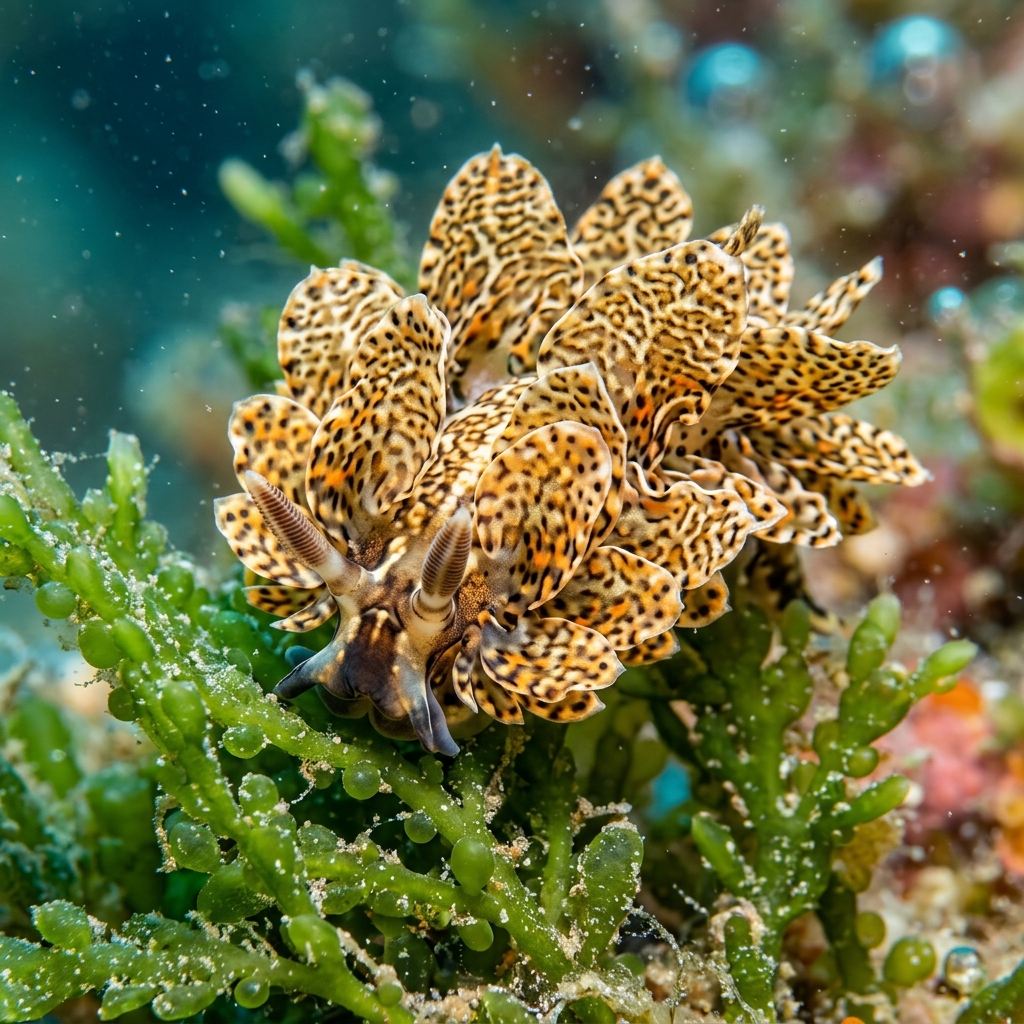
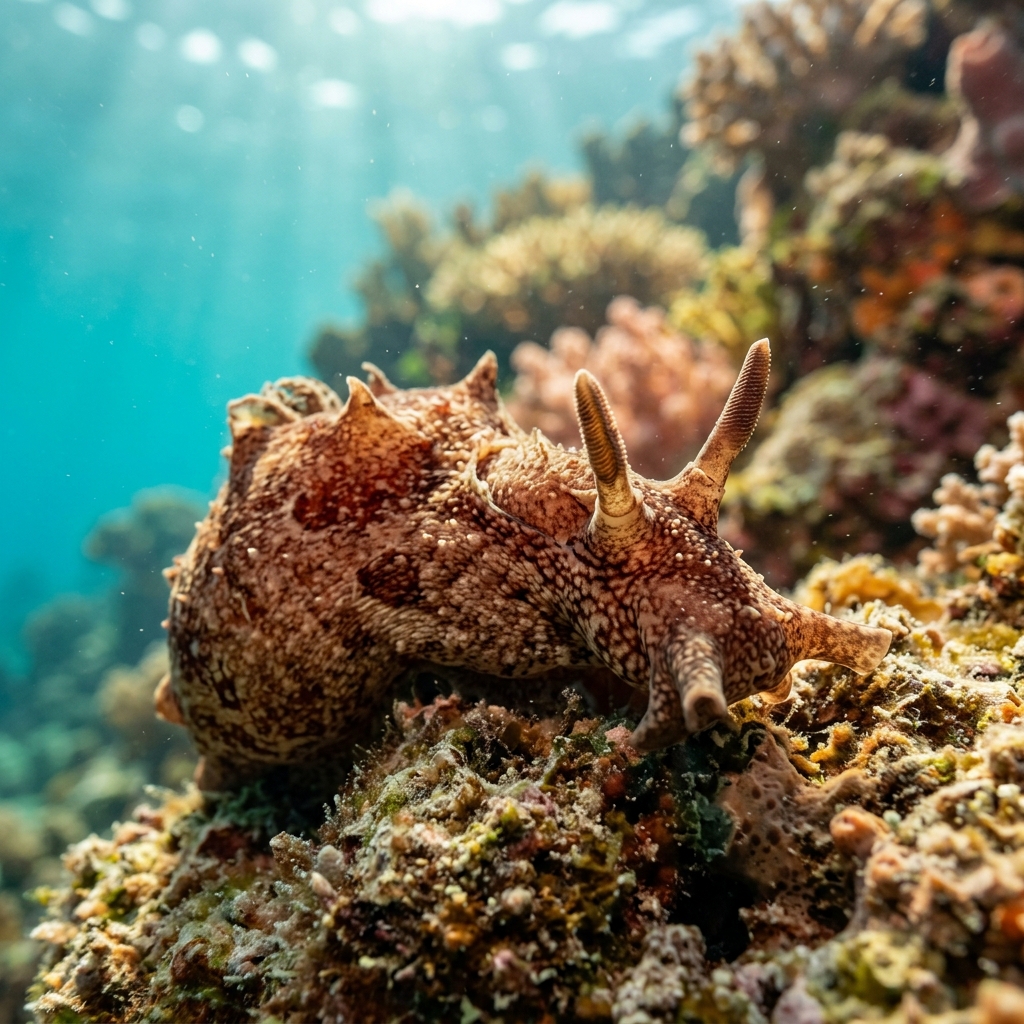
Reef neighbours a diver could mistake it for. Use the identification notes above to tell them apart.
Most sightings come from the Philippines, particularly the Visayas Central and Luzon regions, which together account for the overwhelming majority of logged encounters. Indonesia, especially Bali, Lombok and Java, is the next best bet, followed by the Okinawa Islands in Japan and Kenting in Taiwan. A small number of records exist from Queensland, Australia, rounding out its known Indo-Pacific range.
Mapping where Rabbit Sapsucking Slug is logged…
The Philippines, particularly Visayas Central and Luzon, is by far the most reliable place to find it. Indonesia's Bali, Lombok and Java region and Japan's Okinawa Islands are strong secondary options, with further records from Kenting in Taiwan and Queensland, Australia.
There is no confirmed seasonal peak. It lives in warm tropical waters around 27 to 29 °C, which persist year-round across its core range in the Philippines and Indonesia, so any time of year is potentially viable.
Look for a tiny pale slug sitting directly on green macroalgae, with two distinctively long upright rhinophores shaped like rabbit ears. The back bears rows of cerata, often with dark or reddish tips. Its minute size and greenish body tone help it blend in, so scan algae patches slowly.
Exact size data is not confirmed in diver records, but like most Costasiella species it is extremely small, typically just a few millimetres in length. Macro lenses of 60 mm or longer are highly recommended to get a clear view.
Kleptoplasty is the ability to steal and retain functional chloroplasts from algae. After feeding, this slug keeps those chloroplasts alive inside its own tissue, where they continue photosynthesising and may supplement the animal's energy budget. It is one of the few animals on earth known to use plant solar cells in this way.
Site and sighting data is aggregated from diver logs, iNaturalist and GBIF. For taxonomy and conservation status:
Light-spotted Aegires
3,168 sites