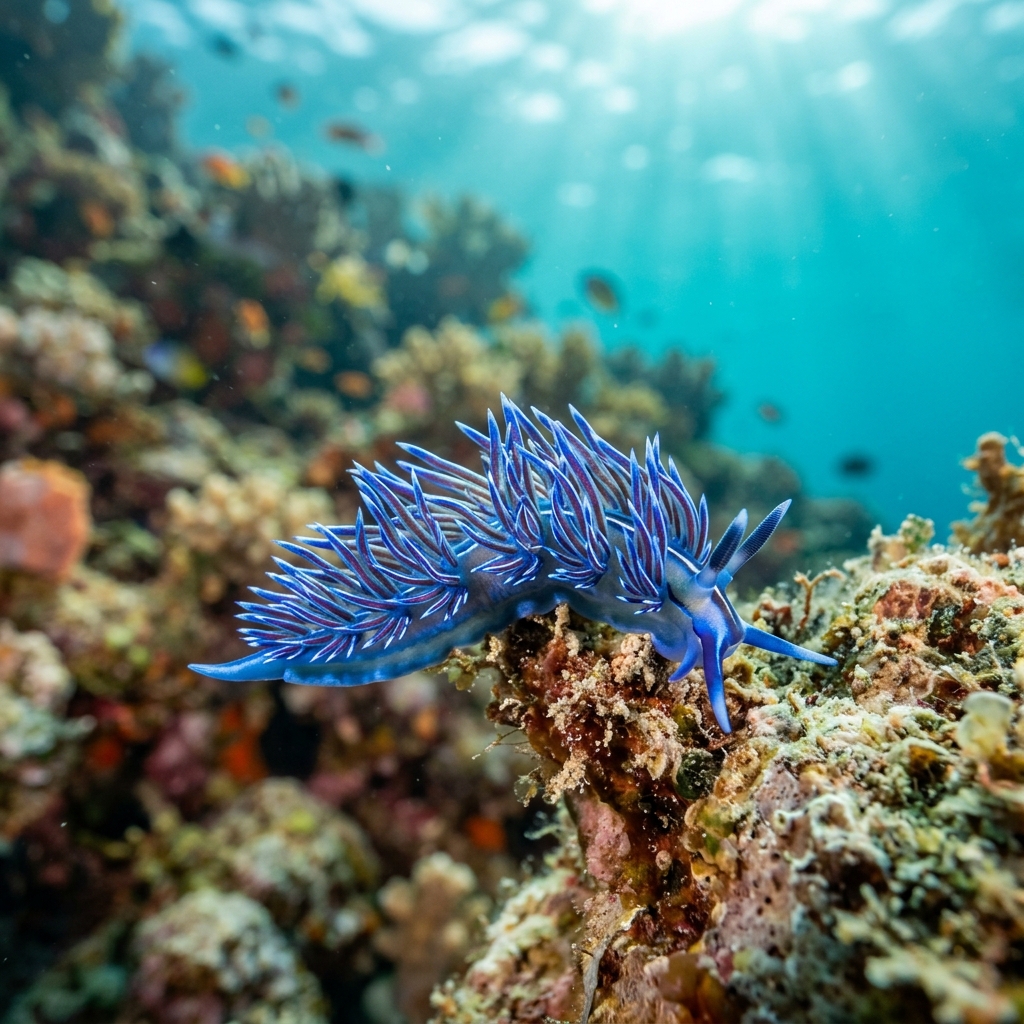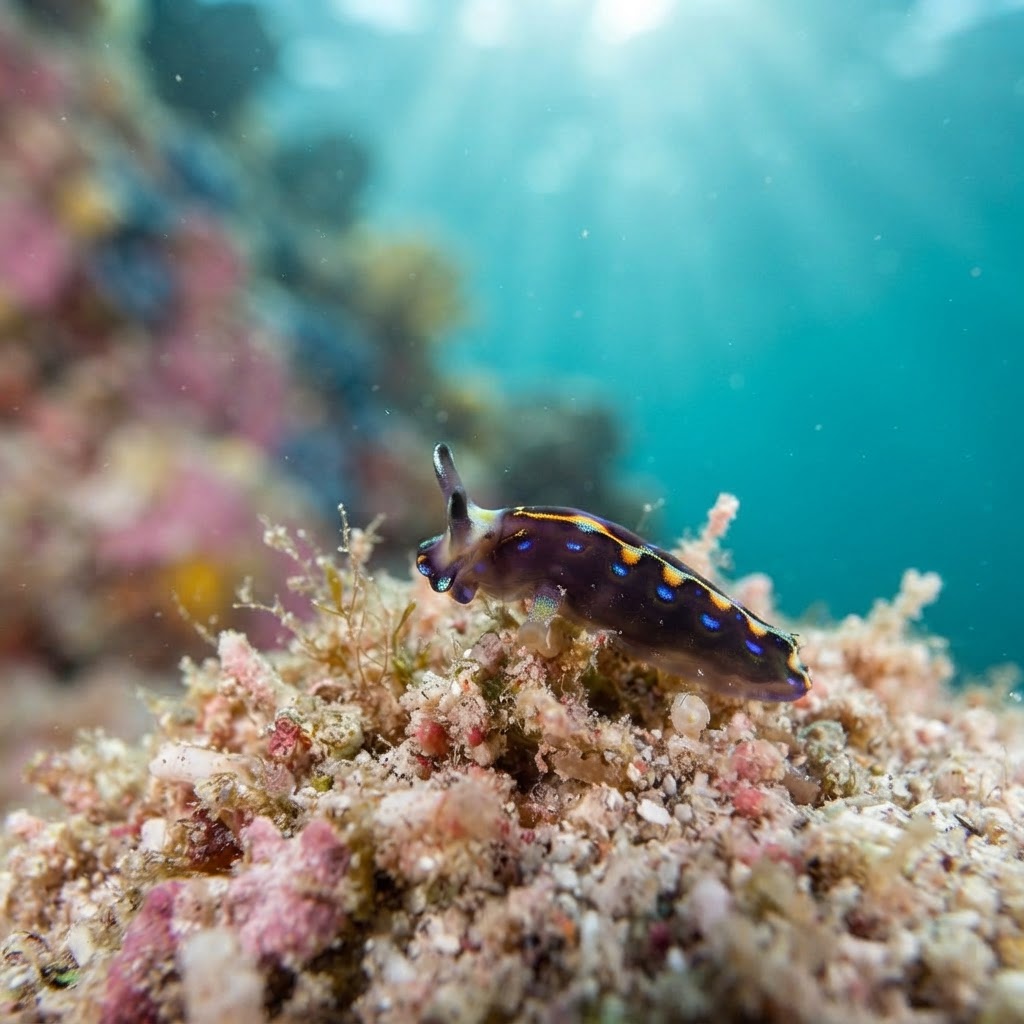
Thuridilla mazda
A 1cm sea slug most often logged on Florida reefs, with a smaller foothold in Guadeloupe's Grande-Terre in warm 24-30C water year-round.
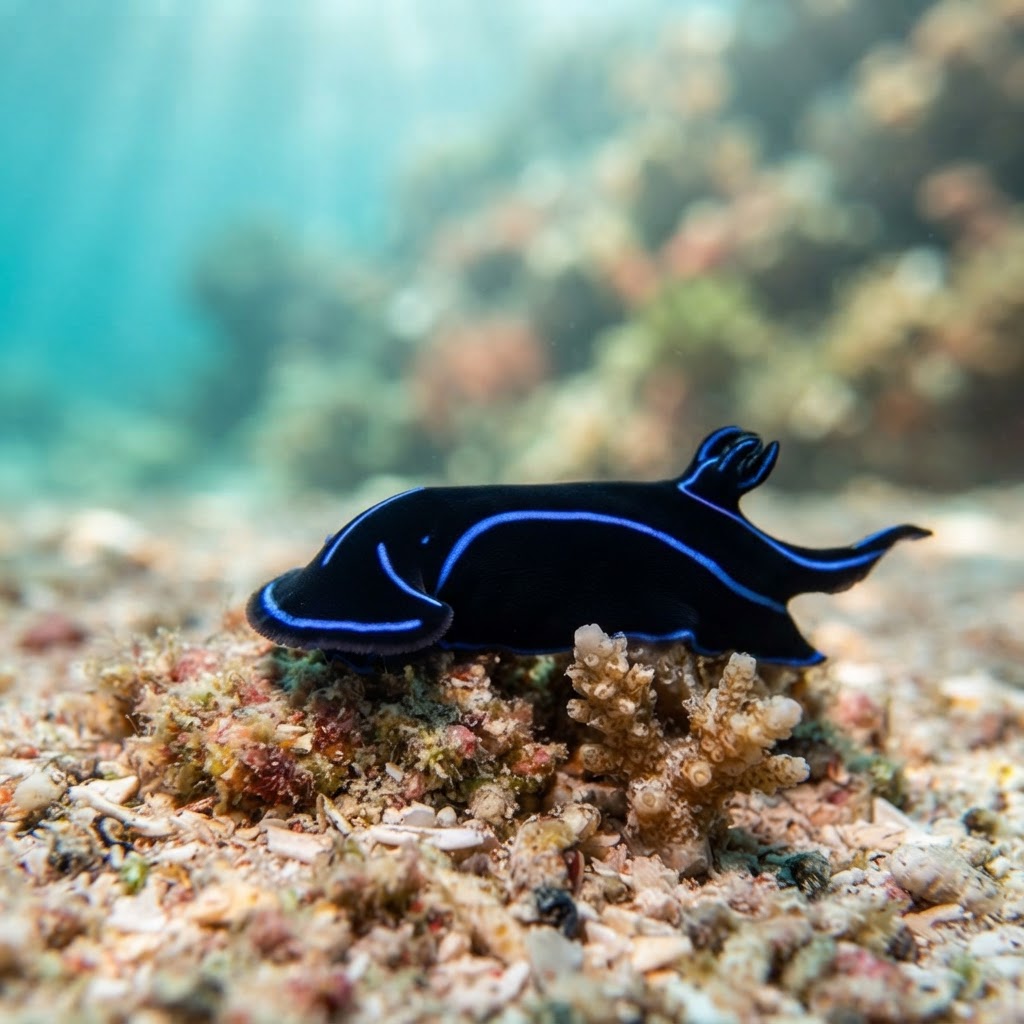
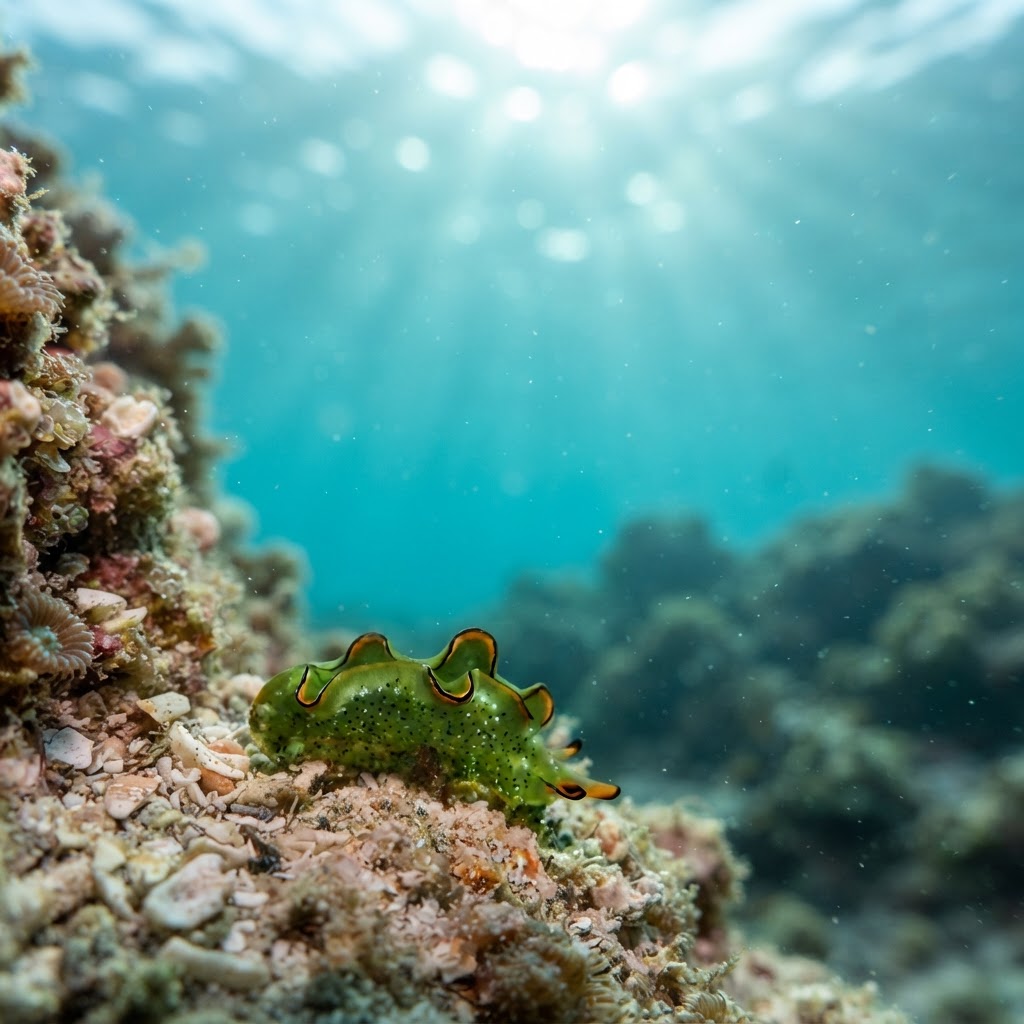
Barely a centimetre long, so this is a slow, close-focus find rather than a swim-by sighting. Look for an elongated slug body with parapodia (the wing-like flaps along its sides) edged in orange and streaked with blue lines running lengthwise. The head bears a pair of short, upward-curving rhinophores (sensory tentacles), and the overall look is more like a tiny painted ribbon than a typical rounded nudibranch.
Divers find this one grazing slowly over algae-covered rock and rubble, usually during the day when its colours are easiest to pick out against the substrate. It does not flee or hide when approached, it simply keeps grazing, so a steady hand and a macro lens (or a sharp eye) are all you need for a good look. Most sightings come from shallower, sheltered patches of reef rather than open water.
Like other members of its family, this slug feeds on algae and can retain the algae's chloroplasts in its own tissue, using them to photosynthesise for a while after feeding, a trick called kleptoplasty.
No clear seasonal pattern shows up in the data, and with a comfortable range of 24.3 to 30.3C it fits typical Florida and Caribbean reef temperatures year-round, so any month is fair game.
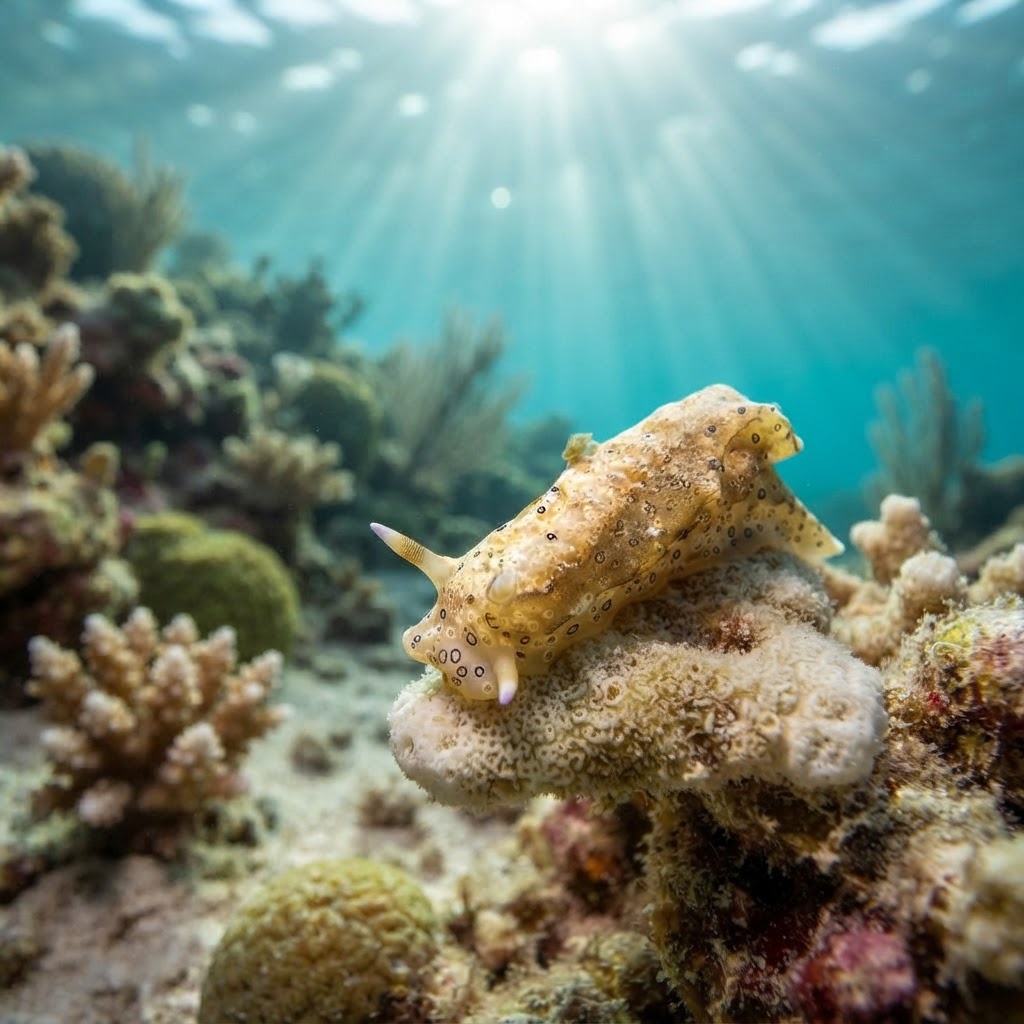
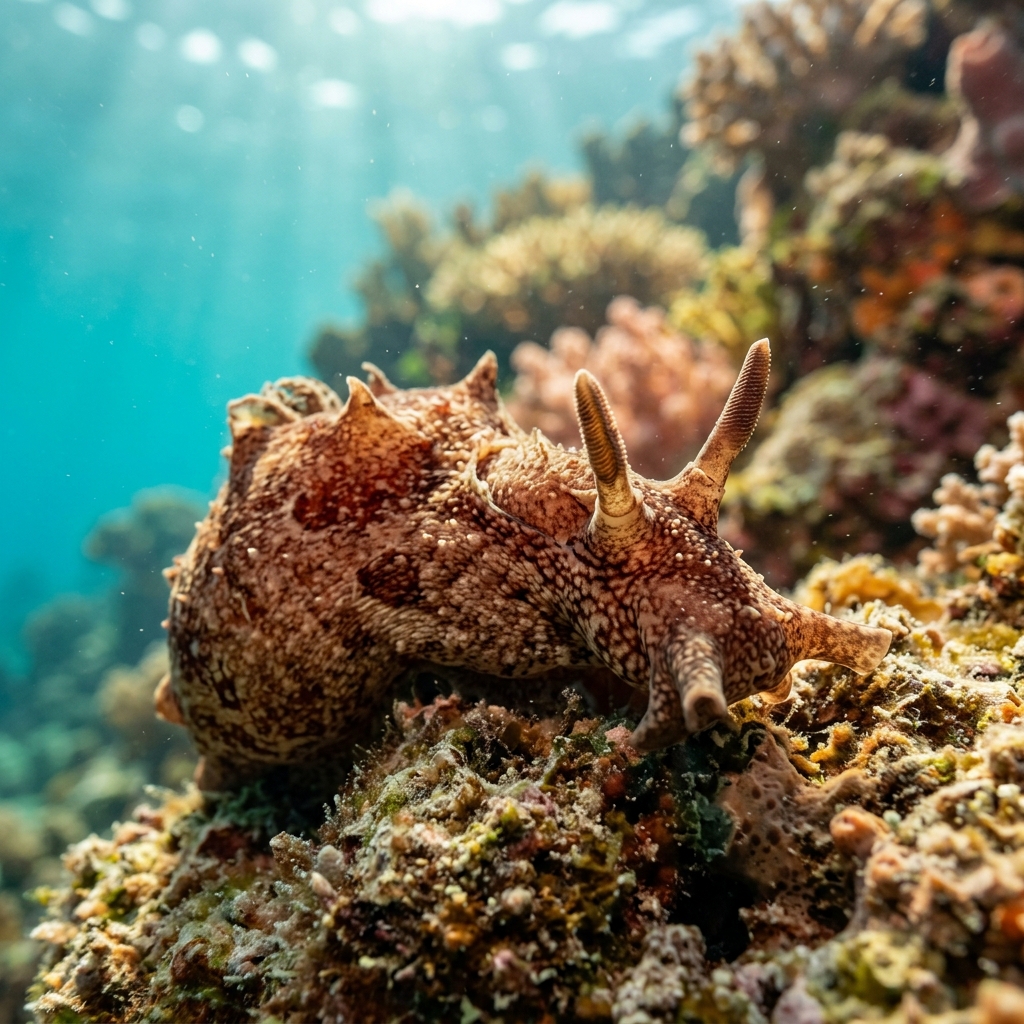
Reef neighbours a diver could mistake it for. Use the identification notes above to tell them apart.
Florida is by far the strongest area for this species, with sightings spread across dozens of sites there. Guadeloupe's Grande-Terre region is the other reliable spot, though sightings there are fewer and generally logged as uncommon to rare.
Mapping where Mazda Thuridilla is logged…
Florida in the United States is the most reliable place to find it, logged across many sites there. Grande-Terre in Guadeloupe is the other known location, though sightings are less frequent.
There is no strong seasonal signal in the sightings, and it tolerates a wide warm-water range of roughly 24 to 30C, so it can turn up on Florida and Caribbean reefs at any time of year.
Look for a slug under 1cm long with narrow blue stripes and orange-tipped side flaps (parapodia), and short curved rhinophores on the head. It moves slowly over algae-covered rock rather than swimming.
It stays tiny, topping out around 1cm, so most divers need a macro lens or a very close look to spot the markings clearly.
It feeds on algae and can hold onto the algae's chloroplasts inside its own body afterwards, letting it photosynthesise for a period, a trait shared with several of its sap-sucking slug relatives.
No. It has no sting or venom of concern to divers and simply grazes in place when approached, making it safe to observe and photograph up close.
Site and sighting data is aggregated from diver logs, iNaturalist and GBIF. For taxonomy and conservation status:
Light-spotted Aegires
3,168 sites