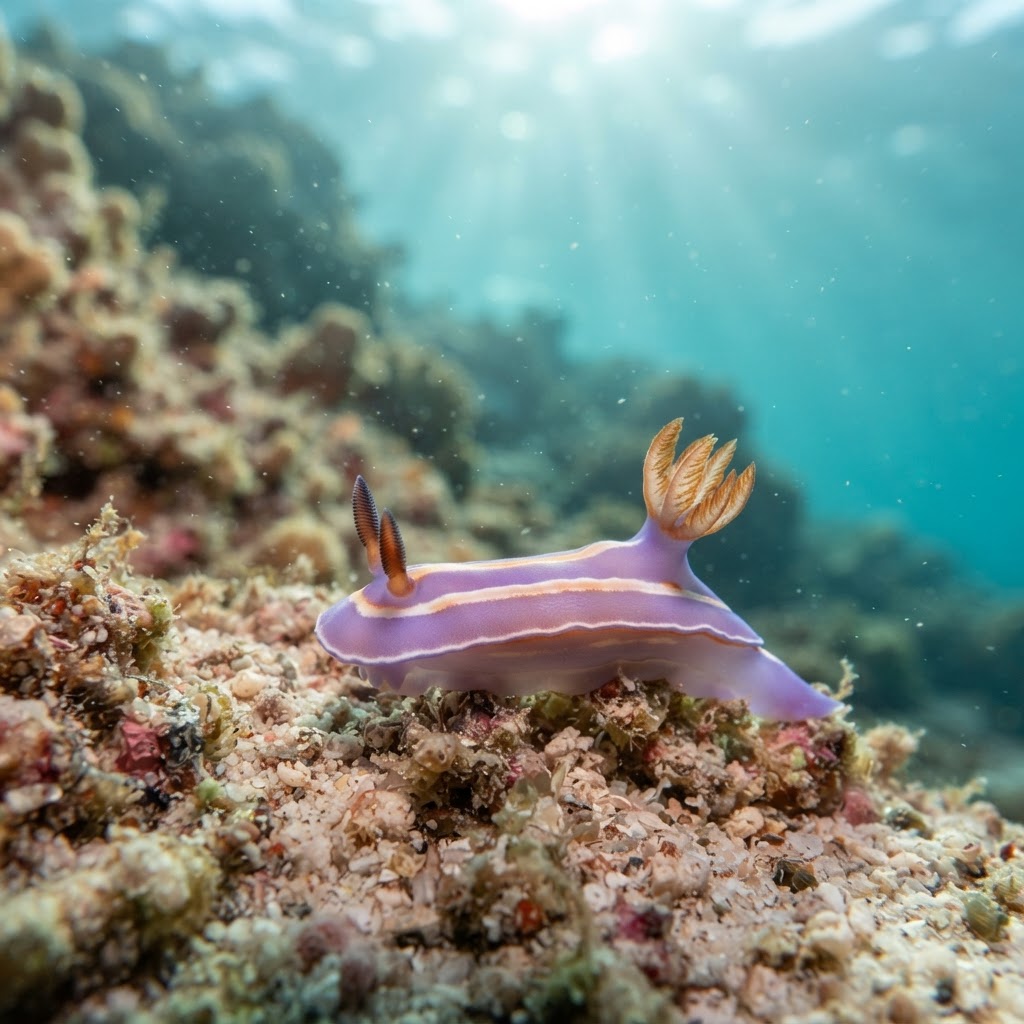
Mexichromis trilineata
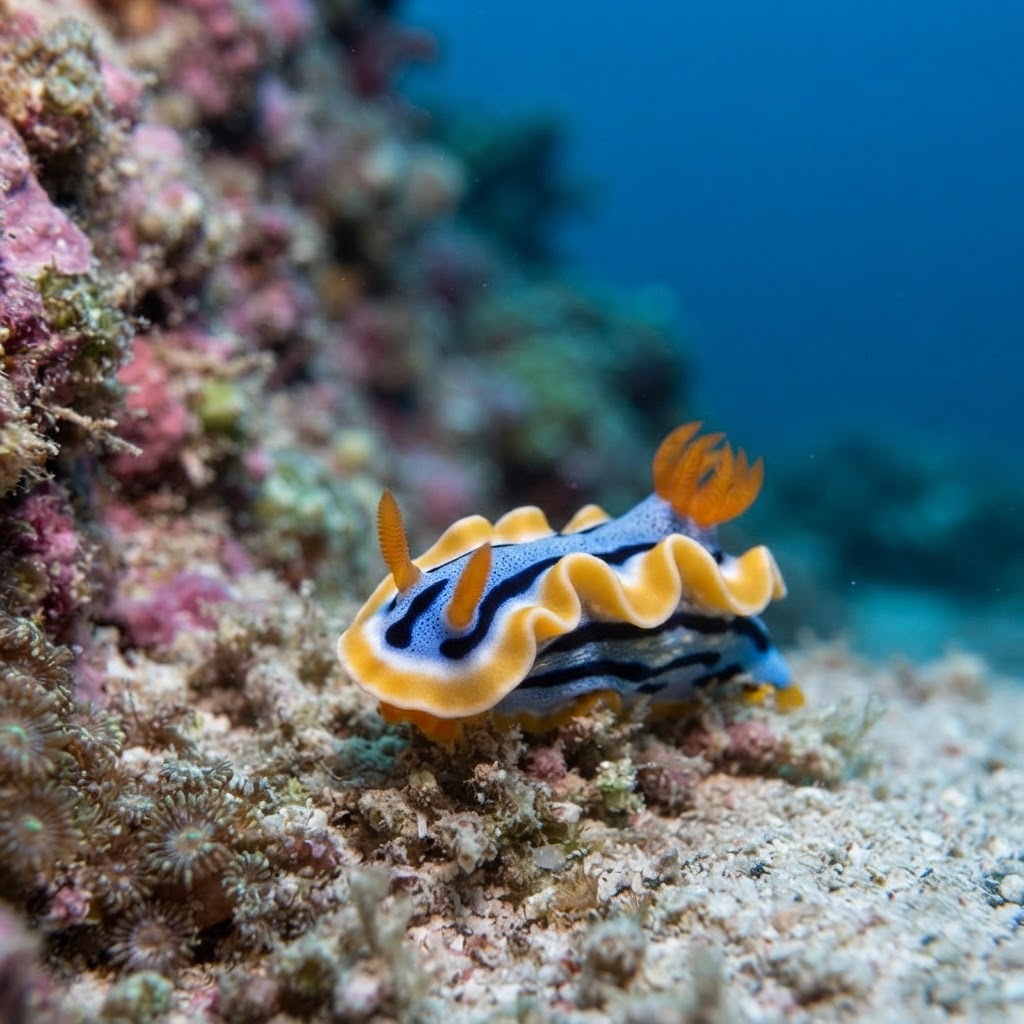
Purple nudibranch with orange gill tufts, most reliably spotted on reefs in Luzon and Bali in warm 25-31C water year-round.
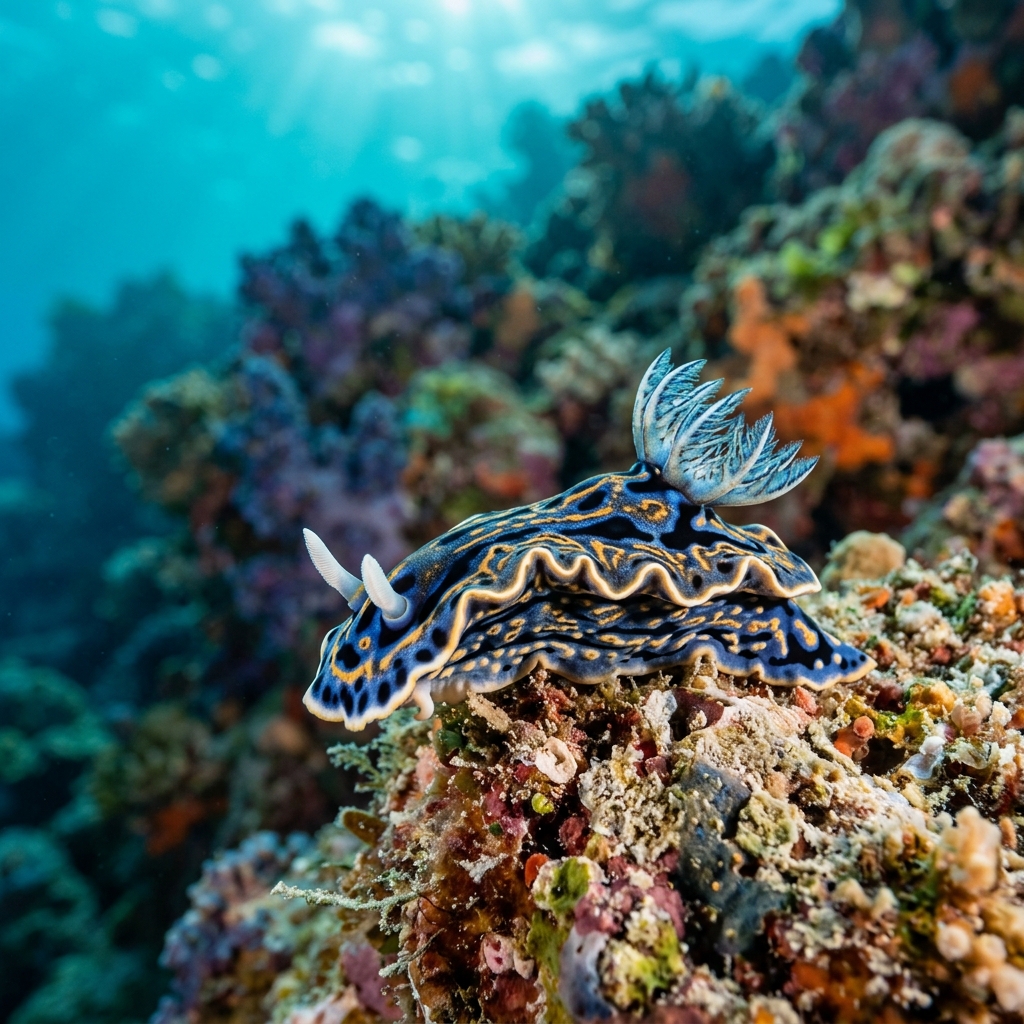
Small purple-bodied nudibranch with a smooth, glossy mantle marked by fine pale lines running along its length, giving it the three-lines look the common name refers to. Look for a contrasting orange or yellow-tipped gill cluster (the feathery breathing organ) on the rear of the back and a pair of similarly tipped rhinophores (the sensory horns) up front. It moves slowly across hard substrate and rubble, staying low and easy to miss unless you are scanning close to the reef.
Expect to find it parked on rubble, sponge patches, or low reef structure during the day, grazing slowly with no urgency and barely reacting to a torch or a close approach. It is a benthic (bottom-dwelling) crawler rather than a swimmer, so divers spot it by working slowly along the substrate on muck and reef dives rather than mid-water.
Like other chromodorid nudibranchs, its bright colouring is a warning rather than camouflage, likely advertising chemical defences it takes up from the sponges it feeds on.
No clear seasonal pattern shows up in the sightings, and it sits comfortably in warm 25.5 to 31.5C water typical of Southeast Asian reefs year-round, so any month is fair game.
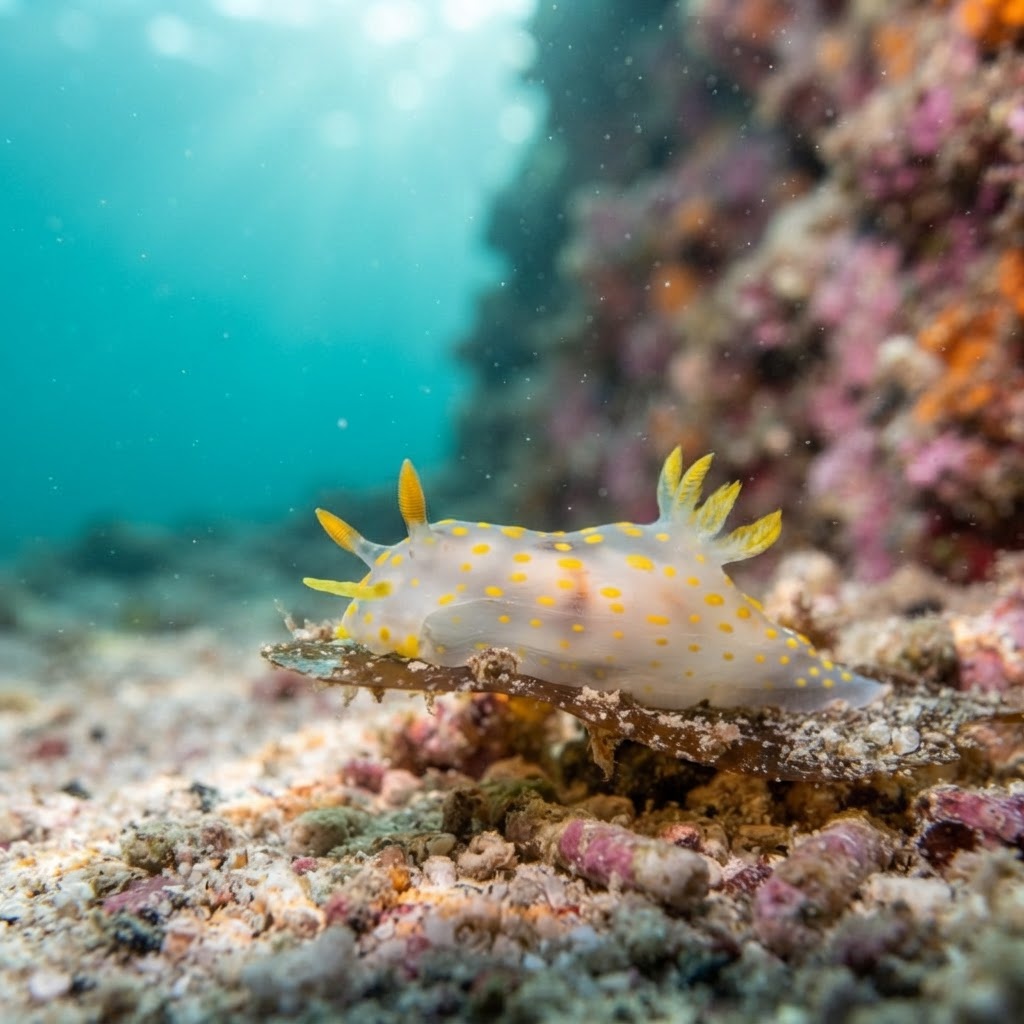
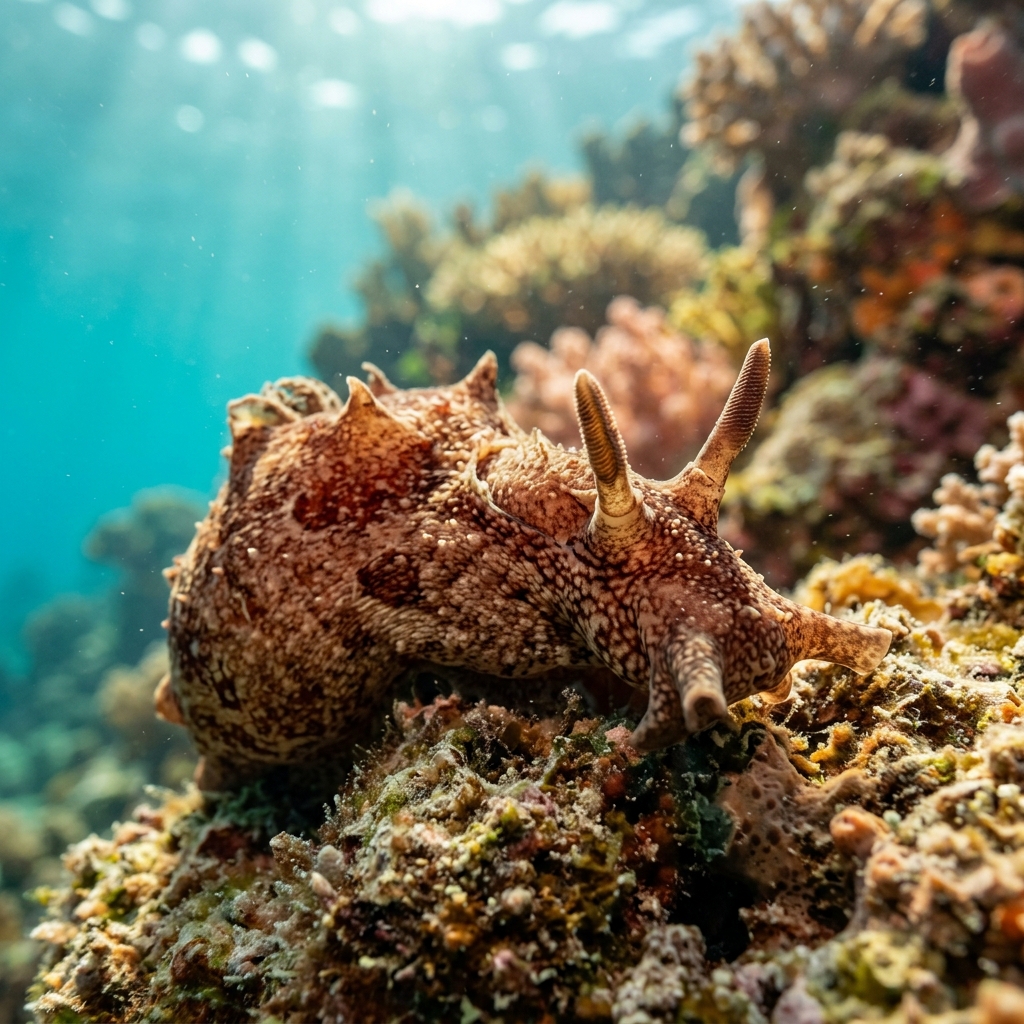
Reef neighbours a diver could mistake it for. Use the identification notes above to tell them apart.
Most reliably logged in the Philippines, especially around Luzon, and a strong second population across Bali in Indonesia. Divers also find it fairly often on Malaysia's Peninsular East Coast, with scattered records from Nusa Tenggara, Raja Ampat, Sulawesi, and Sabah, plus occasional sightings in Timor-Leste and Australia.
Mapping where Three-lines Purple Doris is logged…
Luzon in the Philippines and Bali in Indonesia are the strongest spots, with Malaysia's East Coast Peninsula also a solid bet. Smaller numbers turn up across Nusa Tenggara, Raja Ampat, Sulawesi, and Sabah.
There is no strong season in the sighting data, and its warm-water niche of roughly 25.5 to 31.5C matches tropical reefs all year, so it can turn up on any dive trip regardless of month.
Check for a purple body with fine pale lines along the mantle, plus orange-tipped gills and rhinophores at either end. It moves slowly over rubble and reef, making it easy to photograph once spotted.
No, it poses no threat to divers. It has no venom or sting relevant to humans and simply crawls slowly across the reef, ignoring divers entirely.
Exact size data is not available for this species, but like most Mexichromis nudibranchs it is small, typically a few centimetres long, and easy to overlook without close scanning of the reef.
Site and sighting data is aggregated from diver logs, iNaturalist and GBIF. For taxonomy and conservation status:
Light-spotted Aegires
3,168 sites