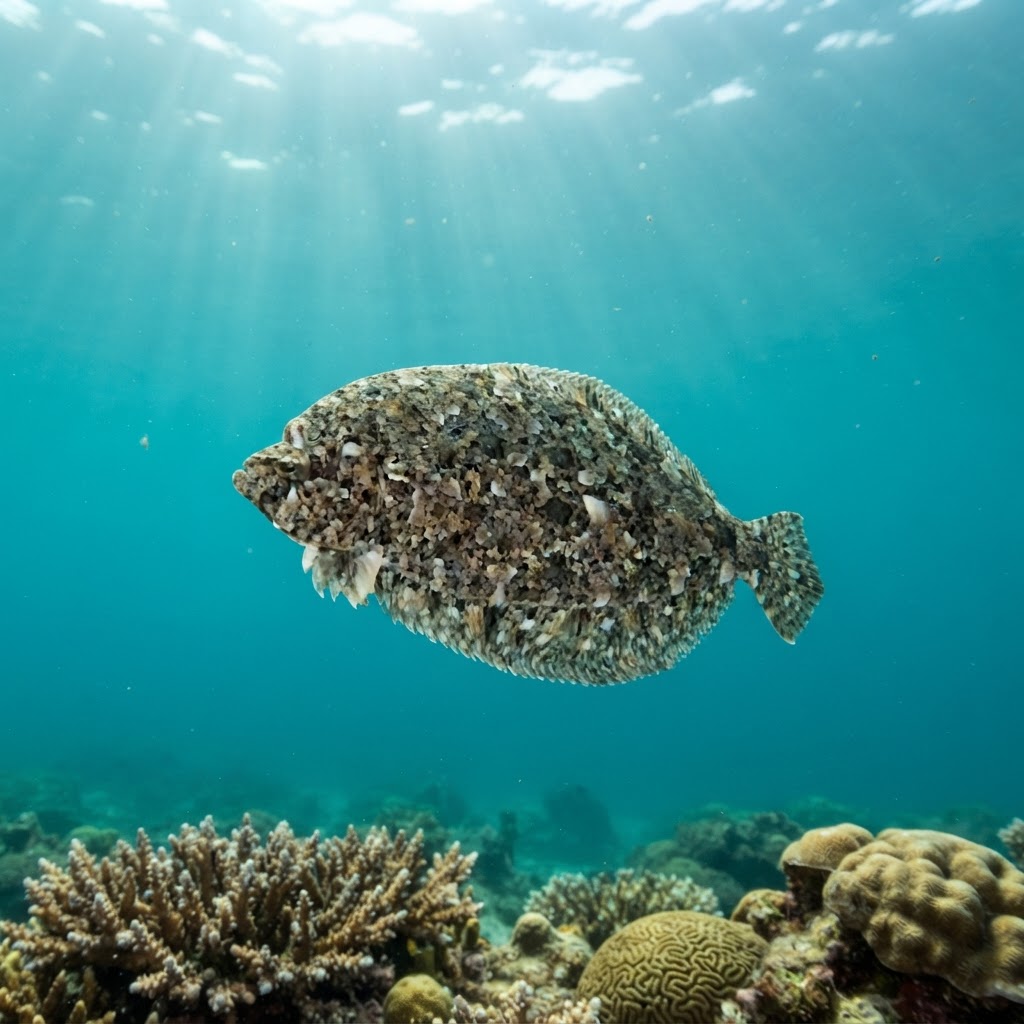
Arnoglossus thori
A small, sand-coloured flatfish logged year-round off the French Riviera and Lisbon Coast, usually uncommon and easy to swim past.
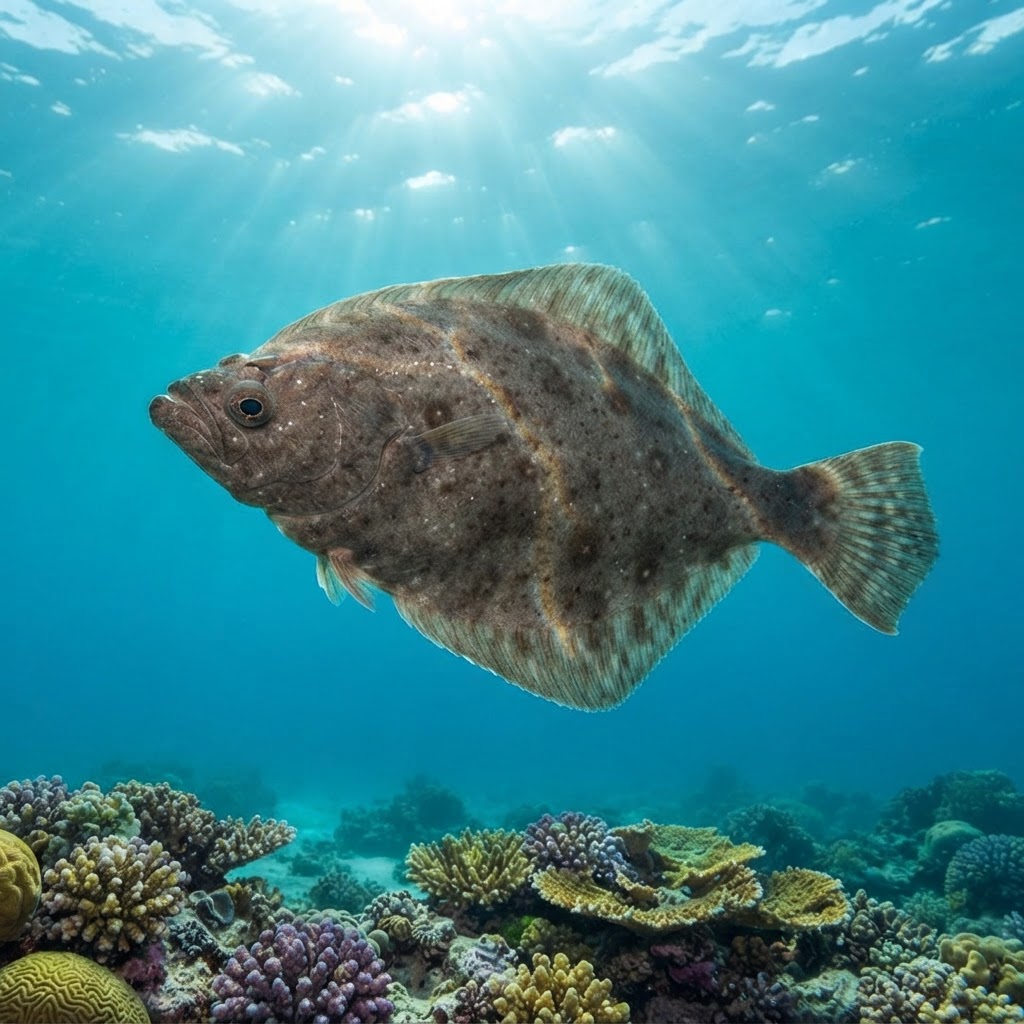
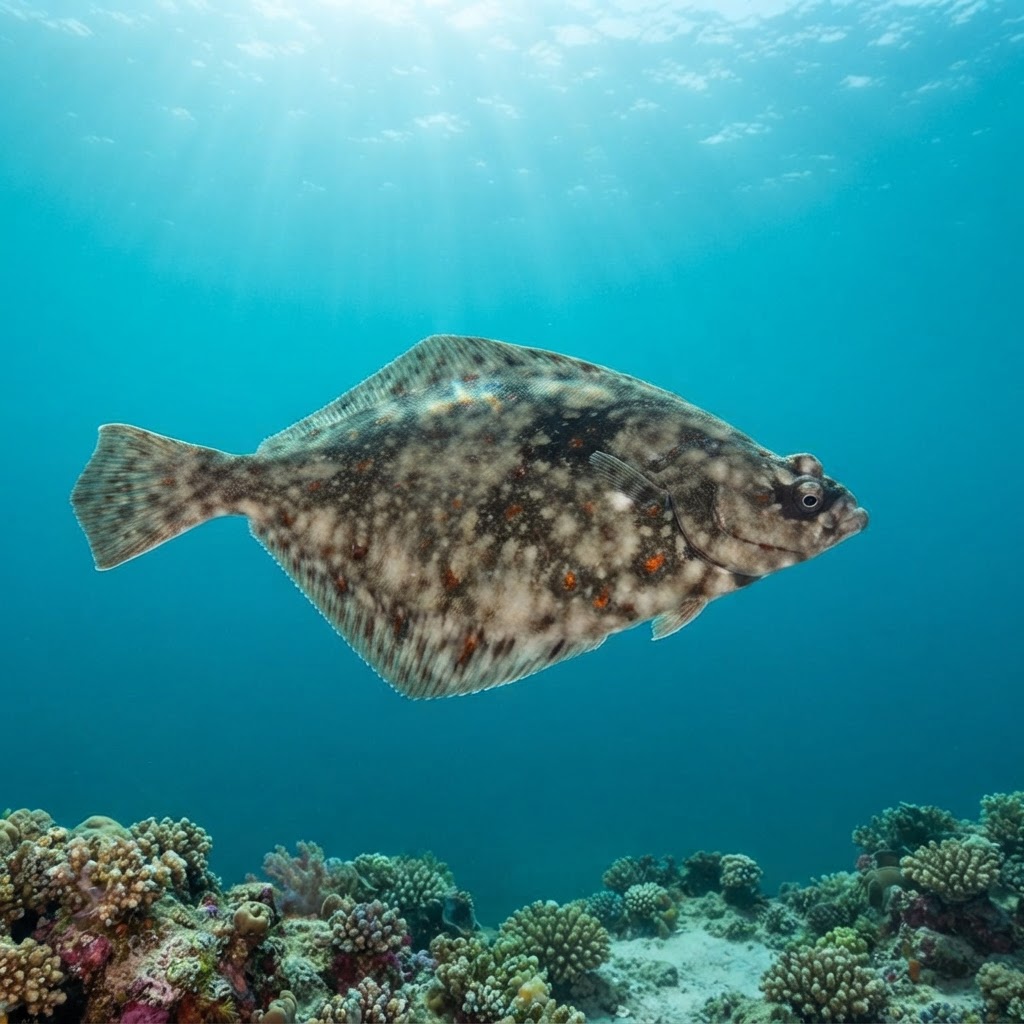
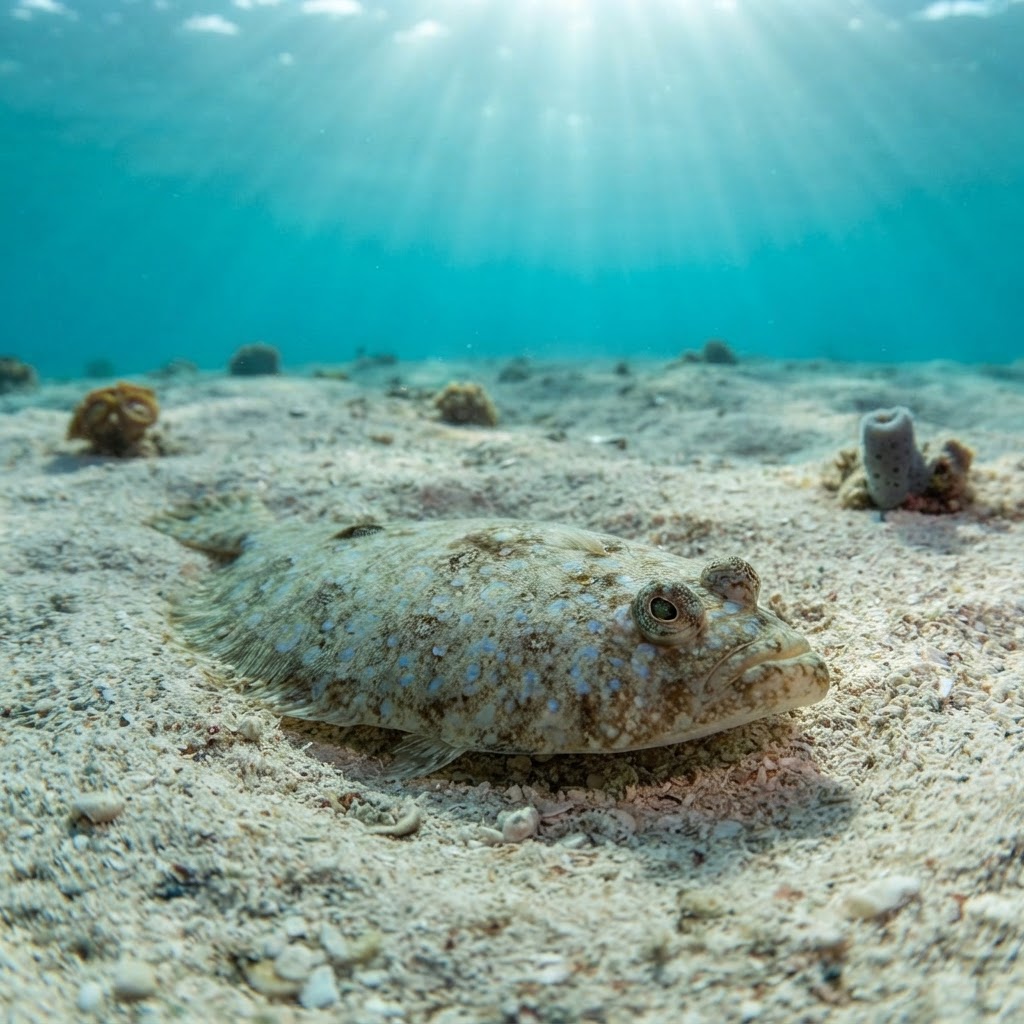
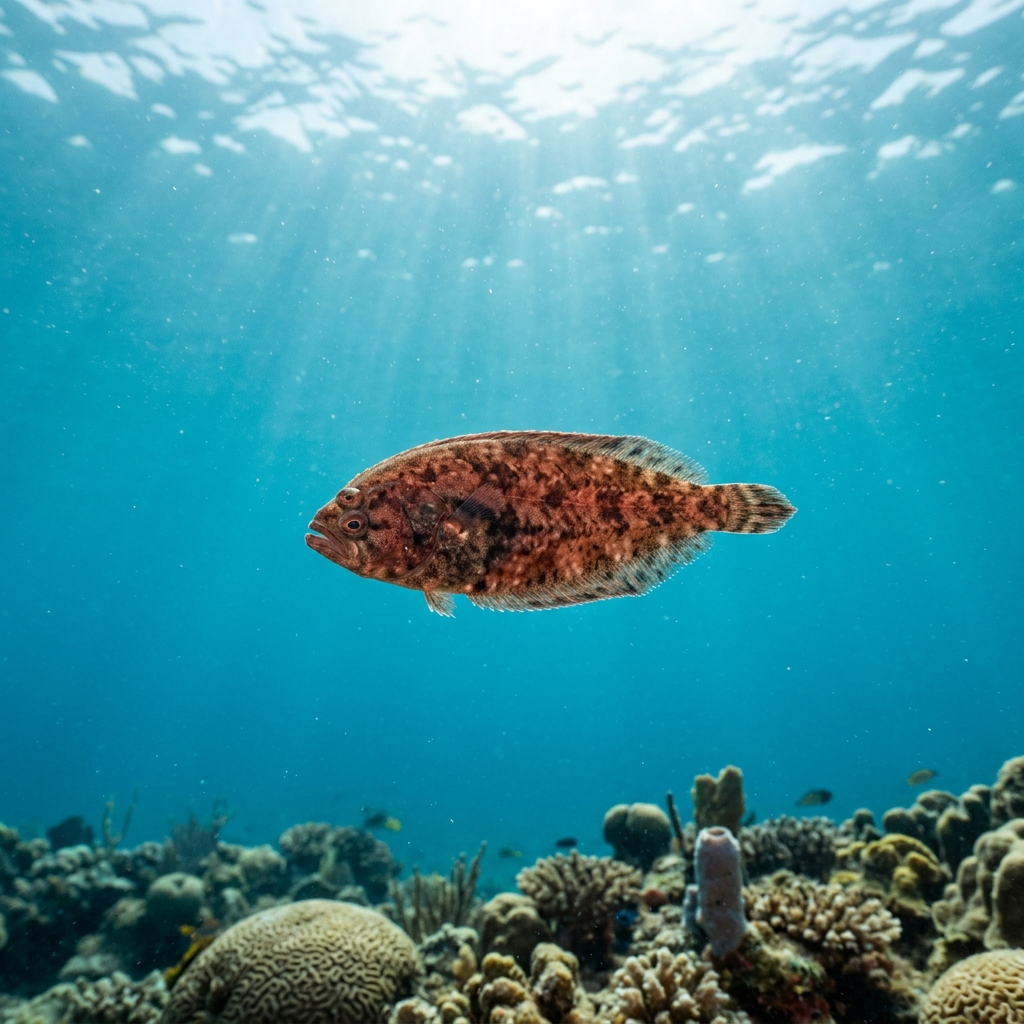
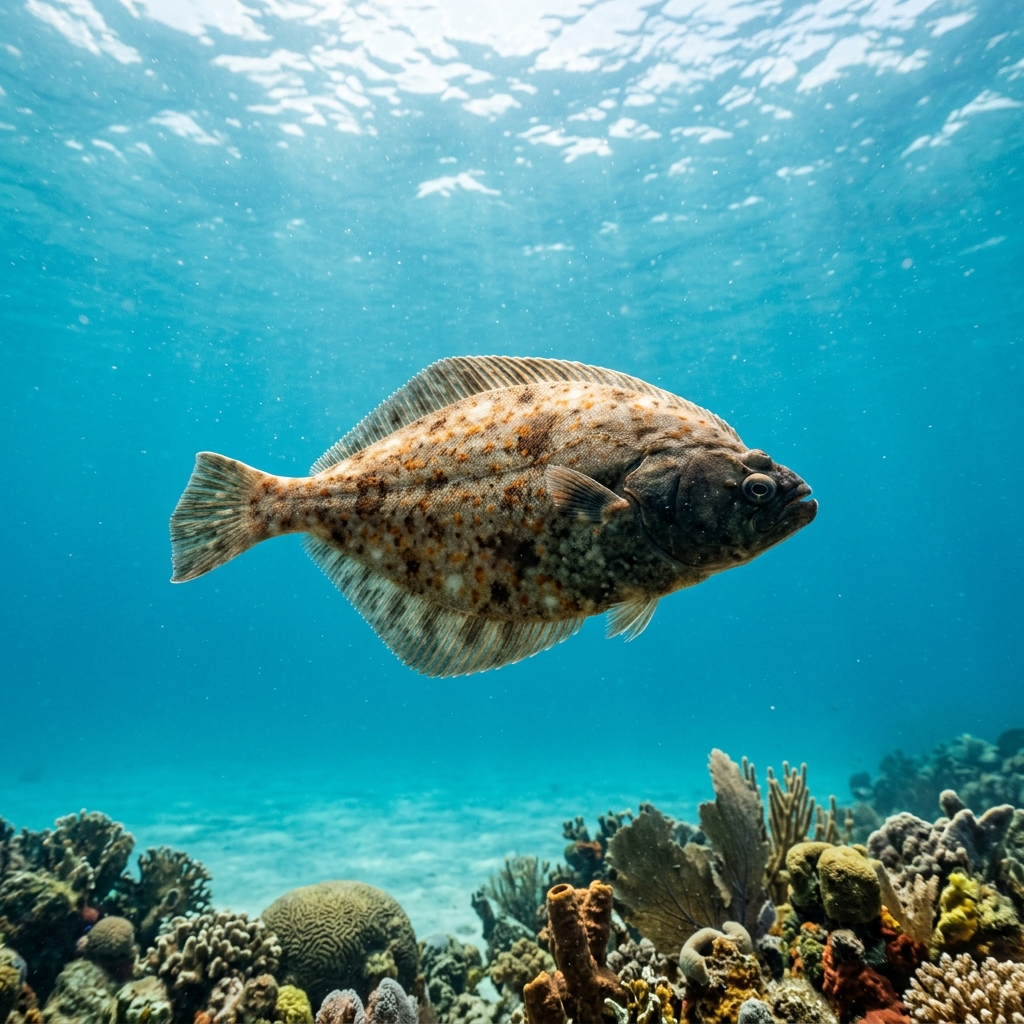
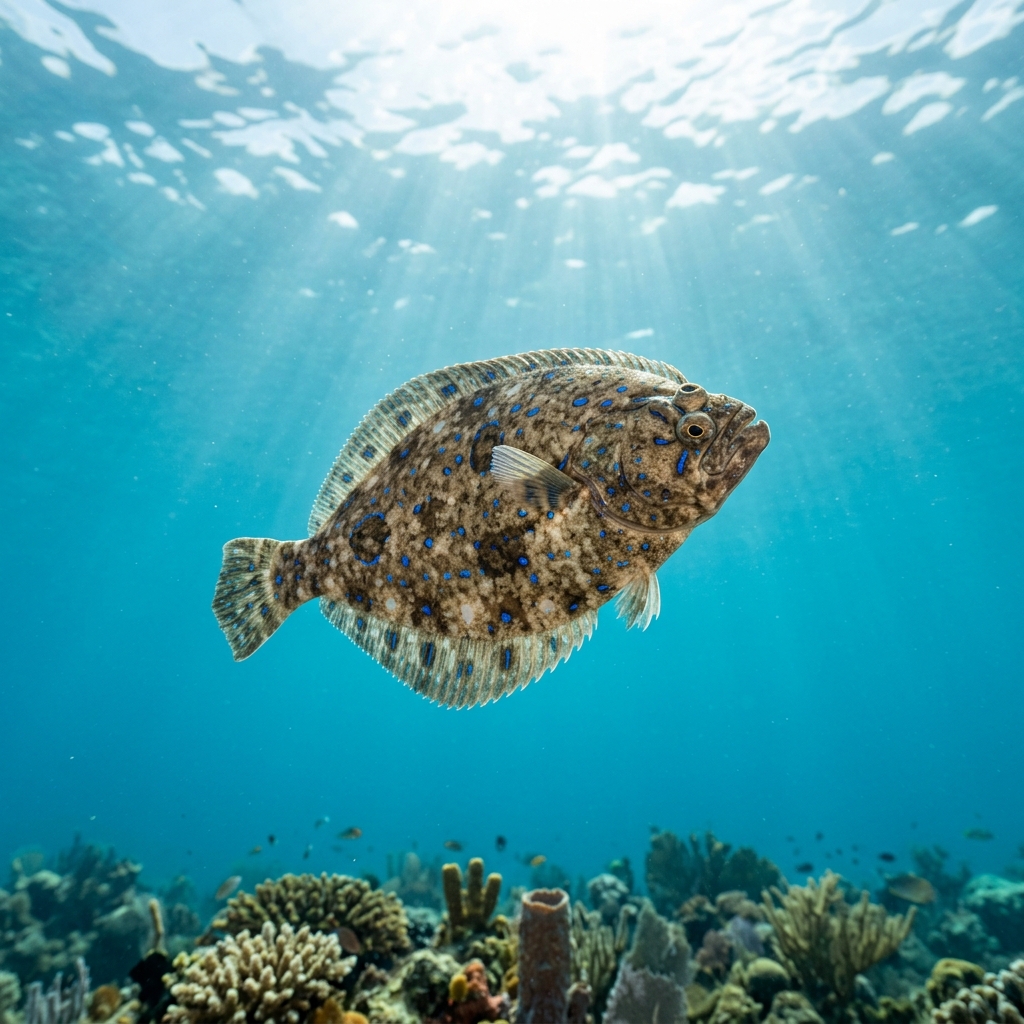
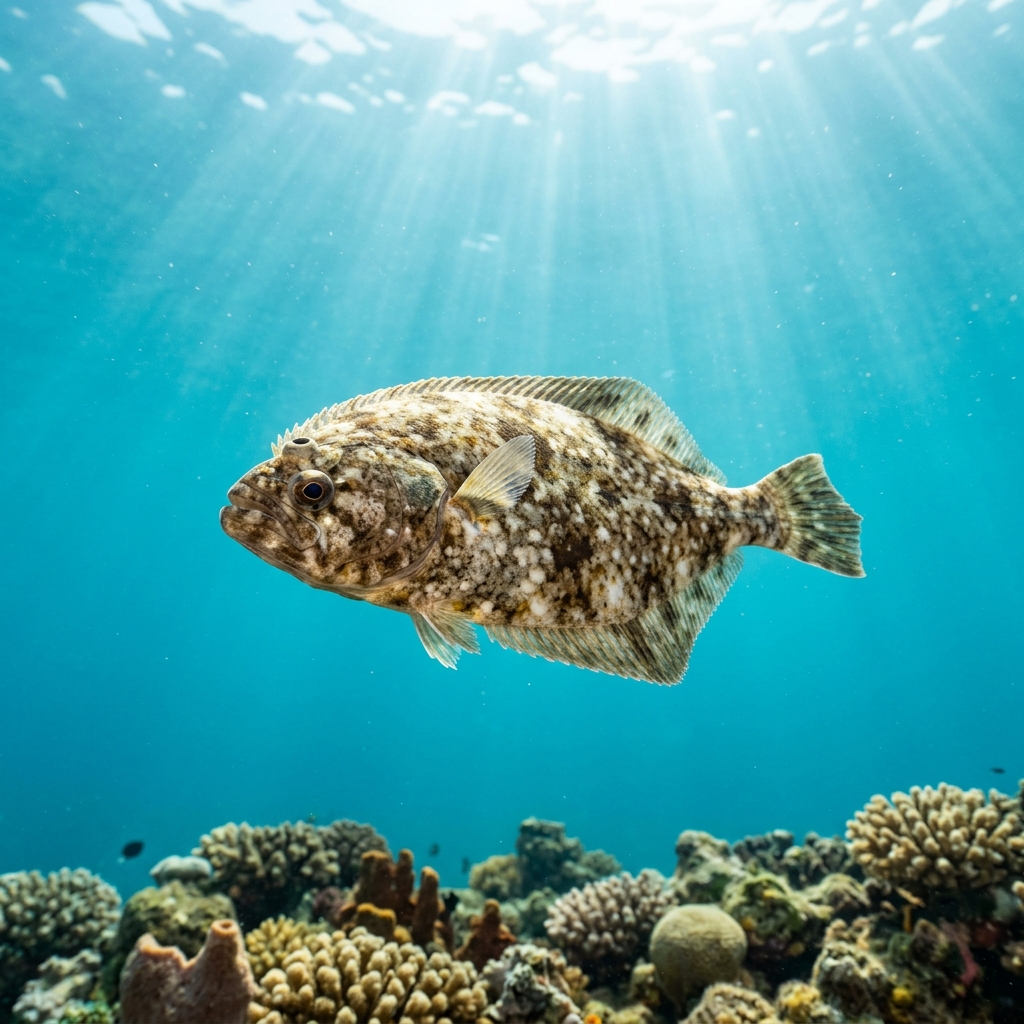
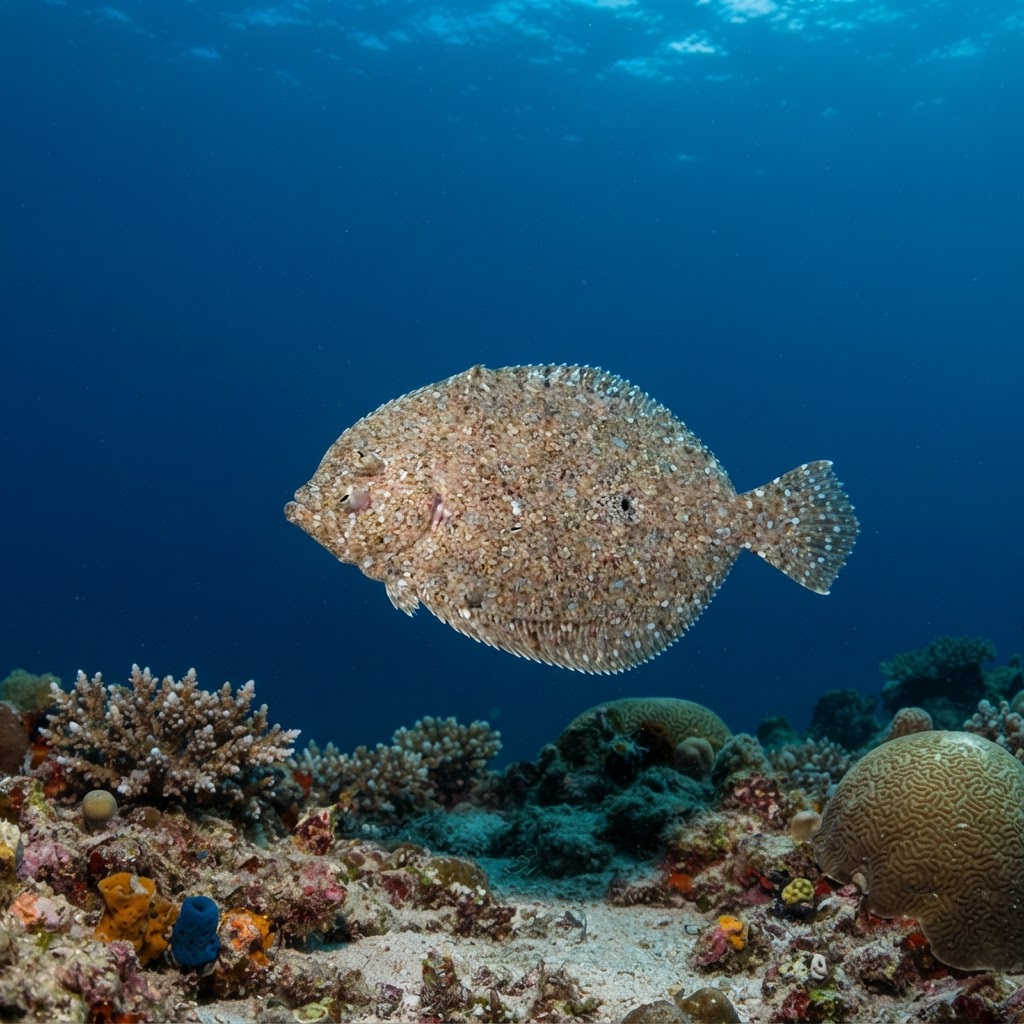
A small, oval flatfish that lies flush against sand or fine sediment, rarely more than 13 cm long, with both eyes on the right side of its body as is typical for this flatfish family. Colouring is a mottled sandy brown to grey that breaks up its outline against the seabed, so most divers spot it only when it flicks away in a short burst. Look for the flattened, almost translucent-edged body shape rather than any bold pattern, since this species relies on blending in rather than standing out.
Spends most of its time motionless on sand or fine sediment, often partly settled into the substrate where its mottled colouring makes it easy to overlook. When approached too closely it tends to dart a short distance in a quick, low glide before settling again rather than fleeing the area entirely. Divers usually find it while scanning open sandy stretches between reef or rock features rather than on the reef structure itself.
Like other members of the flatfish family, it starts life swimming upright with an eye on each side and only develops its lopsided, both-eyes-on-one-side skull as it matures and settles onto the seabed.
Sightings show no clear seasonal pattern, and with a water-temperature niche of roughly 13.7 to 18.6 C this fish is associated with the cooler end of temperate diving conditions rather than a specific month. Treat it as a year-round possibility on sandy patches within that temperature range.
Reef neighbours a diver could mistake it for. Use the identification notes above to tell them apart.
Most reliably logged along the French Riviera and Provence coast and more broadly across Occitanie in southern France, which together account for the bulk of recorded sightings. Portugal's Lisbon Coast is the other strong option, offering a second reliable region if you're diving outside France.
Mapping where Thor's Scaldfish is logged…
It's most often recorded along the French Riviera and Provence coast and in Occitanie, France, with a second reliable spot on Portugal's Lisbon Coast. Look on sandy seabed areas rather than rocky reef structure.
There's no detected seasonal pattern, so sightings are possible year-round. It's associated with cooler temperate water, roughly 13.7 to 18.6 C, rather than a particular season.
Look for a small flatfish, around 13 cm, lying flat on sand with a mottled sandy-brown to grey pattern that camouflages it against the seabed. Both eyes sit on one side of its head, and it tends to dart off in a short burst if disturbed.
They typically reach about 13 cm in length, making them one of the smaller flatfish a diver is likely to spot on a sandy bottom.
No, they pose no danger to divers. They're a small, harmless flatfish that simply relies on camouflage to avoid attention.
Like all flatfish, it hatches swimming upright with a symmetrical, two-sided face, then undergoes a dramatic transformation as one eye migrates across the skull so both end up on the same side once it settles onto the seabed.
Site and sighting data is aggregated from diver logs, iNaturalist and GBIF. For taxonomy and conservation status:
Wide Eyed Flounder
1,624 sites