Bothus maculiferus
A small, sand-coloured flatfish found on Caribbean reef margins, most reliably spotted in the Grenadines and Honduras's Bay Islands in warm 25-28C water.
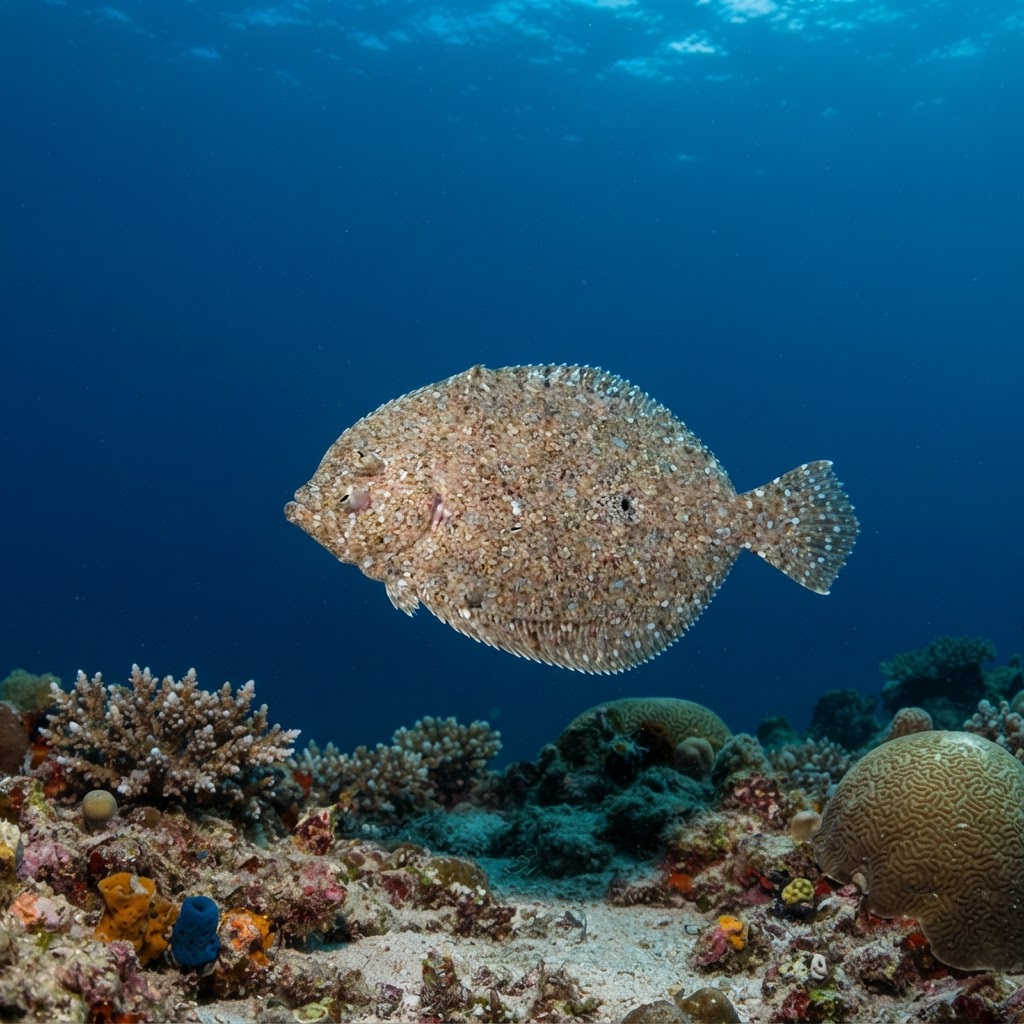
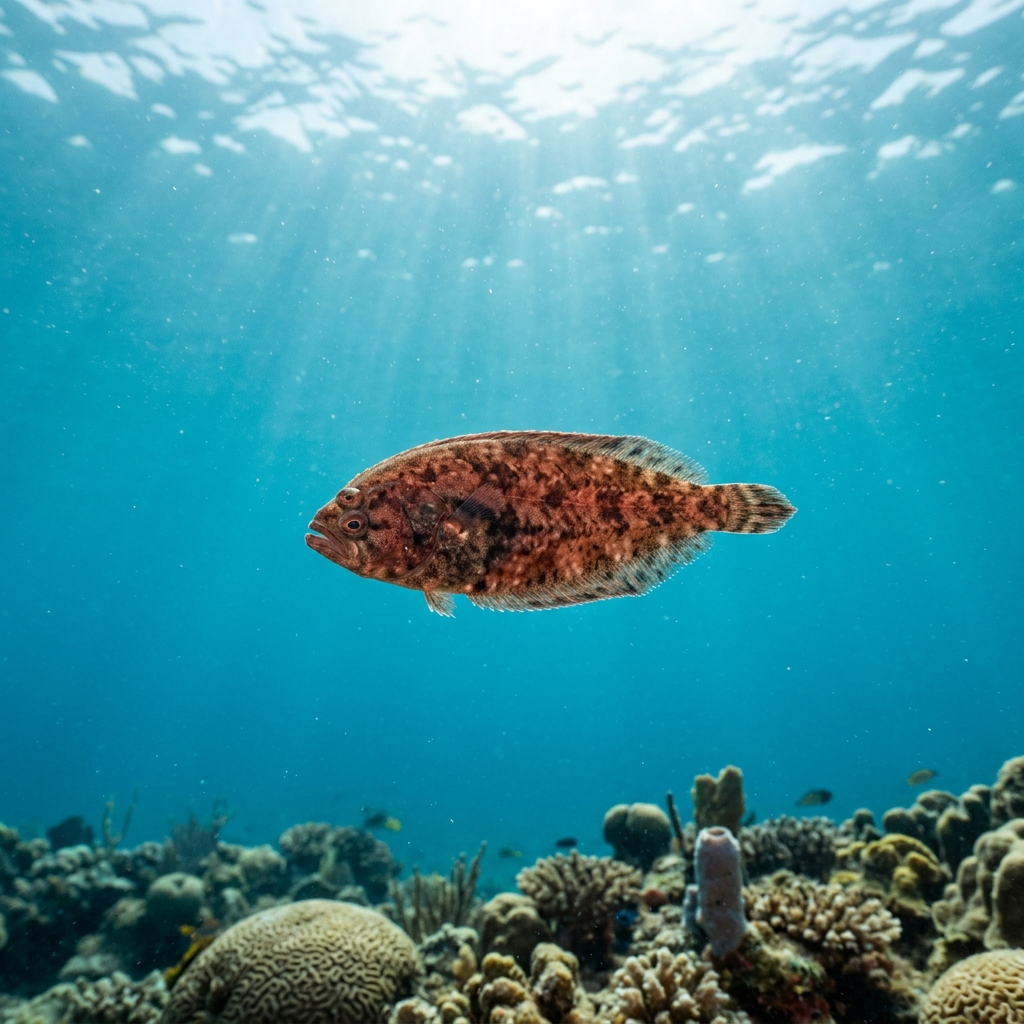
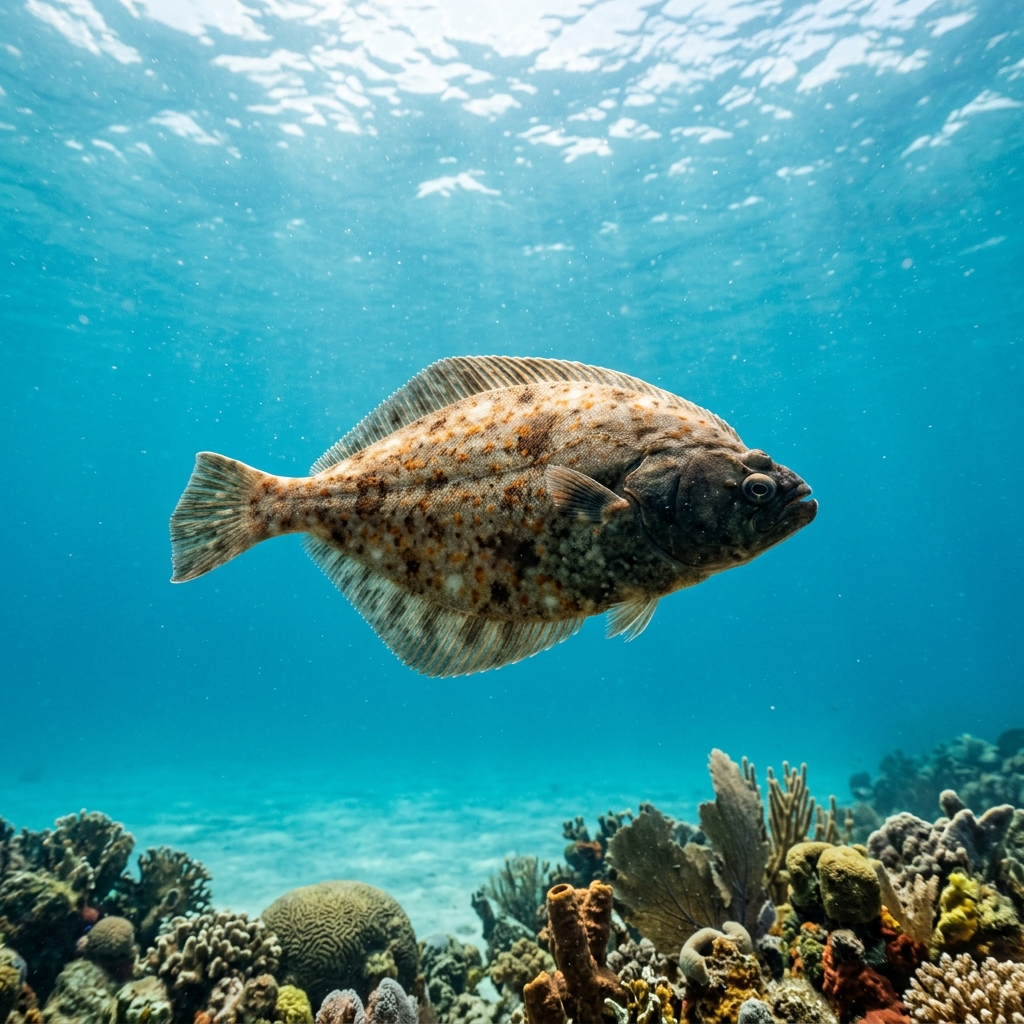
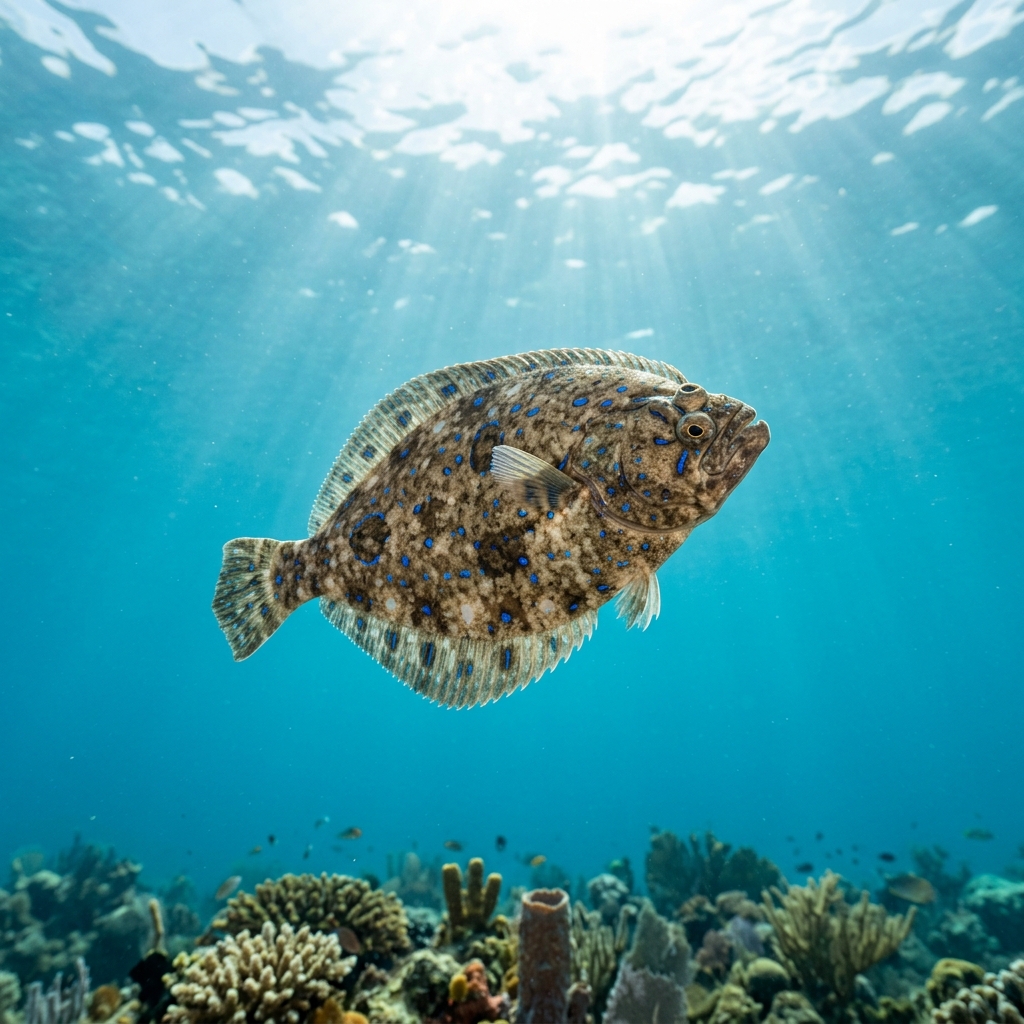
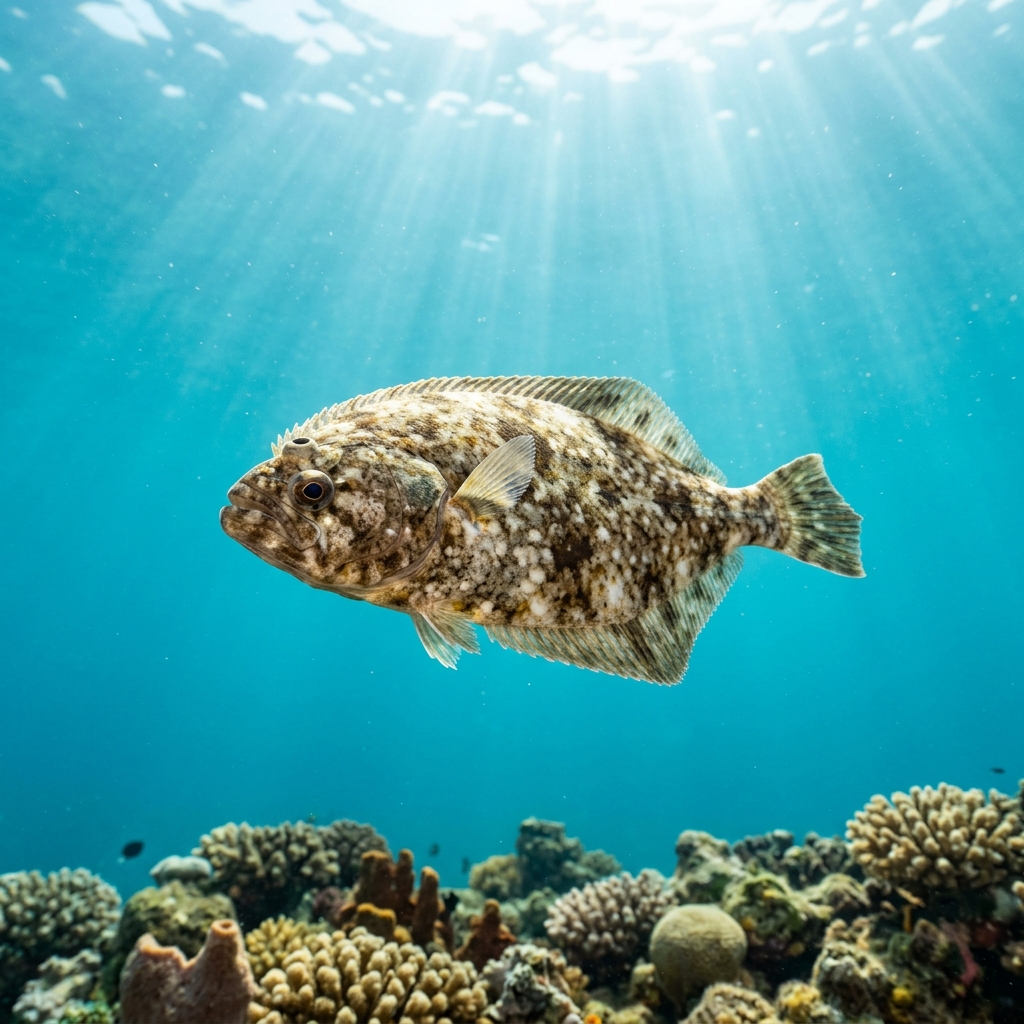
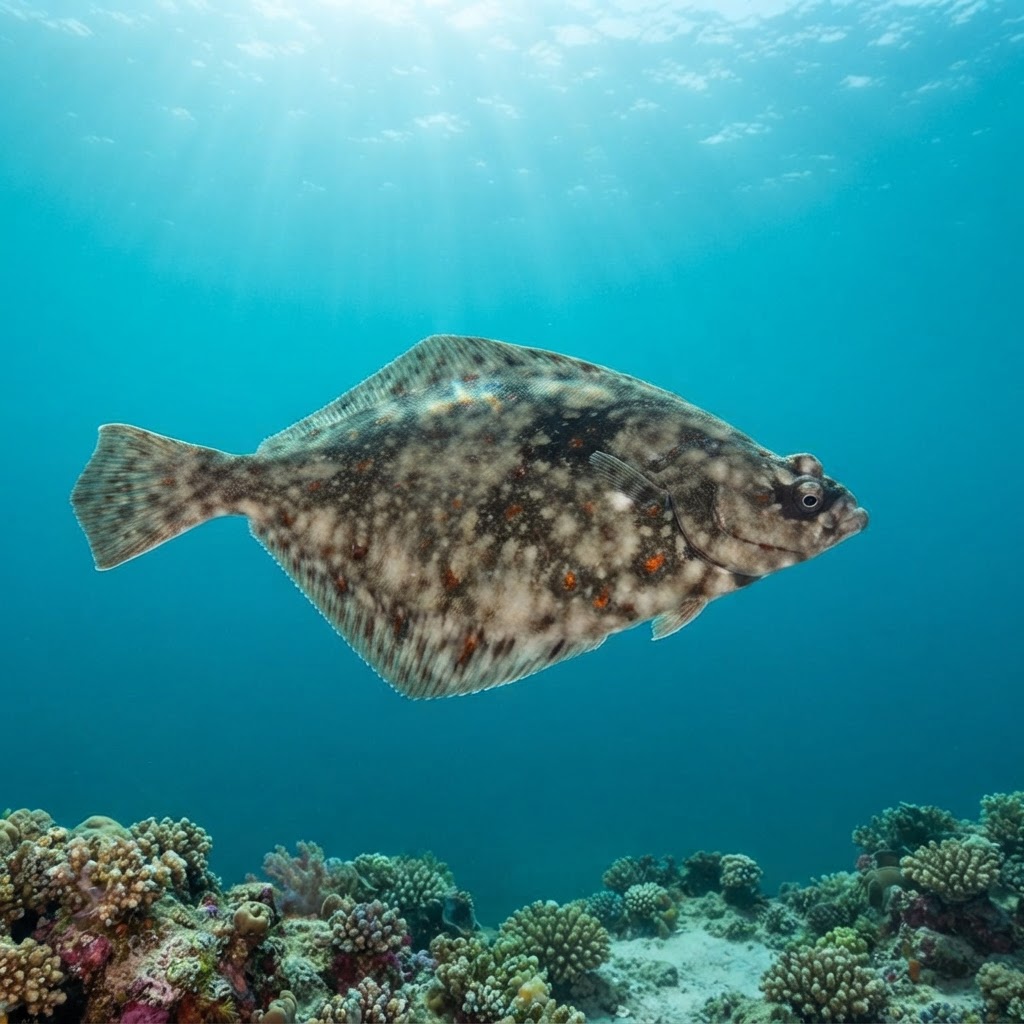
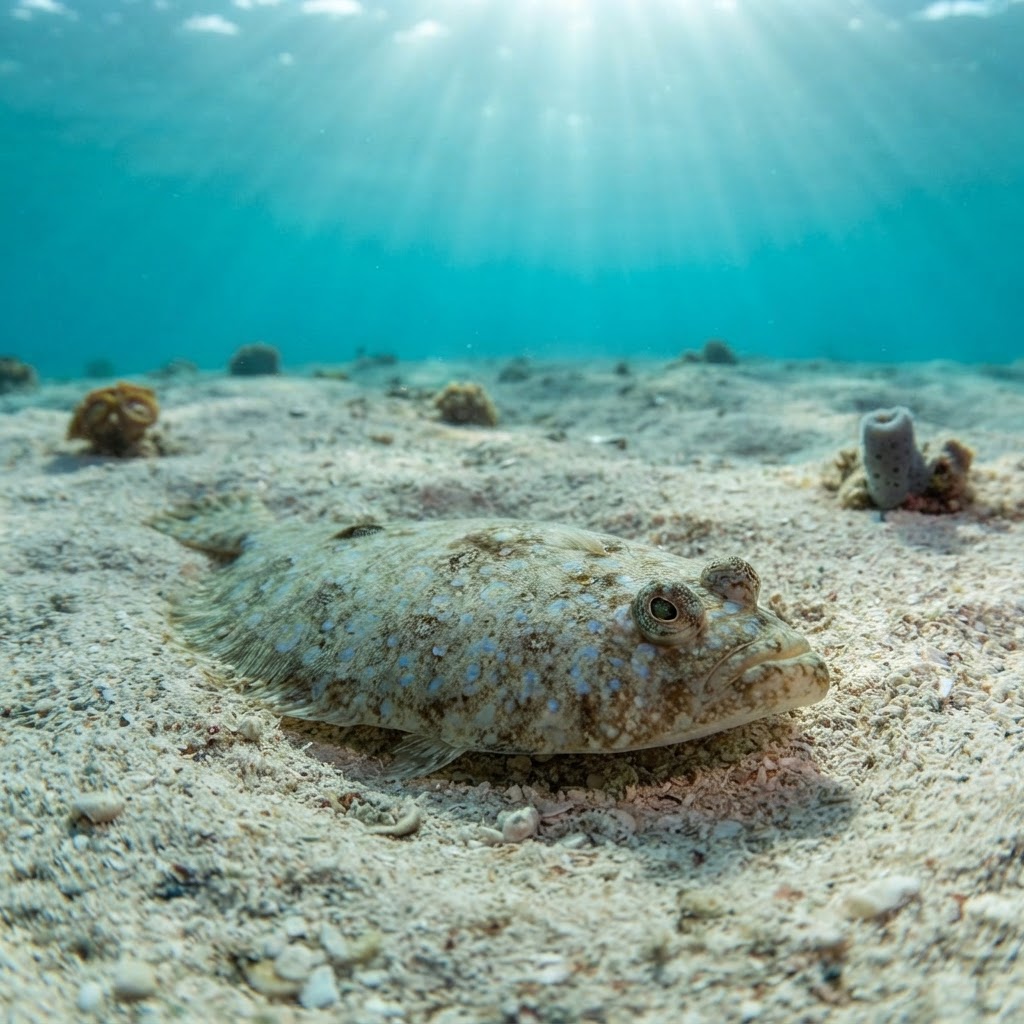
Small flatfish, topping out around 17 cm, lying flat on sand or rubble with both eyes on one side of its body (a lefteye flounder). Look for a mottled brown, tan and grey pattern speckled with darker spots that breaks up its outline against the seabed. It has the classic diamond-ish flatfish shape and tends to lie motionless until you're nearly on top of it, then flick off in a low, gliding dart.
Spends most of its time pressed flat against sand, rubble or mixed reef substrate, relying on its speckled pattern to disappear rather than swim away. Divers usually notice it only when it breaks cover with a short, low burst across the bottom before resettling and vanishing into the background again. It's logged as uncommon to rare at almost every site, so it rewards divers who slow down and scan sand patches near reef edges rather than those cruising past at speed.
Like other lefteye flounders, it starts life swimming upright with an eye on each side, then one eye migrates across the skull as it settles into its sideways, bottom-dwelling adult life on the seafloor.
No clear seasonal pattern shows up in the data, so treat it as a year-round find. It sits in a warm 25.4 to 28C niche, which matches Caribbean reef temperatures for most of the year, so timing your trip around season isn't necessary.
Reef neighbours a diver could mistake it for. Use the identification notes above to tell them apart.
Most reliably logged in the Grenadines in Saint Vincent and the Grenadines and around the Bay Islands of Honduras, with a further reach of sightings in Puerto Rico's west coast, Mexico's Yucatán Peninsula, Ocho Rios in Jamaica, and Bonaire and Curacao's leeward coasts. It shows up across a wide spread of Caribbean sites but nowhere in real numbers, so treat any sighting as a bonus rather than the dive's headline.
Mapping where Maculated Flounder is logged…
Best chances are in the Grenadines in Saint Vincent and the Grenadines and the Bay Islands of Honduras, with further sightings logged in Puerto Rico, Mexico's Yucatán Peninsula, Jamaica, Bonaire and Curacao.
There's no strong season in the sighting data, so it's a year-round possibility on Caribbean reefs, where water stays in the warm 25 to 28C range it favours.
Look for a small, flat, diamond-shaped fish under 17 cm lying on sand or rubble, coloured in mottled brown, tan and grey with speckled dark spots that blend into the seabed. Both eyes sit on one side of its head, and it moves in short, low glides rather than swimming freely.
They're a small flatfish, typically reaching around 17 cm, so they're easy to miss against a busy sandy bottom.
No, they're harmless and pose no risk to divers, spending their time flat against the seabed and moving off if approached too closely.
Site and sighting data is aggregated from diver logs, iNaturalist and GBIF. For taxonomy and conservation status:
Wide Eyed Flounder
1,624 sites