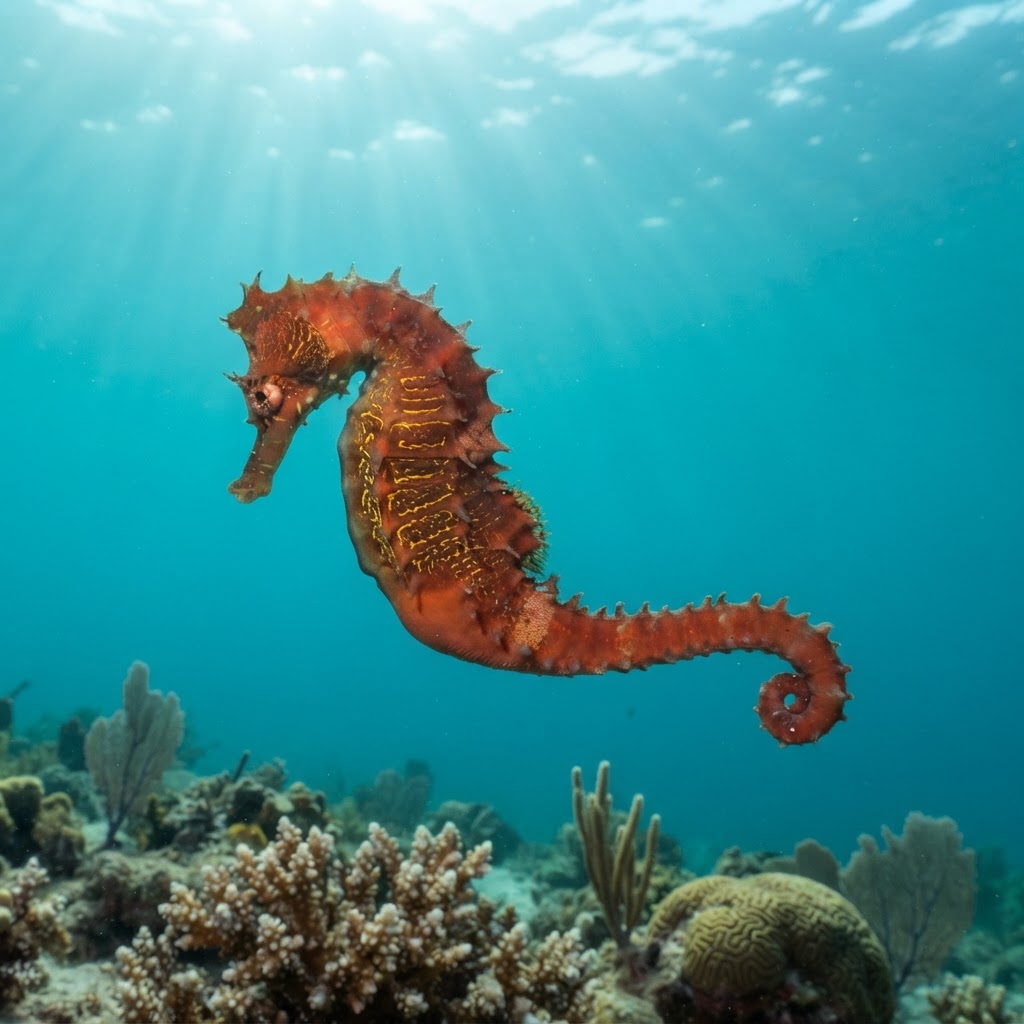
Hippocampus histrix
Spiky-bodied and easy to miss, this seahorse turns up in Bali and Luzon reefs at 24-29C, uncommon but findable year-round.
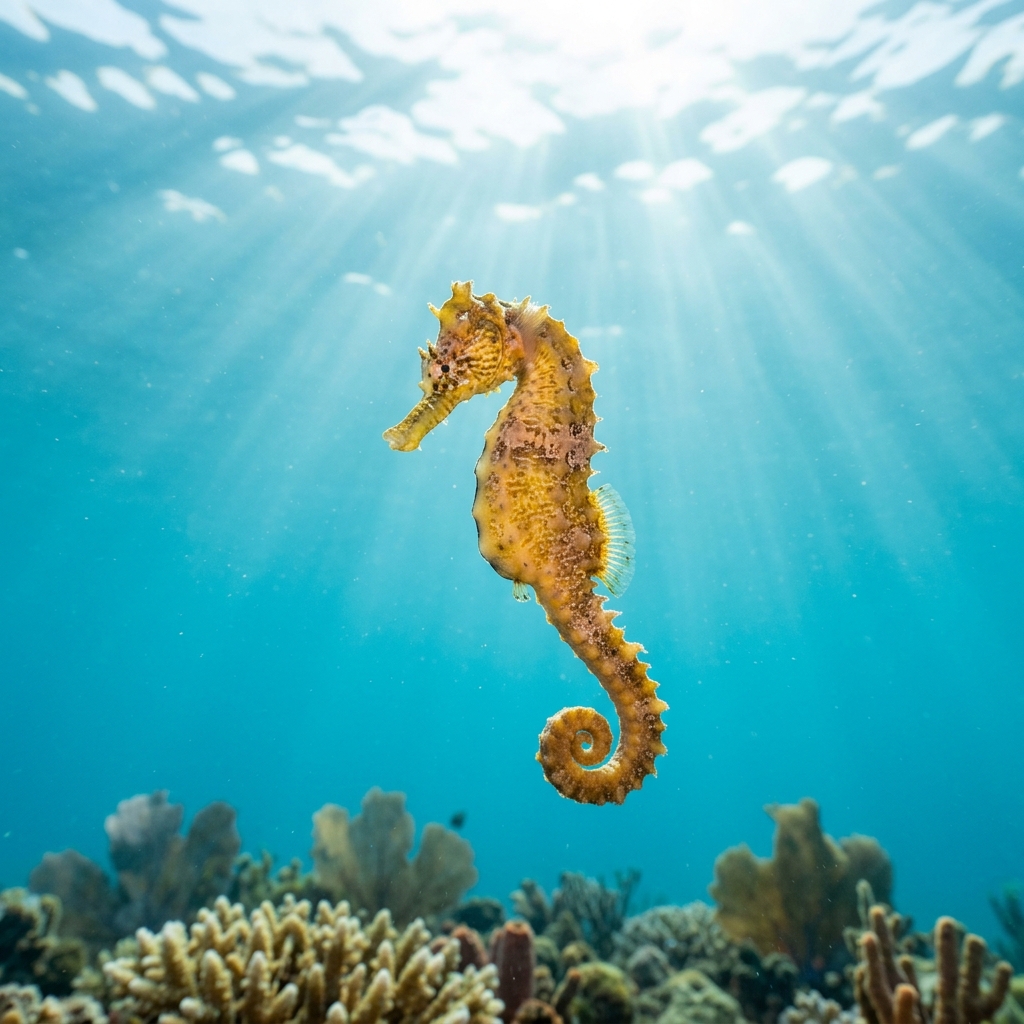
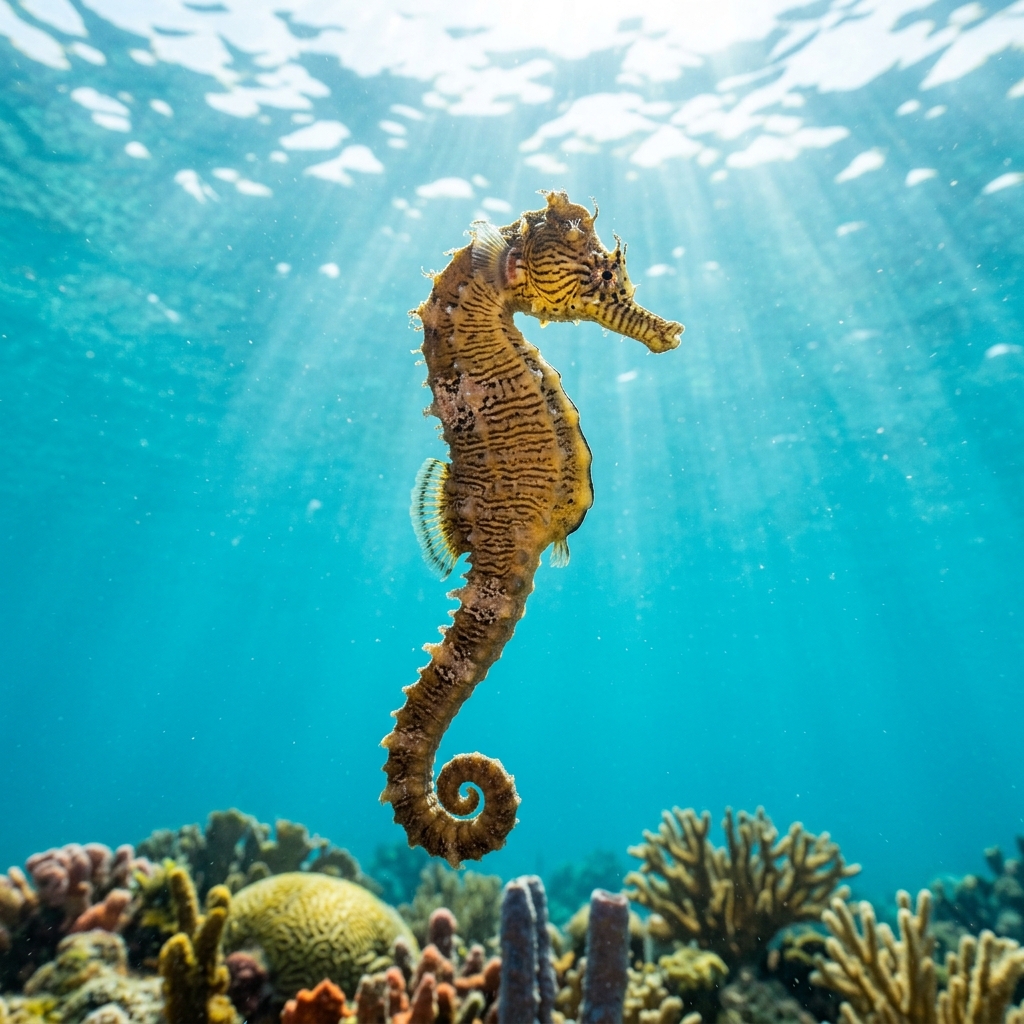
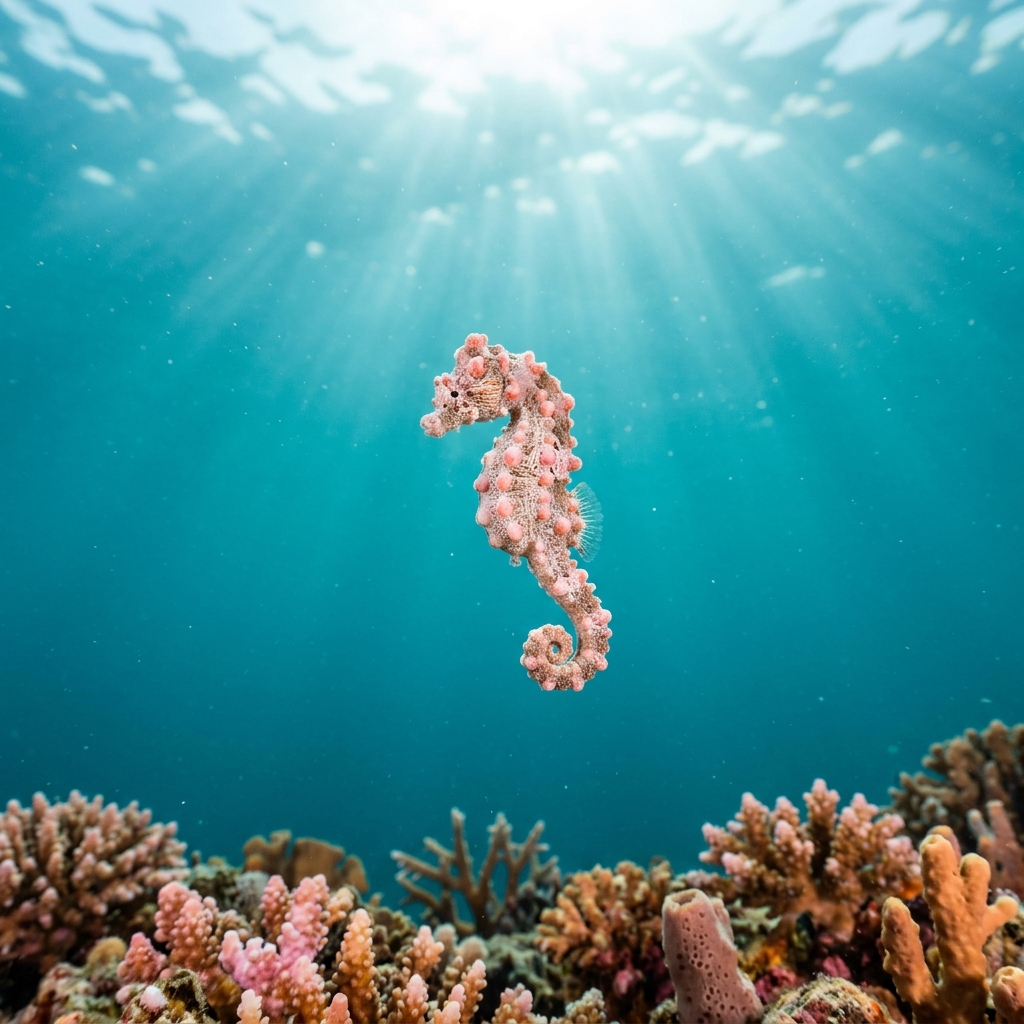
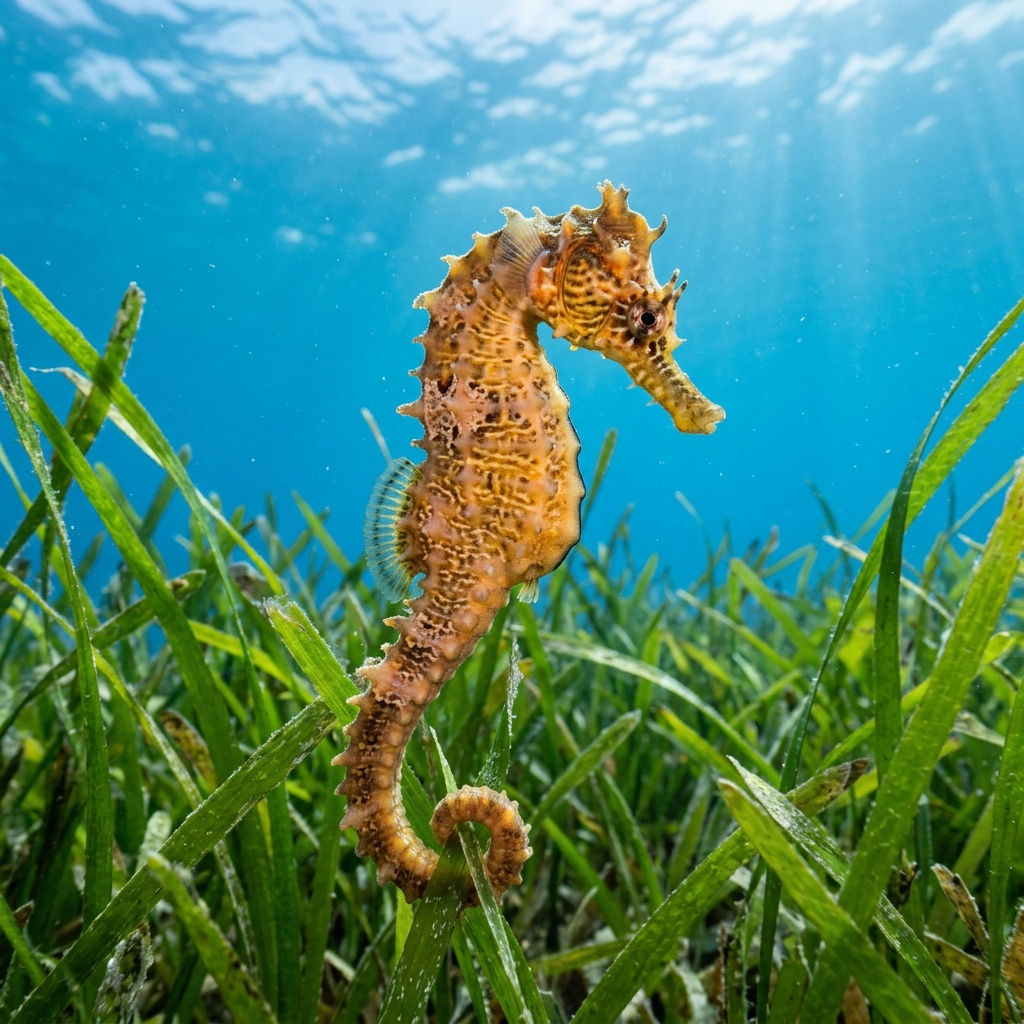
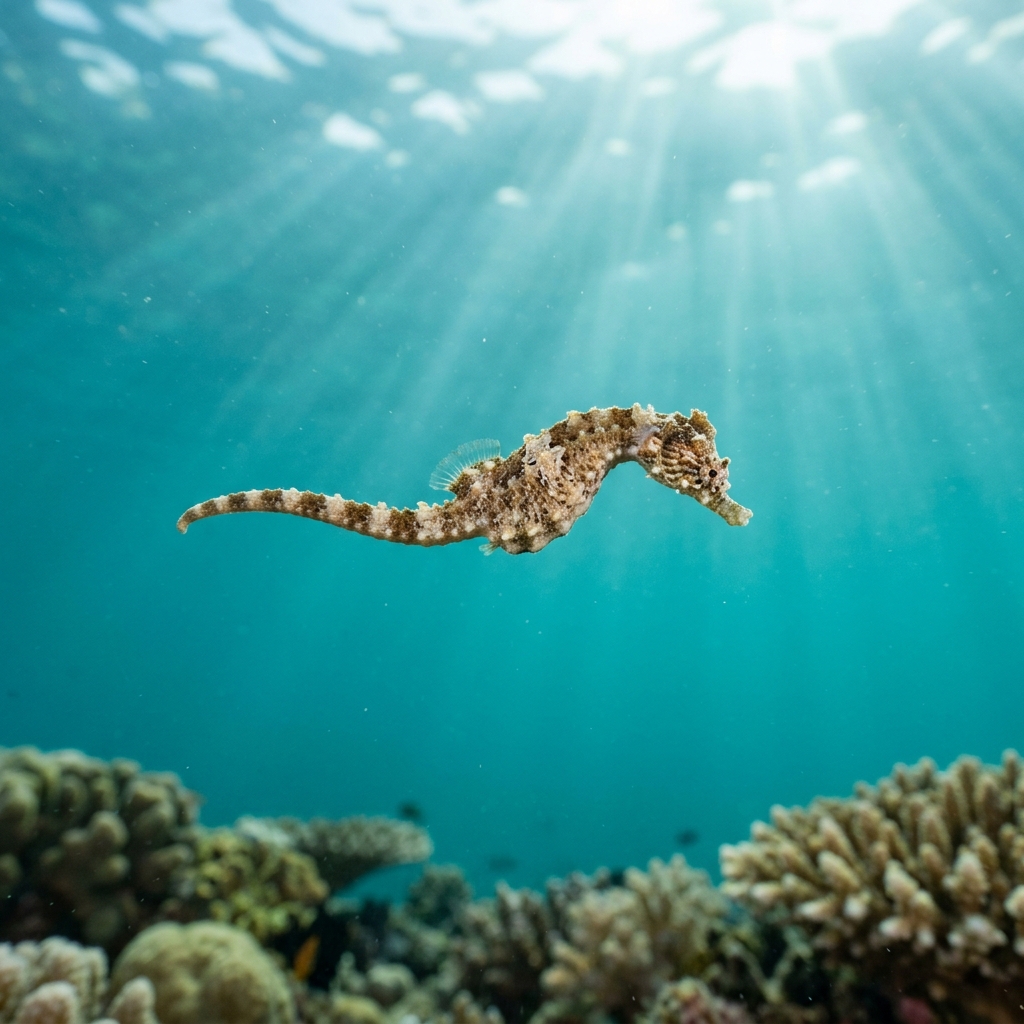
Look for a small seahorse, around 12 cm, covered in long, sharp spines running down the head, back and body, giving it a bristly, thorn-covered silhouette rather than the smooth or knobby look of most seahorses. Colour varies from pale tan to reddish-brown and yellow, usually mottled to match whatever gorgonian or sponge it is gripping with its tail. The spines are the giveaway: longer and more pronounced than on any similarly sized seahorse, especially over the eyes and along the ridge of the back.
Expect to find it holding still, tail wrapped around a branch of soft coral, sponge or gorgonian, relying on its spiny, mottled body to disappear into the background rather than swim away. Divers who spot one usually do so by chance while scanning slowly along a reef wall or muck-diving substrate, since it barely moves and gives few visual cues beyond the outline of its spines. Like other seahorses it feeds by ambush, sucking in small crustaceans that drift past its perch.
Seahorses are one of the few animal groups where the male carries the pregnancy, incubating fertilised eggs in a belly pouch until fully formed young are released into the water.
Water temperatures where it has been recorded run from about 24.4 to 29.0 C, well within the year-round range of both Bali and Luzon, and there is not enough seasonal data to point to a particular month. Treat it as a species to look for on any dive in these regions rather than one tied to a season.
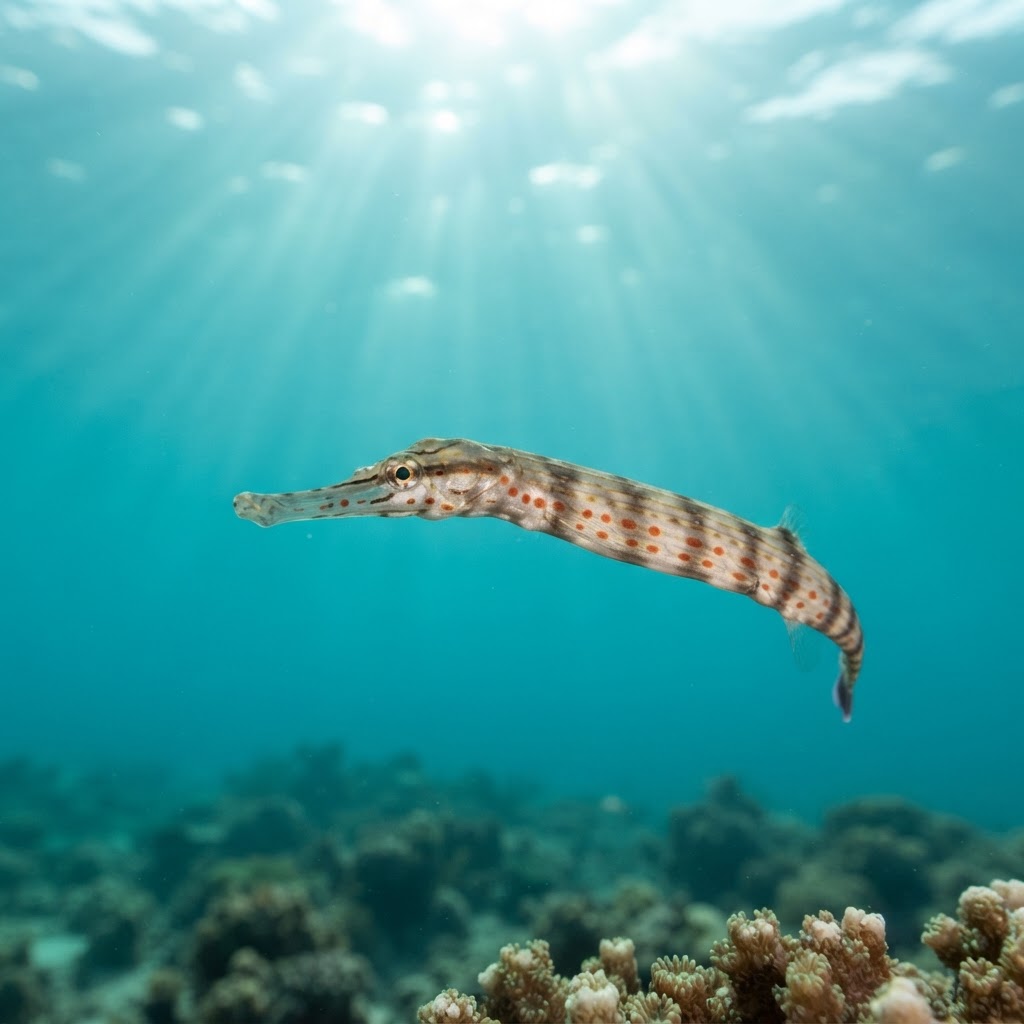
Reef neighbours a diver could mistake it for. Use the identification notes above to tell them apart.
Sightings cluster in Indonesia and the Philippines, with Bali standing out in Indonesia and Luzon the strongest area logged in the Philippines. Both regions offer the kind of muck and reef-slope habitat where this species tends to be found, though it stays uncommon even at the sites where divers have logged it.
Mapping where Thorny Seahorse is logged…
The most reliable regions logged are Bali in Indonesia and Luzon in the Philippines, where divers have found it on reef slopes and muck sites. It stays uncommon even in these areas, so finding one usually takes a slow, careful scan with a guide who knows the site.
There is no clear seasonal pattern in the sighting data, and its temperature niche of roughly 24 to 29 C matches year-round conditions in Bali and Luzon. It is best treated as a species to look for on any dive rather than one linked to a particular month.
Check for long, sharp spines covering the head and running down the back and body, more pronounced than on smoother-bodied seahorses. Colour is usually mottled brown, tan or reddish to match the gorgonian or sponge it is gripping, and it sits at around 12 cm.
They reach around 12 cm in length, making them a small to mid-sized seahorse that is easy to overlook against a busy reef background.
As with all seahorses, the male carries the pregnancy, holding fertilised eggs in a specialised belly pouch until he releases fully developed young into the water.
Site and sighting data is aggregated from diver logs, iNaturalist and GBIF. For taxonomy and conservation status:
Seahorse
1,346 sites