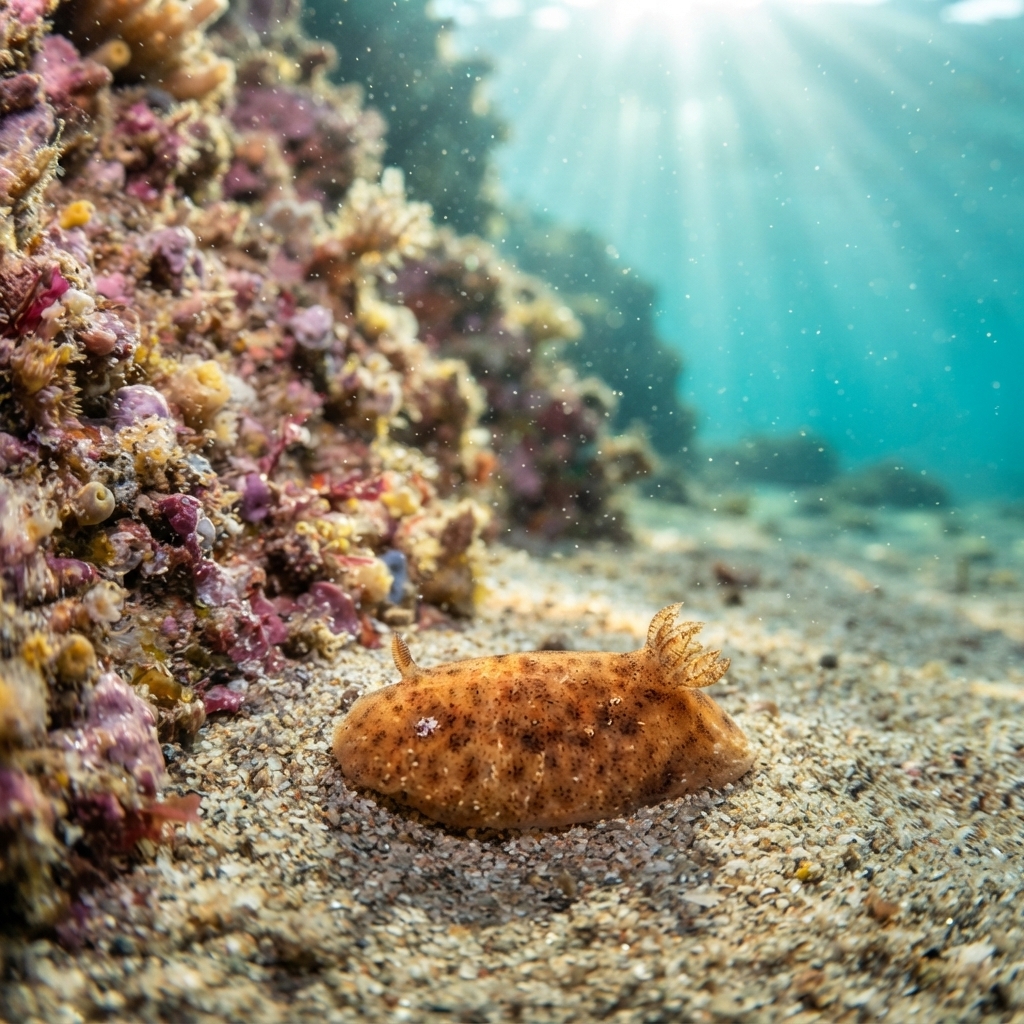
Taringa telopia
A small, uncommon nudibranch logged year-round on the Caribbean Coast of Colombia and Guadeloupe's reefs in 24.6 to 30.6C water.
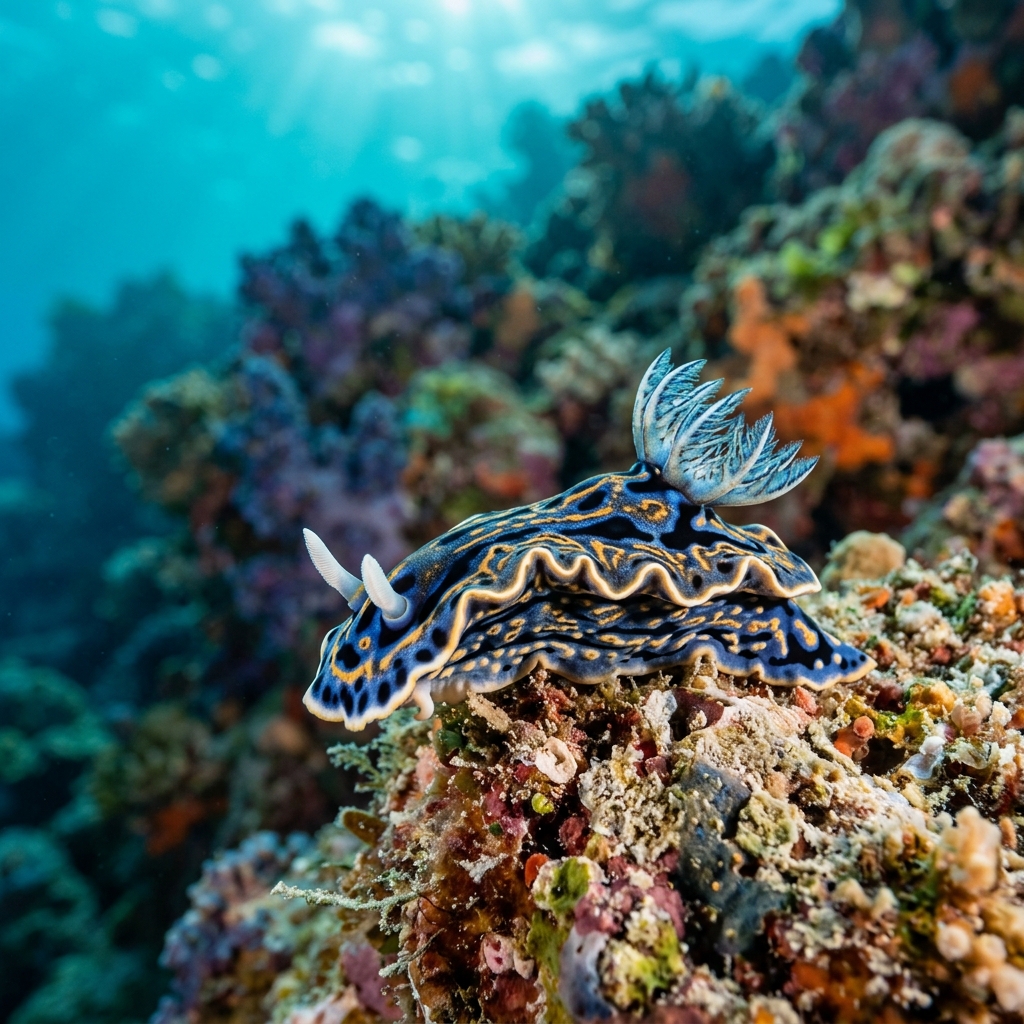
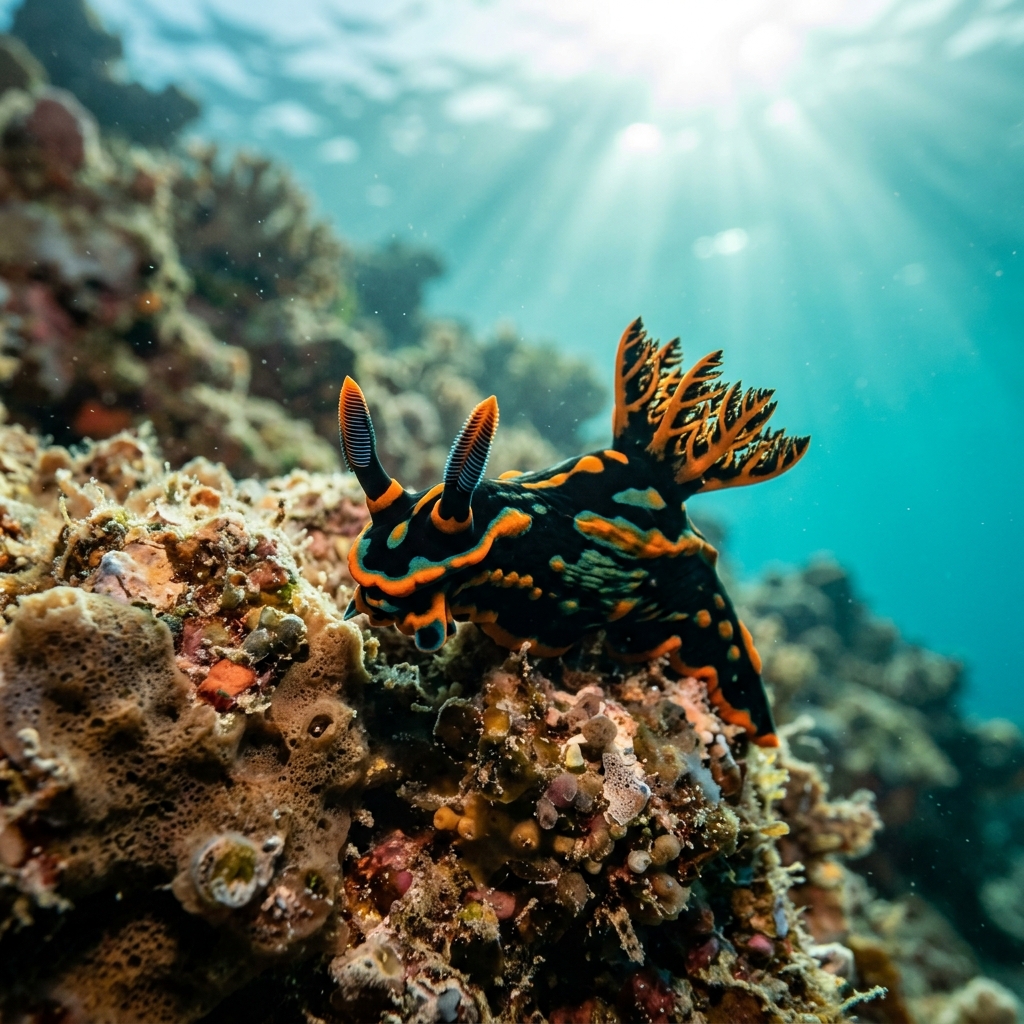
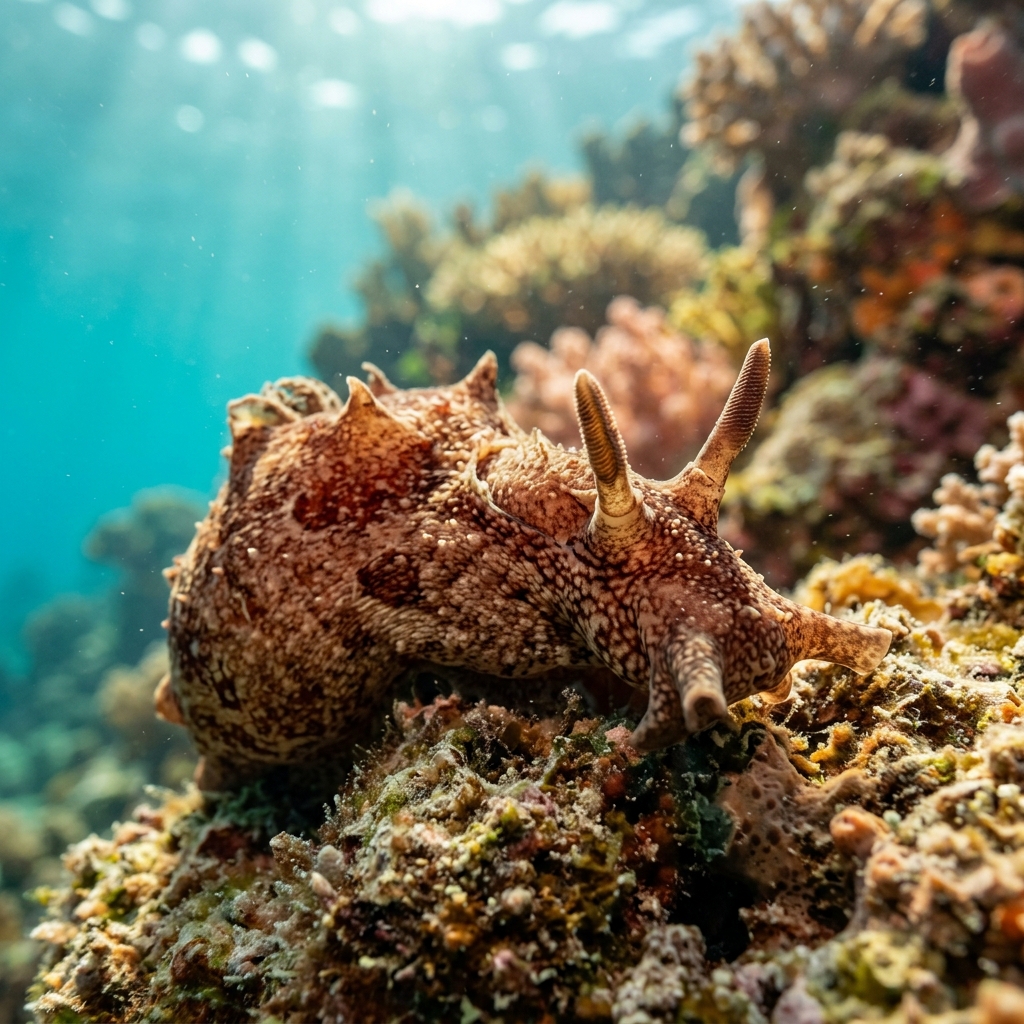
Tops out around 3 cm, so this is very much a slow-down-and-look find rather than something you spot from mid-water. Like other discodorids, expect a broad, soft-edged oval body (a flattened mantle) rather than a sleek streamlined shape, with a rosette of gills near the tail end and a pair of sensory tentacles (rhinophores) up front. Look for it tucked low on the reef substrate rather than out swimming, since nudibranchs of this size rely on staying close to the bottom.
Divers find it moving slowly across hard substrate or tucked into reef crevices, doing the unhurried grazing that nudibranchs are known for. It shows no reaction to divers beyond its usual pace, since it has no eyes or ears in any meaningful sense and relies on chemical cues rather than sight. Best approached on a slow macro-focused dive where you're already scanning the substrate closely, since at 3 cm it is easy to swim straight past.
As a member of Discodorididae, it almost certainly feeds on sponges, using diet-derived chemicals from its prey as a form of chemical defence, a strategy common across the family.
No clear seasonal pattern shows up in the data, and with a comfortable temperature niche of roughly 24.6 to 30.6C it appears to be present on these reefs year-round rather than tied to a particular month.
Reef neighbours a diver could mistake it for. Use the identification notes above to tell them apart.
This one is most reliably logged on the Caribbean Coast of Colombia, which accounts for the largest share of sightings, with a second strong population across Guadeloupe, particularly Grande-Terre, Basse-Terre and the Îles des Saintes. Brazil's Fernando de Noronha adds a smaller but consistent third pocket of sightings.
Mapping where Caramel Dorid is logged…
It's most commonly logged along Colombia's Caribbean Coast, with a second strong cluster across Guadeloupe's Grande-Terre, Basse-Terre and Îles des Saintes, plus a smaller population at Fernando de Noronha in Brazil.
There's no detected seasonal peak in the sighting data, and it tolerates a wide warm-water range of roughly 24.6 to 30.6C, so it's considered a year-round find on these reefs.
It's a small nudibranch, around 3 cm, with the typical discodorid look: a soft oval mantle, front rhinophores, and a tail-end gill rosette. It moves slowly over the reef substrate rather than swimming, so patience helps spot it.
They stay small, typically around 3 cm in length, which is why divers usually need to be looking closely at the substrate to notice one.
No, it poses no danger to divers. Like most nudibranchs its defences, likely chemical compounds absorbed from its sponge diet, are aimed at predators, not people.
Not especially. Divers log it as uncommon at most sites and rare at others, so finding one usually takes a slow, close look at reef surfaces rather than a casual scan.
Site and sighting data is aggregated from diver logs, iNaturalist and GBIF. For taxonomy and conservation status:
Light-spotted Aegires
3,168 sites