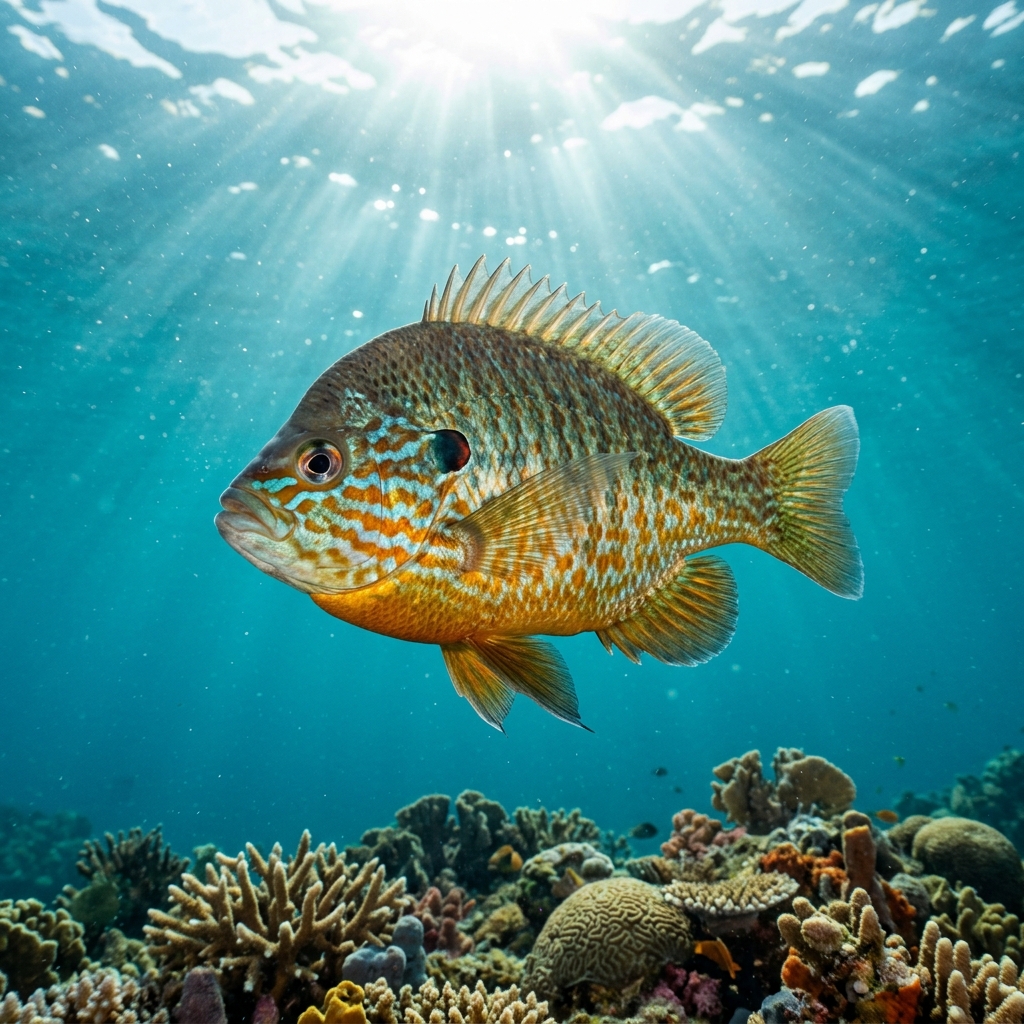
Lepomis gibbosus
Spot sun perch in Central Switzerland and Bavaria from May to August. Recognise it by its vivid orange-red spots and deep, disc-shaped body.
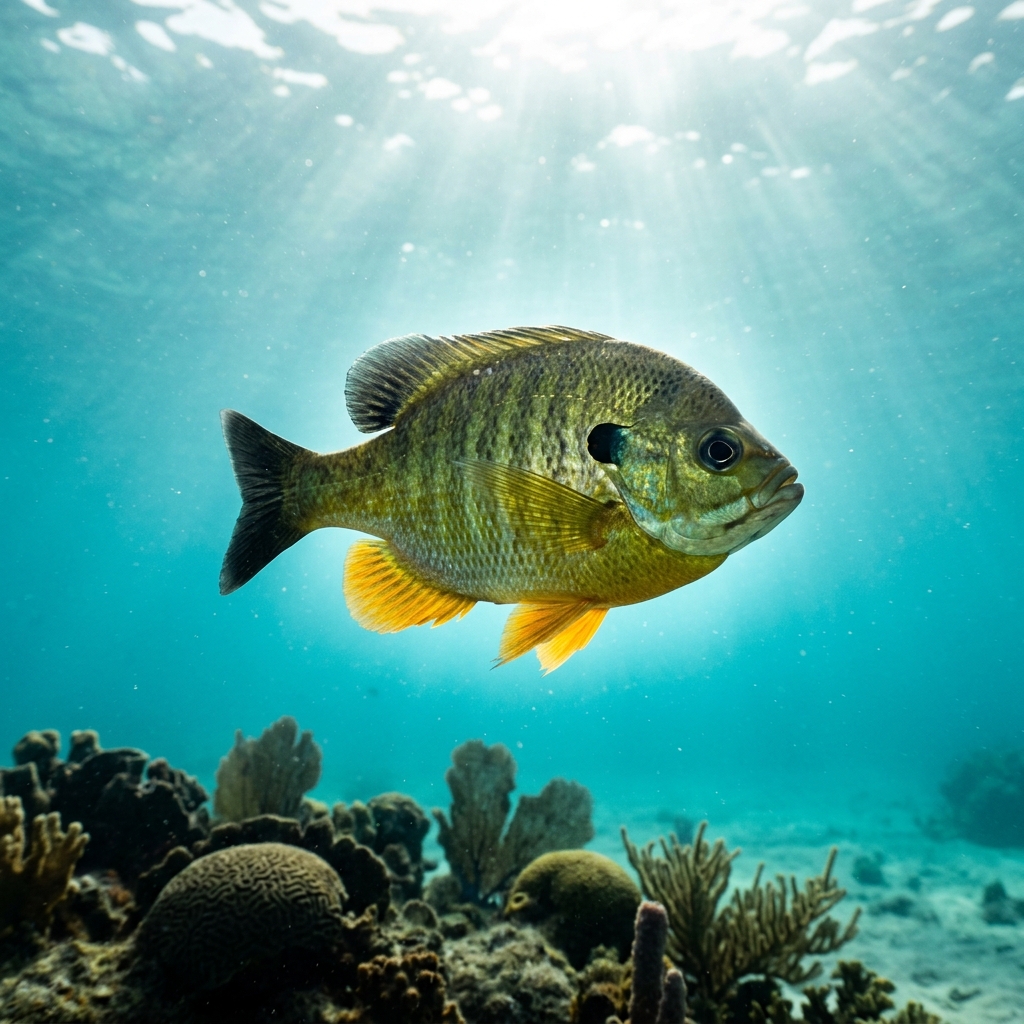
A small, almost circular body shape is the first thing you notice underwater, it looks more like a coin than a fish. The flanks flash blue-green iridescence covered in scattered orange-red spots, and a bold orange-yellow wash runs along the belly. The gill cover (operculum) has a distinctive dark blue-black tab edged in red or orange at its rear tip, which is the clearest single feature to look for. Expect to see fish around 20-28 cm, roughly the size of your open hand.
Sun perch are most often found close to the bottom or hovering near submerged vegetation and woody structure in still or slow-moving freshwater. They tend to hold their position and watch a diver rather than bolt, which makes observation relatively easy once you spot one. Encounters are typically solitary or in very loose groups near cover.
During the breeding season males become noticeably more vivid in colour and are aggressive defenders of their nest, fanning a shallow gravel or sand depression and guarding eggs from any intruder, including curious divers.
Sightings in the Northern Hemisphere concentrate between May and August, when warmer surface temperatures bring these fish into shallower, more visible water.
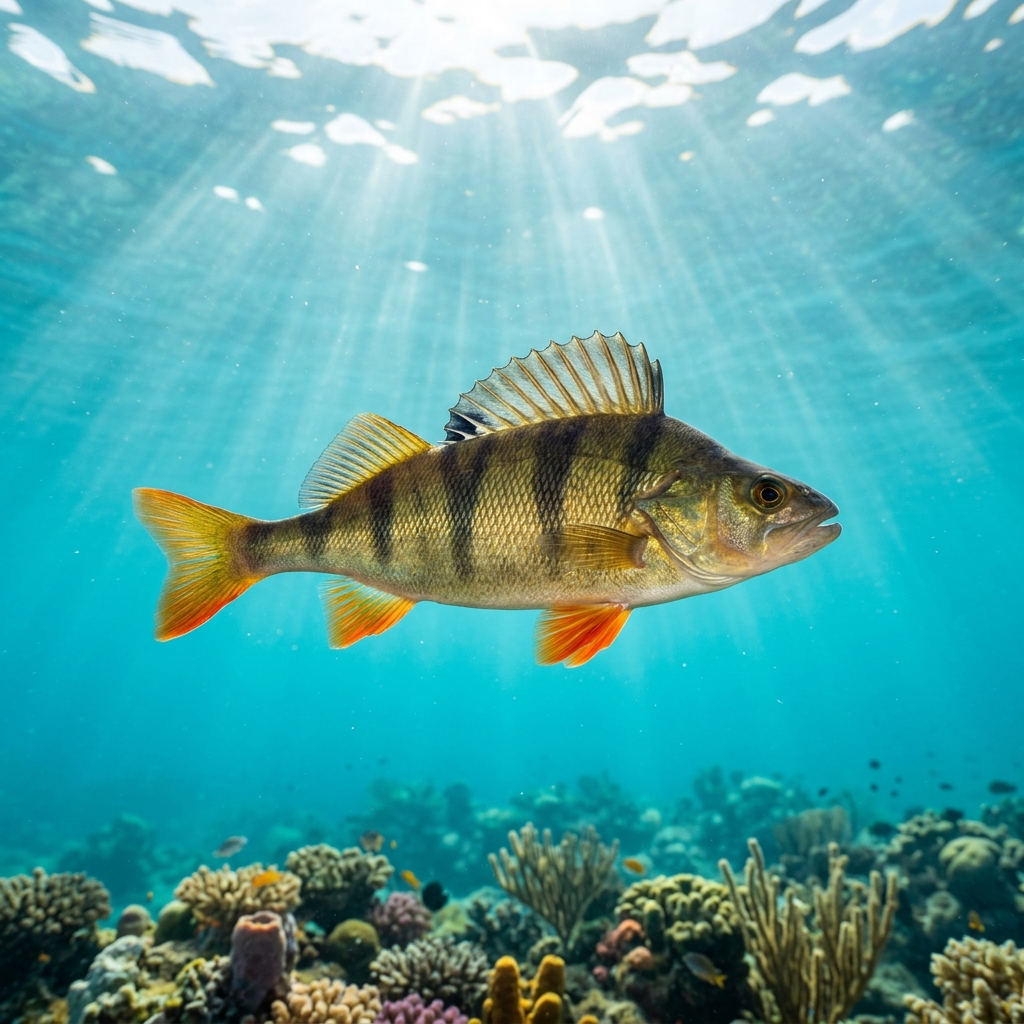
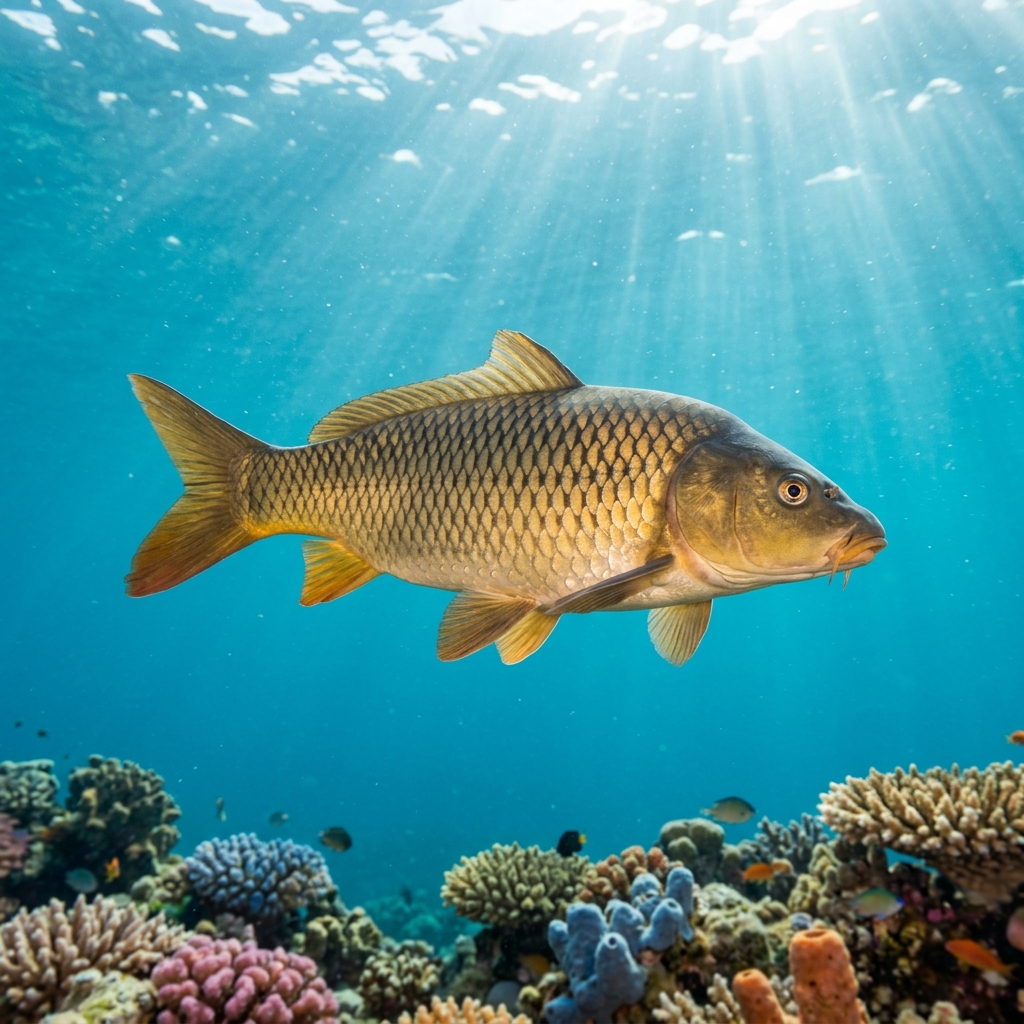
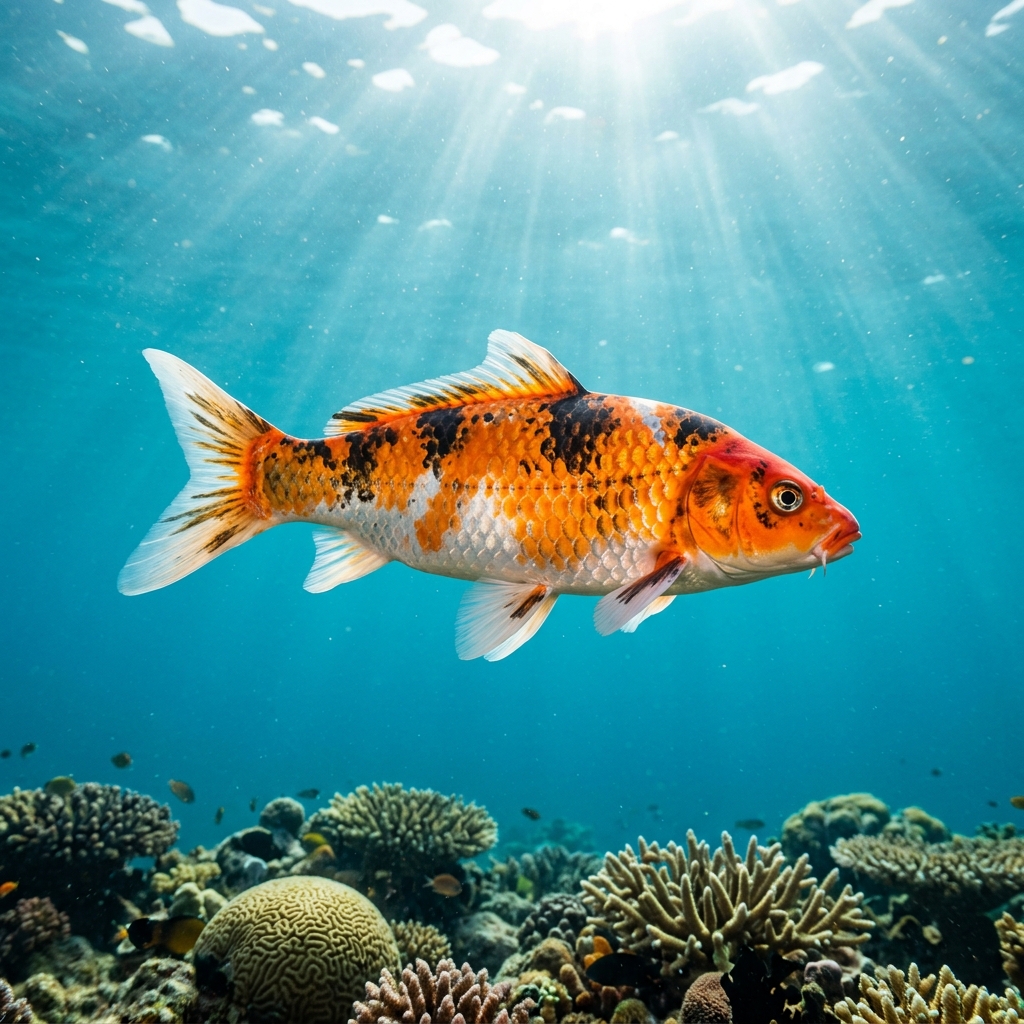
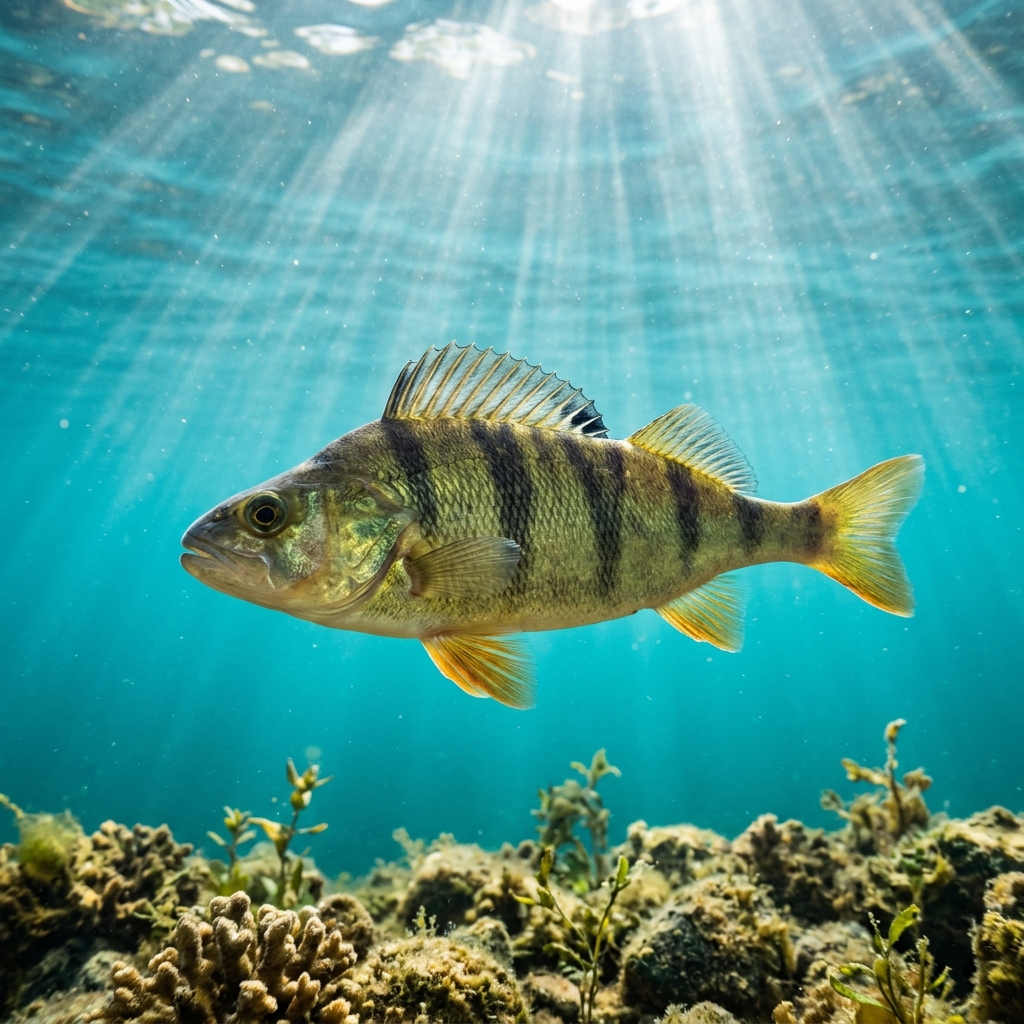
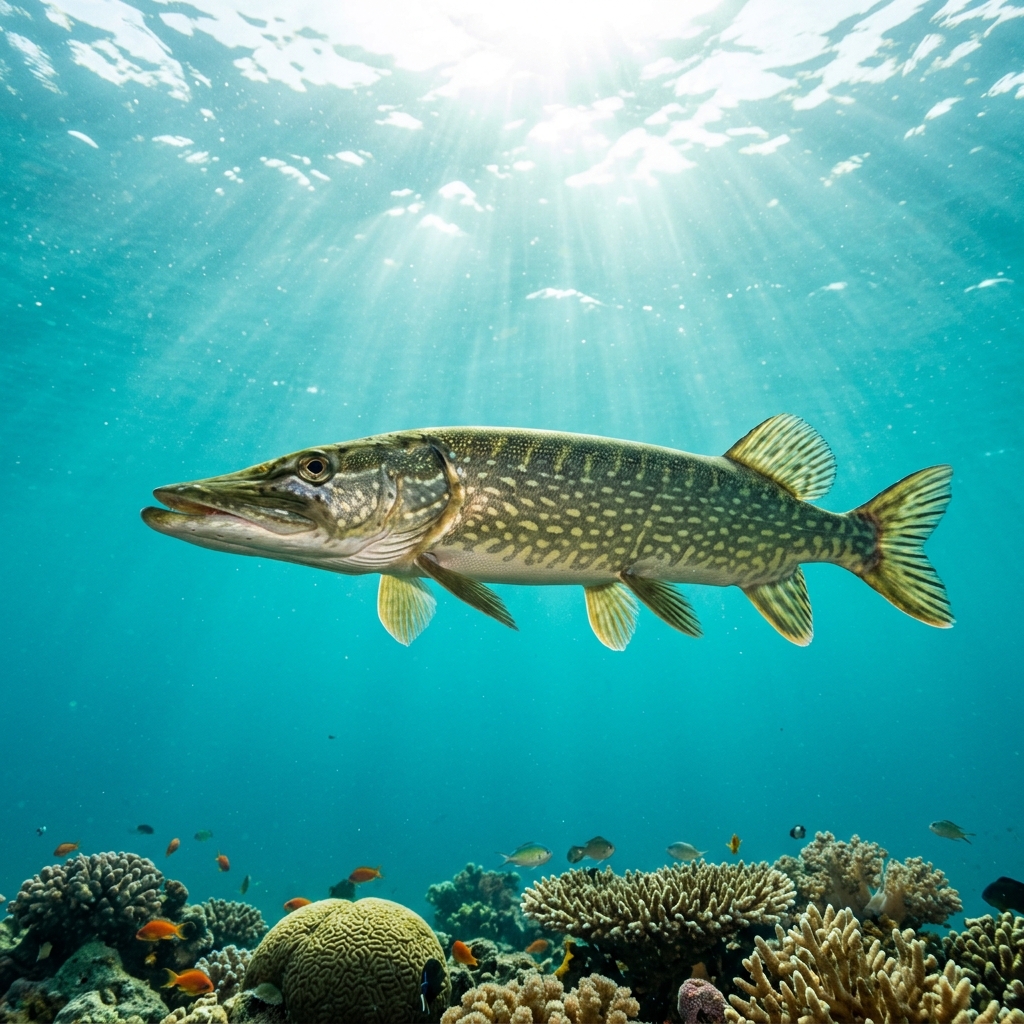
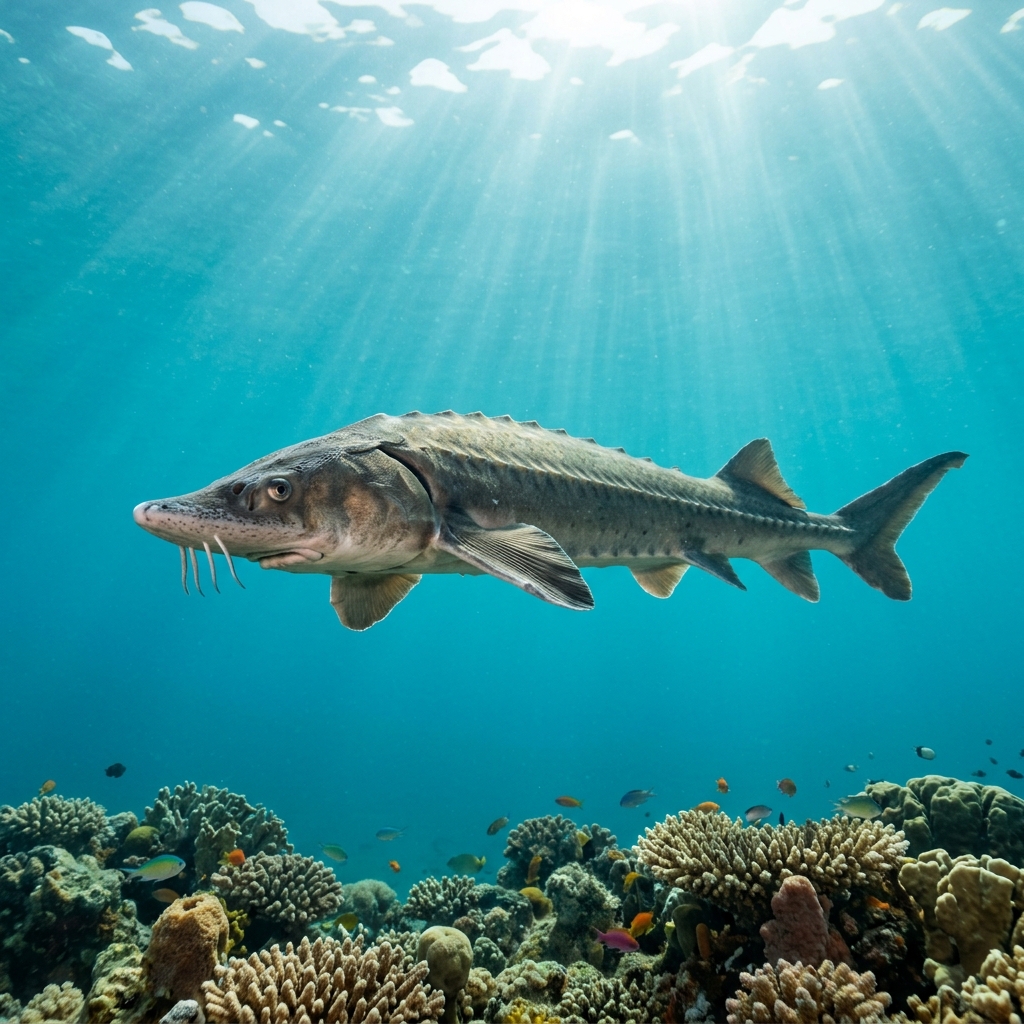
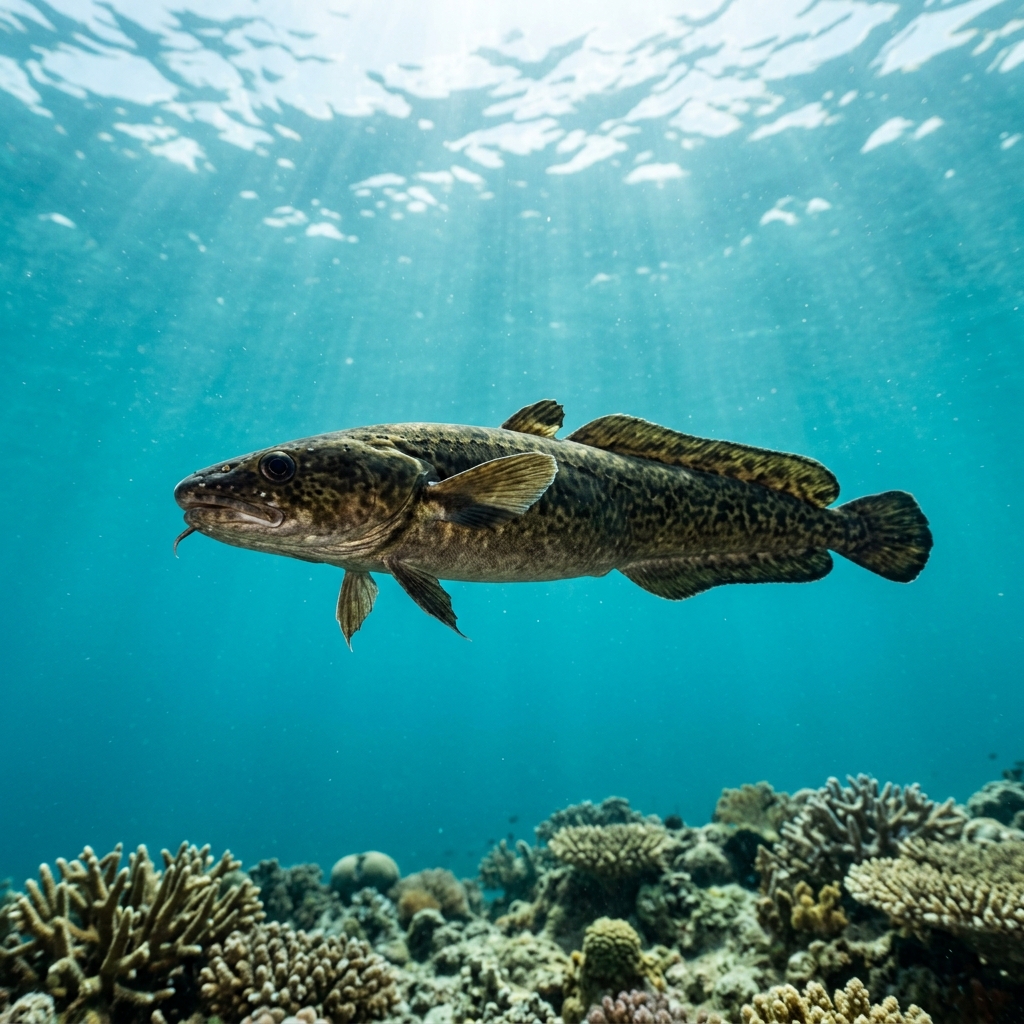
Reef neighbours a diver could mistake it for. Use the identification notes above to tell them apart.
Sun perch are most commonly logged across Central Europe, with Central Switzerland and Bavaria (Bavarian Alps and Central Germany) holding the strongest concentrations of dive sites. Austria's Salzkammergut lakes and the Berlin & Brandenburg region of Germany are also reliable areas to search. In North America, the Great Lakes region and the Florida/Southeast United States round out the best places to look.
Mapping where Sun Perch is logged…
Sun perch are most reliably encountered in Central Switzerland, Bavaria, Austria's Salzkammergut lakes, and the Berlin & Brandenburg region of Germany. In North America, the Great Lakes region and parts of the southeast United States also hold populations worth diving.
The Northern Hemisphere window for sightings runs from May through August. During these months the fish move into shallower, more accessible areas and males become highly visible as they defend breeding territories.
Look for a very deep, disc-shaped body, it is noticeably rounder than most freshwater fish. The key marking is the dark blue-black tab at the rear of the gill cover, edged in red or orange. Orange-red spots scattered across blue-green flanks and a warm yellow-orange belly confirm the ID.
Most individuals divers encounter are in the 15-25 cm range, with the largest reaching around 28 cm. They look larger than they measure because of their exceptionally deep, compressed body shape.
Sun perch are carnivores that feed on invertebrates, small crustaceans, insect larvae, and occasionally small fish. Their strong pharyngeal teeth (teeth in the throat) let them crush snail shells, making them effective hunters of hard-bodied prey that other species avoid.
Site and sighting data is aggregated from diver logs, iNaturalist and GBIF. For taxonomy and conservation status:
Pike
2,172 sites