Lepomis macrochirus
Spot blue gill in the Great Lakes, Florida, and Central Switzerland. Learn what to look for and when to find them in cool freshwater.
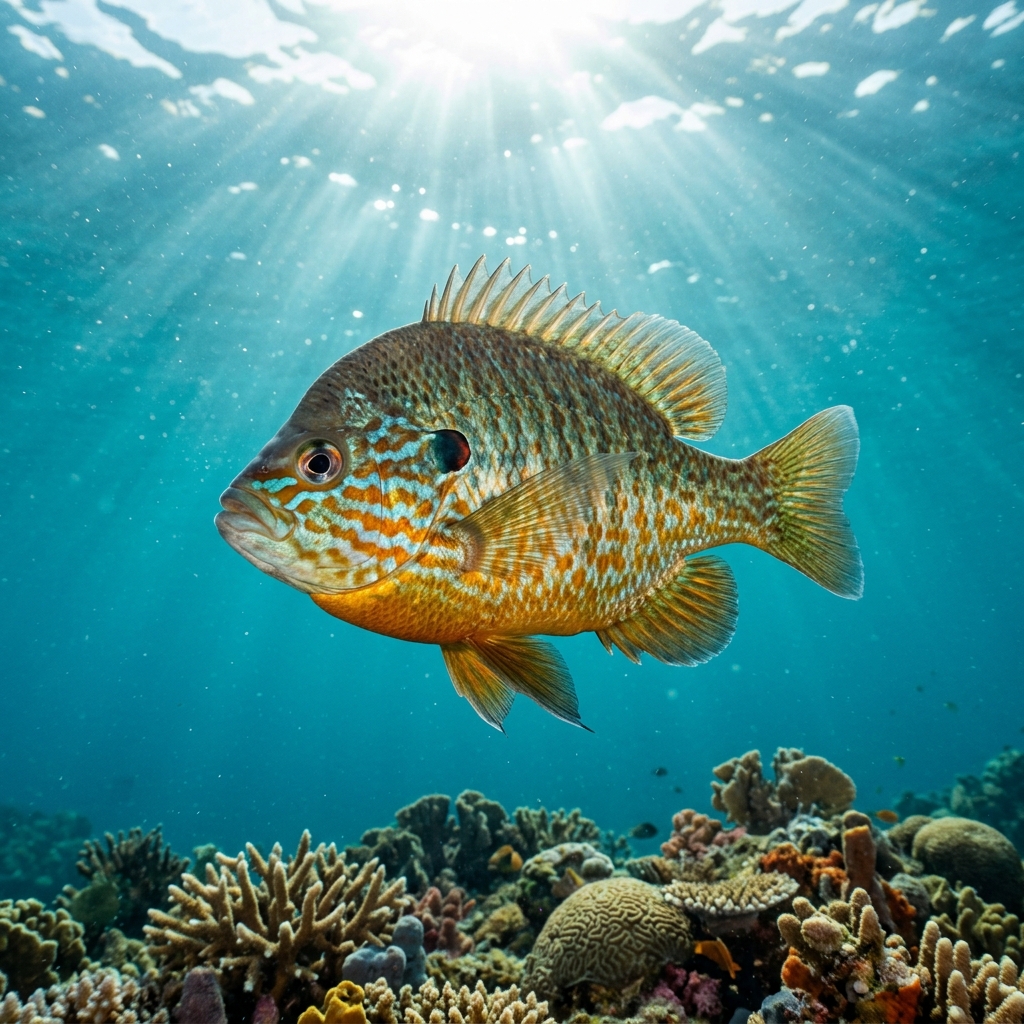
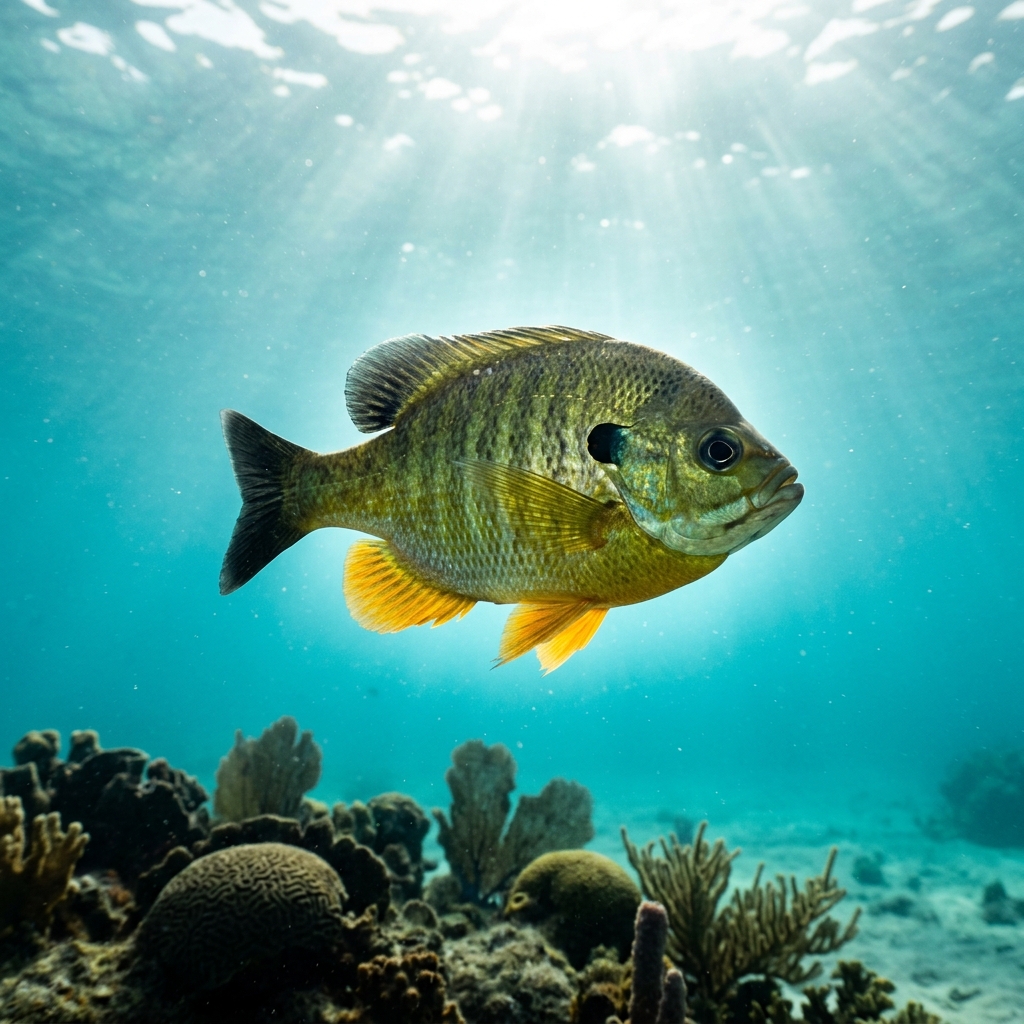
A deep, disc-shaped body roughly 28 cm long, with a distinctive dark ear-flap (the opercular tab) extending back from the gill cover, sets blue gill apart at a glance. Look for the bold blue-green iridescence across the face and sides, particularly in males, combined with a warm orange-yellow wash on the breast. Females show the same rounded profile but with a cream or pale yellow belly and less vivid colouring overall. In murky freshwater conditions, the ear-flap and the compressed body shape are the two features to key on.
Blue gill are typically found hovering close to submerged structure, root tangles, dock pilings, weed edges, and rocky drop-offs are all productive spots. They tend to hold their position rather than bolt when a diver approaches, making calm, slow entries the most rewarding strategy. During breeding season, males become notably territorial around shallow, cleared nesting sites and may circle or dart at intruders much larger than themselves.
Males clear and actively guard circular nest depressions in sandy or gravelly shallows, and a single nest bed can be packed tightly together in colonies, approaching one of these nesting aggregations gives a rare close-up view of freshwater parental behaviour.
Northern Hemisphere sightings concentrate in January through April and again in July to August, suggesting blue gill remain active across both cooler and warmer parts of the year, which fits their broad temperature tolerance down to around 1 °C. Aim for summer months if you want to catch breeding-coloured males at their most vivid.
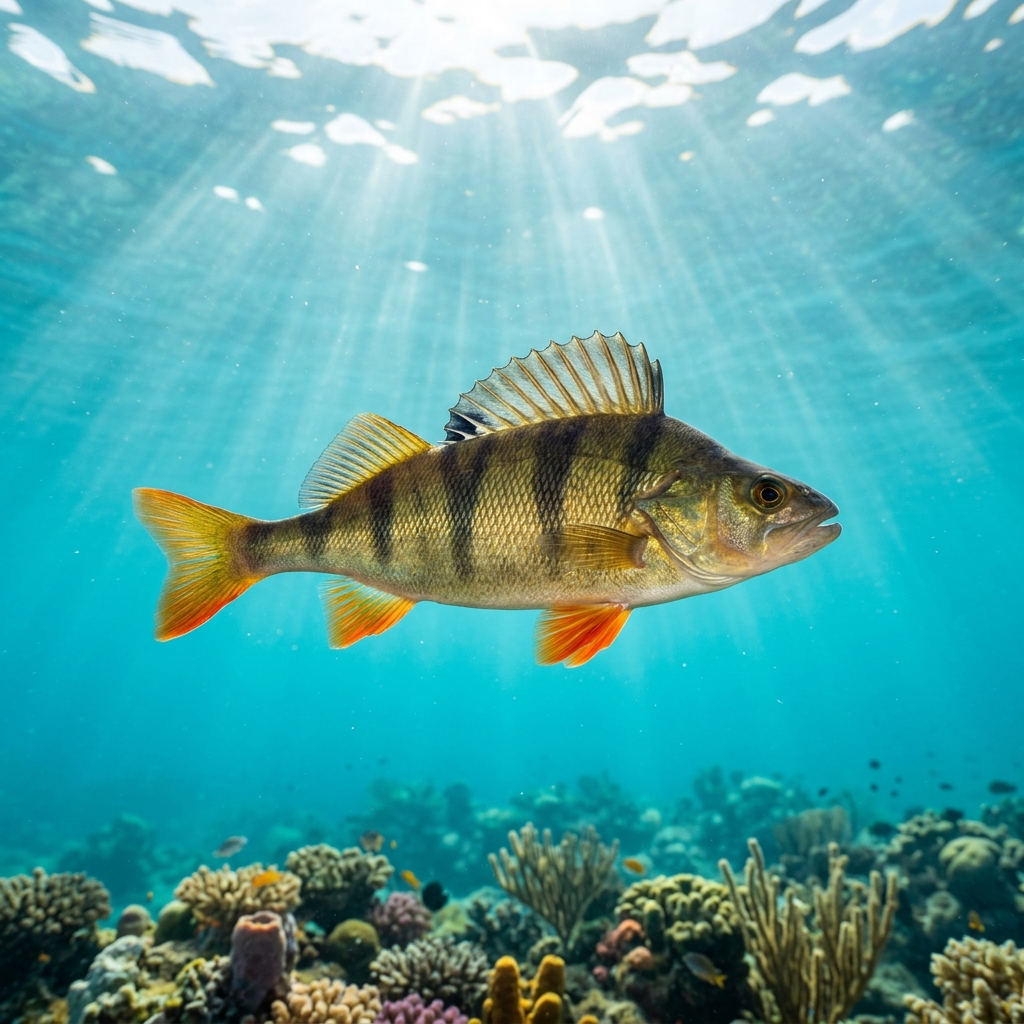
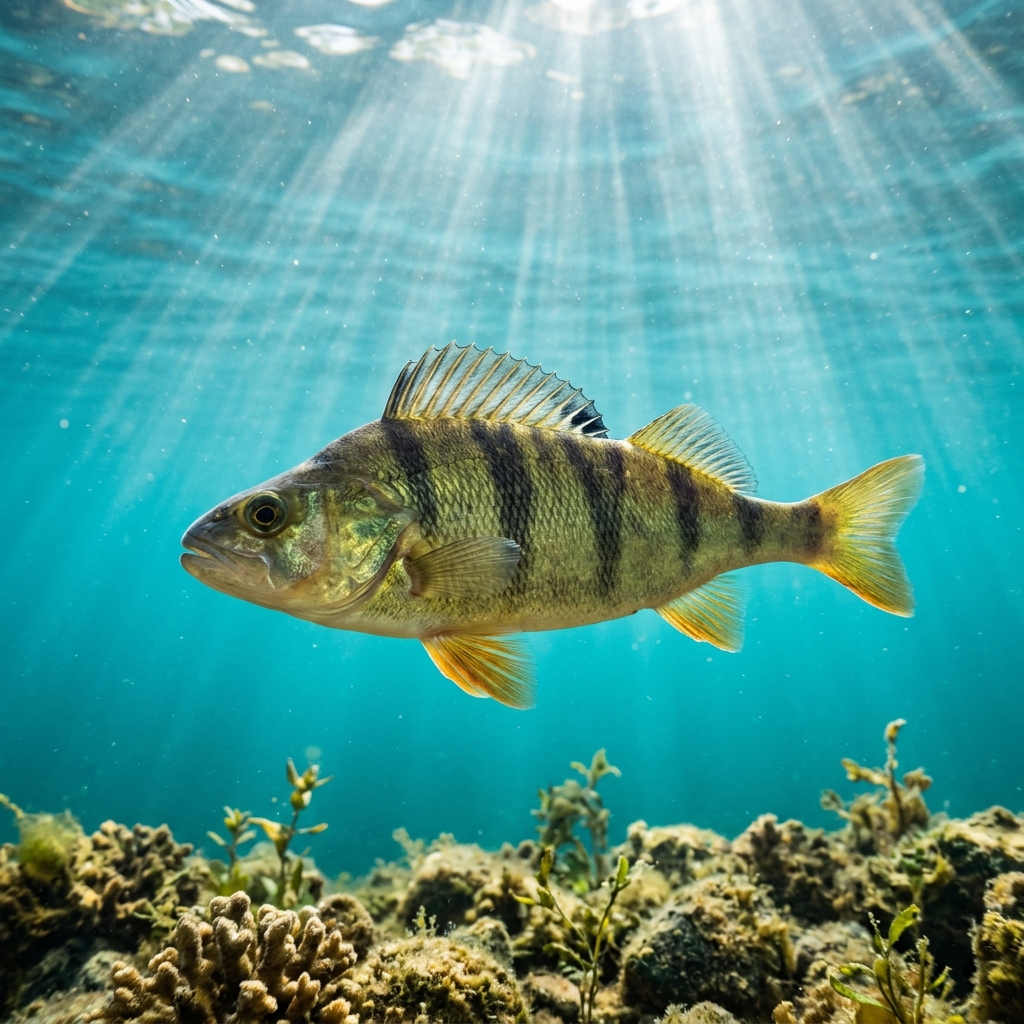
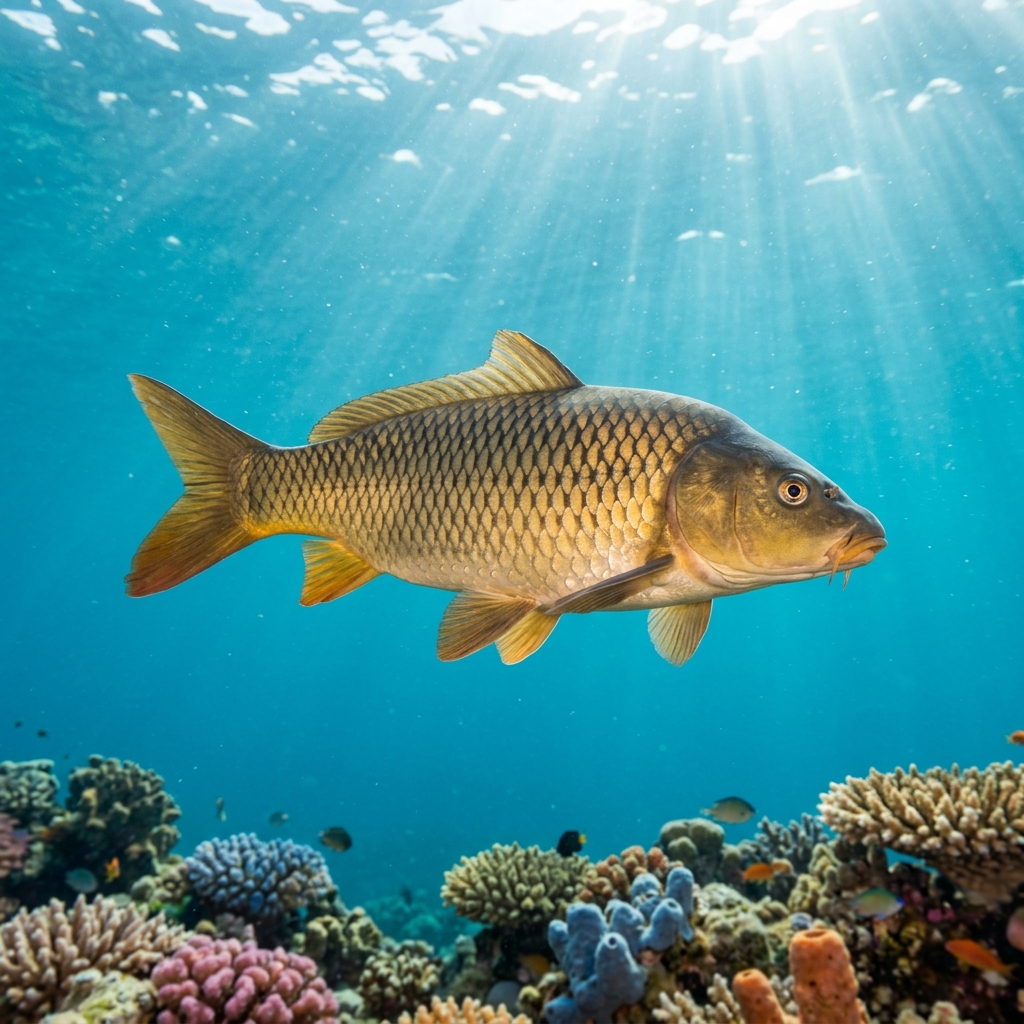
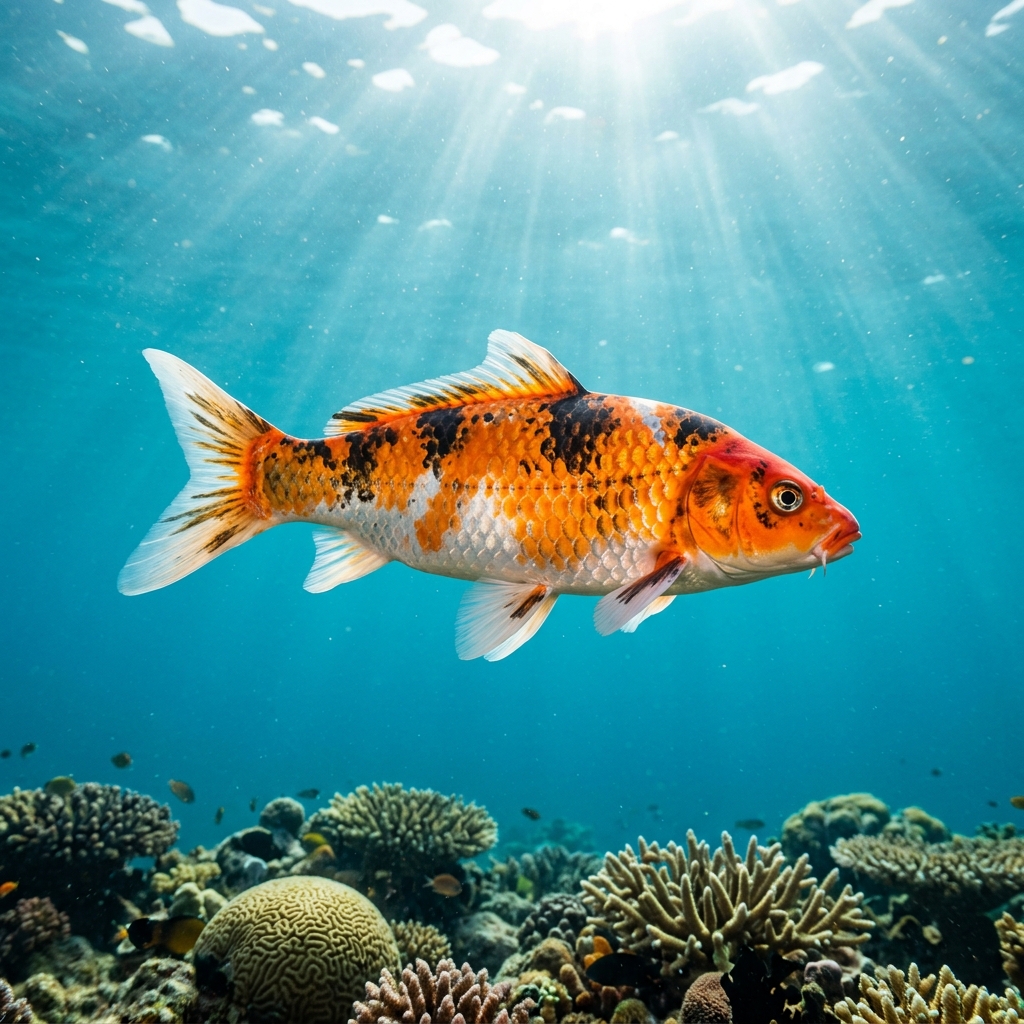
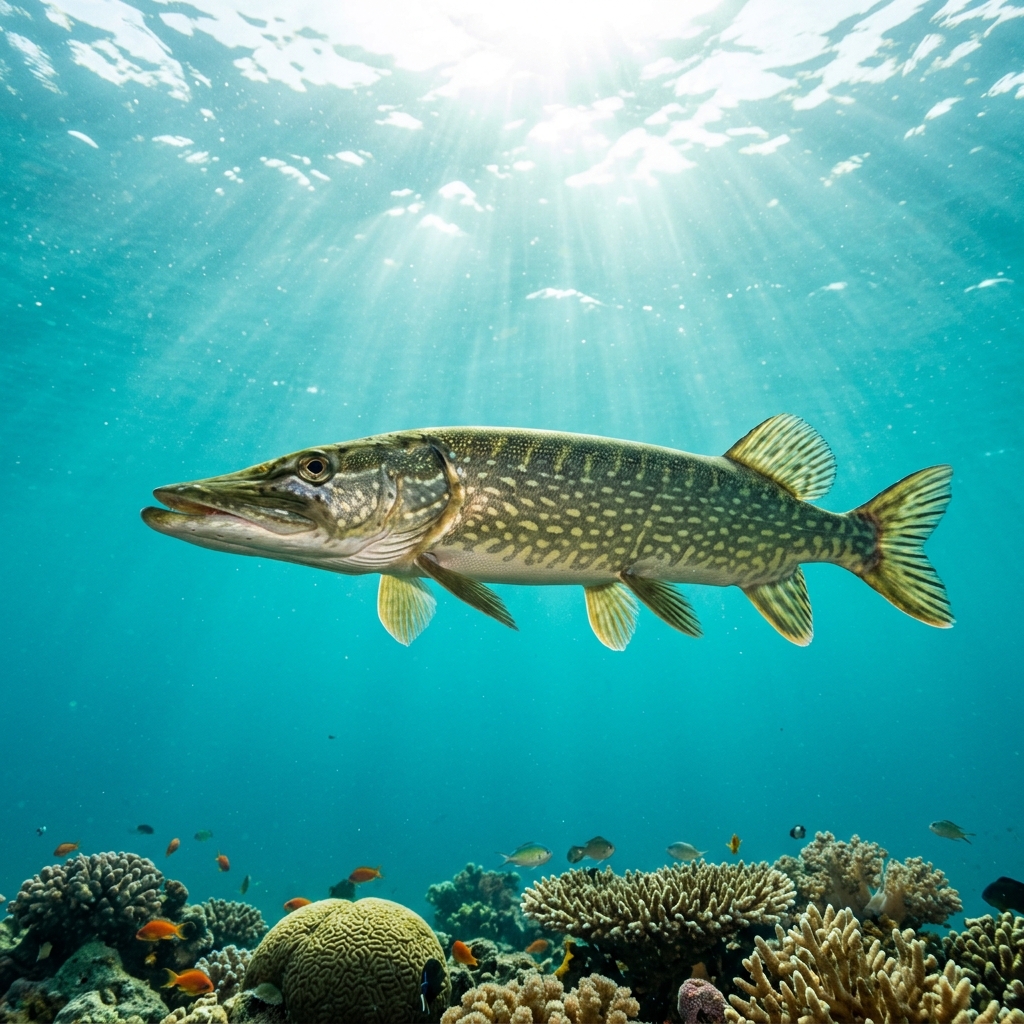
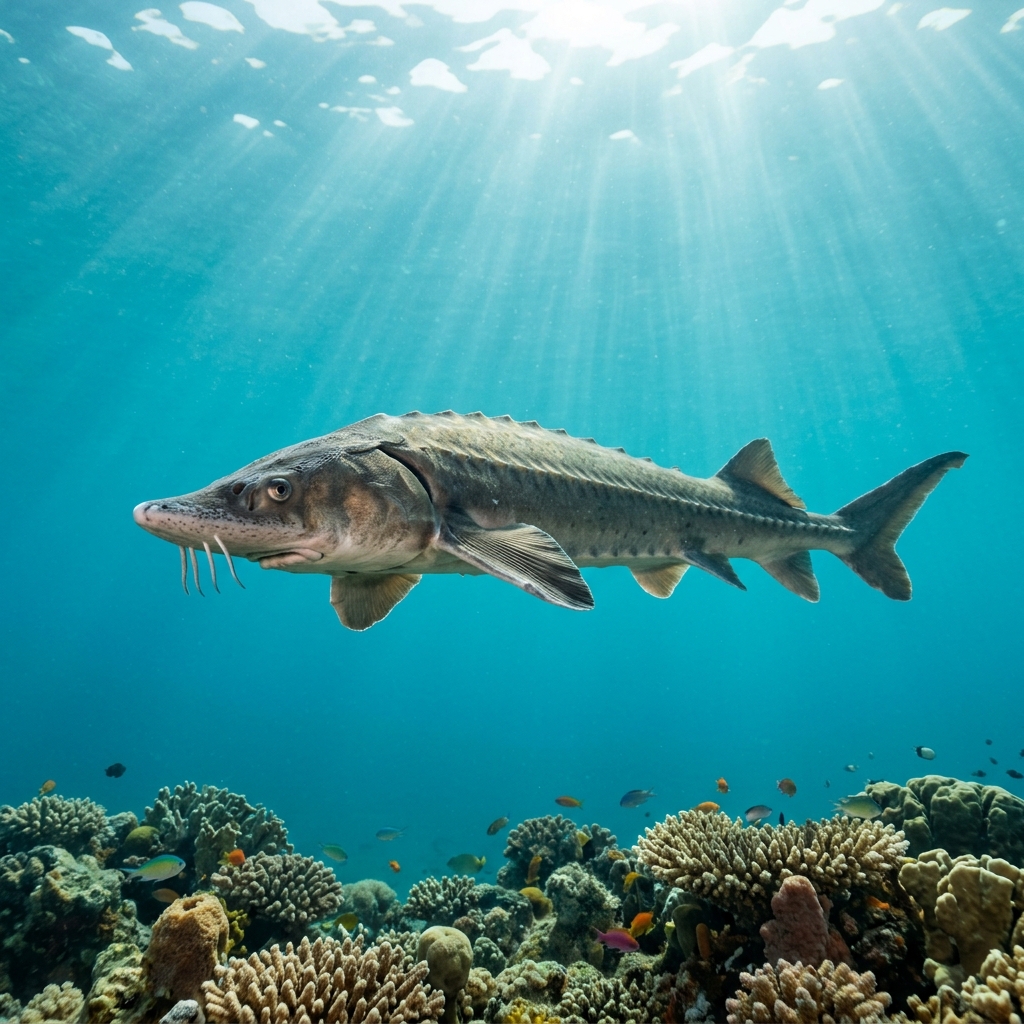
Reef neighbours a diver could mistake it for. Use the identification notes above to tell them apart.
Blue gill are most commonly logged across North America and Central Europe, with strong representation in Florida and the Southeast, the Great Lakes and Northeast regions of the United States, and the Great Lakes and Ontario area in Canada. In Europe, Central Switzerland, the Bavarian Alps, and the Berlin and Brandenburg region account for a large share of sightings, alongside sites throughout Germany and the Netherlands. For the highest likelihood of an encounter, freshwater lakes and slow-moving rivers in these areas are the best starting points.
Mapping where Blue Gill is logged…
Blue gill are most reliably encountered in freshwater sites across the United States, particularly in Florida, the Great Lakes region, and the Northeast. In Europe, Central Switzerland, the Bavarian Alps, and parts of Germany are well-represented. Canada's Great Lakes and Ontario region also offers consistent sightings.
Sightings in the Northern Hemisphere are concentrated in January to April and July to August. Summer visits give the added bonus of seeing males in full breeding colour, with their orange-yellow breasts and intense blue-green iridescence at their most pronounced.
The clearest field mark is the dark, rounded ear-flap extending behind the gill cover, combined with a noticeably deep and laterally compressed body shape. Males add blue-green iridescence on the face and sides and a warm orange-yellow breast. Size helps too, most adults are around 28 cm.
Most blue gill encountered by divers are around 28 cm in length. Larger individuals do occur but are less common, and in heavily fished or resource-limited waters fish tend to run smaller.
Blue gill pose no threat to divers. Even territorial males guarding nests, which may dart or bluff-charge, are far too small to cause any harm. Slow, deliberate movements around nest sites will keep interactions calm.
Site and sighting data is aggregated from diver logs, iNaturalist and GBIF. For taxonomy and conservation status:
Sun Perch
2,182 sites