Lotidae spp.
Burbot lurk in cold freshwater lakes across Central Europe and North America. Find them diving in Switzerland, Germany, and the Great Lakes at 4-16 °C.
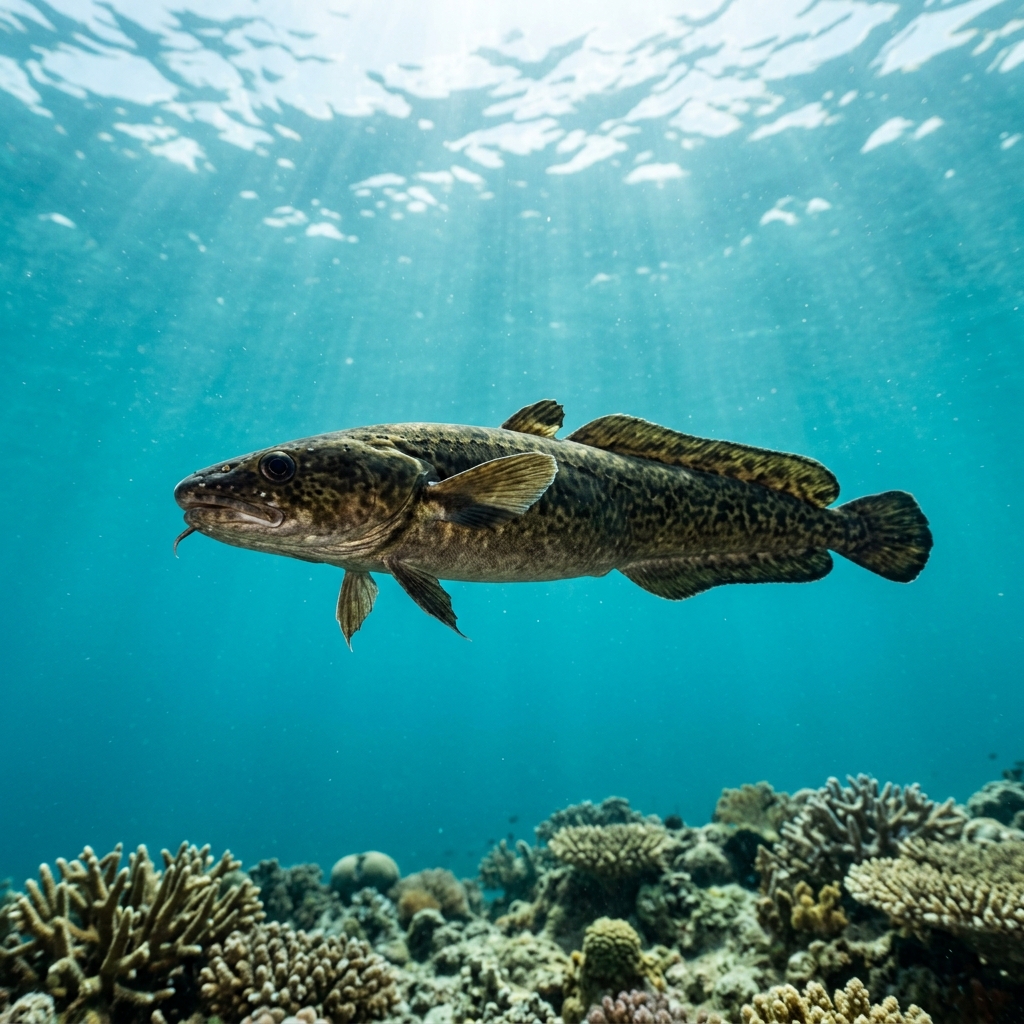
Burbot are the only members of the cod family adapted to freshwater, and that lineage shows: they have a long, eel-like body with a single chin barbel (a short sensory whisker) that immediately sets them apart from most freshwater fish. Colouration is mottled brown, olive, and yellow, blending closely with sandy or rocky lake beds. The body tapers into a continuous run of dorsal and anal fins that merge near the tail, giving the fish a distinctly snake-like silhouette in the water.
Burbot are predominantly nocturnal, spending daylight hours motionless on the bottom among rocks or submerged wood, which makes them easy to overlook on daytime dives. At night or in very turbid, low-light conditions they become more active hunters, moving slowly across the substrate in search of fish and invertebrates. They tend to ignore divers who approach calmly, holding their position rather than fleeing, which allows for a close look if you move slowly.
Burbot are the only truly freshwater representative of the cod order (Gadiformes), a group otherwise made up of marine species, making them a real evolutionary curiosity on any freshwater dive.
There is not enough seasonal sighting data to identify a peak month, so treat burbot as a year-round target wherever their habitat is accessible. Their observed temperature range of roughly 4 to 16 °C suggests they are most active in cold conditions, making late autumn and winter dives in temperate lakes a logical strategy.
Reef neighbours a diver could mistake it for. Use the identification notes above to tell them apart.
Most sightings come from Central Europe, particularly the deep, cold lakes of Central Switzerland and the Bavarian Alps region of Germany, where the water temperature suits them well. North America is also well represented, with the Great Lakes and Northeast United States, and the Great Lakes and Ontario region of Canada, both producing reliable records. The Netherlands and Austria round out a strong European spread.
Mapping where Burbots is logged…
Burbot are most commonly logged in Central Switzerland and the lake districts of Germany, including the Bavarian Alps. North American divers encounter them in the Great Lakes region spanning both the United States and Canada. Austria and the Netherlands also have a solid spread of sites.
No strong seasonal pattern has emerged from diver observations yet, so they can be treated as a year-round target. Their preference for cold water, roughly 4 to 16 °C, suggests late autumn and winter dives in temperate lakes may offer the best activity, particularly at night when burbot become more mobile.
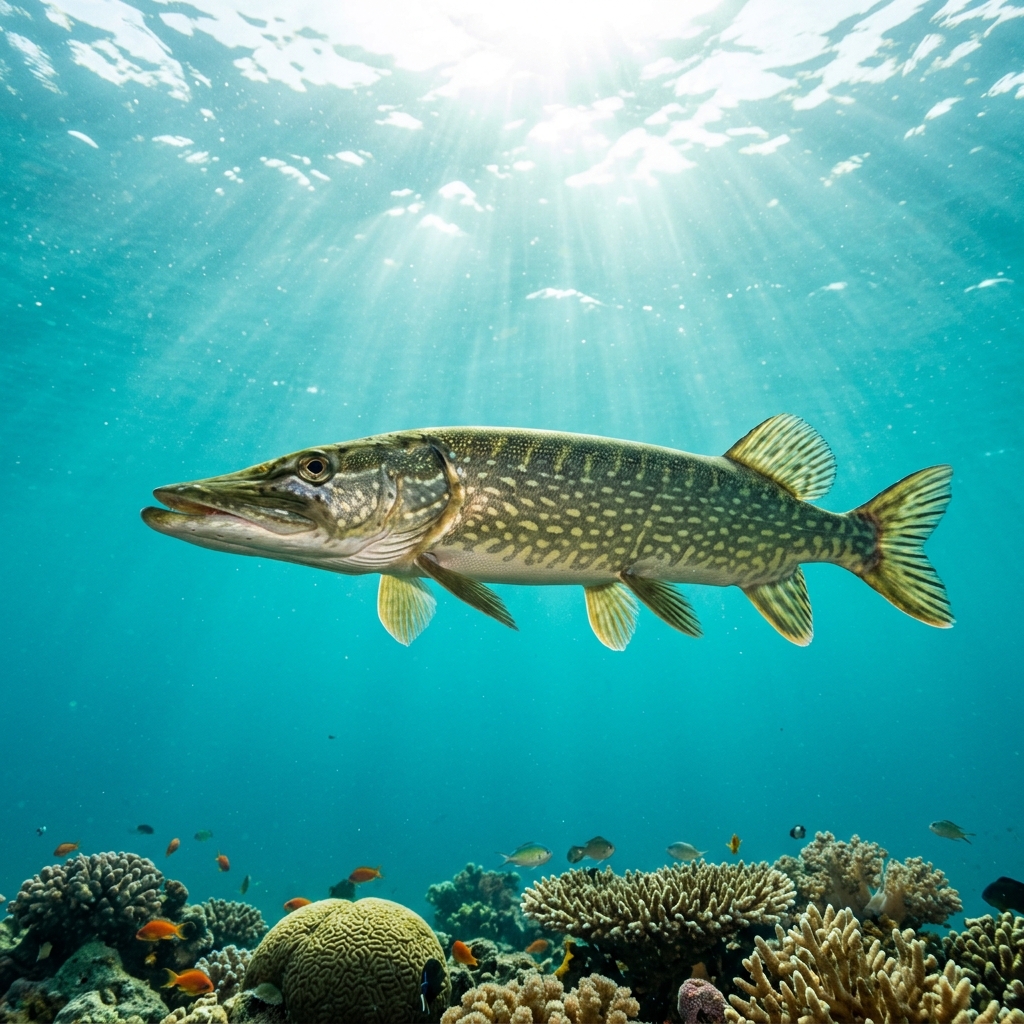
Look for a long, sinuous body with mottled brown and olive colouring, a single chin barbel, and a continuous fin running along the underside toward the tail. That combination is unique among European and North American freshwater fish. Pike can look superficially similar in silhouette, but lack the barbel and have a much more pronounced snout with distinct markings.
Burbot commonly reach 40 to 70 cm in length, with large individuals in cold, deep lakes occasionally exceeding 90 cm. They are stocky despite their elongated shape, so a sizeable fish can look surprisingly robust when encountered on the bottom.
No. Burbot pose no threat to divers. They are slow-moving, non-aggressive bottom-dwellers that will typically stay put or move away quietly when approached.
Burbot are the only freshwater member of the cod order, a group that otherwise lives exclusively in the sea. They are also one of the few freshwater fish known to spawn in mid-winter, often beneath ice, gathering in shallow areas at night to breed in very cold water.
Site and sighting data is aggregated from diver logs, iNaturalist and GBIF. For taxonomy and conservation status:
Sun Perch
2,182 sites