Rossia pacifica
Look for a golf-ball-sized cephalopod perched on the seafloor in British Columbia's cold, 7.5 to 13.5 C waters, year-round.
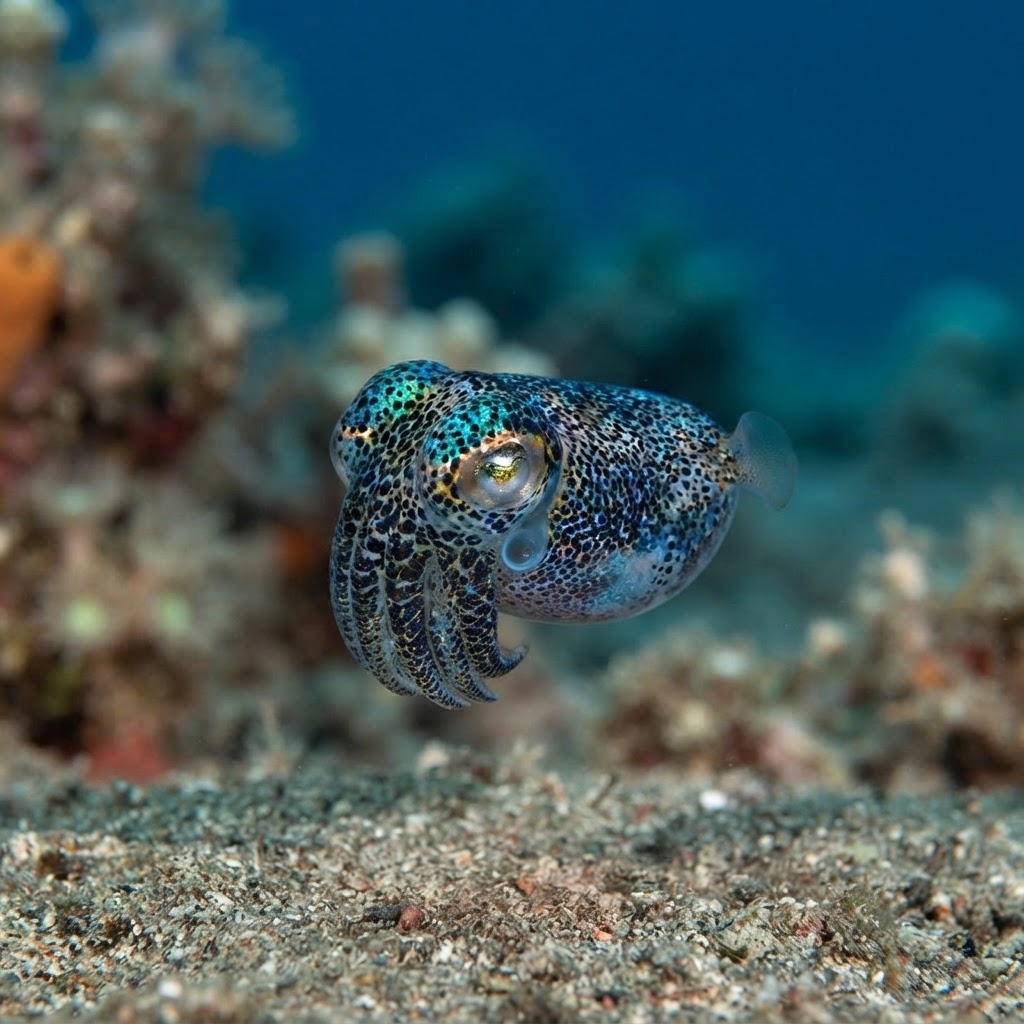
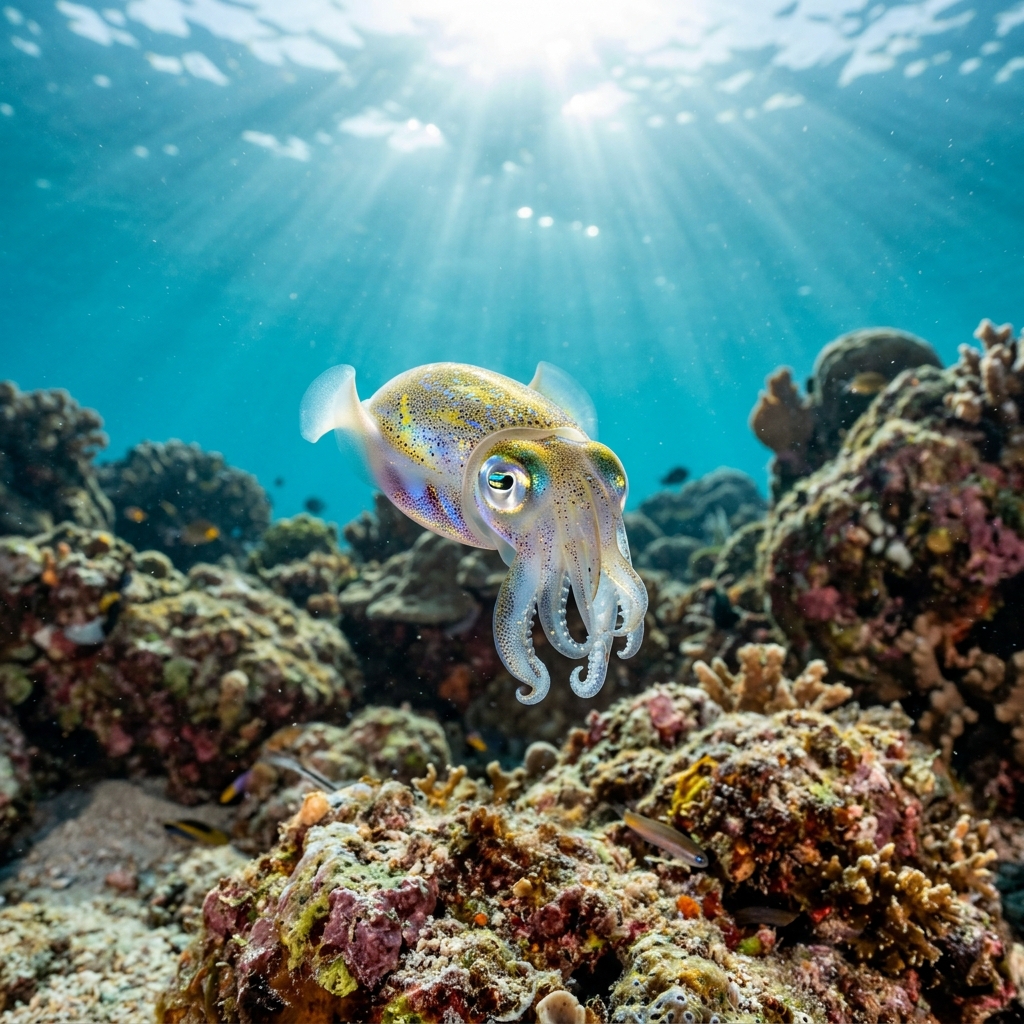
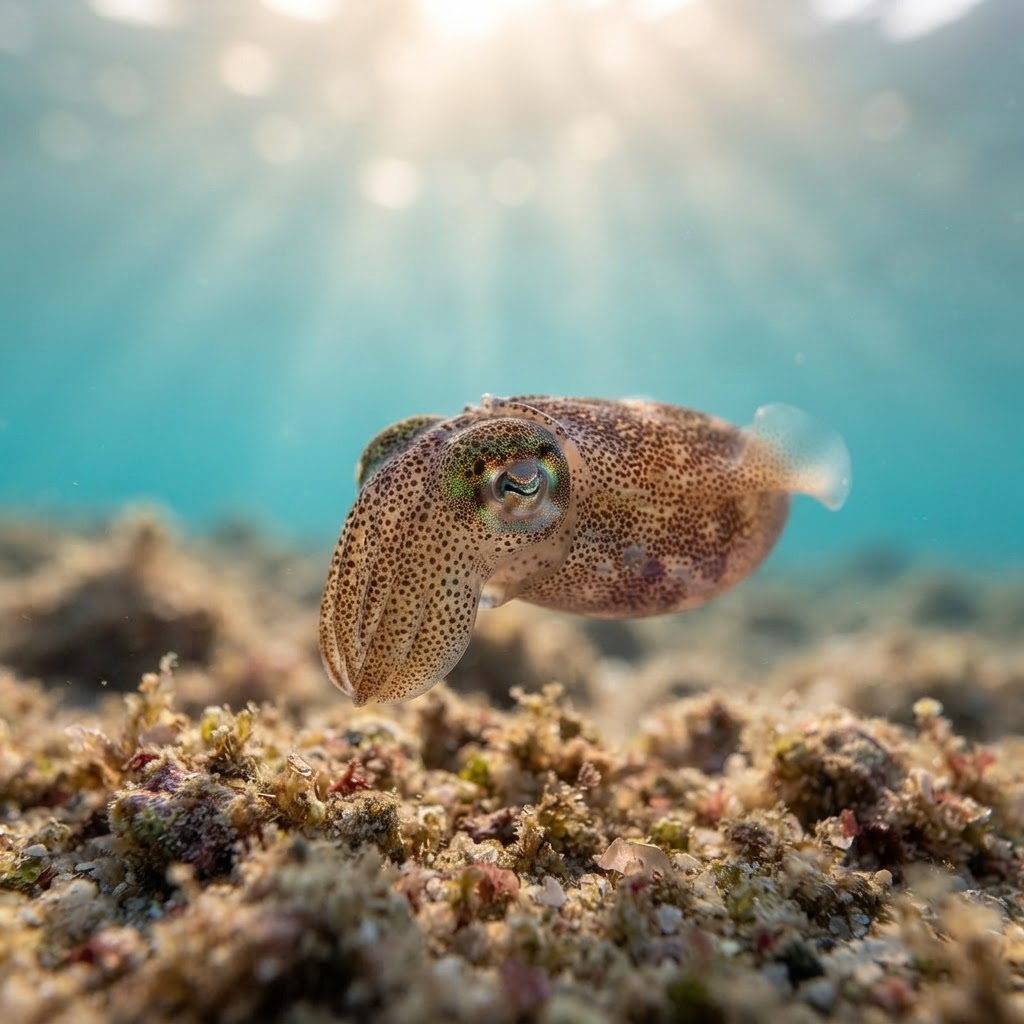
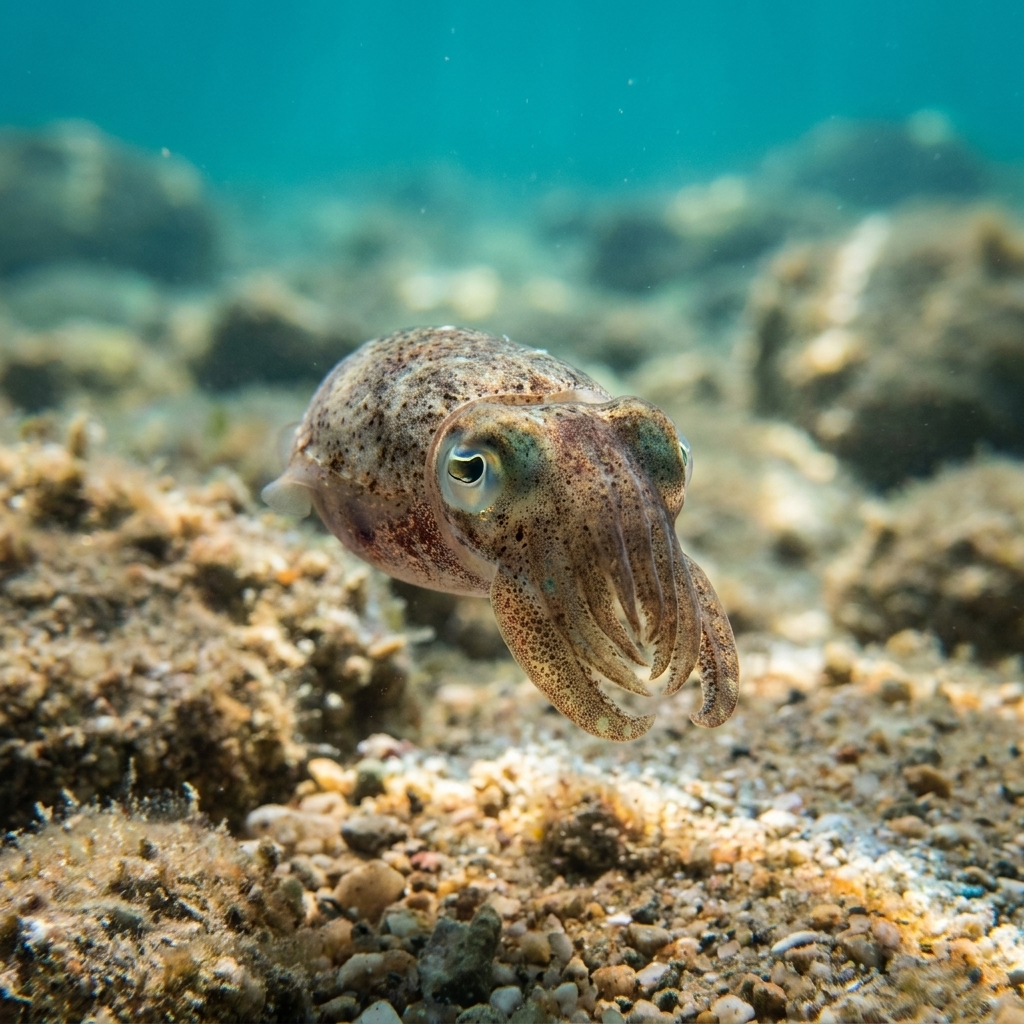
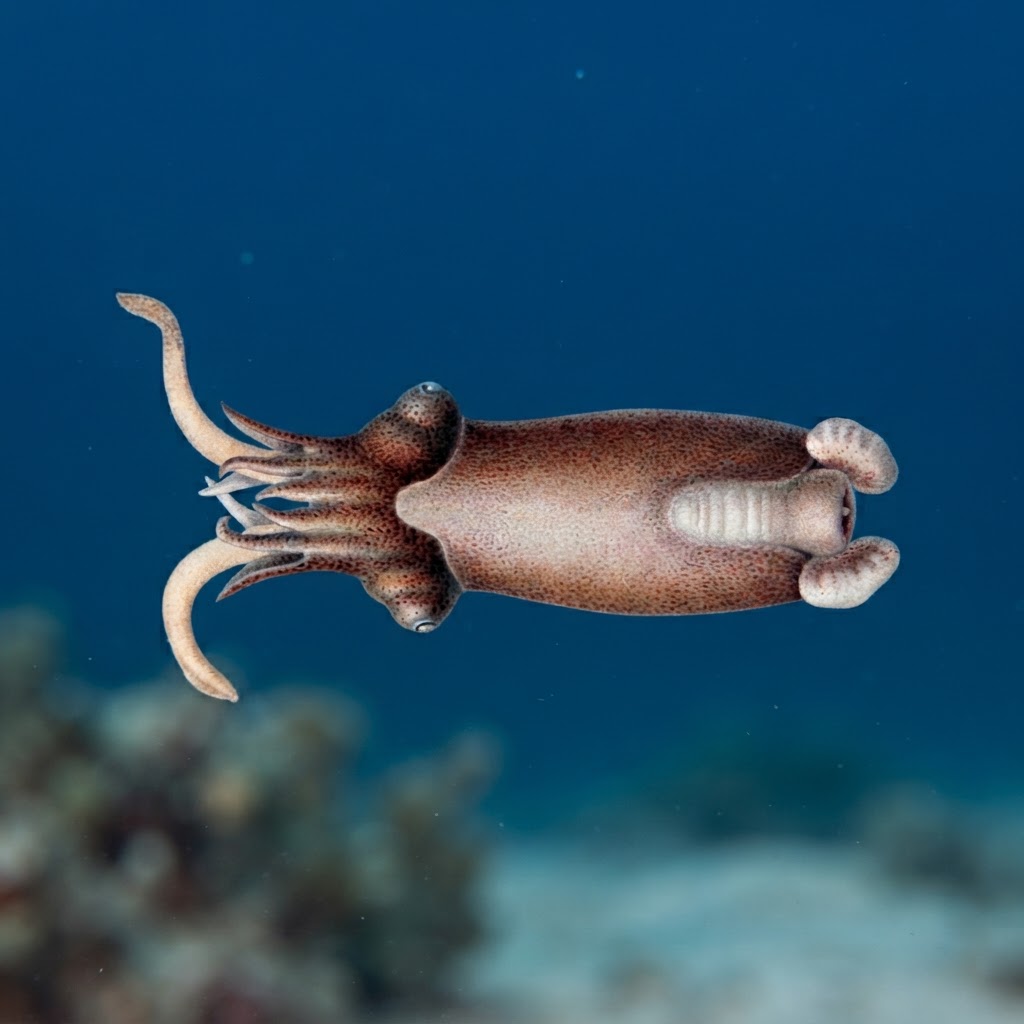
Barely bigger than a golf ball at around 6 cm, it sits propped on the bottom looking more like a rounded gumdrop than a squid, with eight short arms and two tentacles tucked beneath a bulbous, mottled reddish-brown to purple body. Look for the wide, blunt head merging straight into the body with almost no visible neck, and a texture that can shift from smooth to warty as it adjusts its skin. It often rests half-buried in sand with only the top of its body and eyes showing, which is usually the giveaway.
Divers typically find it sitting still on sand, mud, or gravel bottoms, often partially settled into the substrate with just its eyes and mantle visible. It is not a fast mover and rarely bolts when approached carefully, making it a favourite subject for macro photographers who take time to scan the bottom rather than the water column. Most encounters happen on slow, deliberate bottom time rather than mid-water cruising.
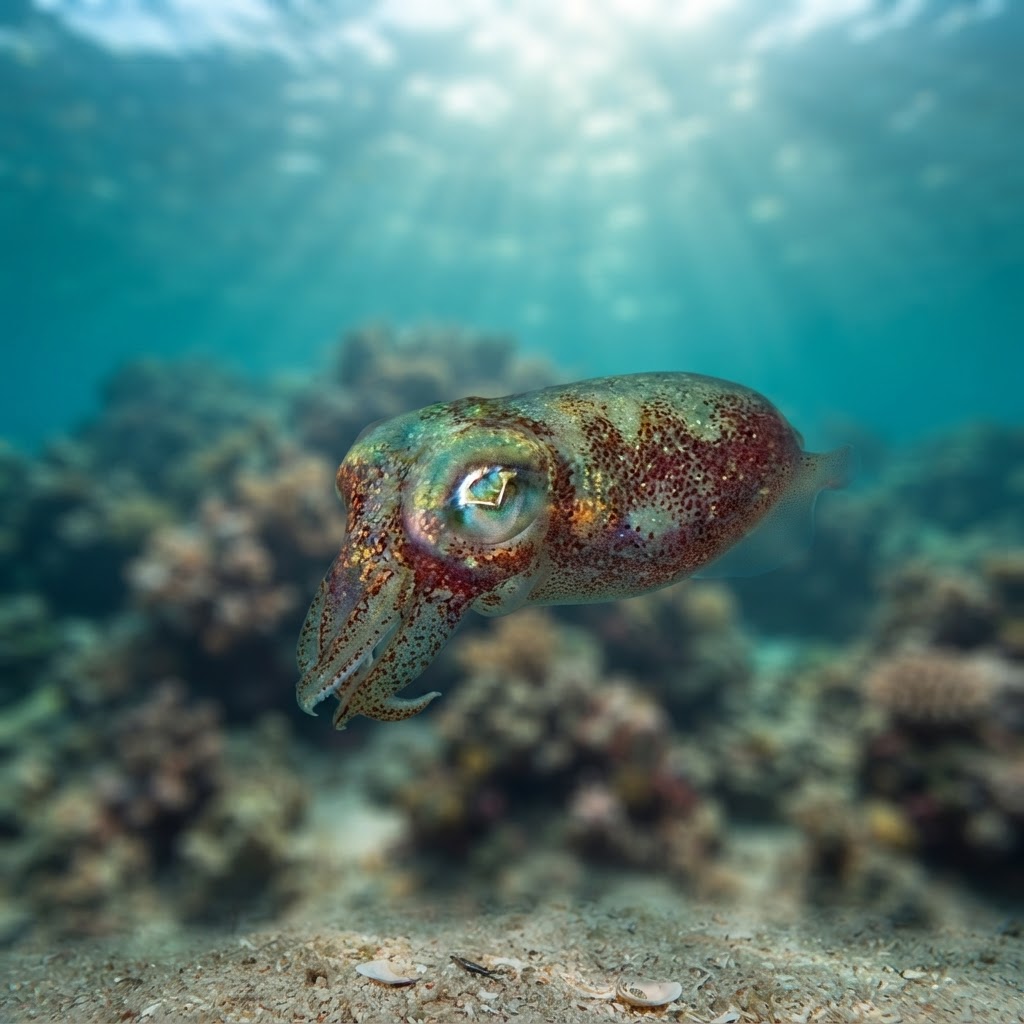
Despite the name and squid-like arms, it is technically a bobtail squid in the cuttlefish family, and like its relatives it can flash or change skin texture and colour almost instantly when disturbed.
Sightings are logged across the year with no clear seasonal spike, which fits a species that stays comfortable in the 7.5 to 13.5 C range typical of Pacific Northwest waters through most seasons. Plan around good visibility and site conditions rather than chasing a particular month.
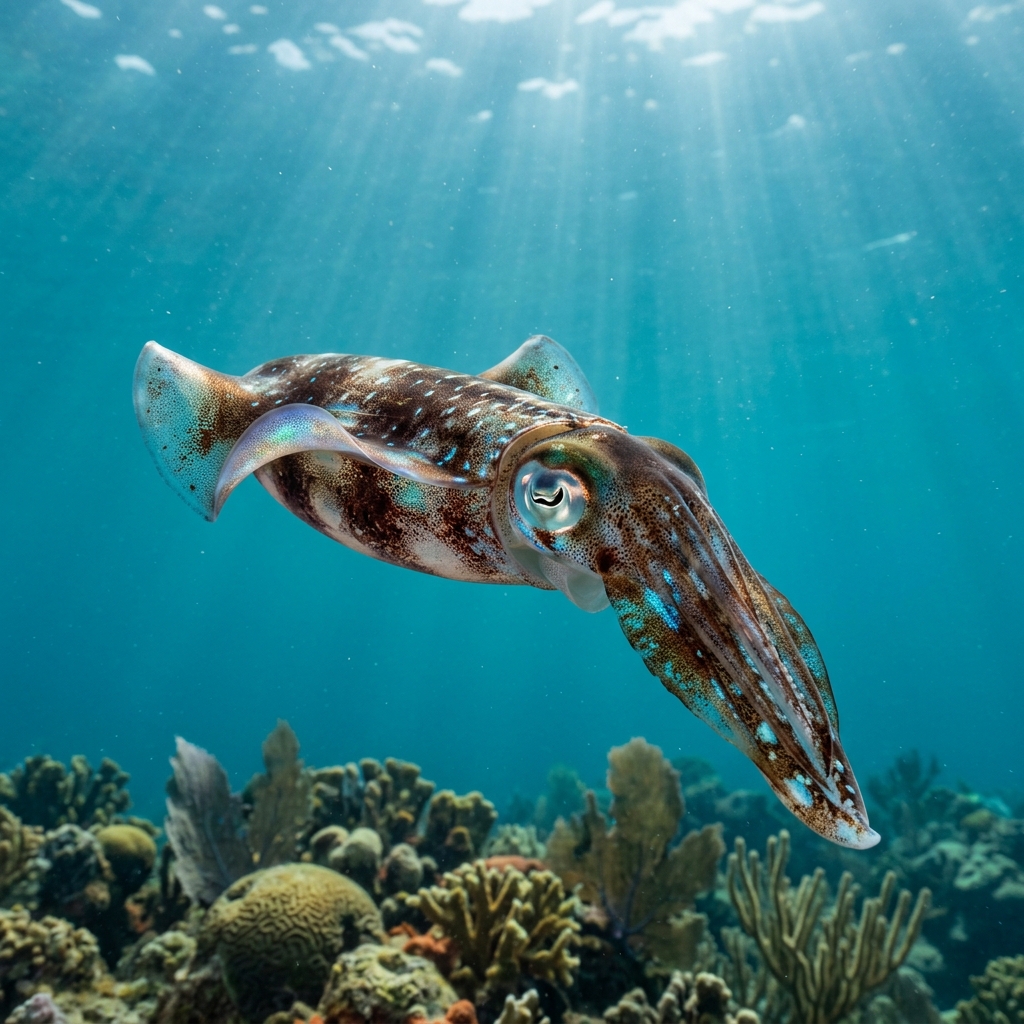
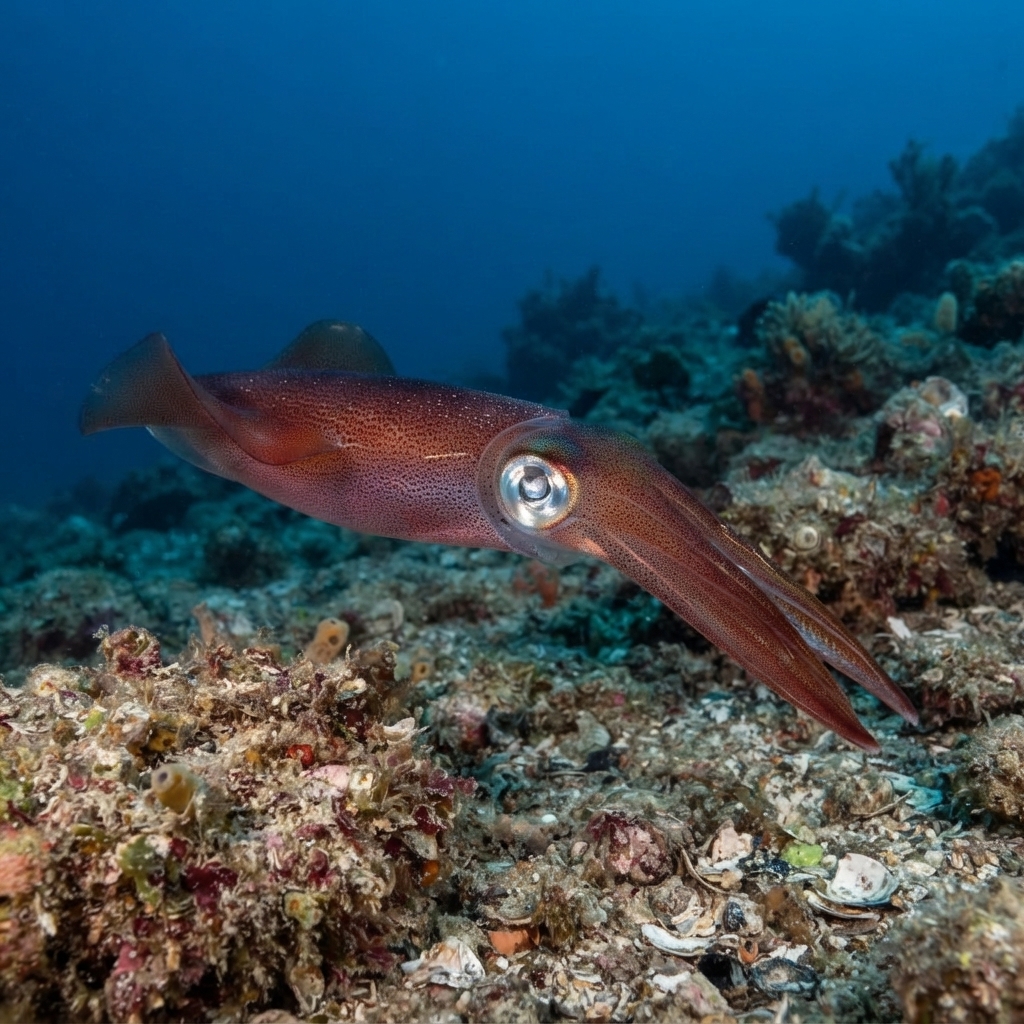
Reef neighbours a diver could mistake it for. Use the identification notes above to tell them apart.
Most reliably logged in British Columbia, Canada, particularly around sites in the province, with a solid secondary showing across the Pacific Northwest region of the United States. These cold, temperate waters are where almost every diver report of this species comes from.
Mapping where Stubby Squid is logged…
British Columbia, Canada is the strongest region for sightings, with additional reports across the Pacific Northwest coast of the United States. Look on sandy or muddy bottoms at sites known for cold-water macro life.
There is no strong seasonal pattern in sightings, so it is considered a year-round find in its cold-water range. It stays active in waters between roughly 7.5 and 13.5 C, which covers most of the diving season in British Columbia and the Pacific Northwest.
Look for a small, rounded body around 6 cm long, mottled reddish-brown or purple, resting on the seafloor with its head merging directly into a bulbous mantle. It often sits half-buried in sand with just its large eyes showing.
They stay small, typically around 6 cm long, roughly the size of a golf ball or a large thumb. This compact size is part of why they are easy to miss on a dive unless you are looking closely at the bottom.
No, they pose no danger to divers. They are small, slow-moving, and tend to stay still on the bottom rather than react defensively to divers nearby.
It is actually a bobtail squid, a close relative of cuttlefish, and can rapidly change its skin colour and texture from smooth to bumpy when it feels threatened. This quick camouflage shift helps it blend into sand or gravel almost instantly.
Site and sighting data is aggregated from diver logs, iNaturalist and GBIF. For taxonomy and conservation status:
Inshore Squid
390 sites