Euprymna berryi
A pea-sized squid that hides by day in Luzon and Sulawesi sand, emerging on warm night dives around 25-31C.
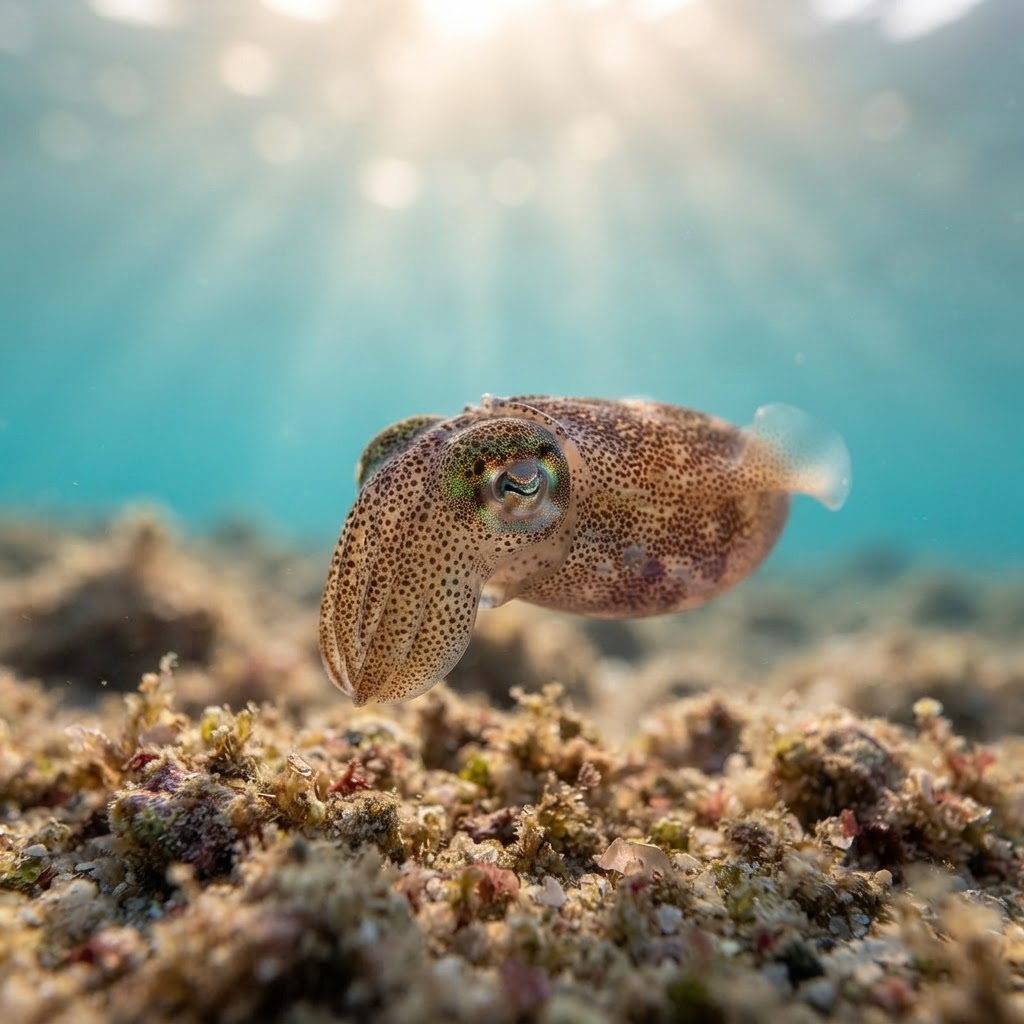
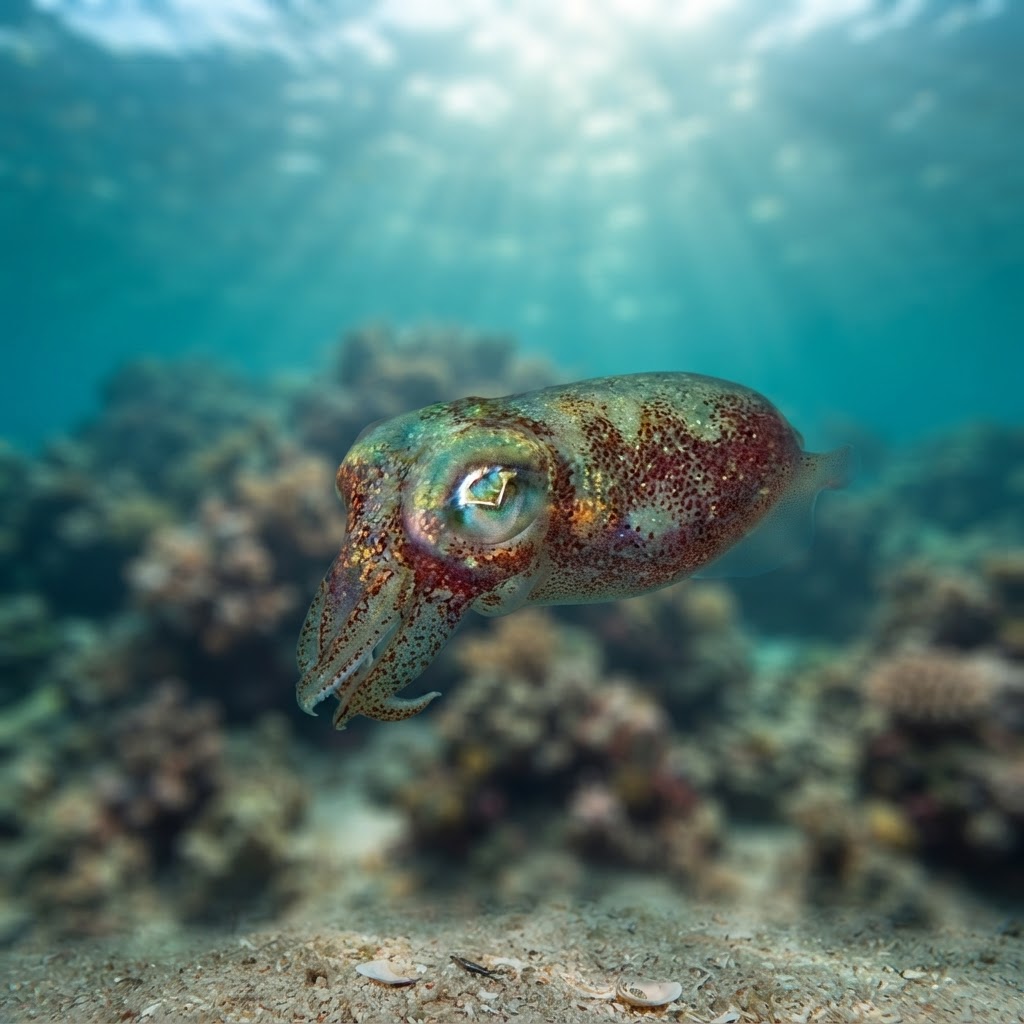
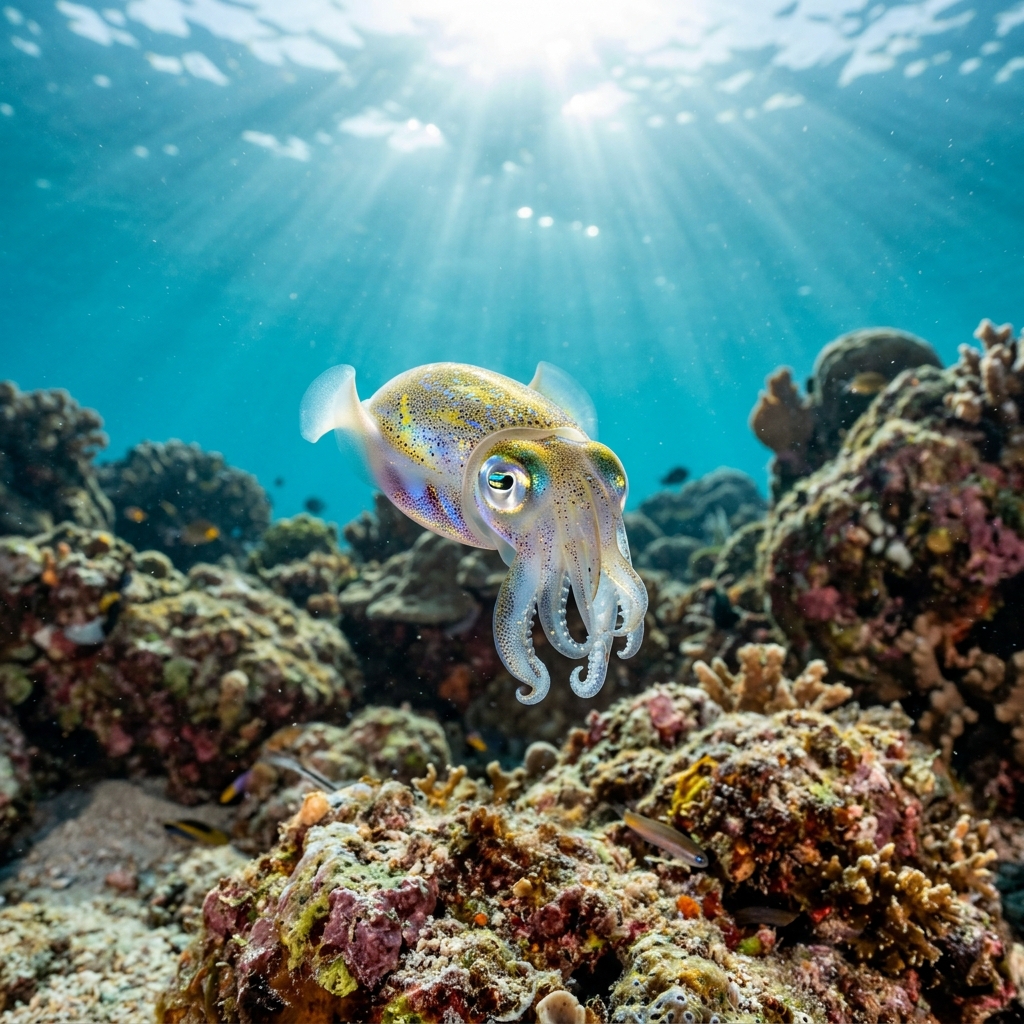
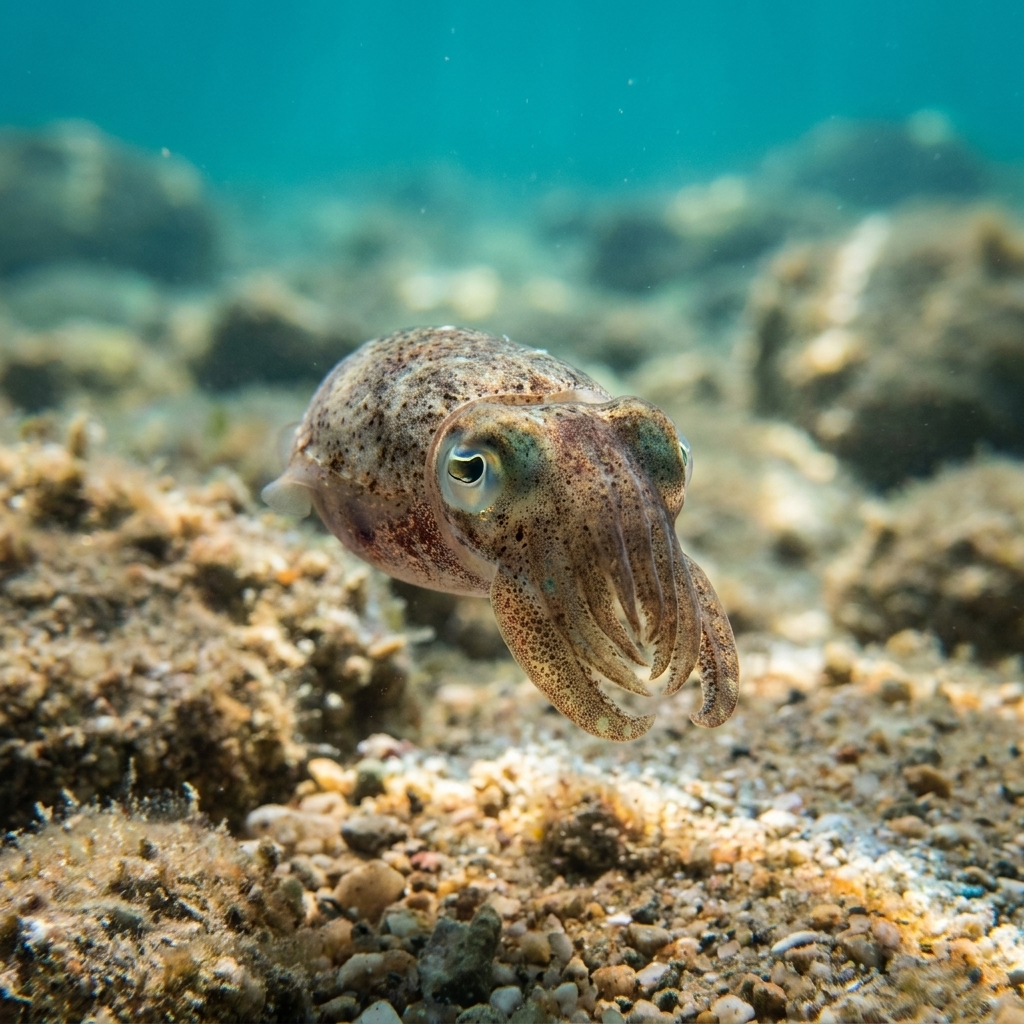
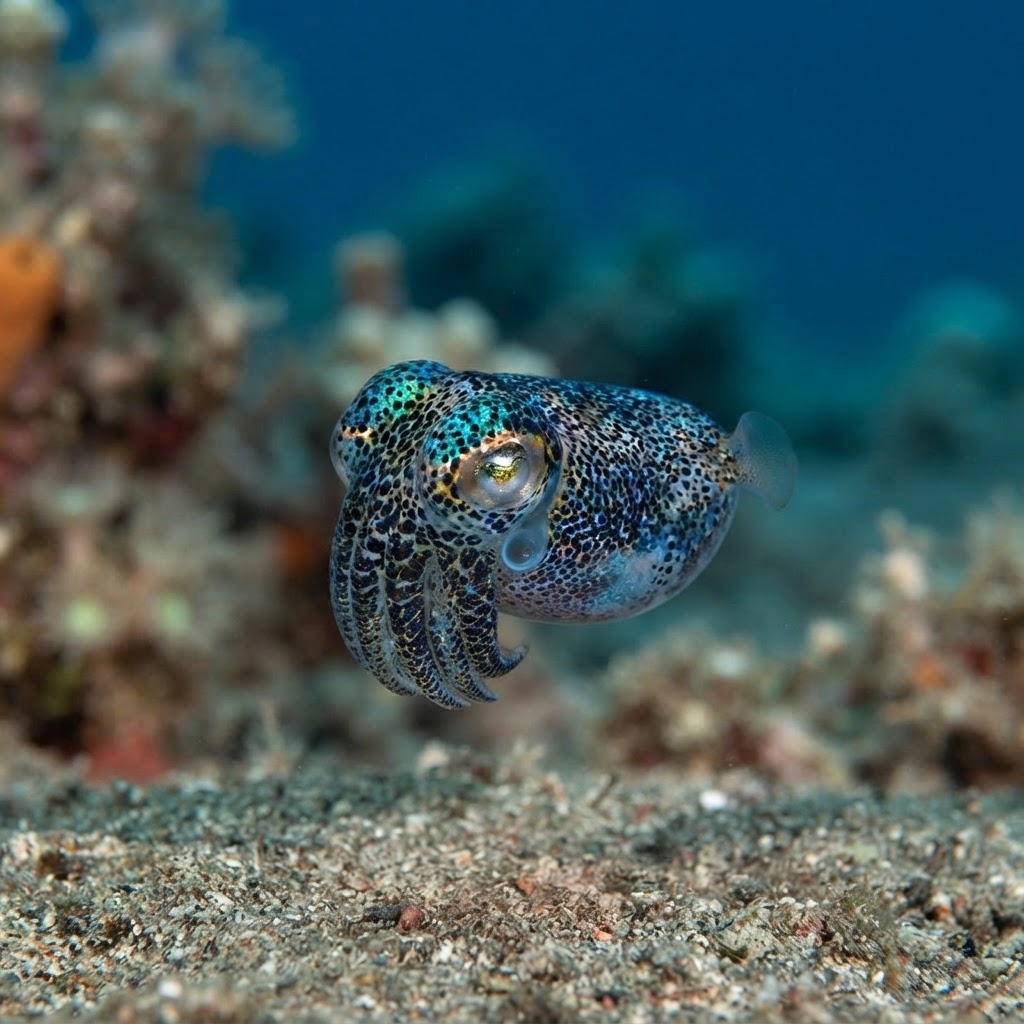
Barely 2 cm long, this squid has a rounded, almost bulbous body more like a dumpling than a torpedo, with a short pair of fins wrapped around its rear rather than running the length of the mantle. Skin tone shifts between mottled browns and creams with fine speckling, blending into sand and rubble. Look for the stubby tail end (the trait behind the
By day it buries itself in sand or rubble, often only visible as a faint outline or a pair of eyes, and becomes active after dark when divers spot it crawling or hovering just above the bottom hunting small crustaceans. It reacts to torchlight and close approach by flushing colour rapidly or dropping back into the substrate, so a steady light and some distance keeps it above ground longer. Most reports come from muck-diving and night-diving sites over sand, silt or rubble rather than hard coral.
Bobtail squid host light-producing bacteria in a special organ and use that glow to cancel out their own shadow on moonlit sand, a defence known as counter-illumination.
Sightings run year-round with no detected seasonal pull, consistent with a species living in a stable warm-water niche of roughly 25.4 to 31.4C found on tropical Indo-Pacific reefs in every month logged.
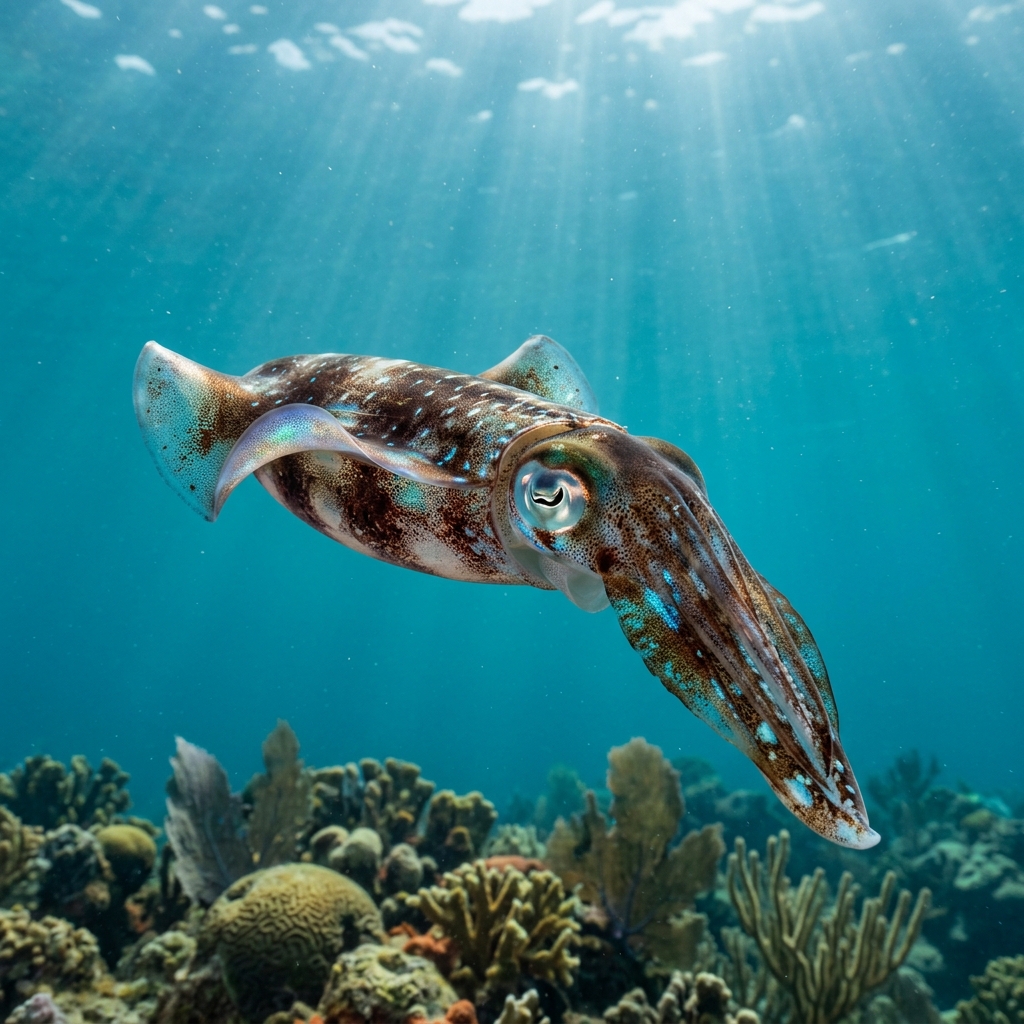
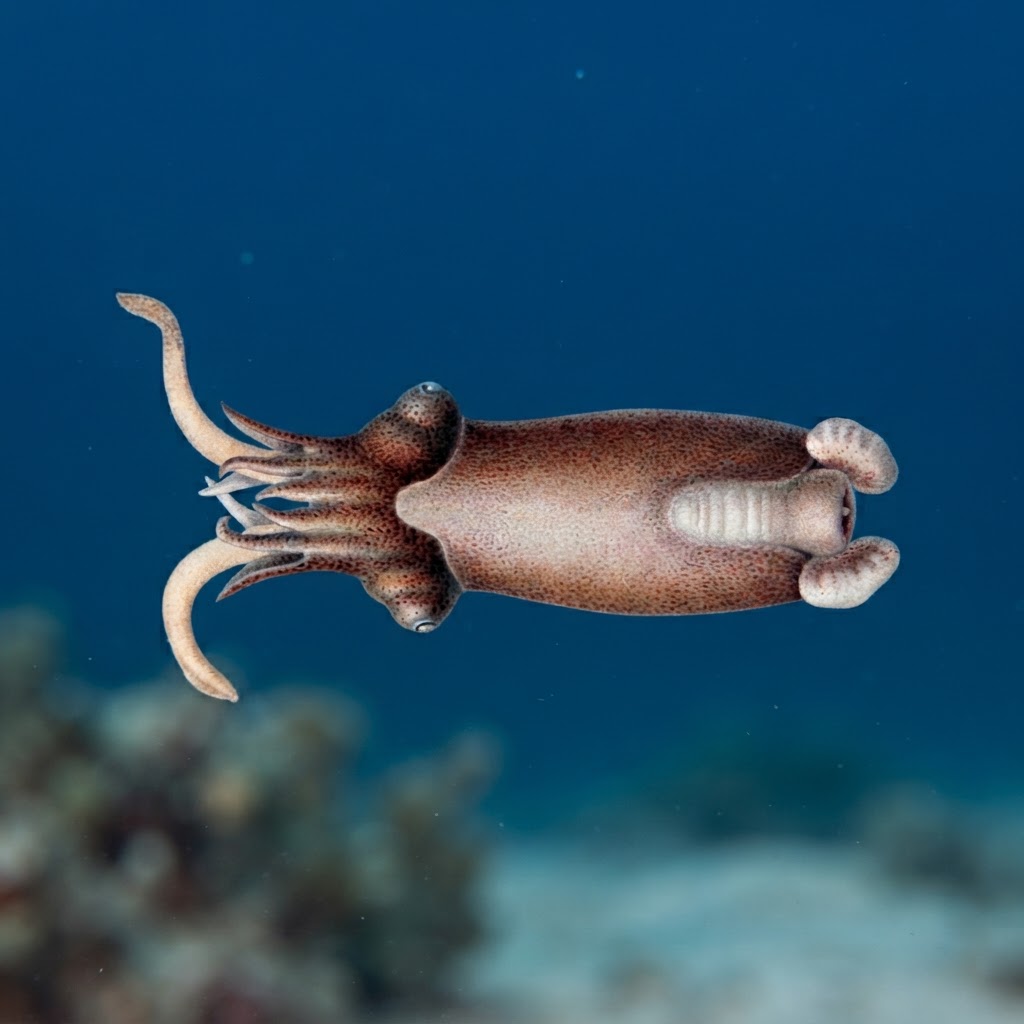
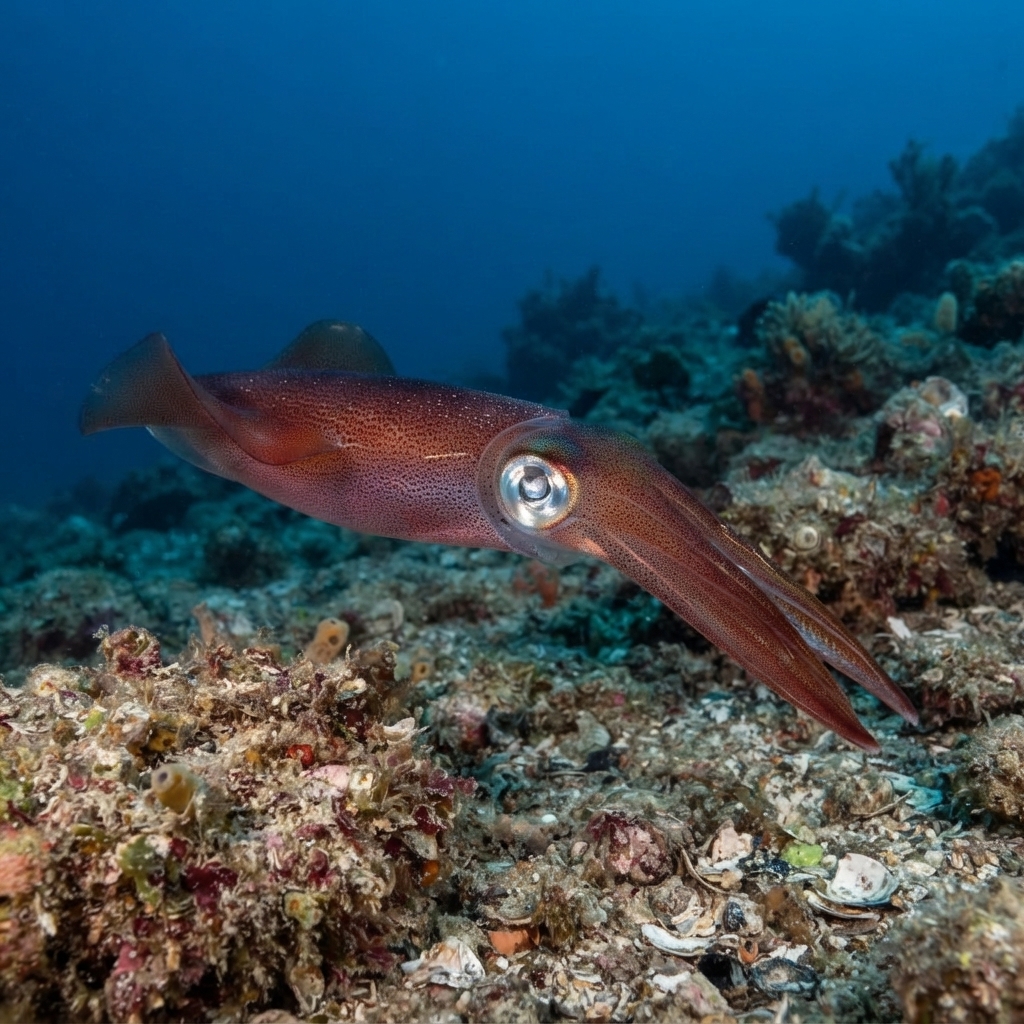
Reef neighbours a diver could mistake it for. Use the identification notes above to tell them apart.
This squid is most reliably logged across Luzon in the Philippines, with further sightings scattered through Sulawesi and Nusa Tenggara in Indonesia, plus a handful of records around Dili in Timor-Leste and off Taiwan's Longdong and Xiaoliuqiu coasts. Even at its best sites divers class it as uncommon to rare, so it rewards slow, patient muck and night diving more than reef cruising.
Mapping where Berry's Bobtail Squid is logged…
Luzon in the Philippines has the strongest run of sightings, with further records from Sulawesi and Nusa Tenggara in Indonesia, Dili in Timor-Leste, and Taiwan's Longdong and Xiaoliuqiu coasts. It stays uncommon to rare even at these sites, so muck and night dives give the best odds.
There is no clear season in the sighting data, and its comfortable temperature range of roughly 25 to 31C spans tropical reefs year-round, so any month can work.
Look for a pea-sized, rounded body only about 2 cm long with short fins wrapped around the rear rather than long side fins, mottled brown and cream skin, and a habit of resting half-buried in sand at night.
They stay tiny, reaching only around 2 cm, making them one of the smaller cephalopods divers log on night dives.
It carries light-producing bacteria in an internal organ and uses that glow to cancel out its own shadow on the seabed, a trick called counter-illumination that helps it stay hidden from predators below.
No, it poses no threat to divers. It is a small, shy carnivore that hunts tiny crustaceans and buries itself in sand when approached.
Site and sighting data is aggregated from diver logs, iNaturalist and GBIF. For taxonomy and conservation status:
Inshore Squid
390 sites