Euprymna tasmanica
Palm-sized and easy to miss: find Southern Dumpling Squid on night dives in Victoria and Western Australia, year-round in cool southern waters.
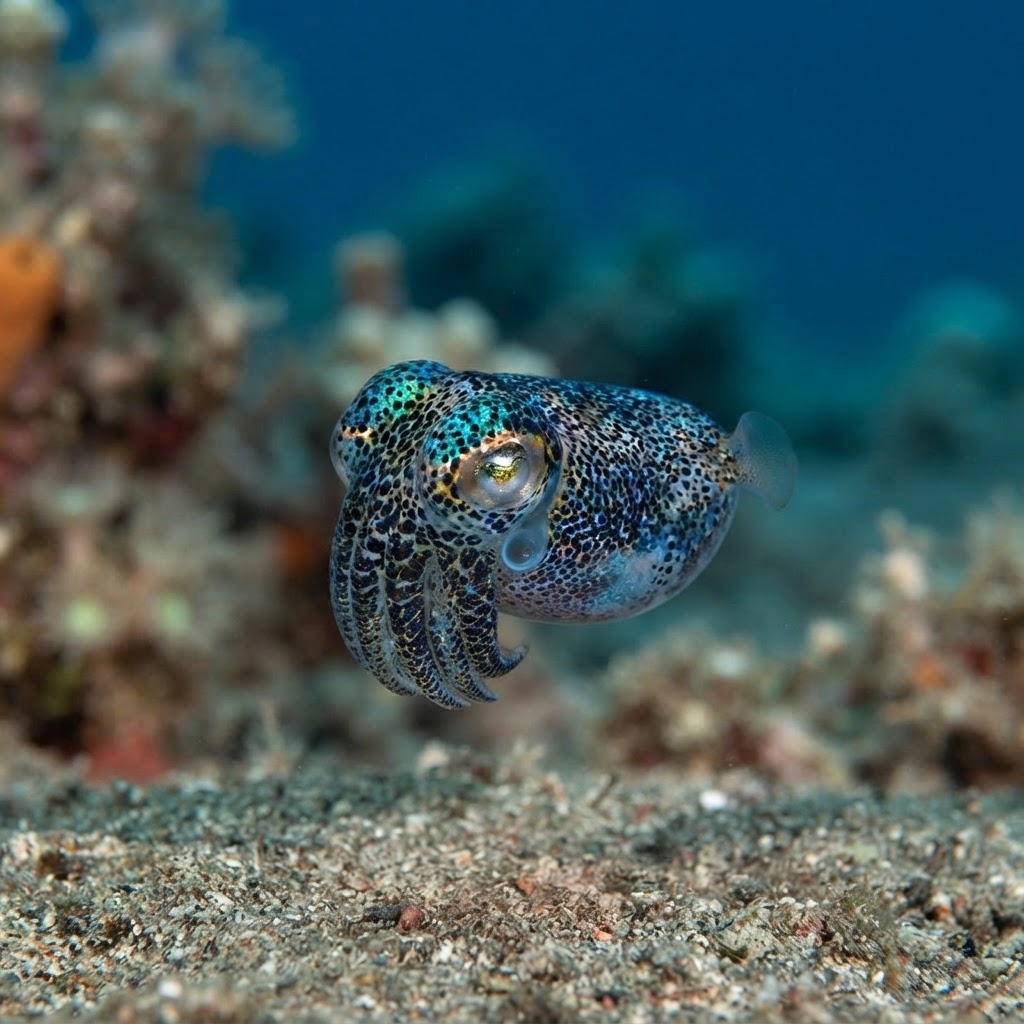
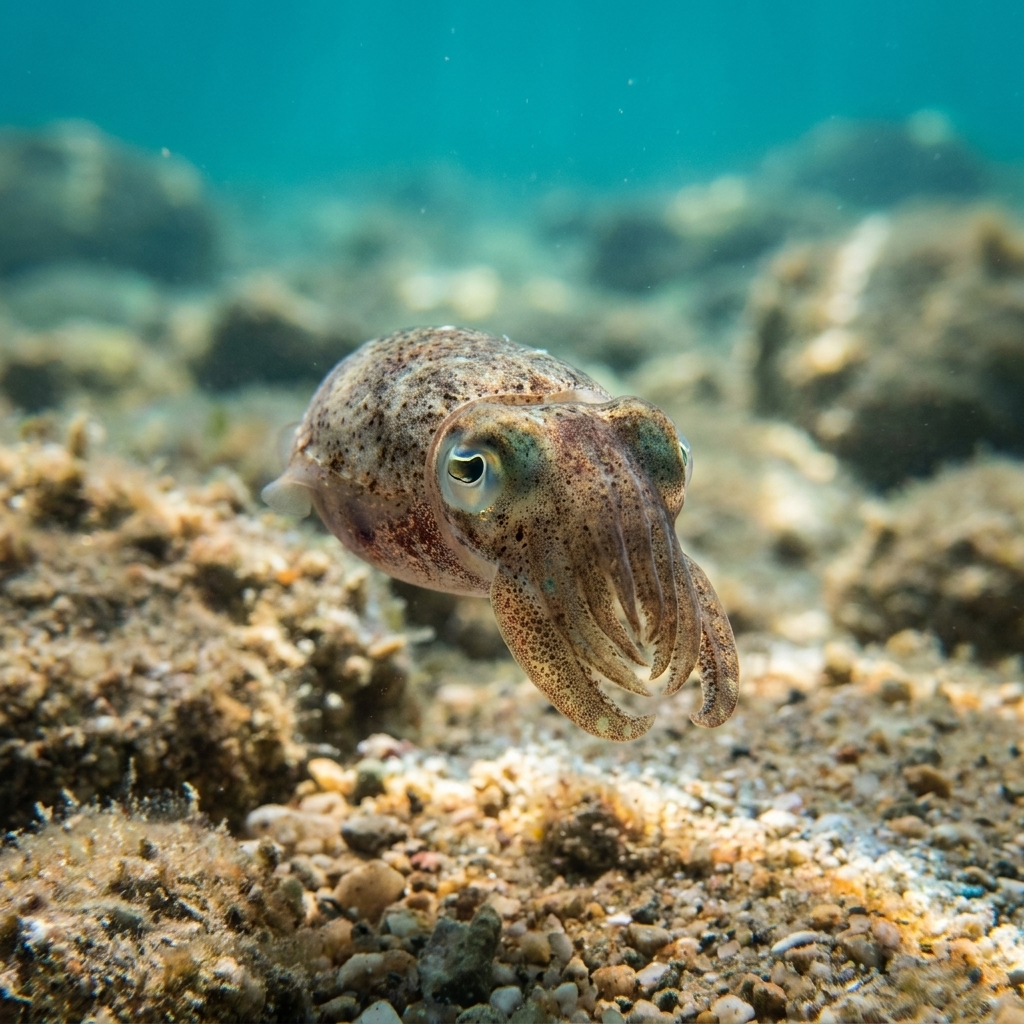
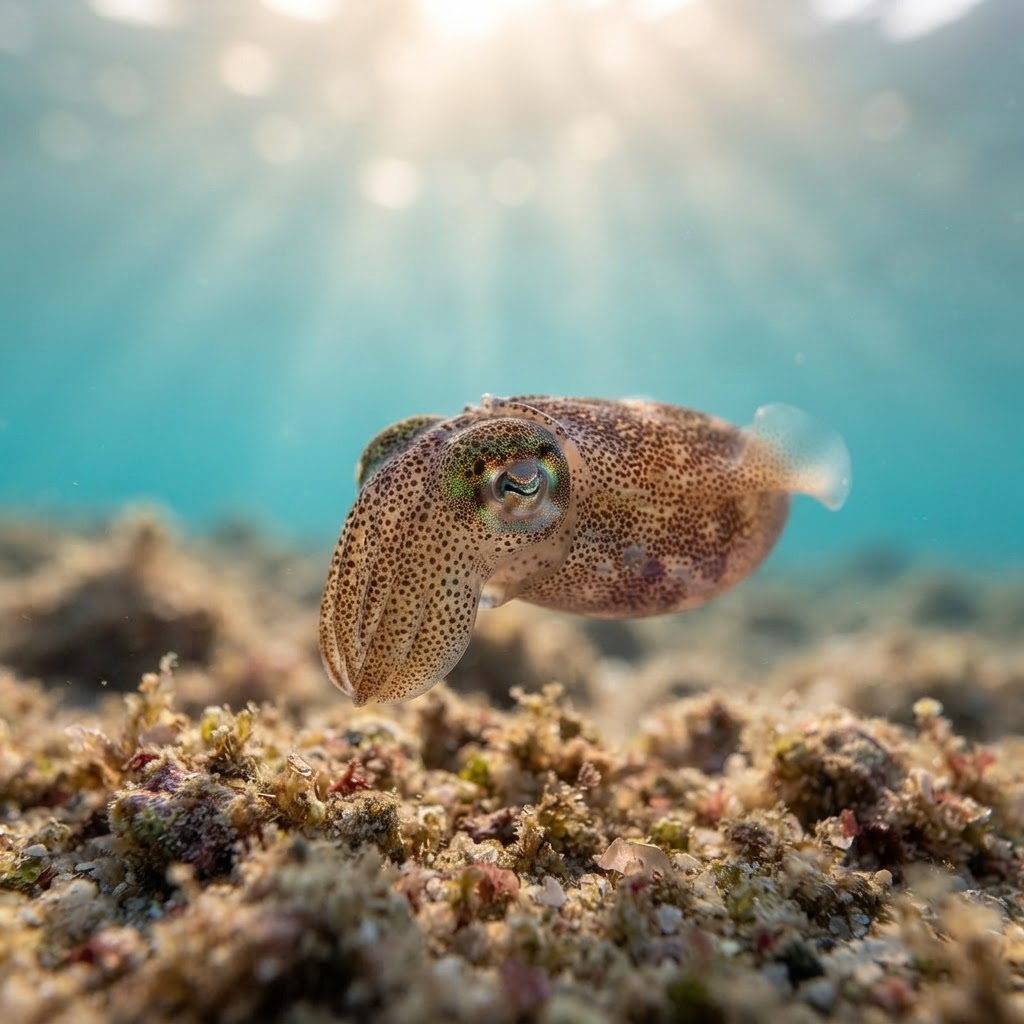
Barely the size of a golf ball, this squid has a short, rounded body rather than the elongated torpedo shape of typical squid, giving it a dumpling-like silhouette. Skin is mottled brown, cream and gold with fine speckling that shifts as it adjusts colour, and two small fins sit low on the sides of the mantle. Look for it sitting half-buried in sand or resting on rubble rather than swimming in open water.
Divers most often find this squid at night, sitting still on sand or gravel with just its eyes visible, or slowly hunting small crustaceans and fish across the seabed. During the day it tends to bury itself under a thin layer of sand, so daytime sightings usually come from divers scanning close to the bottom rather than swimming past. It's not skittish once spotted, often holding position long enough for a careful look, but a sudden approach or torch glare will send it jetting off in a puff of ink.
Like other bobtail squid, it hosts light-producing bacteria in a special organ and uses that glow at night to counter-illuminate its underside, cancelling its own shadow so it's harder for predators below to spot against the moonlit surface.
Sightings don't show a strong seasonal pattern, so treat it as a year-round find in the 14.8 to 22C range typical of temperate southern Australian waters. Cooler months may bring slightly lower water temperatures but the squid appears to be present across the year regardless.
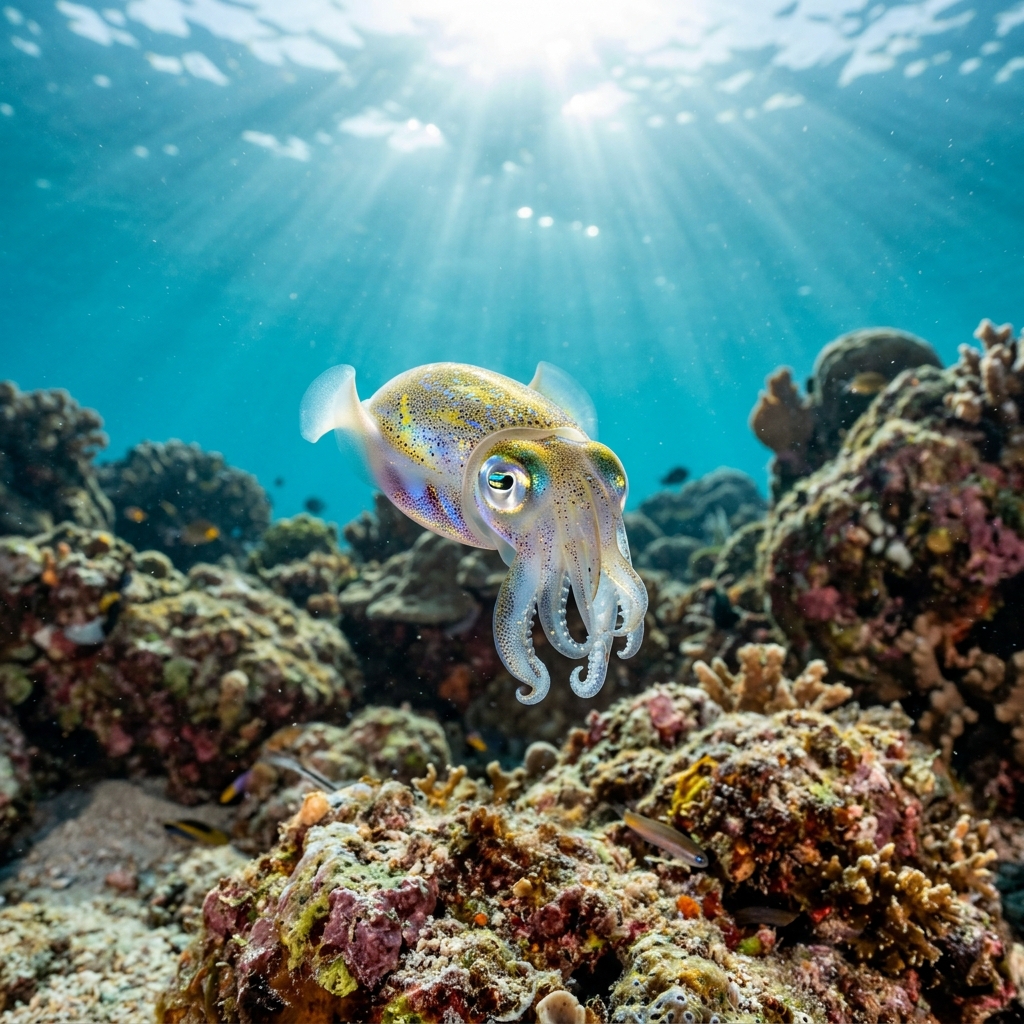
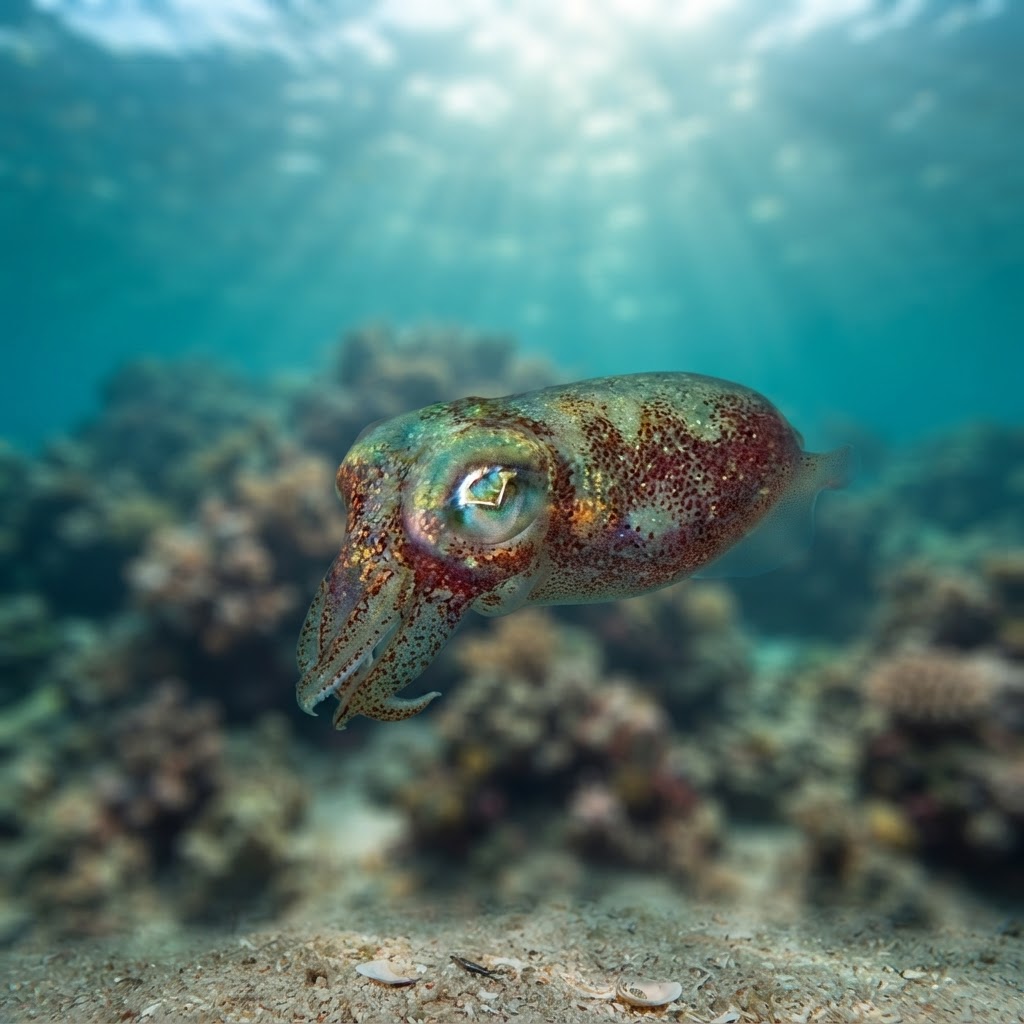
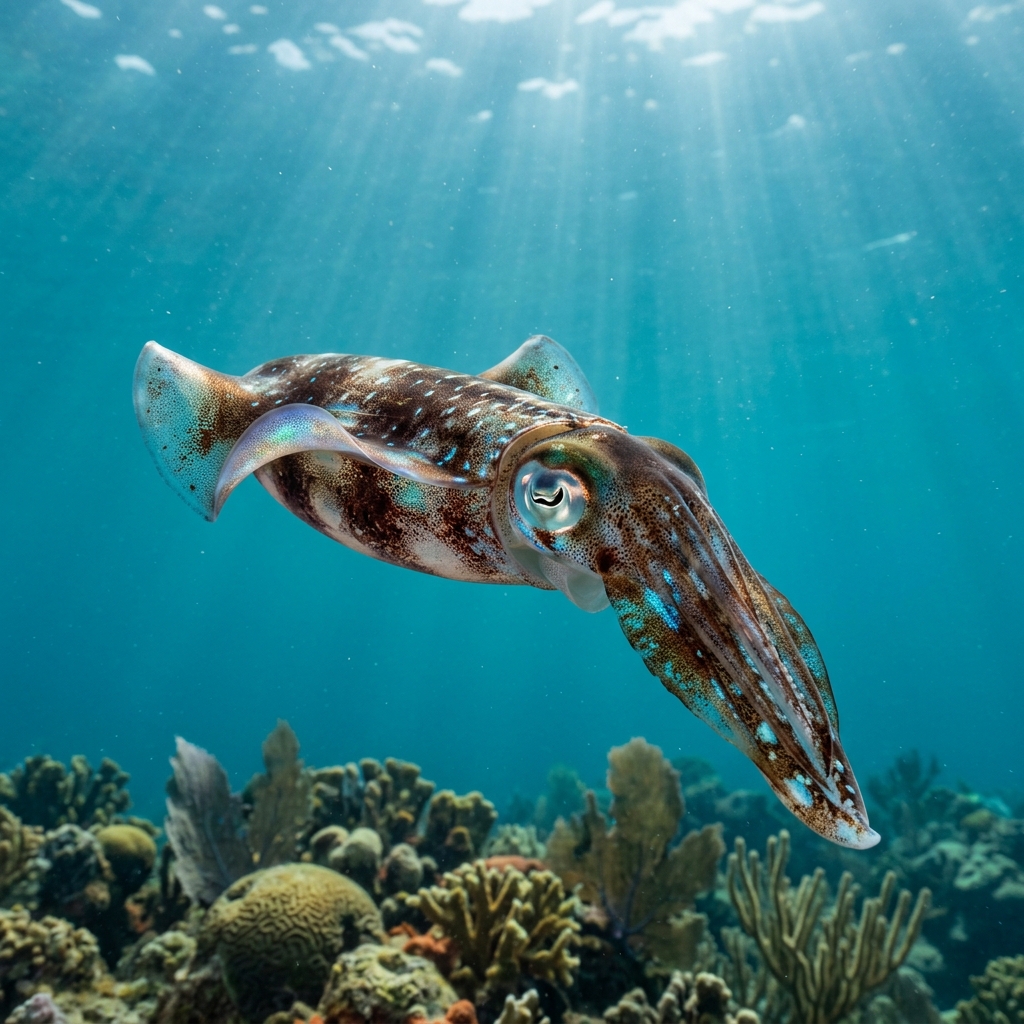
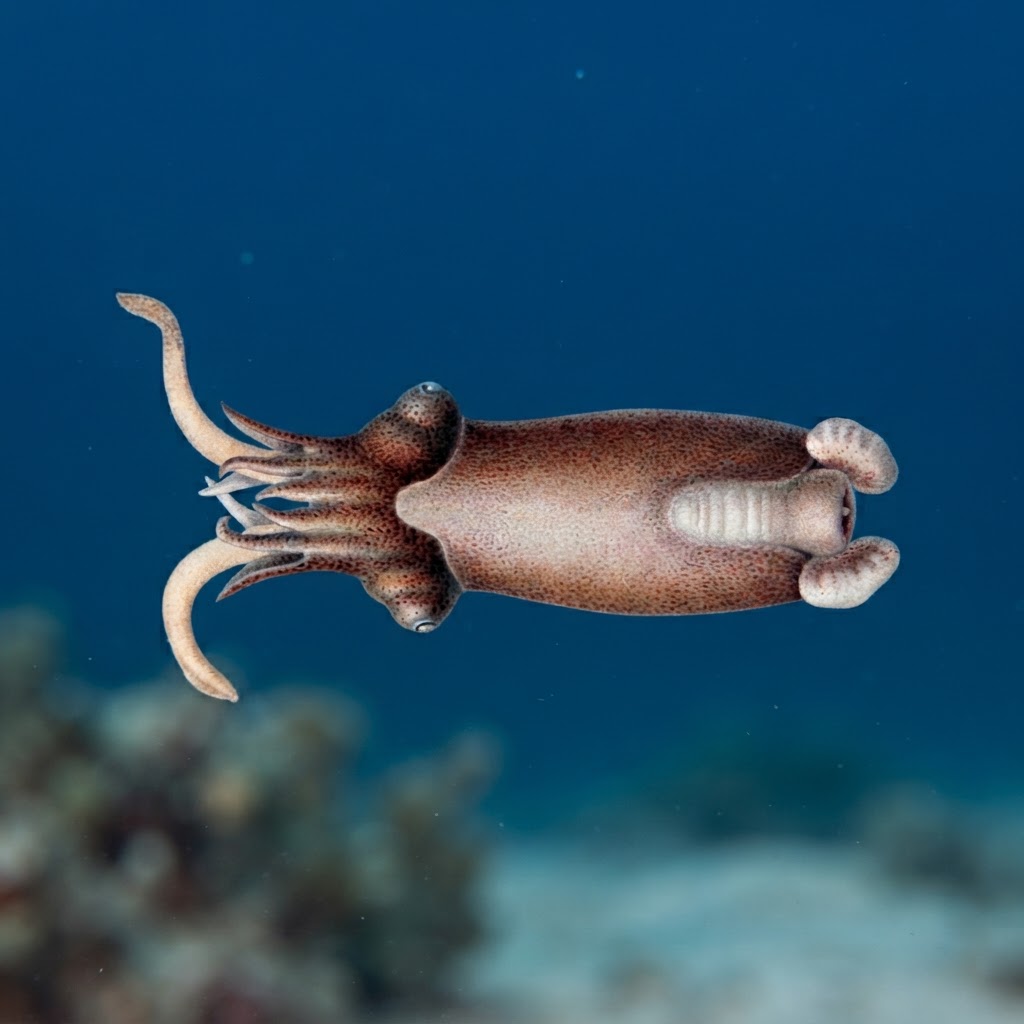
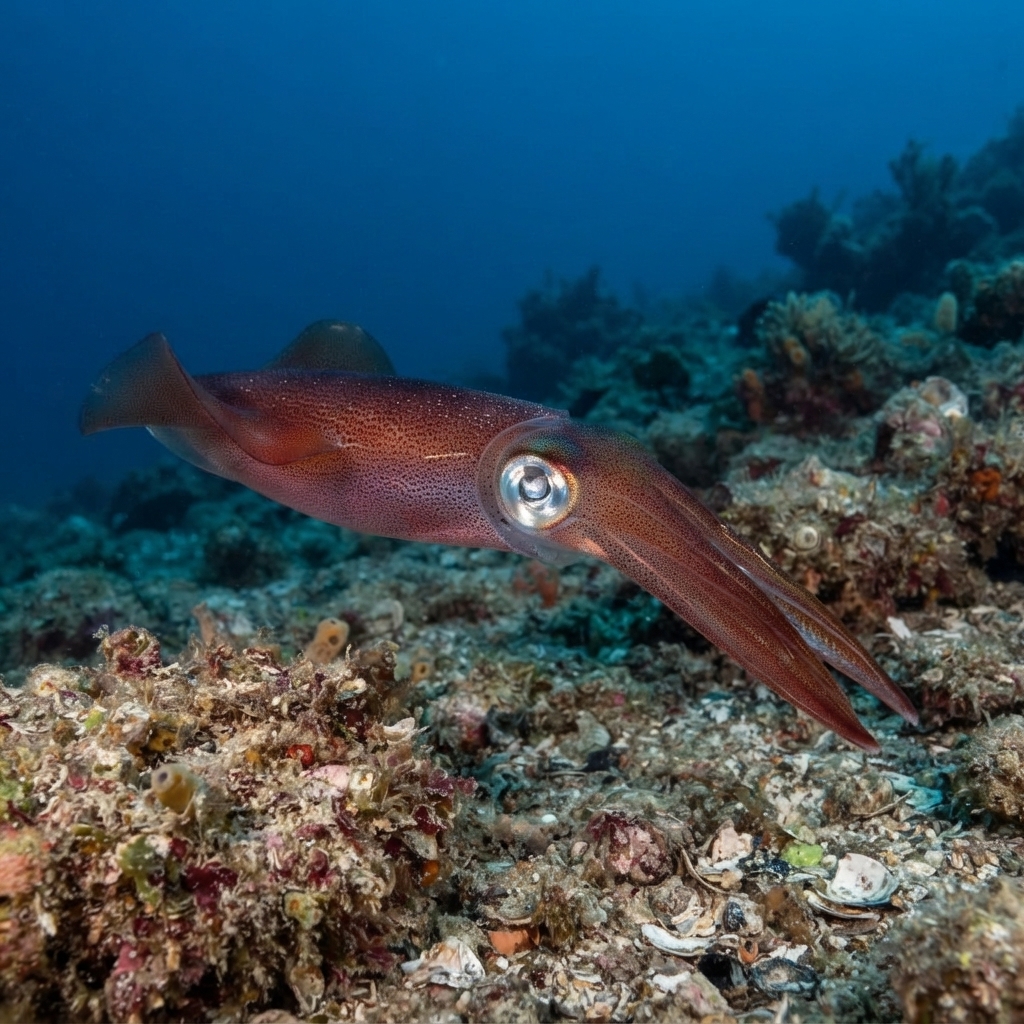
Reef neighbours a diver could mistake it for. Use the identification notes above to tell them apart.
This is an Australian speciality, most commonly logged in Victoria and Western Australia, with smaller numbers of sightings in Tasmania and South Australia. Sites in these regions turn it up reliably enough to search for on a dedicated macro or night dive, though it's never guaranteed.
Mapping where Southern Dumpling Squid is logged…
It's most reliably found in Victoria and Western Australia, with additional sightings logged in Tasmania and South Australia. It's an Australian endemic, so these southern coastlines are really the only place to look for it.
There's no strong season in the sighting data, so it can turn up any month of the year. Night dives in the 14.8 to 22C temperature range typical of southern Australia give the best chance.
Look for a rounded, dumpling-shaped body only a few centimetres long, mottled brown and gold, resting on sand rather than swimming freely. Small side fins and a habit of half-burying itself set it apart from more elongated squid.
They're tiny, typically around 3cm, making them an easy one to swim straight past if you're not looking closely at the sand.
It carries light-producing bacteria in an internal organ and uses the glow at night to erase its own shadow, a trick called counter-illumination that helps it hide from predators hunting from below.
Site and sighting data is aggregated from diver logs, iNaturalist and GBIF. For taxonomy and conservation status:
Inshore Squid
390 sites