Loligo vulgaris
Torpedo-shaped and translucent, European squid turn up year-round in Malta, Sicily and Tuscany in water around 16-22C.
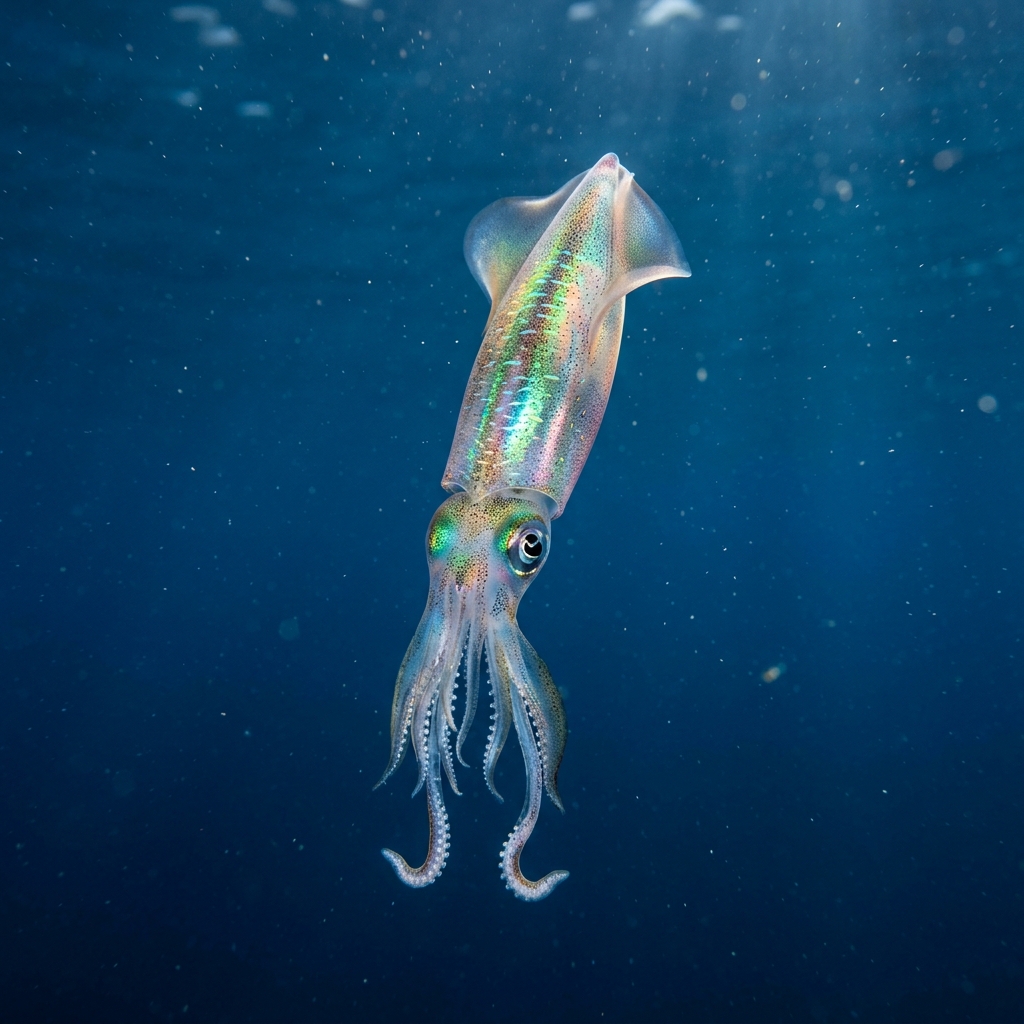
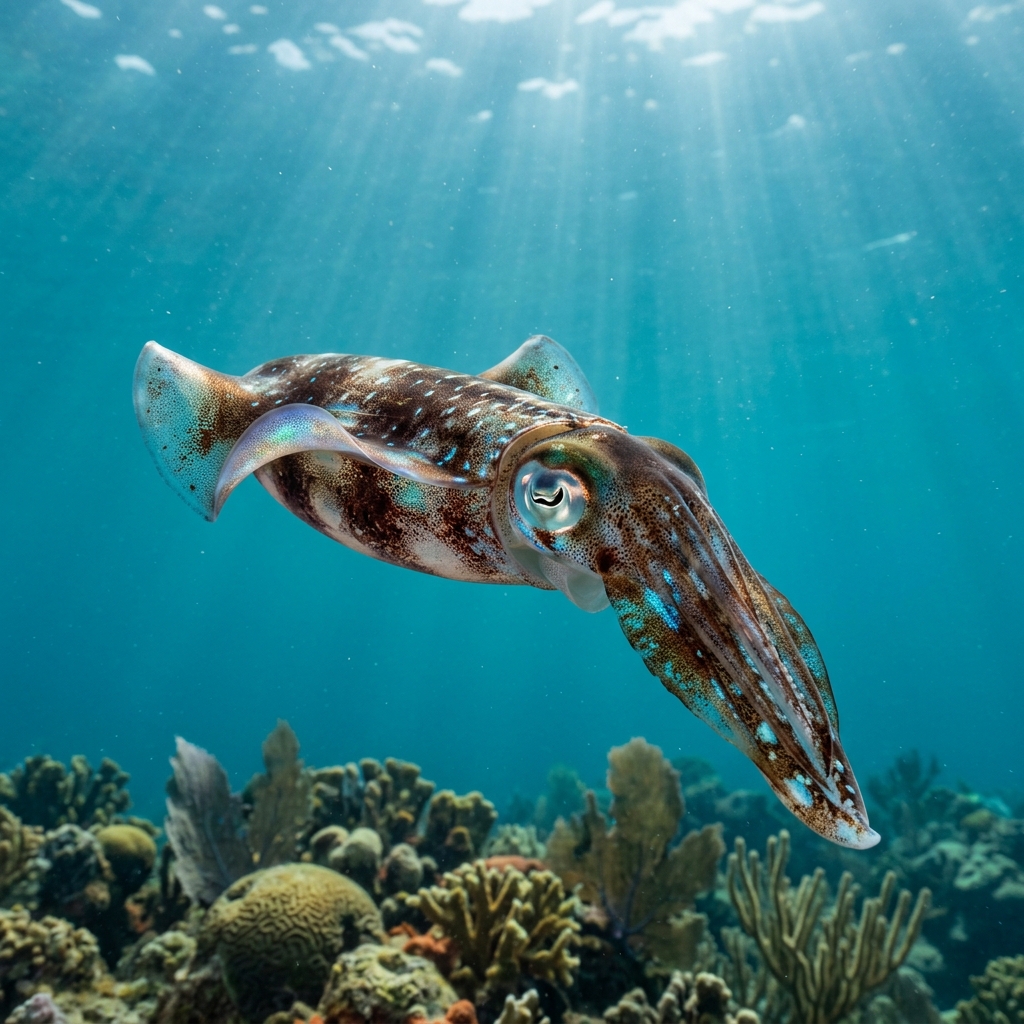
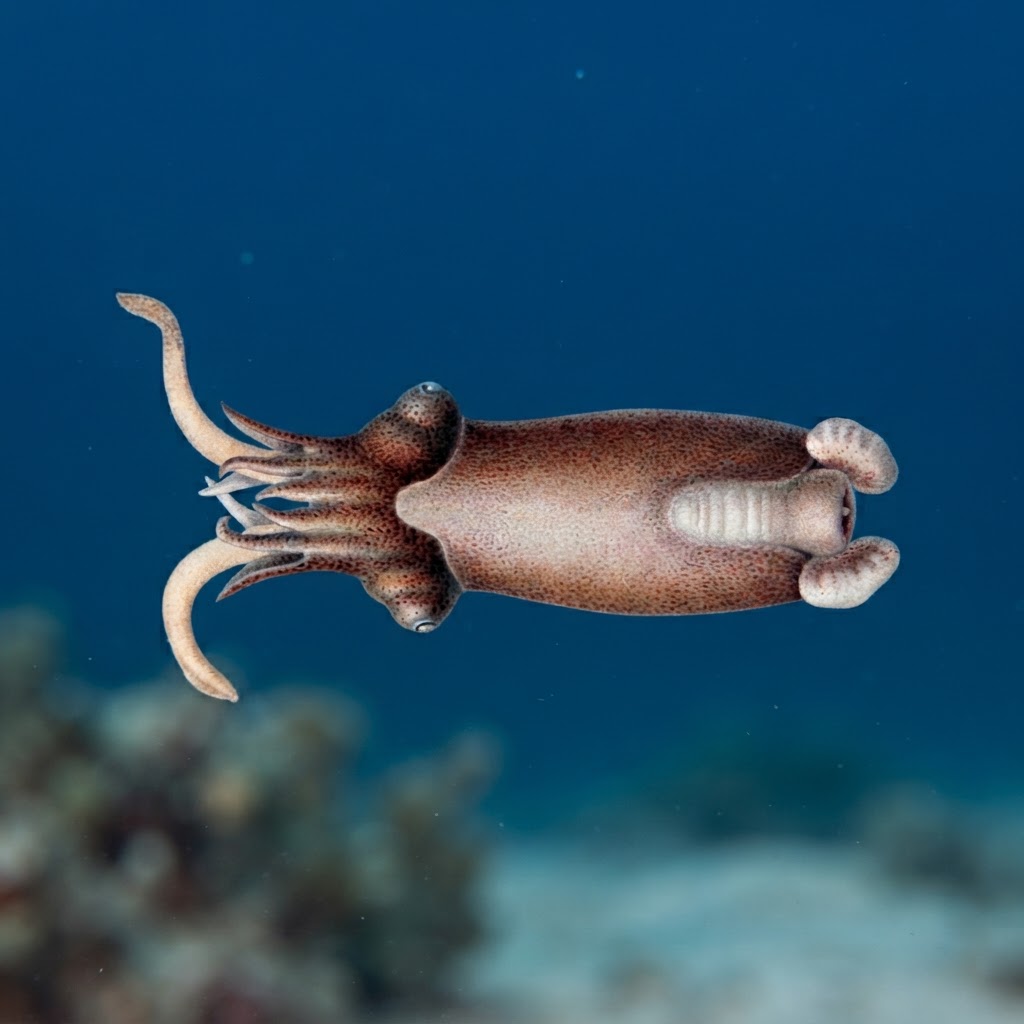
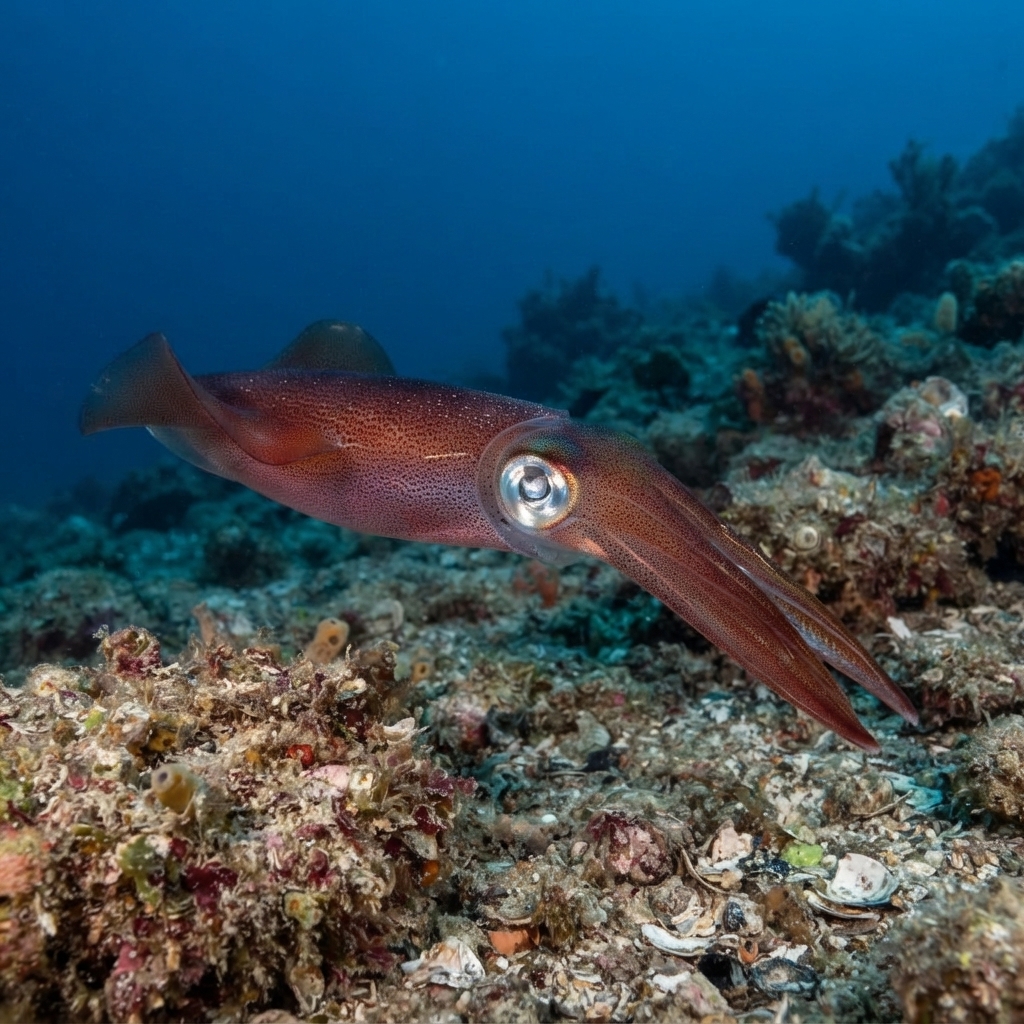
Look for a slim, torpedo-shaped body around 40-45 cm long with a long fin running almost the full length of the mantle on each side, giving it a distinct arrowhead silhouette. Skin colour shifts constantly between translucent, mottled brown and flushed pink or gold as chromatophores (colour-changing skin cells) fire. Eight arms and two longer tentacles trail beneath a bullet-shaped head, and you'll often see it hovering motionless in mid-water before jetting off in a burst.
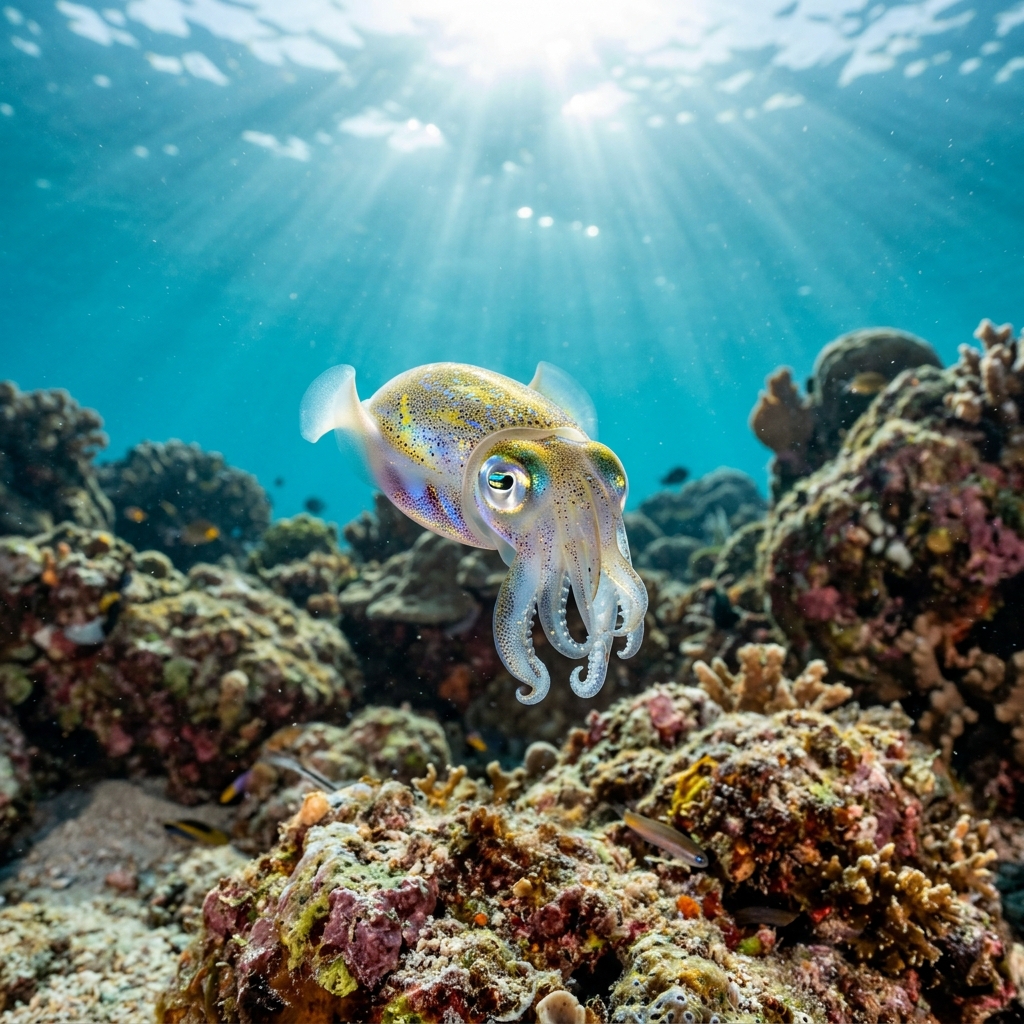
Divers typically find it hovering just off the reef or over sand and rocky patches, holding still with fins rippling before darting away in a quick jet if approached too fast. It's often seen alone or in loose small groups rather than tight schools, cruising the water column between the surface and deeper rocky ground. Night dives can be productive, as it moves up into shallower water to hunt after dark.
It can shoot a cloud of ink and jet backwards in an instant when startled, and its skin can flash through rapid colour changes as a mix of camouflage, mood signal and possible communication with other squid nearby.
Sighting data doesn't point to a clear seasonal peak, and the observed temperature range of roughly 16 to 22C spans much of the Mediterranean diving calendar, so treat it as a year-round possibility rather than a seasonal target.
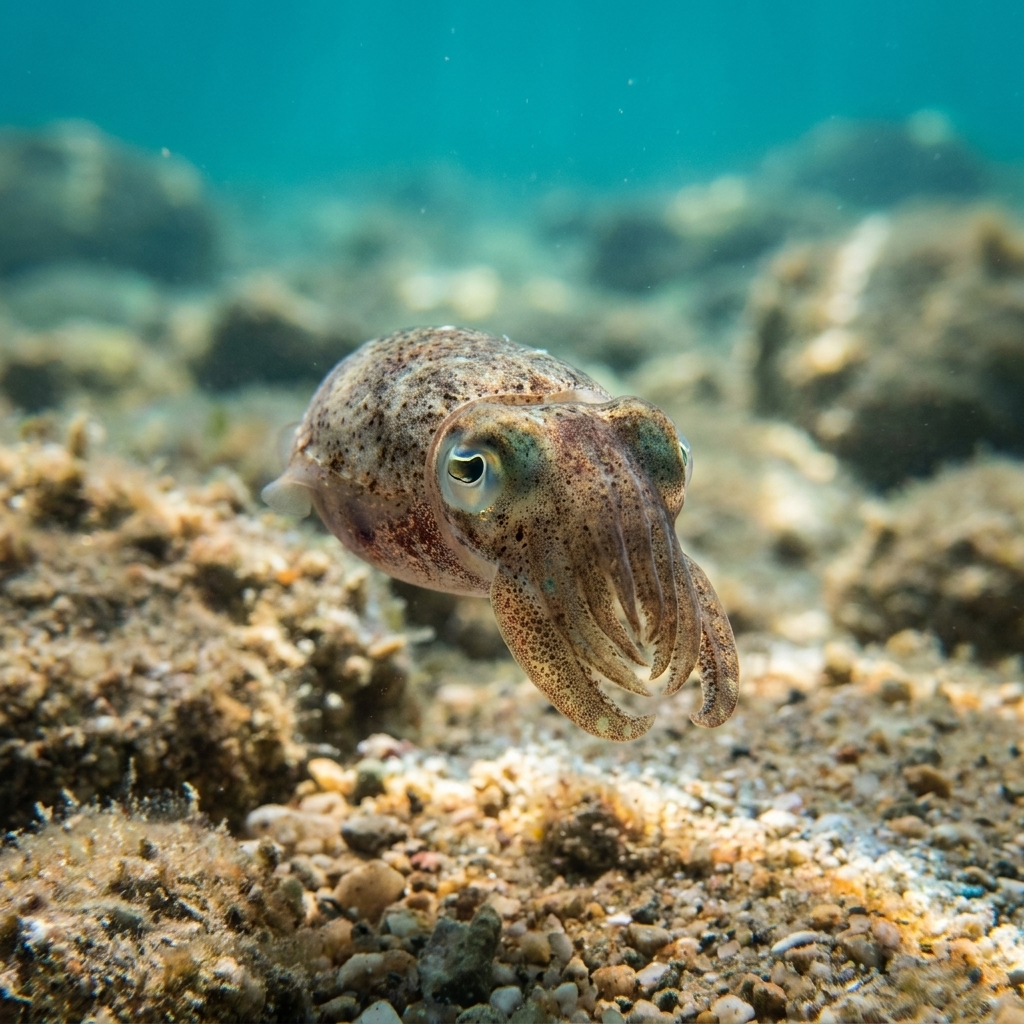
Reef neighbours a diver could mistake it for. Use the identification notes above to tell them apart.
Most reliably logged in the Mediterranean, with strong numbers in Malta, Sicily and Tuscany in Italy, and along the French Riviera and Provence coast. Spain's Balearic Islands and Catalonia, plus Portugal's Lisbon Coast, are also solid bets for a sighting.
Mapping where European Squid is logged…
Malta, Sicily and Tuscany are among the most consistent places to spot them, along with the French Riviera, the Balearic Islands, Catalonia and Portugal's Lisbon Coast.
There's no strong seasonal pattern in the sighting data, and they tolerate a wide temperature range, so they're logged across the diving season rather than at one particular time of year.
Look for a slender, torpedo-shaped body around 40-45 cm with a long fin running nearly the full length of the mantle, translucent skin that flushes brown, pink or gold, and eight arms plus two longer tentacles.
They typically reach around 44 cm in length including the tentacles, making them one of the larger squid species divers encounter in Mediterranean waters.
Its skin holds thousands of colour-changing cells that let it flash between translucent, mottled brown and pink or gold in an instant, useful for camouflage and possibly signalling to other squid.
No. They have no venom or bite that threatens divers and will simply jet away or release an ink cloud if they feel threatened.
Site and sighting data is aggregated from diver logs, iNaturalist and GBIF. For taxonomy and conservation status:
Inshore Squid
390 sites