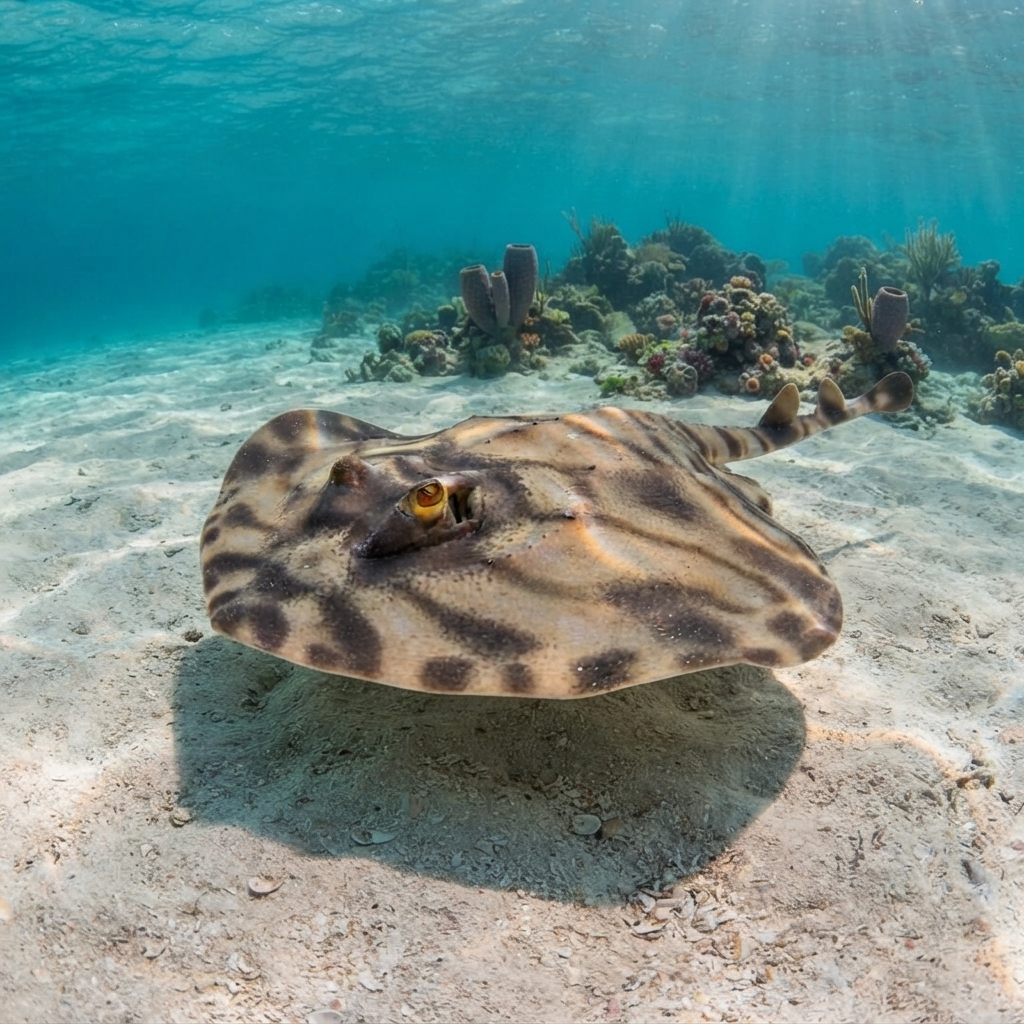
Zanobatus schoenleinii
A flat, banded ray common in Dakar's cool 15.6 to 20.9 C water year-round: here's how to spot one on the seabed.
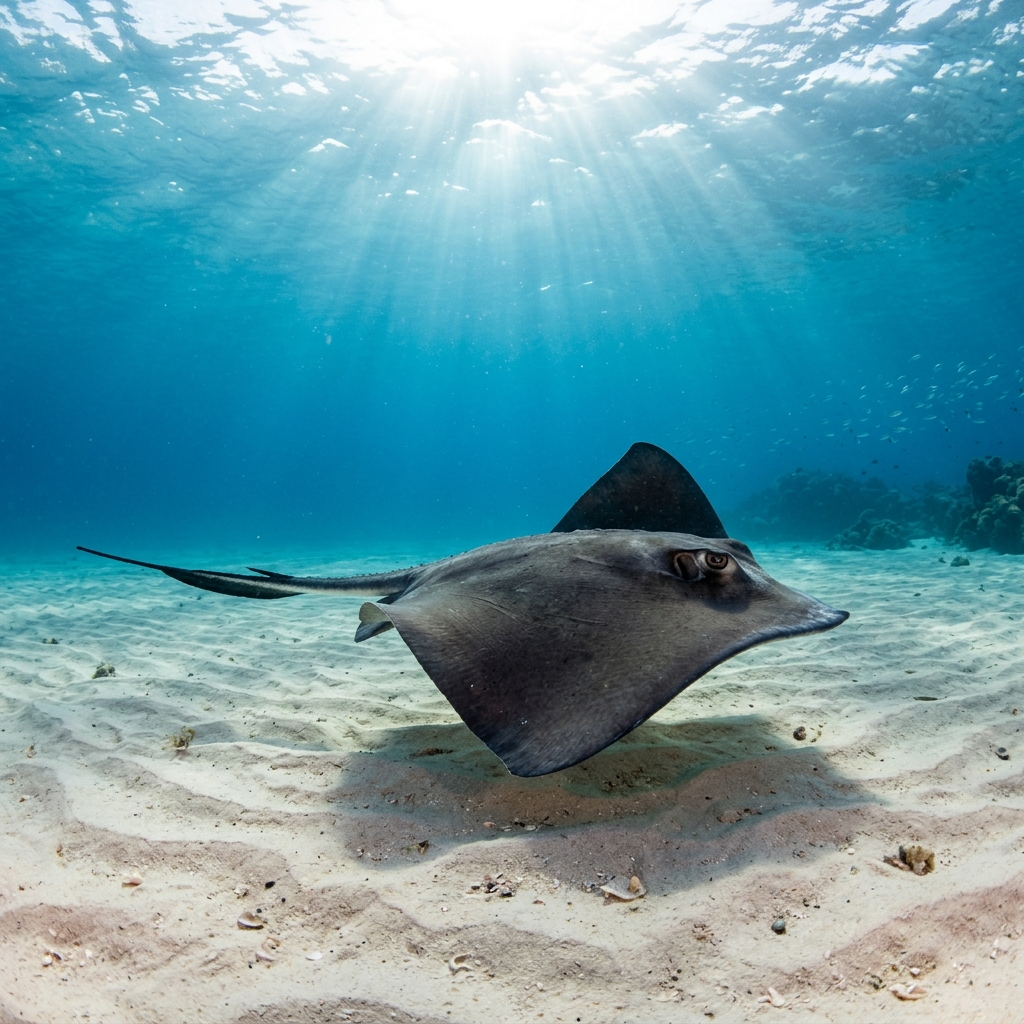
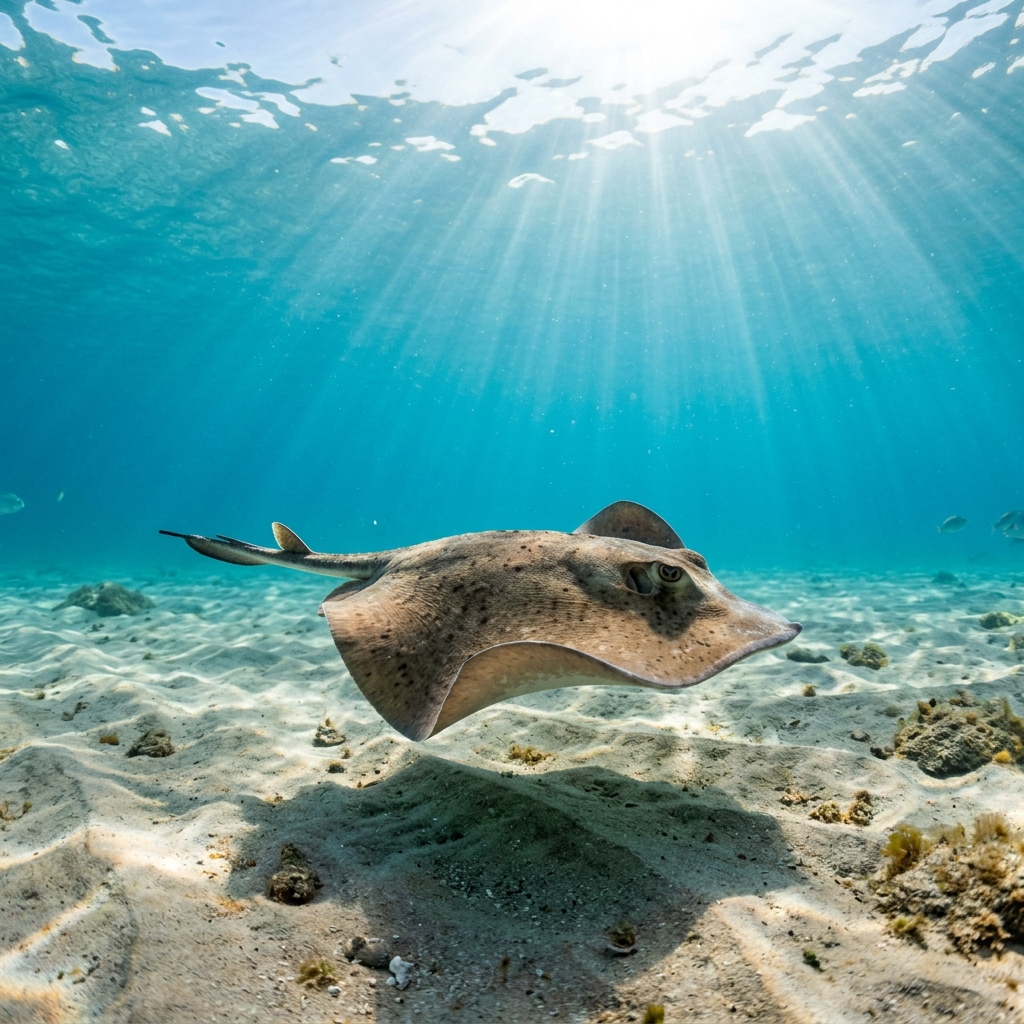
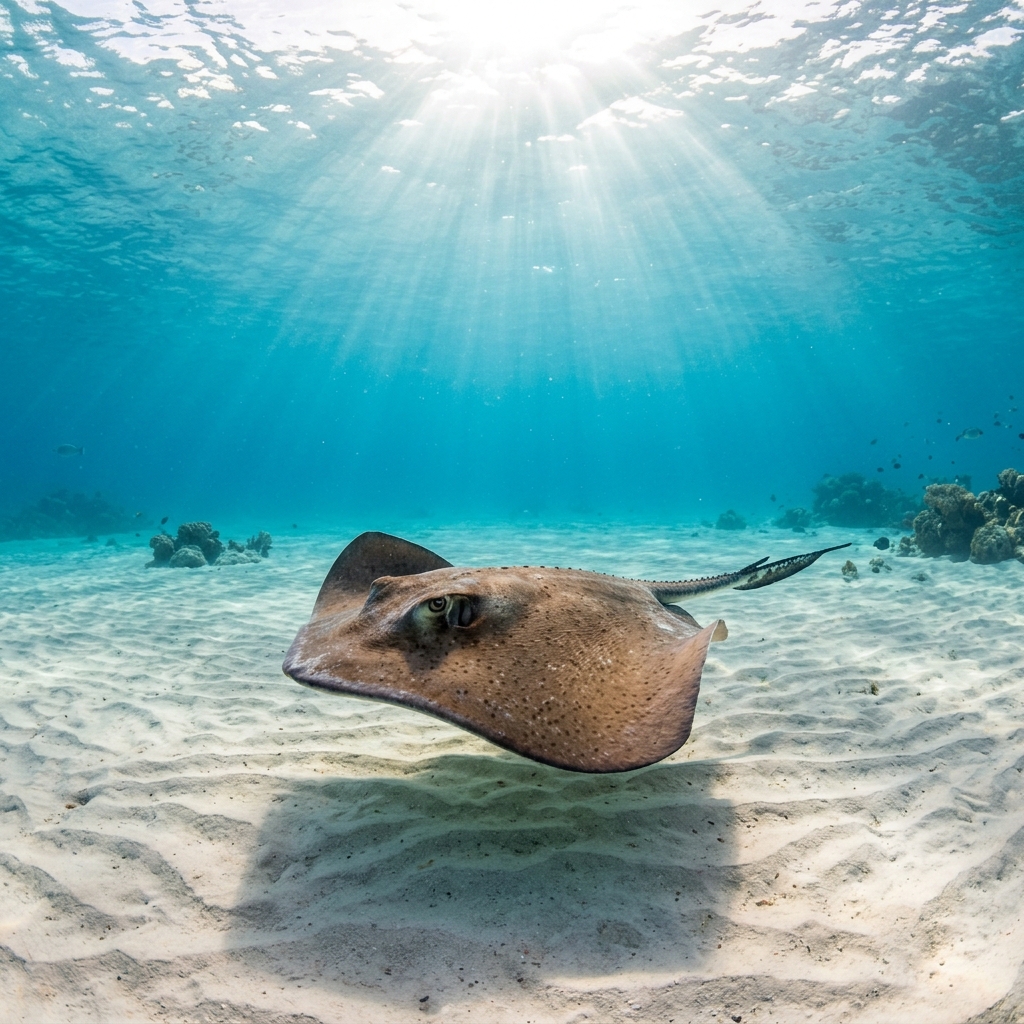
Flattened, disc-shaped body that tapers into a short, thick tail, giving it a guitar-like outline rather than the round disc of a true stingray. Look for dark cross-bands or stripe patterning running across a pale to sandy-brown body, which is where the common name comes from. At around 70 cm it sits low and still on the seabed, easy to miss until the banding catches your torch or the sun angle.
Typically found lying still on sand or mixed seabed, often partly settled into the substrate where its banded pattern breaks up its outline. It doesn't spook easily and tends to hold position as divers pass, making it a reasonable subject for a slow, low approach rather than a chase. Most sightings come from a calm scan of open sand rather than reef structure.
Panrays belong to a small family (Zanobatidae) that sits taxonomically between guitarfish and true rays, which is exactly why the body shape looks like a cross between the two.
No clear seasonal pattern shows up in the sightings, so treat it as a year-round find in Dakar's cooler water, which sits in the 15.6 to 20.9 C range. Pack a hood or thicker wetsuit rather than waiting for a warmer month.
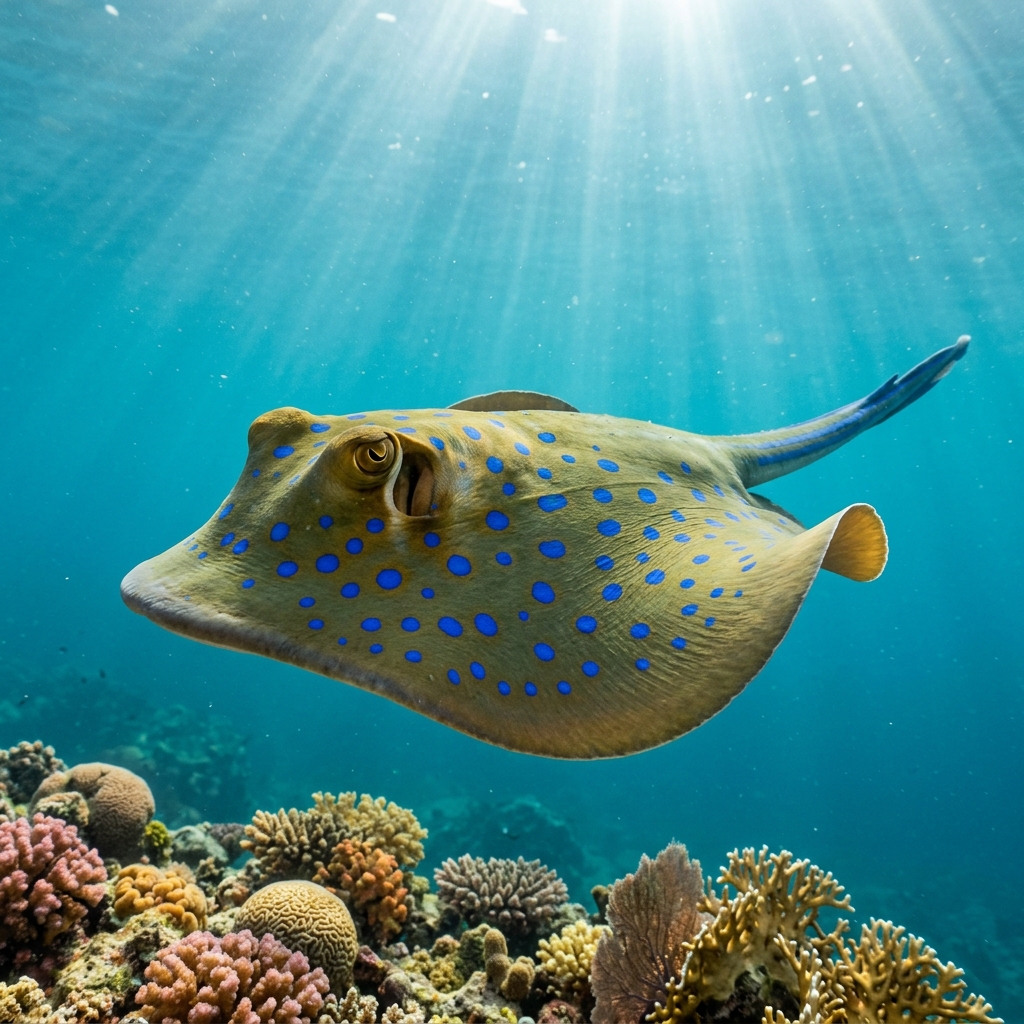
Reef neighbours a diver could mistake it for. Use the identification notes above to tell them apart.
Every logged sighting of this ray comes from Senegal, with Dakar the clear hotspot and the site where divers report it most reliably. If you're diving the Dakar area, this is one of the more dependable seabed finds rather than a lucky encounter.
Mapping where Striped Panray is logged…
Dakar, Senegal is by far the most reliable region, with sightings logged as common to very common across a wide spread of local sites. Outside Senegal there is no notable diver record for this species.
Sightings show no detectable season, so it's considered a year-round find in Dakar's cooler coastal water, which runs roughly 15.6 to 20.9 C. There's no need to time a trip around a specific month.
Look for a flattened, guitar-shaped body around 70 cm long with dark cross-banding over a pale to sandy background, usually lying still on the seabed. The short thick tail and stripe pattern separate it from rounder-disc stingrays.
They reach around 70 cm in length, making them a modest-sized, low-profile ray rather than a large one. Most divers spot them resting flat on sand rather than swimming in open water.
No, they're not considered dangerous to divers and tend to stay settled on the seabed rather than reacting defensively. Standard reef etiquette of not touching or crowding the animal is all that's needed.
Site and sighting data is aggregated from diver logs, iNaturalist and GBIF. For taxonomy and conservation status:
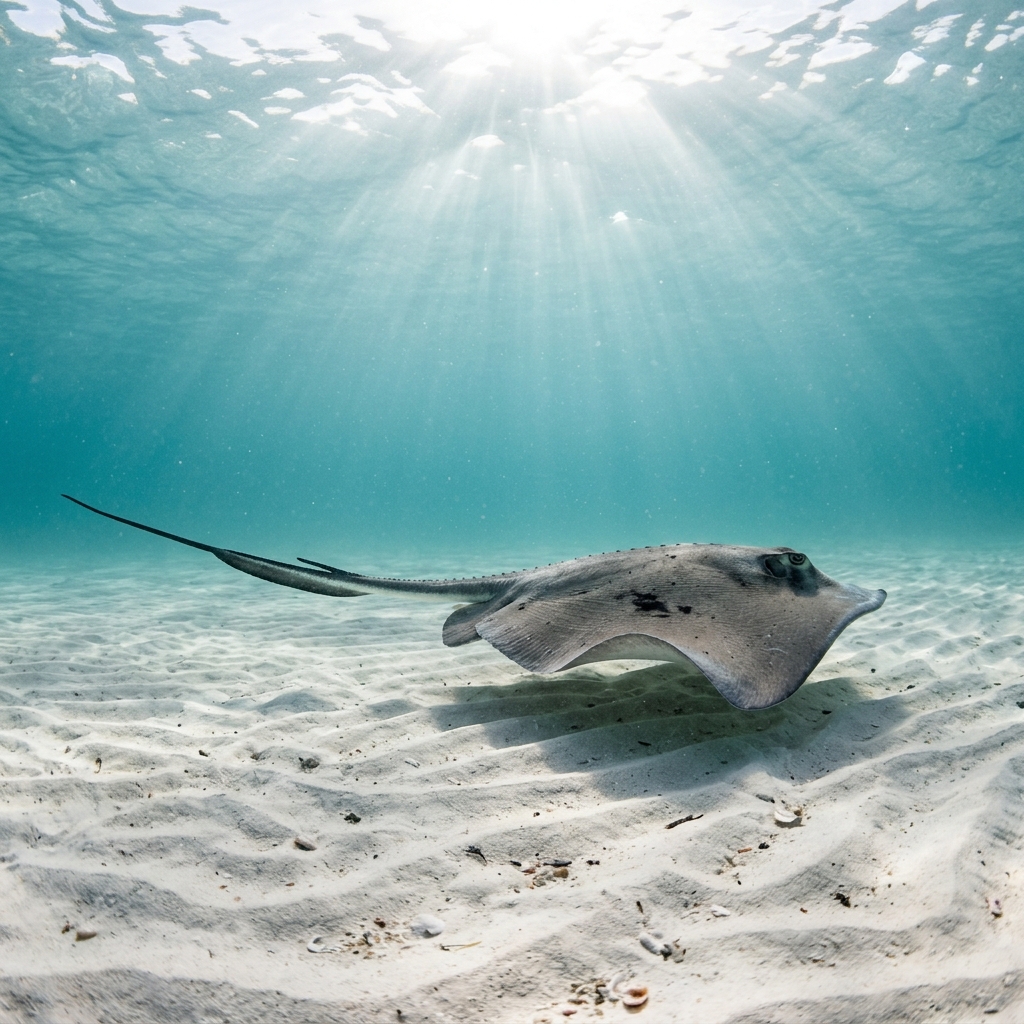
Whiptail Stingray
1,747 sites