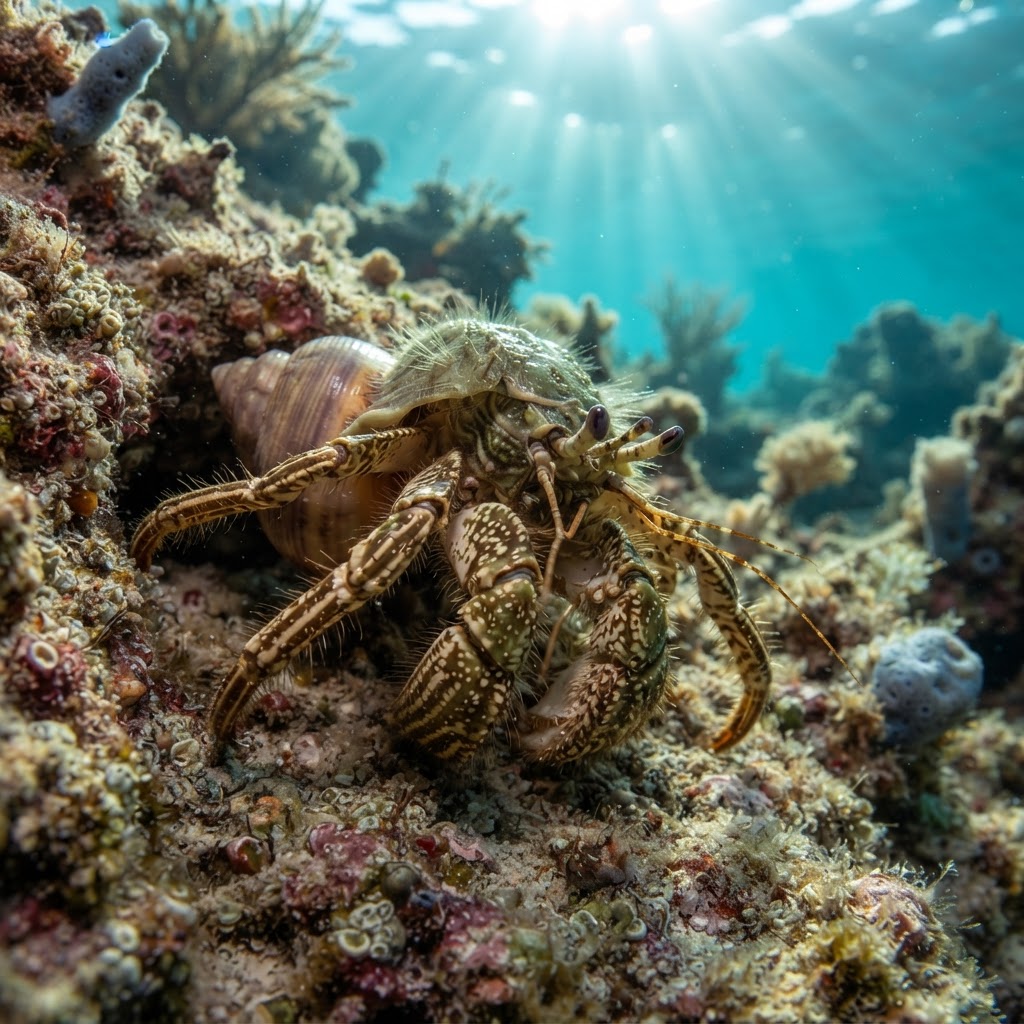
Clibanarius vittatus
Common on Florida's shallow reefs and flats, this striped-legged hermit crab turns up in 22-28C water almost year-round.
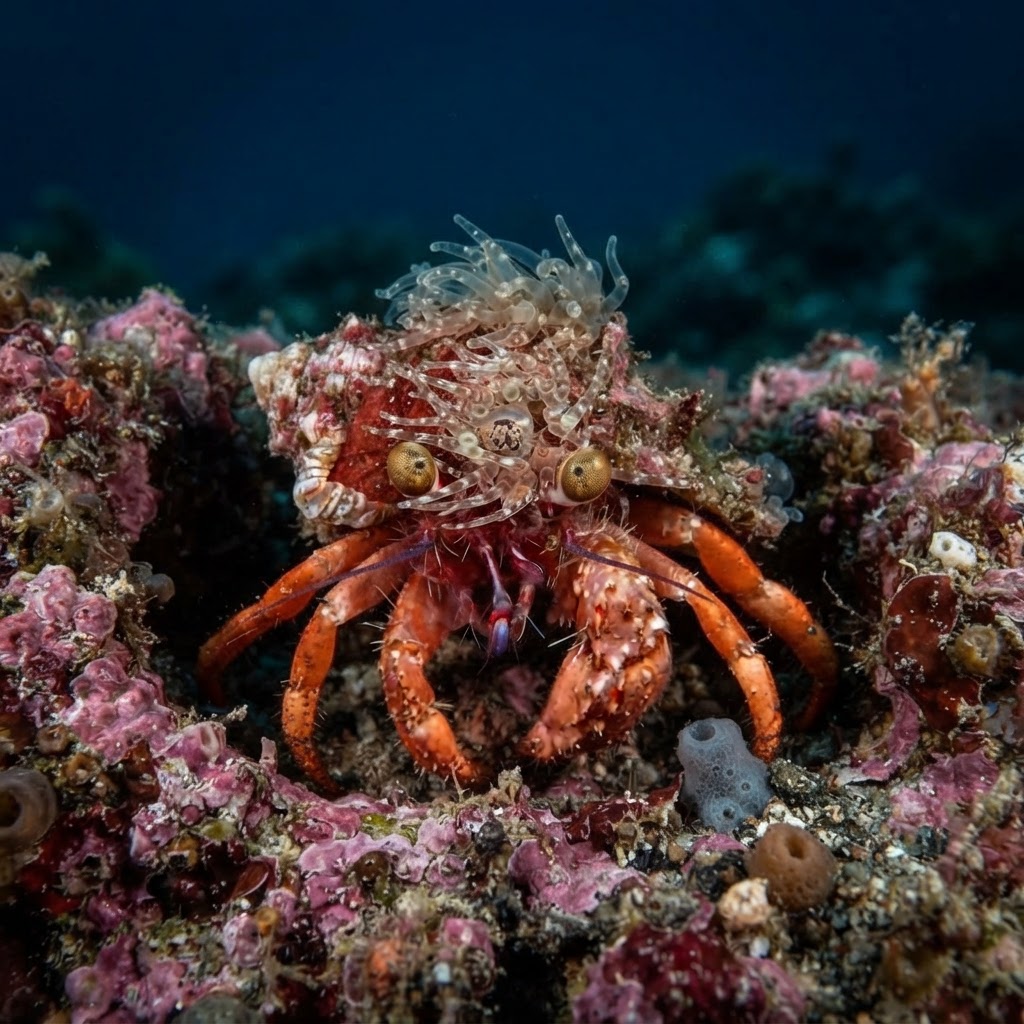
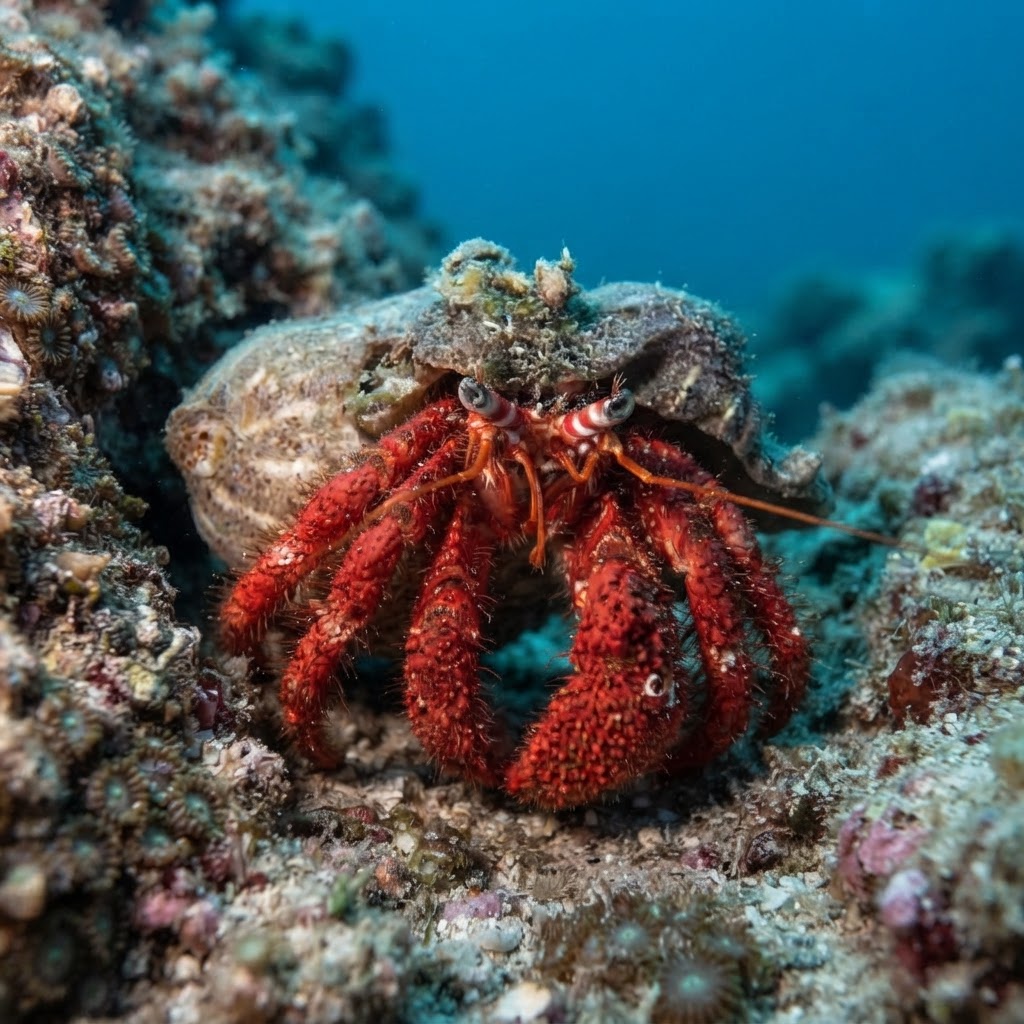
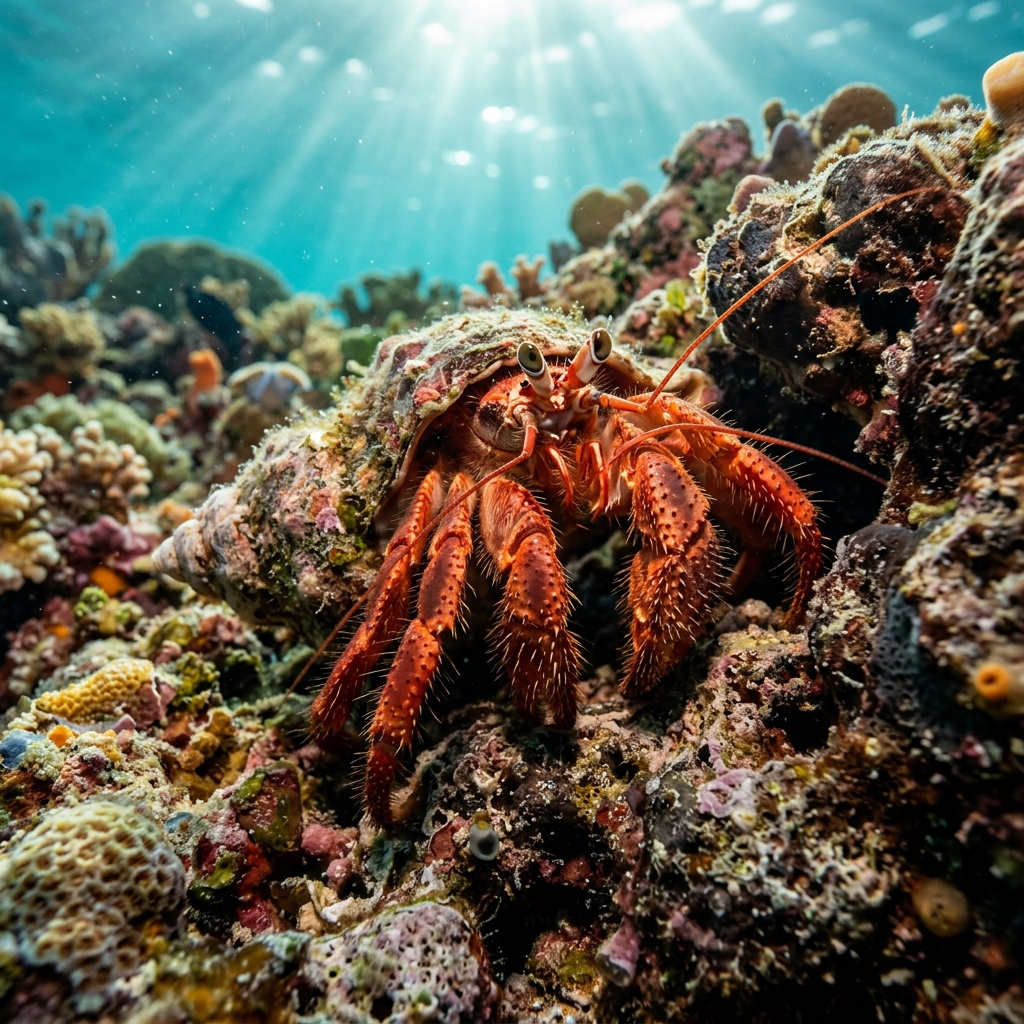
Look for a hermit crab with legs banded in olive-green to grey stripes running against a lighter cream background, tucked into a recycled gastropod shell. The claws are roughly equal in size and also carry the same longitudinal striping, which is the easiest tell at a glance. Body size in the water is modest, usually fitting in your palm, and it moves with the jerky, dragging gait typical of shell-dwelling hermits.
Expect to find it picking over sand, rubble, or seagrass edges, often in groups where several individuals cluster around the same patch of debris. It's an unhurried scavenger, more interested in whatever organic scraps are nearby than in the diver watching it, and will retreat into its shell if you get too close or cast a shadow over it. Most sightings are in shallow water, making it as much a snorkelling find as a scuba one.
Like other hermit crabs, it has to trade up shells as it grows, and where shell supply is short you'll sometimes see several crabs of different sizes queuing near a vacated one, waiting their turn.
Sightings show no clear seasonal pattern, and with a comfortable range of 22 to 28C, that tracks: Florida's shallow water stays in this band most of the year, so it's a reliable year-round find rather than a seasonal one.
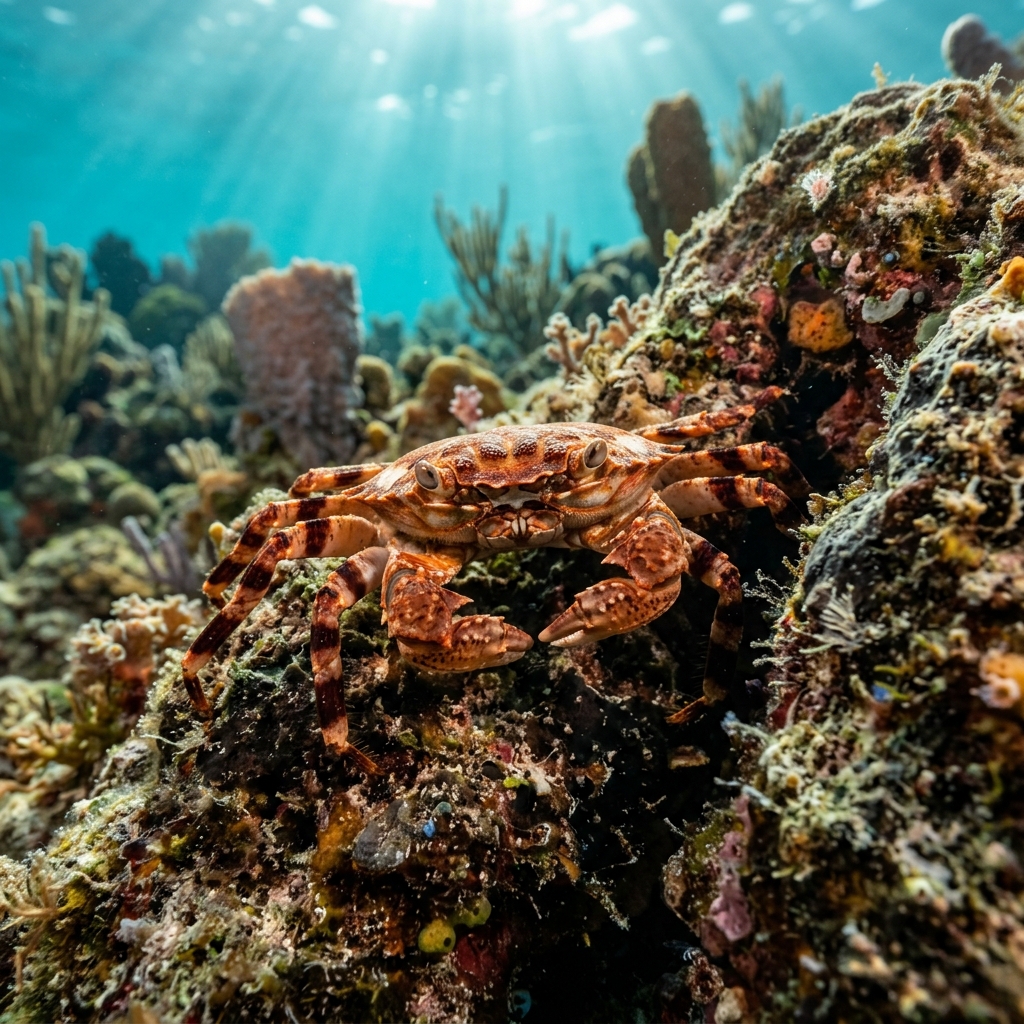
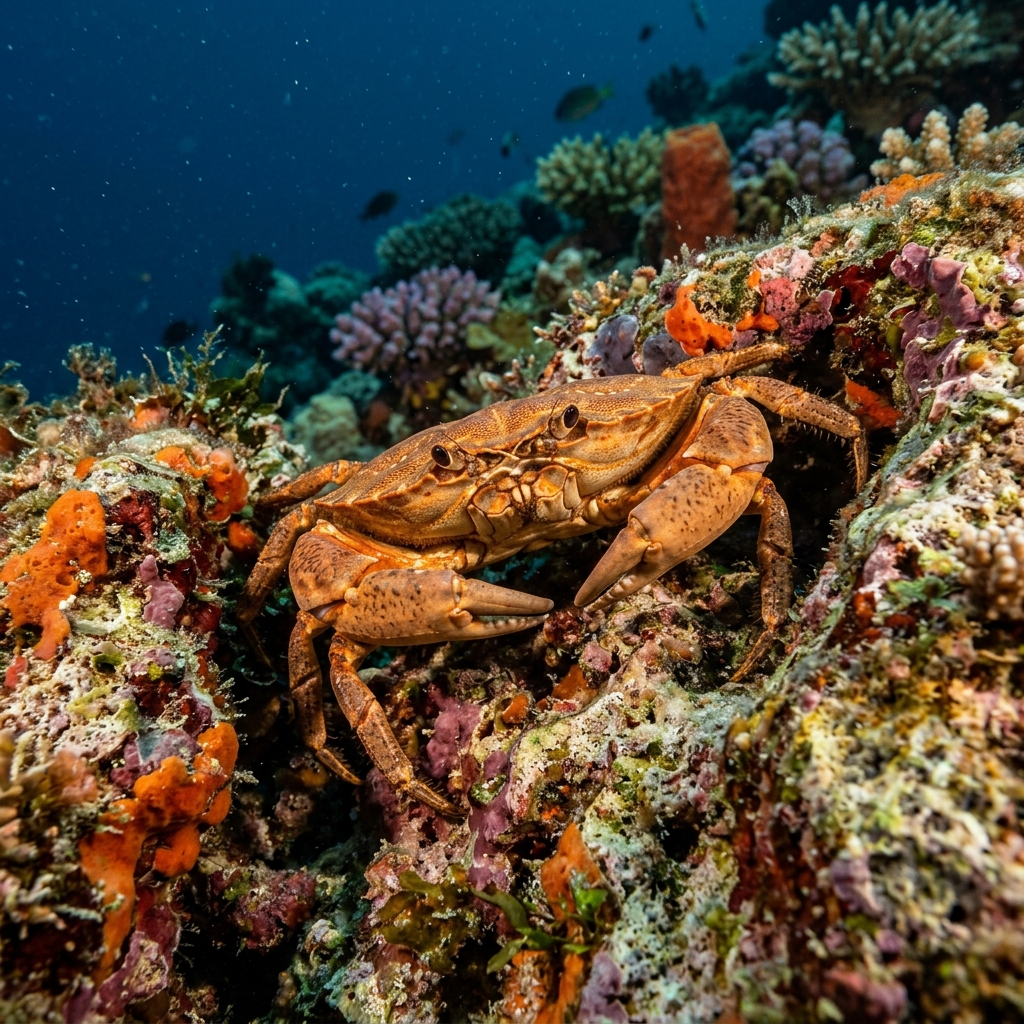
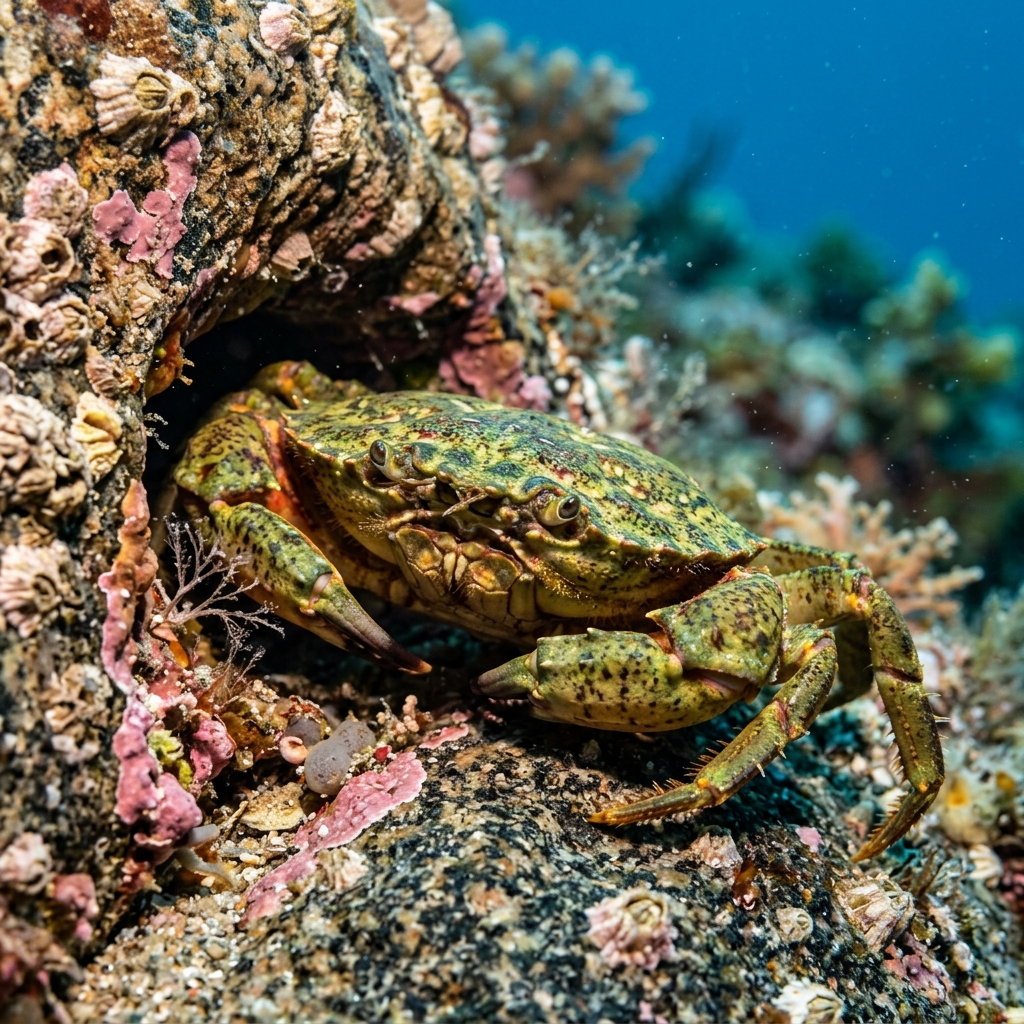
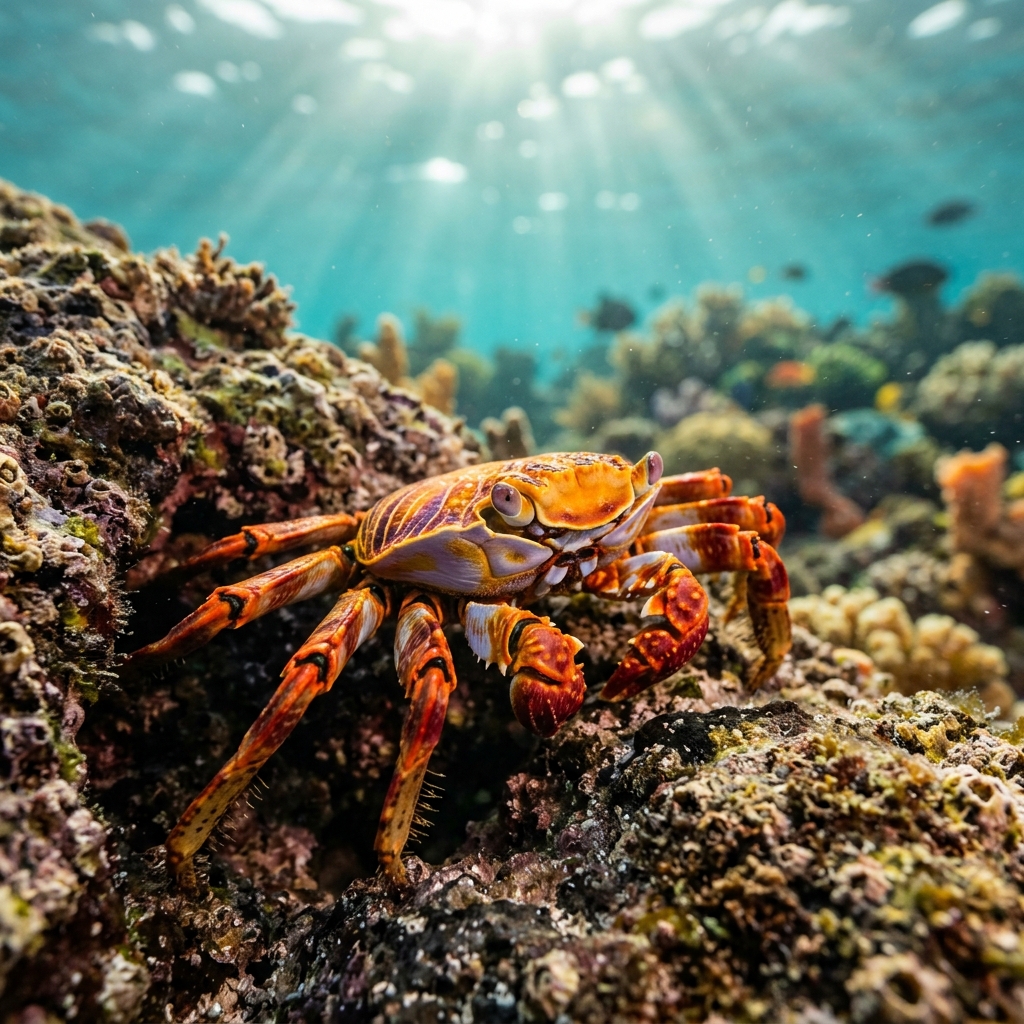
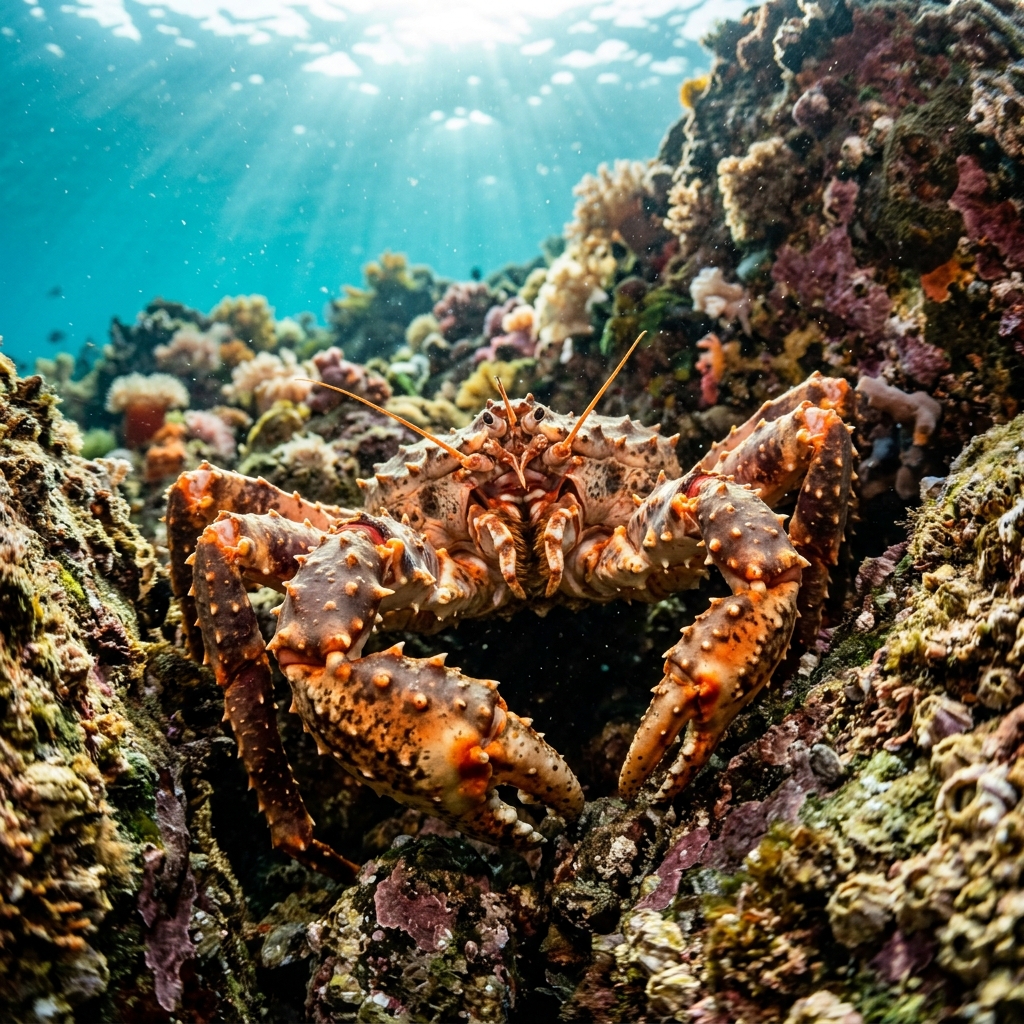
Reef neighbours a diver could mistake it for. Use the identification notes above to tell them apart.
This is a Florida species through and through, most commonly logged on shallow sites across the state, with Texas turning up a smaller but real number of sightings too. Divers and snorkellers doing shallow rubble, seagrass, or jetty dives in Florida have the best odds of finding one.
Mapping where Thinstripe Hermit Crab is logged…
Florida is by far the strongest spot for this species, with additional sightings from Texas. Shallow sand, rubble, and seagrass sites are typical habitat.
There's no strong season in the data. Water in its comfort range of 22 to 28C persists through most of the year on Florida's shallow sites, so it's seen year-round.
Check the legs for olive-to-grey longitudinal stripes on a cream background, carried through onto the roughly equal-sized claws. It's usually tucked into a scavenged snail shell rather than showing bare abdomen.
Exact size figures aren't confirmed in the data, but in the water they're a small-to-modest hermit crab, easily fitting in a diver's palm along with its shell.
No, they pose no danger to divers. They're harmless scavengers that will simply withdraw into their shell if disturbed.
Site and sighting data is aggregated from diver logs, iNaturalist and GBIF. For taxonomy and conservation status:
European Green Crab
2,469 sites